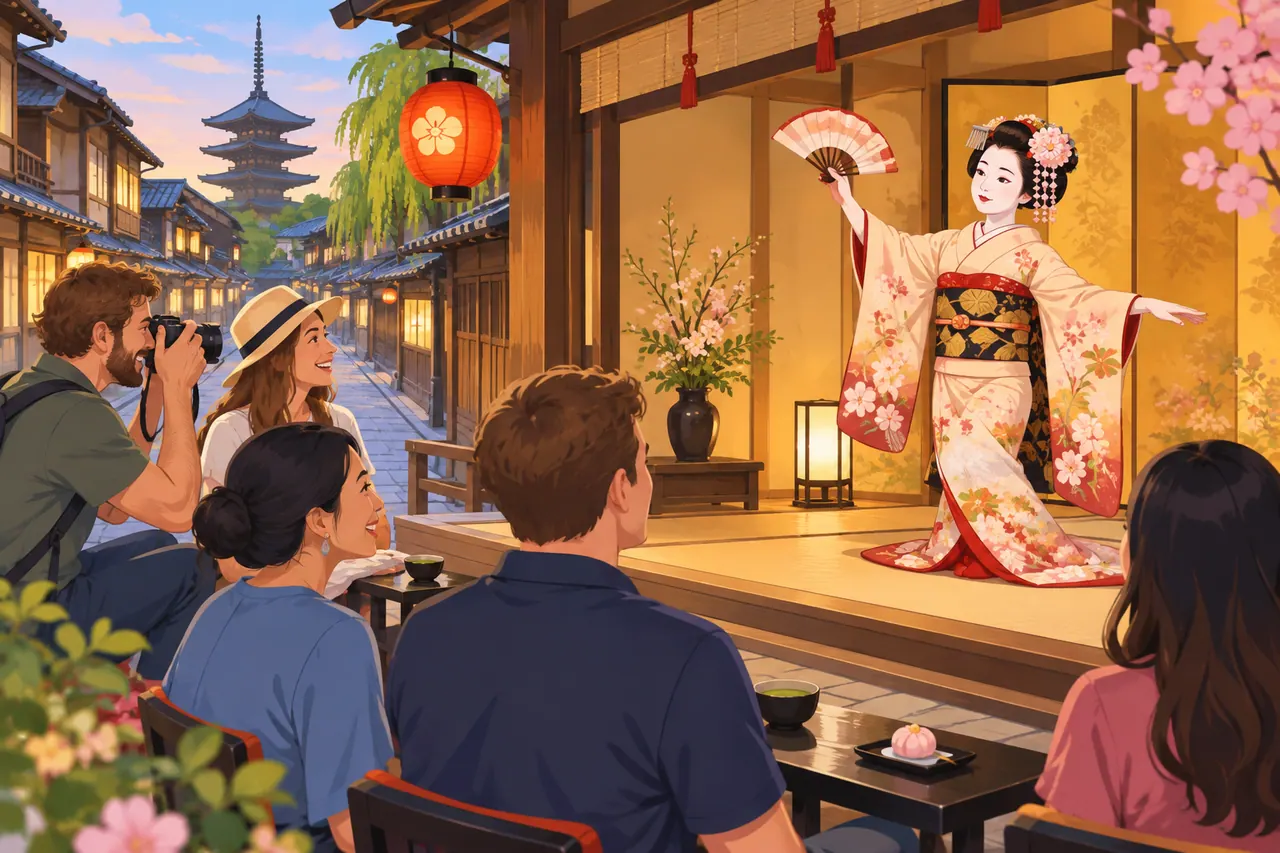
Maiko Experience Kyoto 2026–27: Dances, Prices, Etiquette
Contents
- 1What is a maiko experience in Kyoto?
- 2Choose a maiko experience in Kyoto: show, tea, meal or makeover
- 3Maiko experience Kyoto dance calendar: spring and autumn stages
- 4Gion Corner: a short maiko experience in Kyoto
- 5MAIKOYA tea show: a maiko experience in Kyoto with English help
- 6Maiko experience Kyoto etiquette: districts, maps and photo rules
- 7FAQ: planning a maiko experience in Kyoto
The easiest maiko experience in Kyoto is a booked event. You can choose a district dance, a Gion Corner show, a MAIKOYA tea show or a meal plan. A maiko is a young performer in training. A geiko is a fully trained Kyoto performer.
We checked the facts below on official pages on November 3, 2026. Some pages did not open. When that happened, we say so and send you to the organiser. We did not visit these events, and no expert reviewed this guide.
1What is a maiko experience in Kyoto?
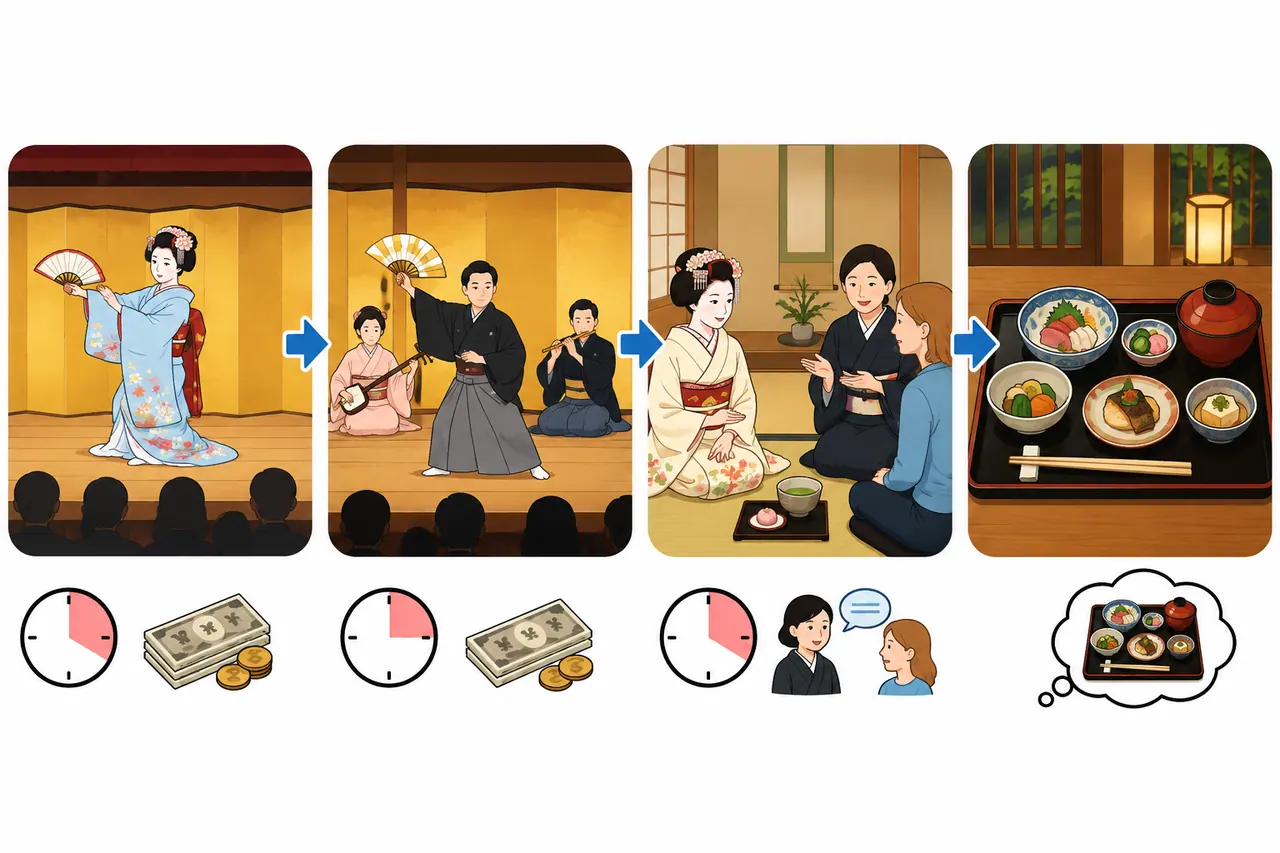
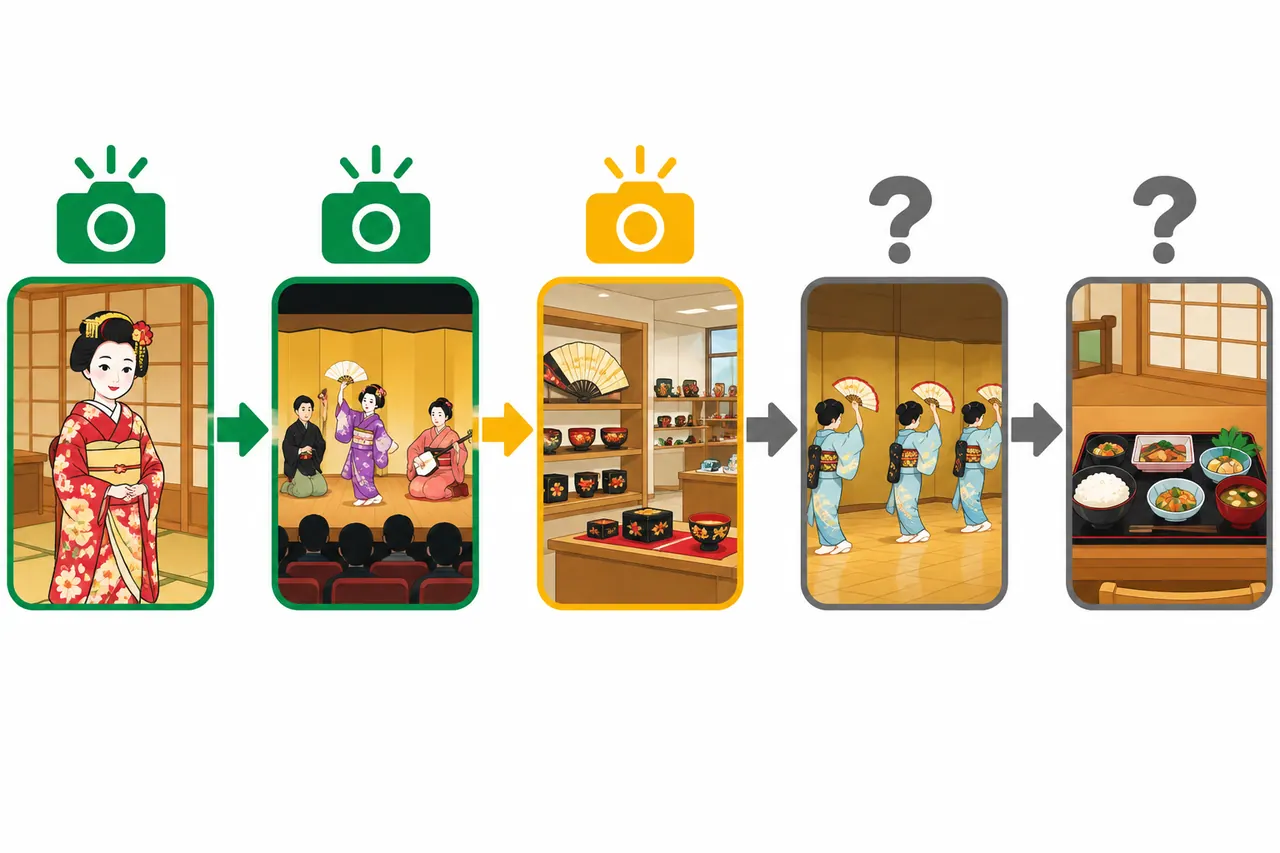
A maiko experience is a booked event where you watch or meet a maiko. It can be a public dance show, a short arts show, a tea ceremony or a meal. Seeing a maiko walk down the street is not a booked experience.
Maiko and geiko work in Kyoto's hanamachi. A hanamachi is a traditional entertainment district. Kyoto has five of them: Gion Kobu, Gion Higashi, Kamishichiken, Miyagawacho and Pontocho([1]), S1a).
Maiko and geiko entertain guests with dance, songs and party games. These games are called ozashiki asobi. An ozashiki is a party in a Japanese-style room.
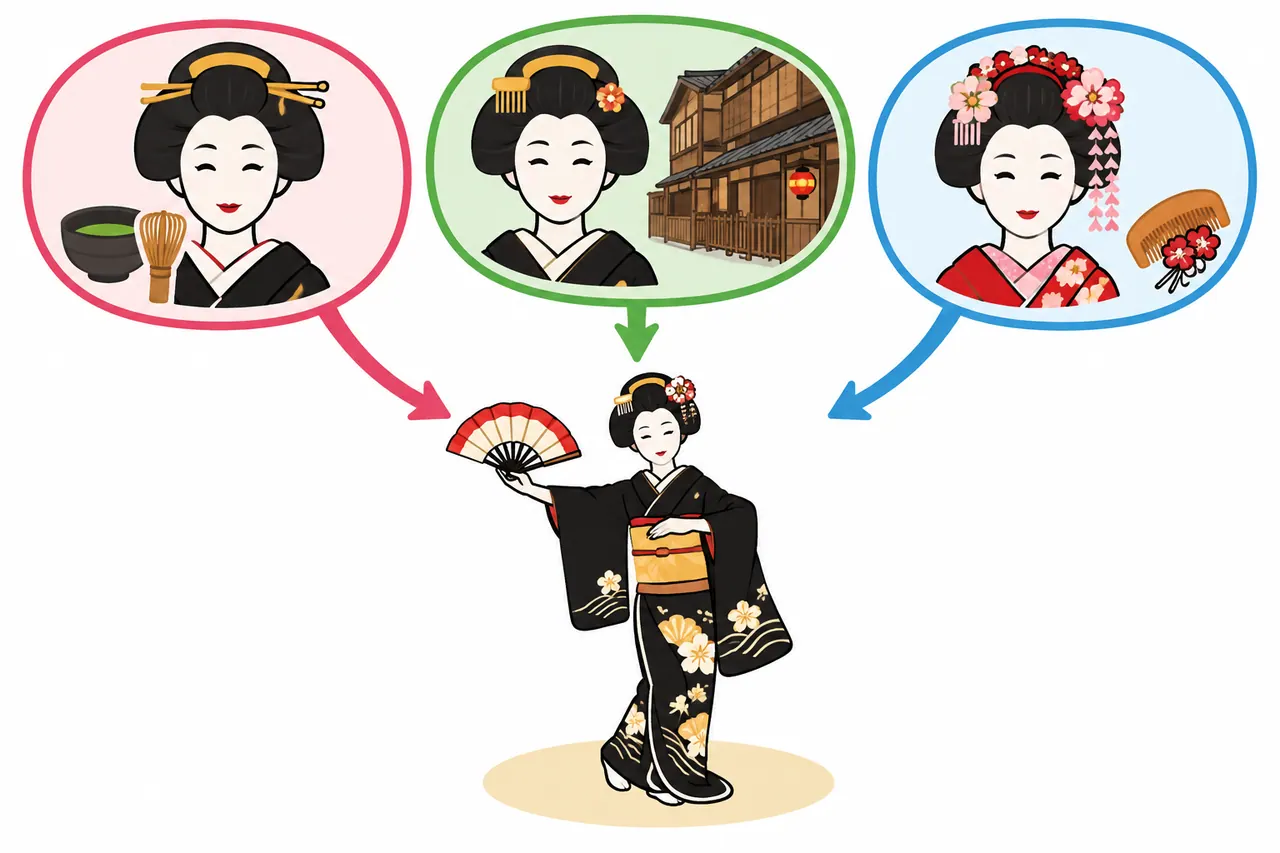
Maiko vs geiko: what is the difference?
A maiko is still in training. A geiko has finished that stage. Kyoto Kanko Navi plus, the city's official tourism site, describes these features.
| Point | Maiko | Geiko |
|---|---|---|
| Stage | A trainee on the way to becoming a geiko | A fully trained performer |
| Kimono | Furisode, a kimono with long sleeves | A calmer style |
| Sash | Darari obi, a long hanging sash | Not described as darari |
| Footwear | Okobo, tall wooden sandals | Zori, flat sandals |
| Hair | Kanzashi, hair ornaments like seasonal flowers | A wig is used |
| Life | Trains through a house called an okiya | Expected to be independent; no retirement age |
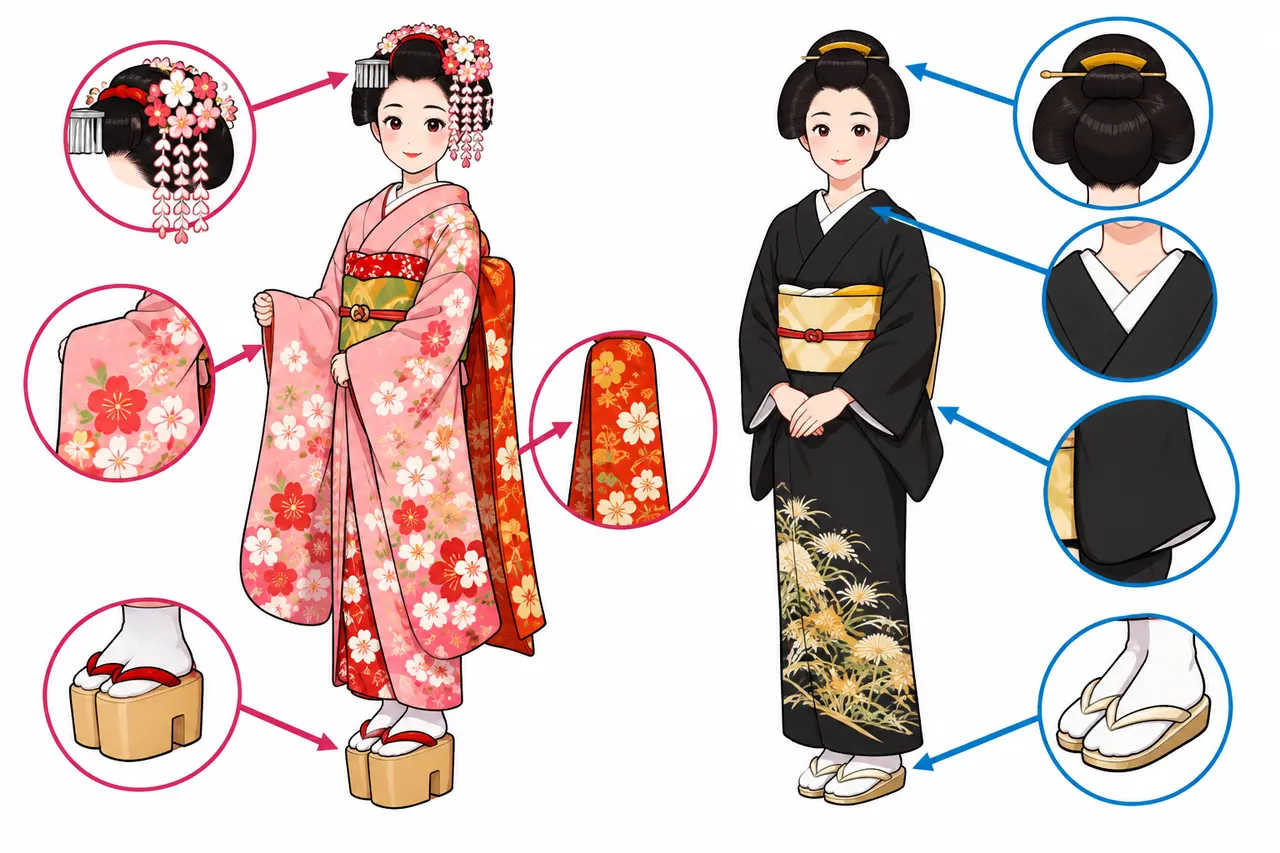
So a long hanging sash and tall sandals are signs of a maiko. A wig, flat sandals and a quieter kimono are signs of a geiko.
In this Spanish-language reel, travelers show a private dinner in a tatami room in Gion with a maiko they say is 19. Tatami are floor mats made of woven straw.
That age fits the official path. Kyoto tourism says maiko usually become geiko at around age 20.
How does a maiko become a geiko?
The path has several stages and takes years. Here is the order Kyoto Kanko Navi plus gives.
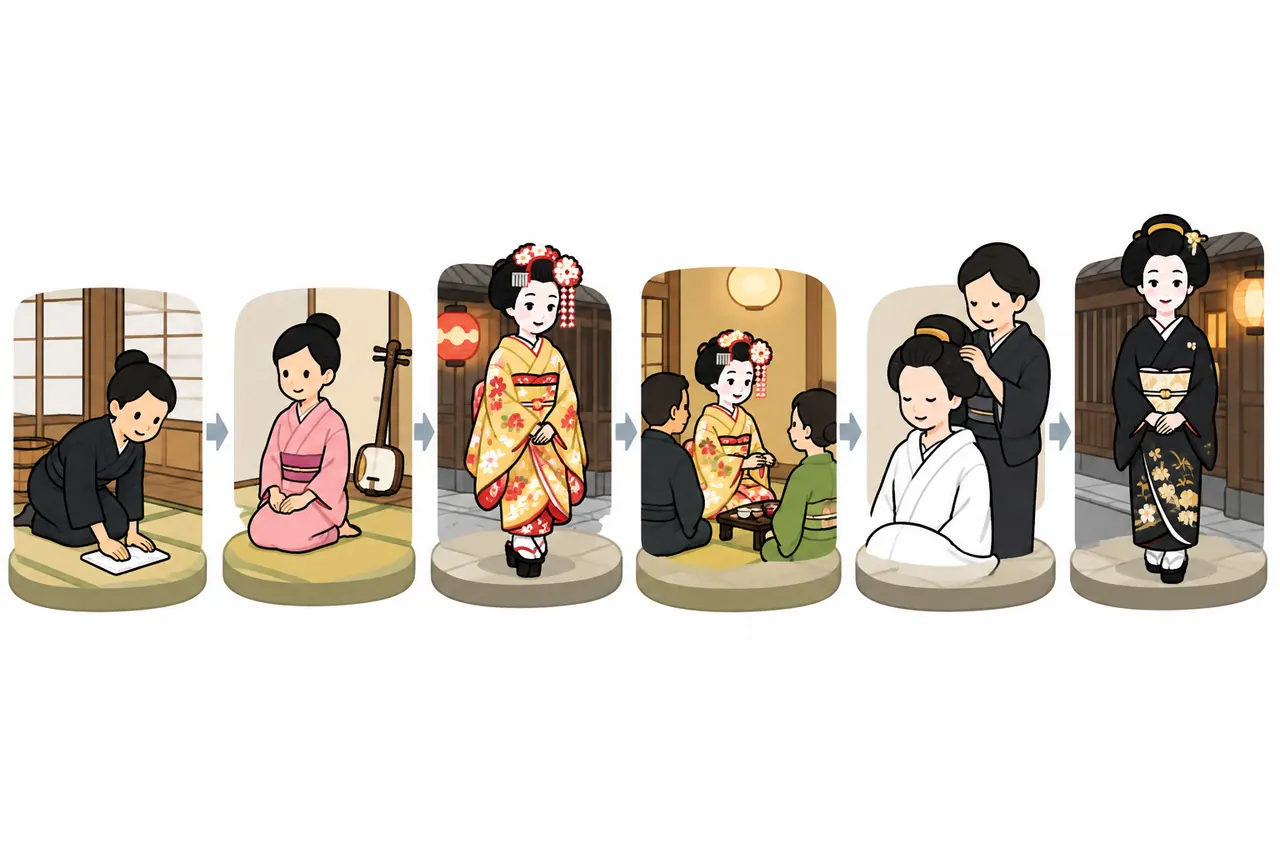
- Shikomi (about one year): The trainee lives at an okiya. She learns manners, the local way of speaking and dance.
- Minarai ("learning by watching"): She goes to ozashiki parties with geiko and practises there.
- Becoming a maiko: After minarai, she starts work as a maiko.
- Gaining experience: She works at many ozashiki parties and keeps learning.
- Erikae, at about age 20: This "collar change" marks the move to geiko.
- Life as a geiko: She is expected to stand on her own, without the okiya. There is no set retirement age.
This explains why some events list maiko and geiko separately. One is still learning. The other has finished training.
Geisha, geiko and maiko: why the words change
Many English pages say "geisha." Kyoto sources usually say "geiko." MAIKOYA's English page title uses "Geisha," but it says a maiko usually hosts. So one page can mix the words.
The job idea is the same. Performers entertain with dance, song and ozashiki games. Shows let you watch the dance. Some meal and party plans add talk and games.
Our guide to geisha experiences in Japan explains ozashiki parties in other cities. It helps you compare a party with a show ticket.
2Choose a maiko experience in Kyoto: show, tea, meal or makeover
Pick the activity first. Then compare price, length, language and age rules. This table puts the main options side by side.
| Option | Length or dates | Price (checked Nov 3, 2026) | English | Age rule | Source |
|---|---|---|---|---|---|
| Gion Corner | About 50 min; 18:00 and 19:00 | ¥5,500 for age 23+ | Not stated | Preschool free (seat costs extra) | ([2]) |
| MAIKOYA tea show | About 45 min | See booking calendar | Interpreter included | No children under 7 | ([3]) |
| Kyoto Handicraft Center | About 45 min ⓘ JNTO listing | Ask the provider | English staff ⓘ JNTO listing | Ask | ([4]), S14a |
| Gion Odori | Nov 1–10, 2026; about 1 hour | ¥6,000; ¥7,000 with tea | Not stated | No children under 3 | ([5]) |
| Kotobukikai | Nov 12–18, 2026; 16:00 | ¥10,000 | Not stated | See note in dance section | ([6]) |
| Spring dances | March–May (2026 dates) | Mostly ¥4,000–¥7,000 in 2026; Miyako Odori student seat ¥2,000 | Not stated | Differs by dance | Dance section |
| Meal with a performer | Ask the provider | Ask the provider | Ask | Ask | ([7]) |
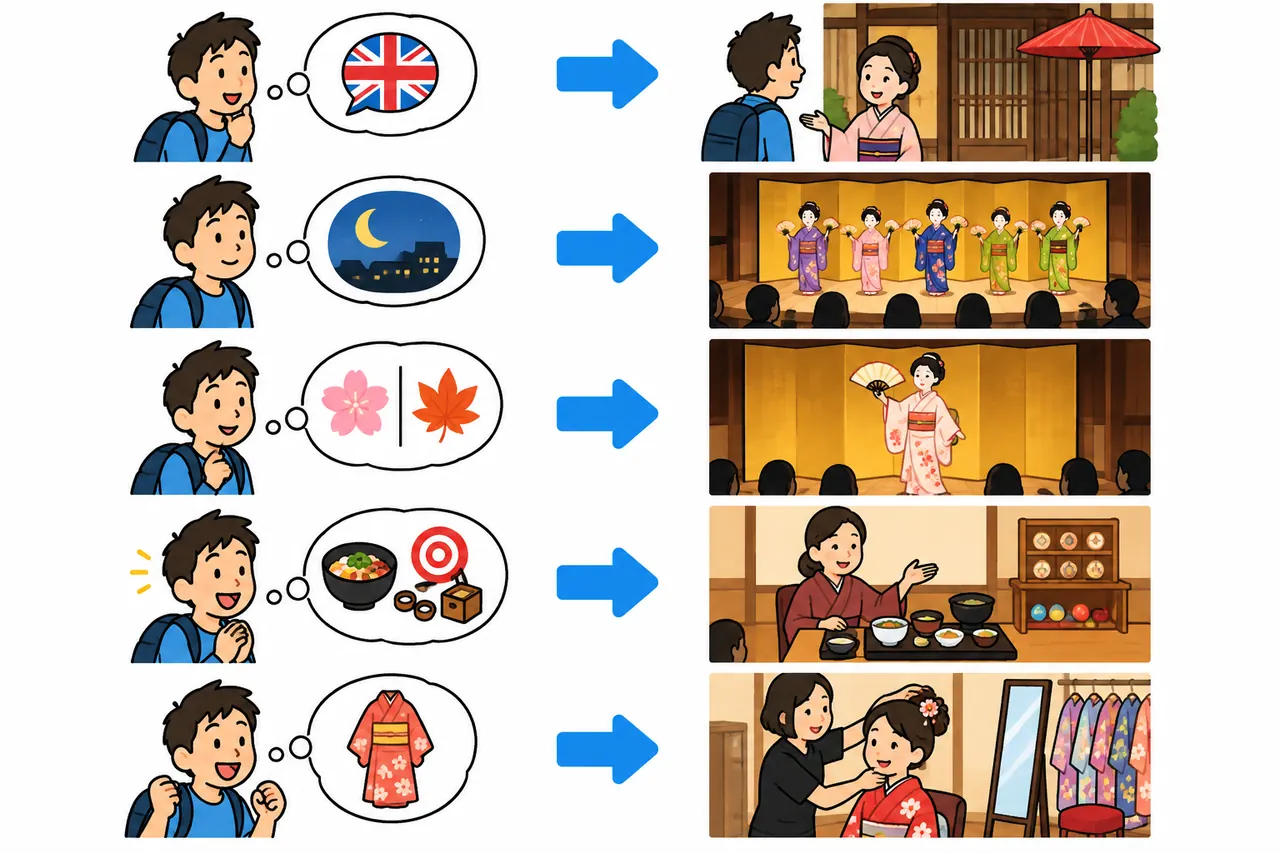
"Not stated" means our source does not say. It does not mean there is no English help. Ask the organiser if you need it.
Which experience fits your group?
Gion Corner suits a short evening. MAIKOYA suits groups that want English help. A district dance suits you if your dates match its schedule.
| Your group | Start with | Why |
|---|---|---|
| First-timers with one free evening | Gion Corner | Several Japanese arts in about 50 minutes |
| People who need English | MAIKOYA tea show | An English interpreter is included |
| Dance fans in spring | A spring district dance | Full dance shows from March to May |
| Travelers in November 2026 | Gion Odori or Kotobukikai | Autumn stages in two districts |
| Families with children aged 7–9 | Gion Corner or MAIKOYA | Kyo Odori did not admit under-10s in 2026 |
| A private group | MAIKOYA's 90-minute private plan | Listed as a private tea ceremony and dance |
| Food lovers | A meal plan | Ask the provider about food, talk and games |
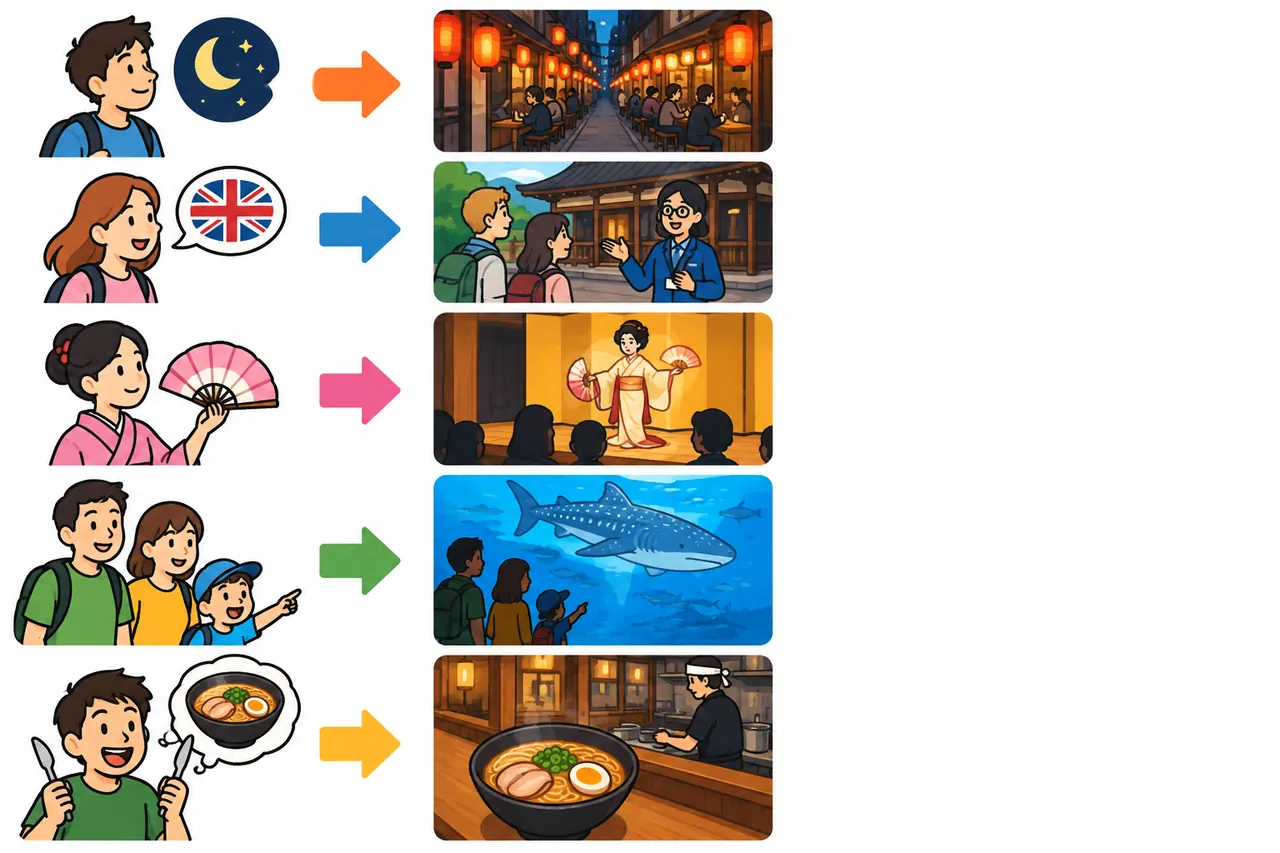
Gion Corner may not suit people who want a long dance. A district dance may not suit people without fixed dates.
Compare the total price, not one ticket
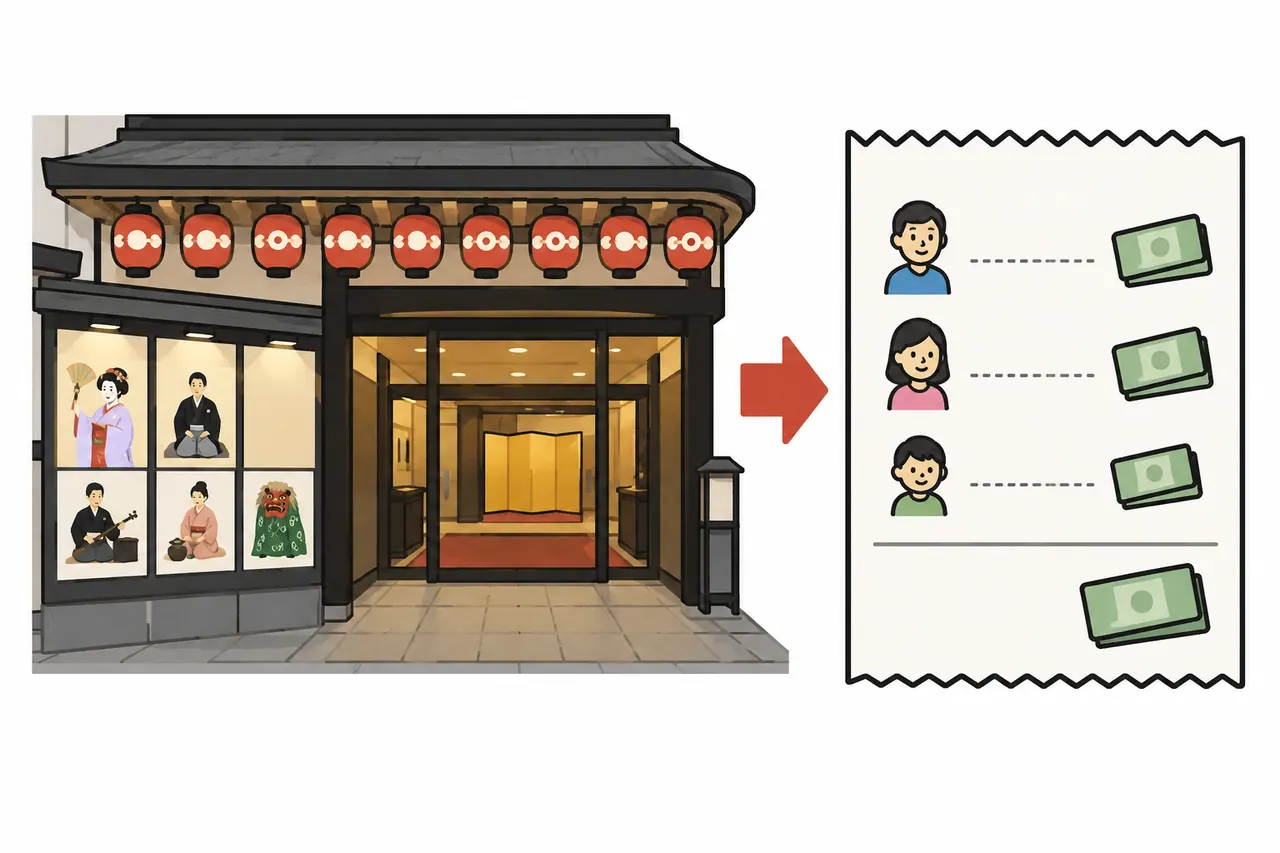
Add every guest and every extra before you compare. Tea, a printed programme and kimono rental are not always included.
Here is an example with Gion Corner's listed prices([2]), checked Nov 3, 2026):
- Two guests aged 23 or over: ¥5,500 × 2 = ¥11,000.
- Add a 10-year-old at ¥3,300: total ¥14,300.
- Compare: two Gion Odori 2026 seats with tea cost ¥7,000 × 2 = ¥14,000.
| Question to ask | Why it matters |
|---|---|
| Is tea included? | Some dance tickets include tea; others are seat only. |
| Is the programme extra? | Gion Odori sold its 2026 printed programme for ¥1,000. |
| Is kimono rental extra? | MAIKOYA books and charges for rental separately. |
| Is an interpreter included? | Only MAIKOYA's tea show says so in our sources. |
| Can I choose my seat? | Gion Odori 2026 seats were reserved, but you could not pick the seat number. |
A cheap ticket is only good value if it gives your group what it wants. A tea show, a dance seat and a meal are different things.
Dressing up vs meeting a performer
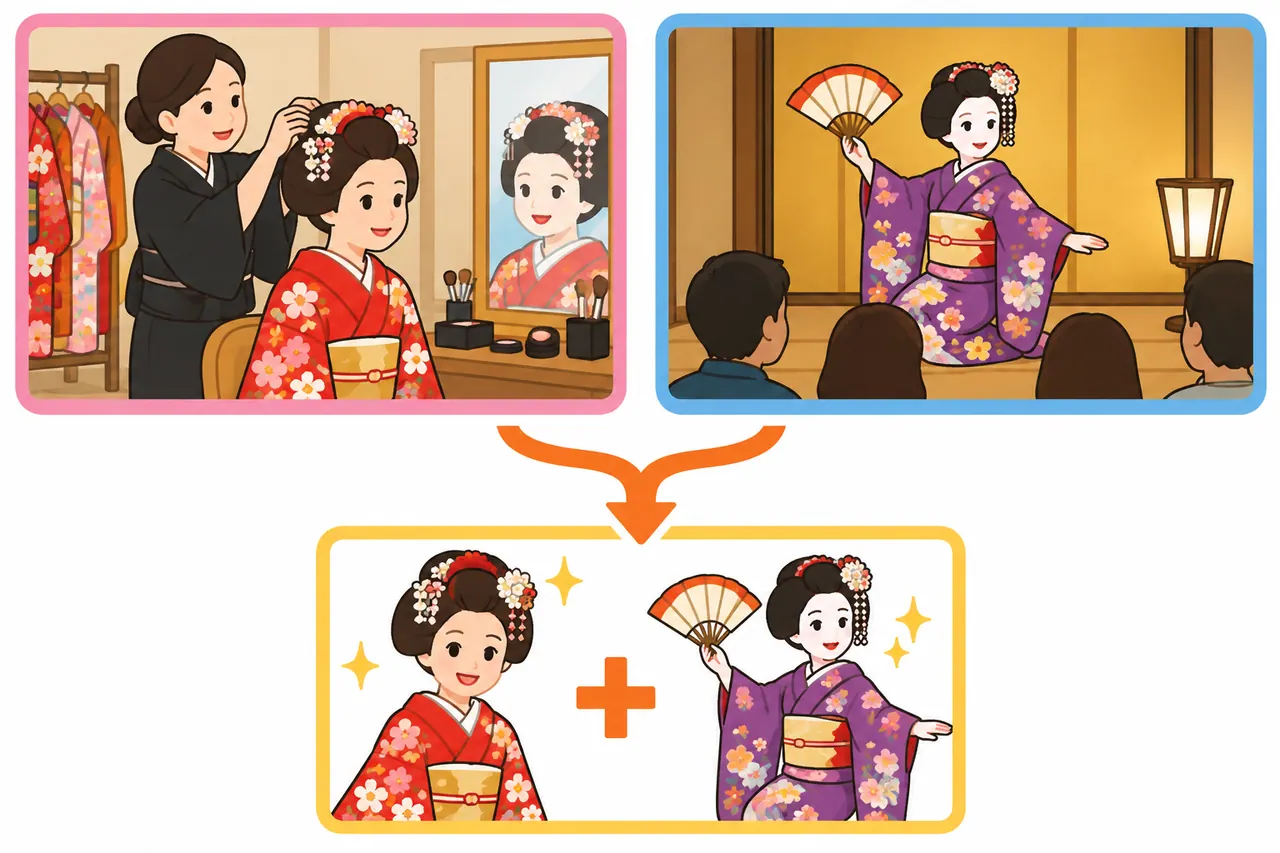
A makeover and a performance are two different activities. In a makeover, a studio dresses you in maiko or geiko style. In a performance, a real maiko or geiko dances or hosts.
In this English-language reel, a traveler first gets a maiko makeover. Then they join a real ozashiki with geiko and maiko.
The two activities appear together in that video. For your trip, check if they are sold as one package or as two bookings.
Kyoto Handicraft Center: check the programme first
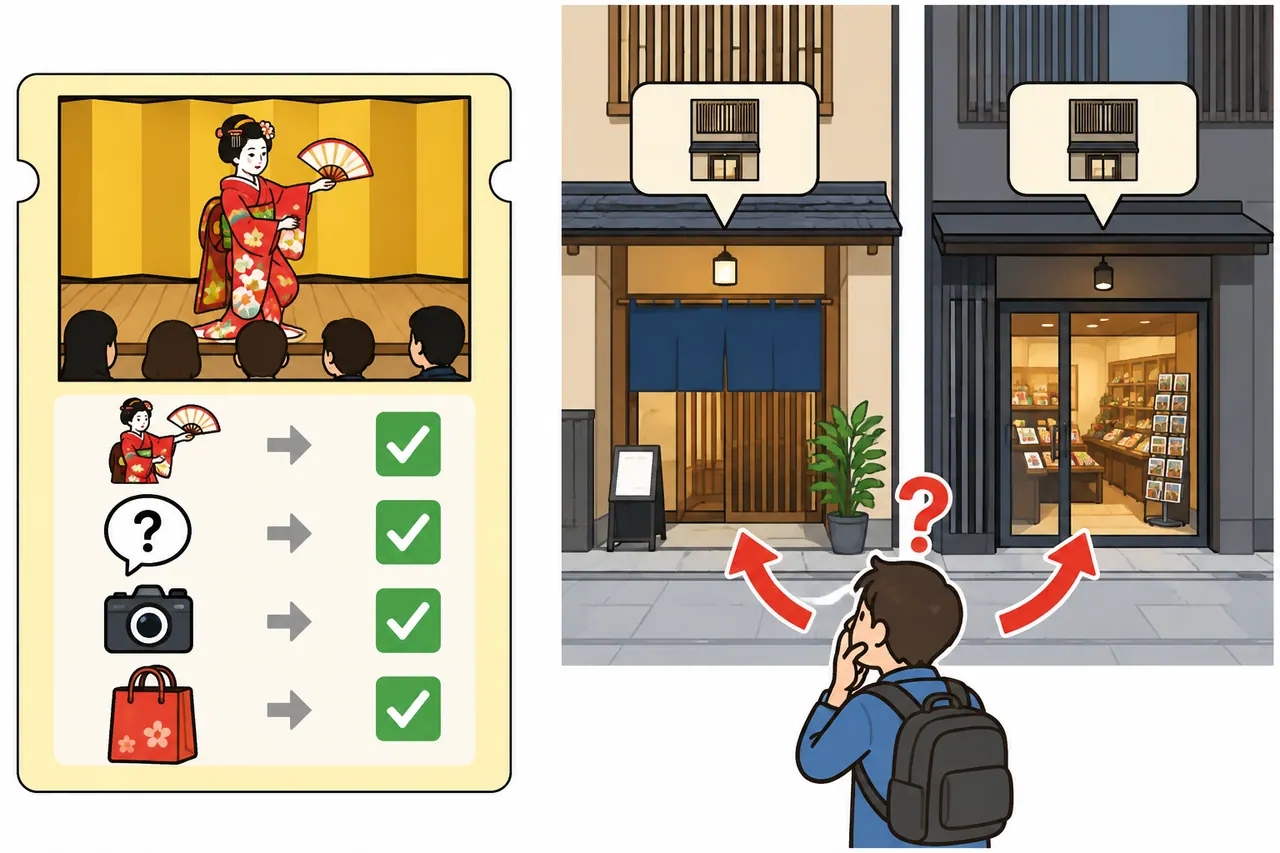
Kyoto Handicraft Center lists a "Meet-&-Greet, Maiko Show & Experience." Its own page mentions photos with a maiko. Its listed phone number is 075-761-8001.
Japan's national tourism site ⓘ JNTO describes an experience of about 45 minutes (S14a). It lists this order: dance, explanation by English-speaking staff, questions and answers, photos, and a souvenir. This is JNTO's description, not a promise for your session.
- Open the center's experience page and find the current dates and price.
- Ask the center by phone or email if your session includes questions, photos and the souvenir. Ask about any other extras too.
- Check the meeting point. JNTO lists the West Wing 2F, 21 Shogoin Entomi-cho, Sakyo-ku. The center's page lists number 17 in the same area.
- Open the map search and compare it with your confirmation.
Meals and ochaya teahouses
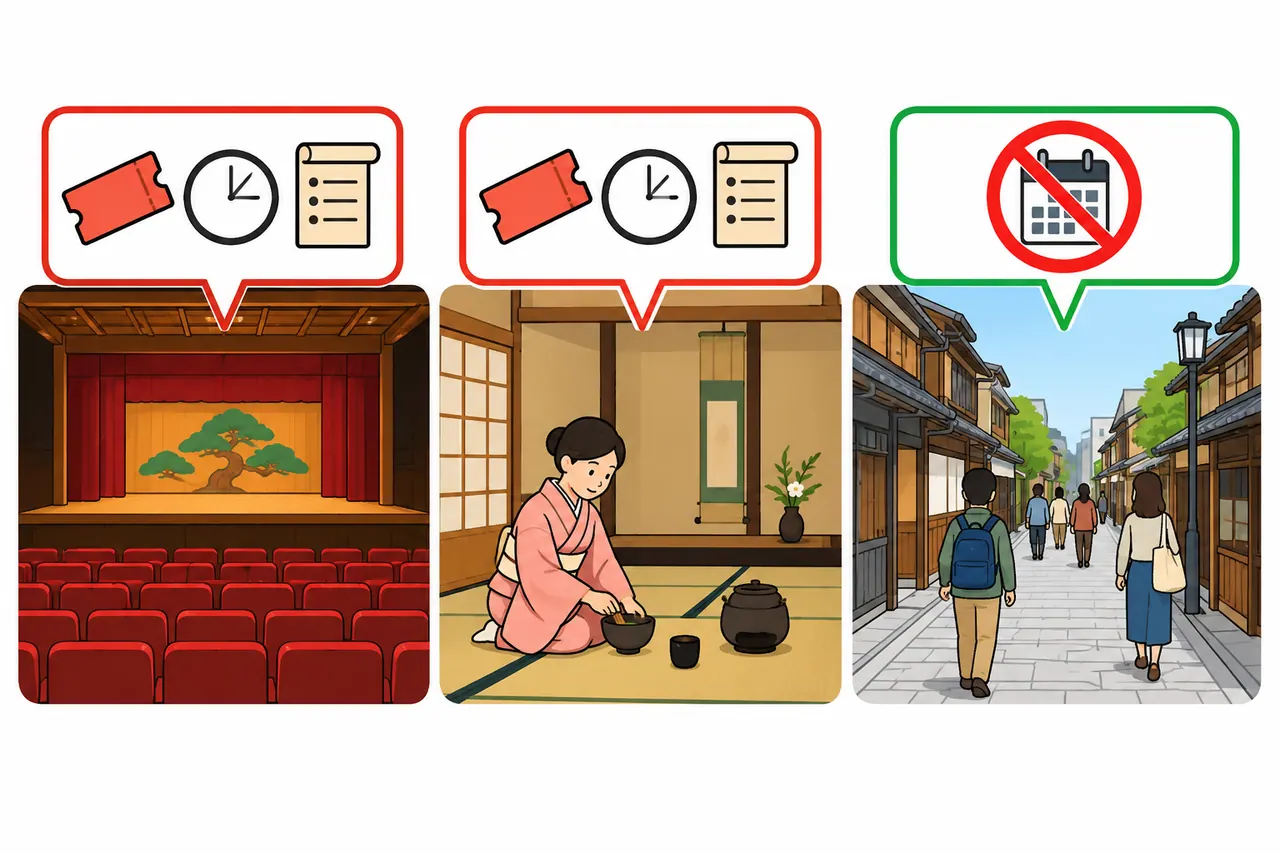
Ochaya teahouses usually need an introduction. Restaurants and inns are another way in. An ochaya is a traditional teahouse where performers entertain guests.
The foundation that runs Gion Corner explains this on Kyoto Kanko Navi plus. Ochaya follow a custom called ichigen-san okotowari. It means "no first-time guests without an introduction."
The same explanation lists other ways to invite geiko and maiko. Some ryoriya (Japanese restaurants) and old ryokan (traditional inns) can arrange this.
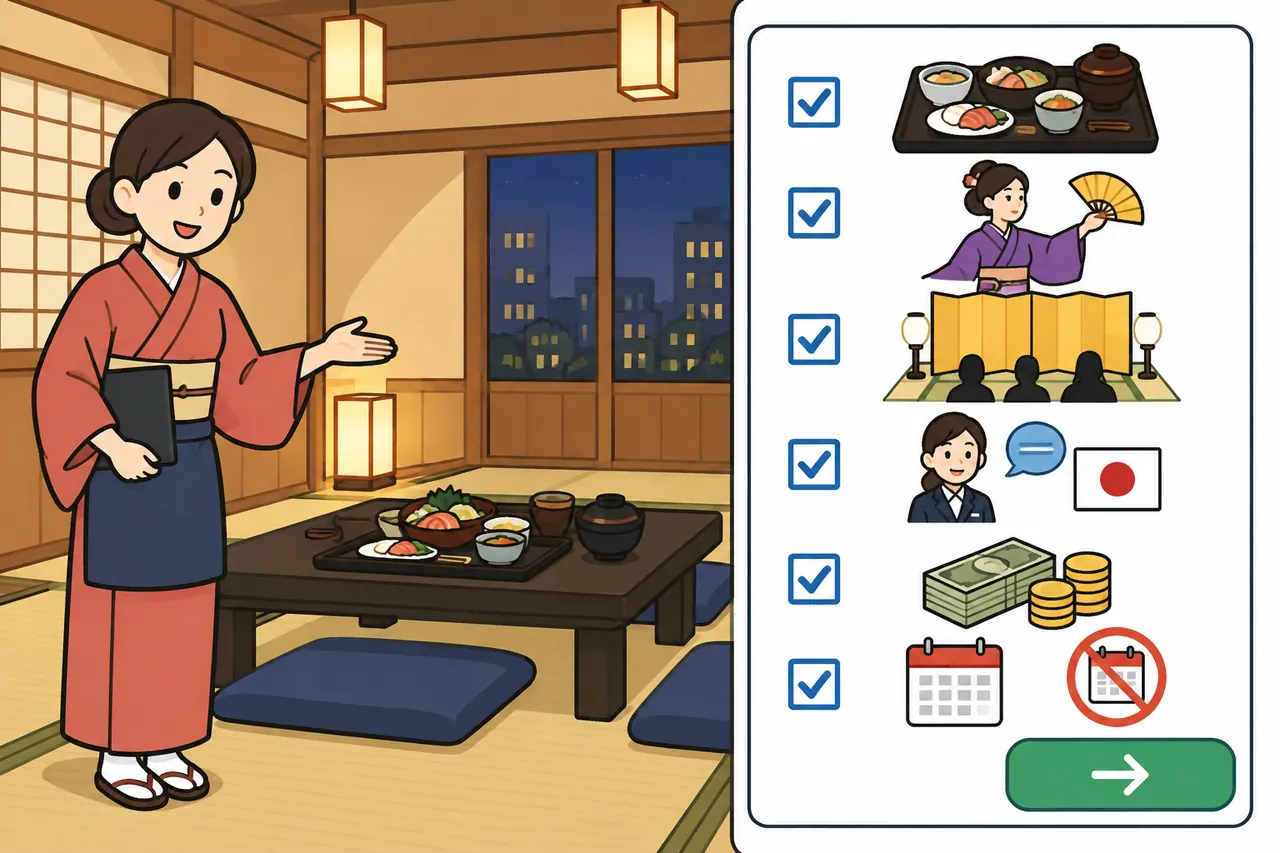
In this French-language reel, a traveler meets a geiko over kaiseki, a meal of many small courses. They also see a dance and ozashiki games.
That is one meal plan. Food, dance and games are features to confirm with your provider, not promises.
| Ask the meal provider | Why |
|---|---|
| What is in the meal? | Check dishes and dietary needs. |
| Which performer comes? | A maiko, a geiko, or both. |
| What happens during the event? | Dance, games, talk or photos may differ. |
| Is there an interpreter? | An English website is not the same as English help. |
| Is the price per group or per guest? | Totals can differ a lot. |
| What if plans change? | Read the cancellation terms. |
A past noh-stage meal: check before booking
We could not confirm a current plan for a maiko meal on a noh stage. Noh is a traditional masked drama. Its stage is a special wooden floor.
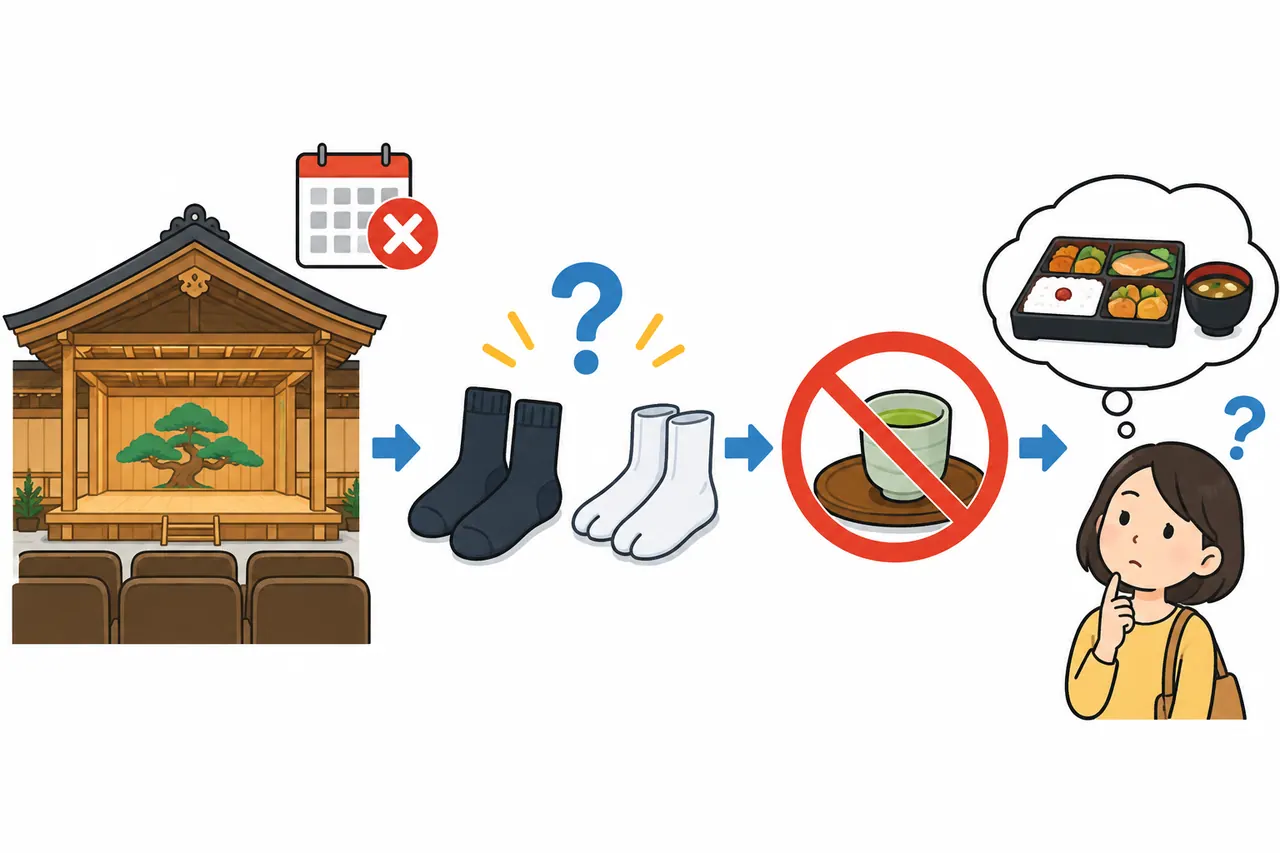
Kyoto Kanko Navi lists one past example. It was a maiko show with lunch at a venue with a noh stage. That past event ended in 2025.
At that past event, guests needed socks or tabi (Japanese split-toe socks) to step on the stage. Eating and drinking on the stage was not allowed. These were the past event's rules, not rules for any plan today.
If you find a noh-stage meal plan, use this checklist:
- Ask the provider where the venue is and where the meal is served.
- Ask the provider who performs and what dance is shown.
- Ask the provider if there is time for questions or photos.
- Ask the provider about extra costs, such as drinks or transport.
- Ask the provider about rules for stepping on the stage, such as socks or tabi.
Do not copy the past event's rules onto a new plan. Each provider sets its own.
3Maiko experience Kyoto dance calendar: spring and autumn stages
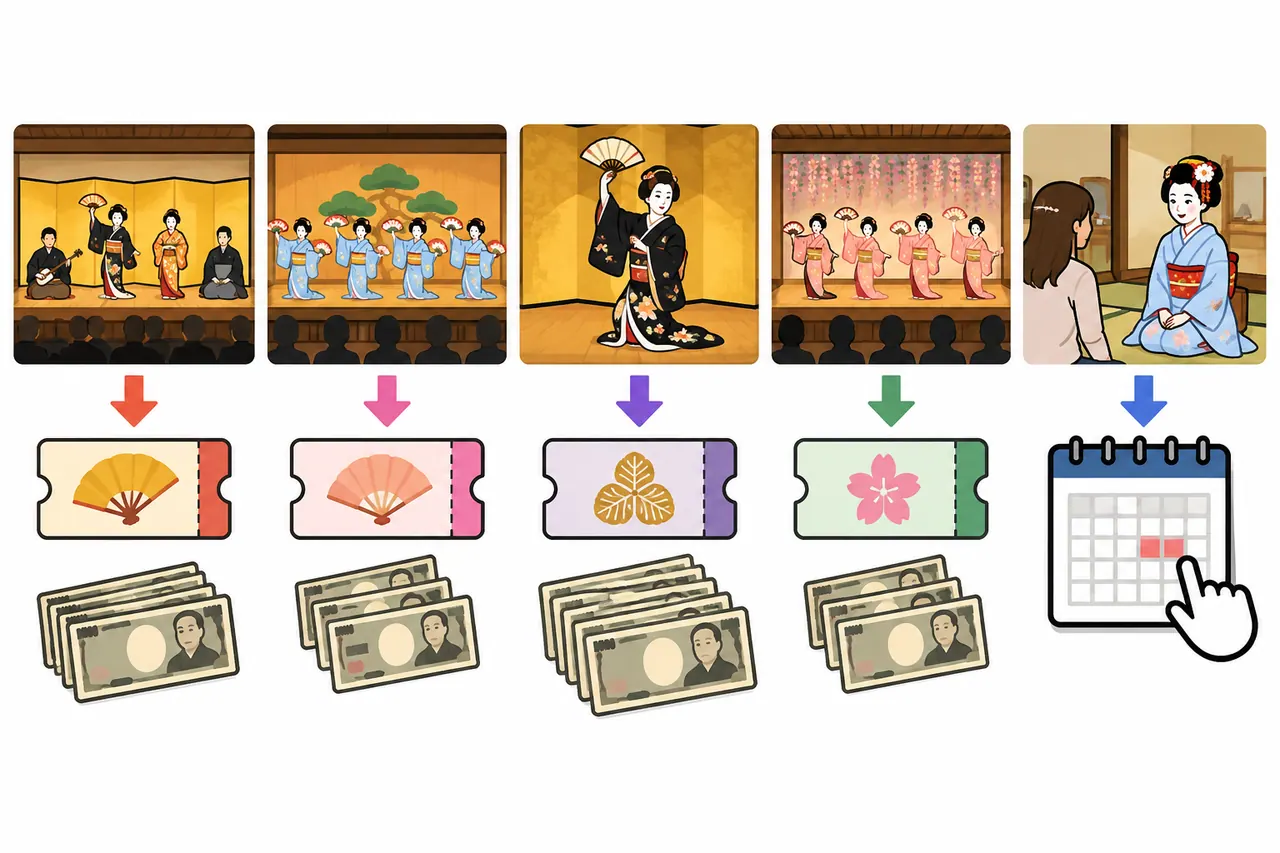
Each district holds its own dance on set dates. A kaburenjo is a district theatre. Use the theatre name to match your ticket.
The table shows what we confirmed. Past events are marked so you do not book a show that has already ended.
| Dance | District and venue | Dates and starts | Status (checked Nov 3, 2026) | Source |
|---|---|---|---|---|
| Kitano Odori | Kamishichiken | Mar 20–Apr 2, 2026; 14:00, 16:30 | Ended | ([8]) |
| Miyako Odori | Gion Kobu; Gion Kobu Kaburenjo | Apr 1–30, 2026 | Ended | S2b |
| Kyo Odori | Miyagawacho; Miyagawacho Kaburenjo Mitsuwaza | Apr 4–19, 2026 (no show Apr 13); 13:00, 16:00 | Ended | S5b |
| Kamogawa Odori | Pontocho; Pontocho Kaburenjo | May 5–22, 2026; 12:30, 14:20, 16:10 | Ended | ([9]) |
| Miyako no Nigiwai | All five districts; Minamiza theatre | Jun 27–28, 2026 | Ended | ([10]) |
| Gion Odori | Gion Higashi; Gion Kaikan | Nov 1–10, 2026; 13:30, 16:00 | Running on check date | ([5]) |
| Kotobukikai | Kamishichiken | Nov 12–18, 2026; 16:00 | Coming up | ([6]) |
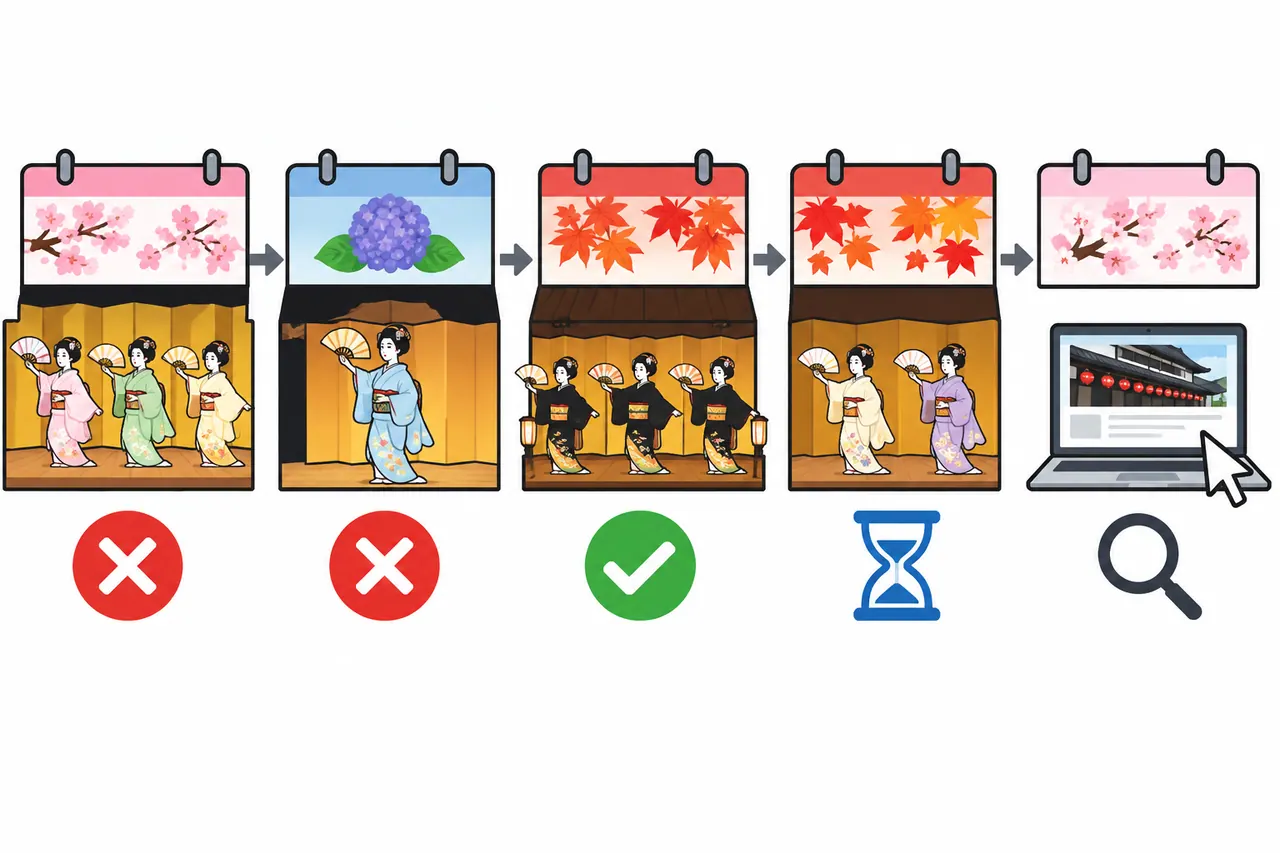
We could not confirm 2027 dates or prices for any spring dance on November 3, 2026. Check the official pages before you plan a spring trip. Our best time to visit Japan guide helps you compare spring and autumn travel.
In this English-language reel, a geiko and a maiko perform a two-person dance on stage.
The video does not name the show. It gives you an idea of what a stage dance looks like.
What do "first class" and "second class" mean?
"First class" and "second class" are ticket types for seats. In Japanese, they are itto and nito. They are not about service, like on a plane.
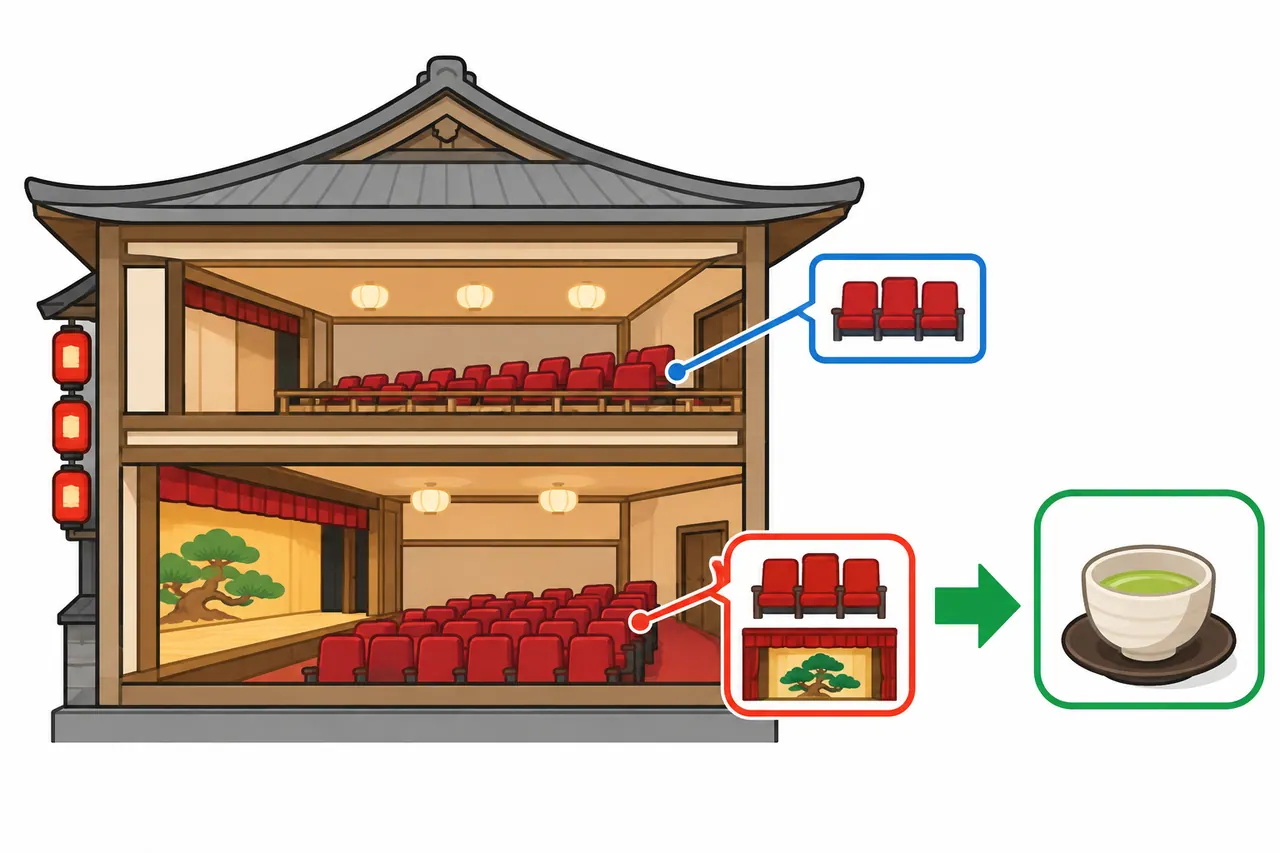
Each ticket type decides where you sit and if tea is included (S2c, S5b). At Kyo Odori 2026, first class was on the ground floor. Second class was on the upper floor.
A ticket "with tea" includes a tea seat before the show. Other dances use names like "special seat" or "regular seat." Read each theatre's own seat names.
Miyako Odori: Gion Kobu in April
The 152nd Miyako Odori ran April 1–30, 2026, at Gion Kobu Kaburenjo (S2b). The 12:30 shows on April 23 and 24 were booked out for private groups.
| 2026 ticket | Price |
|---|---|
| First class with tea | ¥7,000 |
| First class | ¥6,000 |
| Second class | ¥4,000 |
| Second class, student | ¥2,000 |
Sources: S2b and S2c, checked Nov 3, 2026.
Details for the 2027 Miyako Odori were not confirmed. We could not open the organiser's page or leaflet. Check the official Miyako Odori site for dates, prices and the sales day.
Kitano Odori and Kamogawa Odori
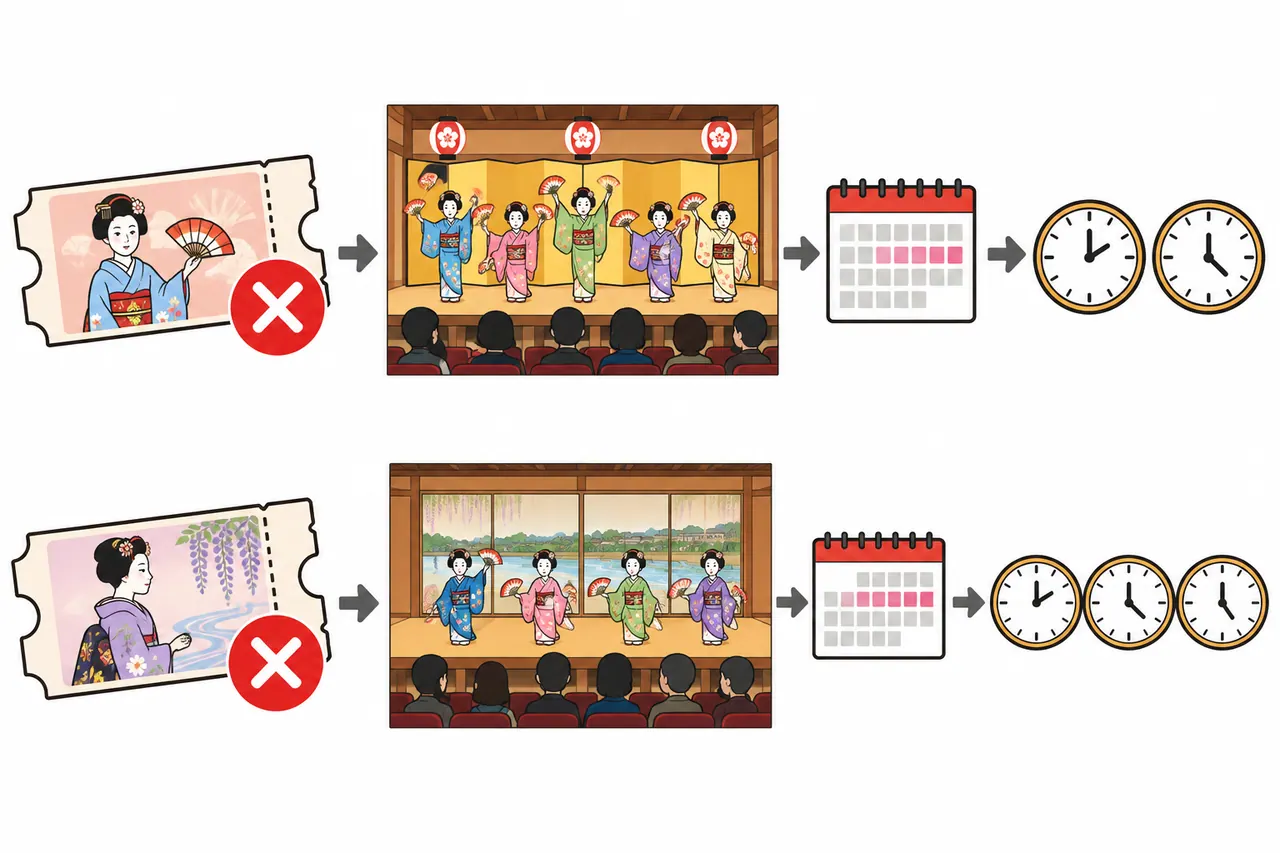
Kitano Odori is Kamishichiken's spring dance. The 74th show ran March 20 to April 2, 2026, at 14:00 and 16:30. Seats with tea cost ¥7,000, and seats only cost ¥6,000. Preschool children could not enter.
The form we saw was for hotels and inns. If you book as an individual, ask Kamishichiken Kabukai how to buy. Their number is 075-461-0148 (S1a).
Kamogawa Odori is Pontocho's May dance. The 187th show ran May 5–22, 2026. Shows started at 12:30, 14:20 and 16:10.
| Kamogawa Odori 2026 ticket | Price |
|---|---|
| Special seat with tea | ¥7,000 |
| Special seat | ¥6,000 |
| Regular seat | ¥4,000 |
Pontocho Kaburenjo stands at the west end of the Sanjo Ohashi bridge. Pontocho Kabukai's number is 075-221-2025 (S1a). Our Pontocho guide explains this district in more detail.
Kyo Odori: Miyagawacho in April
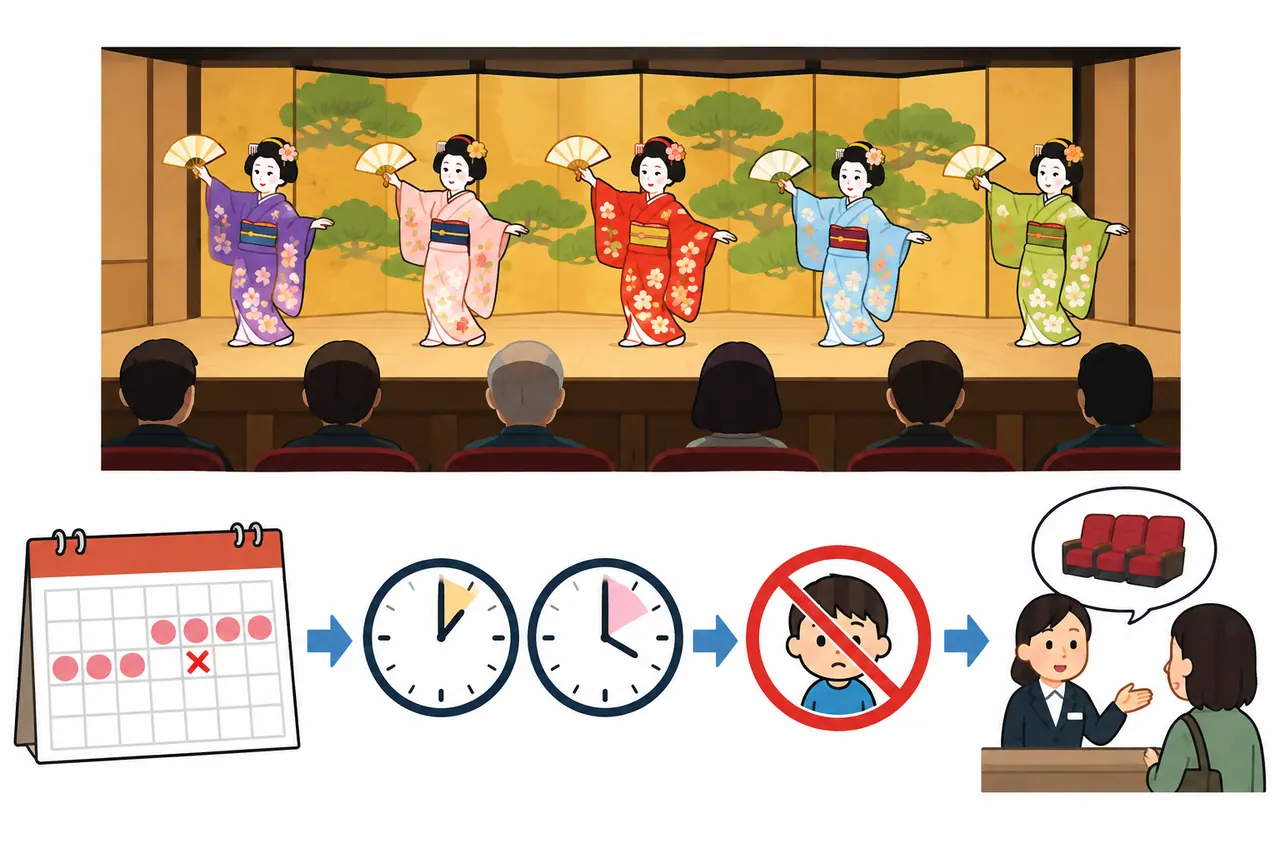
Kyo Odori is Miyagawacho's spring dance. In 2026, it ran April 4–19, with no show on April 13 (S5b).
| Kyo Odori 2026 | Detail |
|---|---|
| Shows | 13:00–14:00 and 16:00–17:00 |
| First class with tea | ¥7,000 (ground floor) |
| Second class with tea | ¥6,000 (upper floor) |
| Age rule | No children under 10 |
| Venue | Miyagawacho Kaburenjo Mitsuwaza, 4-306 Miyagawasuji, Higashiyama-ku |
| Access | About 7 minutes on foot from Keihan Gion-Shijo Station |
Check the organiser for seat and sales details. The Miyagawacho district's own page did not open when we checked, so we do not list a sales date.
Our Miyagawacho guide covers this district's other events.
Gion Odori: November 1–10, 2026
The 67th Gion Odori runs November 1–10, 2026, at Gion Kaikan. Shows start at 13:30 and 16:00 and last about an hour each.
| 2026 ticket | Price |
|---|---|
| Seat with tea | ¥7,000 |
| Seat only | ¥6,000 |
| Printed programme | ¥1,000 |
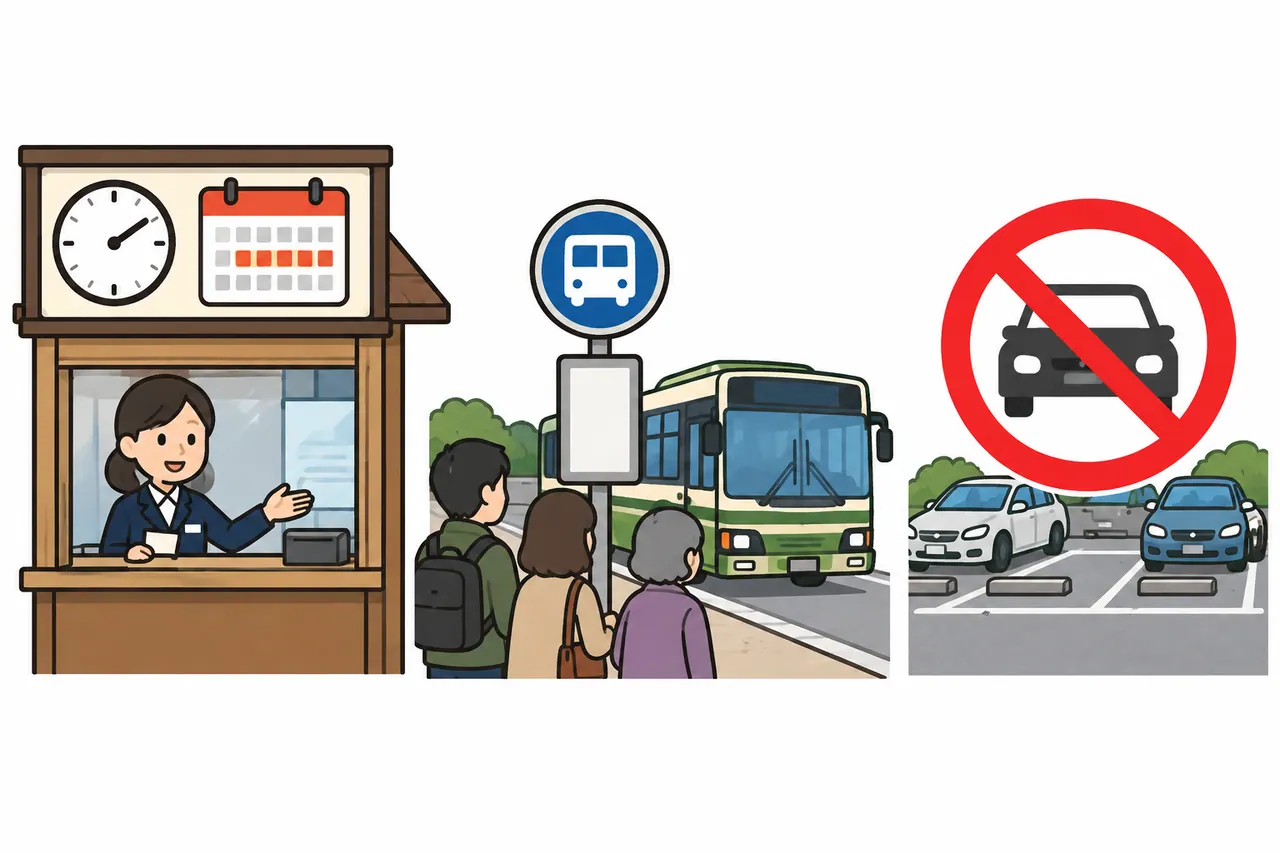
Online sales ran from August 1 to October 28, 2026. The Gion Kaikan window sells tickets from October 30 to November 10, including same-day tickets.
- Open the map for Gion Kaikan, 323 Gion-machi Kitagawa, Higashiyama-ku. It is in front of the "Gion" city bus stop.
- Go to the ticket window between 11:00 and 16:00.
- Ask for "seat only" or "seat with tea." Seats are reserved, but you cannot choose the seat number.
- Check ages. The 2026 listing says children under 3 cannot enter.
- Call 075-561-0224 if you have questions.
Kotobukikai and other autumn stages
Kamishichiken holds an autumn stage called Kotobukikai. The 75th Kotobukikai runs November 12–18, 2026. Doors open at 15:30, and the show starts at 16:00.
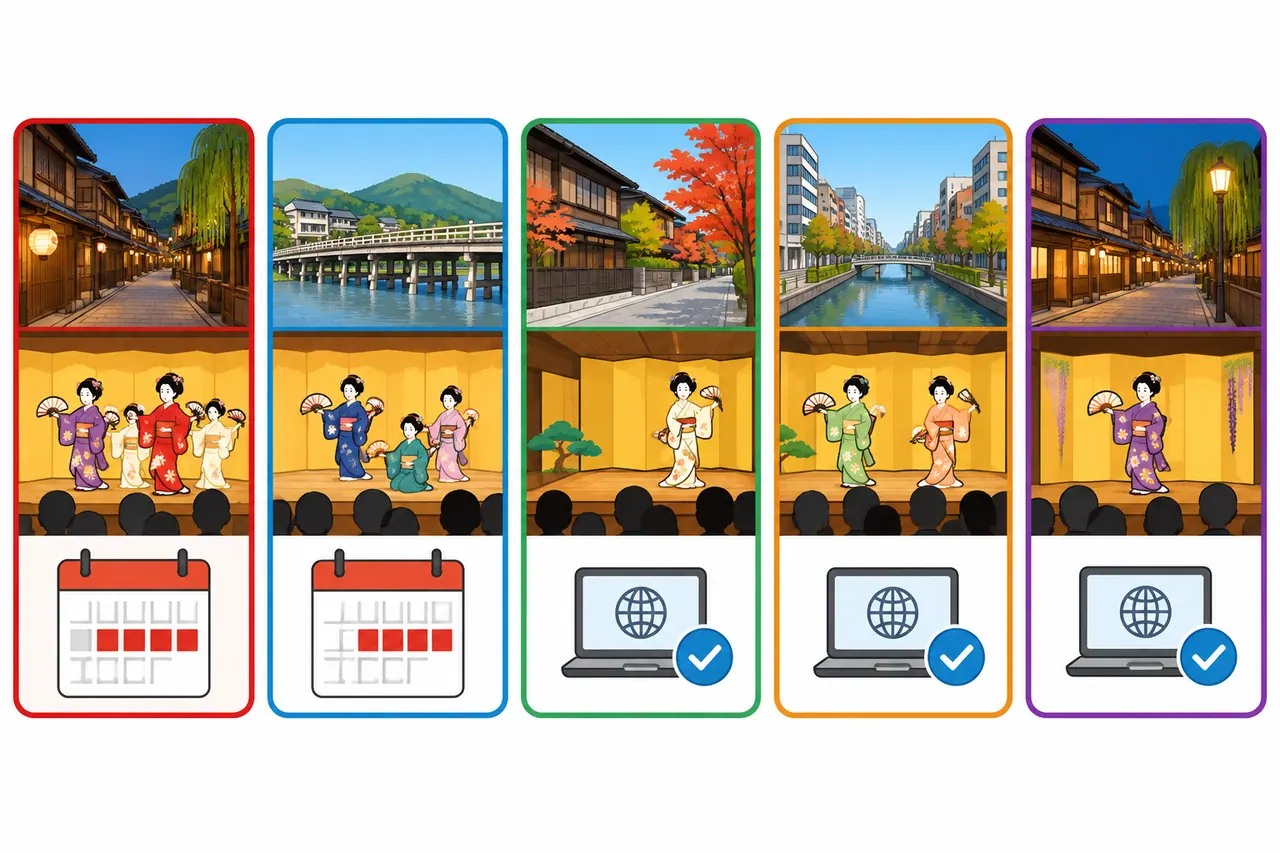
Entry costs ¥10,000, tax included. Tickets are sold online and at the theatre window, among other places.
Gion Higashi Kabukai calls Gion Odori the only autumn hanamachi dance. But the Ookini Zaidan foundation lists other autumn stages too (S1a).
| District | Autumn stage listed by Ookini Zaidan |
|---|---|
| Gion Kobu | Onshukai |
| Gion Higashi | Gion Odori |
| Miyagawacho | Mizue-kai |
| Pontocho | Suimeikai |
| Kamishichiken | Kotobukikai |
We did not confirm dates or prices for Onshukai, Mizue-kai or Suimeikai. Check the Ookini Zaidan page or each district's own site.
Miyako no Nigiwai: all five districts on one stage
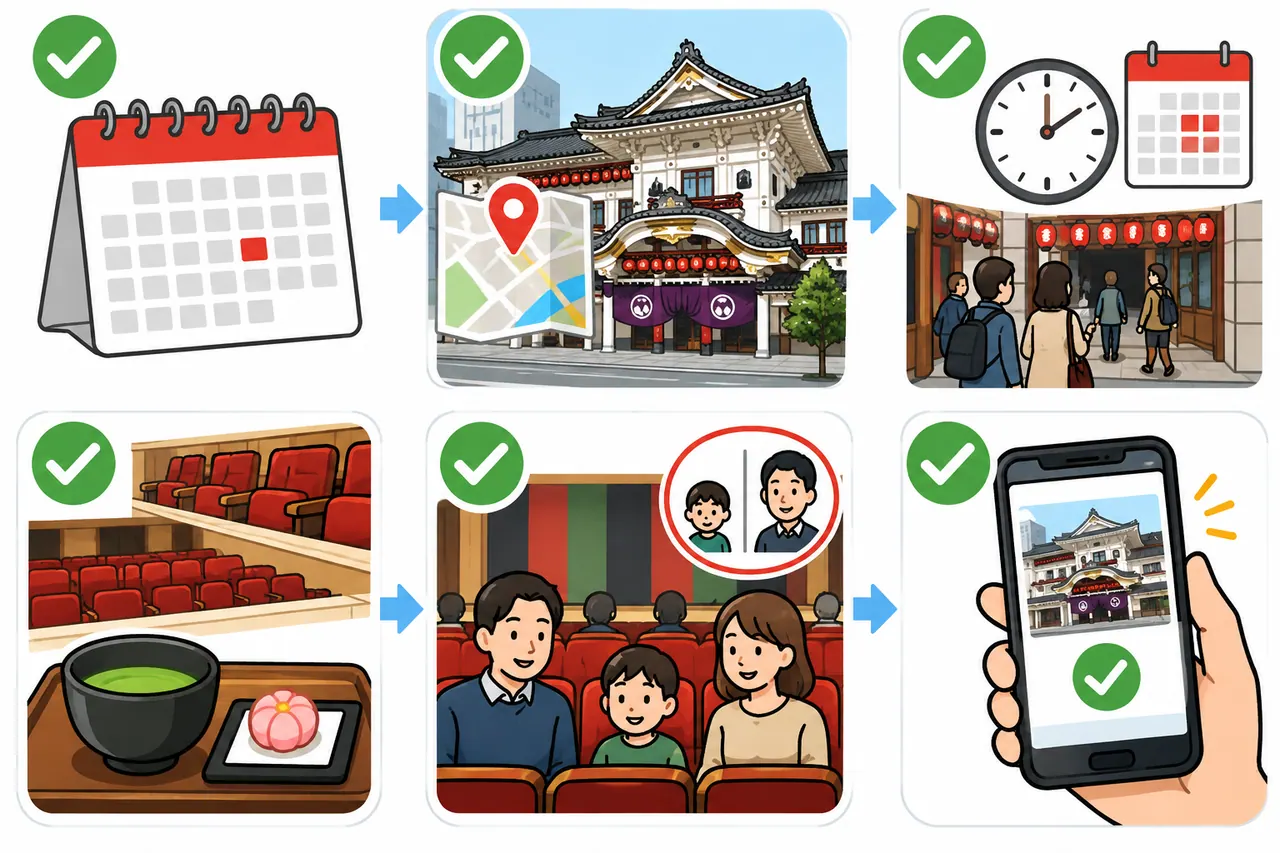
Miyako no Nigiwai is a joint show by all five districts. The 33rd show ran June 27–28, 2026, at the Minamiza theatre.
| 2026 seat | Price |
|---|---|
| Special seat | ¥14,000 |
| First-class seat | ¥13,000 |
| Second-class seat | ¥6,500 |
This show has ended. Check the Ookini Zaidan page for the next one.
How to book a district dance ticket
Match the year, theatre and ticket type before you pay. A famous dance name does not mean the same dates next year.
- Open the official page from the source links above. Find the year on the page.
- Type the theatre name into your map app. Compare it with the venue on the ticket page.
- Pick a date and start time on the organiser's sales page.
- Read the ticket type. Check the seat class and if tea is included.
- Check the age rule for every guest.
- Save your confirmation with the dance name and theatre.
4Gion Corner: a short maiko experience in Kyoto
Gion Corner shows several Japanese arts in about 50 minutes. Regular shows start at 18:00 and 19:00. In winter, shows are normally Tuesday–Friday, and there are closed days.
The Ookini Zaidan foundation runs it. The theatre is the small theatre of Gion Kobu Kaburenjo, at 570-2 Gion-machi Minamigawa, Higashiyama-ku (map). It is about 7 minutes on foot from the "Gion" city bus stop or Keihan Gion-Shijo Station (S8a).
What happens at Gion Corner?
The regular show introduces seven Japanese arts. One of them is kyomai, a Kyoto-style dance. The noh or bunraku part changes by season.
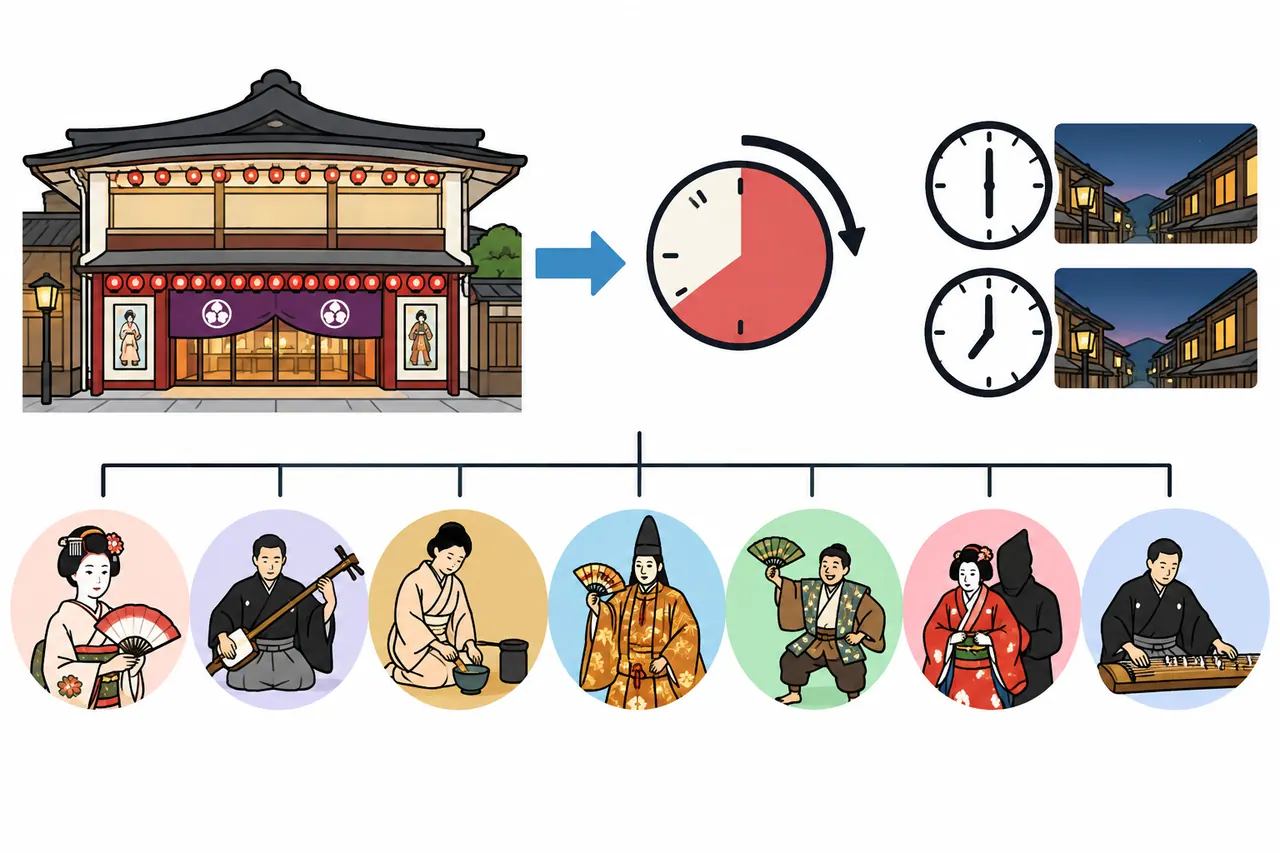
| Art | Plain meaning |
|---|---|
| Kyomai | Kyoto-style dance |
| Sado | Tea ceremony |
| Kado | Flower arranging (also called ikebana) |
| Sokyoku | Music on the koto, a long string instrument |
| Bugaku | Old court dance |
| Kyogen | Traditional comic theatre |
| Noh or bunraku | Masked drama or puppet theatre, depending on the season |
A 2023 Kyoto tourism article says two maiko usually dance the kyomai. It also says the day it visited was an exception.
Gion Corner prices and age bands
General tickets cost ¥5,500 for age 23 and over. Premium seats cost ¥6,600 and tea ceremony seats cost ¥6,050 for all ages. These prices include tax. The organizer’s price page was checked on November 4, 2026; it does not say when these prices started.
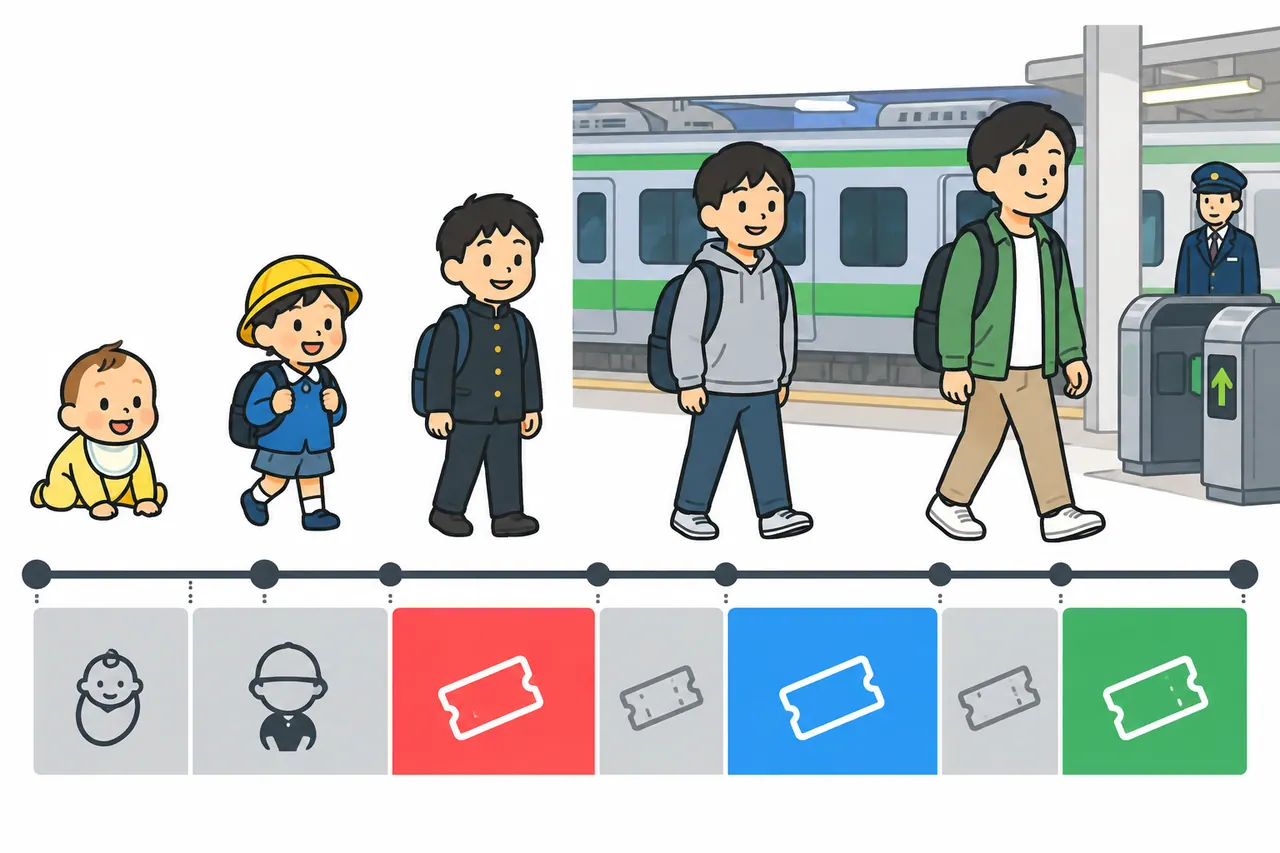
| Ticket | Price |
|---|---|
| Premium | ¥6,600 (same for all ages) |
| Tea ceremony seat | ¥6,050 (same for all ages) |
| General, age 23 and over | ¥5,500 |
| General, age 16 to under 22 | ¥3,850 |
| General, age 7 to under 15 | ¥3,300 |
| Preschool child | Free; pay if the child uses a seat |
| Group of 20 or more | ¥4,700 per person |
The age bands have gaps. The page does not cover age 15, age 22, or school children under 7.
How to book and attend Gion Corner
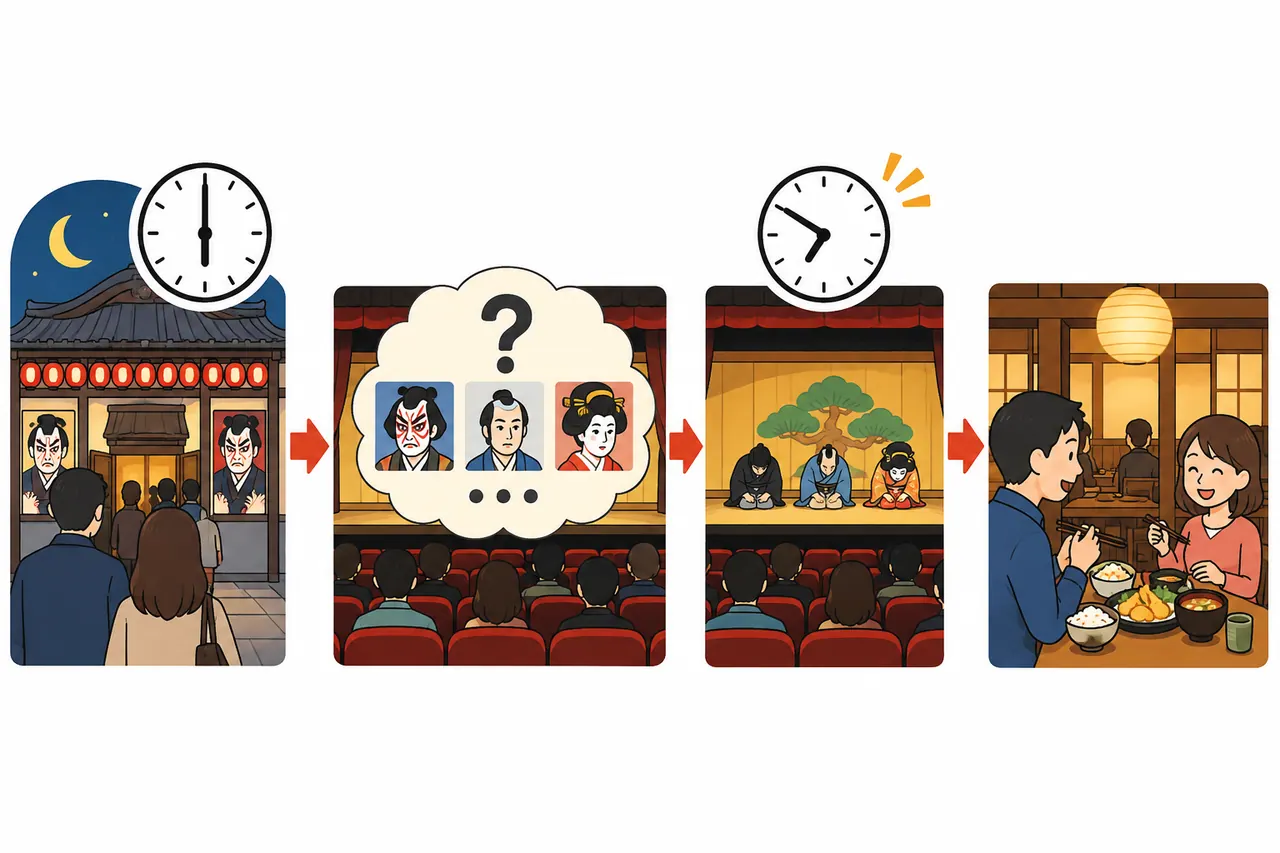
Only two times are confirmed: the start time and the length. The operator does not publish the order or length of each act. A 2023 article lists the order on one day, which may differ now.
- Open the Gion Corner ticket page and follow its link to online purchase.
- Choose a date, the 18:00 or 19:00 start, and a ticket type for each guest.
- Save the confirmation to your phone.
- Open the map link and walk about 7 minutes from Keihan Gion-Shijo Station.
- Find reception. In 2023, it was in the theatre's annex building. Follow the signs on the day.
- Plan dinner for about 18:50 or 19:50, when the roughly 50-minute show ends.
A 2023 article said premium seats came with a tablet giving explanations. Current foreign-language support is not confirmed. Ask if you need English.
Winter season and closed days
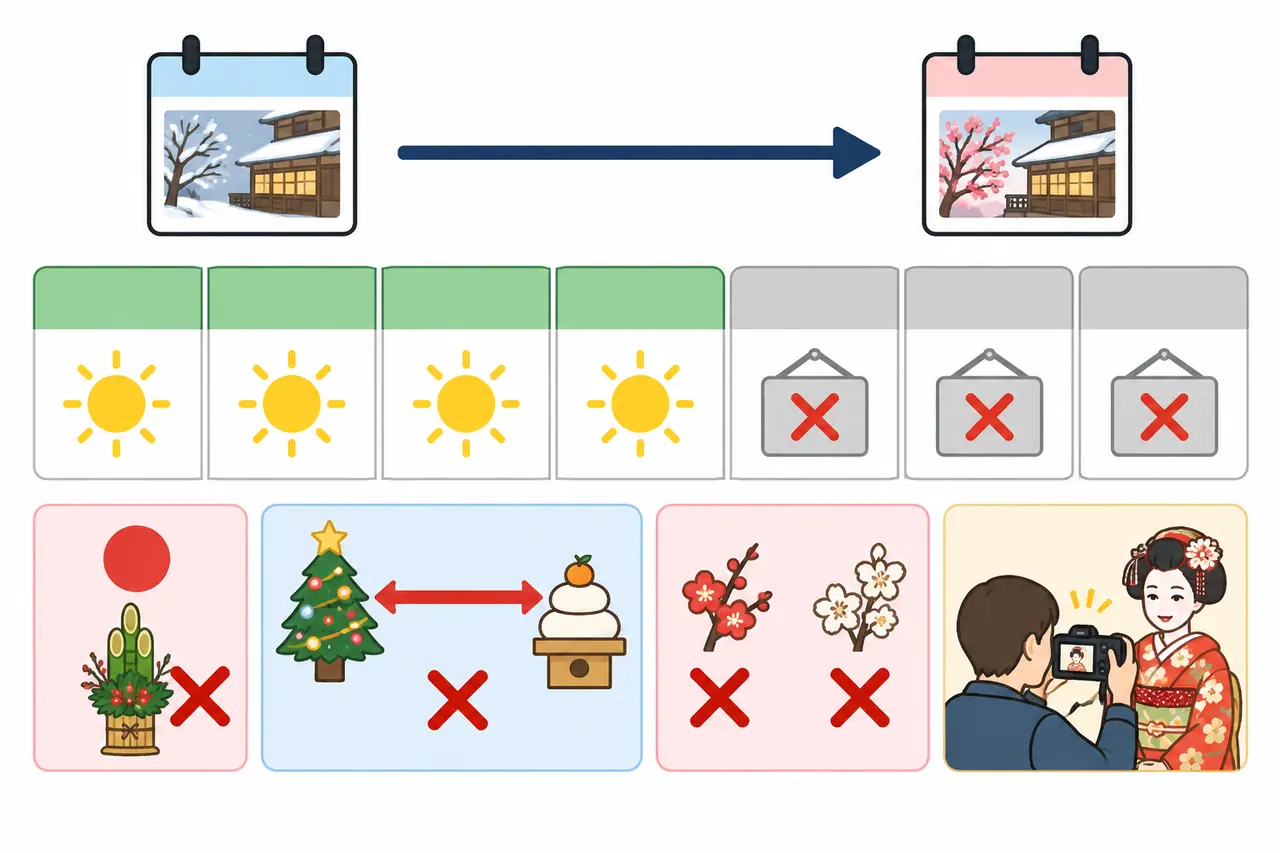
From December 1 to March 11, Gion Corner normally runs Tuesday to Friday; exceptions apply. Public holidays in that period are closed.
In winter, a photo with a maiko after the show replaces the noh or bunraku part. That is a nice extra for winter visitors.
| Closed days listed by the operator |
|---|
| Public holidays during Dec 1–Mar 11 |
| July 16 |
| August 16 |
| December 26 to January 4 |
| February 11 and February 23 |
The page does not say which year these closed days apply to. Check the operator's calendar before you book.
5MAIKOYA tea show: a maiko experience in Kyoto with English help
MAIKOYA's tea show lasts about 45 minutes and includes an English interpreter. You must book ahead. Walk-ins are not accepted.
Usually a maiko hosts. On some days, a geiko may perform instead. The listed address is 100 Rokurocho, Matsubara-dori Yamatooji Higashi-iru, Higashiyama-ku (map). MAIKOYA has several shops, so check your venue when you book.
What does the tea show include?
You get a tea ceremony, matcha and sweets, a short dance, talk and photos. Here are the key details from the product page. Matcha is powdered green tea.

| Detail | What MAIKOYA says |
|---|---|
| Length | About 45 minutes |
| Performer | Usually a maiko; a geiko on some days |
| English | Interpreter included |
| Programme | Tea ceremony, matcha and Japanese sweets, short dance, talk, photos |
| Price | Shown in the booking calendar for your date |
| Children | Under 7 cannot attend |
| Photos | Photo time after the tea ceremony and dance |
| Filming | Do not film the whole tea ceremony or dance |
| Short videos | Short personal clips in photo time, with permission first |
| Kimono | Rental is extra and booked separately |
The price was not in the page text when we checked. Pick your date in the calendar to see it.
How to book MAIKOYA's tea show
Book the show and any kimono rental as two separate bookings. Then check the shop address.
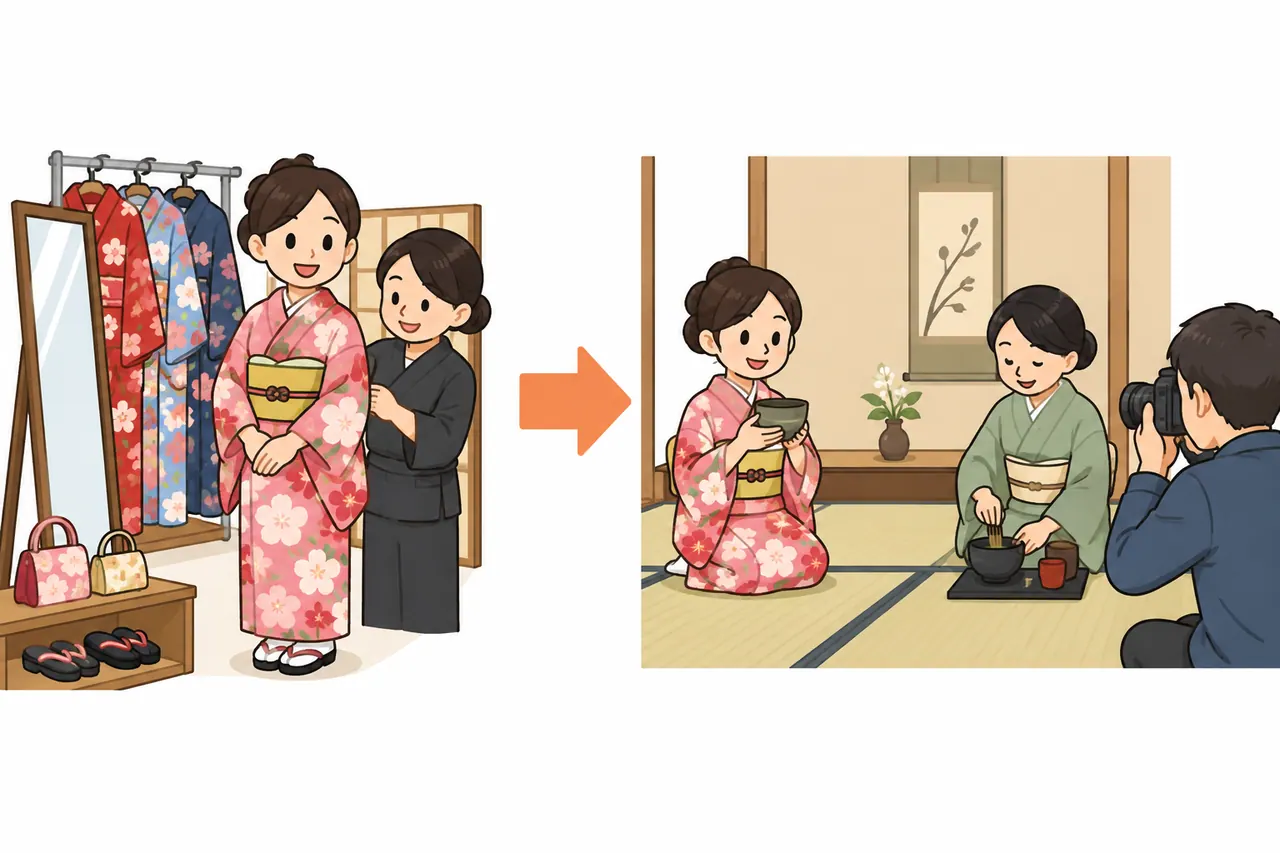
- Open MAIKOYA's tea show page and select a date in the calendar.
- Read the price and guest rules for that date.
- Book the show and save the confirmation.
- Book kimono rental separately if you want it. Pick a rental slot at least one hour before your show.
- Compare the confirmation address with the map link.
- Ask staff before you record anything. Follow their instructions in photo time.
Kimono rental is not the same as a full makeover. In this long YouTube video, a creator films a full geiko self-makeover at a studio, step by step.
It helps you see what a full makeover involves. If you want this look, book a makeover studio, not only kimono rental.
Other MAIKOYA plans
MAIKOYA's Kyoto list includes three plans with performers (S10a). We could not confirm current prices.
| Plan | Length | Check before booking |
|---|---|---|
| Tea ceremony and show | 45 minutes | Price for your date |
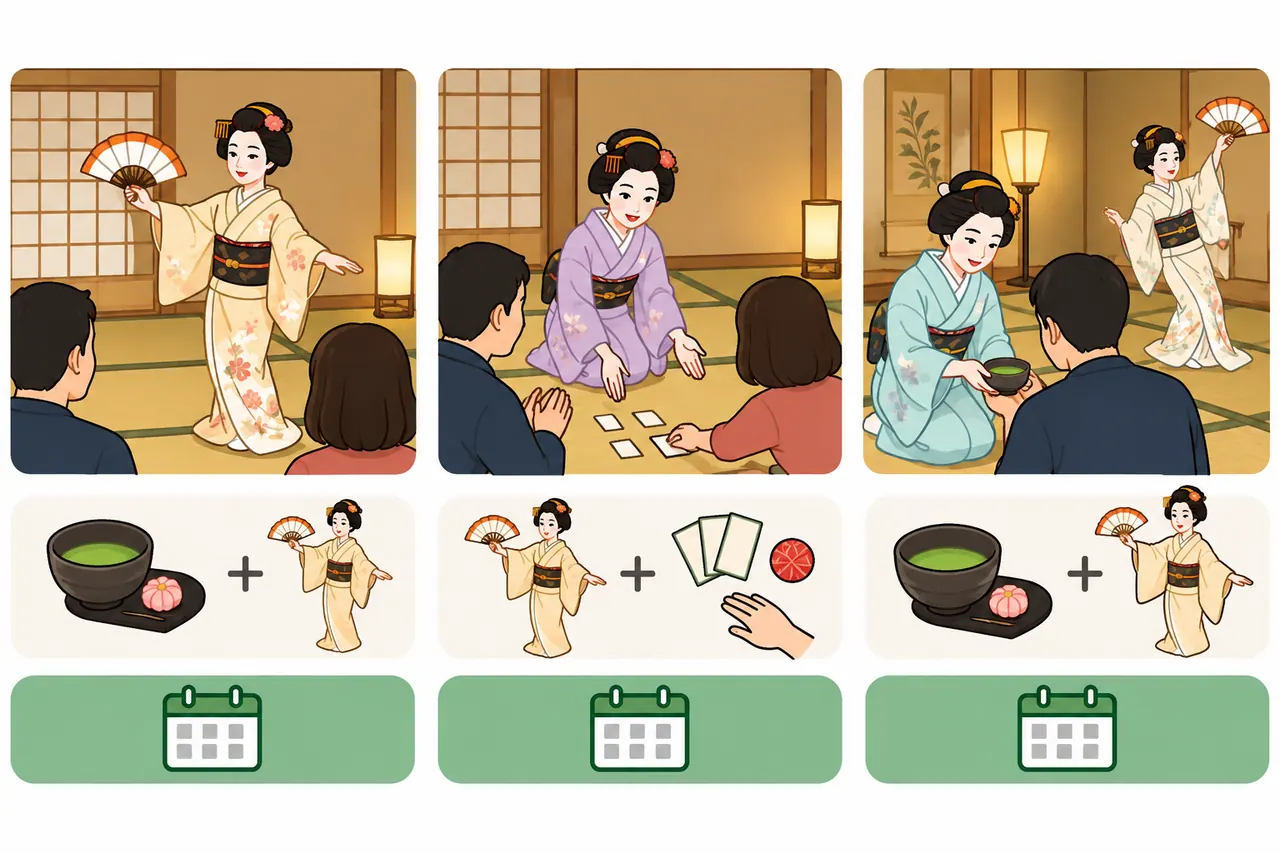
| Show and ozashiki games | 45 minutes | Price and programme |
| Private tea ceremony and dance | 90 minutes | Group price and what is included |
The interpreter and child rules above are for the tea show. Do not assume they apply to every plan. MAIKOYA's site also mentions a dinner show. We could not confirm its current dates or price.
6Maiko experience Kyoto etiquette: districts, maps and photo rules
Use the district name to understand the event. Use the theatre name to find the door. Here are the five hanamachi([1]), S1b).
| District | Where and history | Main stage |
|---|---|---|
| Gion Kobu | Near Yasaka Shrine; grew from teahouses | Miyako Odori |
| Gion Higashi | Near Yasaka Shrine; split from Gion Kobu in 1881 | Gion Odori |
| Kamishichiken | Near Kitano Tenmangu Shrine; grew from teahouses | Kitano Odori, Kotobukikai |
| Miyagawacho | Linked to theatre since Izumo no Okuni's early kabuki dance | Kyo Odori |
| Pontocho | Grew from inns for boatmen and travelers on the Takase River | Kamogawa Odori |
Kabuki is a traditional Japanese stage art. Izumo no Okuni was a performer linked with its early days.
Venue map links
Tap the map link for each place. Then compare it with your ticket.
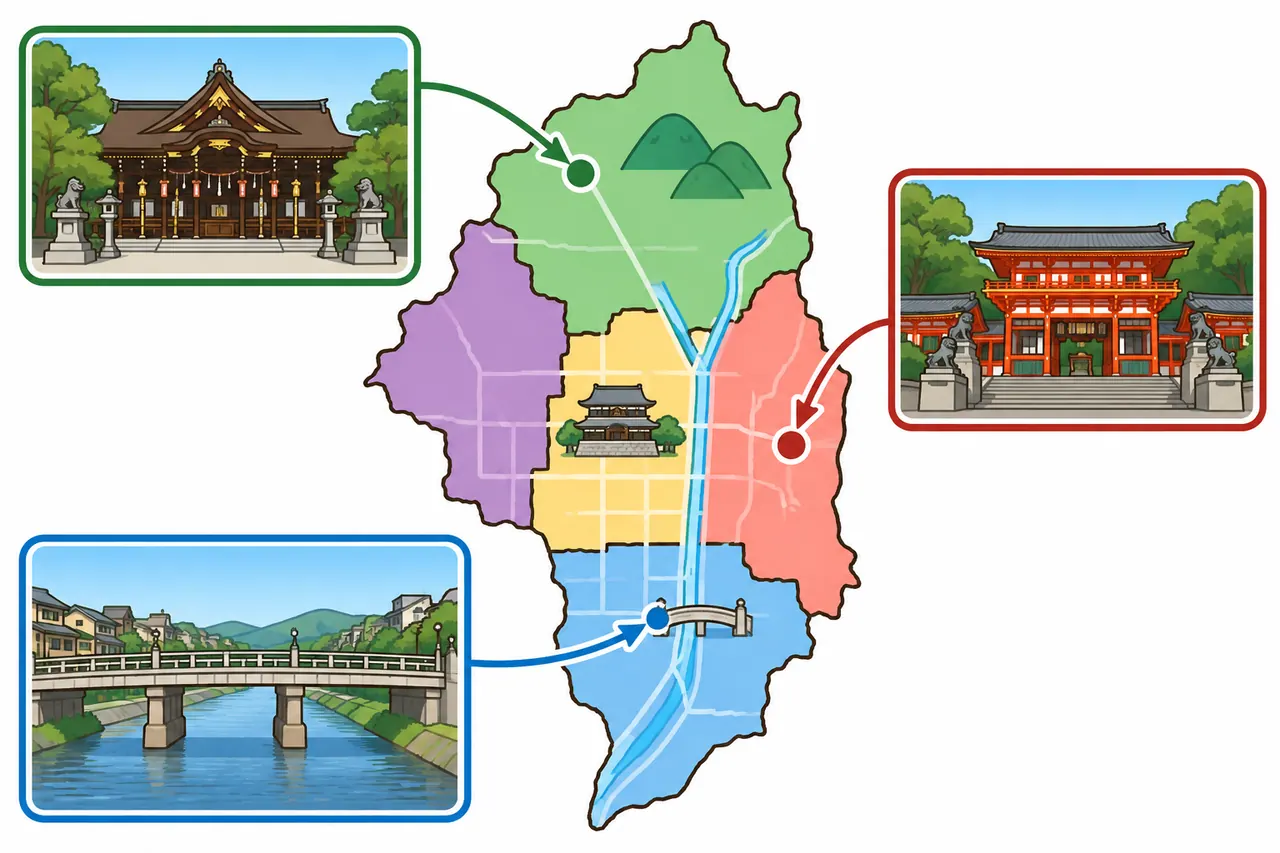
| Event | Venue | Map | Access note |
|---|---|---|---|
| Miyako Odori | Gion Kobu Kaburenjo | Open map | Check the entrance on the event page |
| Gion Odori | Gion Kaikan | Open map | In front of "Gion" bus stop; no car park |
| Kitano Odori, Kotobukikai | Kamishichiken area | Open map | Near Kitano Tenmangu; check venue on ticket |
| Kyo Odori | Miyagawacho Kaburenjo Mitsuwaza | Open map | About 7 min on foot from Keihan Gion-Shijo |
| Kamogawa Odori | Pontocho Kaburenjo | Open map | West end of Sanjo Ohashi bridge |
| Miyako no Nigiwai | Minamiza theatre | Open map | Check access on the official page |
| Gion Corner | 570-2 Gion-machi Minamigawa | Open map | About 7 min from Keihan Gion-Shijo or bus "Gion" |
| MAIKOYA | 100 Rokurocho, Higashiyama-ku | Open map | Several shops; match your confirmation |
| Kyoto Handicraft Center | Shogoin Entomi-cho, Sakyo-ku | Open map | Two street numbers listed; confirm entrance |
Our sources do not give walking times for every venue. Check each venue's own access page.

For a wider city plan, see our Kyoto travel guide. Coming from Osaka for an evening show? Our Osaka-to-Kyoto guide compares the train lines.
Street etiquette in Gion
Give performers and neighbours space. Gion is a place where people live and work.
The southern Gion-machi district asks visitors to avoid four things. Do not stop maiko or geiko on the street. Do not touch them or follow them. Do not take photos or videos of them without permission.
Kyoto's manners guide adds more points (S9a). Do not block the road while taking photos. Do not enter private roads. Do not touch the lanterns of ochaya teahouses.
Do not enter private property or restricted areas without permission. You may visit areas of shrines and temples that are open to the public.
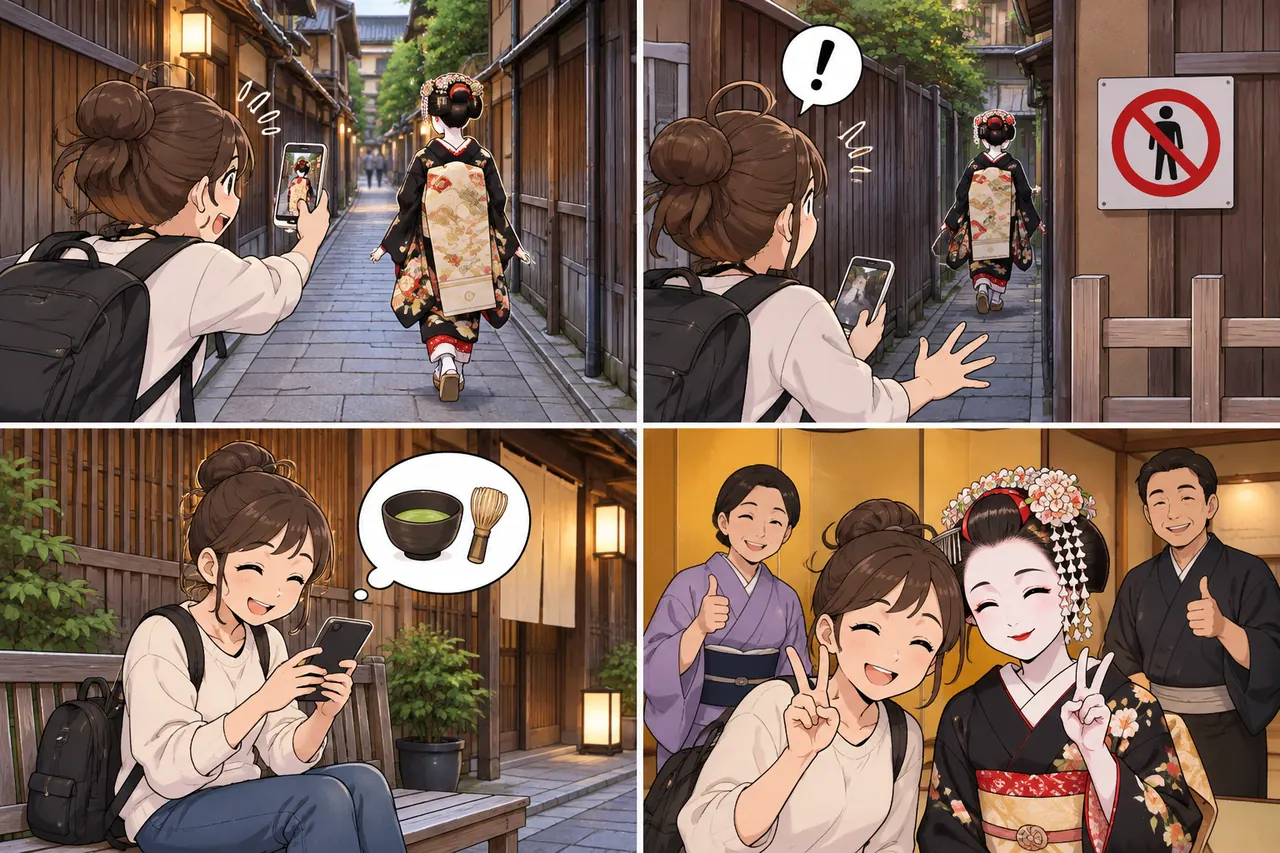
Want to meet a maiko up close? Book a plan instead of waiting on the street. In this English-language reel, a restaurant in Gion presents its own maiko ozashiki plan.
The video shows how a booked plan can look. It does not confirm the price or rules for your date.
Photos at booked events
Photo rules depend on the event. Read the product page and follow staff.
| Event | What the source says | Ask |
|---|---|---|
| MAIKOYA tea show | Photo time after the show; no filming of the whole show | Any other limits? |
| Gion Corner winter show | Photo with a maiko after the show | Is the winter show on your date? |
| Kyoto Handicraft Center | Its page mentions photos with a maiko | Is photo time in your session? |
| District dances | Not stated in our sources | Ask the theatre |
| Meal plans | Depends on the plan | What photos are allowed? |
Final checks before you pay
Go back to the tables above for prices. Use this short list as your last check.
- Year: Is your ticket for the right year? 2026 shows are not a 2027 schedule.
- Name and venue: Gion Odori and Miyako Odori are different shows. See the dance calendar.
- Ages: Check every guest against the age rules in the comparison table.
- Extras: Check tea, programme, kimono and interpreter.
- Address: Match your confirmation with the map table.
7FAQ: planning a maiko experience in Kyoto
Prices, age rules and English help depend on the event. These answers were checked on November 3, 2026.
How much does a maiko experience in Kyoto cost?
Gion Corner lists ¥5,500 for age 23 and over. Gion Odori 2026 costs ¥6,000, or ¥7,000 with tea. Kotobukikai 2026 costs ¥10,000. Most listed spring-dance seats cost ¥4,000–¥7,000; Miyako Odori also listed a ¥2,000 student seat (S2b,. MAIKOYA shows its price in the booking calendar.
How far ahead should I book a maiko experience in Kyoto?
MAIKOYA needs advance booking and does not accept walk-ins. Gion Odori 2026 still sells window tickets, including same-day tickets, until November 10. For 2027 spring dances, sales dates were not confirmed when we checked. Watch each official page.
Is English available at a Kyoto maiko experience?
MAIKOYA's tea show includes an English interpreter. JNTO says the Kyoto Handicraft Center show uses English-speaking staff (S14a). Our sources do not confirm English at Gion Corner or the district dances. Ask the organiser if you need help.
Can children join a maiko experience in Kyoto?
It depends on the event. MAIKOYA's tea show does not admit children under 7. Gion Odori 2026 does not admit children under 3. Kyo Odori 2026 did not admit children under 10 (S5b). Gion Corner lets preschool children in free, but a seat costs extra.
Can I photograph maiko in Gion?
On the street, do not take photos or videos of maiko or geiko without permission. Do not stop, touch or follow them. At a booked event, follow that event's rules. MAIKOYA has photo time after its show.
Sources
Facts come from organiser pages and Kyoto's official tourism sites. We checked them on November 3, 2026. "Primary" means the organiser's own page. "Official secondary" means a tourism site reporting the facts.

- S1 — Official secondary: Kyoto Kanko Navi plus – Kyoto's five hanamachi and maiko
- S1a — Primary: Ookini Zaidan – The five hanamachi
- S1b — Primary: Ookini Zaidan – Hanamachi walking map (PDF)
- S2b — Official secondary: Kyoto Kanko Navi – 152nd Miyako Odori
- S2c — Official secondary: Miyako Odori leaflet (PDF)
- S3 — Primary: Kamogawa Odori official site
- S4 — Primary: Kamishichiken Kabukai – 74th Kitano Odori form (PDF)
- S5b — Official secondary: Kyoto Prefecture Tourism Federation – Spring events (PDF)
- S6 — Primary: Gion Higashi Kabukai – Gion Odori
- S7 — Official secondary (2023 article): Kyoto Night Tourism – Gion Corner
- S8 — Primary: Ookini Zaidan – Gion Corner performances and tickets
- S8a — Primary: Ookini Zaidan – Gion Corner access
- S9 — Official secondary: Kyoto City – Gion manners message
- S9a — Official secondary: Kyoto Kanko Navi plus – Kyoto travel manners
- S10 — Primary: MAIKOYA – Geisha Tea Ceremony & Show
- S10a — Primary: MAIKOYA – Geisha Experience in Kyoto
- S11 — Primary: Kamishichiken Kabukai – Kotobukikai
- S12 — Primary: Ookini Zaidan – 33rd Miyako no Nigiwai
- S13 — Official secondary: Kyoto Kanko Navi plus – Ookini Zaidan
- S14 — Primary: Kyoto Handicraft Center – Meet Maiko
- S14a — Official secondary: JNTO – Meet-and-Greet Maiko Show and Experience
- S15 — Official secondary (past event, ended 2025): Kyoto Kanko Navi – Maiko on a noh stage
Social posts show one traveler's experience. They are not price quotes or rules. Always use the organiser's latest page and your own confirmation.
Sources referenced in this article
Related guides




Experiences and questions about this trip
Share your experience of this place or ask a question.


)](https://i.ytimg.com/vi/3J5VSdqPW4Y/mqdefault.jpg)


)](https://i.ytimg.com/vi/4NOXJydIPKk/mqdefault.jpg)