
Best Tempura in Kyoto: 10 Places and How to Book
Contents
Kyoto’s tempura restaurants range from chef-selected courses to places near Kyoto Station, but the available information is not equally complete for every restaurant. Tenjaku and Kyoboshi each held one star in the Michelin Guide Kyoto and Osaka 2026, while Kyorinsen offers a practical location inside a hotel connected to Kyoto Station. Among the prices confirmed in the sources checked for this guide, listed courses run from ¥8,000 to ¥23,100; several restaurants’ current prices remain unconfirmed.
Use the comparison table to narrow your choices, then check the restaurant’s own booking page or contact details before making plans. A listed course price is not necessarily the final bill: Tenjaku and Gion Fuji list prices including tax but excluding service, while tax and service details for Kyorinsen’s listed prices are unconfirmed. Information was checked on November 3, 2026, and prices and arrangements may have changed since the sources were published.
1. Compare Kyoto’s tempura restaurants
Tempura is seafood or vegetables coated in batter and fried. The restaurants in this guide offer different settings and planning considerations, from chef-selected courses to a restaurant close to Kyoto Station. The list is ordered by the strength of the selection evidence and, among similar entries, by confirmed English-language booking or guidance; it is not a ranking of taste or sales.
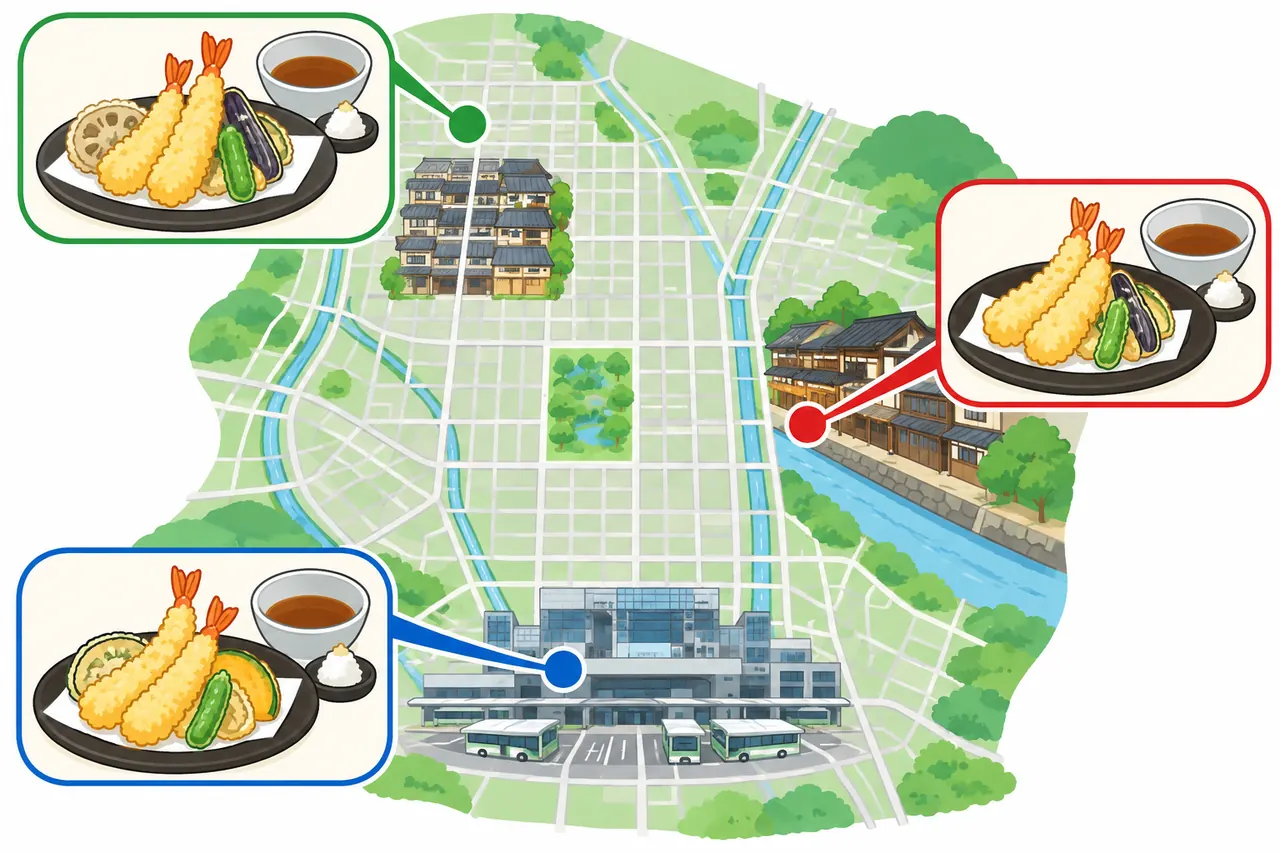

| Restaurant | Area | Confirmed price or booking detail |
|---|---|---|
| Tenjaku | Nishijin | Omakase course ¥16,500, including tax and excluding service; reservations required |
| Kyoboshi | Gion | Price unconfirmed; Michelin advises contacting the restaurant directly |
| Tempura Yoshikawa | Tominokoji | Price and English booking method unconfirmed; about a five-minute walk from Shiyakusho-mae Station |
| Gion Fuji | Gion | Chef-selected courses ¥17,600 and ¥23,100, including tax and excluding service |
| Tempura Matsu | Matsuo Taisha area | Price and booking method unconfirmed |
| Kawatatsu | Kuze | Dinner courses ¥8,000 and ¥16,000, including tax; the ¥16,000 course requires a reservation |
| Kyorinsen | Kyoto Station | Hana course ¥9,000 and Yuki course ¥12,000; tax and service details unconfirmed |
| TENKI | Nishijin | Price unconfirmed; an English leaflet lists phone and email as booking options |
| ENYUAN KOBAYASHI | Gion | Price unconfirmed; the official site displays booking links in English, Chinese and Korean |
| Tempura Yasaka Endo | Gion | Price and English booking details unconfirmed |
The confirmed figures are examples from the cited sources, not a complete price range or a guarantee of current prices. The lower figure in this table is Kawatatsu’s listed ¥8,000 dinner course, and the highest is Gion Fuji’s listed ¥23,100 course; this comparison does not establish that either is the cheapest or most expensive option in Kyoto. Check the restaurant’s current menu and ask whether tax, service and any other charges are included before confirming.
2. The 10 restaurants: what to expect
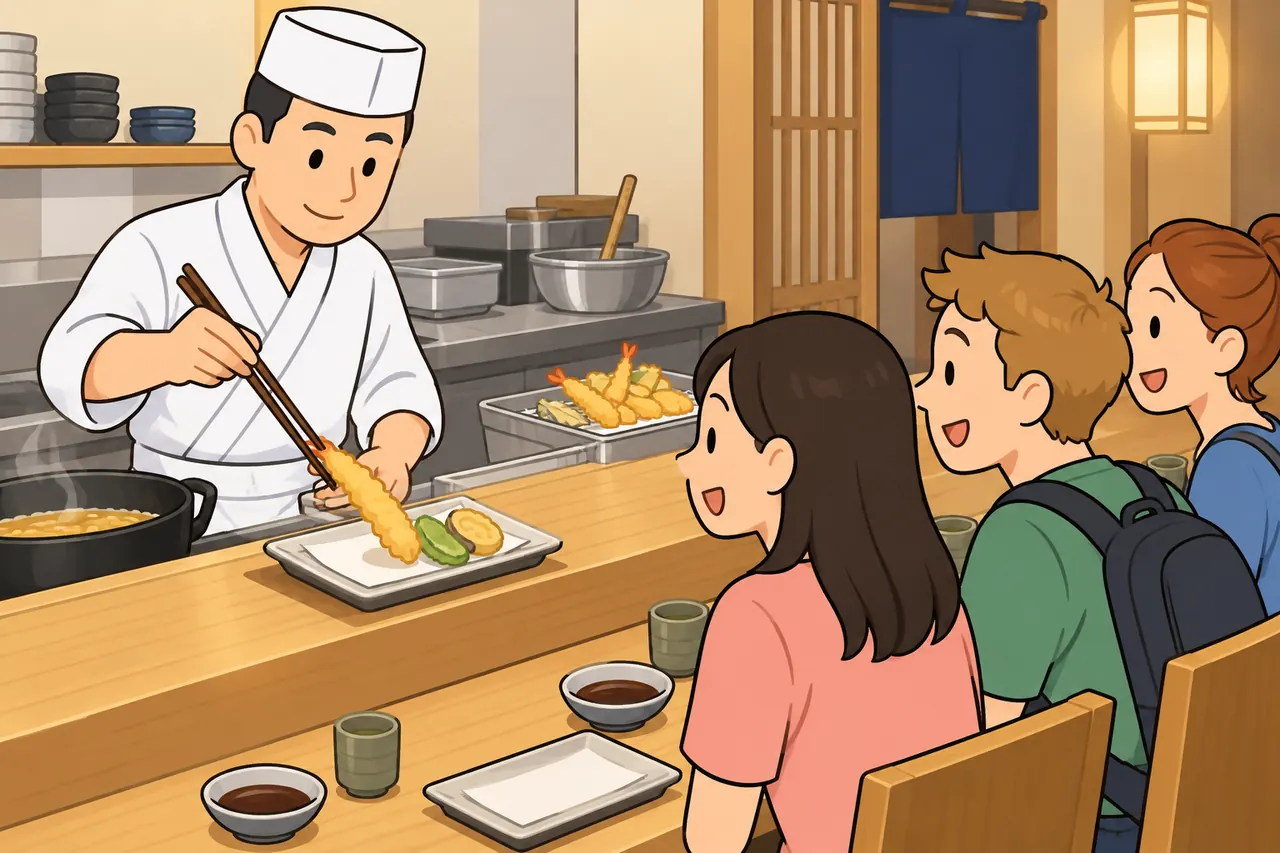
1. Tenjaku — Nishijin
Tenjaku held one star in the Michelin Guide Kyoto and Osaka 2026 and was also selected for Tabelog’s Tempura Hyakumeiten 2025. Its listed omakase—Japanese for a chef-selected meal—costs ¥16,500 including tax, with service charged separately. The Michelin Guide entry and Tenjaku’s TableCheck reservation page are useful starting points for checking its listing and course details.
The Japanese booking page states that reservations are required. English online booking guidance is available through Japan Dining’s Tenjaku page, but an English menu and the staff’s English-speaking ability are unconfirmed. If those details matter to you, ask before booking rather than assuming that English booking guidance means every part of the visit is available in English.
2. Kyoboshi — Gion
Kyoboshi also held one star in the Michelin Guide Kyoto and Osaka 2026 and was selected for Tabelog’s Tempura Hyakumeiten 2025. A current course price was not confirmed for this guide, so do not use a third-party budget estimate as a substitute for a price from the restaurant. The Michelin Guide’s English Kyoboshi page lists the address and phone number and advises guests to contact the restaurant directly to book.
When you make contact, confirm the price for your intended meal and ask about language support if you need it. English menu availability and English-speaking staff are unconfirmed. The Michelin listing is a practical contact reference, but it does not establish what a current meal will cost or which courses are available on your chosen date.
3. Tempura Yoshikawa — Tominokoji
Kyoto City Tourism describes Yoshikawa as a restaurant where a chef prepares tempura and gives its location as a five-minute walk from Shiyakusho-mae Station. The city’s tourism listing is useful for that access detail, while Yoshikawa’s official English site provides English-language restaurant information. The restaurant was also selected for Tabelog’s Tempura Hyakumeiten 2025.
Current prices, an English menu and the method for booking in English were not confirmed. Check the official site before choosing a date, and contact the restaurant to confirm any details that are important to your visit. Other online videos show tempura meals at Yoshikawa, but they should not be treated as confirmation of current prices or menus.
4. Gion Fuji — Gion
Gion Fuji describes tempura prepared with seasonal seafood and vegetables. Its official site lists chef-selected tempura courses at ¥17,600 and ¥23,100, including tax but excluding service; check the Gion Fuji official site for the current menu and booking information. The restaurant was also selected for Tabelog’s Tempura Hyakumeiten 2025.
The official site provides a phone number and a dedicated booking page. Whether that booking process or the menu is available in English is unconfirmed, so contact the restaurant if you need assistance in English. Before confirming a course, check which price applies to the meal you want and remember that the listed prices exclude service.
5. Tempura Matsu — Matsuo Taisha area
Tempura Matsu is in Kyoto’s Nishikyo ward, in the Matsuo Taisha area, and was selected for Tabelog’s Tempura Hyakumeiten 2025. Its Tabelog listing identifies it as a tempura restaurant and is the available starting point for its Japanese-language restaurant information. A separate official restaurant website was not identified in the sources checked for this guide; that does not prove that none exists.
Prices, English-language guidance and booking methods were not confirmed. Check the listing for available contact information and verify the booking process directly before travelling to the area. Do not assume a particular course, English menu or price from the restaurant’s category listing alone.
6. Kawatatsu — Kuze
Kawatatsu’s official menu lists the Mai dinner course at ¥8,000 including tax and the Homare dinner course at ¥16,000 including tax. The Homare course requires a reservation, according to the official Kawatatsu menu. Both prices are examples from that menu and should be checked again before you book.
Lunch is offered Friday to Sunday and on public holidays, and the official page says lunch must be reserved by the previous day. The same menu page lists a phone number for contact, but English menu and booking support are unconfirmed. If you want lunch, arrange it by the day before rather than arriving and expecting to order it without a reservation.
7. Kyorinsen — Kyoto Station
Kyorinsen is inside a hotel connected to Kyoto Station, which makes it a convenient option if you want to dine close to the station. Its listed courses include Hana at ¥9,000 and Yuki at ¥12,000; see the Hotel Granvia Kyoto restaurant page for the restaurant’s booking information and menu details. The restaurant was also selected for Tabelog’s Tempura Hyakumeiten 2025.
The sources checked do not confirm whether those listed prices include tax or service, so ask about the total before booking. English menu availability and an English booking process are also unconfirmed. The hotel connection is a location advantage, but it does not by itself confirm current opening hours, course availability or any other booking conditions.
8. TENKI — Nishijin
TENKI serves tempura and Kyoto cuisine. Its English restaurant leaflet lists telephone and email as ways to make a booking, and the leaflet is available here. The document dates from 2014, however, so treat it as an older source and confirm that its contact details and guidance still apply.
Current prices, the availability of an up-to-date English menu and staff language skills are unconfirmed. The restaurant’s official site is kyoto-tenki.com, and the older leaflet can help you identify contact options, but it should not be relied on alone for current arrangements. Ask about the date, meal and price directly before making a plan.
9. ENYUAN KOBAYASHI — Gion
ENYUAN KOBAYASHI serves kaiseki—a Japanese multi-course meal—with tempura as its main feature. It received one Michelin star in the Kyoto and Osaka 2023 guide, which is a historical listing rather than a claim about its current Michelin status; the 2023 Michelin announcement provides the dated reference. The restaurant is a six-minute walk from Gion-Shijo Station, according to its official site.
The site displays booking links in English, Chinese and Korean, but the booking steps after opening a link were not confirmed. Prices, English menu availability and staff language skills are also unconfirmed, so check those details before committing. The multilingual booking links are useful for starting the process, but they are not confirmation that all menu or service information is available in English.
10. Tempura Yasaka Endo — Gion
Kyoto City Tourism describes Tempura Yasaka Endo as serving Kyoto-style tempura and notes its Japanese-style counter and private rooms. See the city’s official tourism listing for that description and the restaurant’s official site for current menu and booking information. Prices and English booking support were not confirmed for this guide.
An online video shows a Tempura Endo experience in Kyoto, but a video is not a reliable source for a current price or Michelin status. Use the restaurant’s official site to check what is available for your date and contact it if the booking details are unclear. English menu availability and English-speaking staff are unconfirmed.
3. How to order tempura
Start by identifying the kind of meal the restaurant actually offers. Several restaurants in this guide publish courses, and Tenjaku and Gion Fuji specifically list chef-selected courses; that does not mean every restaurant has the same format or number of dishes. Check the current menu before deciding, rather than assuming that a course at one restaurant can be compared directly with a course at another.

Confirm the price and what it includes. Tenjaku’s ¥16,500 omakase and Gion Fuji’s listed ¥17,600 and ¥23,100 courses include tax but exclude service; Kawatatsu’s listed ¥8,000 and ¥16,000 dinner courses include tax. Kyorinsen lists Hana at ¥9,000 and Yuki at ¥12,000, but the sources checked do not confirm tax or service treatment for those prices. Ask about extra charges before you accept a booking.
If you have an allergy or cannot eat a particular ingredient, tell the restaurant before booking or ordering and ask whether it can accommodate you. Do not assume that a dish can be changed or that a restaurant can meet a particular dietary need unless it confirms this. If the menu is in Japanese, show the staff the course name or price you are asking about and request confirmation before ordering.
A tempura rice bowl, sometimes called tendon, is a different format from a chef-selected course, but the sources checked do not establish that each restaurant in this guide serves one. Similarly, videos showing a meal at one restaurant are examples of that particular visit, not proof that another restaurant offers the same dishes or course length. Use each restaurant’s current menu to check what is actually available.
4. How to book and plan your visit
Begin with an official restaurant page or a booking source identified in this guide. Tenjaku has an online booking page and English booking guidance, while Michelin’s English page for Kyoboshi advises contacting the restaurant directly. Gion Fuji’s official site provides a phone number and booking page, and Kyorinsen’s hotel page includes booking information.
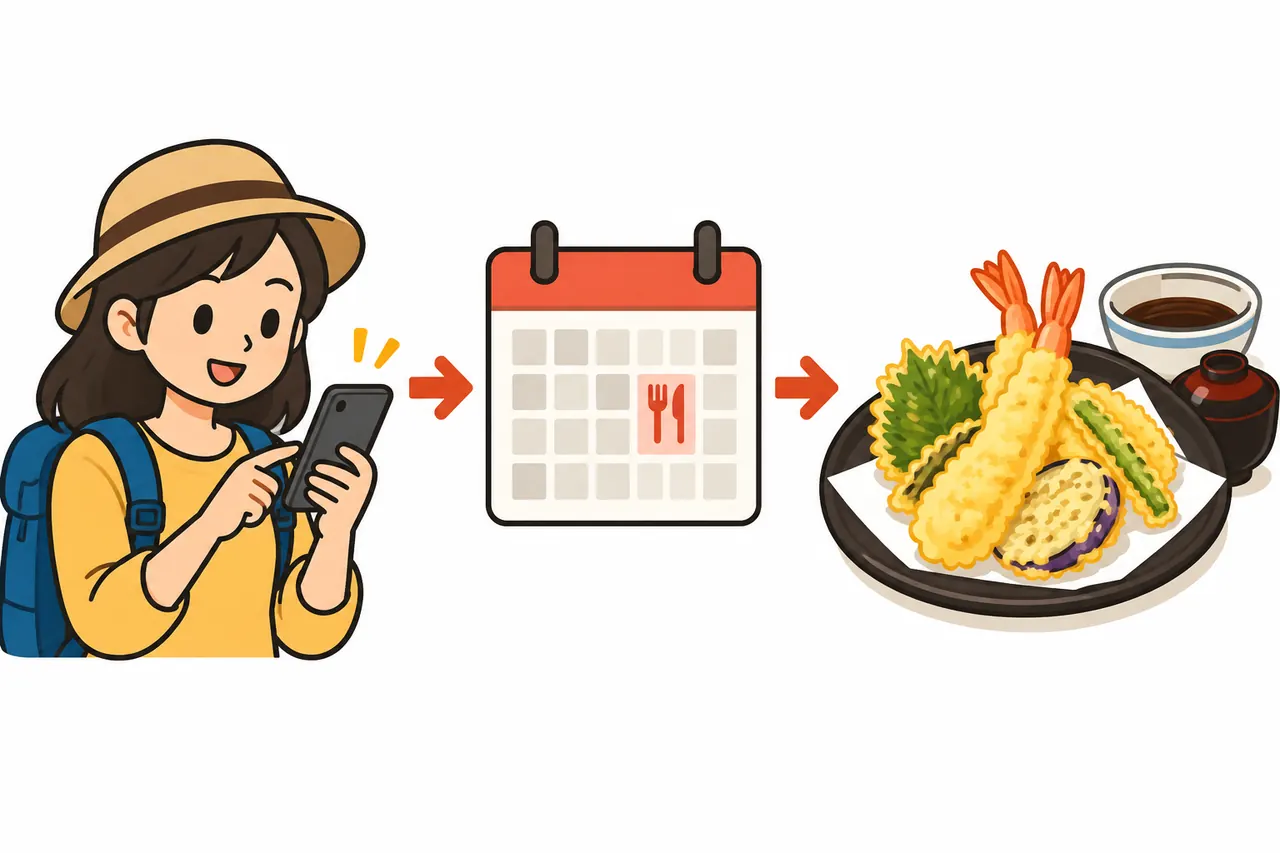
For other restaurants, the available route varies. TENKI’s English leaflet lists phone and email, but it dates from 2014 and needs current confirmation; ENYUAN KOBAYASHI’s official site displays booking links in English, Chinese and Korean, though the next steps are unconfirmed. Kawatatsu lists a telephone number on its official menu page, and its lunch booking deadline is the previous day.
Before confirming, check the date, meal, course name and current price. Ask whether tax and service are included, especially where the source does not state this; service is separate for the listed Tenjaku and Gion Fuji prices, while tax and service details for Kyorinsen are unconfirmed. If an English booking process or menu is not confirmed, contact the restaurant to ask how best to proceed.
Exact opening hours and closures were not confirmed for this guide. Check the restaurant’s official site or contact it directly for current hours and any conditions that apply to your visit. Do not plan around an assumed lunch or dinner service unless the restaurant confirms it; the specific lunch schedule and advance booking rule supplied here apply to Kawatatsu.
5. Mistakes first-timers make
Arriving at Tenjaku without a reservation. Its Japanese booking page says reservations are required, so arrange the booking before you go. Do not assume that arriving in person will secure a seat.
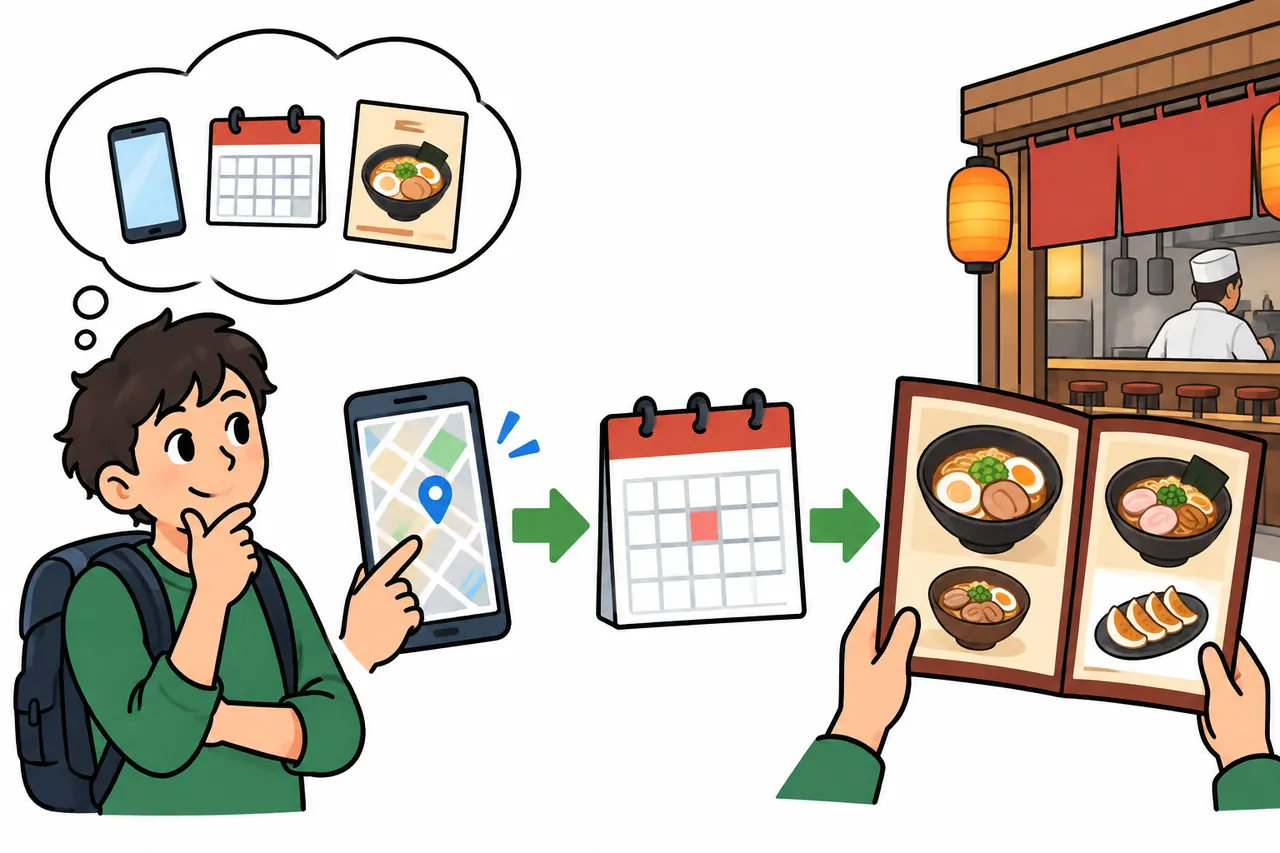
Treating a listed course price as the full bill. Tenjaku and Gion Fuji list prices including tax but excluding service, and Kyorinsen’s tax and service details are unconfirmed. Ask what is included in the amount you will pay.
Leaving Kawatatsu lunch until the same day. The official menu says lunch is offered Friday to Sunday and on public holidays, with reservations required by the previous day. Contact the restaurant in time if you want to request lunch.
Assuming every restaurant has an English menu. English booking guidance is confirmed for some places, but menu language and staff English are unconfirmed for many entries. Ask in advance if you need to communicate in English.
Using an old leaflet or video as current confirmation. TENKI’s English leaflet dates from 2014, and videos do not establish today’s prices or menu. Verify current arrangements with the restaurant’s official site or direct contact details.
6. FAQ
Which Kyoto tempura restaurants have Michelin stars?
Tenjaku and Kyoboshi each held one star in the Michelin Guide Kyoto and Osaka 2026. ENYUAN KOBAYASHI received one star in the 2023 guide, which is a dated recognition rather than confirmation of its current status. Check the Michelin listing for the latest information before treating an older award as current.
How much does tempura cost at these restaurants?
The confirmed examples in this guide range from Kawatatsu’s ¥8,000 dinner course to Gion Fuji’s ¥23,100 listed course. Kawatatsu’s two listed dinner prices include tax, while Gion Fuji’s listed prices include tax and exclude service; Tenjaku’s ¥16,500 course also includes tax and excludes service. Several other restaurants’ prices are unconfirmed, so ask for the current total rather than relying on this range as a prediction.
Which restaurant is near Kyoto Station?
Kyorinsen is inside a hotel connected to Kyoto Station, making it the clearest choice in this list for a meal by the station. Its listed Hana and Yuki courses are ¥9,000 and ¥12,000, but tax and service details are unconfirmed. Check the hotel’s Kyorinsen page for booking information and confirm the current price before you go.
Can I book in English?
Tenjaku has English online booking guidance, and ENYUAN KOBAYASHI displays an English booking link on its official site. The steps after opening ENYUAN KOBAYASHI’s booking link are unconfirmed, and English menu availability or staff language skills are not established for either restaurant. For other restaurants, check the contact or booking options listed in this guide and ask directly if you need English-language support.
Do I need a reservation?
It depends on the restaurant and the meal. Tenjaku’s Japanese booking page says reservations are required, Kawatatsu requires reservations for its Homare dinner course, and its lunch must be booked by the previous day. For other restaurants, the sources checked do not confirm a general reservation rule, so contact the restaurant before travelling.
What does “omakase” mean?
Omakase means a chef-selected meal or course. Tenjaku lists an omakase course, and Gion Fuji lists chef-selected tempura courses, but their prices and conditions differ. Confirm the current course price and whether service is extra before booking.
Can I request a vegetarian or allergy-friendly meal?
The information checked for this guide does not confirm whether any of the ten restaurants can accommodate vegetarian diets or specific allergies. Contact the restaurant before booking, explain exactly what you cannot eat and ask whether it can meet your needs. Do not assume that a course can be modified unless the restaurant confirms it.
Are the listed prices current?
They are examples from the sources available when this guide was checked on November 3, 2026, not a guarantee of current prices. Some sources do not state when their prices were last updated, and prices remain unconfirmed for several restaurants. Recheck the official menu or contact the restaurant before booking.


)](https://i.ytimg.com/vi/3J5VSdqPW4Y/mqdefault.jpg)


)](https://i.ytimg.com/vi/4NOXJydIPKk/mqdefault.jpg)