Where to Stay in Tokyo: 15 Areas, Train Times & Tax (2026)
Contents
For a first Tokyo trip with varied plans, start by comparing Shinjuku and Shibuya: both have many train connections, but different station exits and hotel locations can make a big difference. Choose Tokyo Station or Shinagawa if bullet trains or airport connections are central to your itinerary, and compare Asakusa, Ueno, or Shimokitazawa for their particular attractions and atmosphere. No area is proven here to be Tokyo’s cheapest or quietest, so compare real room offers and ask about the exact room.
The journey times below are estimates, not door-to-door times. They can vary by service, transfer and time of day, and do not include the walk from a station or bus stop to your hotel. Official sources and hotel details were checked on 3 November 2026, except where a different check date is stated.
Compare 15 Tokyo areas
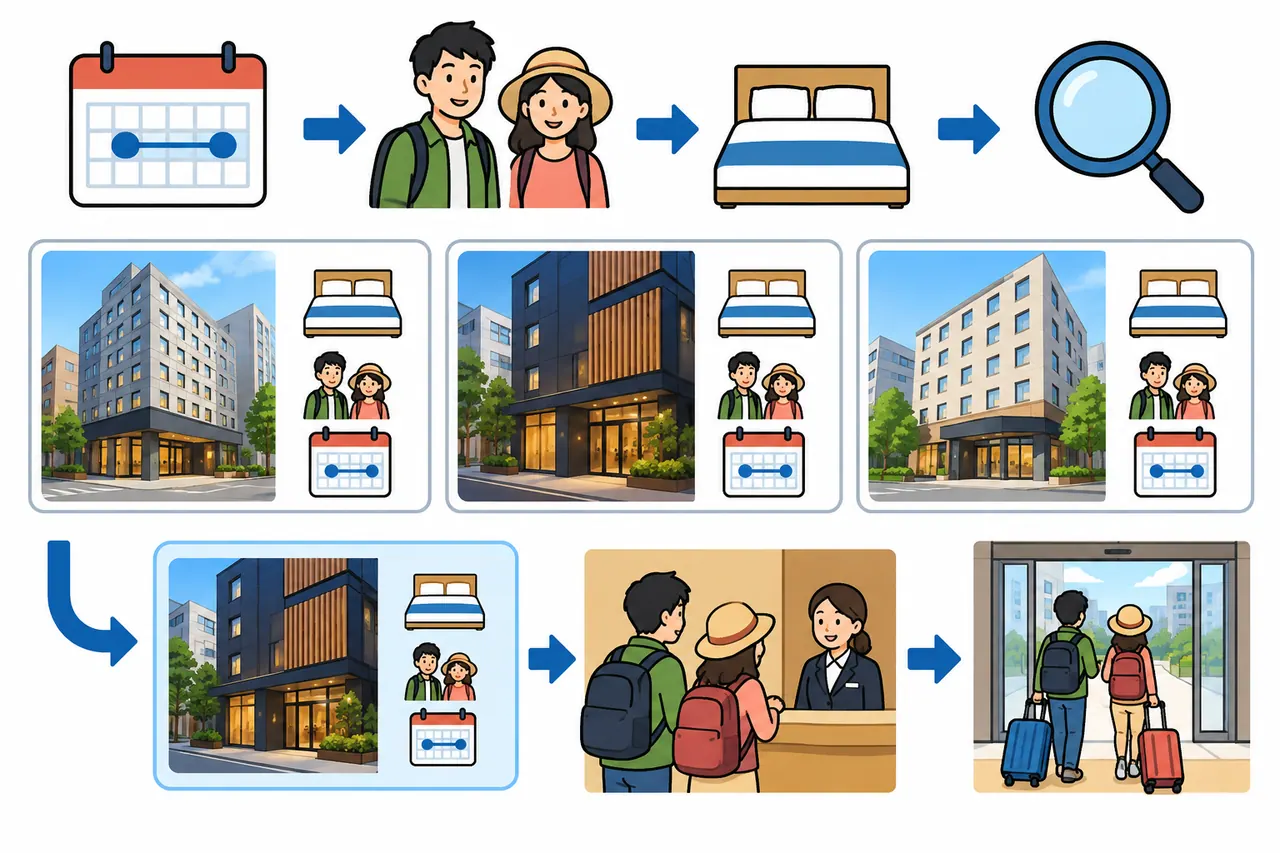
A base is the area where you sleep and start your days; you can visit other neighborhoods without changing hotels. Begin with your main plans, then compare the hotel’s named station and exit, room arrangement and total cost. GO TOKYO’s area guides provide the journey examples below; check the relevant guide and transport operator for your date before setting out.

| Area | Why consider it? | Published journey example |
|---|---|---|
| Shinjuku | Many rail connections and Busta Shinjuku bus terminal | Tokyo Station: about 14 min by JR Chuo rapid train |
| Shibuya | Crossing, shopping and city views | Shinjuku: about 7 min by Yamanote Line |
| Ginza | Shopping, department stores and theater | Tokyo Station: about 3 min by Marunouchi Line |
| Tokyo Station and Marunouchi | Bullet trains and airport buses on the Yaesu side | Haneda: about 30–55 min |
| Asakusa | Senso-ji, Kaminarimon and Nakamise | Tokyo Station: about 20 min, changing at Kanda |
| Ueno | Park, museums and zoo | Tokyo Station: about 8 min by Yamanote Line |
| Ikebukuro | Anime-related shops and Sunshine City | Shinjuku: about 8 min by Yamanote Line |
| Shimokitazawa | Vintage shops, books, music and cafes | Shinjuku: about 7 min by Odakyu Line |
| Akihabara | Electronics, anime and games | Tokyo Station: about 4 min by Yamanote Line |
| Odaiba | Waterfront and Rainbow Bridge views | Haneda: about 45 min by train or 35 min by bus |
| Akasaka | Restaurants and hotels | Akasaka-mitsuke Station to the area: about 10 min on foot |
| Sumida and Skytree | Tokyo Skytree and Tokyo Solamachi | Narita: about 90 min by train |
| Shinagawa | Haneda connections and Tokaido Shinkansen | Haneda: about 35 min by train |
| Roppongi | Museums, restaurants and nightlife | Shinjuku: about 9 min by Oedo Line |
| Harajuku | Yamanote Line access near Shibuya | Shinjuku: about 4 min by Yamanote Line |
The timings come from the linked GO TOKYO area guides and related official destination pages. They are examples of journeys between areas, not estimates from every hotel. For a luggage-heavy arrival, check the route from the exact station exit or bus stop you expect to use.
Choose by your main priority
Use this table to narrow your search, not to treat any one area as a universal winner. A district name does not tell you which station a hotel uses, how many beds a room contains or how much the offer will cost. Compare the exact hotel route and room before booking.
| Priority | Areas to start with | Practical trade-off |
|---|---|---|
| First visit with varied plans | Shinjuku | Many train choices, but hotels may use different stations and exits. |
| Traditional streets | Asakusa | Check which of the stations named Asakusa serves your hotel. |
| Museums | Ueno | JR Ueno, Tokyo Metro Ueno and Keisei Ueno are different stations. |
| Shopping and theater | Ginza | Some hotels are closer to Shimbashi Station than Ginza Station. |
| Food and cafes | Akasaka or Shimokitazawa | Akasaka has restaurants; Shimokitazawa combines cafes with vintage and music shops. |
| Nightlife | Roppongi or Shinjuku | Ask about the exact room’s location if sleep is important. |
| Anime and games | Akihabara or Ikebukuro | Akihabara is about 4 min from Tokyo Station; Ikebukuro is about 8 min from Shinjuku. |
| Waterfront views | Odaiba | Hotel access may use Daiba or Tokyo Teleport stations. |
| Haneda or a bullet train | Shinagawa or Tokyo Station | Shinagawa has a published Haneda train estimate; airport buses use Tokyo Station’s Yaesu side. |
| Three or four guests in one room | Ginza International or all day place shibuya | The named rooms accept three adults and four guests respectively; prices are not matched. |
| Quieter streets | Yanaka or Yoyogi-Uehara | An area description cannot guarantee a quiet room. |
| Lower-cost search | Minami-Senju | Listed rates can help start a search but do not establish the cheapest area. |
Traditional streets, modern views or vintage shops?
Choose Asakusa for Senso-ji temple, Kaminarimon gate and Nakamise shopping street; choose Shibuya for its crossing, Shibuya Sky and shopping; or compare Odaiba for waterfront and Rainbow Bridge views. Shimokitazawa has a different focus, with vintage shops, bookstores, music shops, cafes and bars. Check individual businesses for current opening times and menus rather than assuming the area guide sets them.
See GO TOKYO’s Asakusa guide, Shibuya guide, Odaiba guide, Shimokitazawa guide and Akasaka guide. For food, Akasaka offers restaurants and hotels, while Shimokitazawa combines cafes and bars with shopping and music. These are reasons to compare the areas, not guarantees about a particular business or hotel.
Shinjuku or Shibuya?
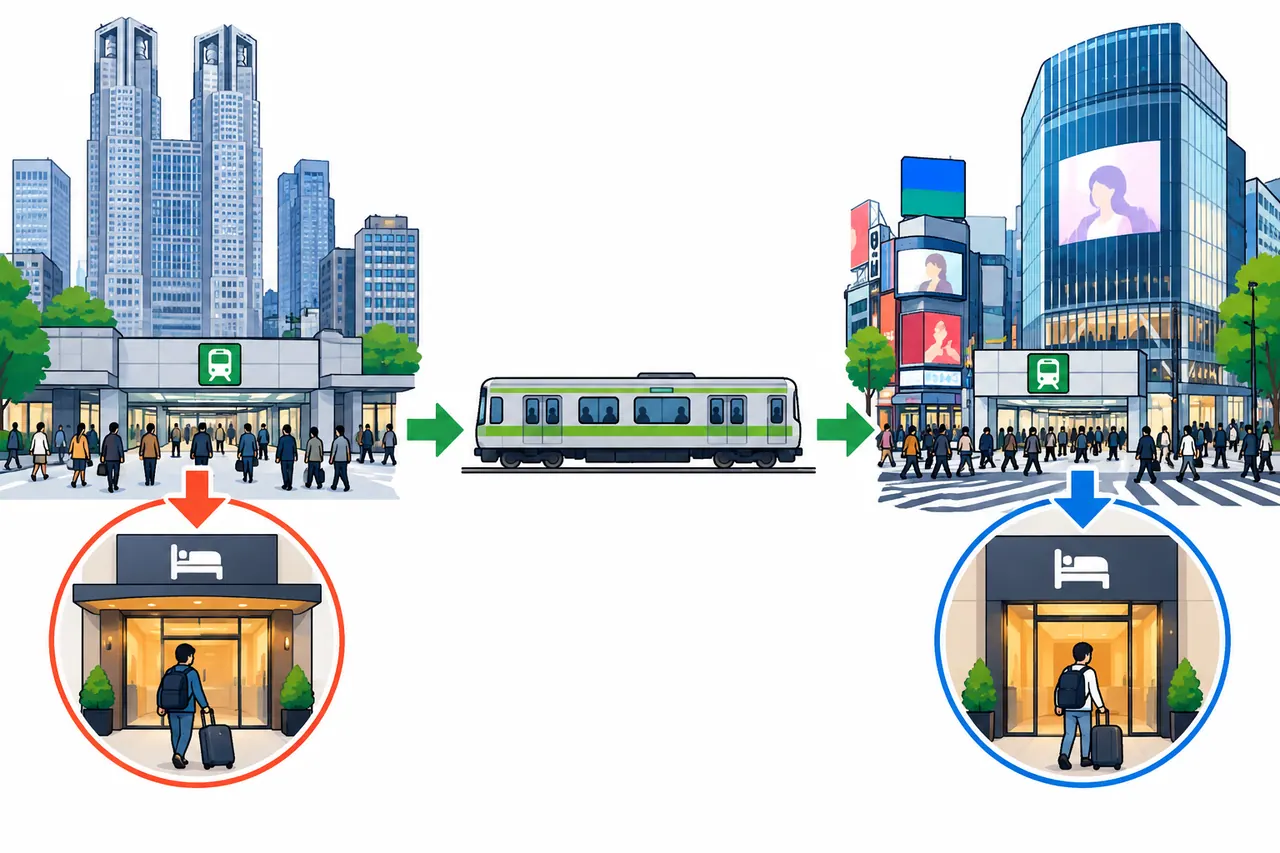
Choose Shinjuku if its range of train services and Busta Shinjuku suit your plans; choose Shibuya if you want to center the stay on shopping, the crossing and city views. GO TOKYO estimates about 7 minutes from Shinjuku to Shibuya on the Yamanote Line. The airport journey examples below are approximate and do not include the hotel walk.
| Consideration | Shinjuku | Shibuya |
|---|---|---|
| Main appeal | Transport choices and varied plans | Shops, crossing and views |
| From Haneda | About 55 min by train or bus | About 45 min by train; about 55 min by bus |
| Nearby detail | Busta Shinjuku is by the south exit | Harajuku is about 20 min on foot from Shibuya Station |
| Hotel check | Confirm station and side | Confirm train line and exit |
See the GO TOKYO Shinjuku guide and Shibuya guide for the published access examples. Shinjuku and Shibuya each have different station approaches, so keep the hotel’s recommended exit with your booking. If stairs matter, ask the property about the route from the platform and whether a step-free route is available.
How to compare hotels and rooms
The hotels in this guide are comparison candidates based on official information, not a ranked list or a matched price comparison. Room prices and availability depend on travel dates, guest count and booking conditions. Compare offers for the same dates and number of guests, then check beds, meals, taxes, service fees and cancellation terms.
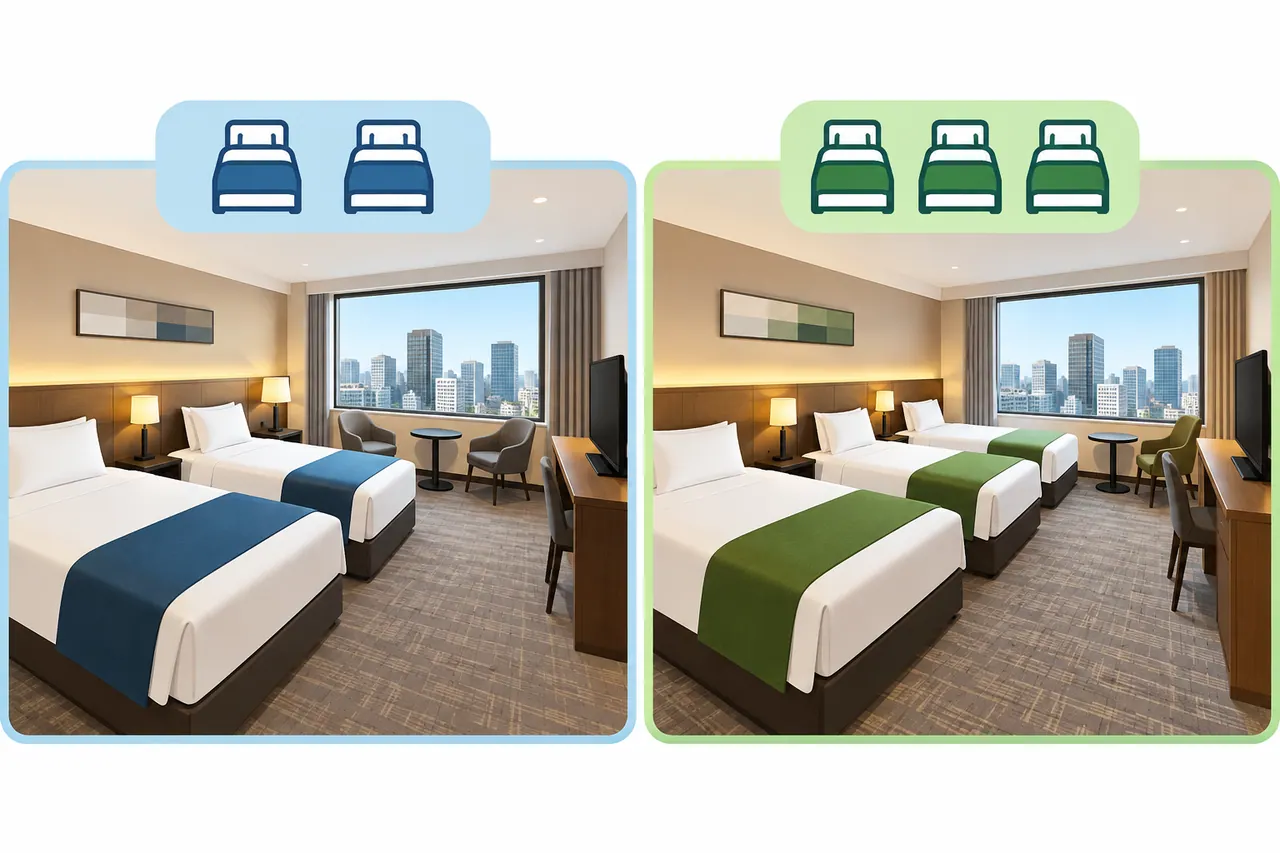
A short station walk does not prove that a room suits your group or access needs. For example, the Ginza International triple is listed for three adults with two beds and one extra bed, while all day place shibuya’s Party Suite is listed for up to four guests; neither statement supplies a price for your dates. The official Ginza International room page and all day place shibuya information are useful places to confirm the named room before booking.
Area guides and hotel candidates
The hotel access and room details below were checked on 3 November 2026 unless a different date is stated. A hotel’s access page is the best starting point for its named station and exit; use it to check the final walk rather than relying on the district name alone. Prices are not compared unless a published rate is specifically identified.
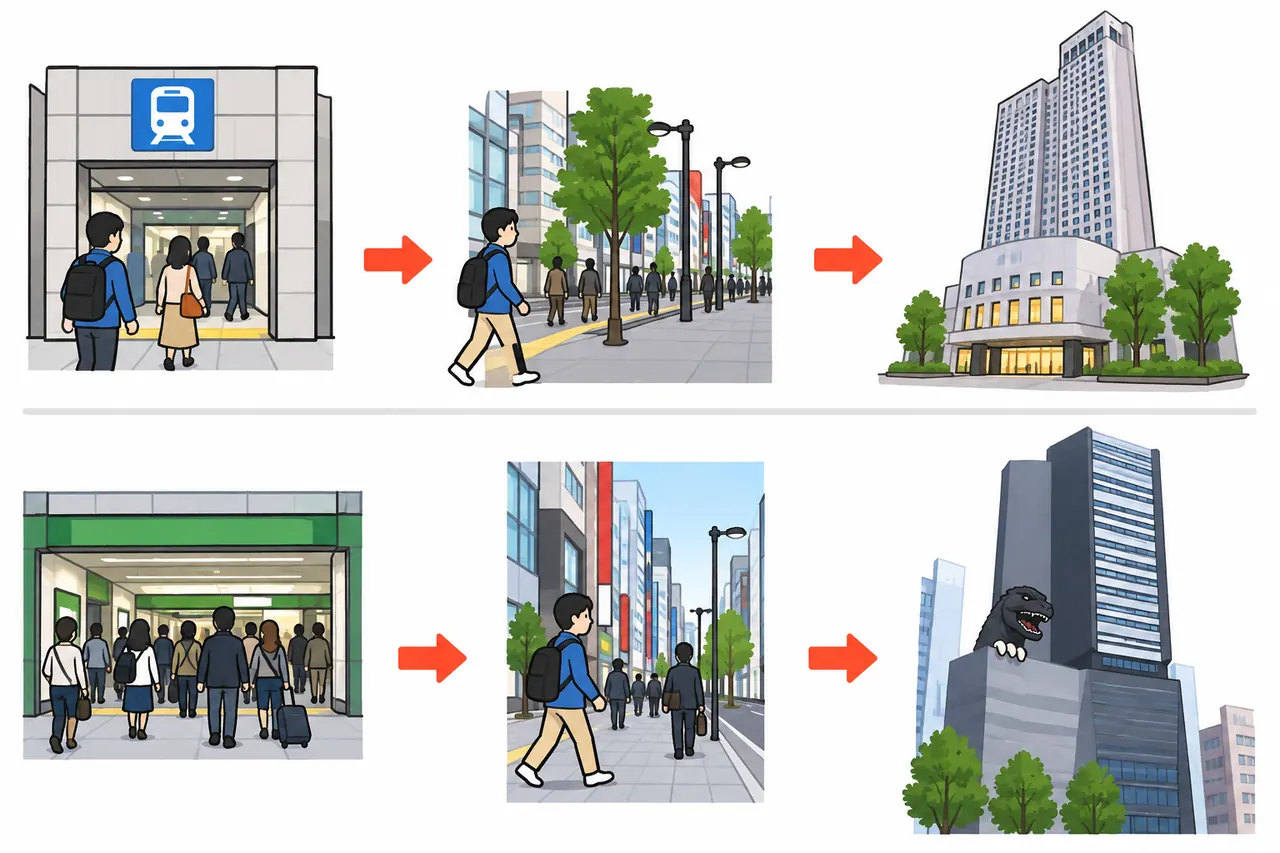
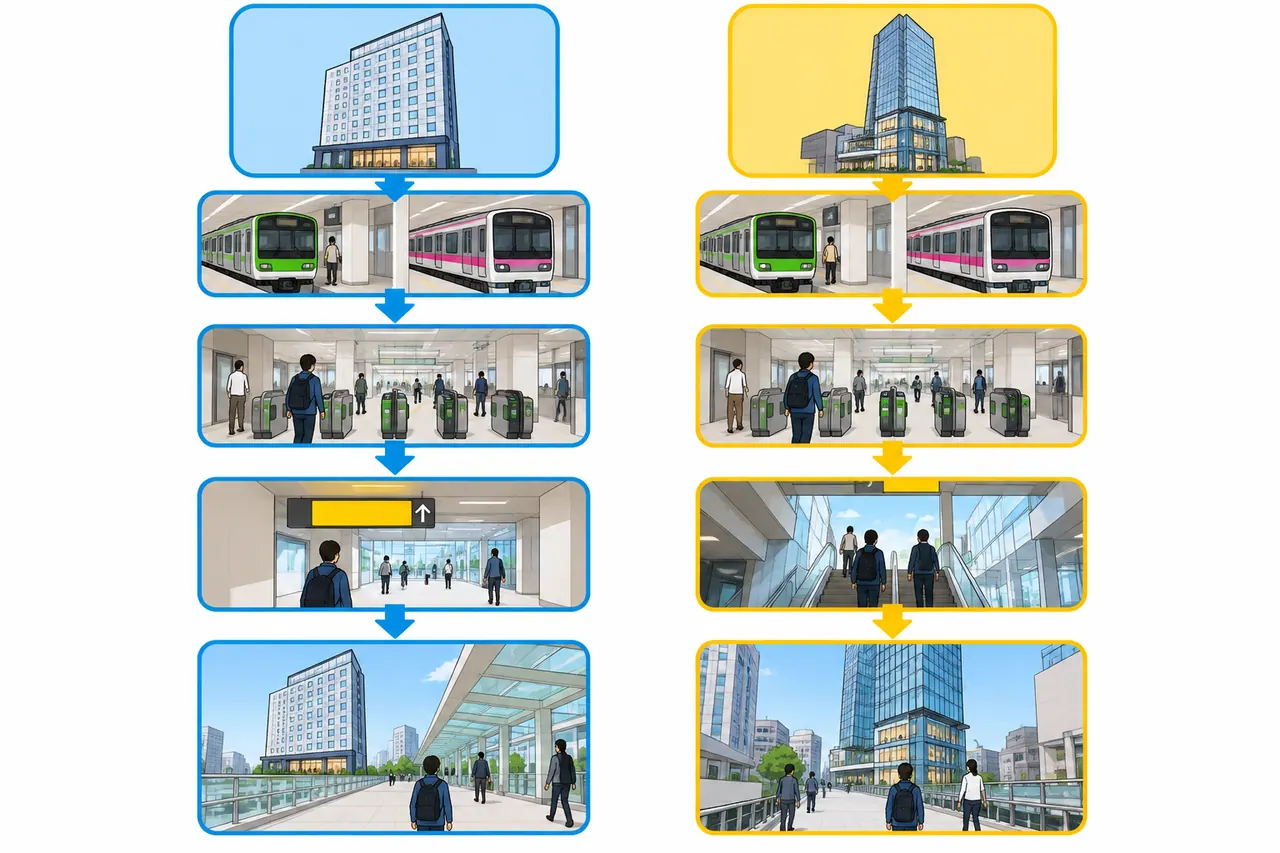
Shinjuku: rail choices and a first-time base
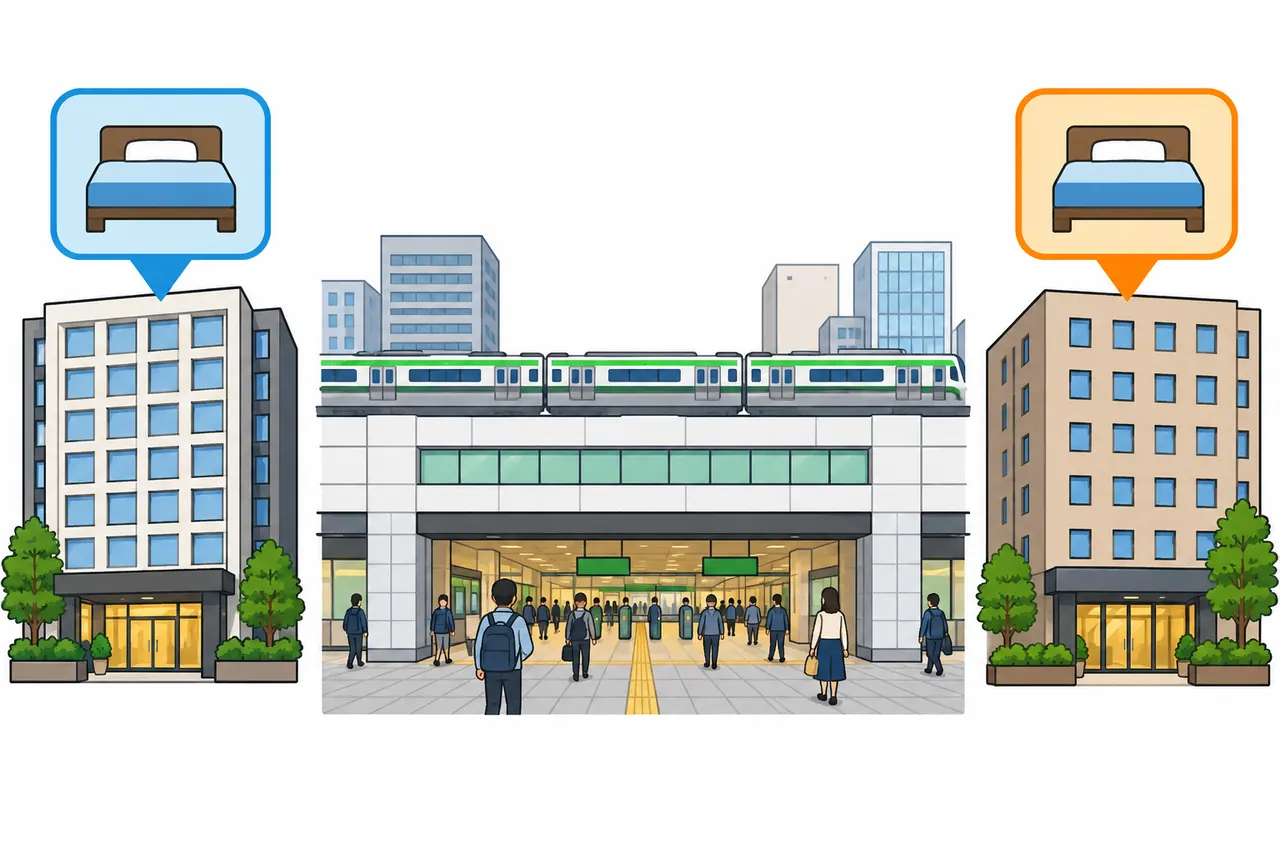
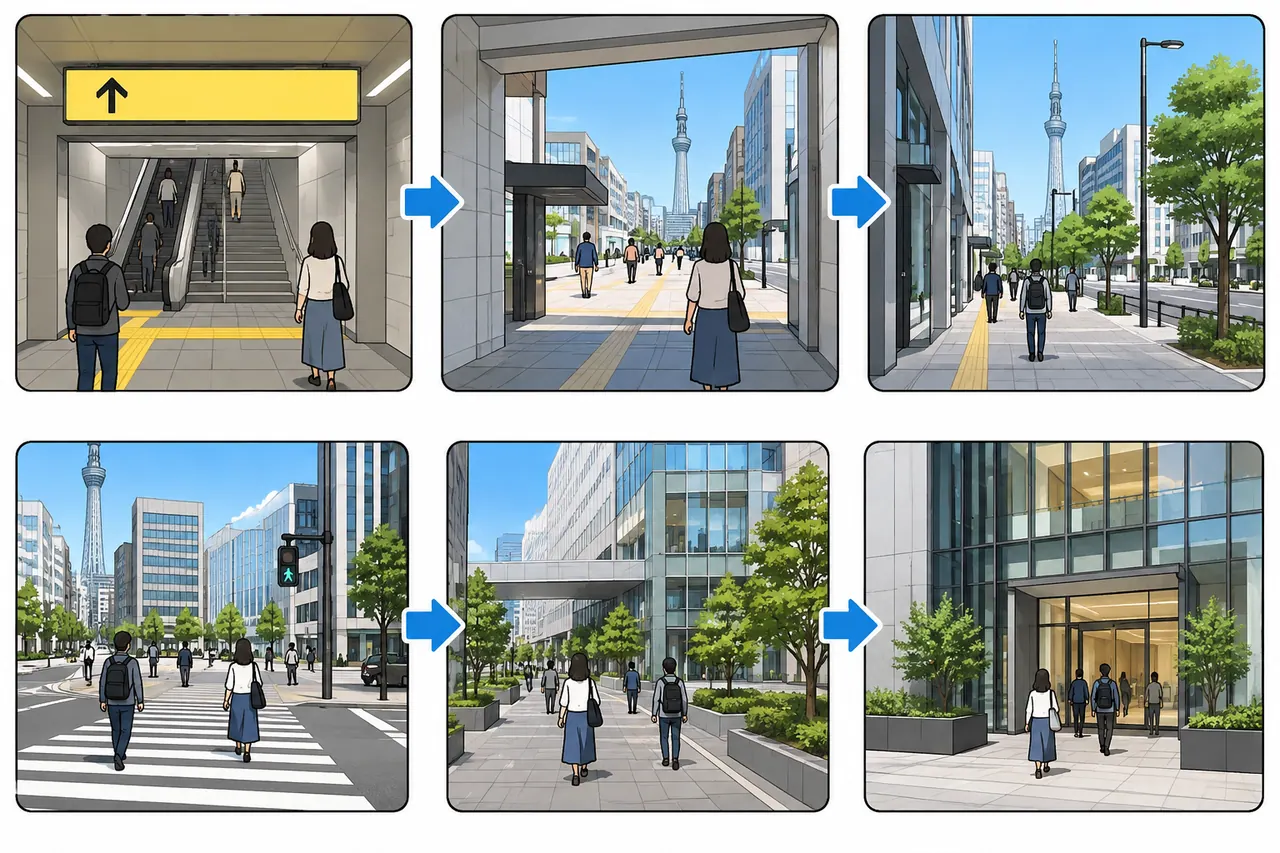
Shinjuku has JR, private railways and subway services, including JR, Keio, Odakyu, Tokyo Metro Marunouchi Line and Toei lines. The west side has high-rise buildings and the Tokyo Metropolitan Government Building; Kabukicho is on the east side, and Busta Shinjuku is near the south exit. GO TOKYO estimates about 14 minutes from Tokyo Station on the JR Chuo rapid train and about 55 minutes to Haneda by train or bus (Shinjuku guide).
| Hotel | Published access and comparison point |
|---|---|
| Shinjuku Prince Hotel | Connected to Seibu-Shinjuku Station; about 5 min from JR Shinjuku. |
| Hotel Gracery Shinjuku | About 5 min on foot from JR Shinjuku’s east exit. |
Seibu-Shinjuku and JR Shinjuku are different station names, so choose the route that fits your plans. Room features and prices were not compared for these two candidates. Confirm the exact exit and route from the station before arrival.
Shibuya: crossing, shopping and views
Shibuya is served by JR, Keio, Tokyu and Tokyo Metro lines. GO TOKYO lists Shibuya Sky, Hikarie, PARCO and Miyashita Park, and estimates about 20 minutes on foot from Shibuya Station to Harajuku; the same guide estimates about 15 minutes to Daikanyama. Check the hotel’s station connection against the line and exit you expect to use.
| Hotel | Published access and comparison point |
|---|---|
| Shibuya Excel Hotel Tokyu | Connected to JR and Keio Inokashira Line Shibuya Station. |
| SHIBUYA STREAM HOTEL | Connected to JR’s New South exit and Tokyu/Metro exit C2. |
Both candidates have station connections, but those connections are not identical. Compare the train lines and exits for your itinerary, and ask the hotel about a step-free route if needed. The GO TOKYO Shibuya guide gives area journey estimates, not door-to-door hotel timings.
Ginza: shopping and theater
Ginza Station serves the Ginza, Marunouchi and Hibiya subway lines. The area includes department stores, GINZA SIX and Kabukiza, a theater for Japanese stage performances; check the theater’s official site for current shows. GO TOKYO estimates about 3 minutes from Tokyo Station by Marunouchi Line, but its area-level walking guidance—about 5 minutes from JR Yurakucho Station and 15 minutes from Tokyo Station—is not a hotel-specific route (Ginza guide).
| Hotel | Published access and room details |
|---|---|
| Ginza International Hotel | About 3 min from JR Shimbashi’s Ginza exit. Standard twin: 20.4 m² for two adults. Triple: 20.4 m² for three adults, with two beds and one extra bed. |
| Mitsui Garden Hotel Ginza Premier | About 5 min from JR Shimbashi’s Ginza exit. Its official page lists rooms for two and three people. |
Ginza International lists check-in at 1 p.m. and check-out at 11 a.m.; it advises three guests sharing to book a triple or deluxe triple (FAQ). Mitsui Garden Hotel Ginza Premier lists check-in at 3 p.m. and check-out at noon; it says a booking may be cancelled if a guest is more than two hours late without contacting the hotel. Its Executive Wide King and Executive Twin rooms have a three-part bathroom arrangement, while the usual arrangement has two parts (room information, checked 4 November 2026). Prices were not compared; confirm the exact room and bed arrangement in the offer.
On weekends and holidays, Ginza’s Chuo-dori is listed as car-free from noon until 6 p.m. from April to September and 5 p.m. from October to March. The pedestrian period may be suspended unexpectedly, and cyclists should get off and push their bicycles. Check the Tokyo Metropolitan Police pedestrian-road information for current details.
Tokyo Station and Marunouchi: bullet trains and airport buses
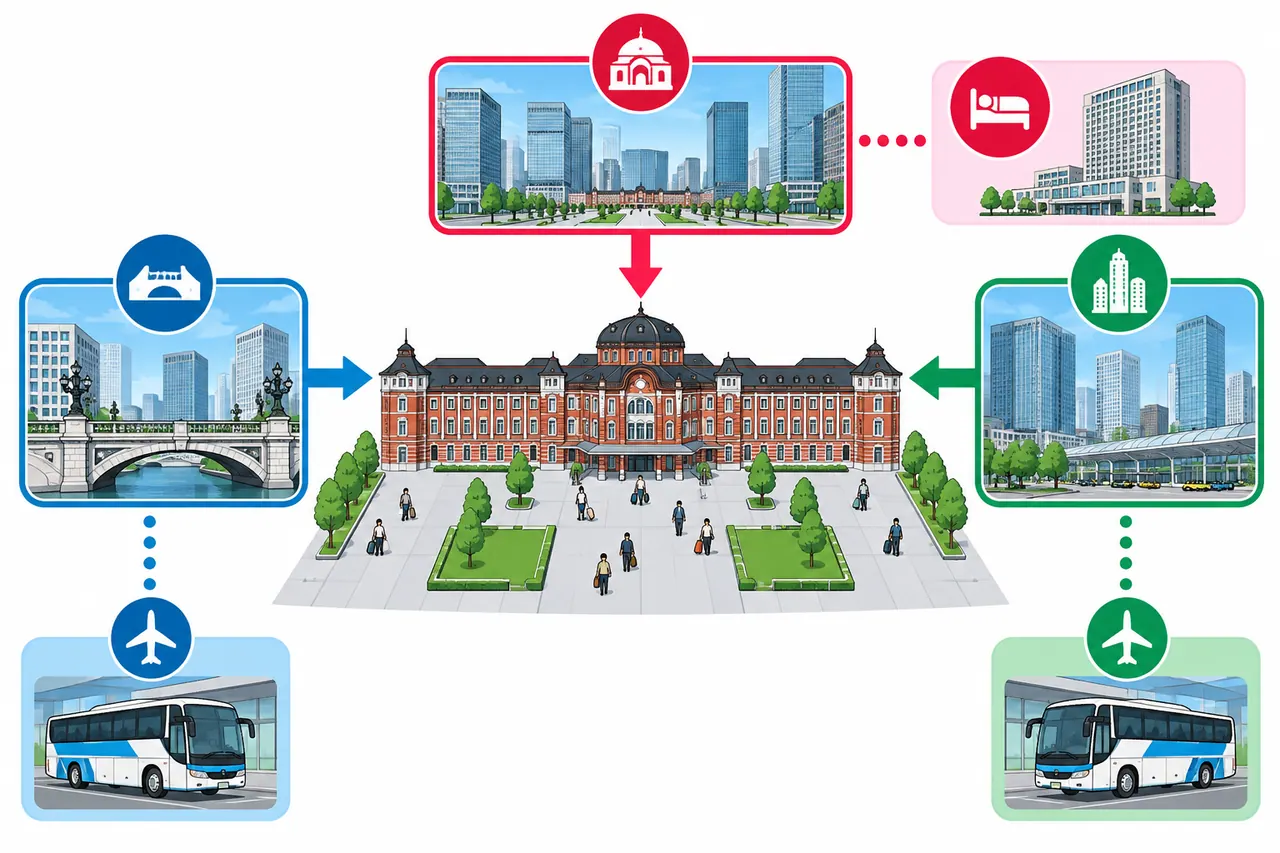
Tokyo Station is useful for Shinkansen journeys and airport buses, which use the Yaesu side. Marunouchi and Nihombashi are different sides or exits, so save the exit named by your hotel. GO TOKYO lists GRANSTA, Tokyo Station First Avenue, Yaesu Underground Mall and commercial facilities in Marunouchi; it describes Yaesu Underground Mall as having about 180 shops (Tokyo Station and Marunouchi guide).
| Hotel | Published connection |
|---|---|
| The Tokyo Station Hotel | Connected to Tokyo Station’s Marunouchi South exit; see its stay plans. |
| Hotel Metropolitan Marunouchi | Connected to JR Tokyo Station’s Nihombashi exit; the listing describes 337 rooms. |
A hotel connected to Marunouchi South is not automatically on the Yaesu airport-bus side. GO TOKYO estimates about 30–55 minutes to Haneda and about 1 hour 20 minutes to Narita, depending on service. Check the route from your arrival point and the operator’s timetable for your date.
Asakusa: temple and shopping street
Asakusa is a base for Senso-ji temple, Kaminarimon gate and Nakamise shopping street. Tokyo Metro Ginza Line, Toei Asakusa Line and Tobu Skytree Line serve stations named Asakusa, so check which station your hotel uses. GO TOKYO estimates about 20 minutes from Tokyo Station with a change at Kanda, about 35 minutes from Shinjuku with a change at Kanda, about 50 minutes from Haneda and about 1 hour 25 minutes from Narita (Asakusa guide).
| Hotel | Published access and comparison point |
|---|---|
| Hotel Tavinos Asakusa | About 4 min on foot from Tsukuba Express Asakusa Station, exit A1. |
| Asakusa View Hotel | Connected to Tsukuba Express Asakusa Station; a standard twin room is listed. |
These two access descriptions refer to Tsukuba Express Asakusa Station, not every station with Asakusa in its name. If you plan to arrive by another line, open the hotel map for that route. Prices were not compared.
Ueno: park, museums and different station names
Ueno is useful for Ueno Park, museums, Shinobazu Pond and Ueno Zoo. JR Ueno, Tokyo Metro Ueno and Keisei Ueno are distinct stations, so keep the full station name and hotel exit in your directions. GO TOKYO estimates about 8 minutes from Tokyo Station on the Yamanote Line, about 24 minutes from Shinjuku, about 50 minutes from Haneda and about 1 hour 20 minutes from Narita (Ueno guide).
| Hotel | Published access and comparison point |
|---|---|
| Hotel Resol Ueno | About 1 min from JR Ueno’s Asakusa or Iriya exit. |
| Hotel Sardonyx Ueno | About 7 min from JR Ueno’s Hirokoji exit, 3 min from Okachimachi’s north exit, or 7 min from Keisei Ueno’s main exit; a superior room is listed. |
Resol is close to two named JR Ueno exits; Sardonyx gives access options from Okachimachi and Keisei Ueno as well. Compare the route you expect to use before comparing room offers. The walking times are hotel-published access details, not estimates for every route through the neighborhood.
Ikebukuro: anime shops and indoor attractions
Ikebukuro has JR Yamanote, Saikyo and Shonan-Shinjuku lines, Tobu and Seibu railways, and Tokyo Metro Marunouchi, Yurakucho and Fukutoshin lines. Sunshine City has an observation deck, aquarium and planetarium, and the surrounding area has anime- and manga-related shops; check attraction operators for current tickets and hours. GO TOKYO estimates about 8 minutes from Shinjuku by Yamanote Line and about 24 minutes from Tokyo Station by that line (Ikebukuro guide).
| Hotel | Published access and comparison point |
|---|---|
| Hotel Grand City | About 5 min from Ikebukuro Station’s east exit. |
| Hotel Metropolitan Ikebukuro | On the west-exit side; its stay page lists several room types. |
First decide whether the east or west side fits your plans. A station-side choice does not tell you how many beds are included, so check the exact offer. Room features and prices were not compared.
Shimokitazawa: vintage shops, books and music
Shimokitazawa is served by Odakyu and Keio Inokashira lines and is known for vintage shops, bookstores, music shops, cafes and bars. GO TOKYO estimates about 7 minutes from Shinjuku on the Odakyu Line (Shimokitazawa guide). Check which station is most convenient for your hotel, since the area also has nearby stations.
| Hotel | Published access and comparison point |
|---|---|
| Mustard Hotel Shimokitazawa | About 5 min from Shimokitazawa Station and 1 min from Higashi-Kitazawa Station; see its room page. |
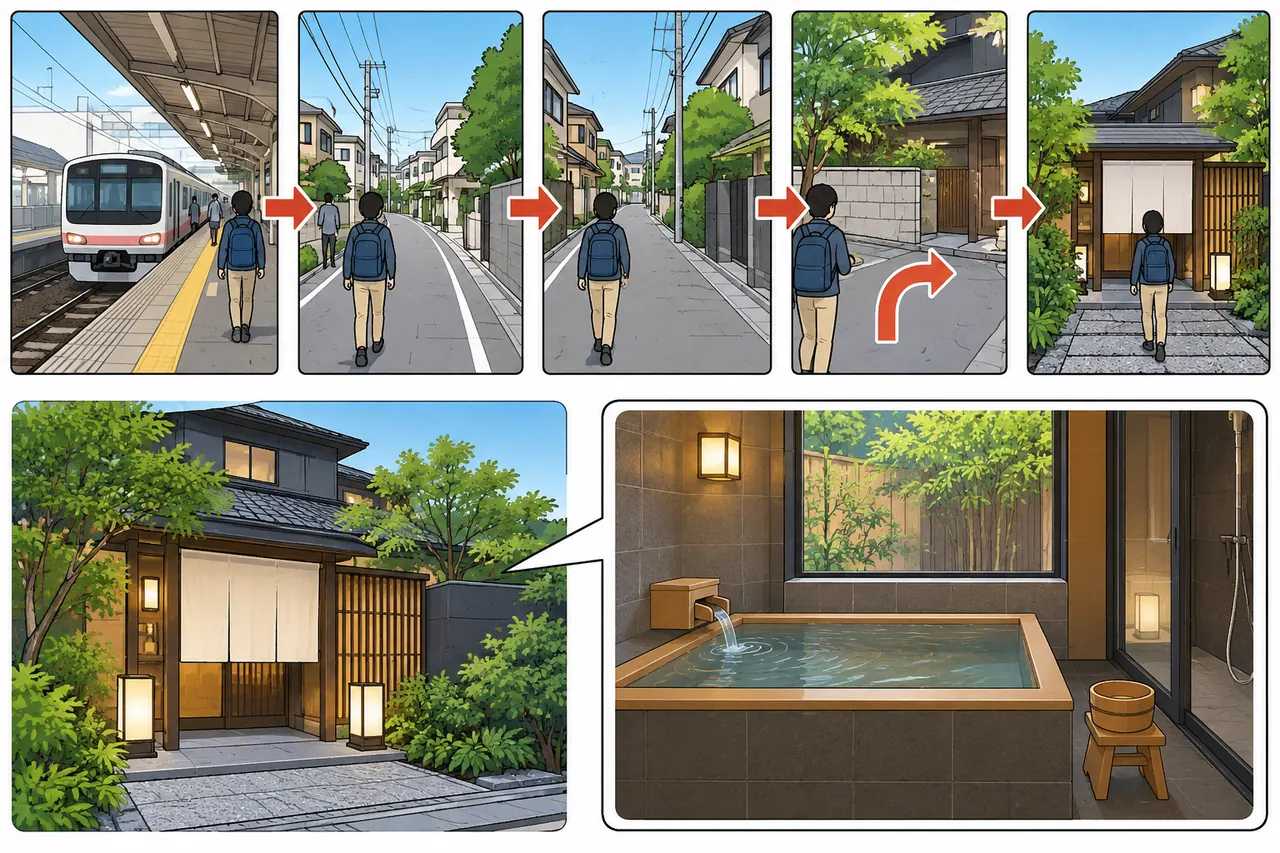
| Yuen Bettei Daita | About 30 seconds from Setagaya-Daita’s east ticket gate and 8 min from Shimokitazawa’s southwest exit; bathing facilities are listed. |
Yuen Bettei Daita may suit a traveler comparing bathing facilities, but ask which facilities are included in your room offer. The open-air baths in its rooms are not hot-spring baths. Prices were not compared.
Akihabara: electronics, anime and games
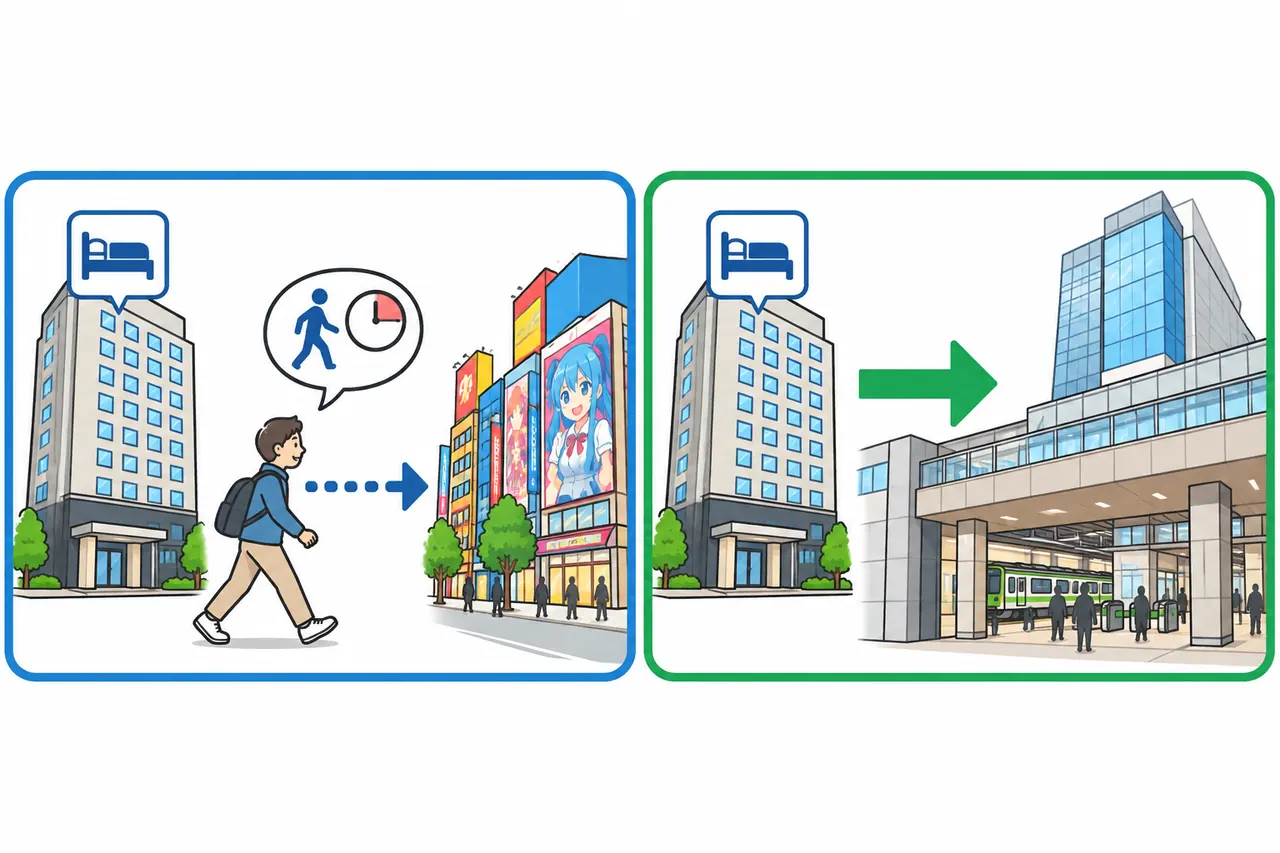
Akihabara is served by JR Yamanote, Keihin-Tohoku and Sobu lines, Tokyo Metro Hibiya Line and Tsukuba Express. The area is known for electronics and anime and game culture; GO TOKYO estimates about 4 minutes from Tokyo Station on the Yamanote Line (Akihabara guide). Check the station exit against your hotel directions.
| Hotel | Published access and comparison point |
|---|---|
| Best Western Hotel Fino Tokyo Akihabara | About 7 min on foot from Akihabara Station. |
| remm Akihabara | In a building connected to JR and Tsukuba Express Akihabara stations; a universal twin room is listed. |
Consider remm if its station connection or listed universal twin is relevant. Ask the hotel whether the room and route meet your particular mobility needs. The two hotels’ prices and other room features were not compared.
Odaiba: waterfront and Rainbow Bridge
Odaiba offers a waterfront setting and views of Rainbow Bridge. GO TOKYO lists the Yurikamome, Rinkai Line and water buses as ways to reach the area; it estimates about 45 minutes from Haneda by train or 35 minutes by bus (Odaiba guide). Confirm the exact arrival point for your hotel.
| Hotel | Published connection |
|---|---|
| Hilton Tokyo Odaiba | Connected to Yurikamome Daiba Station. |
| Grand Nikko Tokyo Daiba | Connected to Daiba Station and about 10 min on foot from Tokyo Teleport Station. |
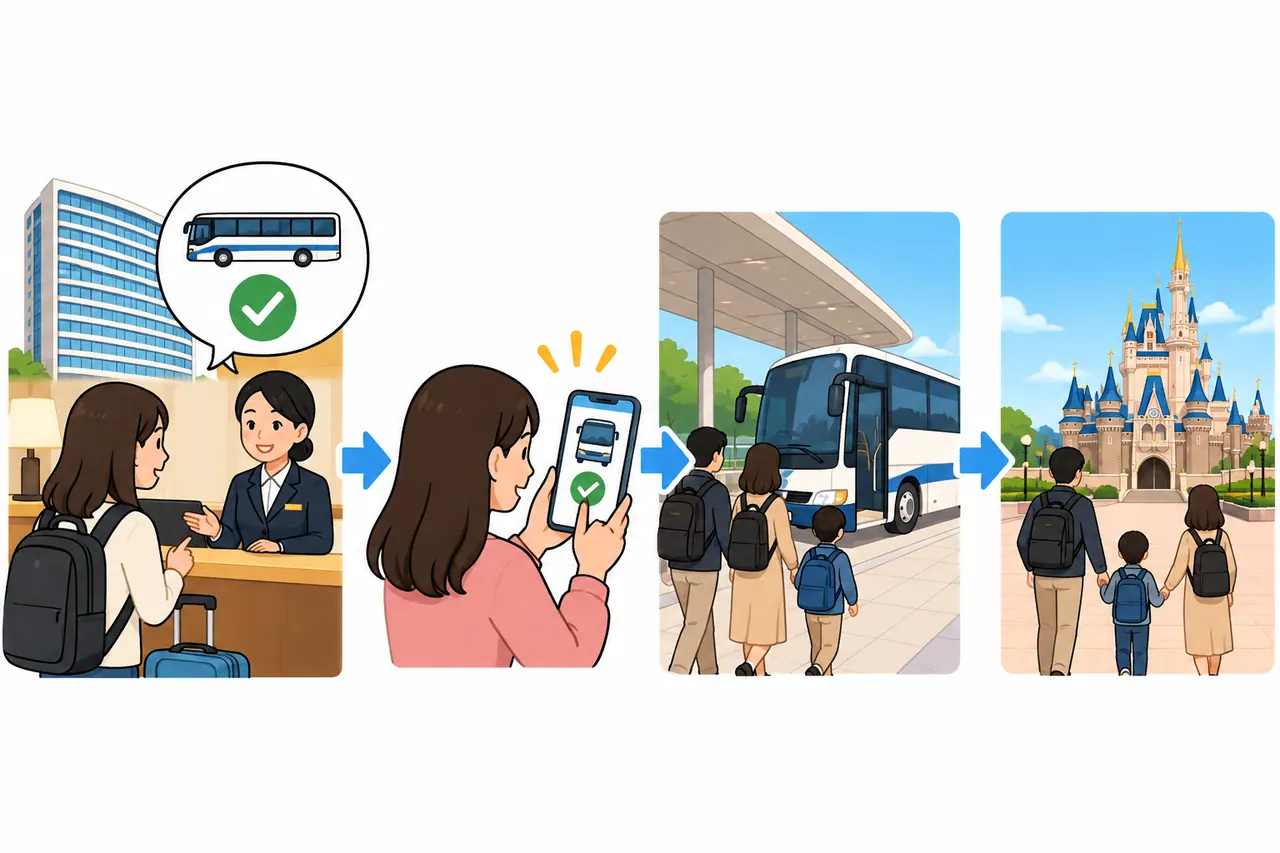
Both hotels connect to Daiba Station, while Grand Nikko also publishes a walking route from Tokyo Teleport. Hilton lists a free Tokyo Disney Resort shuttle for eligible guests, subject to its conditions. Its shuttle is for guests travelling on their own rather than with a tour group; seats are limited and service may be suspended. The hotel says to reserve online from 10 a.m. two months before travel until 10 p.m. the day before, and to wait at the boarding point at least 10 minutes before departure (shuttle information). Confirm your booking’s eligibility and service for your date.
Akasaka: restaurants and station choices
Akasaka has restaurants and hotels, and Akasaka Station is on the Tokyo Metro Chiyoda Line. Akasaka, Akasaka-mitsuke and Tameike-Sanno are separate station names, so use the one given by your hotel. GO TOKYO estimates about 10 minutes on foot from Akasaka-mitsuke Station to the Akasaka area, not to every hotel (Akasaka guide).
| Hotel | Published access |
|---|---|
| ANA InterContinental Tokyo | About 1 min from Tameike-Sanno exit 13 or 3 min from exit 14. |
| the b akasaka-mitsuke | About 1 min from Akasaka-mitsuke exit 10. |
Pick the station that works best for your repeated journeys, then compare the exact room offers. These access details do not establish a price or a room comparison. Keep the hotel’s station and exit with your booking.
Sumida and Tokyo Skytree: tower and shopping
The Sumida area is a starting point for Tokyo Skytree and Tokyo Solamachi. Oshiage and Tokyo Skytree are different station names, so check which one your hotel directions use. GO TOKYO estimates about 90 minutes by train from Narita to the Skytree area and about 45 minutes from Shinjuku to Tokyo Skytree Station (Skytree and around guide).
ONE@Tokyo is about 3 minutes on foot from Oshiage exits A1 or B3. The hotel lists exit A1 as open from 6:30 a.m. to 10 p.m.; ask which route to use if you arrive outside those hours. Its access information is a candidate to check, not a comparison of its room or price with another hotel.
Shinagawa: Haneda and Shinkansen connections
Shinagawa is served by JR Yamanote, Keihin-Tohoku, Yokosuka and Tokaido lines, Keikyu and the Tokaido Shinkansen. GO TOKYO estimates about 35 minutes by train from Haneda and about 13 minutes to Tokyo Station by Yamanote Line (Shinagawa and Tennozu guide). Check the actual service and final hotel route for your arrival time.
| Hotel | Published access and contact details |
|---|---|
| Shinagawa Prince Hotel | About 2 min from Shinagawa Station’s Takanawa exit. Address: 4-10-30 Takanawa, Minato-ku, Tokyo. Phone: 03-3440-1111. |
| The Prince Sakura Tower Tokyo | About 3 min from Shinagawa Station. |
The one-minute difference in published walks should not decide the stay by itself; compare your room and total offer. Shinagawa Prince lists normal check-in at 3 p.m. and check-out at 11 a.m., although plans can differ. It accepts luggage before check-in and after check-out at the Main Tower’s first floor, but not valuables, breakable items or food that can spoil (hotel FAQ, luggage information). Ask the hotel about the route from your expected exit and any step-free access you need.
Roppongi: museums and nightlife
Roppongi has museums, restaurants, bars and clubs, with Tokyo Metro Hibiya Line and Toei Oedo Line services at Roppongi Station. GO TOKYO estimates about 9 minutes from Shinjuku on the Oedo Line (Roppongi guide). If sleep matters, ask where your room is located; nightlife in an area does not prove that every nearby room is noisy.
| Hotel | Published access and comparison point |
|---|---|
| Grand Hyatt Tokyo | Address: 6-10-3 Roppongi, Minato-ku; the official site lists about 3 min on foot from Roppongi Station. |
| remm Roppongi | About 1 min from Hibiya Line exit 4a or Oedo Line exit 7; a twin room is listed. |
The station exit and room type may help distinguish these candidates, but prices were not compared. Check the exact room and total before booking. The published journey time from Shinjuku is an area connection, not a hotel-to-hotel estimate.
Harajuku: a base near Shibuya
Harajuku Station is on the JR Yamanote Line, and Meiji-jingumae Station serves the Chiyoda and Fukutoshin subway lines. GO TOKYO estimates about 4 minutes from Shinjuku by Yamanote Line (Harajuku guide). Shibuya can also be a base for visiting Harajuku: GO TOKYO estimates about 20 minutes on foot from Shibuya Station, depending on your route.
| Hotel | Published access and room details |
|---|---|
| TRUNK(HOTEL) CAT STREET | Address: 5-31 Jingumae, Shibuya-ku; see its room page. |
| all day place shibuya | About 1 min from Tokyo Metro Shibuya exit B1 and 5 min from JR Shibuya’s Miyamasuzaka exit. Party Suite: 57.5 m², maximum four guests. |
If four people want to share, confirm that the offer specifically names the Party Suite and check its bed arrangement. The property’s maximum guest count does not by itself tell you how the beds are set up. Prices for these hotels were not compared.
Airport and city travel
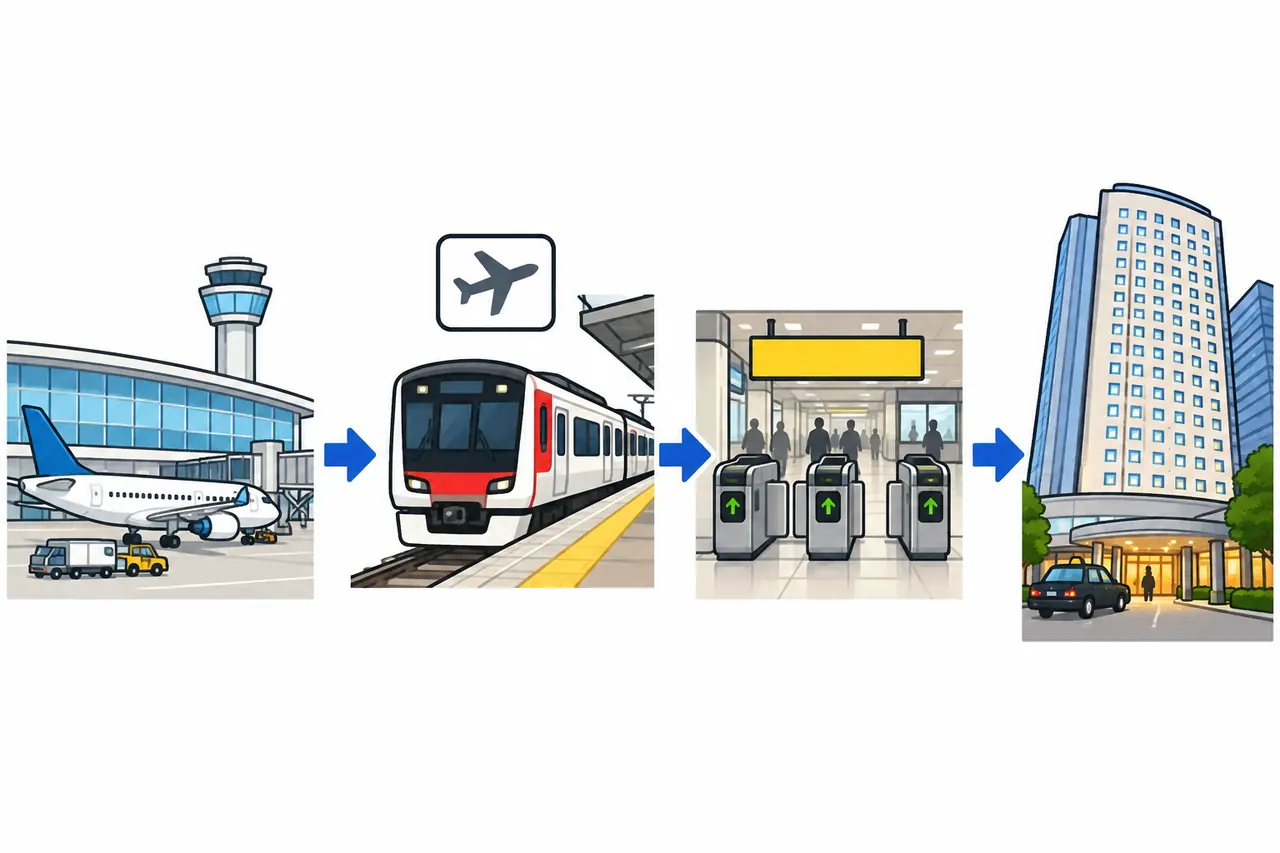
For Haneda, Shinagawa has a published train estimate of about 35 minutes; Tokyo Station’s published Haneda estimate ranges from 30 to 55 minutes. From either airport, add the final walk from the station or bus stop to your hotel. The airport estimates below are from GO TOKYO area guides and were checked on 3 November 2026; they vary by service and do not include the hotel walk.
| Area | From Haneda | From Narita |
|---|---|---|
| Shinjuku | About 55 min by train or bus | About 1 hr 35 min by train; 2 hr by bus |
| Shibuya | About 45 min by train; 55 min by bus | About 1 hr 40 min by train; 1 hr 55 min by bus |
| Ginza | About 50 min by train; 35 min by bus | About 1 hr 35 min by train; 2 hr by bus |
| Tokyo Station | About 30–55 min; check the service | About 1 hr 20 min; check the service |
| Asakusa | About 50 min by train | About 1 hr 25 min by train |
| Ueno | About 50 min by train | About 1 hr 20 min; check the service |
| Ikebukuro | About 1 hr by train; 1 hr 10 min by bus | About 90 min by train; 2 hr 25 min by bus |
| Odaiba | About 45 min by train; 35 min by bus | Check the operator |
| Skytree area | About 1 hr 5 min by train; 1 hr by bus | About 90 min by train |
| Shinagawa | About 35 min by train | Check the operator |
Check the official Shinjuku, Shibuya, Ginza, Tokyo Station, Asakusa, Ueno, Ikebukuro, Odaiba, Skytree and Shinagawa guides for those published estimates. Then check the airport or transport operator’s timetable, fare and luggage rules for your travel date. These estimates do not establish the cheapest route or the route with the fewest changes.
Train or bus with luggage?
A train may suit you if its station and exit are close to the hotel; a bus may suit you if its named stop is easier for your group. The published journey estimates do not determine which option is cheaper or simpler for your arrival time. Compare the whole trip, including changes, bags and the final walk.
| Check | Train | Bus |
|---|---|---|
| Arrival point | Exact station and exit | Exact bus stop |
| Timing | Service and any changes | Service and departure time |
| Bags | Operator’s luggage rules | Operator’s luggage rules |
| Last part | Walk from exit to hotel | Walk from stop to hotel |
| Cost | Current fare for each traveler | Current fare for each traveler |
Open the hotel’s access page and save its address and recommended station or stop. Enter the airport and hotel address in a route planner for your travel date, then check the operator’s timetable, fare and luggage rules. If your group needs a step-free route, ask the hotel about stairs between the named exit and the property.
City journeys and walking between areas
The Yamanote Line is a JR train line connecting major Tokyo stations; Tokyo Metro and Toei operate subway lines. The following GO TOKYO journey examples are useful for comparing a base, but waiting, transfers and the walk to your hotel are additional. Check the relevant area guide and transport operator for your date.
| Journey | Published estimate | Route example |
|---|---|---|
| Tokyo Station to Shinjuku | About 14 min | JR Chuo rapid train |
| Shinjuku to Shibuya | About 7 min | Yamanote Line |
| Tokyo Station to Ginza | About 3 min | Marunouchi Line |
| Tokyo Station to Asakusa | About 20 min | Change at Kanda |
| Tokyo Station to Ueno | About 8 min | Yamanote Line |
| Shinjuku to Ikebukuro | About 8 min | Yamanote Line |
| Tokyo Station to Shinagawa | About 13 min | Yamanote Line |
| Tokyo Station to Akihabara | About 4 min | Yamanote Line |
Some nearby areas can also be joined on foot. GO TOKYO estimates about 20 minutes from Shibuya Station to Harajuku and 15 minutes to Daikanyama; these are separate walks from the station, not estimates from every Shibuya hotel. Check the specific route and allow time for your own pace.
Tokyo Disney Resort
Tokyo Disney Resort’s official rail-access page identifies JR Maihama Station as the nearest station. It gives about 15 minutes by JR Keiyo or Musashino Line from Tokyo Station to Maihama, and about a 5-minute walk from Maihama to Tokyo Disneyland; Tokyo DisneySea is reached by transferring to the Disney Resort Line. The same page also displays an approximately 20-minute Tokyo–Maihama train journey, so its journey-time displays differ; both are estimates and do not include transfer time (official rail access). Check the official page and current service details for your date.
Hilton Tokyo Odaiba also lists a guest shuttle to Tokyo Disney Resort. It is for qualifying individual guests, is subject to limited seating and may be suspended, so check whether your booking and travel date qualify. The hotel’s stated reservation window is from 10 a.m. two months before travel until 10 p.m. the day before; be at the boarding point at least 10 minutes before departure (shuttle information).
IC cards and rail passes
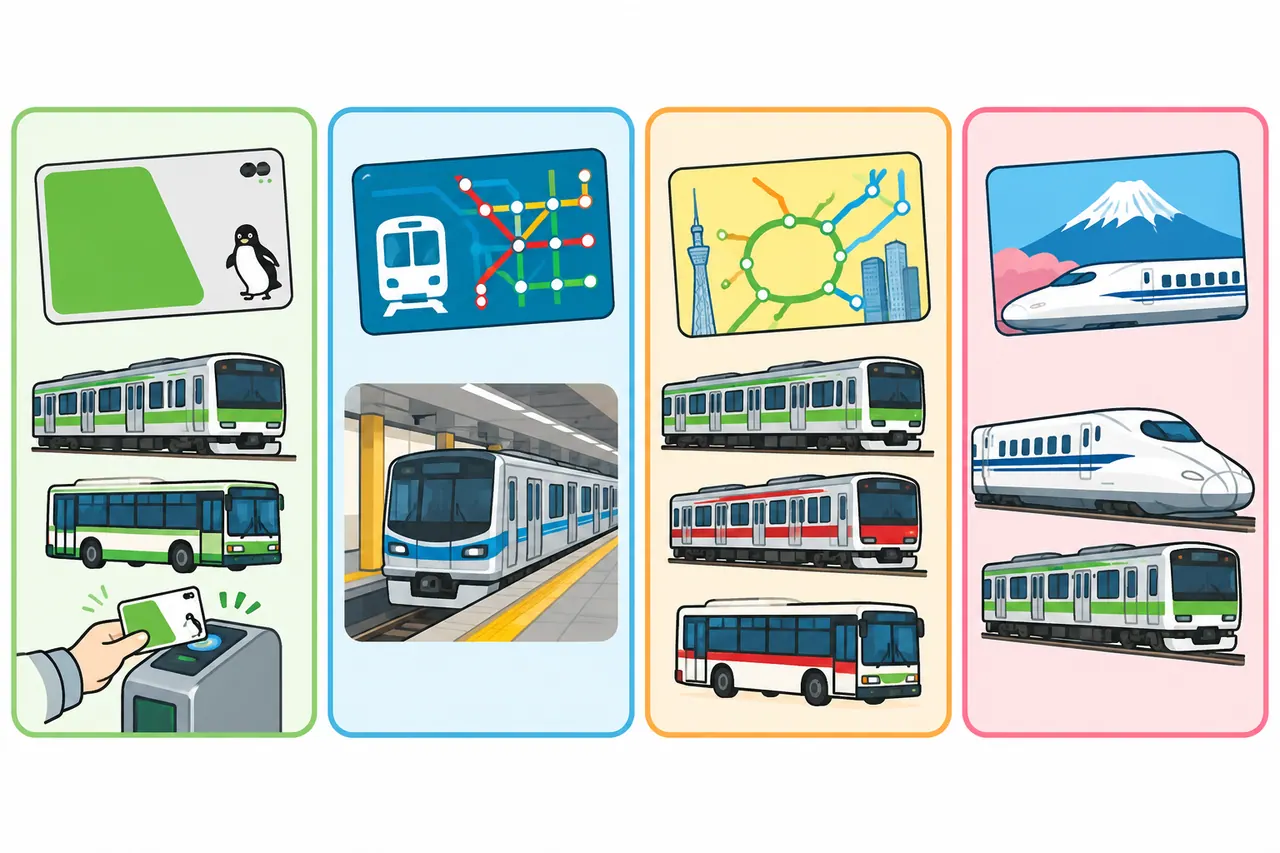
An IC card is a rechargeable card for transport payments; a rail pass is a separate ticket with its own routes, duration and eligibility rules. Compare the pass price with the journeys you actually plan to make, including which railways it covers. Published prices and conditions below are tied to the named official pages and should be checked before purchase.
| Option | Published details and what to check |
|---|---|
| Welcome Suica | The official guidance lists purchase amounts of ¥1,000, ¥2,000, ¥3,000, ¥4,000, ¥5,000 and ¥10,000, with no deposit, a ¥20,000 balance limit and cash-only top-ups. It is valid for 28 days including the purchase date; normally, unused balance is not refundable. |
| Tokyo Subway Ticket | From 14 March 2026, the listed adult prices are ¥1,000 for 24 hours, ¥1,500 for 48 hours and ¥2,000 for 72 hours; child prices are ¥500, ¥750 and ¥1,000. It covers Tokyo Metro and Toei Subway lines, not JR. |
| Greater Tokyo Pass | The official purchase page lists a five-day pass at ¥6,500 for adults and ¥3,250 for children for selected private railways and Toei buses. It is for visitors from overseas; passport presentation is required. |
| JAPAN RAIL PASS | The official page lists an adult seven-day Ordinary pass at ¥50,000, with 14- and 21-day options also available. Special conditions apply to Nozomi and Mizuho trains. |
Welcome Suica is listed for sale at dedicated machines at Narita Airport, Airport Terminal 2 and Haneda Airport Terminal 3, and at JR East travel service centres including Tokyo, Shibuya, Shinjuku, Ikebukuro and Ueno; the stated locations are from official guidance published from 27 March 2025. It is generally one card per person. Top-ups are in cash, not by credit card; carry the reference paper and check the expiry date. See JR East Welcome Suica purchase information and its FAQ.
For a Tokyo Subway Ticket, compare the listed duration and covered lines with your planned trips using Tokyo Metro’s travel-ticket page and its fare-change notice. Greater Tokyo Pass price and coverage differ across official selling information: the general purchase page lists a five-day pass covering selected private railways and Toei buses, while Tokyu lists a five-day rail-and-bus ticket at ¥7,200 for adults and ¥3,600 for children, and a three-day rail ticket at ¥6,000 and ¥3,000. Compare the Greater Tokyo Pass page, Odakyu information and Tokyu page before paying. For the Japan Rail Pass, check its official price page and conditions for Nozomi and Mizuho.
Budget searches, quieter streets and room types
Minami-Senju is a practical starting point for a lower-cost search, but the listed rates do not establish that it is Tokyo’s cheapest area. Yanaka and Yoyogi-Uehara are options to investigate if quieter streets appeal to you, but no neighborhood description guarantees a silent room. Compare the actual room and total for your dates, and ask the property about the details that matter.
Minami-Senju for a budget search
Hotel Meigetsu is about 8 minutes on foot from Minami-Senju Station. Its official rate page lists a single for one person at ¥3,900–¥7,900 per night and a “semi-double” for two people at ¥5,900–¥10,900 per night; rates vary by day. These are the published ranges checked on 3 November 2026, not confirmed prices or availability for a particular date (rates, access). Ask about bed width, taxes, meals and cancellation terms before booking.
| Property | Published price and other details |
|---|---|
| Hotel Meigetsu | Single: ¥3,900–¥7,900 for one person per night. Semi-double: ¥5,900–¥10,900 for two people per night. Rates vary by day. |
| Business Hotel Miyako | Three-mat Japanese-style room: ¥2,500 listed. Check-in noon; check-out 10 a.m.; bath 4–10:30 p.m.; refundable key deposit ¥1,000. |
Business Hotel Miyako lists these details on its lodging page and access page; they were checked on 3 November 2026. A tatami is a woven floor mat, and a three-mat room describes floor size, not three beds. The published information does not establish the applicable guest count, taxes, meal terms, date-specific availability or cancellation conditions, so ask the property.
Yanaka and Yoyogi-Uehara for quieter streets
Yanaka is within walking distance of Nippori Station, and Nezu and Sendagi stations also serve the surrounding area. See GO TOKYO’s Yanaka and Nezu guide, then check the hotel’s own map for its exact location. Odakyu describes Yoyogi-Uehara as a quiet residential area with greenery and lists a fastest trip of 4 minutes to Shinjuku and a connection to the Chiyoda subway line (Odakyu area guide, checked 3 November 2026).
Neither description guarantees a quiet room. Ask the hotel where the room is in relation to roads, railway tracks and lifts, which direction its window faces, and whether your requested room position can be confirmed. A request is not the same as a guaranteed feature, so save the property’s reply with your booking.
| Room detail | What to ask |
|---|---|
| Road or railway | Where is the room in relation to the road and tracks? |
| Lift | Is the room close to the lift? |
| Window | Which way does the window face? |
| Arrival | What route should we use at our expected arrival time? |
| Confirmation | Can the hotel confirm the requested room position? |
Choose a room type
GO TOKYO lists hostels, guesthouses, capsule hotels, business hotels, luxury hotels, traditional inns and private rentals among Tokyo’s accommodation types (accommodation guide). The name of an accommodation type does not tell you what a particular offer includes. Check the exact room, bed arrangement, services and rules before paying.
| Type | What to check |
|---|---|
| Hostel or guesthouse | Is the offer for a shared bed or a private room? |
| Capsule hotel | What space is included, and where can bags go? |
| Business hotel | Which beds and room details are included? |
| Luxury hotel | Which services are included in the rate? |
| Ryokan | Are meals included, and what are the room terms? |
| Private rental | What is the registration or permit number, and what are the house rules? |
GO TOKYO’s capsule-hotel page, updated 17 June 2025, gives ¥2,000–¥5,000 per night as a guide; this is a 2025 reference, not a current quote (capsule hotel guide). Add the cost of every capsule or bed your group needs, then compare that total with a private room that accepts the same number of people. GO TOKYO advises checking a private rental’s registration or permit number and contacting the property if it is not shown; also check its terms, cancellation conditions and house rules.
Families, groups and access needs
Start with the people in your group and the beds they need. A room that permits your guest count may still have a bed arrangement that does not suit you, and a listed room type does not confirm availability on your dates. For indoor activities, compare Sunshine City’s aquarium and planetarium with Ueno’s museums, then check current tickets and opening information with the attraction.
| Need | Ask the property |
|---|---|
| Beds | What beds are included for all guests? |
| Children | What guest and room rules apply to our booking? |
| Luggage | Where can bags be stored before or after the stay? |
| Mobility | Does the route from the named exit have stairs? |
| Late arrival | How does check-in work at our arrival time? |
| Rest | Can the hotel confirm the requested room position? |
The Ginza International triple is listed for three adults with two beds and one extra bed, while the all day place shibuya Party Suite is listed for up to four guests. Those capacity details do not confirm a price for your dates or bed arrangement beyond the published information. Ask the hotel when the booking page does not answer your question.
Which areas are safest, and are there places to avoid?
This guide does not rank whole districts as safe or unsafe, and the supplied information does not support naming one area as the safest or rejecting an entire district. Check your hotel location and route for the time you expect to arrive, and ask the property about late check-in if needed. Kabukicho and Roppongi have nightlife, but that does not prove that every nearby room is noisy; ask about the exact room rather than deciding only by district name.
Tokyo accommodation tax for stays in 2026–2027
Tokyo’s accommodation tax changes for stays from 1 April 2027. The rule is determined by the night you stay, not the date you book. For the calculation, use the room price and service fees that every guest is required to pay; exclude meals, parking and consumption tax.
Stays through 31 March 2027
Through 31 March 2027, the tax applies to guests at accommodation businesses covered by Tokyo’s hotel and inn rules. The property collects the tax and pays it to Tokyo; it may be collected separately at the front desk. Read the table using one person’s room price for one night, not the total for a whole room or booking.
| Room price used for tax, per person per night | Tax per person per night |
|---|---|
| Under ¥10,000 | ¥0 |
| ¥10,000 to under ¥15,000 | ¥100 |
| ¥15,000 or more | ¥200 |
See the Tokyo tax bureau’s guest information and review of the tax. A small inn may also be covered: the applicable business licence, not the size or name of the property, determines whether these rules apply. Children also pay when their room price used for tax reaches ¥10,000 per person per night; for a shared room, use the property’s per-person breakdown.
Stays from 1 April 2027
For stays from 1 April 2027, a room price used for tax below ¥13,000 per person per night is tax-free. At ¥13,000 or more, the tax is 3% of that room price. The revised tax extends to simple lodging facilities and private rentals covered by the new rules, in addition to hotels and inns; check the property category rather than relying on the booking label.
| Stay night | Tax-free level | Tax at or above the level |
|---|---|---|
| Through 31 March 2027 | Under ¥10,000 per person per night | ¥100 or ¥200, depending on the band |
| From 1 April 2027 | Under ¥13,000 per person per night | 3% of the room price used for tax |
The revised ordinance takes effect on 1 April 2027, and Tokyo received the Minister for Internal Affairs and Communications’ consent on 30 June 2026. If your stay crosses the change, apply the rule for each night and ask the property for a breakdown when the booking total does not show it. See the Tokyo tax bureau’s review for the new rules.
Worked tax examples
The examples are calculations, not hotel quotes, and each amount is the room price used for tax for one person for one night. The examples below follow the stated tax rules; they do not establish a hotel’s room rate or availability. For a room shared by several guests, divide the room price by the number of guests before choosing the applicable band, as described in the tax bureau’s calculation guidance.
| Room price used for tax per person per night | Through March 2027 | From April 2027 |
|---|---|---|
| ¥12,000 | ¥100 tax | ¥0 tax |
| ¥13,000 | ¥100 tax | ¥390 tax |
| ¥20,000 | ¥200 tax | ¥600 tax |
For example, a ¥24,000 twin-room price used for tax, shared by two guests, is ¥12,000 per person. Under the current rule, each guest pays ¥100 for that night. Tokyo’s guidance says to divide the shared room price by the number of guests; see also the tax bureau’s FAQ. The detailed method for calculations involving fractions is not specified here.
Booking steps and practical help
Choose two or three areas before comparing individual offers. Then use the same dates, guest count and booking conditions for every comparison, and check the room as well as its station connection. Saving the hotel’s official access page and its reply to any room or access questions can help you confirm the route before arrival.
Book your room
Open a map app and mark your main sights and stations, then note the journeys you expect to repeat. Enter each hotel address in a route planner for your expected arrival time and compare it with the hotel’s access page, including the named station and recommended exit. Check the transport operator’s timetable and fare for your date before paying.
Enter the same dates and guest count on each booking page. Compare the number and type of beds, meals, total price, taxes, service fees and cancellation terms; a cancellation deadline is the last time you can cancel under the stated terms, so check any fee after that point. For a private rental, check the registration or permit number, terms and house rules. Save the final confirmation and ask the property about room position, access needs or late arrival if the page is unclear.
Add up the trip cost
A room quote is only one part of a trip budget. Use current prices for your group and dates, rather than treating a listed room rate or pass price as the whole cost. A lower room price may not make the trip cheaper if the location requires additional journeys or the room requires more beds than you expected.
| Cost | What to include |
|---|---|
| Stay | Total for all nights and guests |
| Accommodation tax | Included amount or expected separate charge |
| Airport travel | Current fare for each traveler |
| City travel | Planned tickets, card use or passes |
| Food | Your planned spending |
| Attractions | Current official ticket prices |
| Luggage service | Current fee, if used |
Compare the same number of nights, guests and beds, then add planned transport and other costs. Check any pass against the routes it actually covers, and confirm the total on the final booking screen. For accommodation tax, ask the property if the amount is not shown.
Arrival checklist and luggage
Save the airport service and fare, hotel address and station exit, check-in instructions, booking total, tax details, cancellation deadline, late-arrival instructions and the last return service. The transport operator’s timetable is the source for the last train or bus on your date, while the hotel access page gives its recommended approach. If you change hotels, consult a luggage-forwarding service’s own current route, price and conditions before relying on it.
Shinagawa Prince Hotel accepts luggage before check-in and after check-out at the Main Tower’s first floor. Its instructions exclude valuables, breakable items and food that can spoil (FAQ, luggage information). For its same-day free luggage service for guests, the hotel says to enter your name, pickup time and requested details on its service site, then present the issued code and booking confirmation at the luggage service. Confirm the current procedure and any conditions with the hotel.
Emergency and visitor help
Save help numbers before travelling and check your final train or bus if your plans change. JNTO’s visitor-information call centre is 050-3416-0010, open daily from 9 a.m. to 5 p.m. and available in English, Chinese, Korean and Japanese (JNTO announcement).
| Need | Contact | Purpose or hours |
|---|---|---|
| Visitor information | 050-3416-0010 | Daily, 9 a.m.–5 p.m.; English, Chinese, Korean and Japanese |
| Illness, disaster or other emergency support | 050-3816-2787 | Japan Visitor Hotline, 24 hours |
| Police emergency | 110 | Police |
| Fire or ambulance emergency | 119 | Fire and ambulance |
JNTO lists the Japan Visitor Hotline and emergency contacts on its official hotline page. If rain or a closure changes your plans, check current hours with indoor attractions such as Sunshine City’s aquarium and planetarium or Ueno’s museums. At a hotel or private rental, read and follow the property’s house rules.
Frequently asked questions
The best base depends on your plans, room needs and travel dates. Start with the journey or accommodation detail that matters most to your group, then compare exact offers rather than relying on an area label.
Where should I stay in Tokyo for a first visit?
Start by comparing Shinjuku and Shibuya if you have varied plans: Shinjuku offers many train choices and Busta Shinjuku, while Shibuya centers on shopping, the crossing and city views. GO TOKYO estimates about 7 minutes between them on the Yamanote Line, but your hotel walk and station exit add time (Shibuya guide). Compare Tokyo Station instead if bullet trains and Yaesu-side airport buses matter more.
Is Shinjuku or Shibuya better?
Choose Shinjuku for its transport choices and bus terminal, or Shibuya for shopping, the crossing and Shibuya Sky. The published Haneda estimates are about 55 minutes to Shinjuku by train or bus and about 45 minutes to Shibuya by train or 55 minutes by bus. The right choice depends on the hotel’s station and exit, not only the neighborhood name.
Which Tokyo area is cheapest?
This guide does not verify a cheapest area or a current area-by-area accommodation ranking. Minami-Senju is a useful place to begin a lower-cost search: Hotel Meigetsu lists a single at ¥3,900–¥7,900 for one person per night and a semi-double at ¥5,900–¥10,900 for two people per night, with rates varying by day (official rates). Compare actual offers for the same dates, number of guests, beds, fees and cancellation terms.
Which areas are quieter?
Yanaka and Yoyogi-Uehara are areas to consider if quieter streets appeal to you. GO TOKYO describes Yanaka and Nezu, while Odakyu describes Yoyogi-Uehara as a quiet residential area with greenery; neither description guarantees that a particular room is quiet. Ask about the room’s position relative to roads, tracks and lifts, and whether the hotel can confirm your request.
Which area is convenient for Haneda or Narita?
For Haneda, compare Shinagawa, Tokyo Station, Shibuya, Ginza and other areas using the published estimates and the hotel’s final route. GO TOKYO estimates about 35 minutes by train to Shinagawa, about 30–55 minutes to Tokyo Station and about 35 minutes by bus to Ginza. For Narita, GO TOKYO estimates about 1 hour 20 minutes to Tokyo Station and Ueno, but check the actual service and the walk from the arrival point to your hotel.
Does Tokyo accommodation tax apply to children?
Yes, under the current rule through 31 March 2027, children pay when the room price used for tax reaches ¥10,000 per person per night. From 1 April 2027, the tax-free threshold is under ¥13,000 per person per night, with a 3% tax at or above that amount. Ask the property for your booking’s per-person calculation and see the Tokyo tax bureau guidance and tax review.
How do I choose between a train and an airport bus?
Compare the exact station exit or bus stop, timetable, fare, luggage rules and final walk to your hotel. The published times do not establish which option is cheapest or has the fewest changes for your arrival. Check the operator’s current information for your date and ask the hotel about stairs if your group needs a step-free route.
Is Tokyo Disney Resort easy to reach from Tokyo Station?
The official rail-access page lists JR Keiyo or Musashino Line travel from Tokyo Station to Maihama, then a walk to Tokyo Disneyland or a Disney Resort Line transfer for Tokyo DisneySea. The page gives both about 15 minutes and about 20 minutes for the Tokyo–Maihama train journey, so its estimates differ; transfer time is not included (official access page). Check the current route and service before travelling.