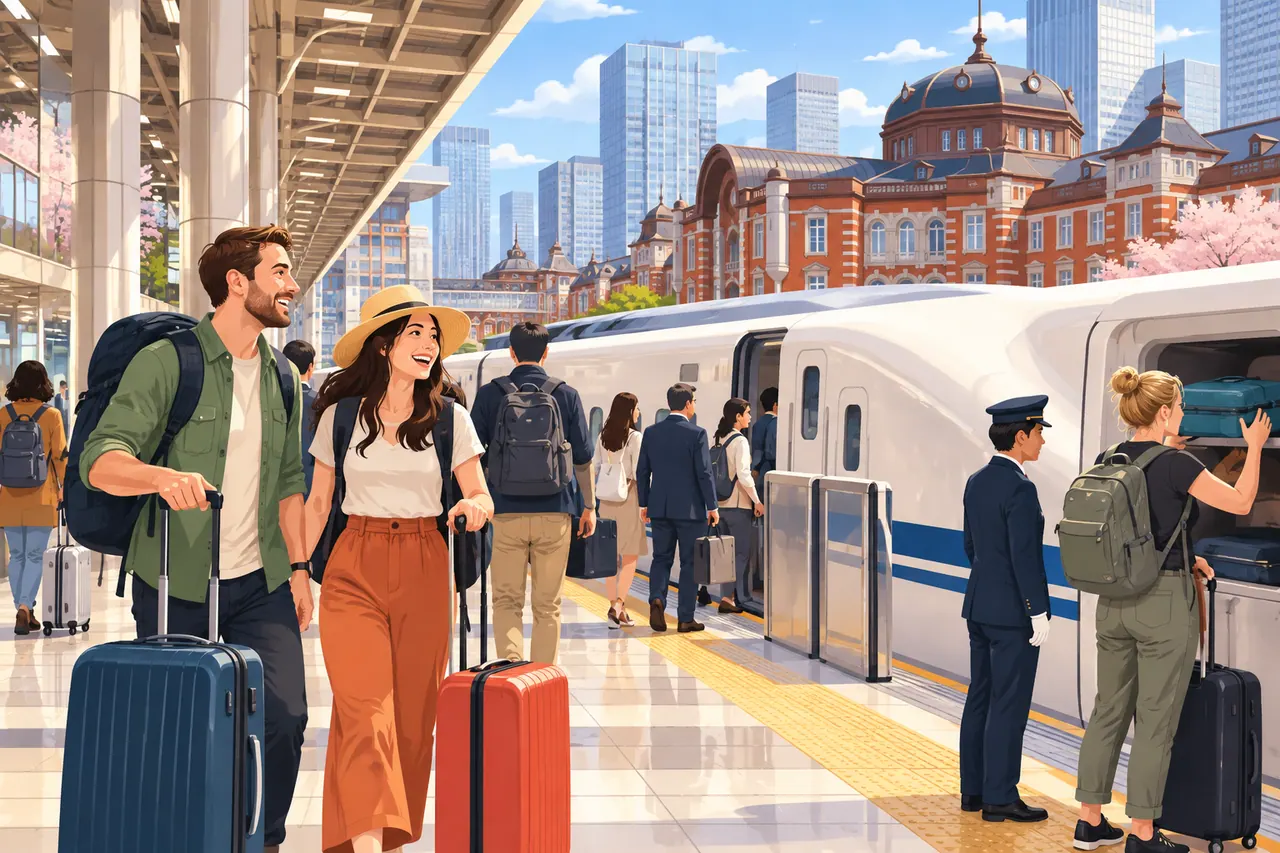
Tokyo to Kyoto: Shinkansen Time, Price, Luggage & Bus
Contents
- 1. 1. Tokyo to Kyoto travel options, time and route
- 2. 2. Tokyo to Kyoto by shinkansen: trains, fares, passes and booking
- 3. 3. Tokyo to Kyoto luggage: size rules, seats and delivery
- 4. 4. Tokyo to Kyoto by bus: night and daytime services
- 5. 5. Tokyo to Kyoto by plane, car or private driver
- 6. 6. Kyoto arrival, local transport and summary
- 7. 7. Tokyo to Kyoto FAQ
For most travelers, the direct Tokaido Shinkansen is the simplest way to travel between Tokyo and Kyoto. JR Central gives about 130 minutes as a general guide, but the actual journey time depends on the train; a published Nozomi example takes 2 hours 9 minutes. JR Central’s Kyoto guide links to SmartEX for date-specific train searches and booking.
A night bus can cost less on some dates: West Japan JR Bus lists basic adult one-way fares of ¥3,300–¥12,500 for the four-seat Seishun Eco Dream and ¥5,000–¥14,500 for the three-seat Grandream. Those are fare ranges, not guaranteed prices for your travel date. Flights, rental cars and private drivers need a full-route comparison because the available examples do not establish a complete Tokyo-to-Kyoto journey time or price.
Check the exact train or bus, luggage conditions and arrival point before paying. Prices and timetable examples below were checked against the supplied sources on 3 November 2026; where a current fare, schedule or service condition could not be established, the guide says so rather than estimating it.
1. Tokyo to Kyoto travel options, time and route
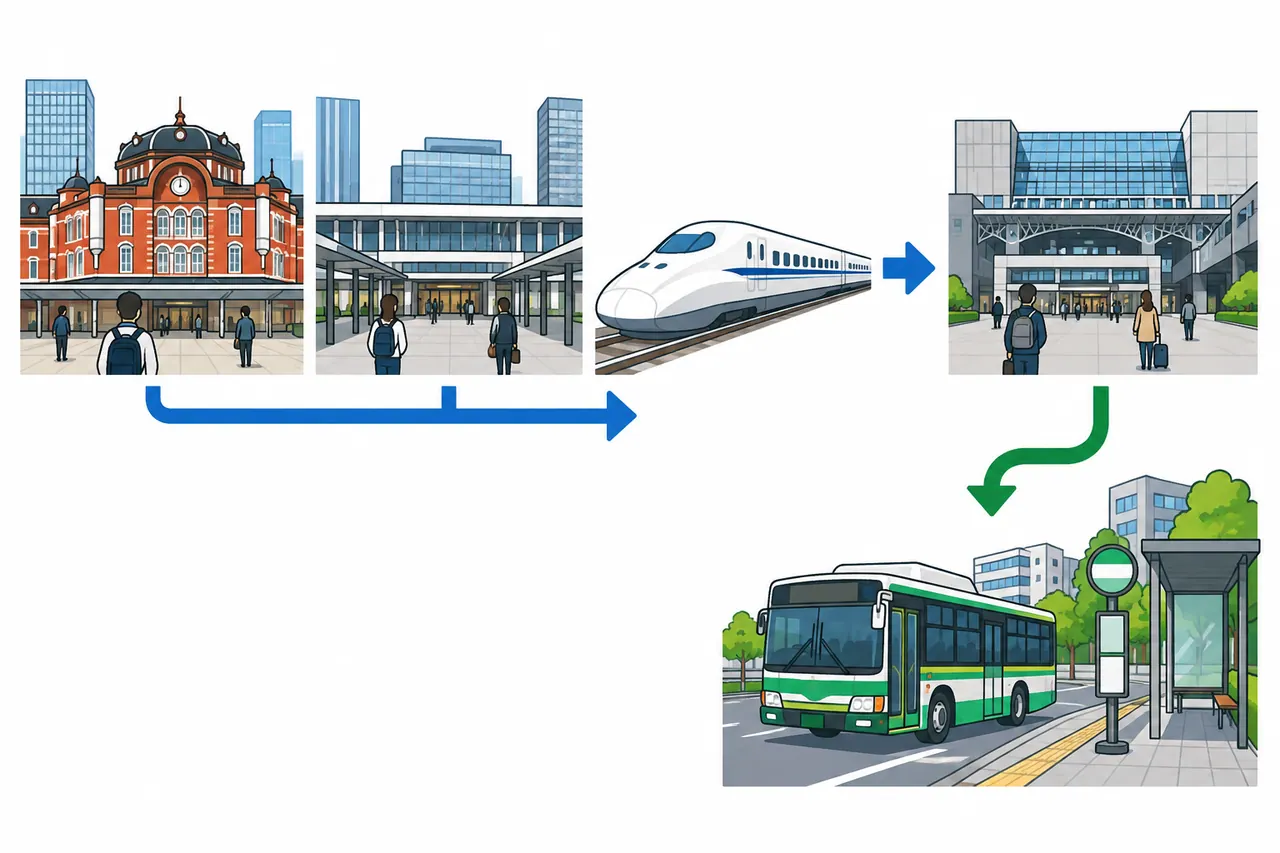
Tokyo and Kyoto are connected directly by the Tokaido Shinkansen, so the train can take you from one city’s main station to the other without a transfer between stations. Buses, flights and road travel involve different departure points and additional ground-transport checks. The former distance figure of 513.6 km could not be confirmed from the available official source, so no rail distance is given here.
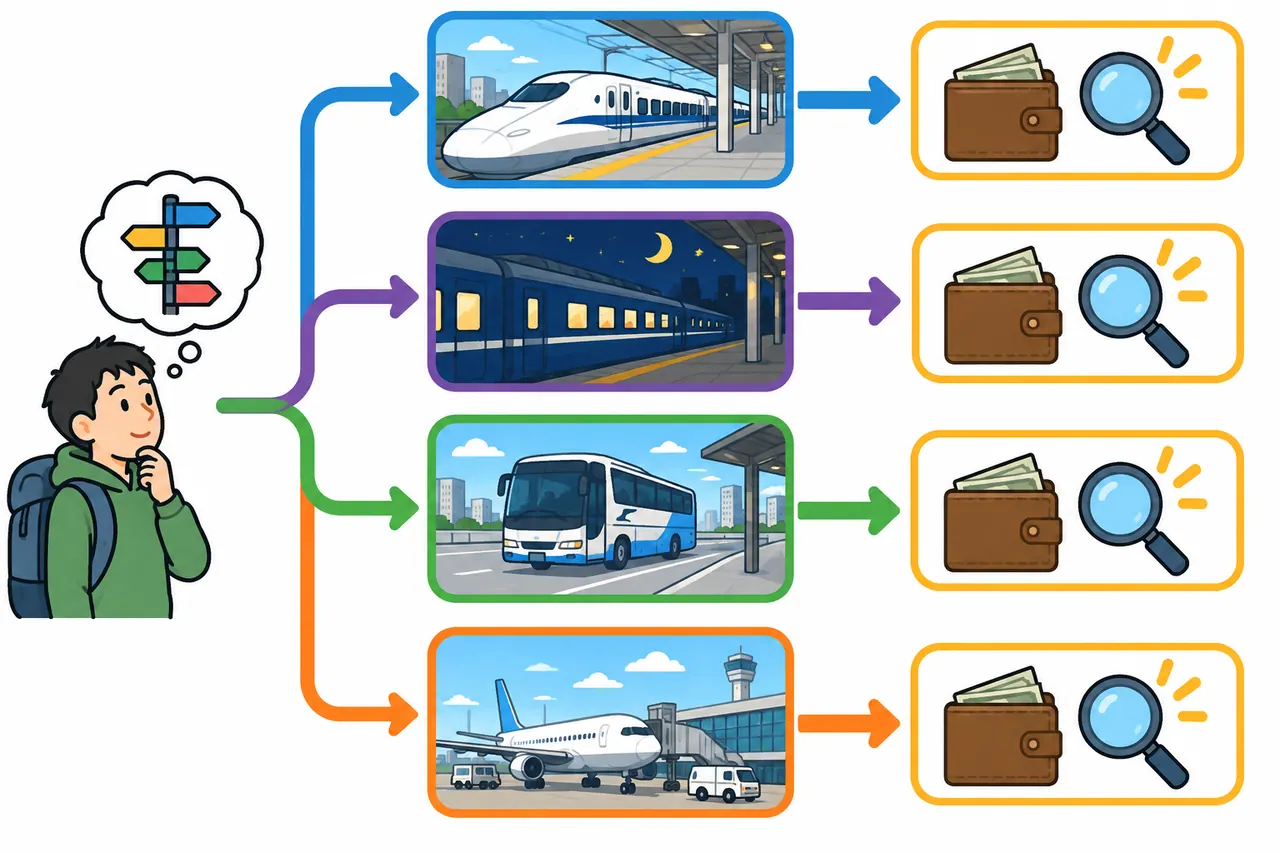

| Option | Time example | Price reference | Main trade-off |
|---|---|---|---|
| Direct shinkansen | JR Central’s general guide: about 130 minutes; Nozomi 1 example: 2 hours 9 minutes | Search SmartEX for your date, route and seat | Direct station-to-station journey; actual fare depends on the product and conditions |
| Night bus | Grandream 5 example: 7 hours 47 minutes | Seishun Eco Dream basic adult range: ¥3,300–¥12,500; Grandream: ¥5,000–¥14,500 | Lower listed fares may be available, but arrival can be early and road conditions affect the trip |
| Daytime bus | Confirm the selected departure and arrival | Check the operator’s fare for your date | Daytime travel; check the exact Kyoto stop and onward route |
| Flight | ANA example: Haneda–Itami, 1 hour 10 minutes in the air | Search the airline for the date and fare conditions | Airport travel and ground transport to Kyoto are extra |
| Rental car or private driver | Request a date-specific estimate | Get a complete quote | Flexible pickup and drop-off, but road time and costs are not established here |
These examples are not quotes for the same date or equivalent journeys. The flight figure is time in the air, not door to door, and the bus fare ranges are not guaranteed prices. For a fair budget, compare the same travel date, number of travelers and start and end addresses, then add local travel, luggage delivery if needed, food and accommodation.
Which option fits your trip?
For a direct station-to-station journey, start by searching the shinkansen. If cost is the priority, compare the actual available seats and fares on the night-bus booking site; weekday fares tend to be lower and major holiday periods can cost more, but this is a general pattern rather than a price promise. JNTO’s overnight-bus guide and the West Japan JR Bus night-fare table provide context and current operator fare information.
A flight may suit an itinerary already organized around airports, but compare all ground legs before choosing it. Ask for a written estimate that covers the same points as your other comparisons.
Route map and station names
Use the stop named on your ticket or bus reservation rather than relying only on a broad map search. Tokyo Station and Shinagawa Station are shinkansen departure choices, while Tokyo Station Yaesu South Exit and Busta Shinjuku are bus departure points used by some services. Kyoto Station Central Exit and Hachijo Exit are different station exits; Kyoto Fukakusa is a separate bus stop, not another name for Kyoto Station.
| Journey point | Place name | Use |
|---|---|---|
| Train departure | Tokyo Station, 東京駅 | Tokaido Shinkansen |
| Train departure alternative | Shinagawa Station, 品川駅 | Tokaido Shinkansen |
| Bus departure | Tokyo Station Yaesu South Exit, 東京駅八重洲南口 | Some highway buses |
| Bus departure alternative | Busta Shinjuku, バスタ新宿 | Some highway buses |
| Train or bus arrival | Kyoto Station Central Exit, 京都駅中央口 | Shinkansen and some buses |
| Station exit | Kyoto Station Hachijo Exit, 京都駅八条口 | Another Kyoto Station exit |
| Bus arrival alternative | Kyoto Fukakusa, 京都深草 | Used by some buses |
Open the Tokyo Station guide or Tokyo Station map to locate the shinkansen gates and ticket offices. For Kyoto, use the Kyoto Station guide and station map; for a bus, match the stop to the operator’s timetable, such as the day-bus timetable.
Before travel, copy the exact departure and arrival names from your confirmation. Search each one in a map app, then add your accommodation address to plan the onward journey. Saving both the English and Japanese place names in your phone notes can help you distinguish exits and stops on the day.
Build a budget for the whole journey
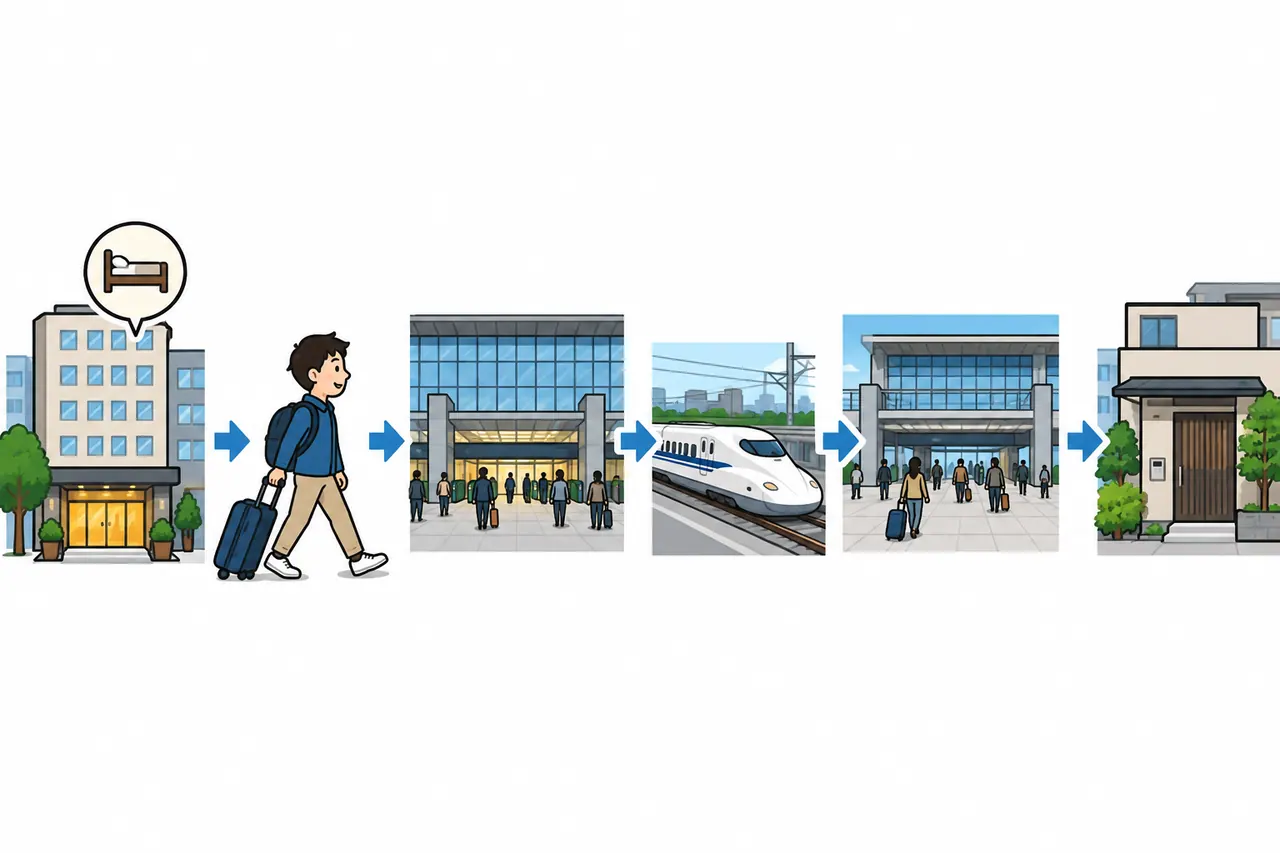
The main ticket is only one part of the trip cost. A train fare search and a bus fare table do not include the same things, so compare them with the same start and end points and add local travel to and from the stations or stops. Neither the SmartEX fare navigator nor the bus fare table supplies a complete door-to-door trip total.
| Cost item | Train | Night bus |
|---|---|---|
| Main transport | Search SmartEX for the actual date and product | Check the operator’s fare and available seats for the date |
| Travel to departure point | Add the fare and time from your Tokyo address | Add the fare and time to the booked bus stop |
| Travel after arrival | Add Kyoto local transport from the station | Add Kyoto local transport from the bus stop |
| Other costs | Add food, accommodation and any luggage delivery | Add food, accommodation and any luggage delivery |
| Total | Add the date-specific ticket and other costs | Add the date-specific fare and other costs |
A practical calculation is: actual Tokyo–Kyoto transport fare, plus travel to departure, plus travel from arrival, plus any necessary luggage delivery. Add meals or an overnight stay if they apply to your plan. The resulting total will depend on your date and choices; no fixed whole-trip price is confirmed here.
2. Tokyo to Kyoto by shinkansen: trains, fares, passes and booking
JR Central describes the Tokyo–Kyoto shinkansen journey as about 130 minutes, while another JR Central page describes it as about two hours in text and shows 130 minutes in an image. These are rounded general descriptions, not a promise for every departure. Use the timetable and booking result for your date to choose the actual train.
Begin with JR Central’s Kyoto route guide and follow its link to SmartEX, or search through the SmartEX fare navigator. Compare the displayed ticket conditions, not just the headline price.
Nozomi, Hikari and Kodama
Nozomi, Hikari and Kodama are service names on the Tokaido Shinkansen, not different stations. Kodama stops at every station, so check the dated timetable rather than assuming a universal travel time.
| Service | Example or stopping pattern | Baggage-space-seat example in a 16-car layout |
|---|---|---|
| Nozomi (のぞみ) | Nozomi 1: Tokyo 6:00 → Kyoto 8:09 | 57 seats |
| Hikari (ひかり) | Check the selected train’s timetable | 42 seats |
| Kodama (こだま) | Stops at every station; check the selected train’s timetable | 17 seats in a layout with ordinary reserved cars 7, 11 and 12 |
The baggage-space seat counts are layout examples, not a statement of live availability. JR Central says the Tokaido Shinkansen can run up to 18 trains an hour across the line; that is not the number of trains stopping at every station or available for every particular journey. An ordinary car is standard class, while a Green Car is an upgraded class with a separate charge; compare the actual fare for the seat you want.
JR Central has also announced Supreme Class from 1 October 2026. Its operating trains, booking conditions and price need to be checked separately, so do not assume that it is offered on a particular Tokyo–Kyoto departure. The current train timetable and booking result remain the practical sources for your journey.
Train fares and SmartEX
A regular shinkansen ticket combines the basic rail fare with a shinkansen express charge. The total depends on the train, seat and product, and a confirmed current standard Tokyo–Kyoto fare was not available in the supplied source review. Use the SmartEX fare navigator to compare Tokyo or Shinagawa to Kyoto for your actual date and seat type.
SmartEX is a shinkansen service, so travel on conventional lines to reach the shinkansen departure station or continue beyond the shinkansen arrival station may require additional fares. Include those legs when comparing its total with a regular ticket. SmartEX announced that prices for some products used with Nozomi or Mizuho will change for purchases from 1 July 2027, and Green Car changes from 15 December 2027 travel; those future changes are not the November 2026 price. SmartEX’s round-trip discount product ended for travel through 31 March 2026, so do not include it in a current comparison.
To check a fare, open the navigator, enter Tokyo or Shinagawa and Kyoto, select the travel date, and choose the seat type. Compare products for the same journey and read their conditions before booking. Save the product name and displayed price so you can compare it with a regular ticket and any necessary local travel.
Japan Rail Pass and the Nozomi extra
The Japan Rail Pass alone does not cover Nozomi. A pass holder can use Nozomi after buying the required special ticket before boarding; for an adult travelling Tokyo or Shinagawa to Kyoto, the extra is ¥4,960 for each ride. Check JR Central’s Nozomi guidance and the Japan Rail Pass special-ticket rules before relying on the pass for this section.
Compare the complete pass price plus the required extra tickets with the prices of separate tickets for all the journeys on your itinerary. The Tokyo–Kyoto leg alone is not enough to decide whether a pass makes sense. List your planned rail journeys and dates, mark each Nozomi trip, and add the special-ticket costs before doing the comparison.
Busy dates, booking and changes
Nozomi has all-reserved-seat periods, including 21–23 November 2026 and 25 December 2026–5 January 2027. There are no unreserved seats on Nozomi during those listed periods; check the Nozomi-specific notice for the complete applicable date list. Other shinkansen services keep their usual unreserved seats during these Nozomi periods, but check the train and date you intend to use.
SmartEX accepts some reservations from one year before the travel date, using a provisional operating plan; the train and seat are confirmed later. This does not mean that membership registration opens one year in advance. SmartEX generally allows up to six adults and children in one booking, with restrictions on bookings made from 23:30 to 5:30; check the advance booking guidance and one-year booking information.
To book, enter the departure station, Kyoto and travel date on SmartEX, then compare train names, times, seat types and product conditions. Choose a baggage-space seat during the search if your bag requires one, and check that the particular seat is available rather than relying only on the train’s general availability. Read the confirmation before paying and save the train, time, car and seat details.
Changes are possible only under the applicable conditions. SmartEX says a reservation can be changed before the reserved train’s departure if conditions such as not yet entering the ticket gate or collecting a ticket are met; the alternative product or train may be restricted, and a fare difference or refund fee may apply. Check SmartEX’s change rules for the specific booking rather than assuming every change is free.
Boarding at Tokyo Station and using your ticket
Tokyo Station has multiple shinkansen gates and exits, so identify the Tokaido Shinkansen entrance using the official station map. The station guide lists the Yaesu Central Exit ticket office as open 5:40–22:45 and the Yaesu North Exit office as open 8:30–19:00; confirm the hours for your travel date. Keep your train and seat information ready before navigating the station.
SmartEX boarding methods depend on the product. The official guidance includes QR tickets or a registered IC card for eligible bookings, but you should follow the boarding instructions attached to your own reservation. If using a QR code, confirm the correct code for each traveler and use the updated method if the reservation changes.
At the station, check whether your ticket says Tokyo or Shinagawa, follow the Tokaido Shinkansen signs, and use the ticket or code specified in your booking. Read the departure screen for the train and platform, then follow the car-number signs and find the seat shown on your confirmation. The preserved traveler videos and posts elsewhere in this guide offer additional visual context for the station and train experience, but your booking and station signs govern your journey.
3. Tokyo to Kyoto luggage: size rules, seats and delivery
Measure a packed suitcase before booking a shinkansen seat. The combined length, width and height can determine whether you need a reserved baggage-space seat, and the seat must be available on your specific train. JR Central’s luggage guide and SmartEX’s baggage instructions explain the rules and booking options.
Measure the bag and check the limit
Add the three sides of the packed bag. JR Central’s general guidance treats baggage with a total of 160 cm or less as ordinary baggage, while a bag over 160 cm and up to 250 cm normally needs an oversized-baggage-space seat. There is conflicting wording around the exact 160 cm boundary in the JR Central and SmartEX information, so if your bag measures exactly 160 cm or is close to the boundary, confirm the rule with the operator before travel.
| Three-side total | General guidance |
|---|---|
| 160 cm or less | No oversized-baggage reservation is generally required; use an appropriate place such as the overhead shelf, foot space or a permitted deck storage area |
| Exactly 160 cm | The official wording differs; confirm with the operator |
| Over 160 cm and up to 250 cm | Normally reserve a seat with oversized-baggage space |
| Over 250 cm | Cannot be brought on board |
JR Central also lists a normal limit of two bags, each no heavier than 30 kg, with a longest-side limit of 200 cm. Measure the packed suitcase, add the three sides, record the longest side and check the weight before booking. Strollers, sports equipment and musical instruments are outside the advance-reservation rule for oversized baggage, but using the special baggage space for them still requires the relevant seat reservation.
Reserve the correct baggage-space seat
The oversized-baggage space is behind the last row of a car. The baggage-space seat costs the same as a regular reserved seat of the same type, with no additional baggage-space charge; carrying oversized baggage without the required reservation can lead to a ¥1,000 fee, including tax. An unreserved seat does not remove the reservation requirement.
Choose the baggage-space option during the train search and check the seat map for the specific seat. It can also be requested at a ticket office or reserved-seat machine, but a generally available train does not prove that its baggage-space seat is available. SmartEX normally allows up to five people in one ordinary-car baggage-space booking or four in a Green Car booking, although some trains differ and groups may need separate bookings.
The special seat cannot be reserved in an unreserved car. On a Kodama where the ordinary cars are all unreserved, an ordinary-car baggage-space seat cannot be booked; JR Central suggests choosing another Kodama with ordinary reserved seats or a Green Car option. SmartEX’s English and Japanese advance-booking information differ on baggage-seat availability, so check the exact train, section and equipment when reserving.
Missed trains, deck storage and delivery
If you miss your booked train, your ticket conditions may allow you to use an unreserved seat on a later train. That does not permit an oversized bag in an unreserved car; ask staff about the ticket and whether you need a new reserved-seat express ticket with the appropriate baggage space. Rules can depend on the ticket you hold.
JR Central describes deck storage near the doors between cars, including a cable lock used with an IC card. A trial of reservation-free storage in some decks began for travel from 1 July 2025. The former “baggage corner” is a different facility from the baggage space behind the last row, and do not assume that a trial storage area accepts oversized baggage.
JR Central also describes luggage delivery between a station or hotel and a hotel on the same day. Its luggage guide refers to bags with three sides totalling up to 200 cm, and the service launch announcement describes eligible accommodation in Tokyo and Kyoto, but current prices, participating properties, cutoff times and conditions need to be confirmed with the operator. Ask your Tokyo hotel whether the Kyoto address is covered, provide the bag measurements and delivery date, and confirm the quote and deadline before handing over the luggage.
4. Tokyo to Kyoto by bus: night and daytime services
A bus may have a lower listed fare than a train, but the price depends on the service, date and seats offered. Check the departure point and Kyoto arrival stop as carefully as the fare, because some services do not arrive at Kyoto Station. The West Japan JR Bus Tokyo-area booking page links to its service and booking information.
Night buses and early arrival
Seishun Eco Dream and Grandream are overnight bus service names. West Japan JR Bus lists basic adult one-way fares of ¥3,300–¥12,500 for the four-seat Seishun Eco Dream and ¥5,000–¥14,500 for the three-seat Grandream; discounts may be offered separately and depend on the service, date and available seats. Check the night-bus fare table for the date you plan to travel.
| Service | Seats across | Basic adult one-way fare range |
|---|---|---|
| Seishun Eco Dream | Four | ¥3,300–¥12,500 |
| Grandream | Three | ¥5,000–¥14,500 |
One Grandream 5 timetable example leaves Tokyo Station Yaesu South Exit at 21:50 and arrives at Kyoto Station Central Exit at 5:37 the next morning, a listed journey of 7 hours 47 minutes. The operator’s timetable is the source for that example; operating days can vary and road conditions may affect arrival. The 5:37 arrival is earlier than the listed 6:30 opening time for JR Central’s Kyoto Station ticket offices, so plan where to wait and what you need on arrival.
The operator lists free Wi-Fi and toilets among the equipment for Grandream and Seishun Eco Dream services, but check the particular departure when booking. A night bus can save a hotel night for some itineraries, but that depends on your schedule, comfort and arrival plans rather than the fare alone. Keep essentials, medication and anything needed immediately in a bag you can access during the journey.
Daytime buses and Kyoto Fukakusa
Hiru Tokkyu means “daytime express”; Seishun Hiru Tokkyu and Gran Hiru Tokkyu are daytime bus service names. The daytime fare table and operator booking page are useful starting points.
Some buses use Kyoto Fukakusa rather than Kyoto Station as their Kyoto stop. That is a separate bus stop, so search your onward route from the stop printed on your reservation. A map search can help locate it, but the booking and operator timetable determine where to board and get off.
Booking a bus
West Japan JR Bus says Highway Bus Net is available from 5:00 until 1:00 the next day, and bookings open at 10:00 one month and one day before departure. Daytime buses use reserved seats and tickets are bought in advance; check the operator’s current conditions before planning around those booking details. The same operator page provides its Tokyo-area booking information.
Open the operator’s booking page, select Highway Bus Net and enter the departure area, arrival area and date. Compare the actual services by fare, seat layout, operating day and both stop names, then read the luggage and cancellation conditions on the booking screen. Save the confirmation with the boarding point and arrival stop, and check the route from the arrival stop to your accommodation.
A Kyoto city night bus is not the same as an overnight bus from Tokyo. Kyoto’s city-bus guide describes night services from the Kawaramachi and Gion areas toward Kyoto Station and says there is no departure from Kyoto Station; see the Kyoto city-bus guide if you are looking for local late-night transport.
5. Tokyo to Kyoto by plane, car or private driver
Flying or travelling by road can work for some itineraries, but the available examples do not establish a complete Tokyo-to-Kyoto time or price. Compare the entire route, including airport or road access, before deciding that one option is faster or cheaper. In particular, do not compare time in the air directly with a station-to-station train journey.
Fly via Itami or Kansai Airport
ANA’s winter timetable lists Haneda–Itami flight NH13 at 7:00–8:10 as a November example, or 1 hour 10 minutes in the air. That excludes travel to the Tokyo airport, airport procedures and the onward journey from Itami to Kyoto. The ANA timetable also includes Haneda–Kansai Airport flights; check the operating flight, fare and conditions for your date.
| Part of the trip | What to include |
|---|---|
| Tokyo address to airport | Ground travel time and fare |
| At the airport | Check-in and security time |
| Flight | Fare, baggage conditions and flight time |
| Airport to Kyoto | Ground travel time and fare |
| Kyoto arrival to final address | Local travel time and fare |
To compare a flight, search the airline timetable for the actual date and read the baggage and change conditions for the fare. Then use the relevant ground-transport operator or a map app to check both airport connections and add the costs and times.
Kansai Airport to Kyoto by HARUKA
JR West’s HARUKA is an express train with a direct service from Kansai Airport to Kyoto; the journey normally requires a basic fare and an express charge. In the timetable effective from 14 March 2026, weekday HARUKA 14 leaves Kansai Airport at 10:16 and reaches Kyoto at 11:34, a 1 hour 18 minute example. Other trains and operating days may differ, so check the HARUKA timetable.
JR West lists a visitor HARUKA One-way Ticket from 1 November 2026 at ¥2,700 for an adult and ¥1,350 for a child between Kansai Airport and Kyoto. This is a special visitor ticket, not the regular fare, and it is subject to conditions including a foreign-government-issued passport and short-term visitor status. Check the complete official ticket conditions before purchase; its price is based on the purchase date, not the travel date.
Rental car or private driver
Ask the provider for a full estimate using the same pickup and drop-off points as your other comparisons, and include any tolls, parking, waiting or return-location costs that apply. A vehicle quote is not directly comparable to a per-person train fare.
| Option | Questions to ask |
|---|---|
| Rental car | Which licence is accepted, where is the return point, and what are the fuel and toll costs? |
| Private driver | Are tolls, parking and waiting included, and is there room for every passenger and bag? |
| Either | What are the change and cancellation conditions? |
Before driving, confirm that your licence is valid for use in Japan under the applicable conditions; the National Police Agency information for foreign drivers explains the relevant requirements. Japan drives on the left. Ask your Kyoto accommodation about parking if you plan to keep the vehicle after arrival.
6. Kyoto arrival, local transport and summary
Start from the station exit or bus stop named in your booking, then plan from that point to your actual Kyoto address. Kyoto Station has more than one exit, and a bus may arrive somewhere other than the station. The JR Central Kyoto Station map helps locate the shinkansen gates and exits.
Kyoto Station exits and onward travel
JR Central lists the Kyoto Station Central and Hachijo Exit ticket offices as open 6:30–21:00; confirm current hours before relying on a ticket office. From the arrival area, use the official station map to identify the exit that matches your onward route. If you arrive by bus, first confirm whether your stop is Kyoto Station or Kyoto Fukakusa.
| Onward choice | Check before setting off |
|---|---|
| Subway or local train | Route, fare, station signs and transfer point |
| City bus | Route, direction, boarding stop and fare |
| Taxi or private driver | Pickup point and expected price |
| Walking | Route from your actual exit or bus stop to the address |
Copy your accommodation address, open a map from the correct arrival point and check the route with the relevant operator. Kyoto City Transportation Bureau provides a bus and tourist map, while its Kyoto Station bus-stop timetable helps identify routes, stops and direction. Follow the signs at your exit, and pause to match the place name on your map before moving on after a long journey.
Kyoto bus fares, IC cards and day tickets
Kyoto City Bus’s ordinary fare in the flat-fare zone is ¥230 for an adult and ¥120 for a child. Fares in adjusted sections depend on the boarding and alighting points, and the Tourist Express Bus has a separate fare, so check the official fare information for your route. City buses generally board from the rear and exit at the front; check the city’s bus-riding guidance for payment methods and current instructions.
The Kyoto Subway and Bus One-Day Pass costs ¥1,100 for an adult and ¥550 for a child. It is valid on the day it is first used, not for a rolling 24-hour period, and some routes are excluded; check the official pass details and fare and ticket information. If all five planned rides were in the ¥230 flat-fare adult zone, those fares would total ¥1,150, slightly more than the ¥1,100 pass, but the actual routes, eligible services and any other discounts matter.
An IC card is a rechargeable travel card, but acceptance depends on the operator and service. Compare the fares for your planned journeys with single tickets and any local pass, and check which routes the pass covers before buying. For step-free access or stroller assistance, ask the operator about the exact journey, including the arrival point and planned connections.
Quick checklist before departure
For the train, save the departure station, date, train, time, ticket method and seat. If using a Japan Rail Pass for Nozomi, include the required special ticket; if you have an oversized bag, save the baggage-space reservation and measurements. For a bus, keep the service name, boarding point, arrival stop and confirmation together.
For a flight or road trip, save the full route, fare conditions and onward travel plan, not just the flight time or vehicle price. In Kyoto, keep your accommodation address and the route from the exact arrival point available offline if possible. For a longer Japan itinerary, compare all planned rail journeys rather than judging a rail pass from the Tokyo–Kyoto leg alone.
7. Tokyo to Kyoto FAQ
The answers below use the dated official examples and conditions described in this guide. A booking screen or operator timetable for your travel date is the source to use for your actual fare, departure and available seat. Check again before setting out, especially for busy dates, luggage and bus stops.
How long does the shinkansen take from Tokyo to Kyoto?
JR Central gives about 130 minutes as a general guide, and another JR Central page describes the journey as about two hours. The timetable example for Nozomi 1 is 2 hours 9 minutes, from Tokyo at 6:00 to Kyoto at 8:09. Train times vary, so check the dated timetable for your chosen departure.
How much does the shinkansen cost?
A confirmed current Tokyo–Kyoto fare was not established in the supplied source review. Use the SmartEX fare navigator to select your date, route and seat, and compare the displayed product with a regular ticket where applicable. Add any travel to and from the stations because SmartEX covers the shinkansen journey, not every local rail leg.
What is the cheapest way to travel from Tokyo to Kyoto?
West Japan JR Bus lists Seishun Eco Dream basic adult one-way fares of ¥3,300–¥12,500, but the fare available depends on the date, service and seats offered. Grandream’s listed basic adult range is ¥5,000–¥14,500, so compare the actual services rather than assuming one is always cheaper. Add local travel and any other costs before choosing by price.
Can I use the Japan Rail Pass on Nozomi?
The pass alone does not cover Nozomi. A pass holder can ride after buying the required special ticket before boarding; for an adult travelling Tokyo or Shinagawa to Kyoto, the extra is ¥4,960 per ride. Compare that amount plus the pass price with separate tickets for all the planned journeys.
What luggage needs a reserved seat?
A bag with three sides totalling over 160 cm and up to 250 cm normally needs an oversized-baggage-space seat. A bag over 250 cm cannot be brought on board, and other limits include a maximum of two normal items, 30 kg per item and a 200 cm longest side. The sources differ in wording around exactly 160 cm, so confirm a bag at that boundary with the operator.
Is there a flight from Tokyo to Kyoto?
The supplied timetable examples are flights from Haneda to Itami and Haneda to Kansai Airport; they do not establish a direct flight to Kyoto. ANA’s NH13 example takes 1 hour 10 minutes from Haneda to Itami, but this excludes airport procedures and ground transport to Kyoto. Compare the complete airport journey with the train before deciding.
What should I check before booking a bus?
Check the fare for your exact date, the service’s operating day, the seat layout and the precise boarding and arrival stops. A Grandream 5 example takes 7 hours 47 minutes and arrives at Kyoto Station at 5:37, before the listed opening time of the station ticket offices. Check luggage and cancellation conditions on the booking screen, and plan for the first part of the morning if your bus arrives early.
Sources and update notes
The official links throughout this guide support the fare, timetable, ticketing, baggage and local-transport details next to the relevant claims. The sources include JR Central, SmartEX, West Japan JR Bus, JR West, ANA, Kyoto City and the Japan National Tourism Organization. The earlier rail-distance figure and several older fare examples could not be confirmed, so they are not presented as current facts.
Prices are in Japanese yen and are per adult, one way unless stated otherwise. Exchange rates change; use the rate available when preparing your own budget. This article has no affiliate links. Fare and timetable references were checked on 3 November 2026, with the Kyoto bus and station details checked on 4 November 2026.
Related guides
For broader planning, see the Kyoto Travel Guide, Japan Rail Pass guide, shinkansen tickets guide, Japan luggage forwarding guide and Japan IC card guide. Other related JGO! guides include Asakusa, Beppu day trips from Fukuoka, and Tokyo ramen, sushi, izakaya and tempura. After arriving, use the Kyoto guide to plan sights, local transport and the rest of your stay.