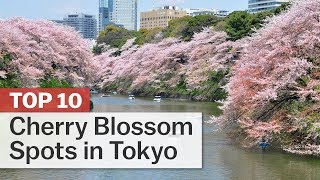
Tokyo Cherry Blossoms: Where to Go and How to Plan
Contents
- 1. 1. Tokyo cherry blossoms: understand the timing first
- 2. 2. Tokyo cherry blossoms: choose a park by its actual trees
- 3. 3. Tokyo cherry blossoms: plan a Shinjuku Gyoen visit
- 4. 4. Tokyo cherry blossoms: organize a flexible day
- 5. 5. Tokyo cherry blossoms: keep festivals and night viewing separate
- 6. 6. Tokyo cherry blossoms: practical questions
Plan a Tokyo cherry-blossom visit around current flowering information and the rules of the garden or park you want to see. Different varieties flower at different times, so a single “peak bloom” date cannot describe every tree in the city. The observations and published information available on November 4, 2026, do not establish flowering dates or reservation conditions for spring 2027.
1. Tokyo cherry blossoms: understand the timing first
There is no one date when all Tokyo cherry trees reach the same stage. Shinjuku Gyoen describes its collection as about 900 cherry trees across roughly 70 varieties, with flowering times that differ by variety. Its official cherry-blossom guide gives typical seasonal windows that can help you decide what to investigate, but these are not guaranteed forecasts for a particular year.
| Variety or term | Typical window described by Shinjuku Gyoen | How to use the information |
|---|---|---|
| Kanzakura | February to early March | Consider it when looking for an early-flowering variety, then check the current report. |
| Somei-yoshino | Late March to early April | This is a useful reference window, not a promise that every tree will peak together. |
| Ichiyō | Early to mid-April | Check later-flowering varieties if your dates fall after the usual Somei-yoshino period. |
| Kanzan | Mid- to late April | A possible later-season option; verify current flowering before choosing a destination. |
| Jūgatsuzakura | Spring and autumn | Look for a current report about the specific location and season. |
| Yaezakura | A general term for cherries with layered petals | Do not treat the term as one variety with one flowering date. |
When you compare dates, distinguish among a forecast, a normal date and an observed date. The Japan Meteorological Agency’s full-bloom table separates recorded full-bloom dates by location from normal dates. A past observation tells you what happened at that location in that year; a normal date is a reference for comparison, and neither one is a current forecast.
At the November 4, 2026 source check, 2027 flowering and full-bloom dates had not been established. The 2026 observations are useful historical information, but they should not be presented as a 2027 prediction. When your travel dates are closer, check current reports for the named variety and place you intend to visit, rather than relying only on a general seasonal headline.
2. Tokyo cherry blossoms: choose a park by its actual trees
The Tokyo Metropolitan Government’s 2026 cherry-park list identifies places and some of the varieties recorded there. It is a practical starting point for matching a visit to the kind of cherry you hope to see, but it does not mean that every variety at a park will flower at the same time. Use the list to form a shortlist, then check the specific park’s current notices and flowering information.
| Place | Location recorded in the official list | Variety detail recorded |
|---|---|---|
| Inokashira Park | Gotenyama 1-chome and other areas, Musashino | Listed as a cherry-viewing park |
| Ueno Park | Ueno-kōen and other areas, Taito | Somei-yoshino and kanhizakura |
| Kinuta Park | Kinuta-kōen and other areas, Setagaya | Somei-yoshino and yamazakura |
| Koganei Park | Sakurachō 3-chome and other areas, Koganei | Several varieties, including kanhizakura |
| Yoyogi Park | Yoyogi Kamizonochō and other areas, Shibuya | Somei-yoshino and Ōshima-zakura |
| Rikugien | Honkomagome 6-chome, Bunkyo | Weeping cherries |
| Koishikawa Korakuen | Koraku 1-chome, Bunkyo | Weeping cherries |
The list gives you useful differences to consider. Ueno and Yoyogi include Somei-yoshino, while Rikugien and Koishikawa Korakuen are listed for weeping cherries; Kinuta adds yamazakura to its recorded varieties. Inokashira Park is also included, although the listed information does not name a variety in the details summarized here. A park’s presence on the list is not a claim that its trees are currently in bloom.
Treat the list as a guide to places and varieties, not as a current ticket catalogue or festival calendar. It does not establish each park’s present admission price, opening hours, night access, event schedule or walking time from a station. Before fixing your day, check the named facility’s current visitor information for the conditions that matter to you, especially if a paid garden or an evening visit is part of the plan.
3. Tokyo cherry blossoms: plan a Shinjuku Gyoen visit
Shinjuku Gyoen is a useful choice for visitors who want to compare several cherry varieties in one garden. Its official guide describes about 900 cherry trees across roughly 70 varieties, including about 300 Somei-yoshino. Those figures describe the collection; they do not mean that every tree flowers simultaneously or that one visit will show every variety at its best.
The garden’s visitor information lists general admission at ¥500, admission for people aged 65 and over at ¥250, and admission for students of high-school age or above at ¥250. Junior-high-school students and younger are free under the Japanese school-category wording used in the published information. If you are buying a reduced-price ticket, check the garden’s eligibility requirements rather than assuming that a different age or school system maps directly onto those categories.
The visitor information lists spring regular opening hours as 09:00–18:00, with final entry at 17:30. Its usual closing day is Monday, or the next weekday when Monday is a holiday; it also lists March 25–April 24 as a period when Mondays are open. The same page states that busy cherry-season days may require advance reservations, so check the announcement for your actual visit date instead of assuming that a reservation is always required or that a 2027 reservation calendar is already available.
| Planning detail | Published information | What to check for your visit |
|---|---|---|
| General admission | ¥500 | Current ticket and entry conditions |
| Age 65 and over | ¥250 | Eligibility requirements for the reduced ticket |
| High-school-age students and above | ¥250 | Student eligibility requirements |
| Junior-high-school students and younger | Free | Japanese school-category wording applies |
| Spring regular hours | 09:00–18:00 | Any seasonal or special notice |
| Spring final entry | 17:30 | Your entry time and any reservation conditions |
| Cherry-season reservations | May apply on busy days | Dates and booking procedure for the current season |
| Gates | Shinjuku, Ōkido and Sendagaya | Which gate best matches your approach |
The garden is at 11 Naitomachi, Shinjuku-ku. Its official access guide distinguishes the Shinjuku, Ōkido and Sendagaya gates, so include the gate—not just the garden name—in your plan. The same visitor information lists transport IC payment at the entrance gates, lockers priced at ¥300 and ¥500, and free wheelchair loans requested at reception on the day. These details can help with planning, but they do not guarantee that a particular locker or wheelchair will be available when you arrive.
4. Tokyo cherry blossoms: organize a flexible day
A practical blossom day starts with one confirmed main destination and leaves room to adjust the rest. First identify the place whose current flowering information best matches your dates. Then check its admission rules, opening conditions and the entrance or gate you intend to use. Only after those details are settled should you add another park or an evening activity.
Keep opening time and visit duration separate in your planning. Shinjuku Gyoen’s listed final entry time of 17:30 is an entry deadline, not a recommended arrival time for a relaxed visit. The official information cited here does not establish one ideal amount of time to spend in the garden, or walking times between all the parks in this guide, so do not build a timed route around assumptions.
For Shinjuku Gyoen, choose among the three named gates using the official access information and your own journey. Saving the exact gate makes your approach clearer than saving only the garden’s name. If your plan depends on a particular entrance, confirm that it is appropriate for your date before setting out.
A simple planning sequence is:
- Open the current visitor page for your intended park or garden.
- Check a current flowering report and note which variety it describes.
- Read ticket and reservation instructions before choosing an arrival time.
- Save the correct gate or entrance from the official access information.
- Check practical services, such as lockers or mobility support, if they affect your visit.
At Shinjuku Gyoen, the listed locker prices and day-of wheelchair loan may be useful details for a visit with luggage or mobility needs. The loan is described as free and requested at reception on the day; that information is not a promise of availability. If a service determines whether your day is workable, check the garden’s current visitor information before relying on it.
A flexible plan also has a reason for its second choice. You might choose another place because it has a different recorded variety, offers a different location, or better suits the entry conditions you have confirmed. That is more useful than trying to visit every highly photographed park regardless of what is flowering. Keep the day’s fixed commitments limited to details that the current official information supports.
5. Tokyo cherry blossoms: keep festivals and night viewing separate
A park with cherry trees is not automatically a festival venue, a night illumination or a picnic space with the same rules as another park. The Tokyo 2026 list identifies parks and varieties; it does not establish future event schedules or current use conditions for every location. Check a specific event or facility notice before treating a photograph or old festival listing as part of your own itinerary.
If night viewing matters, look for an announcement that names the place and the year you plan to visit. A daytime opening schedule does not establish permission to enter after dark, and a photograph from a previous illumination only documents that earlier scene. Do not assume that the same event, hours or access arrangements will apply in a later season.
For a picnic, read the chosen park’s current rules about food, drinks and use of its grounds. Do not transfer one park’s practices to Shinjuku Gyoen or to another managed garden. The useful question is not simply whether people picnic in Tokyo during blossom season, but whether your chosen activity is allowed at that particular place on your date.
Variety matters when expectations are set. A usual flowering window can point you toward a useful report, while weather and the actual season determine what is visible during your trip. Jūgatsuzakura is described as flowering in spring and autumn, but that does not mean every cherry-viewing spot has an autumn display. Look for the named variety and a current report from the location you intend to visit.
When you prepare a backup, choose one that adds something meaningful: a different recorded variety, a different location or entry conditions that better fit your day. A backup should remain an option, not a second fixed commitment that depends on unverified travel times or flowering. This approach lets you change plans when current information differs from expectations without treating historical dates as a guarantee.
6. Tokyo cherry blossoms: practical questions
Use the questions below to separate what the published information supports from what still needs a current check. The key official references are the garden’s variety guide and visitor information, the Tokyo list of cherry-viewing parks, and the JMA table of observed full-bloom dates. Their different purposes matter: a variety guide, a park list and a record of past observations do not all answer the same planning question.
When will Tokyo’s cherry blossoms bloom in 2027?
The official information checked on November 4, 2026, did not establish 2027 opening or full-bloom dates. Shinjuku Gyoen’s typical variety windows can help you understand the season, but they are not forecasts for your travel dates. Check current reports closer to your visit and make sure they refer to the variety and location you want to see.
What does “yaezakura” mean?
Shinjuku Gyoen describes yaezakura as a general term for cherries with layered petals, rather than the name of one single variety. It should therefore not be treated as one tree type with one fixed flowering date. When planning around it, check the actual variety and the current location report.
Do I need to reserve Shinjuku Gyoen in cherry season?
The garden’s visitor information says that advance reservations may apply on busy cherry-season days. The information checked here does not establish a 2027 reservation calendar or the dates when reservations will be required. Check the garden’s current announcement for the season you plan to visit and follow the booking procedure it gives.
Are all the parks on the Tokyo list free to enter?
The Tokyo list is a list of cherry-viewing parks and varieties, not a single admissions policy. It does not establish current prices for every park or garden. Check the individual facility’s official visitor information before budgeting or assuming that entry is free.
Does a JMA full-bloom date tell me what I will see this year?
No. The JMA table separates observed dates at locations from normal dates, and an observation records what happened in a particular year. A normal date is a reference, not a live report, and neither one guarantees current flowering at your chosen park. Use a current location report for conditions during your trip.
Can I assume a park with cherry trees has night viewing or a festival?
No. A cherry listing does not establish a festival, illumination or permission to enter at night. Check the relevant park’s current event and access notices for the place and year you plan to visit. The daytime hours of a garden should not be treated as authorization for after-dark entry.
What should I check if weather changes my plans?
Start again with current flowering information and the visitor conditions for the alternative destination. A usual variety window or a past photograph cannot establish what remains visible after particular weather. Keep a second option that you have checked for its own admission, access and activity rules, rather than assuming the first park’s arrangements apply elsewhere.