Tochigi Prefecture Travel Guide: Nikko, Waterfalls and More
Contents
Tochigi offers several different kinds of visits: temple stops in Nikko, Lake Chuzenji and Kegon Falls, Kinugawa Onsen, and Utsunomiya’s gyoza restaurants. These places are not one single attraction or one simple route, so choose the area and purpose of your trip before deciding what to fit into a day. The Japan National Tourism Organization also introduces outdoor activities around Lake Chuzenji, Kinugawa Onsen and Utsunomiya’s gyoza scene as regional options. See JNTO’s Tochigi guide.
This guide focuses on practical planning for Rinnoji and Kegon Falls, with other Tochigi choices included to help you decide where to start. The temple and the waterfall elevator have different prices, seasonal hours and ticket conditions. The official information cited here was checked on November 4, 2026; opening notices, transport details and other conditions can change, so check the relevant official page again for your travel date.
1. Choose Your Tochigi Stops
Start by choosing the kind of day you want rather than trying to combine every well-known place in the prefecture. A cultural visit can focus on Rinnoji in Nikko, while a nature-focused visit can centre on Lake Chuzenji and Kegon Falls. If neither is your main interest, JNTO’s Tochigi overview offers other starting points: Kinugawa Onsen, outdoor activities around Lake Chuzenji, and gyoza restaurants in Utsunomiya. JNTO’s regional overview is useful for exploring those broader options, but the practical details for each individual restaurant, accommodation or activity need to be checked with the relevant provider.
The simplest comparison is between the two experiences covered in detail here. Rinnoji has several ticket choices and seasonal visiting hours; Kegon Falls’ elevator has its own seasonal schedule and charges a round-trip fare. A visit to both can be planned as a Nikko-area day, but it requires separate decisions about temple tickets, the bus to the Lake Chuzenji area, and the return journey.
| Stop or ticket | Published price | Published hours or conditions | Official information |
|---|---|---|---|
| Rinnoji Sanbutsudo | Adult ¥400; elementary- and junior-high-school student ¥200 | 08:00–17:00 April–October; 08:00–16:00 November–March. Reception ends 30 minutes before closing. | Rinnoji visitor information |
| Rinnoji Taiyuin | Adult ¥550; elementary- and junior-high-school student ¥250 | Check the temple’s current visiting details. | Rinnoji visitor information |
| Rinnoji treasure hall and Shoyoen garden | Adult ¥300; elementary- and junior-high-school student ¥100 | The temple page announced closure on November 25, 2026. Check the page for the date of your visit. | Rinnoji visitor information |
| Sanbutsudo and Taiyuin set ticket | Adult ¥900; elementary- and junior-high-school student ¥400 | November–March reception ends at 13:30. | Rinnoji visitor information |
| Kegon Falls elevator, round trip | Adult ¥600; elementary-school student ¥400; preschool children free | First come, first served; reservations are not required. | Kegon Falls elevator information |
For an adult choosing the Sanbutsudo individual ticket and the Kegon Falls elevator, the published charges total ¥1,000: ¥400 plus ¥600. This is an example of two admissions only, not a complete trip budget; it excludes transport, food and accommodation. If you plan to enter both Sanbutsudo and Taiyuin, the set ticket costs ¥900 for an adult compared with ¥950 for the two individual tickets, and ¥400 for an elementary- or junior-high-school student compared with ¥450 separately. That is a ¥50 saving per visitor in either listed category, but the set ticket’s November–March 13:30 reception cutoff may affect whether it suits your schedule.
Use the table as a comparison, not as a substitute for checking the official pages. In particular, the temple’s general reception cutoff and the set ticket’s seasonal cutoff are different conditions. The elevator’s first-come, first-served rule applies to that facility; it does not mean that temple admission has the same booking arrangement.
2. Rinnoji in Nikko: Tickets, Hours and Planning
Rinnoji is at 2300 Sannai, Nikko, and the temple lists its telephone number as 0288-54-0531. Its visitor information separates admission for Sanbutsudo, Taiyuin, and the treasure hall and Shoyoen garden, as well as offering a Sanbutsudo–Taiyuin set ticket. Decide which places you intend to enter before comparing prices, because the set ticket covers Sanbutsudo and Taiyuin rather than every listed facility. Check Rinnoji’s visitor information for current ticket details.
The temple lists visiting hours of 08:00–17:00 from April through October and 08:00–16:00 from November through March. Regular reception ends 30 minutes before closing, so arriving at the closing time is not a workable plan for admission. The set ticket has an additional limitation: from November through March, its reception ends at 13:30. If the set ticket is important to your visit, plan around that earlier cutoff rather than assuming the regular reception window applies.
| Rinnoji admission | Adult | Elementary- and junior-high-school student |
|---|---|---|
| Sanbutsudo | ¥400 | ¥200 |
| Taiyuin | ¥550 | ¥250 |
| Treasure hall and Shoyoen garden | ¥300 | ¥100 |
| Sanbutsudo and Taiyuin set ticket | ¥900 | ¥400 |
The prices above are the published amounts checked on November 4, 2026. The temple page also says that the common admission ticket for multiple shrines and temples is not being sold. Do not include that ticket in your plan on the assumption that it will be available; consult Rinnoji’s current guidance to identify the admission option for your visit. The temple page announced that the treasure hall and Shoyoen garden would be closed on November 25, 2026, so visitors considering that date should check the official notice and any later updates.
A practical way to use the ticket information is to decide first whether Sanbutsudo alone is enough for your visit or whether you also want to enter Taiyuin. For an adult, the set ticket is ¥50 less than the two individual admissions; the same difference applies to the listed student prices. That saving is modest, so the relevant question is not only the price but whether you can reach the ticket reception before the seasonal cutoff and whether both included places fit your plans.
Check the temple page again close to your travel date, especially if you are visiting in winter or intend to see the treasure hall and Shoyoen garden. The published seasonal hours and ticket conditions give you a planning framework, but they do not confirm that every area will be open on every date. For a specific question, Rinnoji lists 0288-54-0531 as its telephone number. Rinnoji’s official visitor page.
3. Kegon Falls: Seasonal Scenery and Elevator Details
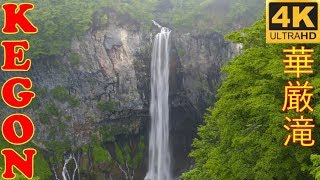
Kegon Falls flows from Lake Chuzenji, and the Nikko tourism association lists its height at approximately 97 metres. The association describes fresh greenery around the falls in May and notes that smaller falls freeze during January and February. It also warns that water may be stopped at night or at other times depending on water volume, so the visible flow can be affected by conditions. Read the Nikko tourism association’s Kegon Falls information.
The Kegon Falls elevator is at 2479-2 Chugushi, Nikko. The operator lists hours of 08:00–17:00 from March 1 to November 30 and 09:00–16:30 from December 1 to February 28. A round trip costs ¥600 for an adult and ¥400 for an elementary-school student; preschool children are free. These are elevator admission prices, not transport fares or the cost of a broader Nikko visit. Check the elevator operator’s prices and visitor conditions.
The elevator is first come, first served, and reservations are not required. The operator does not permit pets and asks visitors not to bring food or drink into the facility. These rules are specific to the elevator facility, so review the operator’s current notice if your plans depend on a particular condition. The listed telephone number is 0288-55-0030.
| Kegon Falls elevator detail | Published information |
|---|---|
| Address | 2479-2 Chugushi, Nikko |
| March 1–November 30 | 08:00–17:00 |
| December 1–February 28 | 09:00–16:30 |
| Adult round-trip ticket | ¥600 |
| Elementary-school student round-trip ticket | ¥400 |
| Preschool children | Free |
| Reservations | Not required; admission is first come, first served |
| Facility restrictions | Pets are not permitted; visitors are asked not to bring food or drink |
| Telephone | 0288-55-0030 |
Season affects both the elevator timetable and what the landscape may look like, but those are separate considerations. The association’s seasonal descriptions are not a guarantee that a particular scene will be visible on a particular day, and its water-volume notice means the flow may vary. Check the operator’s hours and current notices before travelling, especially if the elevator is the main reason for your visit.
4. Getting to Kegon Falls from the Nikko Station Area
For visitors travelling from the Nikko station area, the elevator operator directs them to take a Tobu bus bound for Chuzenji Onsen or Yumoto Onsen. The operator lists a five-minute walk from the Chuzenji Onsen bus stop to the elevator. Use the operator’s access page to confirm the route details, then check the current bus timetable, fare and return service for your travel date; those transport details are not included in the elevator admission price. See the operator’s access guidance.
A workable planning sequence is to identify the bus toward Chuzenji Onsen or Yumoto Onsen, confirm where to get off, and allow time for the listed walk from Chuzenji Onsen. Next, check the elevator’s seasonal closing time and decide when you need to start your return journey. The elevator is first come, first served, so there is no reservation time to build into the plan, but you still need to leave enough time for admission and the onward trip.
Before setting out, check both directions of travel rather than looking only at the trip to the falls. The operator’s access information identifies the bus and the walking connection, but it does not replace a current timetable check. Confirm the return service before adding other stops, and do not assume that a bus schedule or fare you found for another date will be unchanged.
For drivers, the operator identifies Kegon parking areas 1 and 2, each a two-to-three-minute walk from the elevator. The listed charge for an ordinary car is ¥500 per use. The operator gives an approximate drive of 50 minutes from Utsunomiya Interchange via Kiyotaki Interchange and Irohazaka; actual travel conditions and parking availability can change. Review the official access and parking information.
The bus and driving options therefore call for different checks. Bus travellers should confirm the current timetable, fare and return service, while drivers should account for the operator’s approximate drive time and check parking conditions for the day. Neither option removes the need to confirm the elevator’s seasonal hours, which determine the available admission window.
5. Food, Hot Springs and Choosing a Season
If your main interest is food, JNTO points to Utsunomiya’s gyoza restaurants as one of Tochigi’s regional draws. If you are looking for a hot-spring stay, it introduces Kinugawa Onsen; if outdoor activities appeal more, it highlights the area around Lake Chuzenji. These are useful directions for further research, not a single combined itinerary: choose a restaurant or accommodation and check that provider’s own details before making plans. Explore the regional choices in JNTO’s Tochigi guide.
| Your main interest | A place to research | What to decide next |
|---|---|---|
| Temple visit | Rinnoji in Nikko | Choose the hall or set ticket and check the seasonal reception cutoff. |
| Lake scenery and waterfall | Lake Chuzenji and Kegon Falls | Check the bus from the Nikko station area and the elevator’s seasonal hours. |
| Food | Utsunomiya gyoza restaurants | Choose a restaurant and confirm its own details. |
| Hot-spring stay | Kinugawa Onsen | Choose accommodation and check its own conditions. |
| Outdoor activities | Lake Chuzenji area | Identify an activity and confirm its details with the relevant provider. |
For a Nikko day that includes both Rinnoji and Kegon Falls, consider the temple ticket and its cutoff before fitting in the waterfall trip. From November through March, the Sanbutsudo–Taiyuin set ticket has a 13:30 reception cutoff, while the elevator follows a separate winter schedule of 09:00–16:30 from December 1 through February 28. The bus connection and return journey need their own timetable check. The official pages do not provide a complete trip budget or confirm that every part of a proposed day will fit together, so treat the plan as a sequence to verify rather than a guaranteed schedule.
Seasonal planning matters even if you are not visiting both places. Rinnoji’s listed opening hours differ between April–October and November–March, and the elevator has a different winter schedule. The Nikko tourism association’s descriptions of May greenery and January–February frozen smaller falls can help you choose a season, but they describe possible seasonal scenery rather than promising what you will see on a particular date. Check weather, transport and facility notices as part of deciding the order of your stops.
A broader Tochigi trip may include areas beyond the two Nikko stops in this guide, but the sources here do not establish the number of nights needed, a prefecture-wide accommodation total or a complete transport budget. Avoid treating the admission prices in this article as a full-cost estimate. For each additional destination, confirm its location, transport, opening information and any booking conditions with the relevant official or provider page.
6. Frequently Asked Questions
Do I need to reserve the Kegon Falls elevator?
No reservation is required according to the elevator operator; visitors are served first come, first served. Check the current operating hours and notices for your date, since the published schedule changes by season. For the operator’s current information, use the Kegon Falls elevator page.
How much is admission to Rinnoji’s Sanbutsudo?
The published Sanbutsudo ticket is ¥400 for an adult and ¥200 for an elementary- or junior-high-school student. Taiyuin and the treasure hall and Shoyoen garden have separate prices, and the temple also lists a Sanbutsudo–Taiyuin set ticket. Check Rinnoji’s visitor information for the ticket that applies to the places you intend to visit.
What is the winter cutoff for the Rinnoji set ticket?
From November through March, reception for the Sanbutsudo–Taiyuin set ticket ends at 13:30. The temple also lists regular reception as ending 30 minutes before closing, so do not assume that the general cutoff replaces the earlier set-ticket condition. Confirm the current details on Rinnoji’s official page.
How do I walk to the elevator from the bus stop?
The elevator operator lists a five-minute walk from the Chuzenji Onsen bus stop. From the Nikko station area, it directs visitors to a Tobu bus bound for Chuzenji Onsen or Yumoto Onsen. Check the current bus timetable, fare and return service, and use the operator’s access page for the published access information.
Can I take a pet or food into the elevator facility?
The operator says pets are not permitted and asks visitors not to bring food or drink into the facility. These conditions refer to the elevator; consult the operator’s current notice if you need to confirm whether its guidance has changed. The operator lists 0288-55-0030 as its telephone number. Kegon Falls elevator information.
What is the total cost of visiting Rinnoji and Kegon Falls?
There is no single total in the published admission information because the amount depends on the temple ticket you choose and does not include transport, food or accommodation. As one limited example, an adult’s Sanbutsudo ticket and Kegon Falls elevator ticket total ¥1,000 in published admission charges. Check the current facility pages and separately verify transport and any other costs for your own trip.
Before travelling, check the relevant official facility and transport information for your dates. For wider trip planning, JGO! also has guides to train etiquette, rental cars and the best time to visit Japan.