Ramen ticket machine: ordering, payment and mistakes
Contents
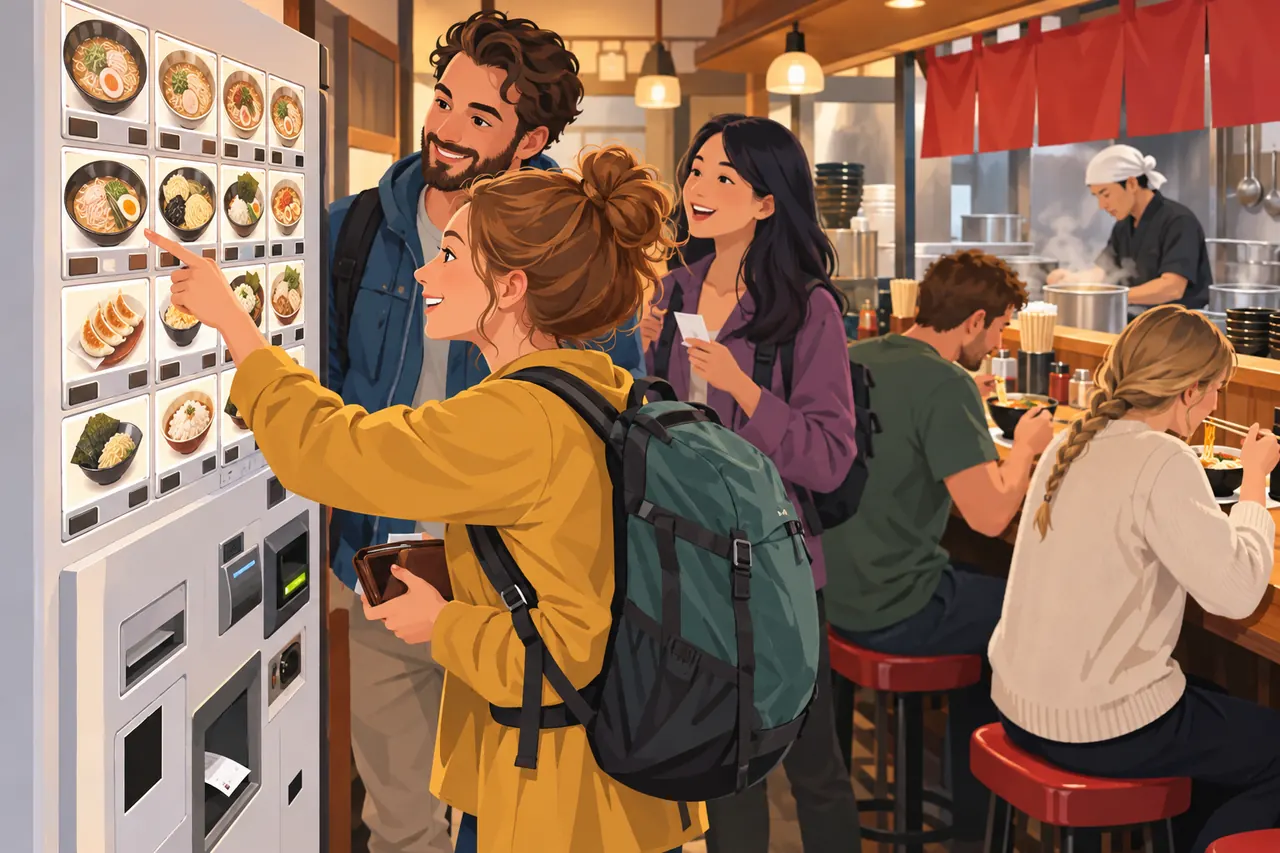
A ramen ticket machine lets you pay for a meal before sitting down. In the usual ticket-ordering process, you choose an item, take the printed ticket and give it to staff; the kitchen prepares the food after that. The details vary by restaurant, so follow the instructions on the machine and any directions from staff rather than assuming every shop uses the same sequence.
The important distinction is between a restaurant machine that sells an order ticket and a vending machine that dispenses a finished meal. This guide is about the restaurant ordering process. A video showing hot noodles emerging from a machine is demonstrating a different kind of vending system, not the usual way to order a kitchen-prepared ramen bowl.
Not every ramen shop uses a ticket machine. Some sell meal tickets before seating, while others take orders directly from diners, as the Japan National Tourism Organization’s ramen guide explains. LIVE JAPAN’s demonstration of a restaurant food-ticket machine can also help you see the hand movements involved, but the machine in your restaurant may look different.
1. Identify the ordering system before you start
Look at the entrance and follow the shop’s directions first. If staff are taking orders or guiding customers to seats, do not assume you need to find a machine. Some restaurants sell a ticket before you sit down; others take the order directly.
A physical-button machine and a touch screen can present choices differently, but there is no single verified layout that applies to every shop. Read the visible instructions and check what action the machine is asking you to take next. The JNTO’s illustrated example begins by inserting money and then pressing the button for the food, but that example is not a nationwide rule for every machine or screen.
Before paying, identify the main bowl you want. A picture of an egg, extra meat or another topping may represent an addition rather than a complete ramen meal, so check that the item you select is the bowl itself if you want a bowl. If the labels or photographs are unclear, point to the dish and ask staff which selection corresponds to it; this is safer than guessing and discovering later that you bought only an extra item.
The screen or panel may show drinks and side dishes as well as ramen. Treat those as optional choices unless you want them, and check the displayed item before selecting it. Giselle Sees Japan’s guide to food-ticket ordering inside a Japanese ramen shop offers another visual introduction, but staff instructions at the restaurant you visit should take priority.
2. Buy the ticket in a clear sequence
The JNTO’s example is a useful model for a money-first machine: inspect the payment instructions, insert money, select the food, take the printed ticket, collect any change and give the ticket to staff. It is an example rather than a guarantee that every machine works in precisely that order. In particular, do not insert money until you have checked the directions on the machine in front of you.
For the money-first example, follow these steps:
- Check the machine’s instructions and payment information before inserting money.
- Insert money as directed.
- Press the button for the ramen you want, then select drinks or side dishes only if you want them.
- Take the printed meal ticket from the machine.
- Collect any change, following the machine’s instructions.
- Give the ticket to restaurant staff and follow their directions about where to sit.
Keep the ticket with you until staff collect it. Buying it does not necessarily settle every choice about your meal: one restaurant may ask about preferences separately, while another may include choices as part of its own ordering process. Listen for the next instruction after you hand over the ticket rather than assuming that payment has communicated every preference to the kitchen.
A control that does not respond is not, by itself, proof that an item is sold out. The accepted payment types, the location of controls and the order of operations vary, and the official sources cited here do not establish one standard layout for change or language controls. Check the screen and ask staff for help instead of repeatedly adding money or pressing buttons without knowing what the machine is doing.
3. Check payment methods and prices
Payment acceptance is a question for the specific restaurant or branch. Ichiran states that it has introduced cashless-compatible ticket machines except at some locations and directs customers to check individual shop information for details. That does not mean every ramen shop in Japan accepts cards, nor does it confirm that every machine supports English.
The prices below are for Ichiran Shinsaibashi, not a national average or a promise about another branch. The branch information was checked on November 4, 2026. Use the official Shinsaibashi shop page for the visit date, since the restaurant says that staffing conditions can affect its hours or closure status and crowding may lead to entry restrictions earlier than usual.
| Choice at Ichiran Shinsaibashi | Published amount | What it covers | Important condition |
|---|---|---|---|
| Ramen | ¥1,180 | The listed ramen item | Ordinary seat reservations are not accepted |
| Extra noodles (kaedama) | ¥210 | An additional portion of noodles | An addition, not another full bowl |
| Half extra noodles | ¥150 | Half a portion of extra noodles | An addition to the meal |
| Late-night dining | Additional charge applies | Dining from 22:00 to 06:00 | Ask the branch for the amount before ordering |
One listed ramen plus one full portion of extra noodles totals ¥1,390, before any applicable late-night charge or other additions. This is an arithmetic example using the published Shinsaibashi prices, not an all-inclusive budget for a visit. Drinks, side dishes and travel are separate, and the published late-night information does not specify the charge amount.
The Shinsaibashi branch is at 1-3-29 Shinsaibashisuji, Chuo-ku, Osaka. Its published hours are 10:00 to 06:00 the following morning, with last orders at 05:45. The branch also notes that crowding can bring entry restrictions forward and that staffing may cause sudden changes to hours or closures, so check the official branch information before setting out.
4. Understand Ichiran’s seat and noodle system
Ichiran has additional steps beyond buying a meal ticket. Its ordering guide says the vacant-seat board uses the illuminated character 空 to indicate an available seat. Once seated, customers can use a preference form to specify choices such as flavor strength and noodle firmness.
Hand the preference form to staff together with the meal ticket, following the official Ichiran ordering instructions. A call button at the seat can be used to contact staff. These details describe Ichiran’s process, not a general feature of ramen ticket machines, so do not expect another restaurant to have the same board, form or button.
Ichiran also describes kaedama, or an additional portion of noodles, as a separate order. For that order, the customer receives a metal plate and places it on a sensor at the seat to communicate the request. The extra-noodle process and seat sensor are specific to this system; at another ramen shop, ask staff how to request more noodles rather than looking for an Ichiran-style plate.
A Solo Nippon Xpress video offers a visual introduction to Ichiran’s restaurant format. MJ日語 presents Chinese-language Japanese phrases associated with ramen queues, vending machines and requests. These videos may help you become familiar with the setting, but the restaurant’s own instructions determine what to do at the counter.
5. Fix a mistake before the meal starts
If you receive the wrong ticket, show it to staff promptly and explain what you intended to order. Ask what correction is possible rather than buying another item to compensate before you know how the shop handles the mistake. The available official information does not establish a universal refund or replacement policy, so the correction process depends on the restaurant.
If a machine rejects your money, check the payment instructions and ask staff which payment methods it accepts. There is no verified rule here about which banknotes every machine accepts or where every machine places its change controls. If you cannot find change or are unsure whether payment went through, remain by the machine and ask for help before another customer begins using it; keep any printed ticket while the issue is sorted out.
A useful question is “Sumimasen, kore de ii desu ka?”, meaning “Excuse me, is this right?” You can make the question more specific by pointing to the screen and the dish you mean. If you have a dietary restriction, ask about ingredients before paying, because a photograph alone does not establish what a dish contains.
A dark or unresponsive selection should not be treated as a confirmed sold-out sign without checking. The cited official sources do not set a common procedure for sold-out items, substitutions or refunds across ramen shops. Ask staff what the display means and what options are available at that restaurant before inserting more money or making another selection.
Amazon Prime Video UK & IE’s Japan clip focuses on the confusion a food-ordering ticket machine can cause, while JimmY C’s video focuses on ordering ramen from a ticket machine. Both can provide a visual sense of the task, but neither should replace the instructions displayed on the machine you are using. If you need assistance, asking staff before completing the purchase is the practical way to avoid turning uncertainty into a second order.
6. FAQ and final checks
Do all ramen shops use ticket machines?
No. The JNTO describes both restaurants that sell meal tickets in advance and restaurants where diners order directly from staff. Check the entrance and follow the restaurant’s directions rather than searching for a machine automatically. If staff are already guiding you or taking orders, use their process.
Does every ramen ticket machine accept cards or have English instructions?
No universal card acceptance or English-language support is established by the sources cited here. Ichiran says cashless-compatible ticket machines have been introduced except at some locations and advises customers to check individual shop information. Confirm the payment method for the specific branch, and ask staff for help if the screen or labels are unclear.
Can I reserve a seat at Ichiran?
Ichiran’s FAQ says ordinary seat reservations are not accepted. The Shinsaibashi branch has information about a fast-pass arrangement for priority entry, but this is not a seat reservation or a guaranteed table time. Read the official Ichiran FAQ and the specific branch conditions before making plans.
How does ordering work at Shin-Yokohama Ramen Museum?
Keep the museum’s admission process separate from ordering food at its ramen shops. The museum says that junior-high-school age and older visitors are expected to order one bowl per person, and that all shops offer mini ramen for tasting; mini portions are generally about three-fifths the size of a standard bowl, though the amount varies by shop. Its FAQ also says that admission and food are separate, that seats cannot be reserved, and that visitors returning after leaving must show the admission-ticket stamp; see the museum FAQ.
The museum says it supports cashless payment except for some items, including parking, so do not assume that this payment information describes every ramen shop or machine there. Its mini-bowl option can help visitors sample different shops, but the portion size differs by shop. Check the museum’s current instructions for admission, payment and re-entry rather than relying on a ramen shop’s ticket machine to handle those separate steps.
What should I check before I pay?
First, confirm that you are using the ordering method the restaurant expects and identify the main ramen item rather than an add-on. Next, check the machine’s payment instructions and make sure you understand the next action before inserting money. After paying, take the ticket and any change, keep the ticket available, and follow staff directions for seating and any separate preference choices.
For Ichiran, open its official ordering guide before visiting if you want to understand the form, vacant-seat board and kaedama process. For any restaurant, check the branch’s own information for payment methods, prices and operating details, because those can differ by location. If something goes wrong, show the ticket or screen to staff promptly and ask what to do; do not assume another shop’s correction policy applies.