Geisha Experience Asakusa: Prices, Shows and Booking
Contents
Miyakodori offers two ways to meet working geisha in Asakusa: a private gathering for your party and a 75-minute shared program called the Ozashiki Tea House. First-time visitors from overseas can book directly without an introduction. The two formats differ in privacy, pricing, food and drink arrangements, and English support, so compare the details before choosing.
Miyakodori’s official pages were checked on November 3, 2026. Prices and availability may change, and the published examples do not confirm that a plan is available on any particular date. Confirm the current price, booking conditions and total for your party with Miyakodori before making travel plans.
1. What a geisha experience in Asakusa means
A geisha experience is an opportunity to meet performers and enjoy their arts; it is not necessarily a costume or make-up session. Miyakodori says that the geisha it invites are working geisha registered with Asakusa Kenban, the local geisha association. Its about page describes the business as an Asakusa machiai chaya, or tea house where guests can meet geisha, founded in 1950.
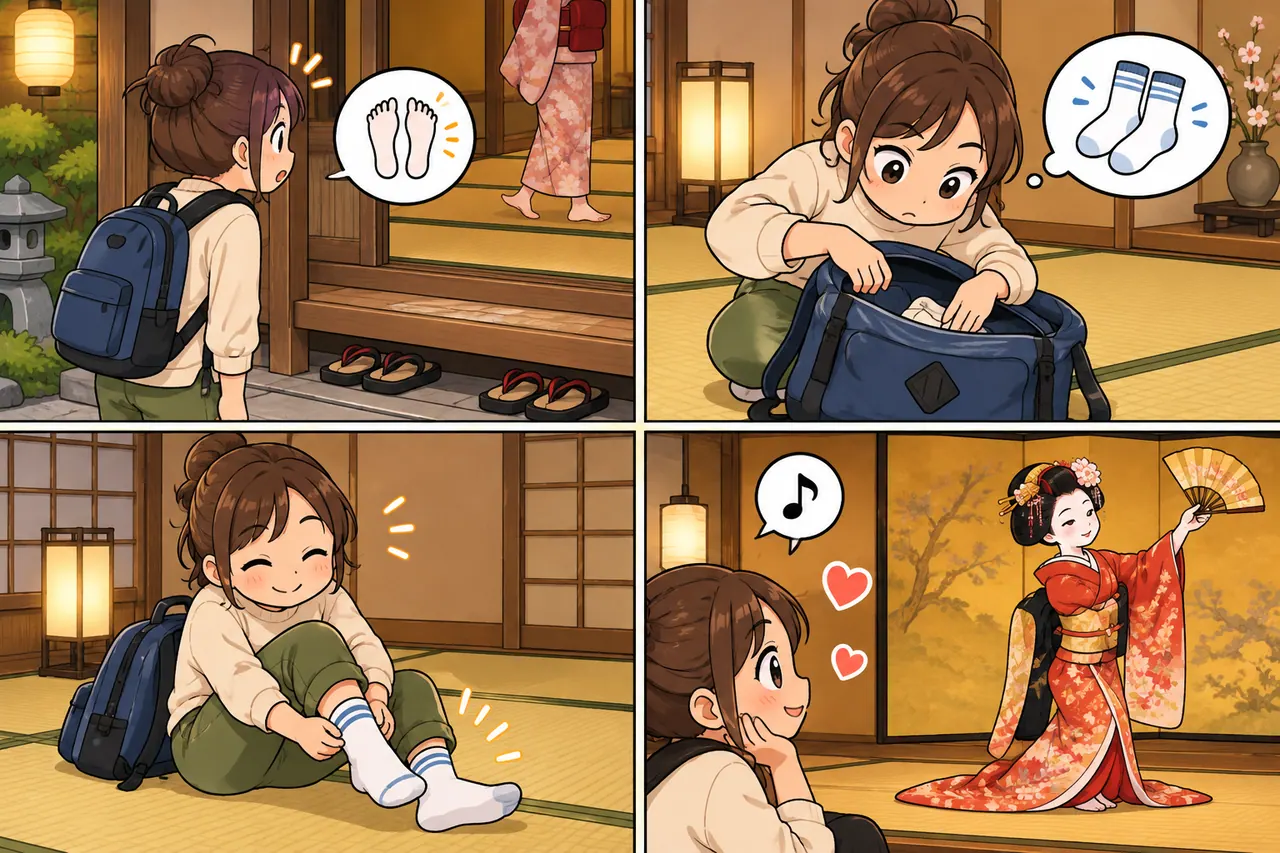
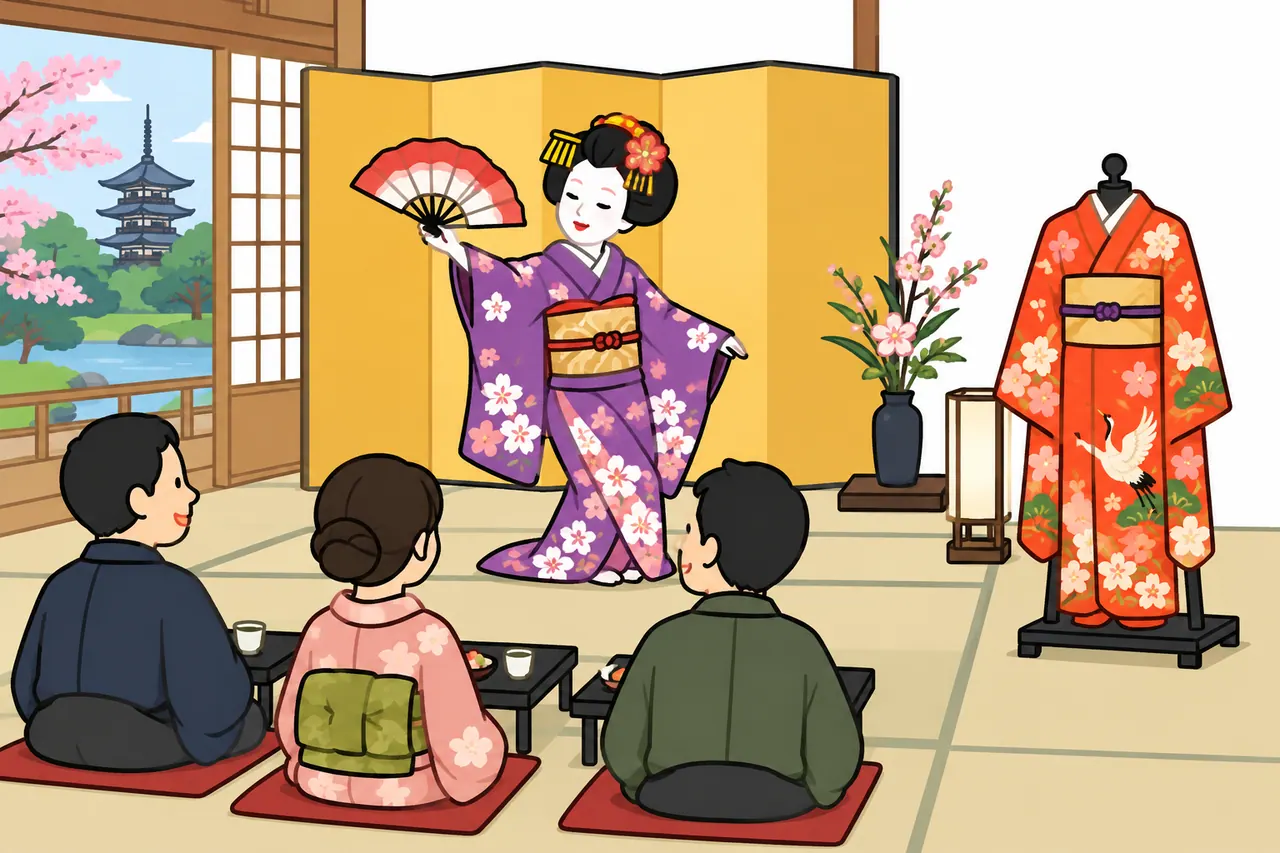
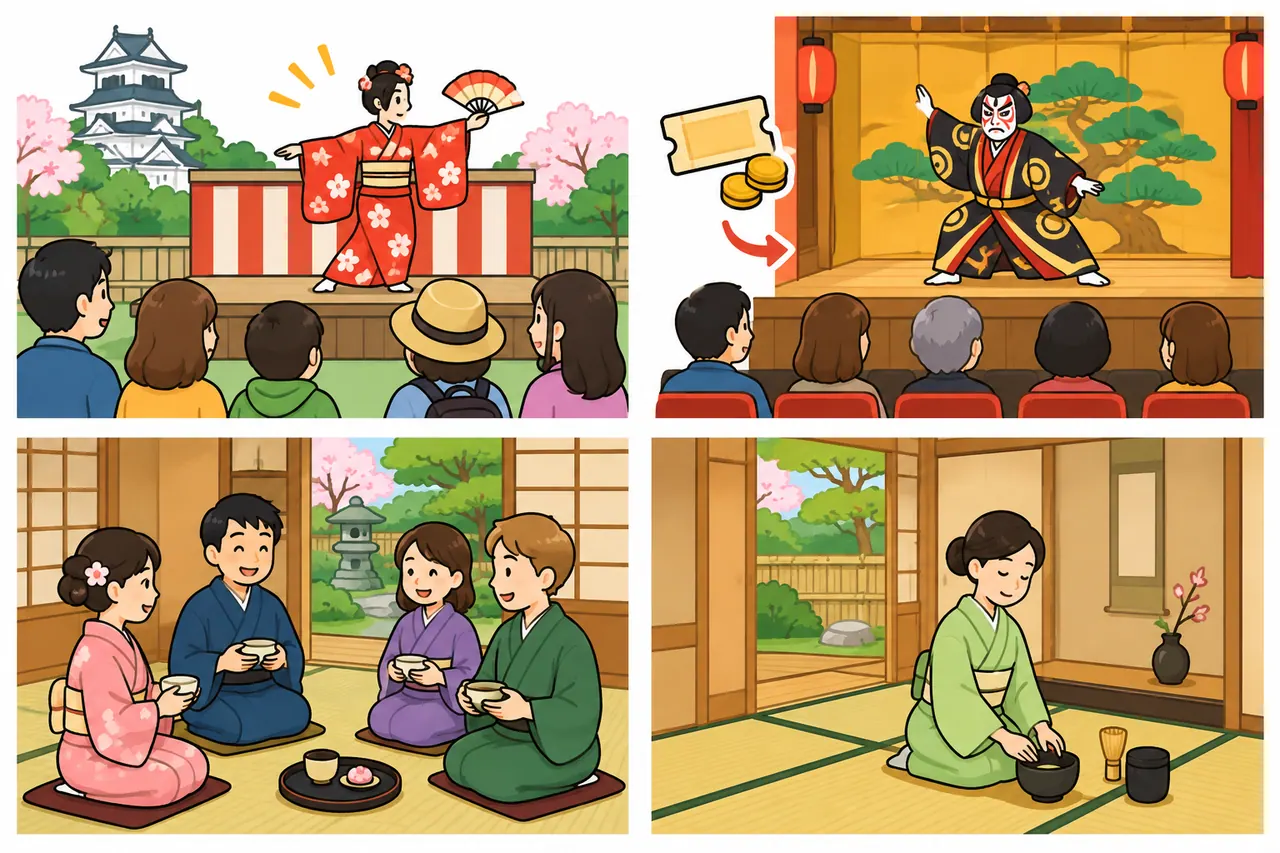
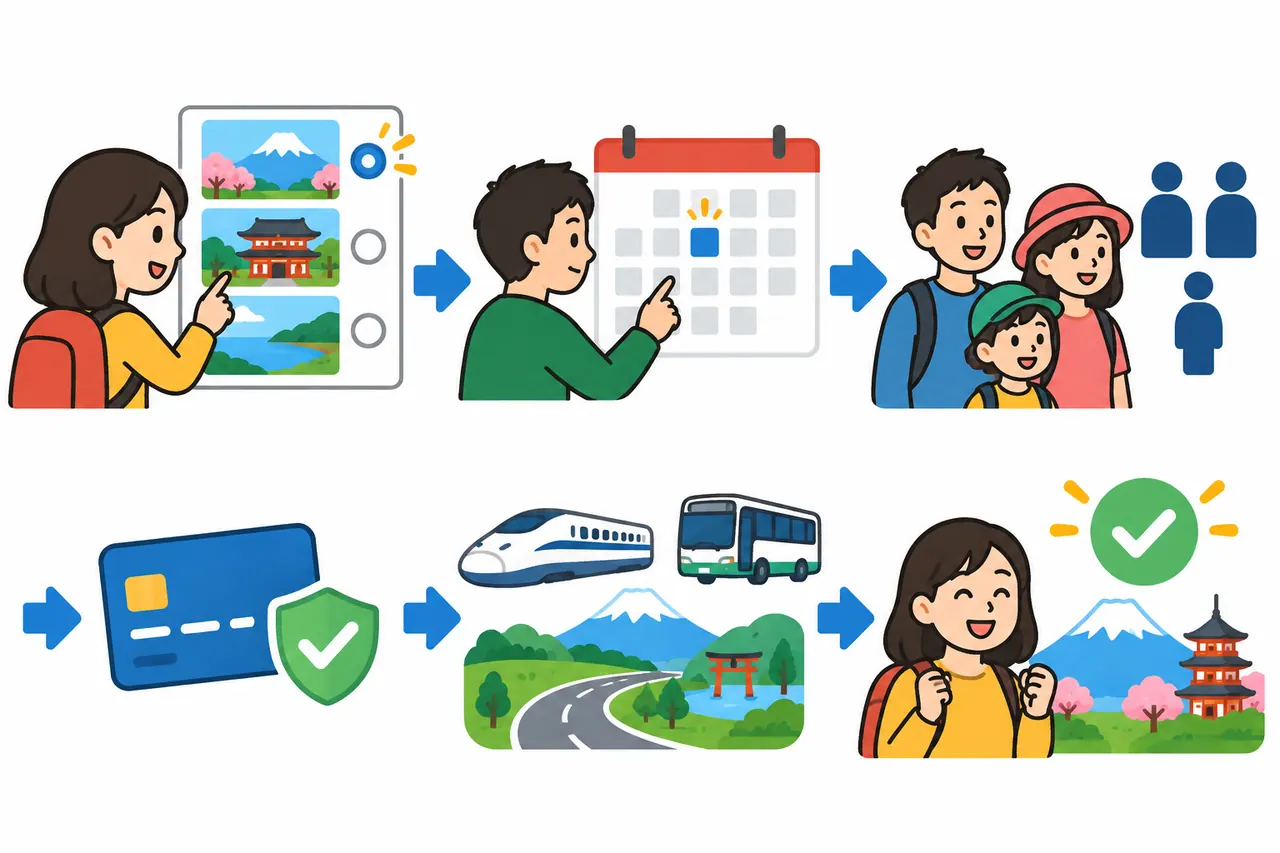

An ozashiki is a gathering with geisha in a Japanese-style room. Miyakodori offers both private ozashiki gatherings and the shared Ozashiki Tea House program, where guests join other visitors. The shared program is not the same as booking a private room: check which format you are selecting before comparing prices or asking about availability.
Working geisha or a costume session?
A meeting with working geisha differs from dressing in a costume for photographs. Miyakodori’s programs involve working geisha, rather than simply offering a photo session in geisha-style clothing. When comparing other activities, read the description carefully and ask who will appear if that is not clear.
Event descriptions may use terms such as hangyoku and taikomochi. The information available for Miyakodori does not explain every role or confirm which performers appear in every plan, so ask the organizer if a particular role matters to you. Miyakodori notes that its owner, Chikage, first appeared at gatherings as a hangyoku in 1969 and spent 27 years as a geisha.
The distinction is useful when deciding what you want from an activity. A costume session and a gathering with working geisha are different kinds of experiences, even if both use geisha-related language in their descriptions. For other options, see our [Tokyo geisha experience guide] and [Kyoto maiko experience guide]; Kyoto is a different destination and its offerings should not be assumed to match Asakusa’s.
2. Public show, shared program or private gathering?
A public performance, a shared program and a private gathering are different settings. Miyakodori lists the shared Ozashiki Tea House and private gatherings; the public-show options below are comparison categories, not confirmation that a particular public event is currently available. Always check the official event or venue page for the actual date, location, ticket rules and price.
| Option | Setting | What to check |
|---|---|---|
| Free public show | Public performance, if one is offered | Confirm the date, venue, entry and ticket rules with the official organizer. |
| Paid public show | Public performance, if one is offered | Check the official price, booking method and conditions for the event. |
| Miyakodori shared Ozashiki Tea House | A 75-minute program with other guests | The English FAQ lists a campaign price of ¥17,600 per person and a regular price of ¥22,000 per person. |
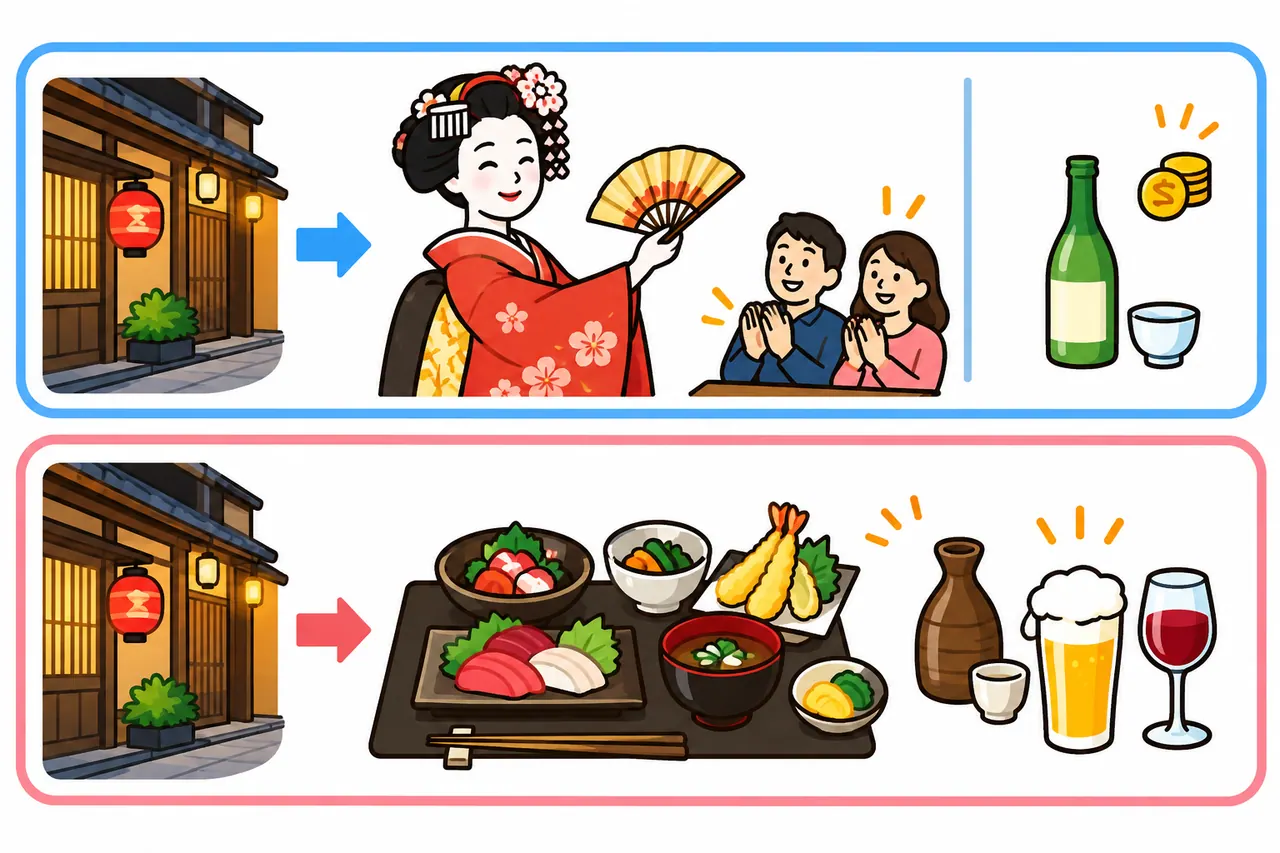
| Miyakodori private gathering | A room for your party | Geisha Highlights lunch is listed from ¥34,000 per person for groups of four or more; ask for the plan length and total for your date. |
Miyakodori gives the shared program’s length as 75 minutes. Its English FAQ describes English support for this program, while private plans include an English interpreter; these are different descriptions, so ask what support will be available for the format you choose. The private-plan start windows shown on the pricing page are not program durations.
Choosing between shared and private
The shared tea house may suit you if you are comfortable joining other guests and want a defined 75-minute program. Its per-person price is lower than the listed private Geisha Highlights rate for groups of four or more, but the plans are not otherwise interchangeable. Check what each plan includes and which price applies on your date.
A private gathering provides a room for your party. It may be the better fit if having a private setting matters more to you than joining a shared program, but the exact plan, price and length depend on what you arrange. Ask Miyakodori to confirm the available room and full conditions for your party size.
For a public show, verify the specific performance date rather than relying on a broad event period. A date range does not necessarily mean a show takes place every day. For a performance at a hotel or another venue, check that venue’s or organizer’s official page for the room, ticket price, schedule and booking conditions.
3. Prices, food and drinks
Miyakodori lists different prices for the shared tea house and private plans. Before booking, confirm the amount for your party and whether the plan requires a separate drink order or offers food as an add-on. The figures below are published examples, not a guarantee of availability or the final amount for your date.
Shared tea-house prices
The English FAQ lists the shared Ozashiki Tea House at ¥17,600 per person as a campaign price and ¥22,000 per person as the regular price. Ask which price applies on your date. The program lasts 75 minutes, but the published per-person price does not establish whether solo booking is available or whether a child price is offered.
| Guests | At the listed campaign rate | At the listed regular rate |
|---|---|---|
| One | ¥17,600 | ¥22,000 |
| Two | ¥35,200 | ¥44,000 |
The two-person totals are calculated by multiplying the listed per-person price by two. They are not a confirmation that two places are available, nor do they establish that the price includes any extra items. Confirm the total and inclusions with Miyakodori before paying.
Geisha Highlights private-plan examples
Miyakodori’s English pricing page lists the following Geisha Highlights examples. The time ranges are stated as start windows, not as the length of the program.
| Geisha Highlights plan | Listed price | Start window |
|---|---|---|
| Lunch, two guests | ¥126,000 total | 14:00–17:00 |
| Lunch, four guests | ¥136,000 total | 14:00–17:00 |
| Lunch, four or more guests | From ¥34,000 per person | 14:00–17:00 |
| Night, per person | From ¥40,000 per person | 17:30–20:00 |
The page states that each guest must order one drink and that the drink is not included in the experience price. Food is also not included in this plan. For example, the listed ¥126,000 lunch for two does not include the two required drinks, so ask for drink prices and the complete total.
Miyakodori lists matcha, or powdered green tea, bento, or a boxed meal, and wagyu beef as paid additions. Ask for the price of any addition before deciding. If your choice of food affects whether you can take part, clarify the available options before booking rather than assuming that food is part of the base price.
Separate Japanese-language evening plan
Miyakodori’s Japanese pricing page lists a separate two-hour evening plan with kaiseki, a Japanese multi-course meal, and unlimited drinks. The page says it was updated on September 10, 2026. Its terms and inclusions are not automatically the same as those for the English-language Geisha Highlights plans.
| Party size | Listed private-plan price |
|---|---|
| Two | ¥170,000 total |
| Three | ¥210,000 total |
| Four or more | From ¥55,000 per person, including tax |
At the listed starting rate, four guests would total ¥220,000. Confirm the total for your party and date with Miyakodori. Do not combine prices or food-and-drink conditions from this Japanese-language plan with the separate Geisha Highlights plan unless Miyakodori confirms that they apply.
4. Dance, games, English support and photography
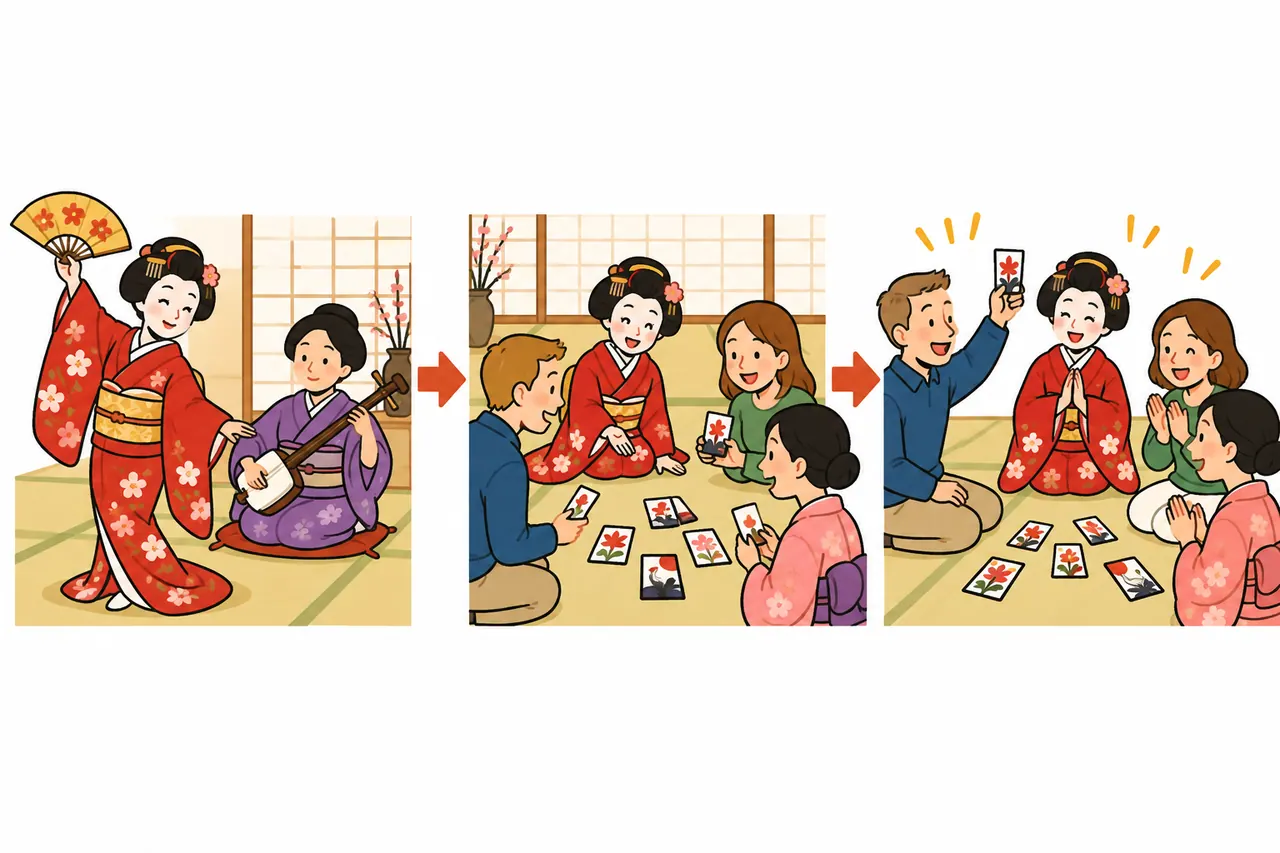
At a private gathering, guests can watch dance accompanied by live shamisen music. A shamisen is a three-stringed Japanese instrument. Miyakodori also says that guests can talk with geisha and take part in ozashiki games, while the shared tea-house program includes time to play with geisha.
The official information does not specify which games will be played or give rules for a particular game. You do not need to choose a game before booking, but if one activity is important to you, ask whether it is included in your chosen plan. The published descriptions establish that there is time for games, not that every game is offered at every gathering.
English support
Miyakodori says private plans include an English interpreter. It describes the shared tea house as having English support, which is not the same wording as a promise of an interpreter throughout the program. Ask what support will be available during your visit, especially if you expect to need help understanding game instructions or asking questions.
Photos, videos and livestreams
The photography conditions differ by format. Miyakodori’s English FAQ says that photographs and videos are allowed during private plans, including during dance and games, but asks guests not to livestream. For the shared tea house, the FAQ permits photography during the program and says a photo with geisha is offered near the end.
| Activity | Private plan | Shared tea house |
|---|---|---|
| Photos | Allowed, including during dance and games | Allowed during the program; a photo with geisha is offered near the end |
| Video | Allowed, including during dance and games | Check with Miyakodori |
| Livestreaming | Miyakodori asks guests not to livestream | Check with Miyakodori |
| Flash | Check with Miyakodori | Check with Miyakodori |
Do not assume that permission for photographs also covers video, flash or livestreaming. The shared-plan information does not settle the rules for video or livestreams, and the listed information does not specify flash conditions for either format. Ask before the visit if you need to know whether a particular kind of recording is permitted.
5. Rooms, seating and getting to Miyakodori
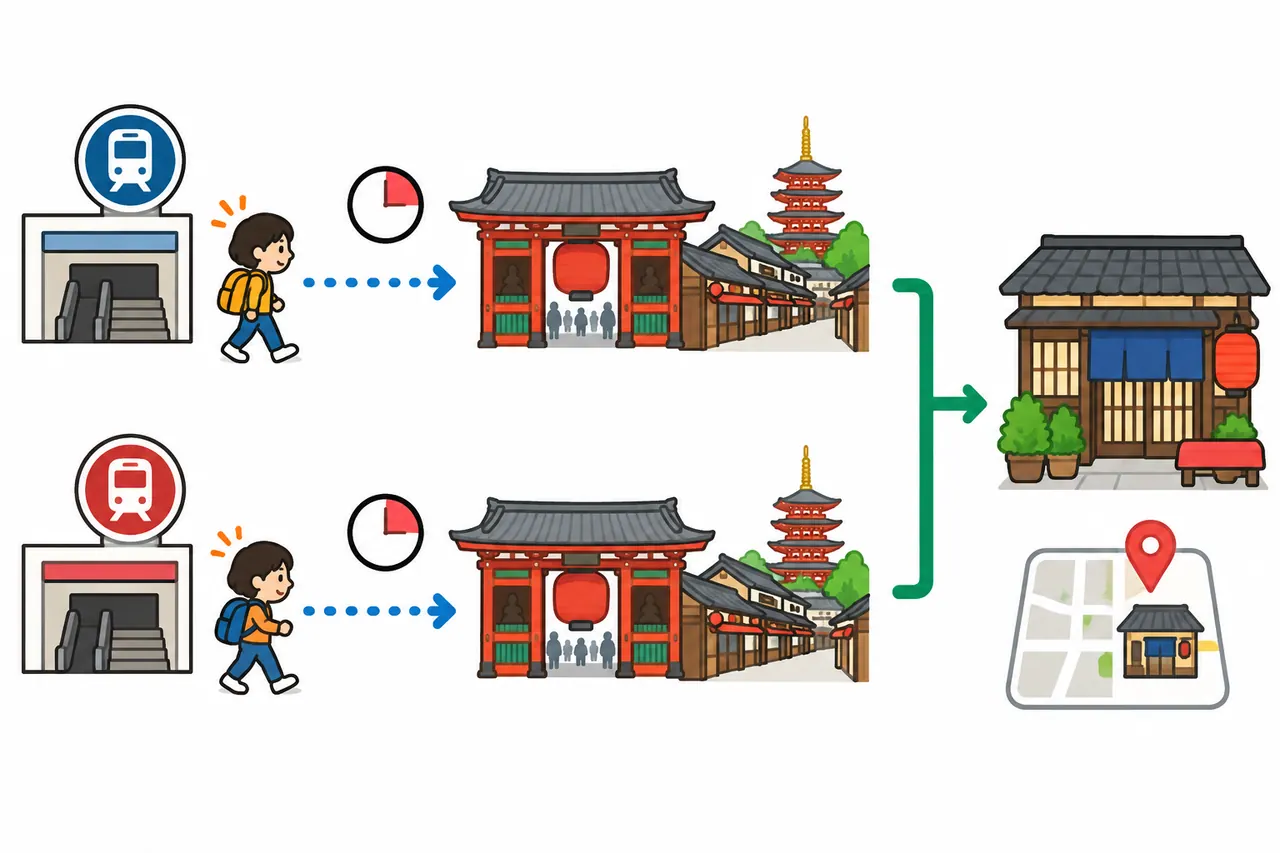
Miyakodori is at 3-23-10 Asakusa, Taito City, Tokyo. Its official access information gives a 13-minute walk from Asakusa stations and a 15-minute walk from the Toei Asakusa Line station. These are the stated walking times; check your chosen station and destination in a map app when planning your route.
For a practical route check, enter “Miyakodori, 3-23-10 Asakusa, Taito City, Tokyo” as the destination and compare it with the station you plan to use. The official page is the place to check the venue address and stated station walking times. If you also plan to visit Sensoji Temple, look up the route between the temple and Miyakodori separately and allow time for that walk rather than assuming a particular journey time.
Private rooms and seating
Miyakodori lists three private rooms: Hana, Yanagi and Hiroma. The capacities on its about page describe how many people each room can hold, but room capacity does not itself confirm that a plan can be booked for that number of guests.
| Room | Listed capacity |
|---|---|
| Hana | 1–6 guests |
| Yanagi | 1–8 guests |
| Hiroma, the larger room | 3–23 guests |
The rooms have tatami, or woven floor mats, and offer table seats or seats at a recessed floor table. Miyakodori says formal kneeling is not required. If seating style matters to you, mention your preference when contacting the venue and ask which room and seating arrangement may be available.
The room listings show that Hana and Yanagi have a capacity beginning at one guest, but that is not a booking rule. Do not treat a room’s capacity as confirmation that one person can book a plan; ask Miyakodori about solo bookings and any minimum party size for your chosen plan.
Wheelchair access and other practical details
Miyakodori has an elevator, but there is a step at the entrance, and its toilet is not wheelchair accessible. Contact the venue before booking to discuss your access needs and ask about the route through the building and the seating arrangement for your plan. The published information does not provide a complete access description for each room.
Miyakodori’s Japanese pricing page asks guests to wear socks. If that requirement affects your plans, note it before visiting and check the official page for the current conditions. For fully halal or kosher food, the English FAQ says that a bento can be prepared with at least five days’ notice; contact Miyakodori in advance to confirm arrangements for your date.
6. How to book
Miyakodori says visitors can book directly without an introduction and that it welcomes first-time guests from overseas. Use its official pages to compare the shared tea-house information with the private-plan prices, then confirm the details for your date. The booking and contact process was not tested for this guide, so check the current process on Miyakodori’s own pages.
A useful order is to choose the format first, then confirm party size, date, start time and total. If you are considering Geisha Highlights, ask about the required drink order and the prices of any food additions. If you are considering the Japanese-language evening plan, confirm its separate two-hour duration and meal-and-drink inclusions rather than assuming they apply to another plan.
Before committing, tell Miyakodori about practical requirements such as wheelchair access or food needs. For a fully halal or kosher bento, the English FAQ specifies at least five days’ notice; confirm the arrangement directly. Ask about child prices or solo bookings if relevant, since the available room capacities and per-person prices do not establish those booking rules.
Read the current booking conditions before paying. The supplied official information does not state the cancellation, refund or program-not-held conditions, so ask Miyakodori what happens if you need to cancel or if the program cannot go ahead. Keep the confirmation together with the plan name, date, time, total and contact details so you can check what was agreed.
Use the English pricing page and FAQ for the English plan information, and consult the Japanese pricing page separately for its evening plan. Since prices and availability can change, confirm the current terms rather than relying only on a previously published example. For general trip-payment preparation, see our [Japan cash or card guide].
7. FAQ
The questions below cover the points that cannot be decided from a price table alone, including solo bookings, children and the kind of English support available. Miyakodori’s official pages should be checked again for your date because prices and availability may change. If a condition is not stated for your selected plan, ask Miyakodori to confirm it before paying.
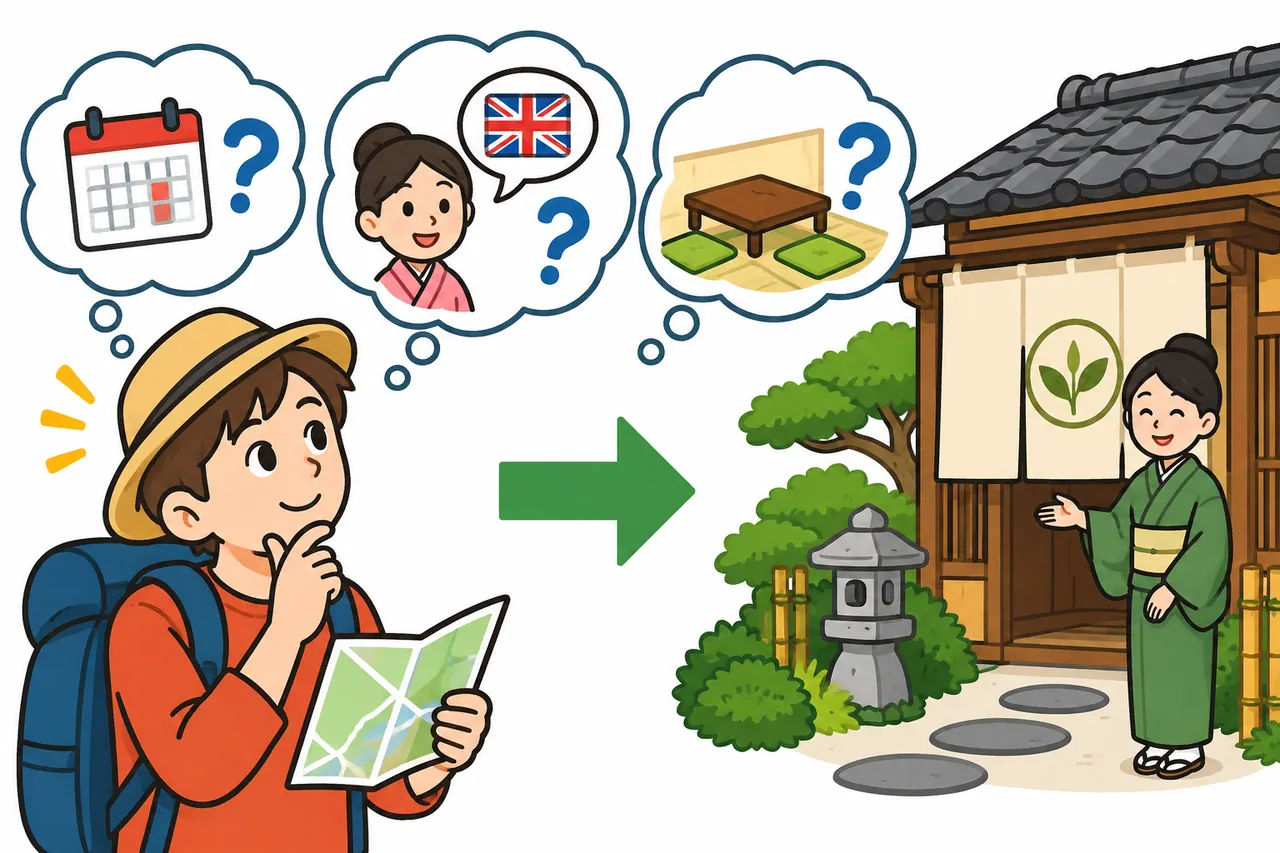
Can first-time visitors book without an introduction?
Yes. Miyakodori says that guests can book directly without an introduction and that it welcomes first-time visitors from overseas. This makes it possible to enquire without a personal referral, but it does not confirm availability for a particular date. Contact Miyakodori through its official pages to check the current booking process and conditions.
How much is a private lunch for two?
The English pricing page lists a Geisha Highlights lunch example of ¥126,000 total for two guests. Each guest must order one drink, and the drink is not included in that price; food is not included either. Confirm availability, drink prices and the complete total for your date before booking.
Can one person book, and is there a child price?
The available information does not confirm whether a solo booking is accepted or whether a child price is available. Hana and Yanagi have listed capacities starting at one guest, but room capacity does not determine the booking rules for a plan. Ask Miyakodori about the exact plan, party size and any age-related price before making arrangements.
Is there English support?
Miyakodori says private plans include an English interpreter and describes the shared tea-house program as having English support. Those descriptions are not identical, so ask what support is available for the plan you intend to book. If you want help with game instructions or other parts of the program, mention that when enquiring.
Do guests have to kneel?
No. Miyakodori says formal kneeling is not required and lists table seats or seats at a recessed floor table in its tatami rooms. If you have a seating preference or mobility concern, ask which arrangement is available in the room for your booking. Remember that the venue has an entrance step and that its toilet is not wheelchair accessible.