Akasaka Geisha Experience: How to Book
Contents
For an Akasaka geisha experience, start with the local association’s English guide or contact Akasaka Asada directly. These are different routes to different kinds of gatherings: Asada’s visitor guide describes live song, dance and games, while the association lists plans built around conversation and videos. Compare what each plan actually includes, then ask the organizer about the date, total price and other arrangements before making plans.
On this page

- What makes Akasaka different?
- Compare the experiences
- What happens at an ozashiki?
- How to arrange your visit
- Mistakes first-timers make
- FAQ
- Related guides
1. What makes Akasaka different?
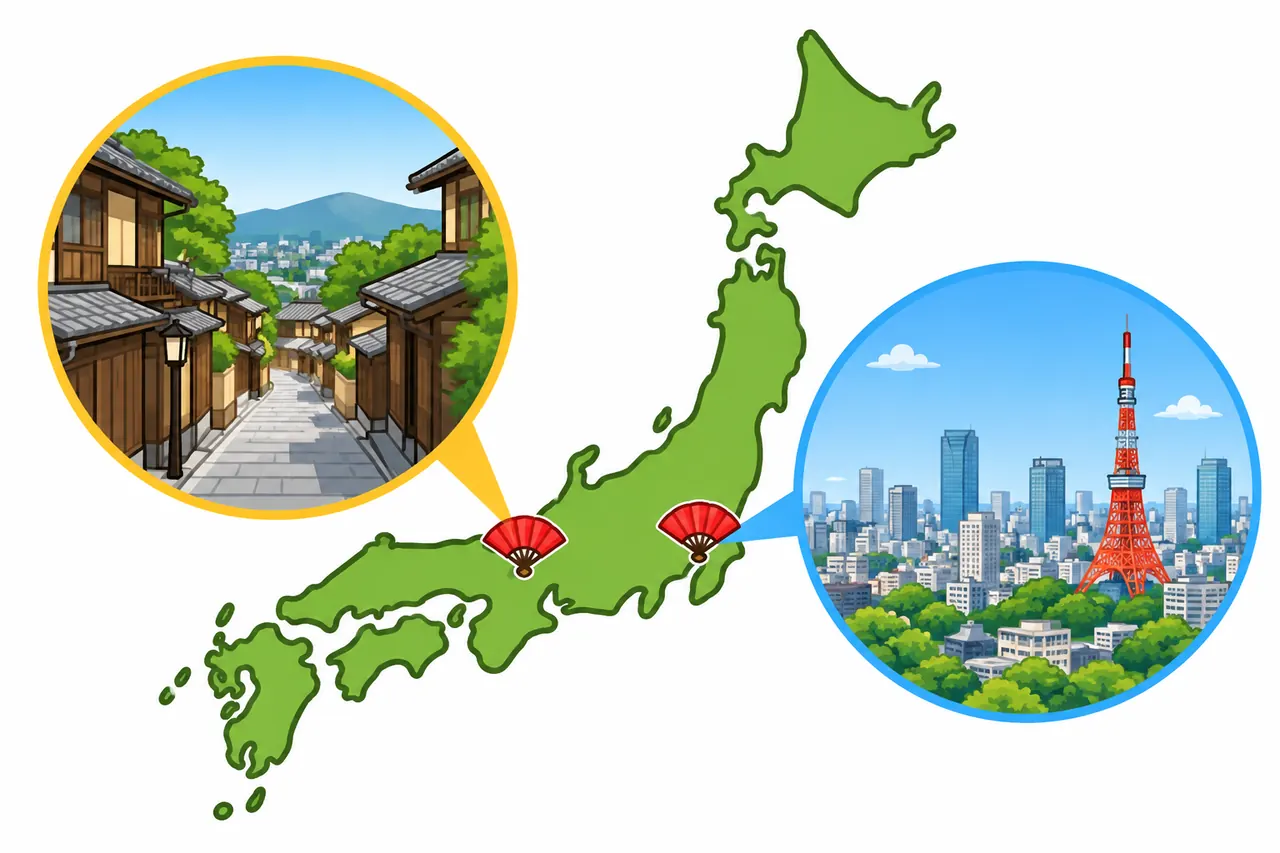
Akasaka is one of Tokyo’s six geisha districts, and its geisha district developed in the early Meiji period. Geisha are professionals who learn and practise performing arts, conversation and hospitality; a gathering may include opportunities to see their arts and talk with them. The Akasaka Association introduces the district and its culture on its English About page and English home page.
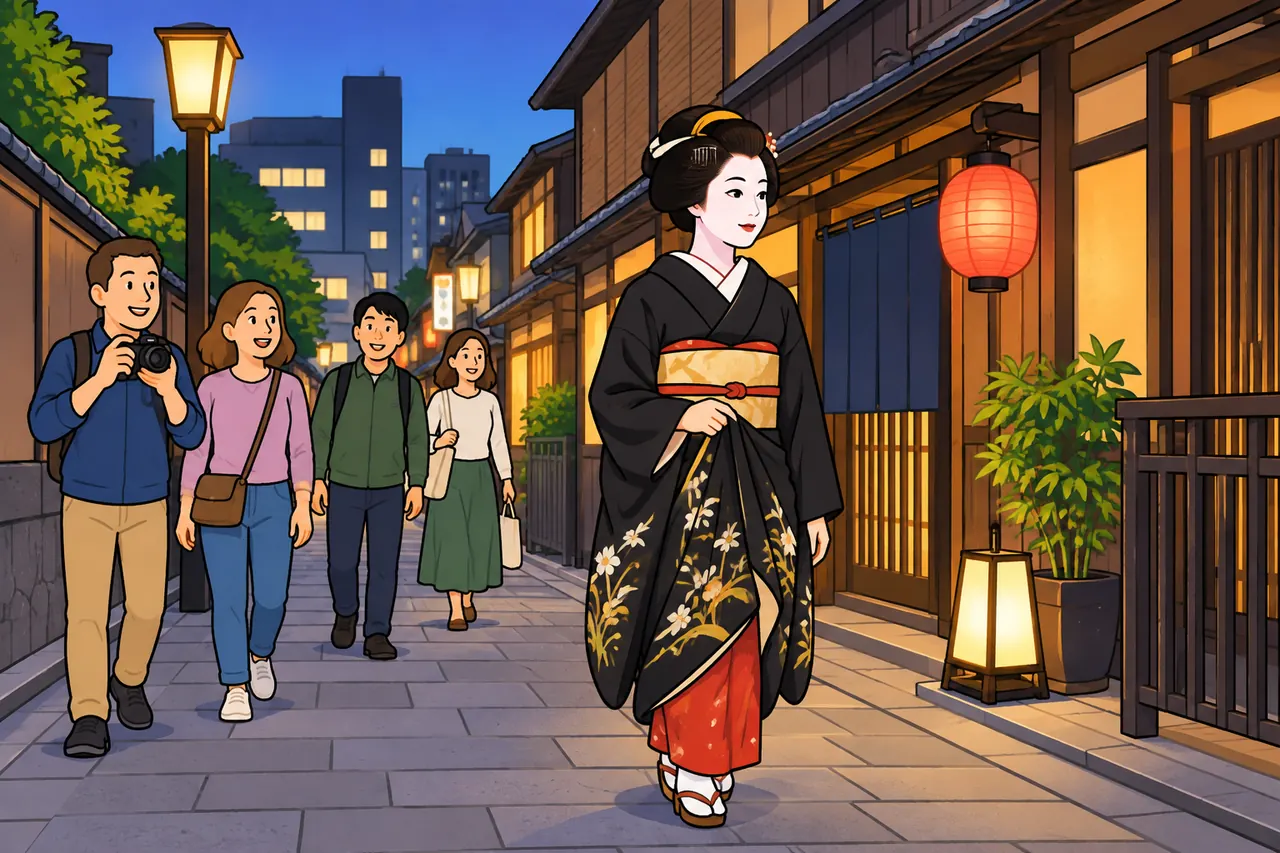
Akasaka’s geisha also take part in local events, including the Akasaka Hikawa Festival. The district’s dance event, Akasaka Odori, began with a performance at the Mitsukoshi Theatre in 1949, and Kanrin Daiko is performed as part of the event. Those public cultural events are distinct from arranging a private geisha gathering: check the association’s current information for event dates, since no current Akasaka Odori date is confirmed here.
The association’s English introduction presents geisha as working artists and hosts, rather than as a costume or photo opportunity. What happens at a private gathering depends on the plan: some plans include a live performance, while others describe conversation alongside recorded material. The videos accompanying this guide offer additional context, including a look at a night in the life of modern Akasaka geisha, geisha at the Akasaka Hikawa Festival, and the Capitol Hotel Tokyu’s Akasaka geisha event, Edo no Mai.
2. Compare the experiences
The first decision is whether you want to see live song and dance or prefer a gathering centred on conversation and videos. The association’s English guide to meeting Akasaka geisha describes three conversation plans at different kinds of venues. Akasaka Asada’s separate guide for foreign visitors describes a live arts and games experience; do not assume that the activities in one description are included in another.
| Experience | What the official guide describes | What to confirm |
|---|---|---|
| Asada live experience | Song and dance in a tatami-mat room, games with geisha, and Kaga cuisine | Price, date, availability, length and exactly what the arrangement includes |
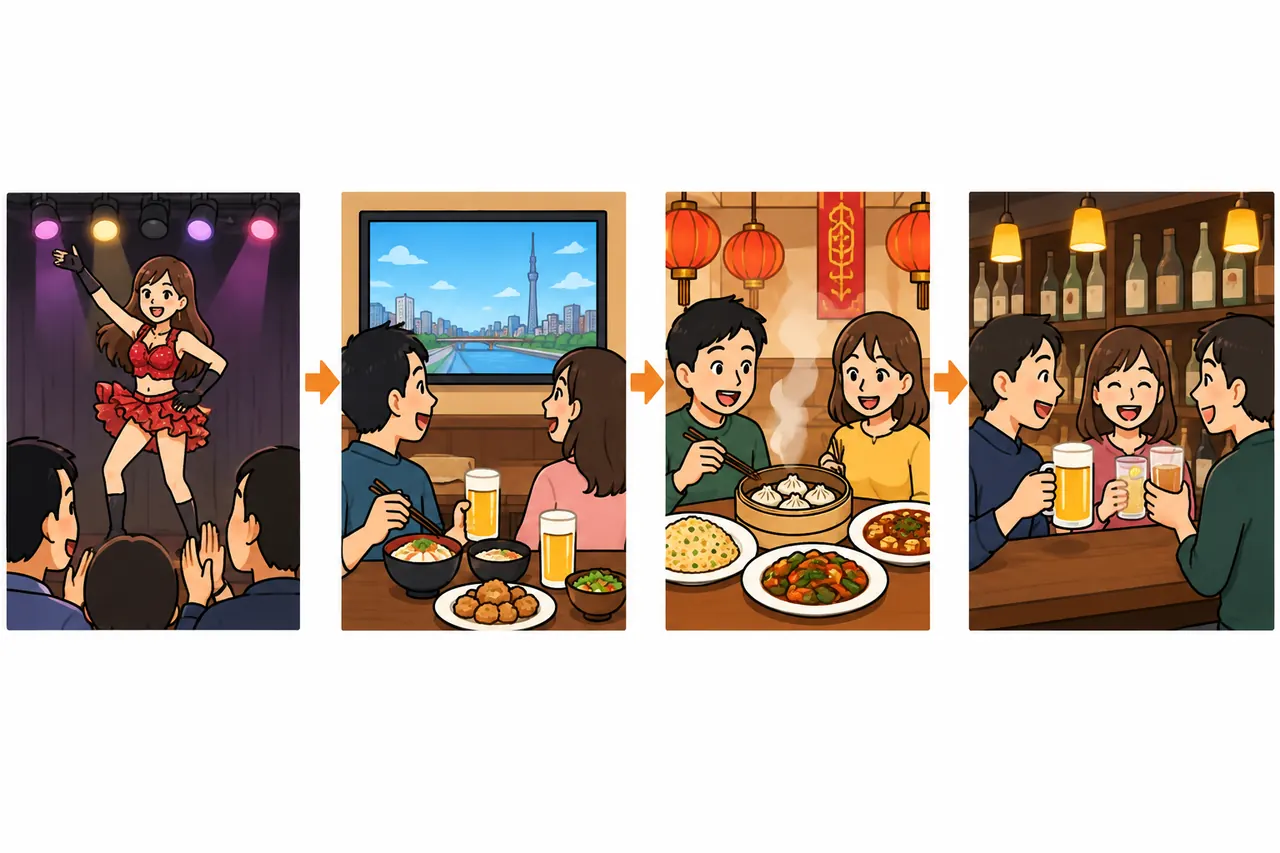
| Plan A: Akasaka Asada | Food, a recording of Akasaka Odori, a documentary and conversation with geisha | The dance described is a recording; ask if you specifically want a live performance |
| Plan B: Wakiya | A Chinese course meal, videos and conversation with geisha | Availability and the full plan details |
| Plan C: BAR salon NORAINU | Drinks, conversation and videos with subtitles | Price and booking arrangements; the association recommends this plan to overseas guests |
Plans A and B have a particular appearance arrangement: the association says the geisha attend without white makeup and with Western-style hair. The descriptions list meeting and talking with geisha, and Plan A includes a recording of Akasaka Odori rather than a listed live dance. If live dance or games matter to you, ask the organizer directly instead of inferring that they are included because another Akasaka experience offers them.
Asada’s visitor guide describes a different experience: guests watch live song and dance in a tatami-mat room, play ozashiki games with geisha, and have Kaga cuisine, a food tradition from Kanazawa in Ishikawa. The guide introduces Asada as having opened in 1971, but that history does not establish the current availability or price of a particular visit. The guide says to inquire with Asada about prices and dates.
First-time access also differs by venue. The association says Akasaka Asada accepts first-time customers, while Tsurunaka and Sato do not; confirm current conditions with the venue before making plans. The association lists Tsurunaka at 2-5-17 Akasaka and Sato at 2-8-19 Akasaka, but those addresses do not imply that either venue is suitable for a first visit.
3. What happens at an ozashiki?
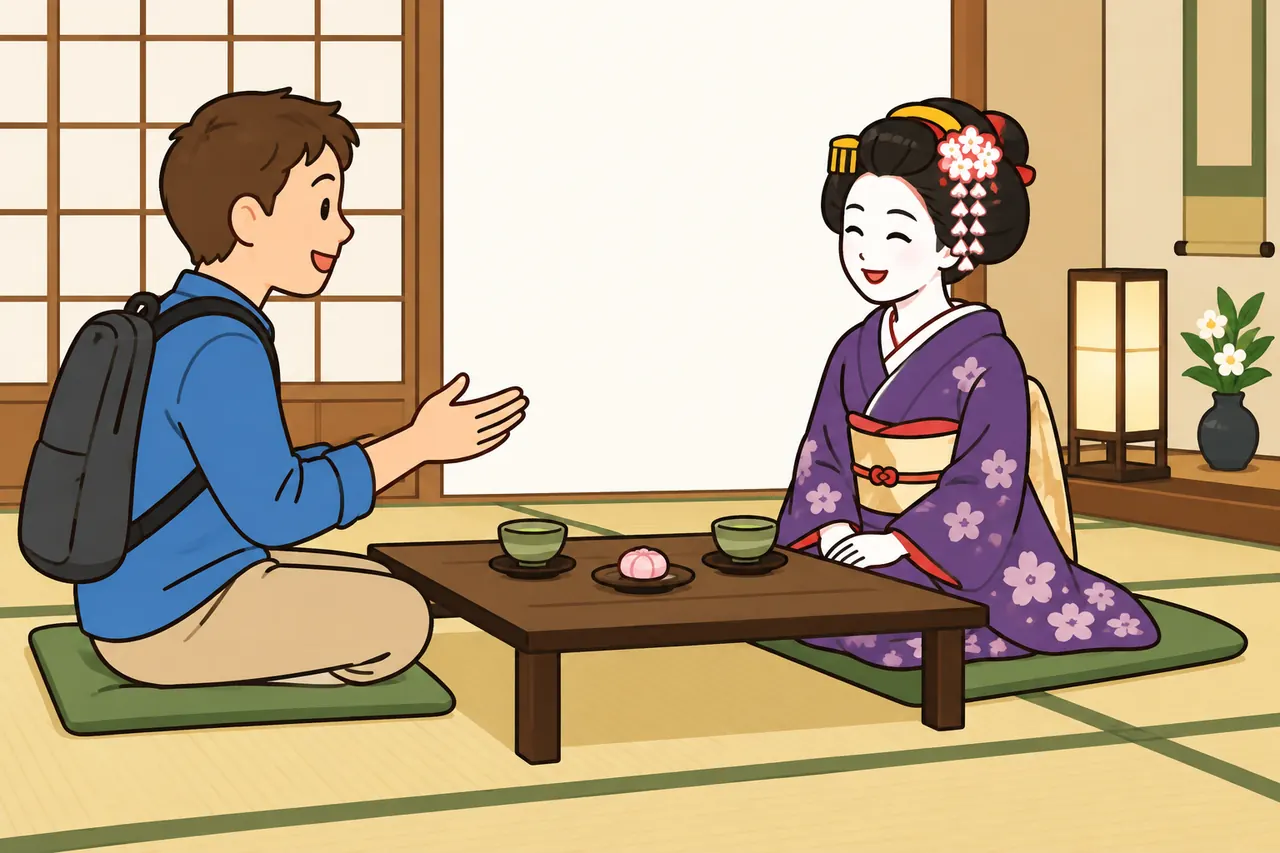
An ozashiki is a gathering with geisha, and the association describes its three elements as conversation, dance and games. Many such gatherings last about two hours, but this is a general guide rather than a confirmed duration for every plan. Ask the organizer how long the specific experience you are considering lasts and what its schedule includes. The association explains the gathering on its English How to Enjoy page.
Conversation is part of the hospitality, alongside the performing arts. You can use it to meet the geisha and learn about the gathering, but the format and language support may differ by plan. A video from Nippon Travel Agency Inbound introduces Akasaka geisha Ikuko and provides another way to learn about the people and work behind the experience.
Watching and playing
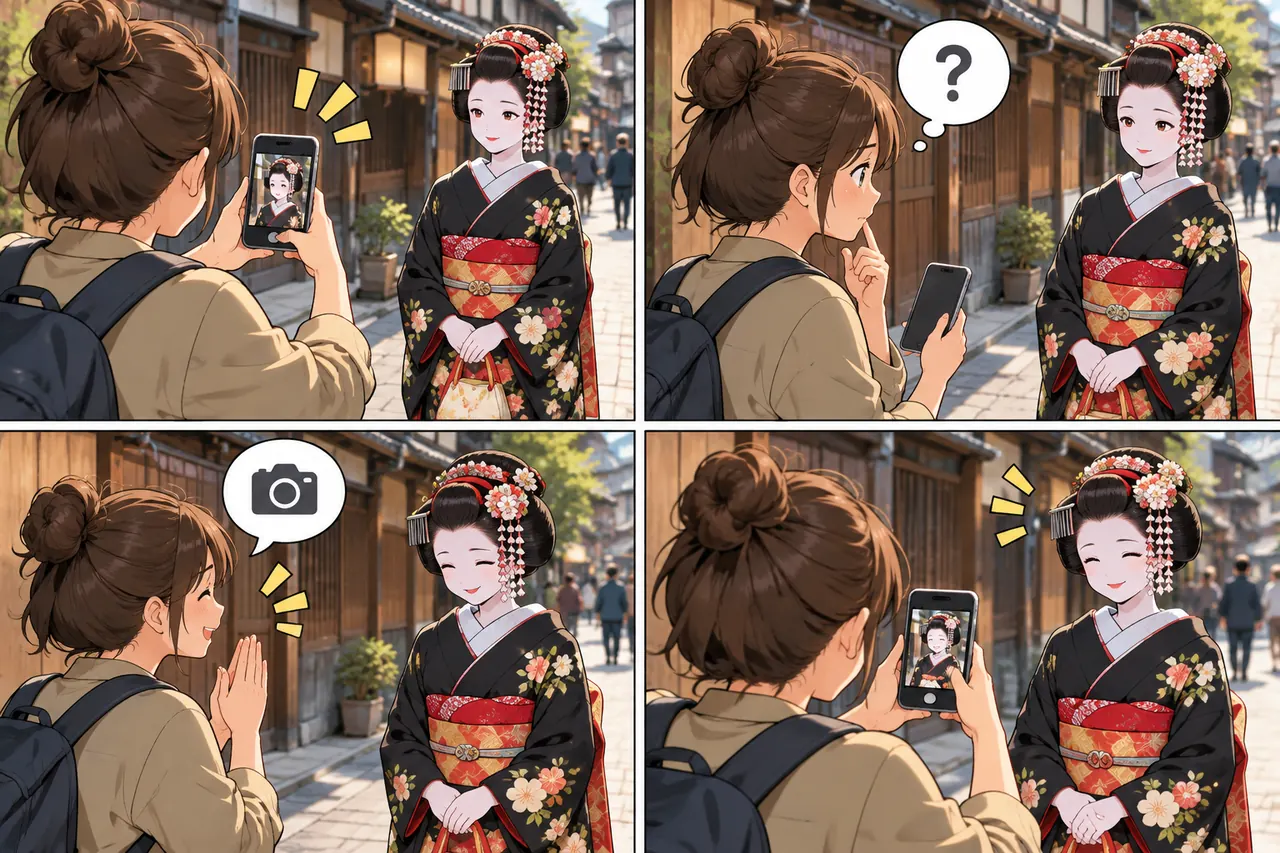
When a geisha is performing a dance or song, the association’s guidance is to stop talking and eating and watch. This gives the performance your attention and follows the local etiquette described by the association. If you would like to take a photo, ask the geisha for permission first rather than assuming photography is allowed.
You do not have to learn the rules of a game before arriving. The geisha explain how to play, including for beginners, and the association says that visitors who do not speak Japanese can enjoy games involving movement. That guidance applies to the games; ask the organizer separately about language support for conversation or other parts of the visit.
One game described in Asada’s visitor guide is tosenkyo. Players throw a fan to knock down a target, then compete for points according to how the pieces land. This example is useful for understanding the kind of activity involved, but it does not mean tosenkyo is included in every plan; ask Asada which games are part of the experience you are enquiring about.
Understanding the charges and terms
Hanadai, also called tamadai, is the fee for a geisha’s appearance at a gathering. The association says it is generally calculated in two-hour units, but that does not establish the total cost of a particular plan or tell you what other items are included. Ask for the full amount and a breakdown of what the quoted price covers.
Goshugi is a gratuity given to express thanks, and the association explains that it is placed in an envelope. If you are unsure whether a gratuity is expected or how to handle it, ask the organizer while discussing arrangements rather than guessing. The term ichigen refers to a customer using an ozashiki for the first time, while tōde means a geisha’s appearance at a restaurant outside her affiliated geisha district.
4. How to arrange your visit
Begin by choosing the kind of experience you want, because the official descriptions are not interchangeable. For live song, dance and games, start with Asada’s English visitor guide. For conversation with recorded videos over a meal or drinks, compare Plans A, B and C on the association’s English page.
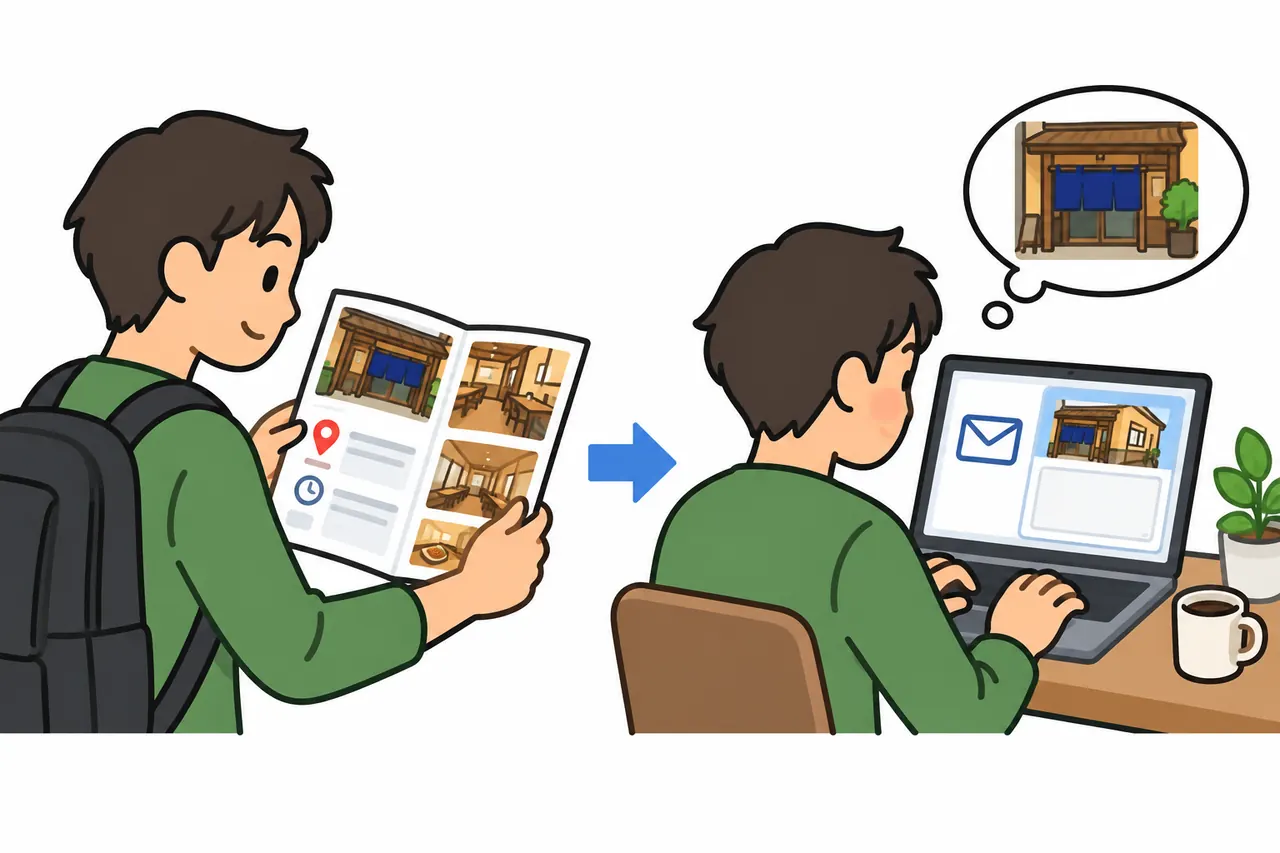
The association also says that arranging geisha for a hotel or commercial venue can be discussed. The conditions, price and availability are not confirmed in the general guide, so contact the association to ask whether the arrangement is possible for your circumstances. Treat this as an enquiry option, not as a confirmed service for a particular date or location.
1. Pick the experience you want
Decide which elements are important to you: live song or dance, games, conversation, a meal, drinks or recorded performances. Then compare those preferences with the plan descriptions rather than relying on a general idea of what an ozashiki includes. In particular, Plan A’s description includes a recording of Akasaka Odori, whereas Asada’s separate guide describes live song and dance.
If you want to see live arts, tell Asada that clearly when you enquire and ask which parts of the guide apply to the date you have in mind. If you mainly want conversation and a chance to learn about Akasaka through videos, the association’s plans may be a better starting point. The association’s English guide also includes venues outside traditional ryotei, including a Chinese restaurant and a bar.
2. Contact the appropriate organizer
For questions about Asada’s experience, call 03-3585-6606 or contact Akasaka Asada at 3-6-4 Akasaka, Minato-ku. Its visitor guide asks prospective guests to enquire about prices and dates, so neither should be treated as fixed or available without confirmation. The Asada guide for foreign visitors is the relevant starting point for understanding the experience it describes.
For help arranging a meeting with Akasaka geisha, email the association at akasaka.geisha2020@gmail.com, or use its English meeting guide to compare the listed plans. The association provides an English-language route for learning about the options, but the guide does not confirm that any particular date or plan is available. Include the plan or type of experience you are asking about so the organizer can respond to a specific enquiry.
3. Ask what the plan includes
Ask whether the arrangement includes a live performance, games, conversation, a meal, drinks or recorded video. Also ask how long it lasts and whether the plan description applies to your requested date. This is particularly important when comparing Asada’s live-experience guide with the association’s plans, which describe different activities.
Request the total price and ask what it covers, including the geisha appearance fee, food or drinks and any other stated charges. The official information cited here does not provide a confirmed price for these plans, and the general explanation of hanadai is not a full quotation. You can also ask the organizer how to handle any gratuity, whether language support is available, and whether food needs can be accommodated; those details are not confirmed for every plan.
4. Confirm practical arrangements
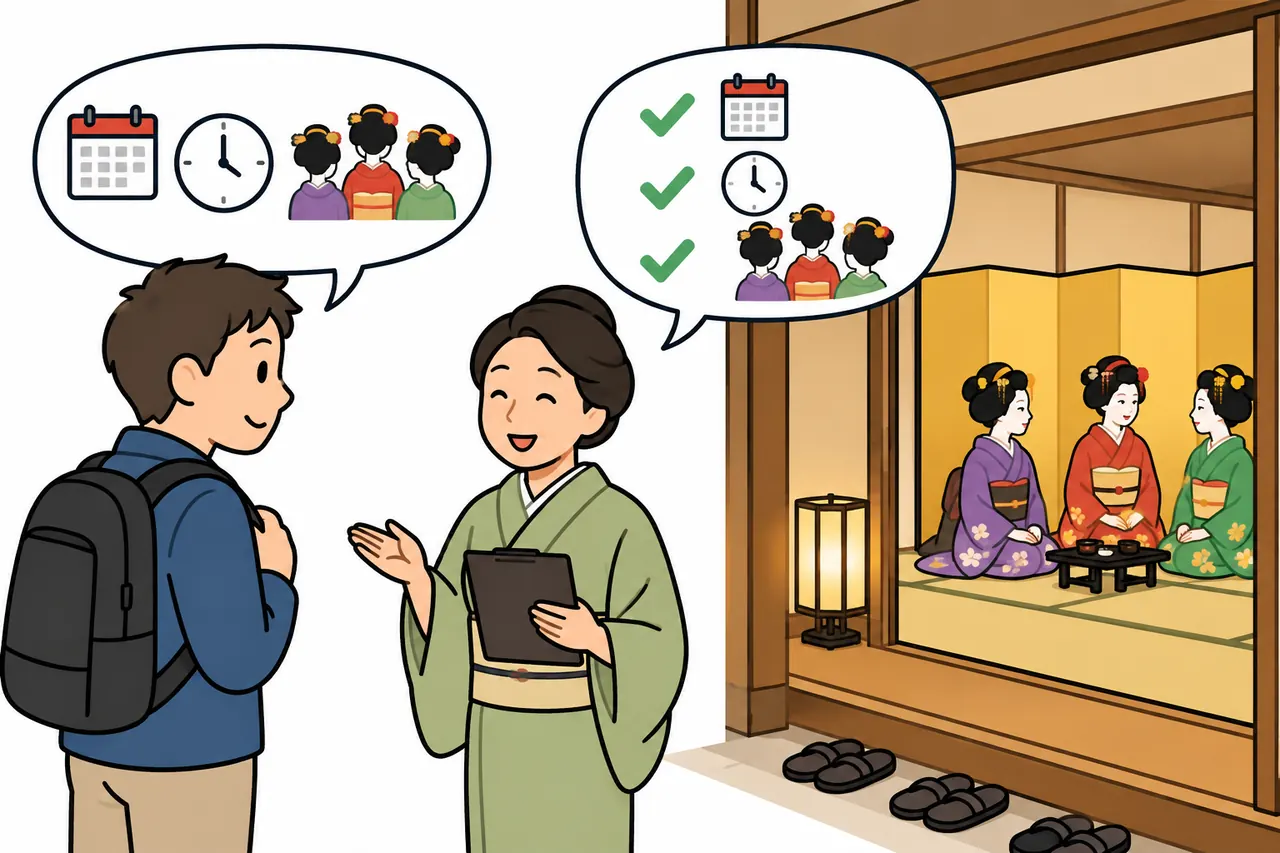
Before you commit, confirm the date, availability, group arrangements, directions and any cancellation or change conditions with the organizer. No fixed price, current event date, cancellation rule or nearest-station route is confirmed in this guide. Do not treat a general description of a plan as confirmation of its current operating arrangements.
Follow the venue’s own instructions and wait for its confirmation before treating the visit as arranged. Sending an enquiry is not the same as receiving a booking confirmation. If you need a particular element—such as a live performance, a non-alcoholic option or support in a language other than Japanese—state that in your enquiry and ask whether it can be accommodated.
5. Mistakes first-timers make
A common misunderstanding is assuming that every Akasaka plan includes live dance. Plan A lists a recording of Akasaka Odori, while Asada’s separate visitor guide describes live song and dance. Compare the activity descriptions and ask the organizer if the distinction matters to you.
Another is expecting games to be part of every conversation plan. Asada’s live-experience guide includes ozashiki games, but the association’s plan descriptions do not all list games. Ask whether games are included in the exact plan you are considering rather than assuming they are standard.
Respect the association’s guidance during a performance: pause conversation and eating while a geisha is performing song or dance. Ask for permission before taking a photograph, even if others are taking pictures. These are practical ways to follow the local etiquette the association describes.
Finally, do not treat the appearance fee as the whole bill or assume that a venue accepts first-time guests. Hanadai is generally calculated in two-hour units, but you still need to ask what the quoted total includes. Confirm first-visit conditions directly, especially if you are considering a venue other than Asada.
6. FAQ
Can first-time visitors go to Akasaka Asada?
Yes. The association says Akasaka Asada accepts first-time customers, so you can enquire about its visitor experience without already having attended an ozashiki. Contact Asada to confirm availability, the conditions for your visit and the price.
How much does an Akasaka geisha experience cost?
No confirmed price is provided here for Asada’s experience or the association’s conversation plans. Asada asks prospective guests to enquire about prices and dates, and the other plans should be checked with their organizer. Request the total cost and what it covers rather than using the general explanation of hanadai as a price estimate.
How long does an ozashiki last?
The association says many gatherings last about two hours. That is a general description, not a guaranteed duration for every plan or booking. Confirm the length of the particular experience with the organizer.
Can I join if I do not speak Japanese?
The association says that visitors who do not speak Japanese can enjoy games involving movement, and that geisha explain the games to beginners. This does not confirm language support for every other part of the gathering. Ask the organizer what support is available for conversation and other activities in your chosen plan.
Does Plan A include a live dance?
The association’s description of Plan A includes a recording of Akasaka Odori, along with food, a documentary and conversation with geisha. It does not list a live dance in that plan description. If you want to see a live performance, ask the organizer directly and compare the plan with Asada’s separate guide, which describes live song and dance.
Can geisha be arranged at a hotel or commercial venue?
The association says that arrangements for hotels and commercial venues can be discussed. This does not confirm availability, price or conditions for a specific request. Contact the association to ask whether it can arrange what you have in mind.
Are there current dates for Akasaka Odori?
The information here confirms that the first Akasaka Odori was held in 1949 at the Mitsukoshi Theatre and that Kanrin Daiko is part of the event. It does not confirm a current performance date. Check current official information before planning a trip around the event.