
Osaka Castle: Tickets, Hours and a Practical Visiting Guide
Contents
- 1. 1. Osaka Castle tickets, opening hours and what to budget
- 2. 2. Osaka Castle access: choose a station and allow for the walk
- 3. 3. Osaka Castle history: what the tower and walls represent
- 4. 4. Osaka Castle inside: stairs, bags and family access
- 5. 5. Choosing a visit and following the rules
- 6. 6. Osaka Castle frequently asked questions
Osaka Castle is both a historic site and a reconstructed museum tower. The tower is the place to see the museum exhibitions and the observation deck; an exterior-focused visit lets you concentrate on the building, walls and approach instead. Plan for a walk from the railway station as well as time at the site: the museum’s FAQ gives an estimate of about 15–20 minutes on foot from the principal nearby stations.
The current main tower dates from 1931, and it has served as a museum facility since its reconstruction. Adult museum admission is ¥1,200. The practical details below—including the stated prices and opening hours—were checked against the museum’s official information on 4 November 2026; check the official pages again before travelling in case conditions have changed.
1. Osaka Castle tickets, opening hours and what to budget
The museum is open from 9:00 to 18:00, with last admission at 17:30. On busy days, staff may restrict the ticket-purchase queue before 17:30, so the listed last-admission time is not a guarantee that you can join the queue at that moment. Allow for the walk from your station and aim to arrive with time to spare rather than treating 17:30 as a target arrival time.
The museum closes annually from 28 December through 1 January. These opening and closure details, along with the admission prices below, are listed on the official visitor information page. The page is the best starting point for checking current arrangements; details such as temporary closures or conditions for a particular ticket are not confirmed here.
| Visitor or service | Price or condition | What to check |
|---|---|---|
| Adult | ¥1,200 | Museum admission |
| University or high-school student | ¥600 | Student proof is required; overseas students need ISIC |
| Junior-high-school age or younger | Free | Applies to museum admission under this age category |
| Bag storage | ¥100 per item | Staffed storage at the sales area; see collection times below |
| Opening hours | 9:00–18:00 | Last admission is 17:30 |
| Annual closure | 28 December–1 January | Museum closed |
For a simple budget example, one adult admission plus storage for one item comes to ¥1,300. Two adults entering the museum without stored bags pay ¥2,400 in total. Those calculations cover only the listed admission and storage costs, not transport, meals, accommodation or any other attraction.
The museum ticket should not be treated as a pass for every paid facility in Osaka Castle Park. The information available here does not confirm that the tower ticket includes other attractions, so check each facility’s own admission and opening information if you plan to visit more than the museum. Nor should you assume that an online ticket removes every wait: check the exact ticket product and its conditions on the official page before purchasing.
2. Osaka Castle access: choose a station and allow for the walk
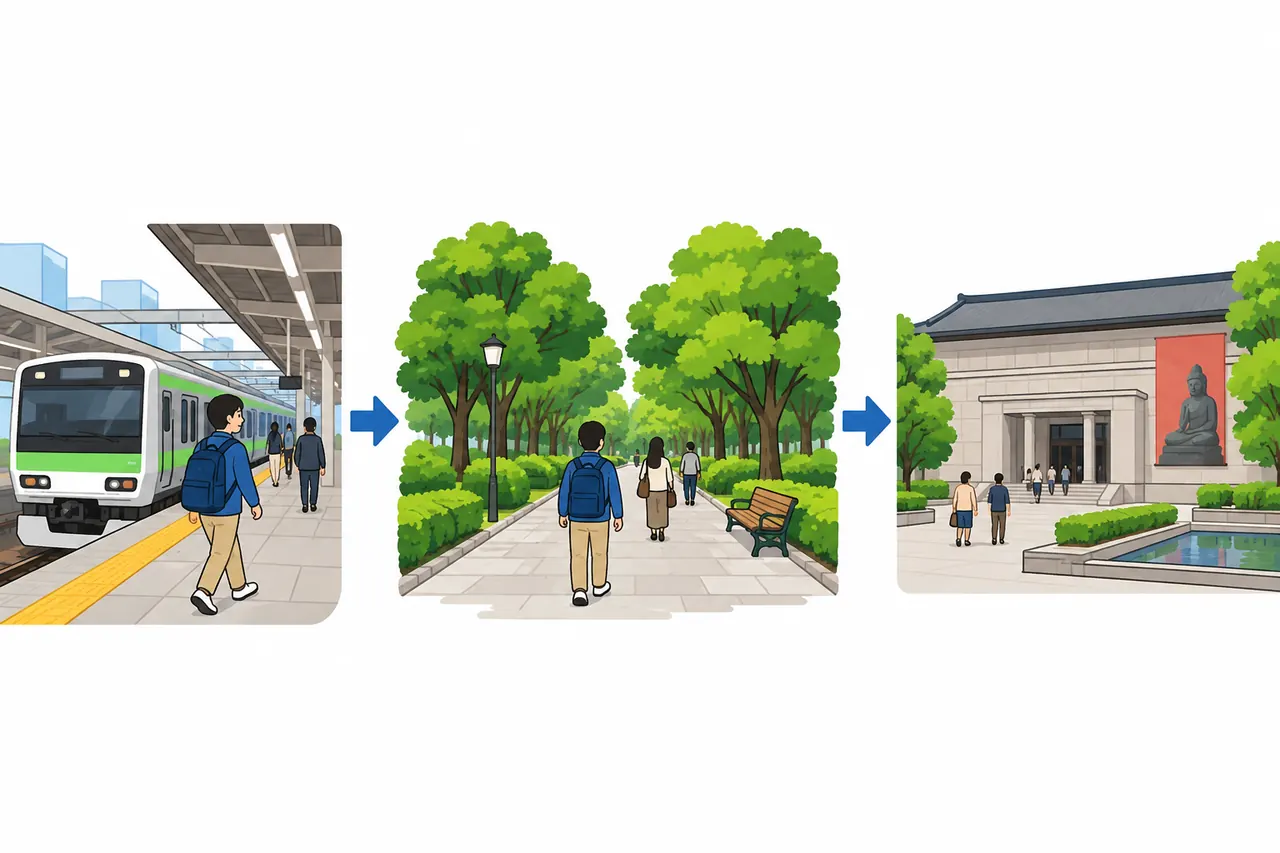
Osaka Castle Museum is at 1-1 Osakajo, Chuo-ku, Osaka. The museum lists several railway stations as possible approaches, but arriving at one of them does not mean you are at the tower entrance. The museum FAQ estimates a walk of about 15–20 minutes from the principal nearby stations; treat that as a guide, not a guaranteed time for every route, entrance or walking pace.
| Station | Railway listed by the museum | Practical point |
|---|---|---|
| Tanimachi 4-chome | Tanimachi Line | The approach through Otemon Gate is described as relatively level |
| Morinomiya | Chuo Line | Check the park approach as well as the rail journey |
| Osakajokoen | JR Osaka Loop Line | The station name does not mean the museum entrance is immediately outside |
| Osakajokitazume | JR Tozai Line | Check the walking approach separately from your train route |
| Temmabashi | Keihan | Compare the whole journey from your accommodation, not just the station name |
Use the official access page to review the location and approaches before setting out. If you need to ask for directions, keeping the Japanese destination name, 大阪城天守閣, and the address available may help distinguish the museum from other facilities in the park. Choose a station based on your starting point and the approach you want; there is no single station choice that is best for every visitor.
The route from Tanimachi 4-chome through Otemon Gate is described in the museum FAQ as relatively level. That may be helpful if avoiding a more demanding approach is important, but it does not mean the entire route to the tower is step-free. There is a separate accessible entrance arrangement, and the park’s accessibility map notes a slope near that entrance; see the accessibility section below.
The access page lists 171 spaces at the park station-front car park. That figure is a published capacity, not a live count of available spaces or a reservation. If you plan to drive, check current parking conditions rather than relying on the listed number as evidence that a space will be available when you arrive.
3. Osaka Castle history: what the tower and walls represent
The main tower standing today was reconstructed in 1931 with donations from Osaka residents. The museum’s historical overview identifies it as the third main tower, after the Toyotomi-period and Tokugawa-period towers. It has been a museum facility since the 1931 reconstruction, so the building visitors enter has had a museum role from the start of its present life.
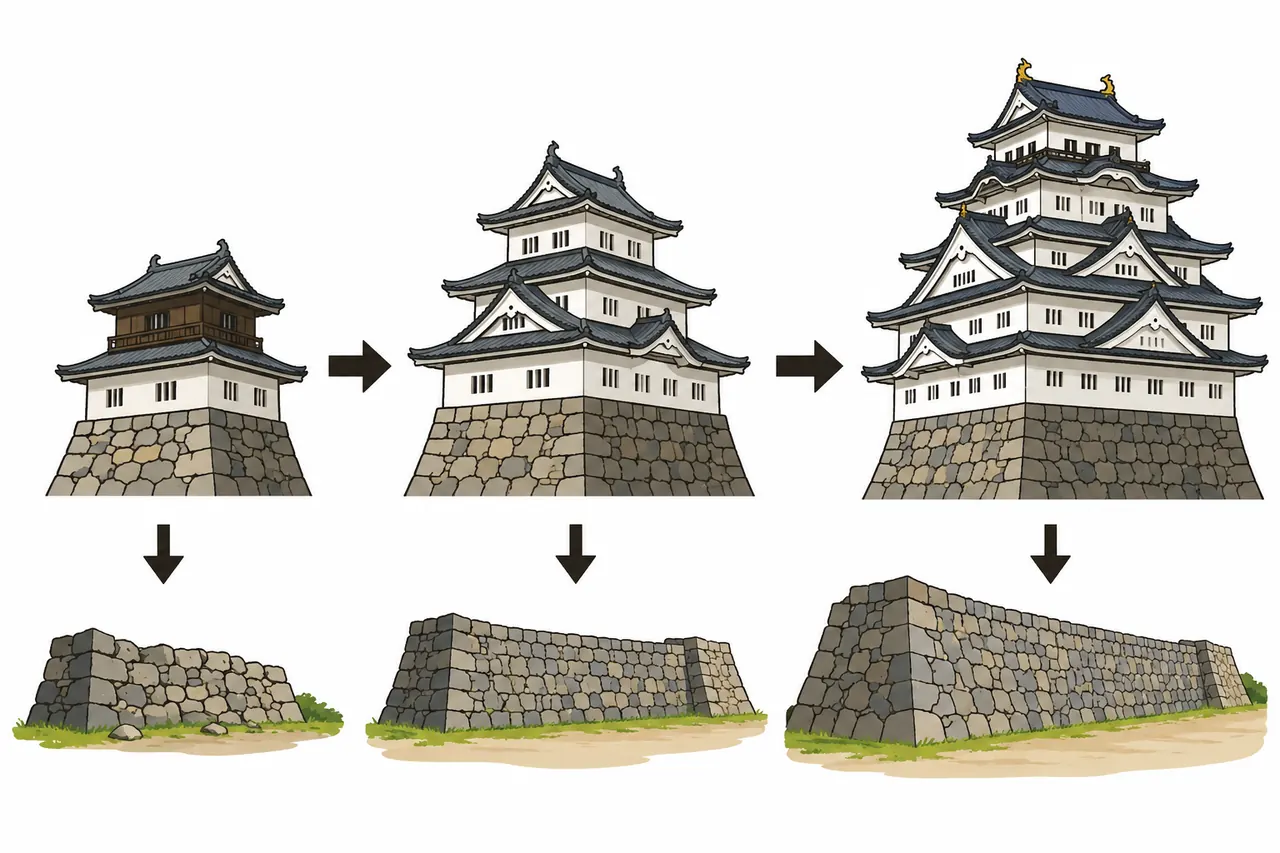
That history helps explain why the tower and the surrounding remains should not be treated as if they all belong to one building period. The museum describes the surviving stone walls and moats as dating from the Tokugawa period onward, while the tower itself is the later reconstruction. In other words, the castle site presents several historical layers: the reconstructed tower, the defensive landscape around it and the museum interpretation inside.
The museum’s exhibitions change over time. If a particular object or display is the reason for your visit, check the museum’s official information for current exhibition details instead of assuming that an older photograph or guide describes what will be on view on your date. The official FAQ places the observation deck on the eighth floor, giving visitors a separate reason to go up beyond the exhibitions.
A useful way to approach the visit is to look at the exterior before entering, then consider how the museum explains the site indoors. That sequence makes the difference between the age of the tower and the history represented by the walls easier to follow. You do not need to mistake the present tower for an untouched keep from an earlier period to appreciate either the building or its setting.
4. Osaka Castle inside: stairs, bags and family access
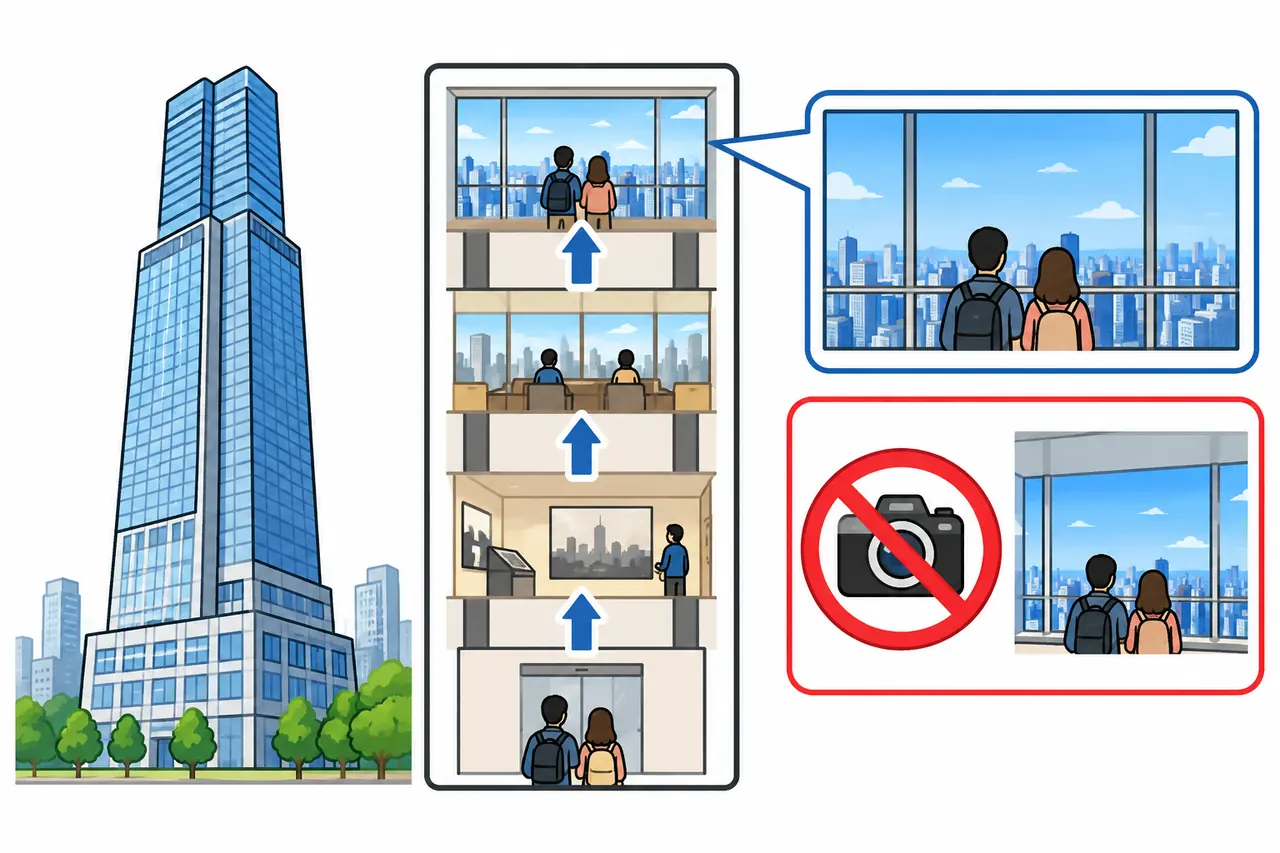
For the ordinary visitor route, the elevator goes up to the fifth floor, and visitors ordinarily use stairs from the fifth to the eighth. The sixth floor is a corridor that visitors cannot enter, so do not expect an exhibition room at every floor number. The eighth-floor observation deck is a distinct destination from the changing exhibition areas below.
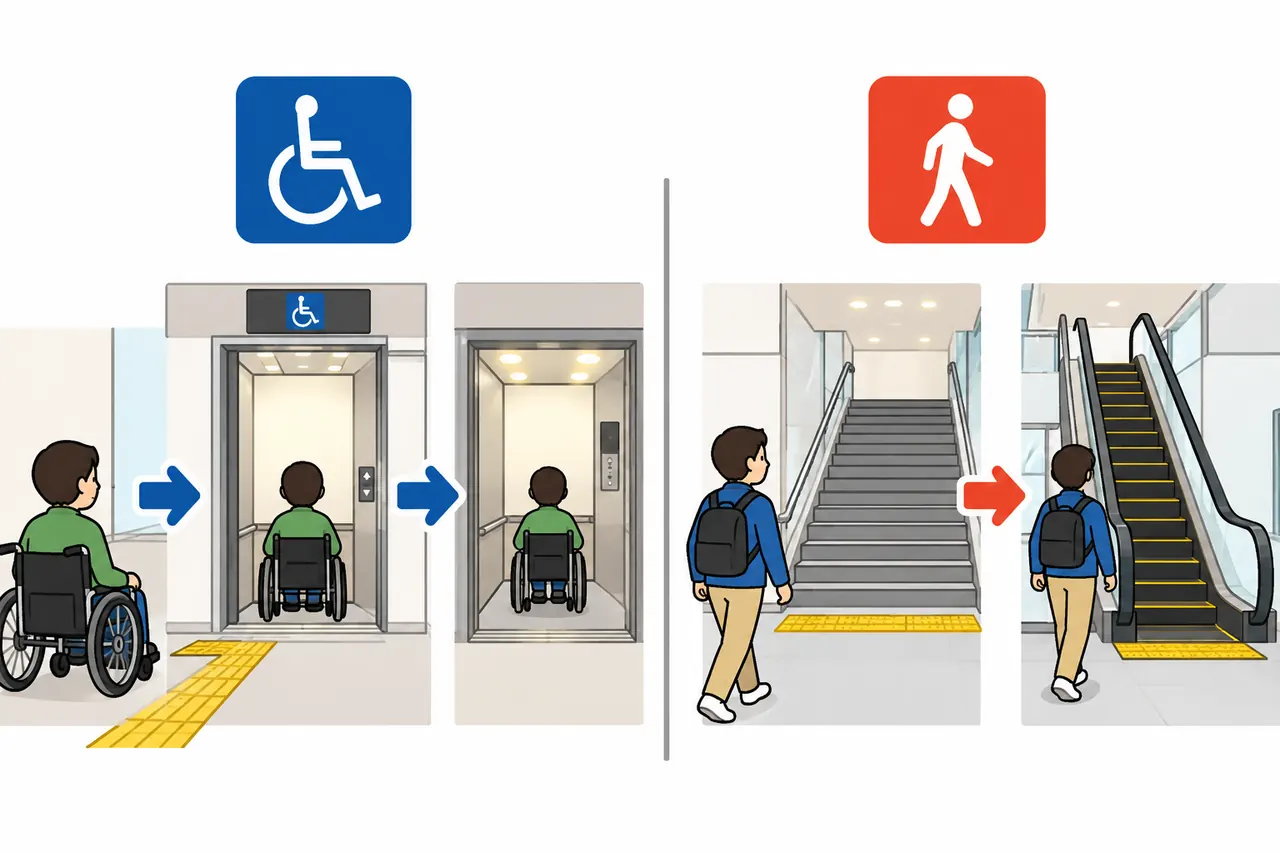
Visitors who have difficulty walking can use elevators between all floors, according to the official visitor information. Speak to museum staff about the appropriate route rather than assuming that the standard visitor flow will meet your needs. If using the all-floor elevator arrangement is essential to your visit, make that need clear to staff.
The park’s accessibility map shows a dedicated elevator from the ground-level sales area to the tower entrance. It also indicates an approximately seven-degree slope between the top of that elevator and the entrance. The map is available here, but it describes the access infrastructure and does not establish whether every item of equipment or service is operating on the day you visit.
The museum FAQ lists five wheelchairs for loan, with no reservations, and says that strollers can be stored free at the entrance. Ask staff about availability when you arrive; the listed number of wheelchairs is not a guarantee that one will be available at a particular time. The park map also notes that some road-train vehicles can carry wheelchair users. Electric-wheelchair users are asked to consult because of weight limits, so check directly if that service matters to your plan.
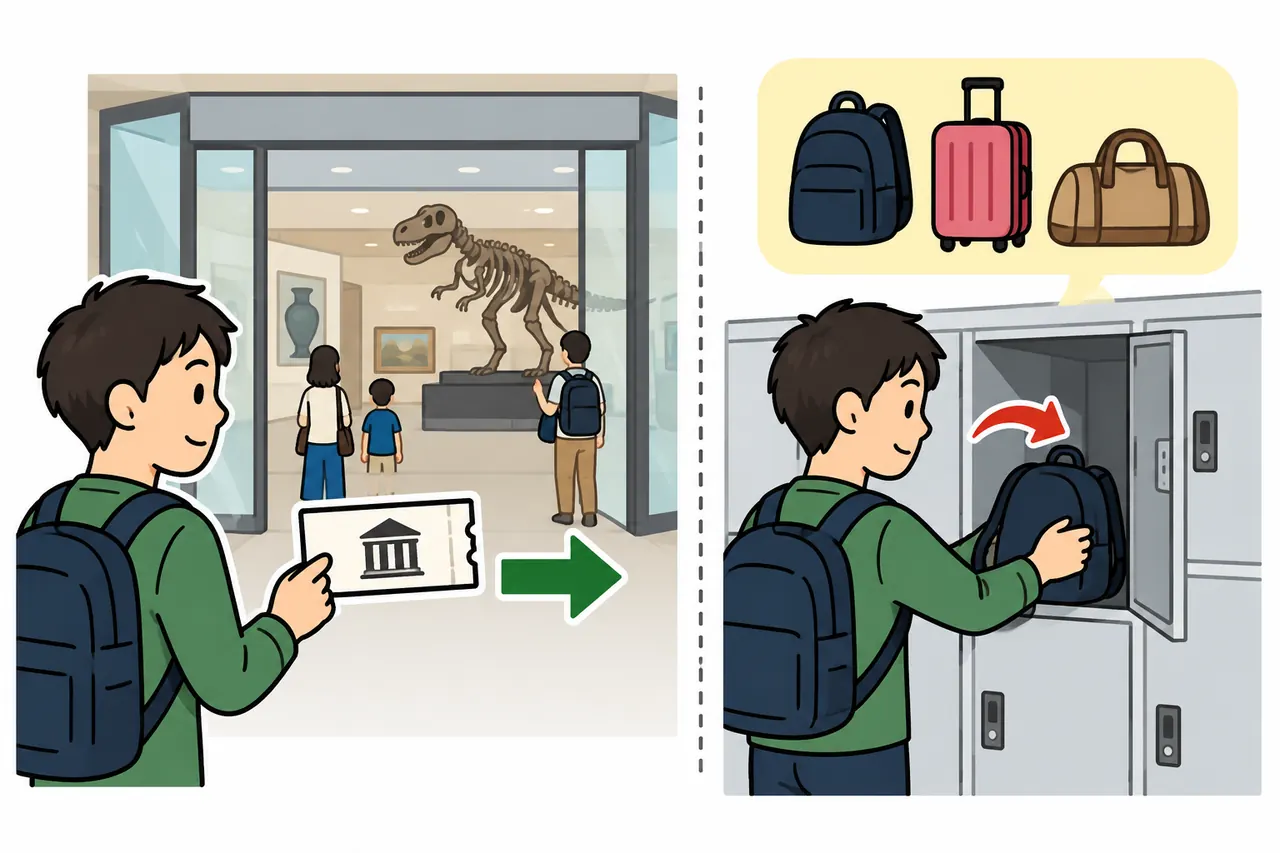
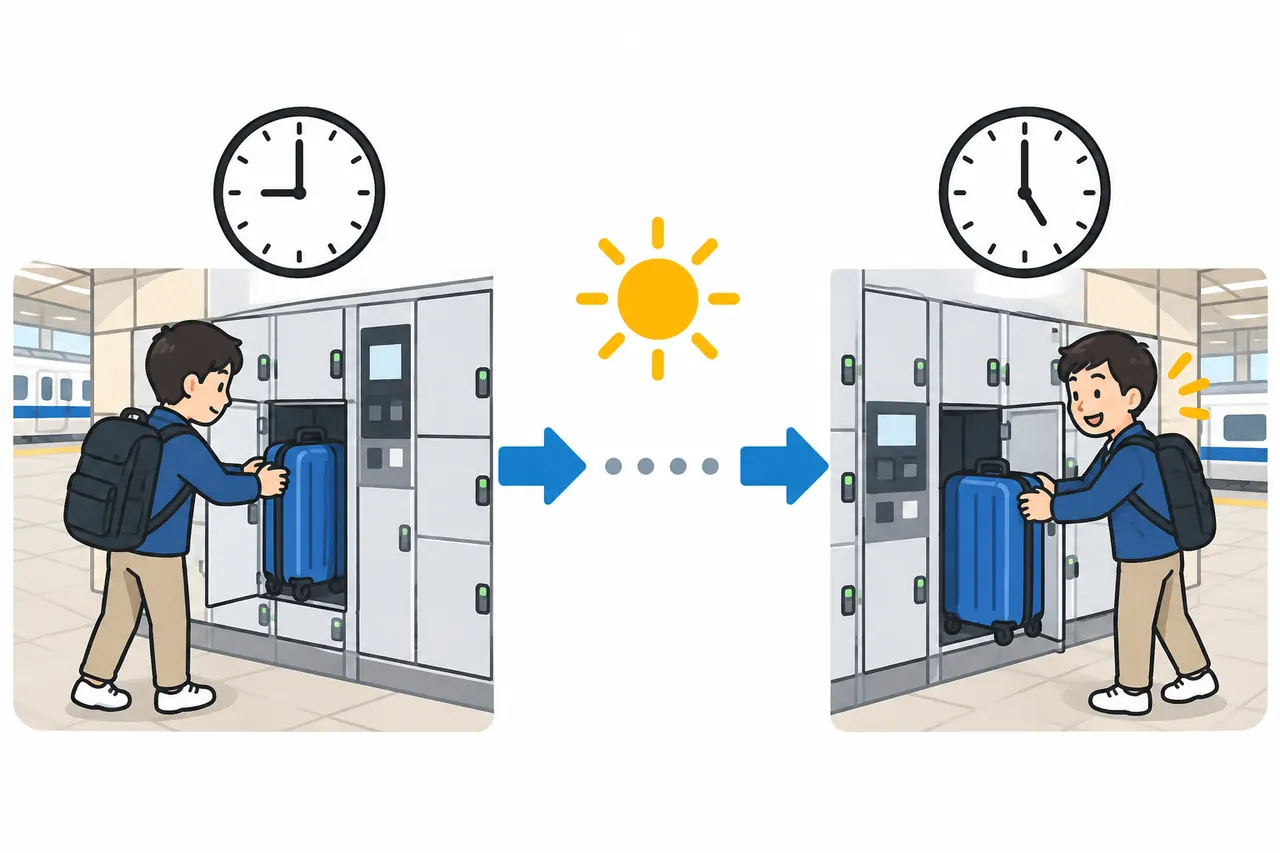
There are no coin lockers inside the museum. Staffed bag storage costs ¥100 per item and operates from 9:00 to 17:30; stored items must be collected by 18:00. These are the museum’s stated storage conditions, not information about station lockers, and they do not support assuming that a bag can be collected after the museum’s closing time.
Pets cannot enter the museum, except for assistance dogs. The museum also lists the Japan 100 Famous Castles stamp at the first-floor information desk and AEDs on the first and fifth floors. These details are in the official FAQ; if you need a facility or service during your visit, use the FAQ as a reference and ask staff for help on arrival.
5. Choosing a visit and following the rules
Choose your plan according to what you want to see, your walking pace and how much time you can allow for the station-to-museum approach. An exterior-focused visit, a tower visit and a wider park outing are different plans, and the ticket for the museum should not be assumed to cover other paid facilities. The available facts do not establish a standard amount of time needed for each option, so leave room for your own pace rather than relying on a fixed visit duration.
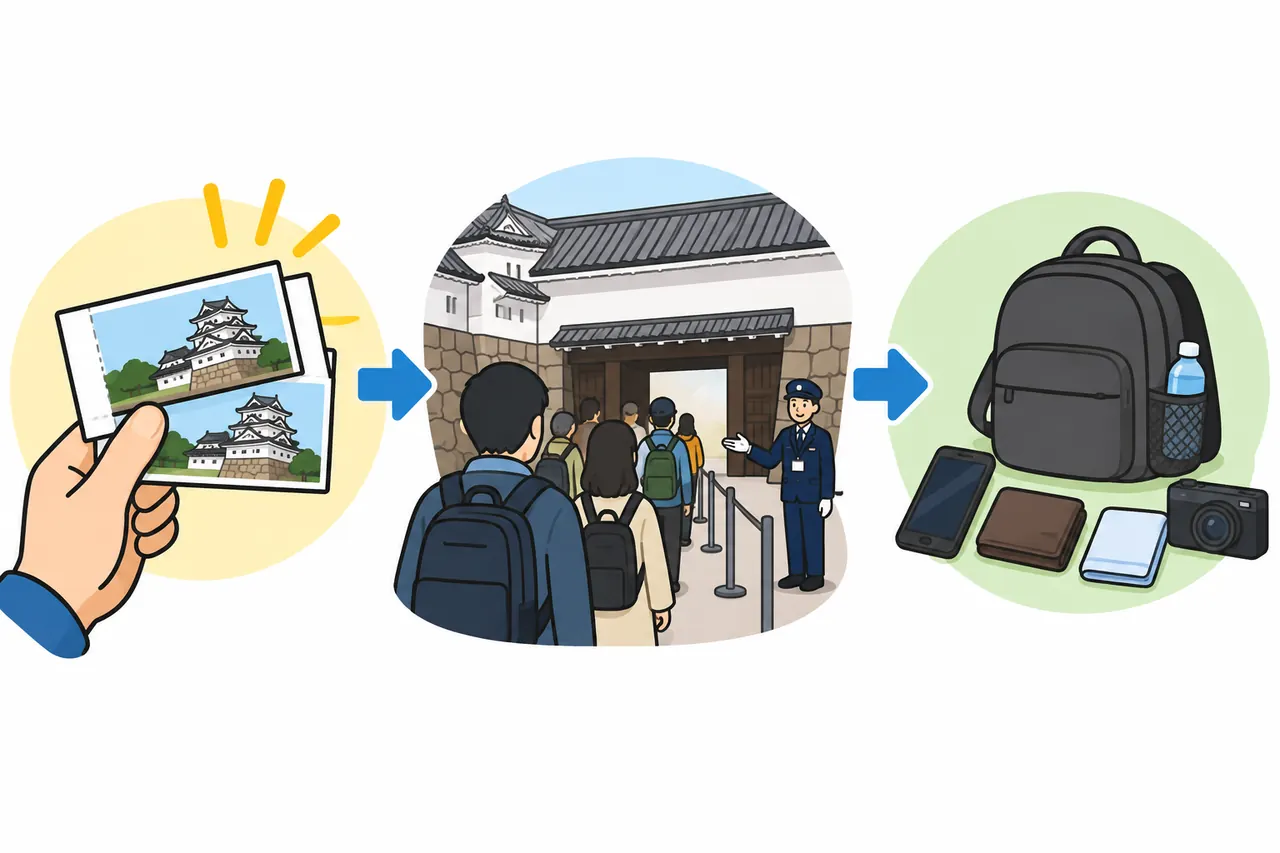
A practical sequence is to review the official access map, choose a station and allow for the walk, then check the admission category you will use. Students using the discounted rate need proof; overseas university and high-school students need ISIC. At the entrance, arrange stroller or bag storage if required, and ask staff about elevator access if the ordinary stairs route is not suitable.
Inside, follow the exhibition route and the photography signs. Photography is prohibited in the third- and fourth-floor exhibition rooms, as stated in the official FAQ. Do not treat a video or photograph posted online as permission to record in a restricted space, and follow signs and staff directions elsewhere in the building.
Before leaving, collect any stored belongings by the stated 18:00 deadline. If you are combining the museum with another attraction in the park, check that attraction’s admission and opening information separately. Keeping those plans separate helps avoid assuming that the tower ticket covers a second facility or that the museum’s hours apply to it.
6. Osaka Castle frequently asked questions
Is the tower an original surviving castle building?
No. The main tower seen today was reconstructed in 1931 with donations from Osaka residents, and the museum identifies it as the third tower after those of the Toyotomi and Tokugawa periods. The museum has operated in the tower since its reconstruction, while the surviving walls and moats are described as dating from the Tokugawa period onward.
How much is Osaka Castle Museum admission?
The price listed in the official visitor information checked on 4 November 2026 is ¥1,200 for adults. University and high-school students pay ¥600 with the required proof; overseas students in those categories need ISIC. Junior-high-school age or younger visitors are listed as free for museum admission, and the museum’s current page should be checked before travel for any changed conditions.
What time should I arrive?
The museum lists opening hours of 9:00–18:00 and last admission at 17:30, but staff may restrict the ticket-purchase queue earlier on busy days. The walk from the principal nearby stations is estimated at about 15–20 minutes, so include that time when planning your arrival. Reaching the station at 17:30 is not a reliable way to make it into the museum.
Can visitors avoid the stairs inside?
The ordinary upward elevator route goes to the fifth floor, followed by stairs from the fifth to the eighth. Visitors who have difficulty walking can use elevators between all floors, according to the visitor information. Ask museum staff about the appropriate route rather than assuming that the standard route is the only option or that all visitors follow the same access arrangement.
Can I take photographs inside?
Photography is prohibited in the third- and fourth-floor exhibition rooms. Follow the signs and staff instructions in other areas rather than assuming that photography is allowed everywhere else. A video or image shared online does not override the museum’s rules on the day of your visit.
Can I leave a stroller or bag at the museum?
Strollers can be stored free at the entrance, according to the museum FAQ. The museum has no coin lockers, but staff storage for bags costs ¥100 per item and accepts items from 9:00 to 17:30. Collect stored bags by 18:00, and ask staff on arrival if you need to confirm the current arrangement.
Is there wheelchair access?
The official visitor information says that visitors who have difficulty walking can use elevators between all floors, and the museum lists five loan wheelchairs without reservations. The park accessibility map shows a dedicated elevator between the ground-level sales area and the tower entrance, followed by an approximately seven-degree slope to the entrance. Because the map describes infrastructure rather than confirming its day-of operation, ask staff about current access and availability.
Which station should I use?
The museum lists Tanimachi 4-chome, Morinomiya, Osakajokoen, Osakajokitazume and Temmabashi as railway approaches. The FAQ estimates about 15–20 minutes on foot from the principal nearby stations, so compare the full route from your accommodation rather than choosing by station name alone. The approach from Tanimachi 4-chome through Otemon Gate is described as relatively level.