
Narita Airport to Tokyo: Train, Bus or Taxi? (2026)
Contents
- 1. Narita Airport to Tokyo at a glance
- 2. Which terminal, station or bus stop do you need?
- 3. Narita Airport to Tokyo by train
- 4. Narita Airport to Tokyo by bus
- 5. Narita Airport to Tokyo by taxi or booked transfer
- 6. Best way from Narita Airport to Tokyo by area
- 7. Late arrivals, luggage and airport hotels
- 8. Going from Narita Airport to Haneda
- 9. The trip back to Narita
- 10. Common mistakes and fixes
- 11. Narita Airport to Tokyo FAQ
The best way to get from Narita Airport to Tokyo depends on your hotel’s nearest station, your luggage and how much you want to spend. For Nippori or Keisei Ueno, compare the Skyliner; for Asakusa, check the lower-fare Access Express; for Tokyo Station or Ginza, compare the TYO-NRT bus with the N’EX. If you want a door-to-door ride, Narita’s fixed-fare taxi prices start at ¥23,500 before tolls.
This guide uses operator and airport information checked on November 3, 2026. N’EX ticket and round-trip information was also checked on November 4, 2026. Fares and timetables can change, and we did not ride these services ourselves, so check the linked official pages for your travel date.
Narita Airport to Tokyo at a glance
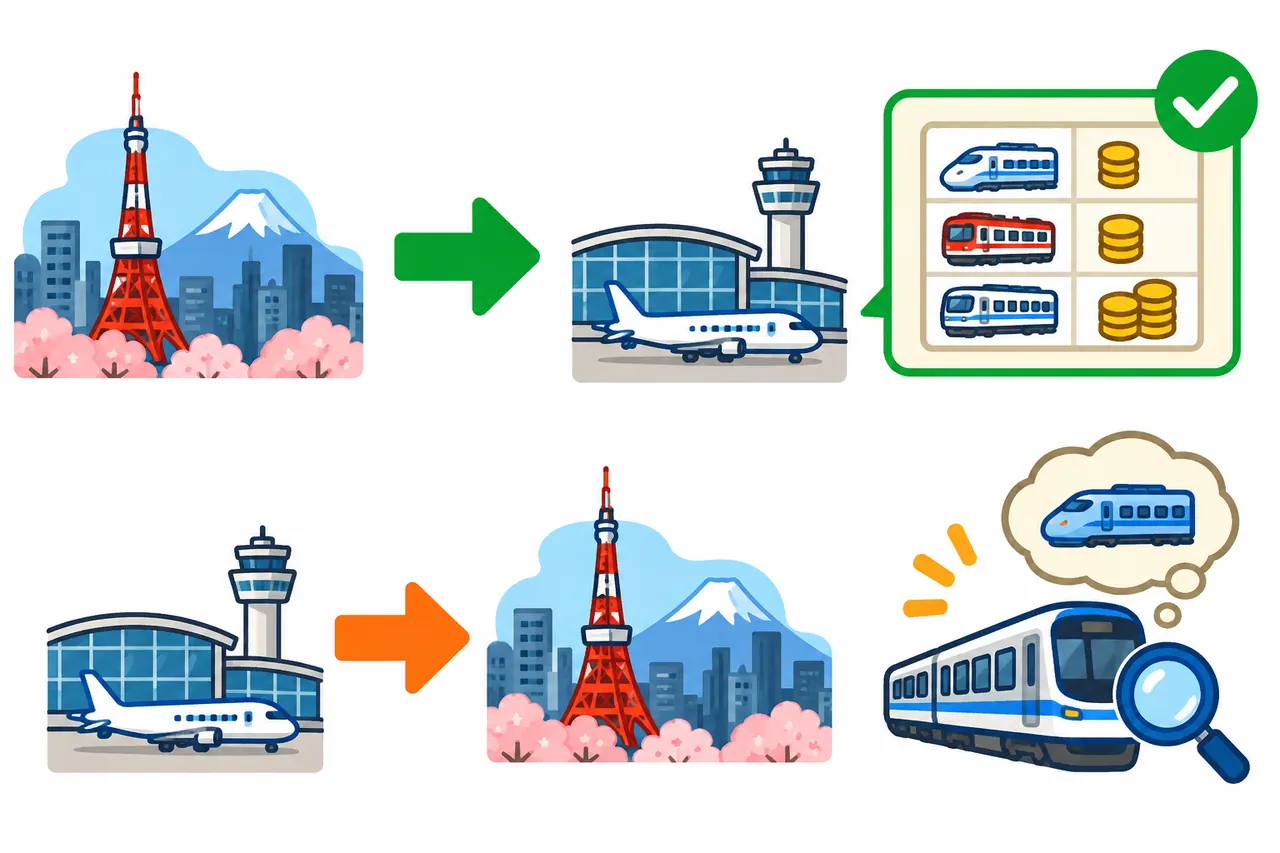
Start by finding the station or bus stop nearest your hotel, then compare services that reach it. A direct ride is not always the best choice if its stop is far from your accommodation, so include any onward trip in your plan. The table distinguishes confirmed fares from prices or details that still need checking.
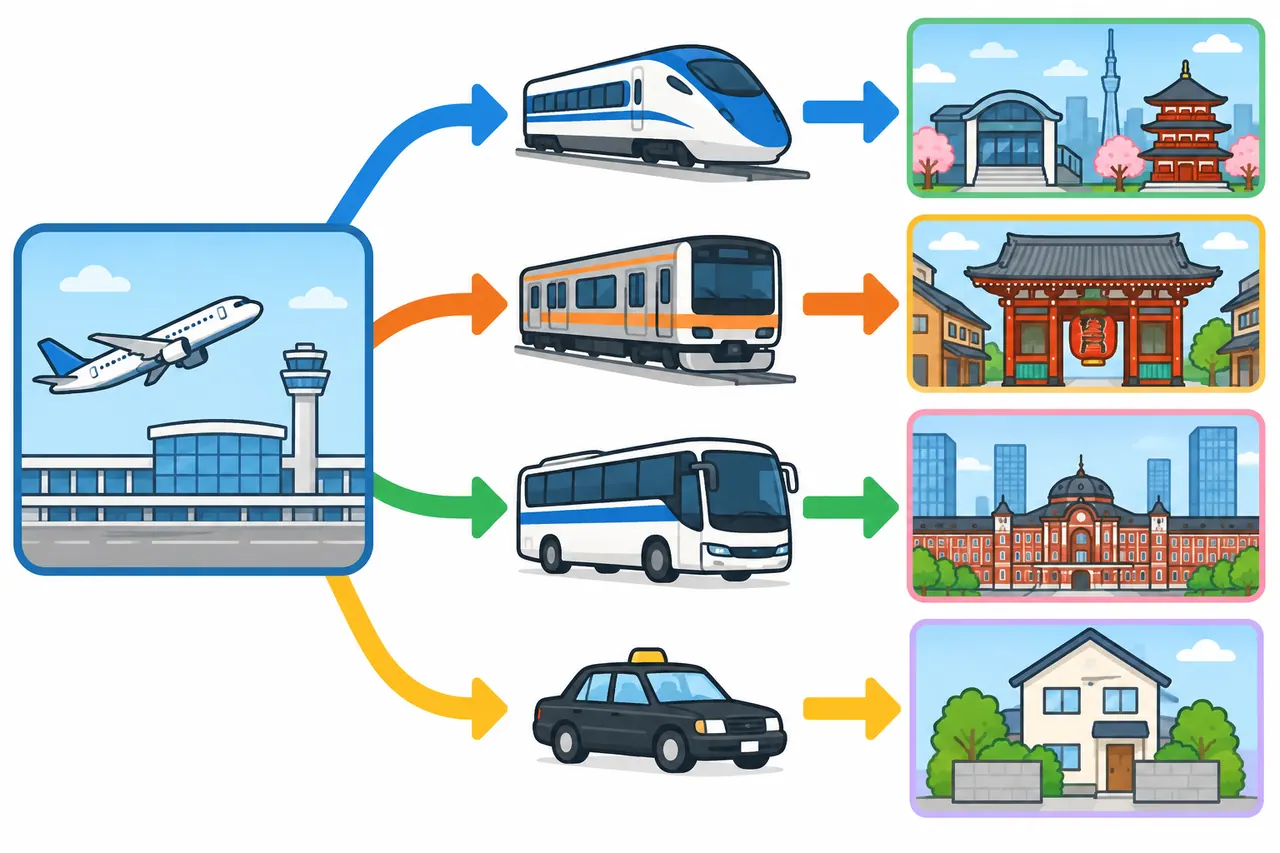
| Option | Best for | Adult fare or price status | Time information | Important conditions |
|---|---|---|---|---|
| Keisei Skyliner | Nippori and Keisei Ueno | Official pages conflict: the fare table lists ¥2,470 by paper ticket and ¥2,465 by IC; a discount-ticket page shows ¥2,580 as the normal fare | From 36 min to Nippori; from 41 min to Keisei Ueno | All seats reserved; confirm the fare with Keisei before buying |
| Keisei Access Express | Asakusa, Nihombashi, Shinbashi and Shinagawa | From ¥1,290 by paper ticket; no extra express fee | Check the timetable for your train | Fare and journey may differ by route |
| JR East Narita Express (N’EX) | Tokyo, Shinagawa, Shibuya and Shinjuku | ¥3,140 to Tokyo; ¥3,330 to Shinagawa, Shibuya or Shinjuku for an ordinary-car reserved seat | Check the train and date | Seat reservation is available online, at a machine or at a counter |
| AIRPORT BUS TYO-NRT | Tokyo Station, Ginza and Shinonome Aeon | ¥1,500 regular trip; ¥3,000 late-night or early-morning trip | One timetable example takes 1 h 38 min | Reservation acceptance is suspended; check purchase and payment rules |
| Airport Limousine bus | A number of Tokyo districts | Current fare not confirmed here | Use the operator’s timetable | Check the exact stop and baggage rules |
| Narita fixed-fare taxi | A specific address or door-to-door travel | ¥23,500–¥38,500, depending on zone and road, plus tolls | Ask the driver | Booking is not required; late-night surcharge applies |
| Private transfer or shared ride | A pre-arranged group ride | Get a quote from the company | Get a quote from the company | Confirm tolls, baggage, meeting point and drop-off arrangements |
| Keisei Main Line | Keisei stations and other stops | The published fare table covers journeys to Narita; the reverse fare is not confirmed here | Check Keisei’s timetable | Do not assume the airport-bound fare also applies from the airport |
| Regular JR train | JR stations | Check with JR East | Check with JR East | The checked sources do not establish a specific service, fare or time |
For official details, use the Narita Airport train guide, Keisei Skyliner fare table, TYO-NRT boarding and fare information and Narita Airport taxi information. A missing fare in this guide does not mean a service has stopped; it means the checked sources did not confirm the number. Times described as “from” are not a promise that every departure takes that long.
Which terminal, station or bus stop do you need?
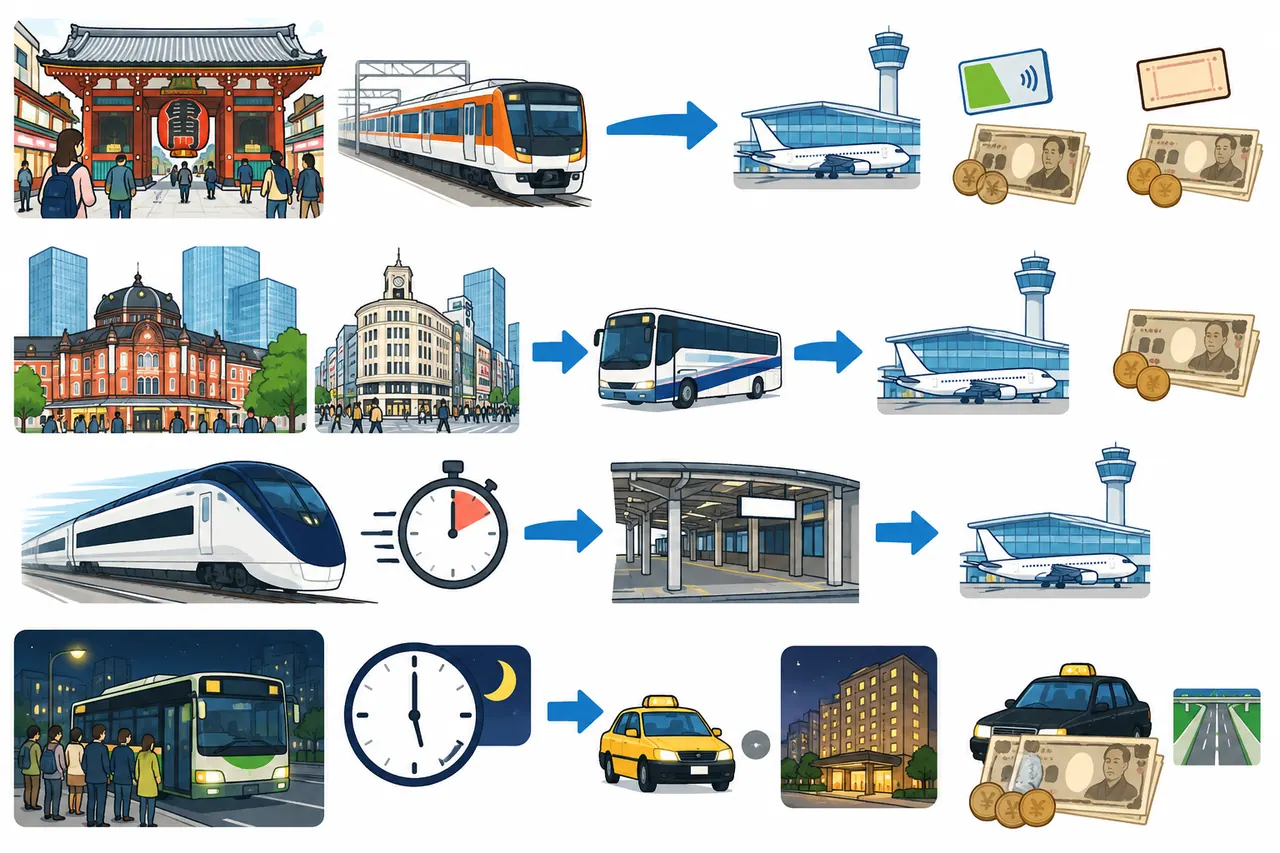
Narita has three passenger terminals but only two railway stations. Terminal 1 uses Narita Airport Station, while Terminals 2 and 3 use Airport Terminal 2 Station. The airport lists a walk of about five minutes between the station and Terminals 1 and 2, and about ten minutes to Terminal 3; follow the airport signs and allow time for the walk.

| Arrival terminal | Railway station | Approximate walk | Taxi stand |
|---|---|---|---|
| Terminal 1 | Narita Airport Station | About 5 min | No. 15 |
| Terminal 2 | Airport Terminal 2 Station | About 5 min | No. 28 or 31-A |
| Terminal 3 | Airport Terminal 2 Station | About 10 min | Terminal 3 taxi stand |
Check the airport’s official train access instructions before setting off. Terminal 3 passengers should not look for a railway station inside their terminal: walk to Airport Terminal 2 Station instead. Taxi stands and bus stops are terminal-specific, so use the correct terminal in the airport’s taxi and bus information.
For buses, a stop number can serve several destinations or operators, and the same destination may appear at more than one stop. At Terminal 1, airport listings include TYO-NRT for Tokyo Station, Ginza and Shinonome Aeon at stop 7; other services to Tokyo Station and nearby destinations appear at stop 10. Terminal 1 examples also include stop 3 for Toyosu, Ikebukuro, Shibuya and Shin-kiba, stop 8 for Tokyo Skytree Town, Kinshicho and Kichijoji, and stop 12 for Haneda, Ebisu and Shinagawa.
TYO-NRT’s timetable lists its airport departure stops as Terminal 1 stop 7, Terminal 2 stop 6 and Terminal 3 stop 5. These are not interchangeable with the Terminal 1 stop examples for other bus services. Check the airport bus listings and the TYO-NRT timetable for your terminal and date.
Narita Airport to Tokyo by train
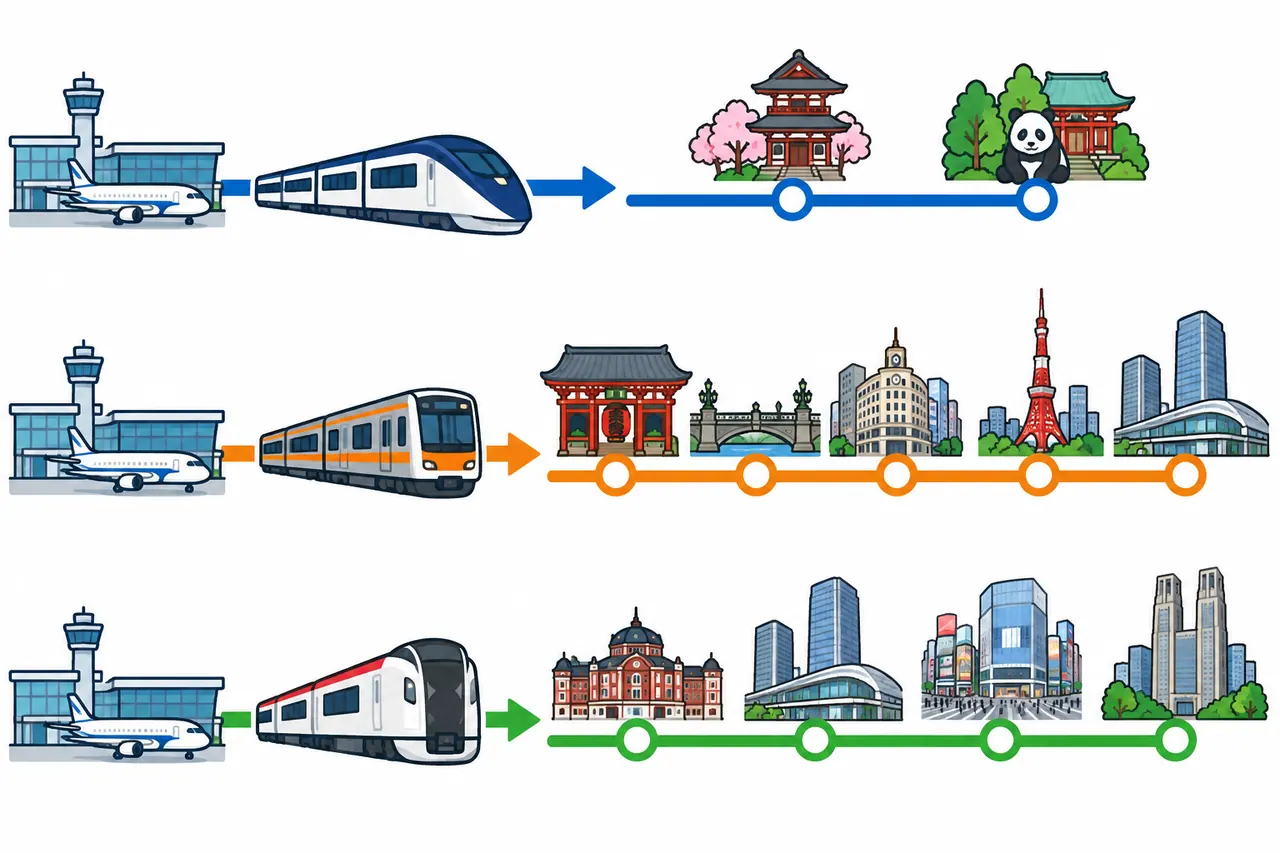
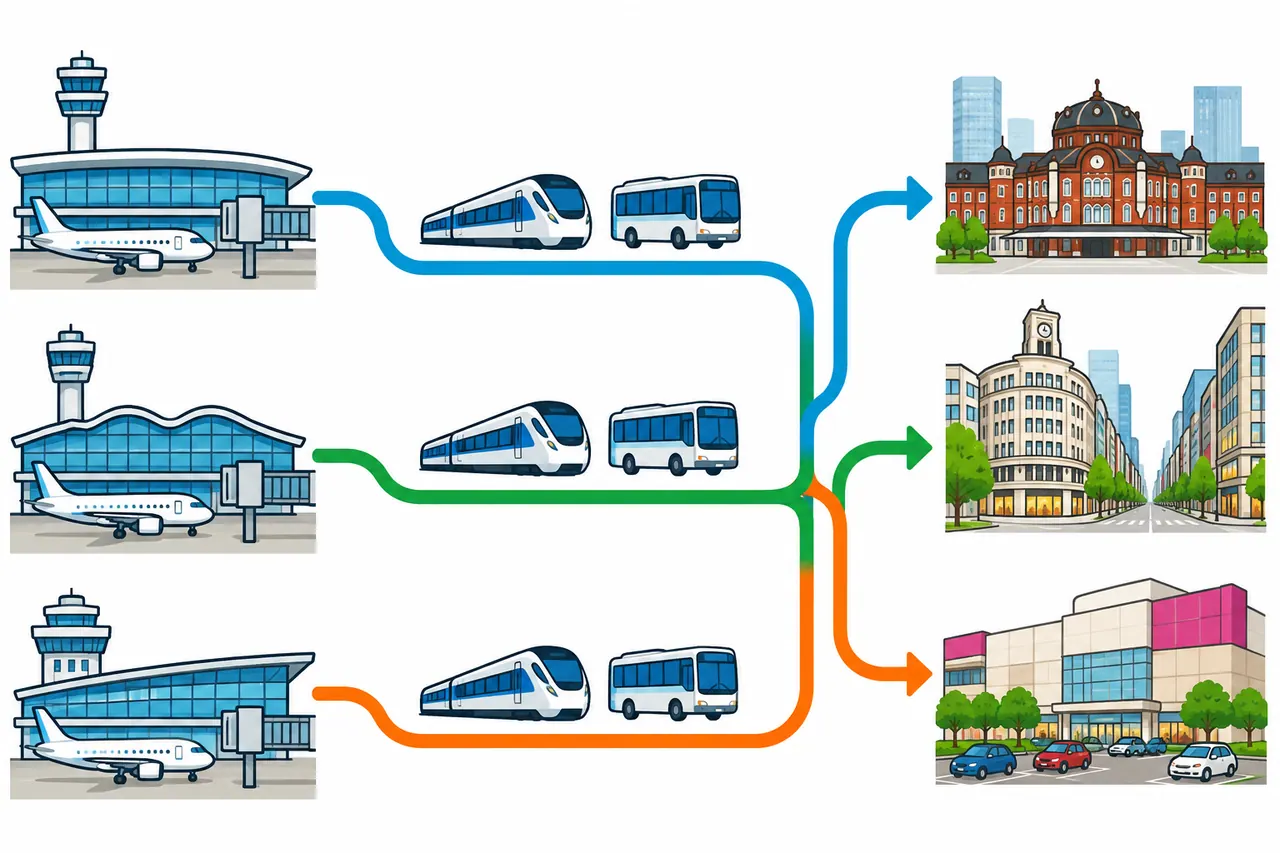
The airport is served by the Narita Sky Access Line, the Keisei Main Line and JR lines. Identify your destination station before deciding which operator to use, because a train that is direct to one part of Tokyo may require onward travel to another. If you are unsure about a JR service, ask JR East rather than relying on an unverified fare or route.
Skyliner: fast service to Nippori and Keisei Ueno
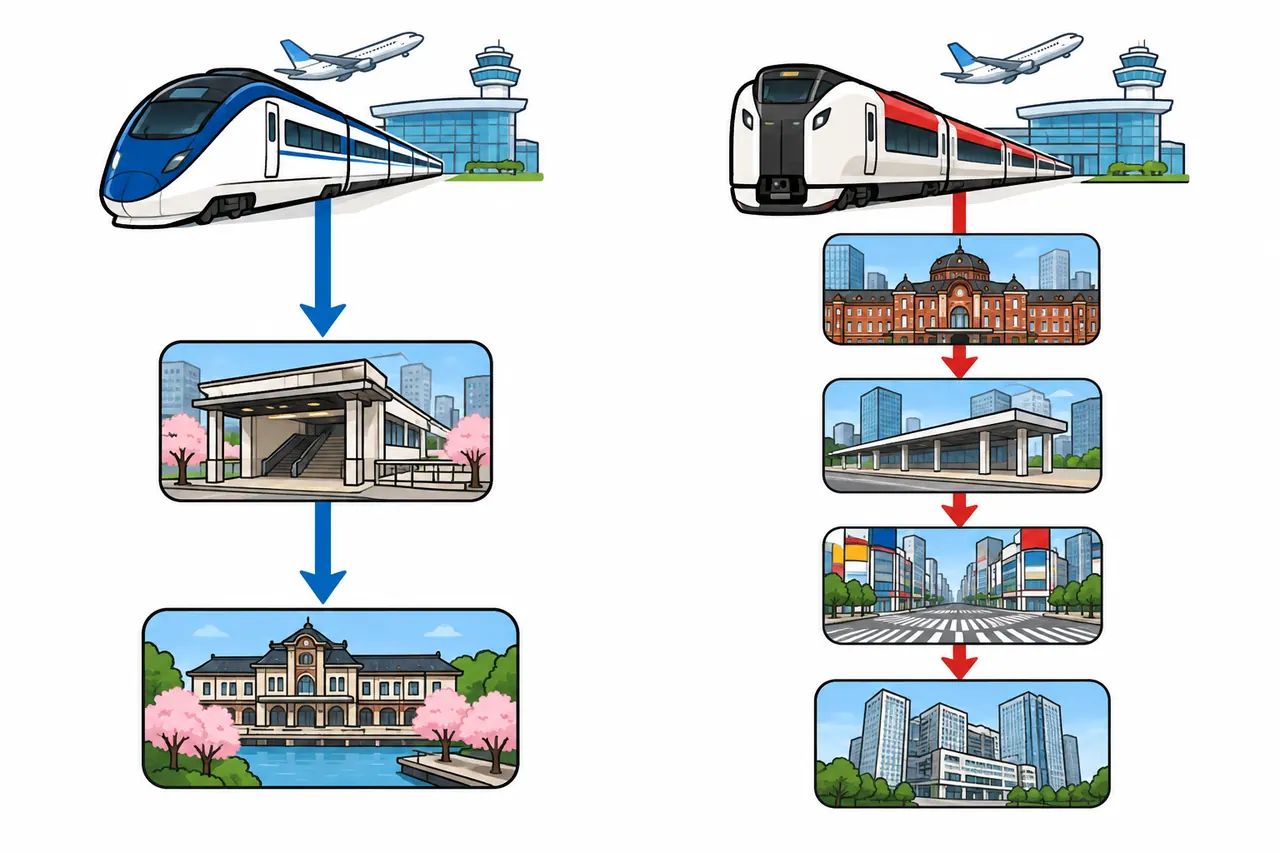
The Skyliner is Keisei’s reserved-seat airport train. It stops at Nippori and Keisei Ueno, not Shinjuku; some trains also stop at Aoto and Shin-Kamagaya, so check the stops for your particular departure. Keisei describes the service as running three times an hour, but check the timetable for your direction and travel date.
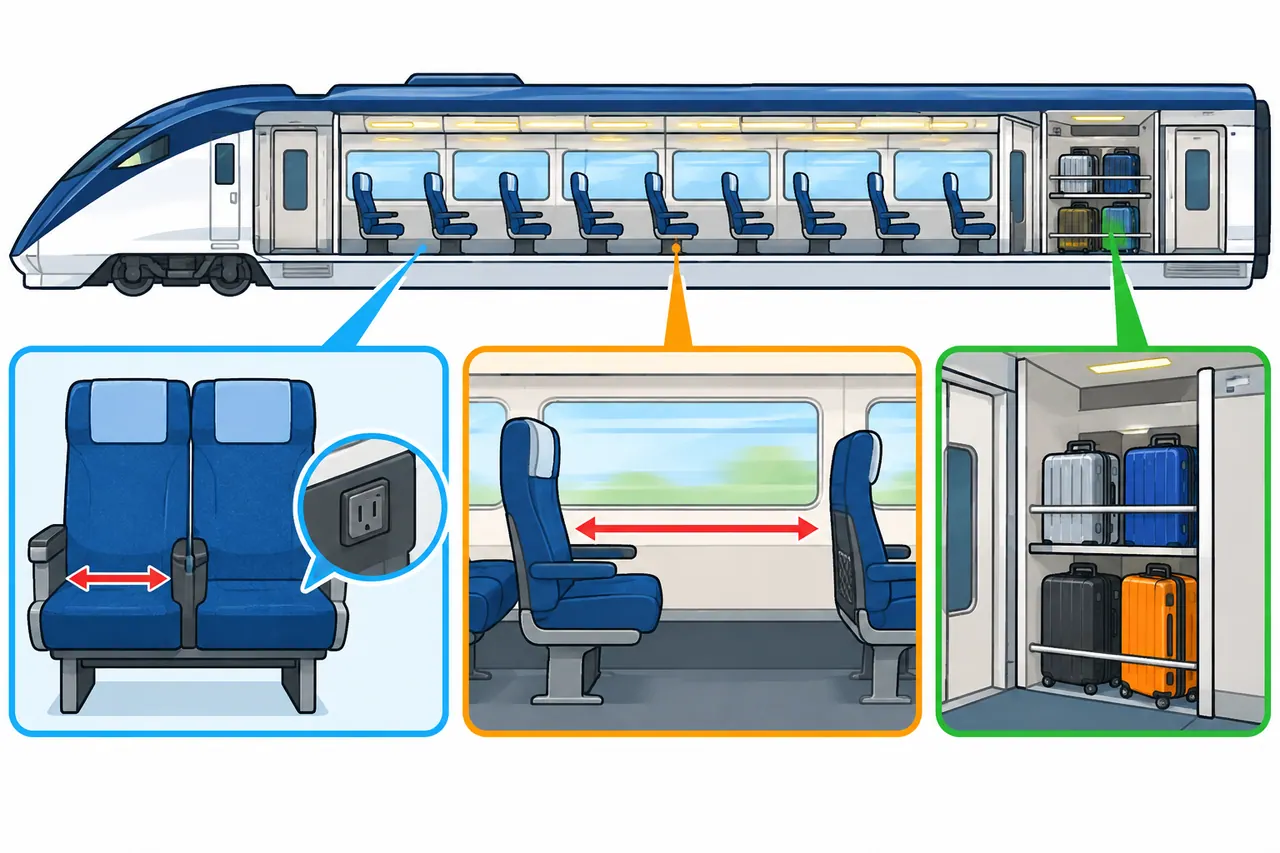
The fastest stated journey is from Airport Terminal 2 Station to Nippori in 36 minutes, or to Keisei Ueno in 41 minutes. Those are fastest-case times, not the duration of every train. Keisei’s Skyliner information also describes a luggage area in every car, power outlets at each seat, a seat width of 47 cm and 105 cm of seat spacing.
There is an unresolved official fare discrepancy. Keisei’s fare table lists an adult one-way fare of ¥2,470 by paper ticket or ¥2,465 by transport IC card, while its discount-ticket page shows ¥2,580 as the normal fare. Confirm the amount with Keisei before purchase rather than treating either figure as definitive. Use the Keisei access guide to check departure times; specific first- and last-train times are not established here.
N’EX: direct service to major JR stations
The Narita Express, commonly called N’EX, serves major JR stations including Tokyo, Shinagawa, Shibuya and Shinjuku. Not every train necessarily stops at every station, so verify the destination and stops for the train you plan to take. The Narita Airport rail guide lists N’EX among the airport’s rail services.
JR East lists ordinary-car reserved-seat one-way totals of ¥3,140 to Tokyo and ¥3,330 to Shinagawa, Shibuya or Shinjuku. Green Car totals are ¥3,910 to Tokyo and ¥4,100 to the other three listed stations. Check JR East’s N’EX ticket page for your travel date, because these are the listed totals rather than a guarantee for a future journey.
N’EX requires a fare ticket and a limited-express ticket; a Suica can be used instead of the fare ticket, but the required express-ticket arrangements still matter. JR East says seats can be reserved online, at a reserved-seat ticket machine or at a station counter. The train has space for large luggage, and a non-reserved seat option is available; if no seat is available, the passenger may need to use the deck.
JR East’s N’EX round-trip offer is for holders of passports issued outside Japan. It costs ¥5,200 for an adult or ¥2,600 for a child aged 6–11, and allows one trip from Narita followed by one return trip to Narita within 14 days. Show the passport when collecting the ticket, and reserve a seat; ordinary-car reserved-seat reservations are available without an extra charge. See the official round-trip ticket conditions before comparing the offer with separate one-way tickets.
JR East has announced that some N’EX trains will be suspended from November 6 to 8, 2026. This is a notice about some trains, not a statement that every N’EX service is cancelled. Check the same JR East page for the particular train and travel date.
Access Express: compare fares for east and central Tokyo
Keisei says the Access Express does not require an additional express fee. Its adult airport-bound fares are ¥1,290 by paper ticket or ¥1,276 by IC card to Asakusa and Higashi-nihombashi; ¥1,330 or ¥1,318 to Nihombashi and Shinbashi; and ¥1,520 or ¥1,502 to Shinagawa. The official Access Express fare table gives the listed fares.
The route may use the Sky Access Line or the Keisei Main Line, and fares can differ by route. Keisei describes the Access Express as serving the airport and the Shinagawa, Shinbashi and Nihombashi areas, but the checked fare page does not provide journey times or confirm the direct and transfer conditions for every train. Check the Keisei timetable and access information for the service you intend to board.
Nihombashi and Higashi-nihombashi are separate stations, so use the exact station name when asking for directions. The Access Express fare to Asakusa is useful for comparing the listed Keisei options, but it should not be described as the cheapest possible fare across every transport service. Check both the route and the fare before deciding.
Keisei Main Line and regular JR trains
The Keisei Main Line’s published fare table is written for journeys to Narita Airport. It lists adult fares from Nippori or Keisei Ueno of ¥1,030 by paper ticket or ¥1,025 by IC card, and fares to the airport of ¥980 from Oshiage, ¥1,100 from Asakusa, ¥1,140 from Nihombashi or Shinbashi and ¥1,330 from Shinagawa. These figures are not confirmed as the fares for the reverse journey from the airport; consult the Keisei Main Line fare page for the direction it covers.
Narita Airport confirms that JR lines serve the airport, but the checked information does not establish a specific regular JR service, its stops, fare or travel time. Do not assume that a fare for a different JR service applies. JR East’s help line is +81 50-2016-1603, open 10:00–18:00 with translation assistance.
When contacting JR East, give the exact airport station—Narita Airport Station for Terminal 1 or Airport Terminal 2 Station for Terminals 2 and 3—and the Tokyo station shown on your accommodation booking. Provide your travel date, arrival time and the full name of any rail pass you hold. Ask which train goes there, how long it takes, whether you change trains and whether you need a separate seat ticket.
Ticket, IC card or pass?
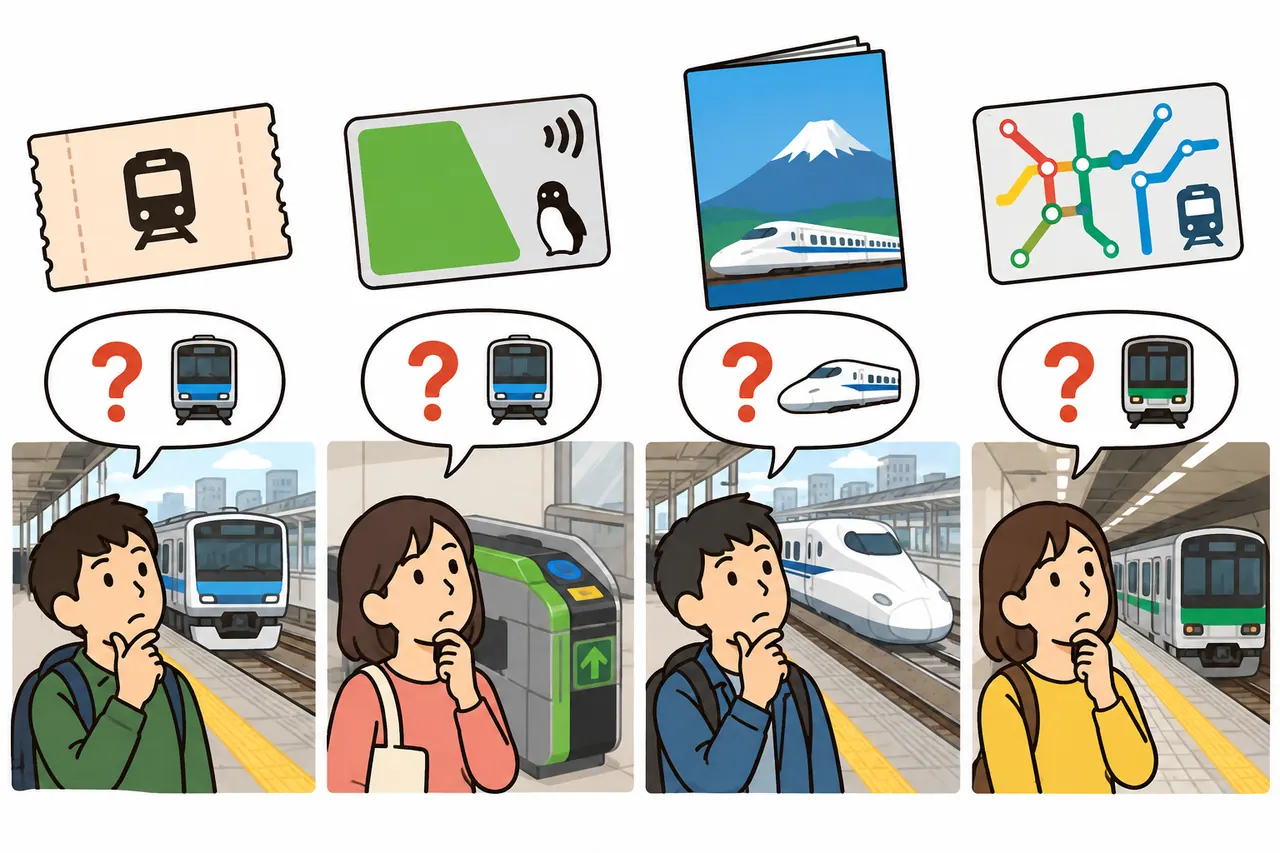
A paper ticket is for a particular journey, while an IC card is a stored-value card used by tapping at gates or readers. Neither description by itself confirms that a reserved seat or limited-express supplement is covered. Ask the operator what your exact train and seat require before you board.
| Option | What to check |
|---|---|
| Paper ticket | Does it cover the correct train and destination? |
| IC card | Is a separate seat or limited-express ticket needed? |
| Rail pass | Does your exact pass cover this train and seat? |
| N’EX round-trip offer | Eligibility, passport presentation, 14-day validity and travel order |
| Tokyo Subway Ticket | Which subway lines it covers and where it can be bought |
The sources checked for this guide do not confirm which rail passes cover which Narita airport trains, or the coverage and purchase locations of the Tokyo Subway Ticket. Check the relevant operator before counting either product toward your airport journey. A pass name alone is not enough to establish that it covers a specific airport train.
How to take a train from Narita
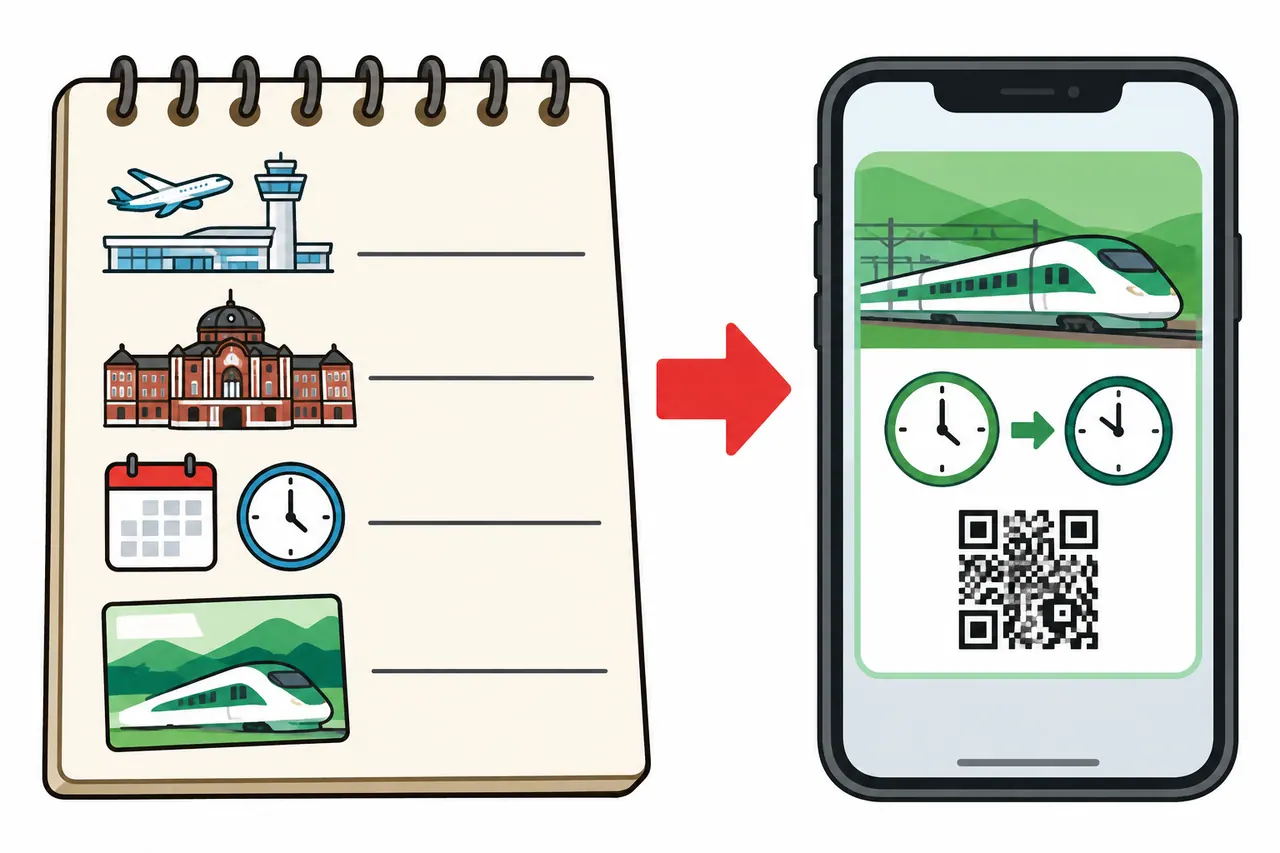
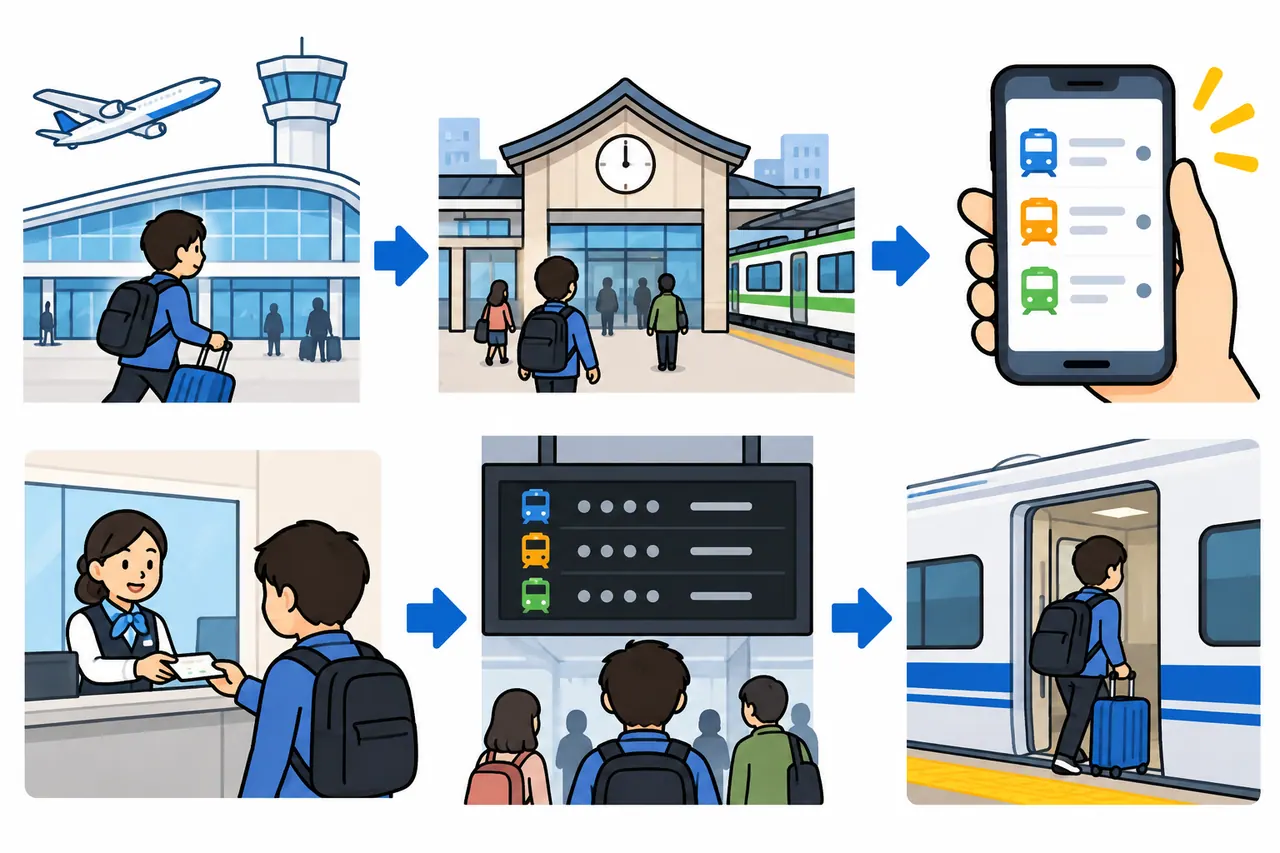
First, open the airport’s train access page and locate the station for your terminal. Then open the relevant Keisei or JR East timetable for your date and note the train name, departure time and destination. Do not plan around the fastest published journey time as if every train takes that long.
Next, check the operator’s ticket rules and buy the right ticket for the service and seat. At the station, ask staff if you are unsure which train to board; show them the train name, destination and date on your phone. Before boarding, match the platform display to the train name, time and destination, and keep your seat details with your ticket if you have a reserved seat.
Narita Airport to Tokyo by bus
A bus can be convenient if its stop is close to your hotel, and it avoids a train change on the airport-to-city leg. It can also be delayed by road traffic, and a destination name such as “Shinjuku” does not guarantee a stop beside your accommodation. Compare the exact stop, luggage conditions, fare and onward journey before choosing.
TYO-NRT fare, tickets and baggage
AIRPORT BUS TYO-NRT connects Narita with Tokyo Station, Ginza and Shinonome Aeon. Regular trips cost ¥1,500 per adult and ¥750 per child; late-night or early-morning trips marked for the higher fare cost ¥3,000 per adult and ¥1,500 per child. The operator’s boarding and fare page and official timetable provide the service details.
Children who have not started school travel free at the rate of one child per adult, but a child who uses a seat must pay ¥750 on a regular trip or ¥1,500 on a late-night or early-morning trip. Ask the operator if you are unsure how a child’s age or seat use applies to your booking. For a group, calculate the fare for each passenger rather than comparing only one adult’s ticket.
TYO-NRT is currently operating with free seating, and advance reservations are suspended. For airport departures, the general process is to buy a time-specific ticket at the airport counter; go to the stop at least five minutes before departure. The timetable lists a Terminal 3 departure at 7:15 arriving at Tokyo Station’s Nihombashi Exit at 8:53, an example of about 1 hour 38 minutes rather than a fixed journey time.
The operator’s luggage rules generally allow one suitcase per passenger in the luggage compartment, with the outside dimensions totalling no more than 158 cm. Bicycles, skis, snowboards, surfboards, golf bags, large musical instruments, cardboard boxes and other listed oversized items are not accepted in the cabin or luggage compartment. Read the current TYO-NRT baggage rules before travelling with anything other than ordinary luggage.
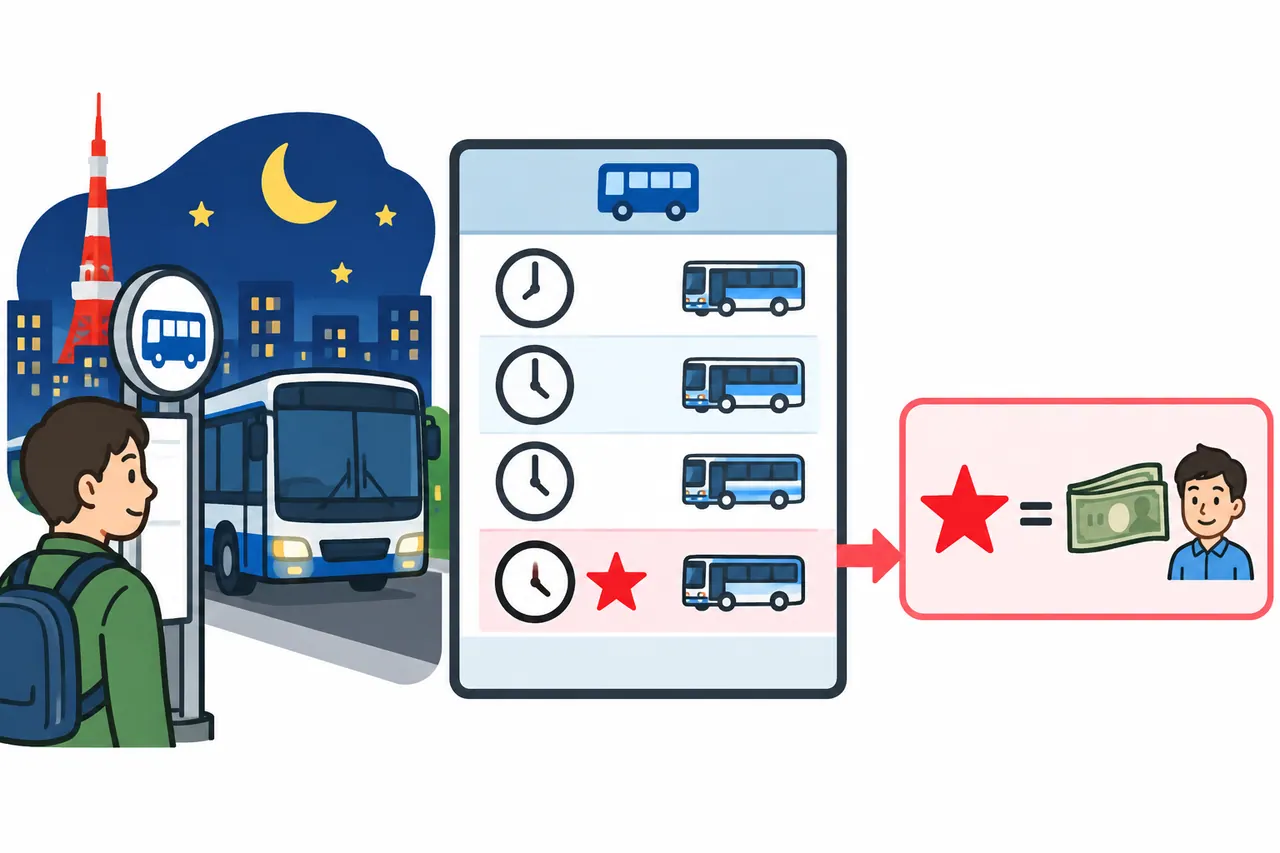
There is a difference in how the operator’s pages describe late airport departures and payment. The boarding page identifies the final bus as an exception for paying onboard, while the FAQ describes counter sales through the 22:45 departure from Terminal 3; the checked timetable’s next listed departure is the 23:20 last bus. For late services, confirm the payment method with the operator before relying on either description; the final bus accepts cash or a transport IC card, not credit cards.
TYO-NRT can be full, and traffic can delay the journey, so leave a margin if you have a connection or appointment. For a regular airport departure, buy your ticket at the counter and confirm the stop number for your terminal. The operator’s timetable page is the place to recheck the latest departures.
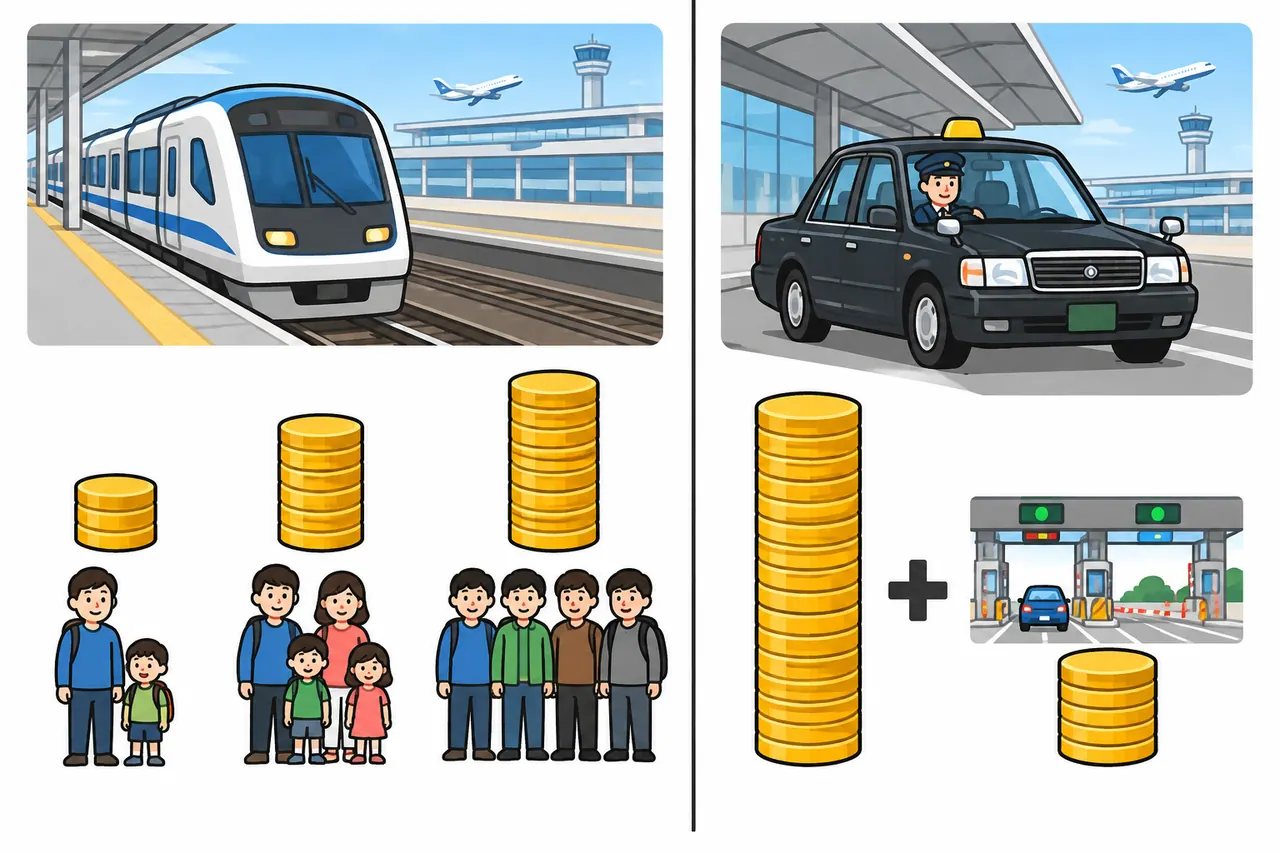
For a simple family fare calculation, regular TYO-NRT fares total ¥2,250 for one adult and one child, ¥4,500 for two adults and two children, or ¥6,000 for four adults. These totals do not include travel from the bus stop to the hotel, and they assume the listed regular adult and child fares. Add onward transport before comparing a group bus trip with a taxi.
Airport Limousine and other bus services
Other airport buses serve areas including Shinjuku, Shibuya, Ikebukuro, Nihombashi and Roppongi. The current Airport Limousine fare from Narita is not confirmed here, so do not rely on an older fare or assume that the price is the same as TYO-NRT. Check the Airport Limousine timetable for the travel date, fare and exact stop.
The operator’s baggage guide generally allows up to two checked bags per passenger, with each item within the stated 50 × 60 × 120 cm dimensions and 30 kg per item. Special items have separate conditions, so check the official luggage guide if you have unusual or oversized baggage. Do not transfer TYO-NRT’s one-suitcase rule to a different bus operator.
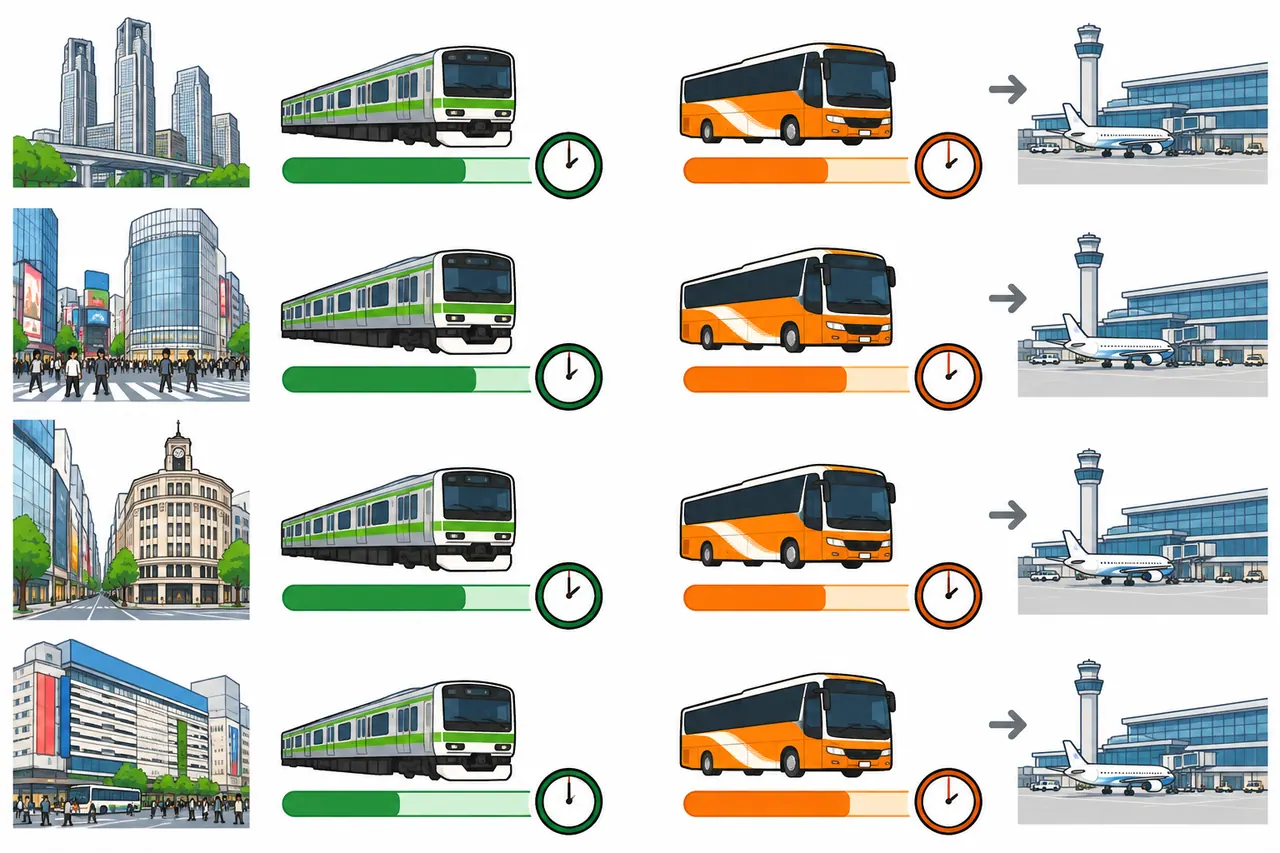
GO TOKYO’s district pages give rough airport journey times, not a guarantee for a specific departure. Its guidance puts Shinjuku at about two hours by limousine bus and 1 hour 35 minutes by train; Shibuya at 1 hour 55 minutes by bus and 1 hour 40 minutes by train; and Ginza at about two hours by bus and 1 hour 35 minutes by train. The Shinjuku page, Shibuya page and Ginza page provide area-level estimates.
GO TOKYO gives an approximate train journey of 1 hour 20 minutes to Ueno, 1 hour 25 minutes to Asakusa and 90 minutes to Ikebukuro; its Ikebukuro limousine-bus estimate is about 2 hours 25 minutes. These are rough area times and may vary with the actual service and transfers. Check the Ueno, Asakusa and Ikebukuro pages alongside the operator’s timetable.
Narita Airport to Tokyo by taxi or booked transfer
A taxi is the most direct option for reaching a specific address, but its base fare is much higher than the confirmed train and bus fares in this guide. Narita’s fixed fares depend on the destination zone and the expressway route, and tolls are extra. A private transfer or shared ride may suit a group, but its price and conditions must come from the company.
Fixed-fare taxi zones and prices
The airport lists these base fares from Narita. The Keiyo Road and Bayshore Route amounts are shown separately, and neither includes tolls.
| Zone and areas | Via Keiyo Road | Via Bayshore Route |
|---|---|---|
| A: Edogawa, Katsushika, Adachi | ¥23,500 | ¥26,500 |
| B: Koto, Sumida, Odaiba in Minato, Higashi-yashio in Shinagawa | ¥28,000 | ¥28,000 |
| C: Chuo, Chiyoda, Taito, Bunkyo, Arakawa | ¥29,000 | ¥31,000 |
| D: Shinjuku, Toshima, Nakano, Shibuya, Meguro, the rest of Minato and Shinagawa, Ota | ¥31,500 | ¥32,500 |
| E: Itabashi, Kita, Nerima | ¥34,000 | ¥36,000 |
| F: Setagaya, Suginami, Mitaka, Musashino | ¥35,500 | ¥38,500 |
Check your accommodation’s address against the airport’s fixed-fare taxi zones. The lowest listed base fare, ¥23,500, is for Zone A via Keiyo Road; central wards such as Chiyoda and Chuo are Zone C. Shinjuku and Shibuya are in Zone D, at ¥31,500 via Keiyo Road or ¥32,500 via the Bayshore Route.
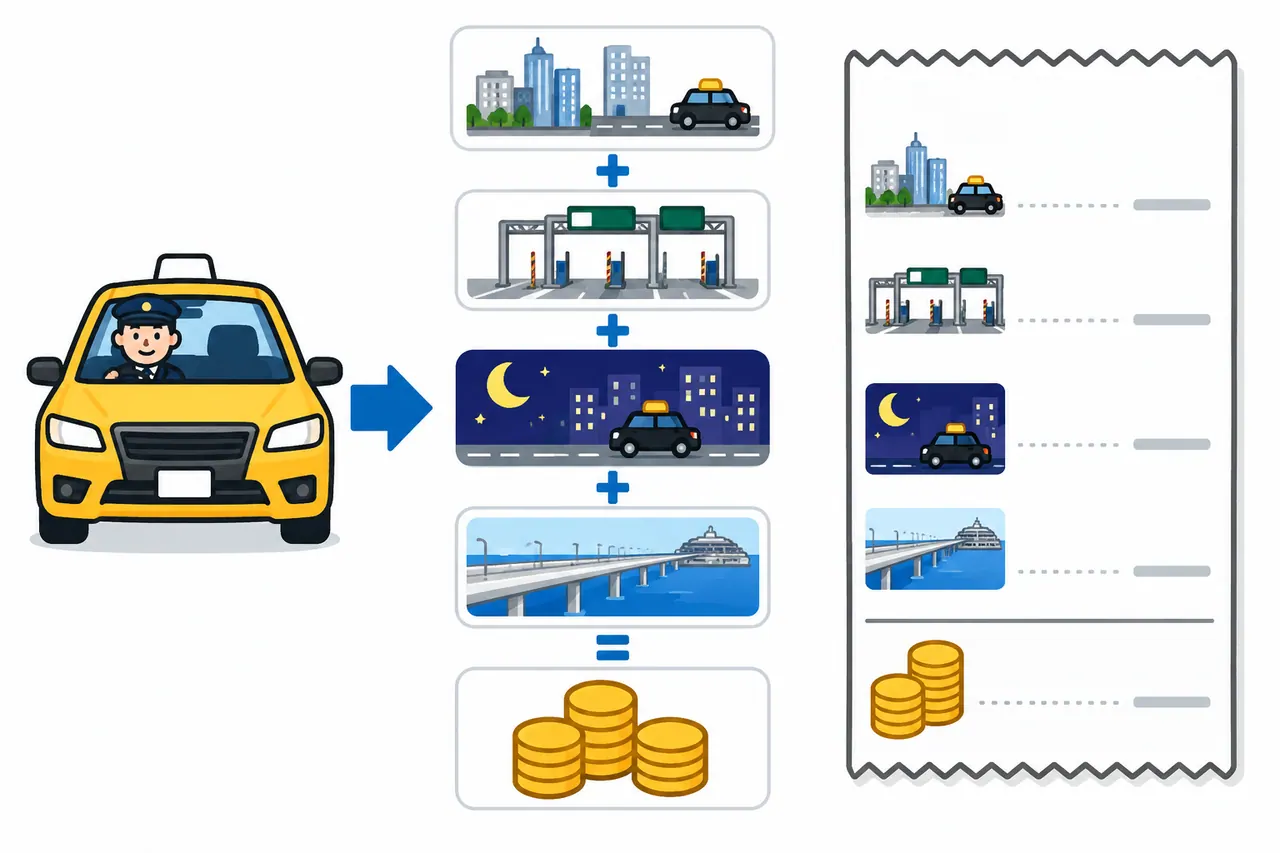
A fixed-fare taxi does not need to be booked in advance, but confirm with the driver that the fixed fare applies before getting in. Ask which route will be used and how much the tolls will be, because tolls are not included in the table. A surcharge applies from 22:00 to 05:00, the Aqua-Line has an additional charge, and if the expressway is not used the fare is metered.
The airport lists taxi stand 15 at Terminal 1, stands 28 and 31-A at Terminal 2, and a taxi stand at Terminal 3. Show the driver the complete destination address and confirm the zone, road and payment details before departure. The ride time is not established here, so ask the driver if you need an estimate.
Private transfers and shared rides
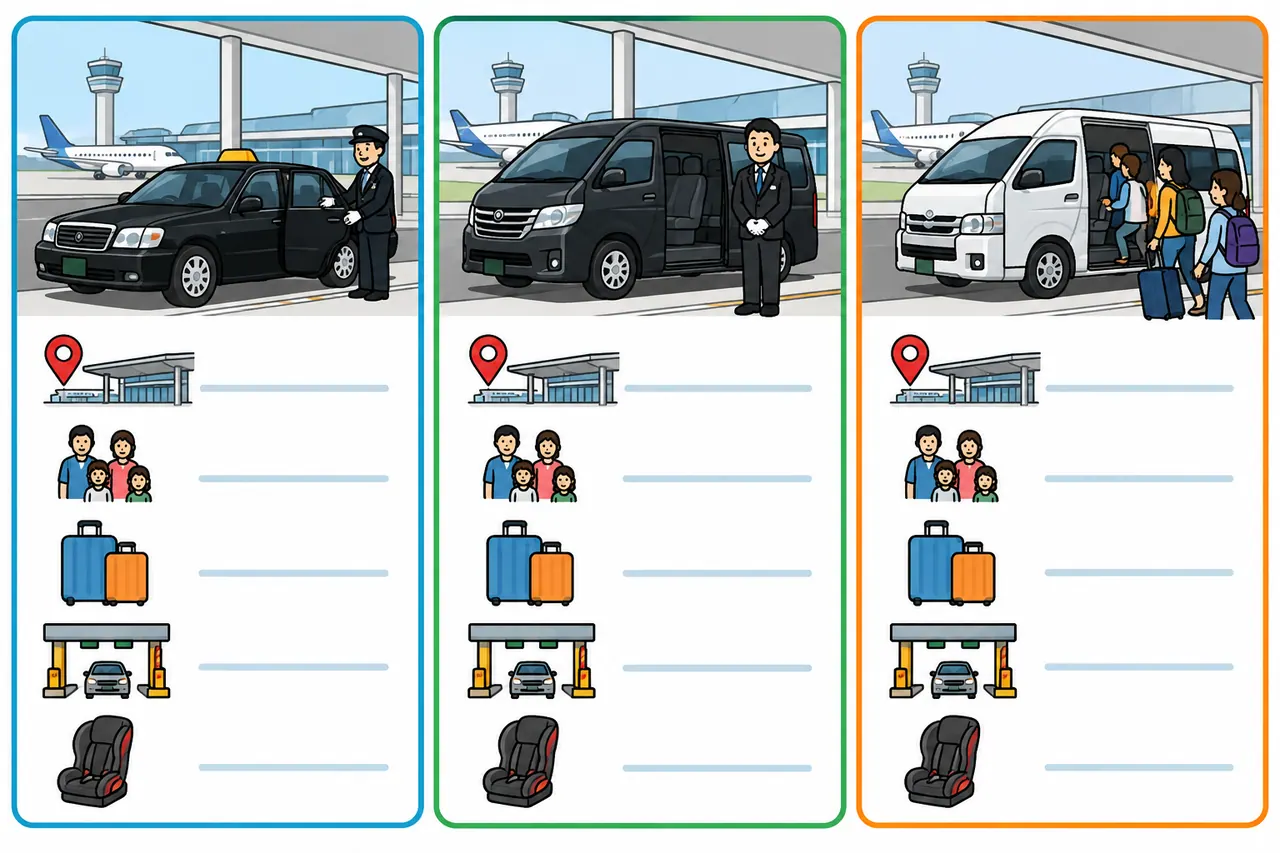
A private transfer is a car booked in advance for your party, while a shared ride may include other passengers. The checked sources do not confirm a particular provider, price or schedule for either service at Narita. Treat the operator’s written quote as the source of truth, not the fixed-fare taxi table.
Before booking, ask where the driver will meet you and whether the quoted price covers everyone in your party. Confirm baggage capacity, whether tolls are included, where each passenger will be dropped off and what happens if your flight is delayed. Also ask about cancellation terms and how to contact the company if your arrival time changes.
Best way from Narita Airport to Tokyo by area
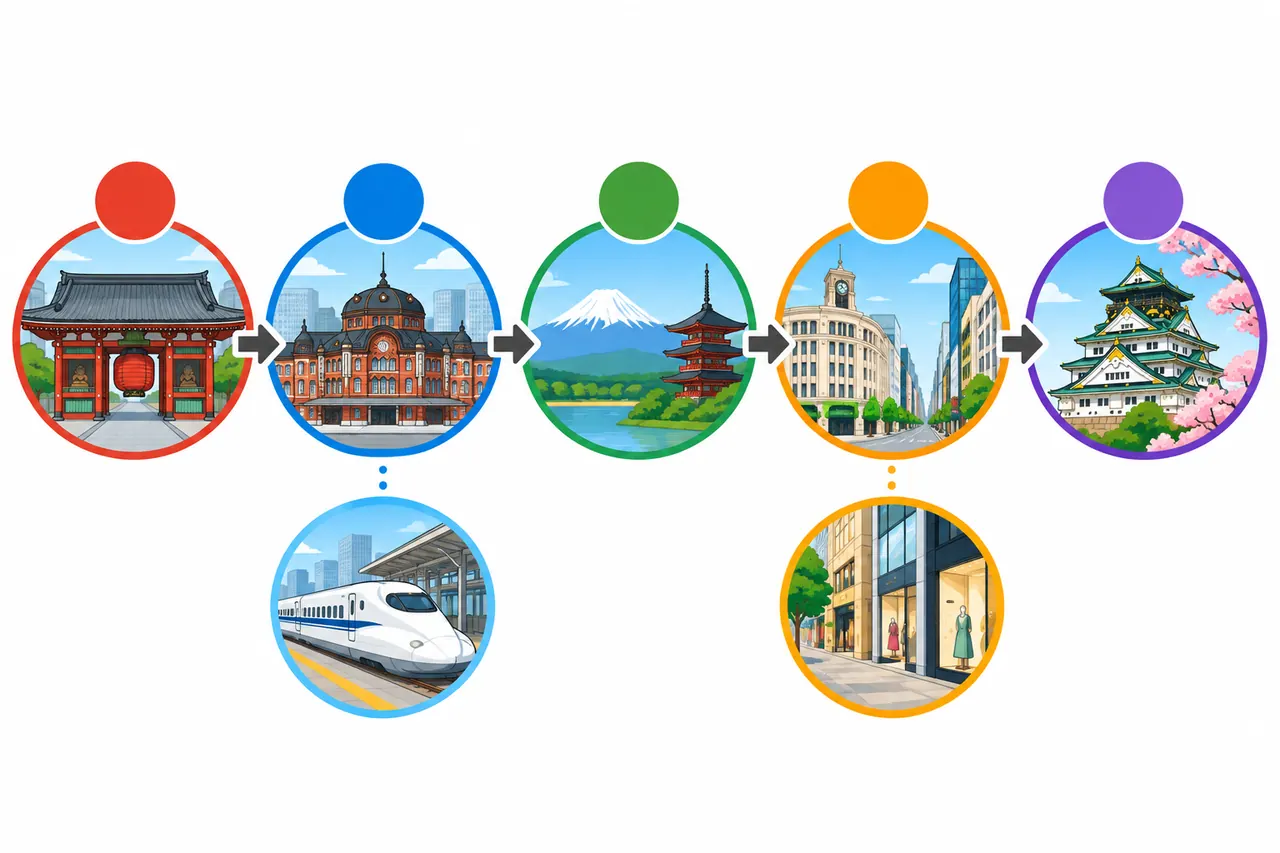
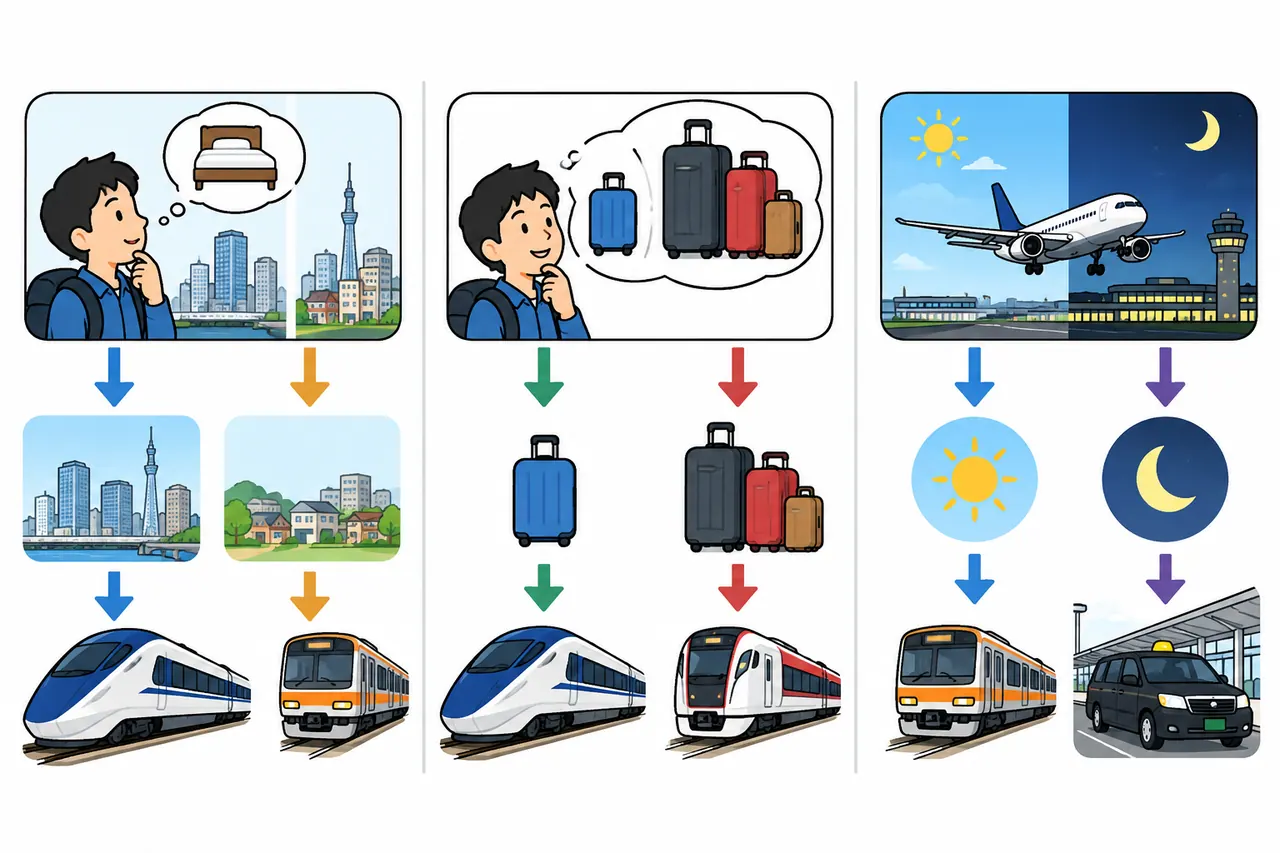
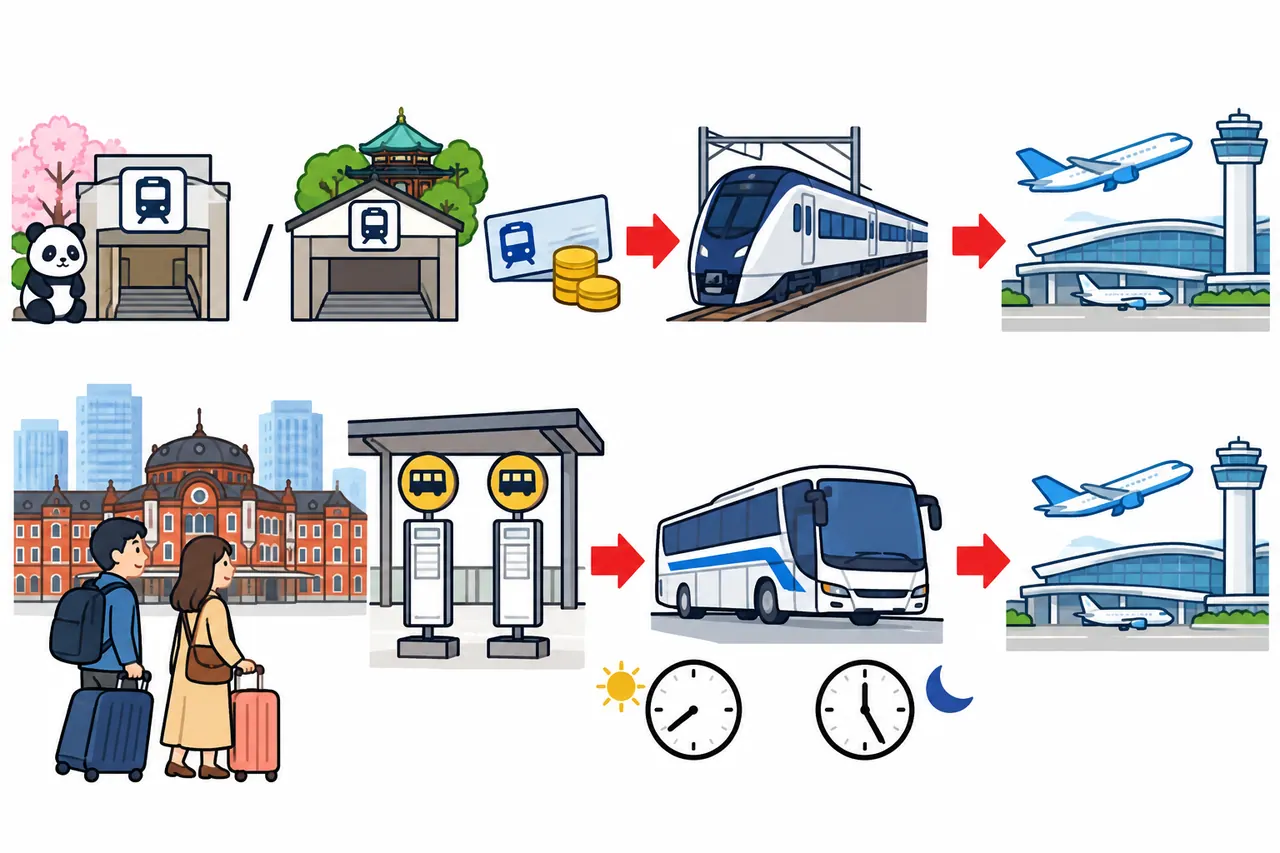
Your hotel’s area is a more useful starting point than a general “fastest” or “cheapest” label. The table gives a first option to compare, with the limitations made clear where the source information is incomplete. A direct train or bus can still require an onward walk or local ride after you arrive.
| Area | Compare first | Time or fare information |
|---|---|---|
| Nippori | Skyliner | From 36 min; official fare pages conflict, so confirm the price |
| Ueno | Skyliner to Keisei Ueno | From 41 min; confirm the Skyliner fare |
| Asakusa | Access Express | ¥1,290 paper ticket or ¥1,276 IC; GO TOKYO gives about 1 h 25 min by train |
| Nihombashi | Access Express or a bus | Access Express ¥1,330 paper ticket or ¥1,318 IC; check bus stop and fare |
| Shinbashi | Access Express | ¥1,330 paper ticket or ¥1,318 IC; check the train and route |
| Shinagawa | Access Express, N’EX or bus | Access Express ¥1,520 paper ticket or ¥1,502 IC; N’EX ordinary reserved seat ¥3,330 |
| Tokyo Station | TYO-NRT or N’EX | TYO-NRT regular fare ¥1,500; one listed bus example takes 1 h 38 min; N’EX ordinary reserved seat ¥3,140 |
| Ginza | TYO-NRT or another bus | TYO-NRT regular fare ¥1,500; GO TOKYO’s rough bus estimate is about 2 h |
| Shinonome Aeon | TYO-NRT | Regular fare ¥1,500; check the departure and stop |
| Shinjuku | N’EX or airport bus | GO TOKYO estimates 1 h 35 min by train and about 2 h by limousine bus |
| Shibuya | N’EX or airport bus | GO TOKYO estimates 1 h 40 min by train and 1 h 55 min by limousine bus |
| Ikebukuro | Bus or train | GO TOKYO estimates about 90 min by train and about 2 h 25 min by limousine bus |
| Roppongi, Ebisu, Toyosu, Shin-kiba and other listed areas | Check the bus operator | Terminal 1 listings include stops 10, 12 and 3 for different destinations; confirm the correct terminal and service |
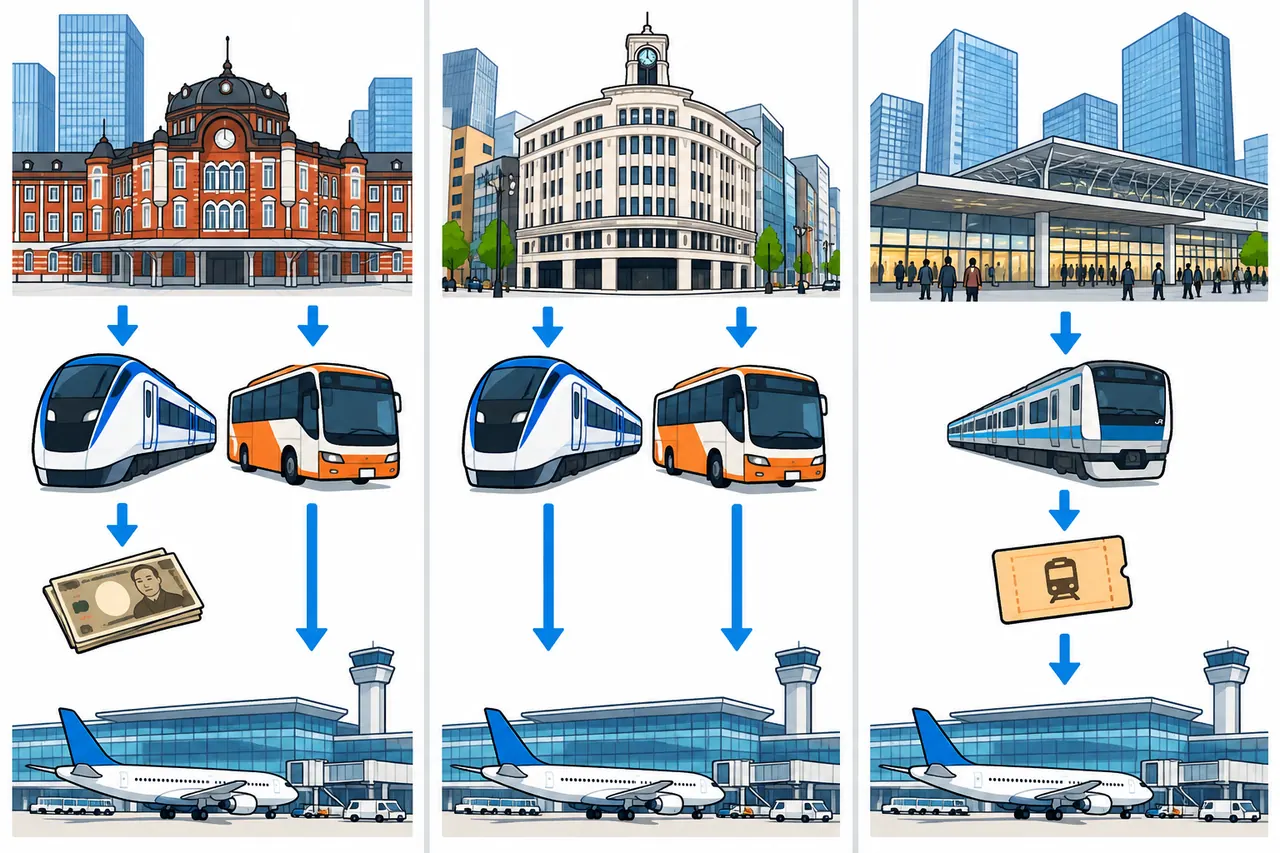
For Nippori and Keisei Ueno, the Skyliner is the straightforward Keisei option, but confirm its fare because the two official pages disagree. For Asakusa, compare the Access Express fare with the complete journey to your hotel rather than treating one fare as a ranking of all possible transport. For Tokyo Station and Ginza, TYO-NRT is the lower listed fare among the options with confirmed prices here, while N’EX provides a rail alternative to Tokyo Station.
For Shinjuku and Shibuya, N’EX serves those stations, and buses also serve these areas. Compare the current bus fare and the exact stop with the N’EX fare and the station nearest your accommodation. For Ikebukuro and other bus destinations, a Terminal 1 stop listing is not enough if you arrive at another terminal; check the operator’s terminal-specific information.
Late arrivals, luggage and airport hotels
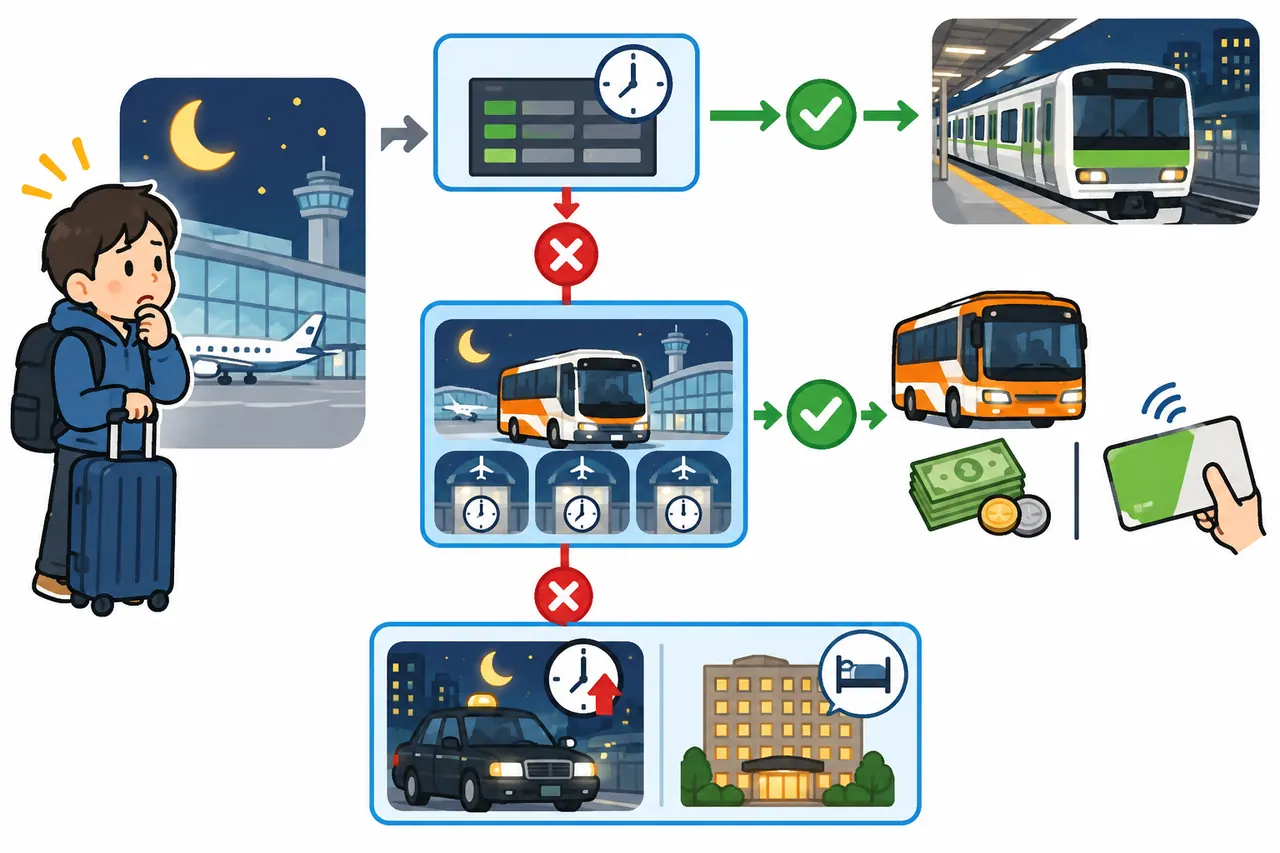
If you land late, check the final train and bus for your date before choosing a route. Your arrival time at the gate is not the time you reach the station or bus stop: allow time to leave the aircraft, clear immigration, collect baggage and buy a ticket. If no service fits, compare a taxi with an airport-area hotel whose late check-in and shuttle arrangements are confirmed.
Last TYO-NRT buses and late-night planning
The checked TYO-NRT timetable lists the final airport departures at 23:20 from Terminal 3, 23:25 from Terminal 2 and 23:30 from Terminal 1. Recheck the official timetable and service status for your date because schedules can change. The last bus accepts cash or a transport IC card; credit cards are not accepted on board.
| Option | What to confirm |
|---|---|
| Train | Check the Keisei or JR East timetable for your date; last-train times are not established here |
| TYO-NRT | Confirm the departure for your terminal, purchase and payment instructions |
| Fixed-fare taxi | Confirm zone, tolls and the 22:00–05:00 surcharge |
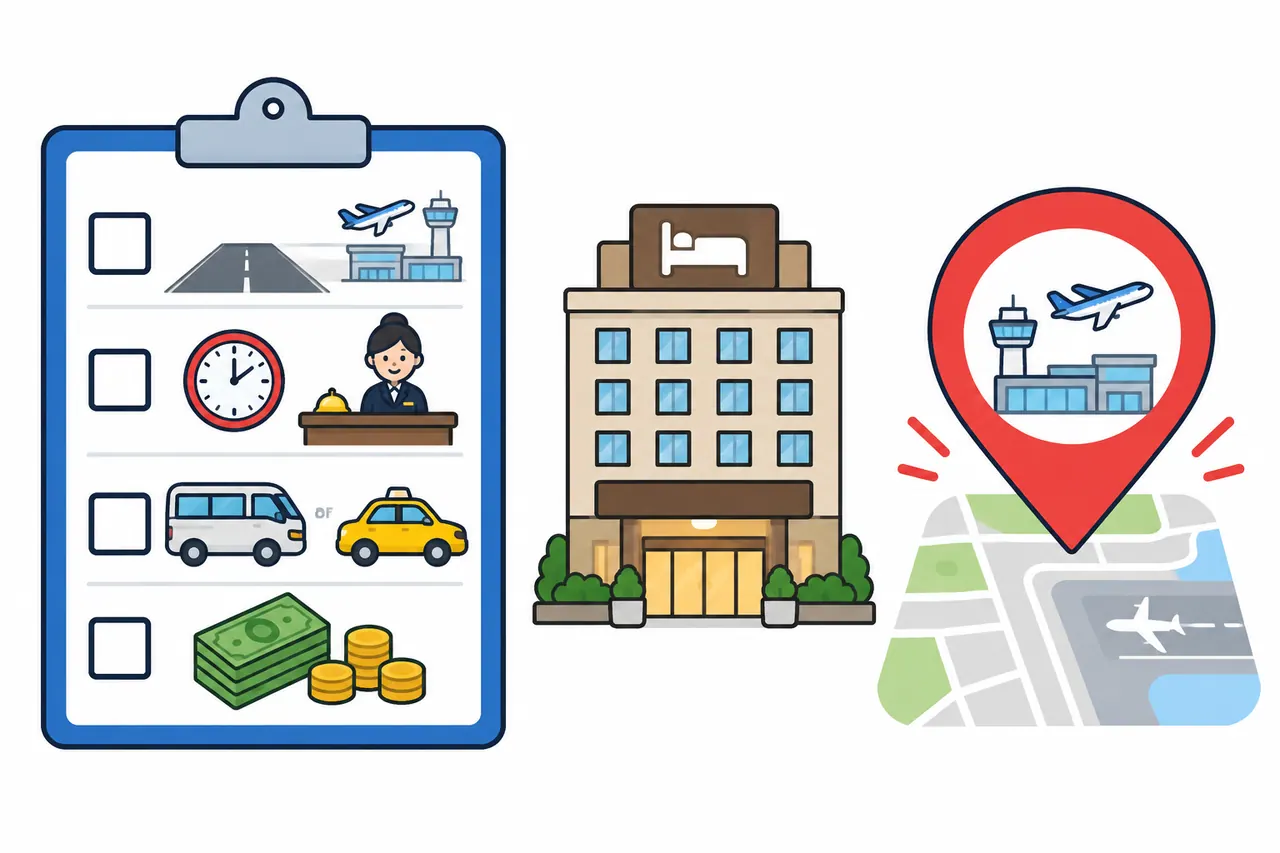
| Airport-area hotel | Confirm late check-in, shuttle operation and the route from your terminal |
Do not assume you can make a late bus because the posted time is after your flight’s landing time. Immigration, baggage collection and walking to the stop all take place first. If neither train nor bus is practical, consider the taxi fare with tolls and surcharge included, or arrange accommodation after checking how to reach it.
Narita Airport says areas available overnight vary by terminal and floor. At Terminal 1, the first floor and basement level are listed as open 24 hours; at Terminal 2, the second floor, first floor and basement are listed as open 24 hours; at Terminal 3, the first and second floors are listed as open 24 hours. Other listed floors in Terminals 1 and 2 are generally open from 05:00 to 24:00; check the airport’s early-morning and late-night guidance, as cleaning or construction may affect waiting areas.
Hotels near Narita Airport
An airport hotel can make a late arrival or early departure easier, but compare the total cost of the room and the next day’s trip into Tokyo. The airport capsule facility, ninehours Narita Airport, is in Terminal 2’s basement before security. Its reception and check-in operate 24 hours, and checkout is at 10:00; confirm overnight prices, pod availability and luggage rules directly with ninehours.
Narita Airport lists ninehours day use at ¥1,500 for the first hour and ¥500 for each additional hour, or ¥1,000 for a shower within one hour. These are day-use and shower prices, not an overnight pod quote, and the airport advises that the capsule hotel can be full. Check availability in advance and confirm the current terms with the facility; see the airport’s capsule hotel information.
| Hotel | Check-in and checkout | Airport connection |
|---|---|---|
| ninehours Narita Airport | 24-hour reception and check-in; checkout 10:00 | Inside Terminal 2, basement level before security |
| Hotel Nikko Narita | Check-in 15:00; checkout 11:00; contact the hotel for arrival after 23:00 | Free shuttle from Terminal 1 stop 16 and Terminal 2 stop 33; no direct Terminal 3 pickup |
| Toyoko INN Narita Airport Honkan | Check-in 15:00; checkout 10:00 | Free shuttle takes about 15 min; Terminal 1 stop 16 or Terminal 2 stop 31-B |
Hotel Nikko Narita’s front desk is open 24 hours, but the hotel asks guests arriving after 23:00 to contact it. Its free airport shuttle leaves from Terminal 1’s first-floor stop 16 and Terminal 2’s first-floor stop 33; from Terminal 3, follow the hotel’s instructions to reach Terminal 2 by airport bus or on foot and transfer to the shuttle. Check the hotel’s FAQ and shuttle information.
Toyoko INN Narita Airport Honkan lists check-in at 15:00 and checkout at 10:00, with a free shuttle of about 15 minutes from Terminal 1 stop 16 or Terminal 2 stop 31-B. See the hotel’s official facility page and shuttle details. Hotel shuttles can change or be suspended, so confirm the current service, terminal stop and arrival-time arrangements with the hotel before relying on them.
Plan for bags, children and onward travel
For Skyliner passengers, Keisei lists a luggage area in every car and reserved seating. For bus passengers, follow the specific operator’s baggage rules: TYO-NRT generally permits one suitcase up to 158 cm total dimensions per passenger, while Airport Limousine generally permits up to two checked bags per passenger within its stated size and weight limits. Ask a taxi, transfer or shared-ride company about vehicle space if your party has several large suitcases.
For children, include the applicable fare in the group total and check whether a seat is needed. TYO-NRT’s stated child fare is ¥750 on a regular trip and ¥1,500 on a late-night or early-morning trip; one preschool child per adult travels free if not using a seat. For the N’EX round-trip offer, the child price applies to ages 6–11, with the offer’s passport and travel-order conditions also applying.
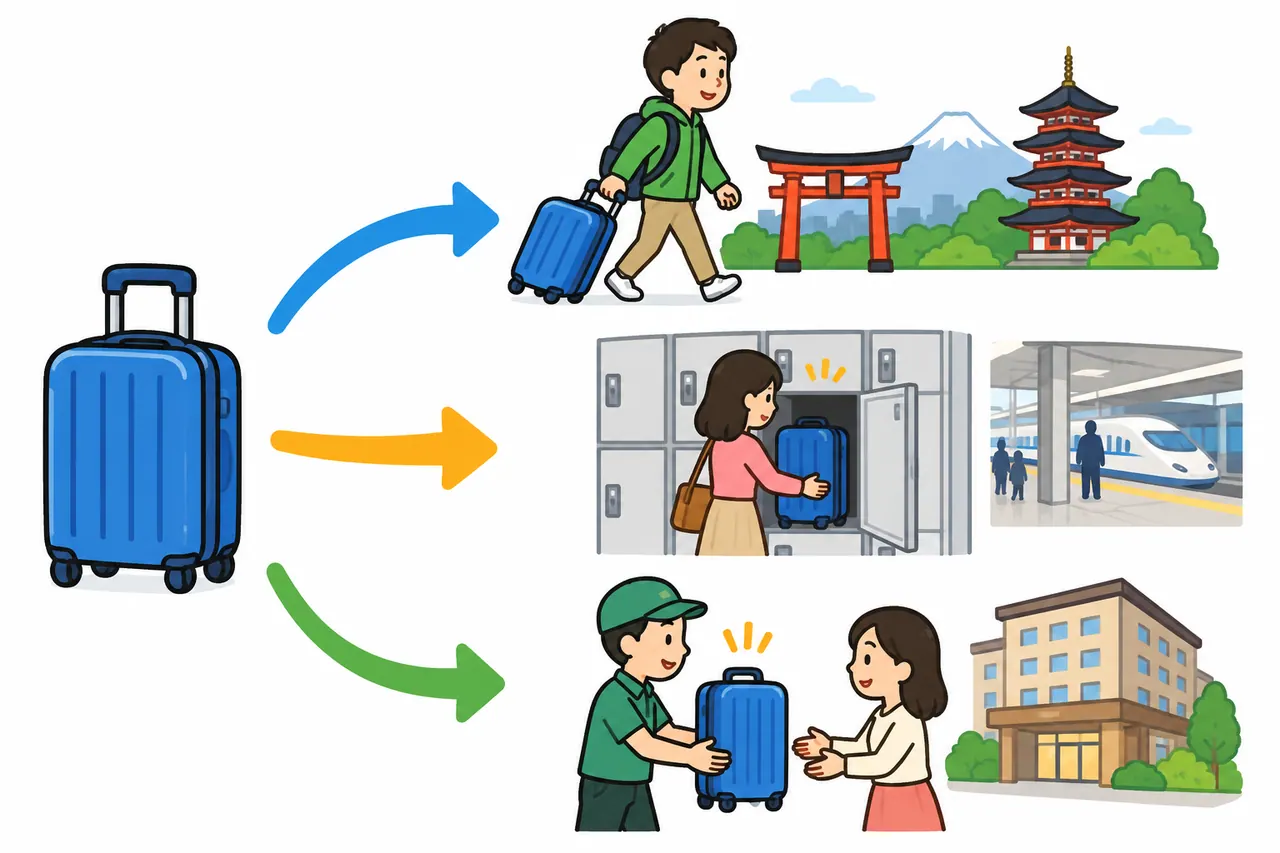
Luggage storage means leaving a bag somewhere and collecting it later, while luggage forwarding means arranging delivery to your accommodation. The checked sources do not establish storage locations, prices or delivery times, so confirm those details with the airport or service provider. For current airport facilities, start with Narita Airport’s access information.
Going from Narita Airport to Haneda
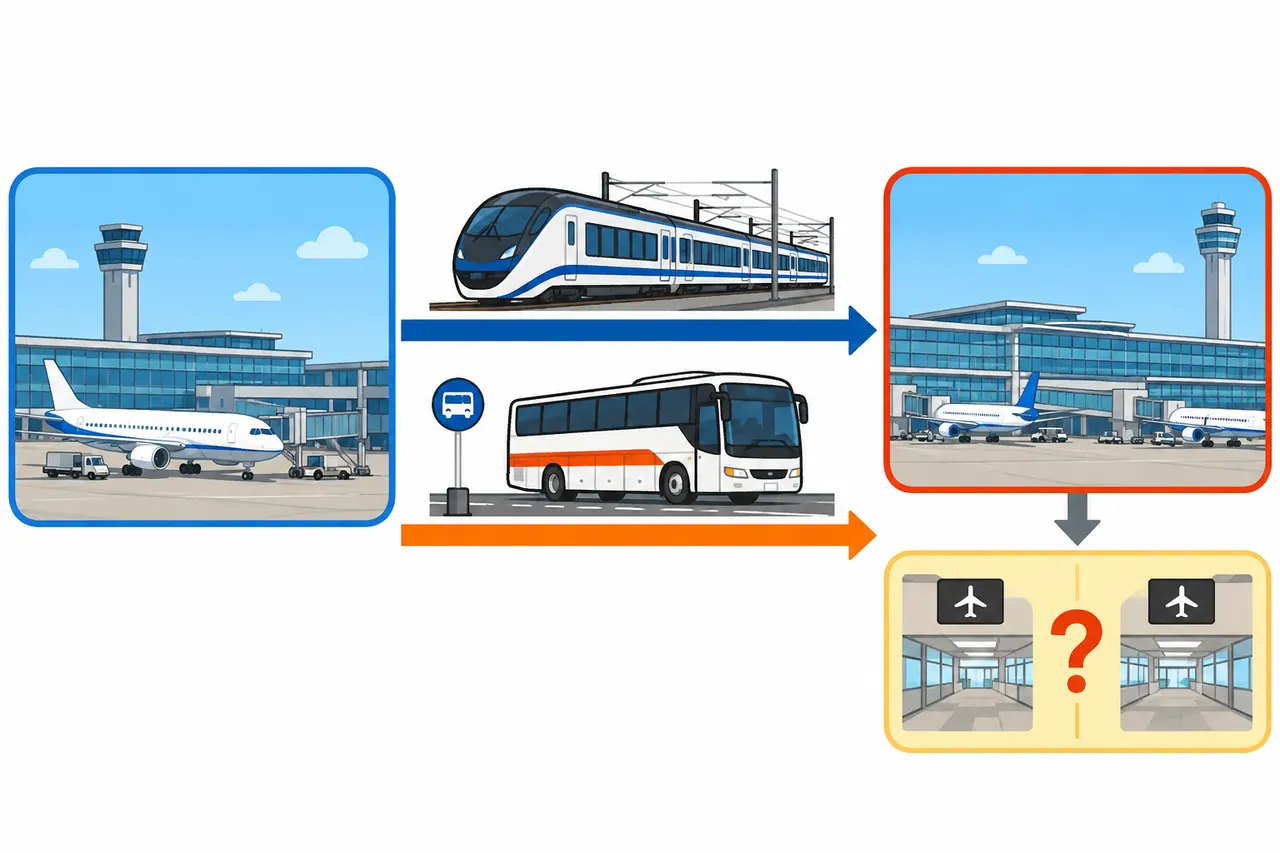
Narita and Haneda are separate airports, so allow time for the transfer as well as the flight’s check-in and security requirements. Keisei’s guidance gives about 89 minutes from Airport Terminal 2 Station to Haneda’s domestic terminal, with a one-way adult fare of about ¥1,800 or ¥1,787 by IC card on the Access Express. The 89-minute estimate does not include transfer time; check Keisei’s Narita–Haneda information for your date.
Narita’s bus listings include Haneda Airport among destinations associated with Terminal 1 stop 12, but the current bus fare and time are not confirmed here. Check the bus operator’s timetable and service conditions before choosing it. Do not plan a flight connection using only the stated train ride time, because the estimate excludes transfer time.
The trip back to Narita
Match your return route to the terminal for your flight. Terminal 1 uses Narita Airport Station, while Terminals 2 and 3 use Airport Terminal 2 Station. Check the airport’s train and bus information for the correct terminal before you leave your hotel.
The Keisei Main Line fare table lists ¥1,030 by paper ticket or ¥1,025 by IC card from Nippori or Keisei Ueno to Narita Airport. TYO-NRT’s timetable lists Tokyo Station departures to the airport from 05:00 to 19:30, with the Tokyo Station service using JR Highway Bus stops 7 and 8. Confirm the latest return timetable and fare with the operator; the Keisei figure should not be applied to the opposite direction without checking.
Common mistakes and fixes
A common mistake is looking for a train station inside Terminal 3; the railway station for Terminals 2 and 3 is Airport Terminal 2 Station, about a ten-minute walk from Terminal 3. Another is using a Keisei Main Line fare table for a direction it does not cover. Read the fare page’s direction and route before you buy.
| Mistake | Better approach |
|---|---|
| Assuming Terminal 3 has its own rail station | Walk to Airport Terminal 2 Station and allow about 10 minutes |
| Treating a fastest train time as every train’s time | Check the timetable for your date and departure |
| Assuming the Skyliner fare is settled | Confirm with Keisei because its official pages show different figures |
| Using an airport-bound Keisei Main Line fare for a trip from the airport | Check the fare for the direction you will travel |
| Choosing a bus by destination name alone | Confirm the operator, terminal and stop number |
| Paying by credit card on the final TYO-NRT bus | Bring cash or a transport IC card |
| Treating a taxi base fare as the full cost | Add tolls and ask about applicable surcharges |
| Assuming a hotel shuttle serves every terminal | Confirm the shuttle stop and route with the hotel |
| Planning a Haneda connection using only the train ride estimate | Add transfer, check-in and security time |
Keep the operator’s official timetable or access page open on your phone, especially for late arrivals and airport transfers. If a price or route is not confirmed in the official information linked here, check directly with the operator rather than assuming that a similar service has the same conditions. The most useful details to have ready are your travel date, terminal, destination station or address, party size and luggage.
Narita Airport to Tokyo FAQ
What is the cheapest confirmed way to get from Narita Airport to Tokyo?
It depends on your destination and which services are included in the comparison. For Asakusa, the confirmed Access Express fare is ¥1,276 by IC card or ¥1,290 by paper ticket, with no extra express fee. For Tokyo Station or Ginza, the regular TYO-NRT fare is ¥1,500 per adult; these are destination-specific comparisons, not a ranking of every possible train or bus.
What is the fastest confirmed train journey?
The fastest stated time in this guide is the Skyliner from Airport Terminal 2 Station to Nippori, from 36 minutes. The fastest stated time to Keisei Ueno is from 41 minutes. These are fastest-case times, so look up your own departure rather than assuming every train matches them.
Is Skyliner or N’EX better?
Choose the Skyliner if Nippori or Keisei Ueno is convenient for your stay, and consider N’EX for Tokyo, Shinagawa, Shibuya or Shinjuku. The Skyliner’s stated fastest time to Nippori is 36 minutes, but its official fare pages conflict, so confirm the price before buying. N’EX ordinary reserved-seat totals are ¥3,140 to Tokyo and ¥3,330 to Shinagawa, Shibuya or Shinjuku; check the train’s actual stops and your travel date.
Can I use a Japan Rail Pass on N’EX?
The sources checked for this guide do not confirm which rail passes cover N’EX or the seat conditions for a particular pass. Check JR East’s N’EX ticket information or contact JR East at +81 50-2016-1603, open 10:00–18:00 with translation help. Give the full name of your pass and ask whether your exact train and seat are covered.
Can I book TYO-NRT in advance?
Advance reservations are currently suspended, and the service is operating with free seating. For airport departures, the general instruction is to buy a time-specific ticket at the airport counter; check the operator’s current late-bus payment instructions because its pages differ in how they describe the exception. The last bus accepts cash or an IC card, not a credit card.
What if I arrive after the last train?
Check the train and bus timetables against your actual arrival time, allowing for immigration, baggage collection and the walk to the stop. The checked TYO-NRT timetable lists last departures at 23:20 from Terminal 3, 23:25 from Terminal 2 and 23:30 from Terminal 1. If no service is practical, consider a fixed-fare taxi with tolls and any applicable 22:00–05:00 surcharge, or an airport-area hotel whose late check-in and shuttle are confirmed.
How much is a taxi from Narita Airport to Shinjuku or Shibuya?
Both areas are in Zone D. The listed base fare is ¥31,500 via Keiyo Road or ¥32,500 via the Bayshore Route, and tolls are extra. Ask the driver to confirm the fixed fare and route before departure; late-night surcharges apply from 22:00 to 05:00.
Are the Airport Limousine bus fares confirmed here?
No. The current fare was not established in the checked timetable information, so do not rely on an older price. Check the official Narita–Tokyo timetable for your date, exact stop, fare and luggage rules.
How do I get from Narita to Haneda Airport?
Keisei gives an approximate journey of 89 minutes from Airport Terminal 2 Station to Haneda’s domestic terminal, at about ¥1,800 or ¥1,787 by IC card for the Access Express. That estimate excludes transfer time, and the bus fare and duration are not confirmed here. Check the current service and allow time for the airport connection, check-in and security.
What if I have several large bags?
Compare baggage rules before buying. TYO-NRT generally allows one suitcase per passenger with total outside dimensions up to 158 cm, while Airport Limousine generally permits up to two checked bags per passenger within its stated size and weight limits. For taxis and booked transfers, ask the company whether your group’s bags fit in the vehicle.