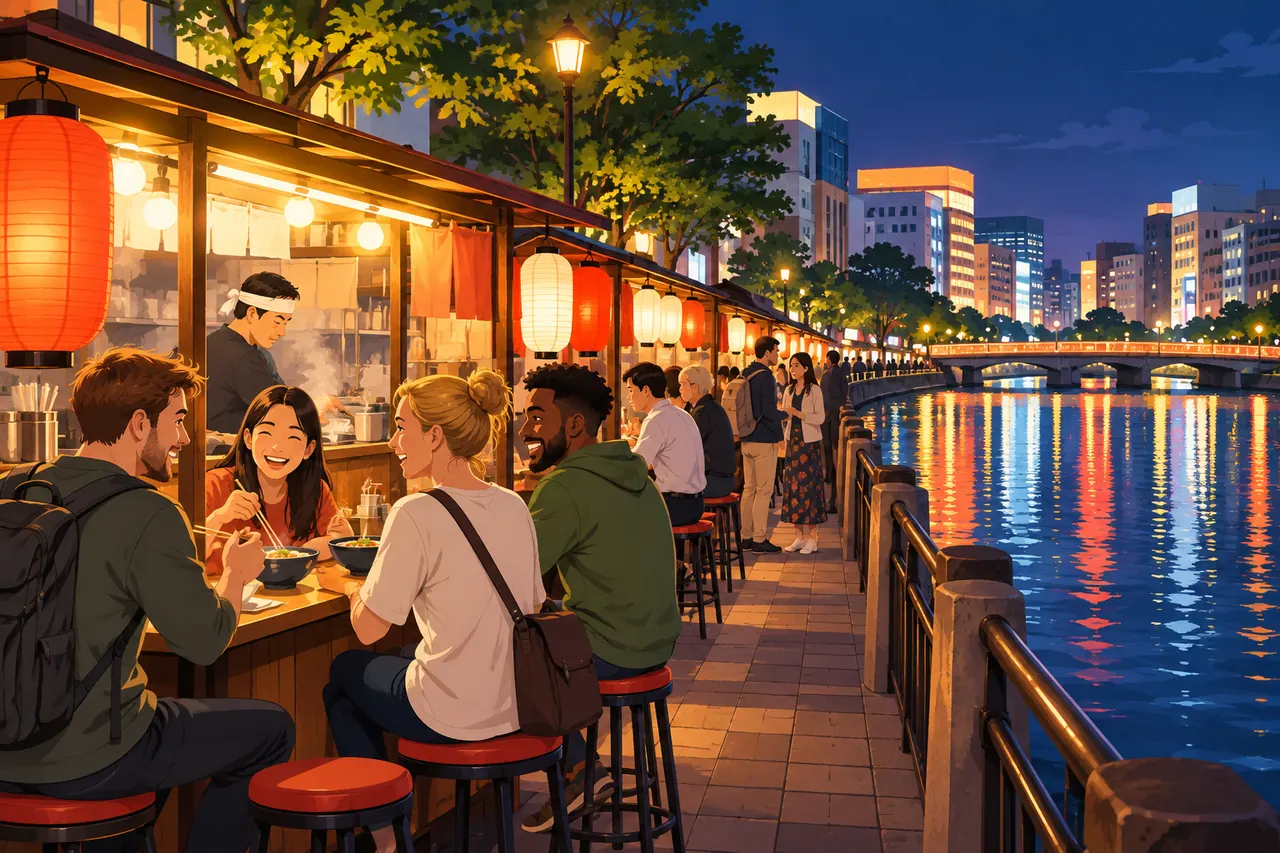
Nakasu Yatai: Where to Find Fukuoka's Riverside Food Stalls
Contents
Nakasu’s yatai are small, open-air food stalls beside the Naka River in central Fukuoka. For a first visit, take the subway to Nakasu-Kawabata Station, walk toward the river and look for the illuminated stalls; some open around 6:00pm, while most open between 6:30 and 7:00pm. Bring cash, leave bulky luggage elsewhere, and plan to order at least one drink and one dish per person.
There is no official map showing the exact position of every Nakasu stall, and the stalls’ locations, opening hours and days off can vary. The practical approach is to arrive in the evening, check the displayed prices before sitting down, and choose a stall with space. The advice below uses the official information available as of the article’s last check, 2026-11-02.
Contents
- Where are the Nakasu yatai?
- How to get there
- Opening hours: when to go
- What the Nakasu yatai are like
- Nakasu vs. other yatai areas
- What to eat and how much it costs
- How to enjoy the Nakasu yatai, step by step
- Things to do nearby
- Mistakes first-timers make
- FAQ
- Related guides
Where are the Nakasu yatai?
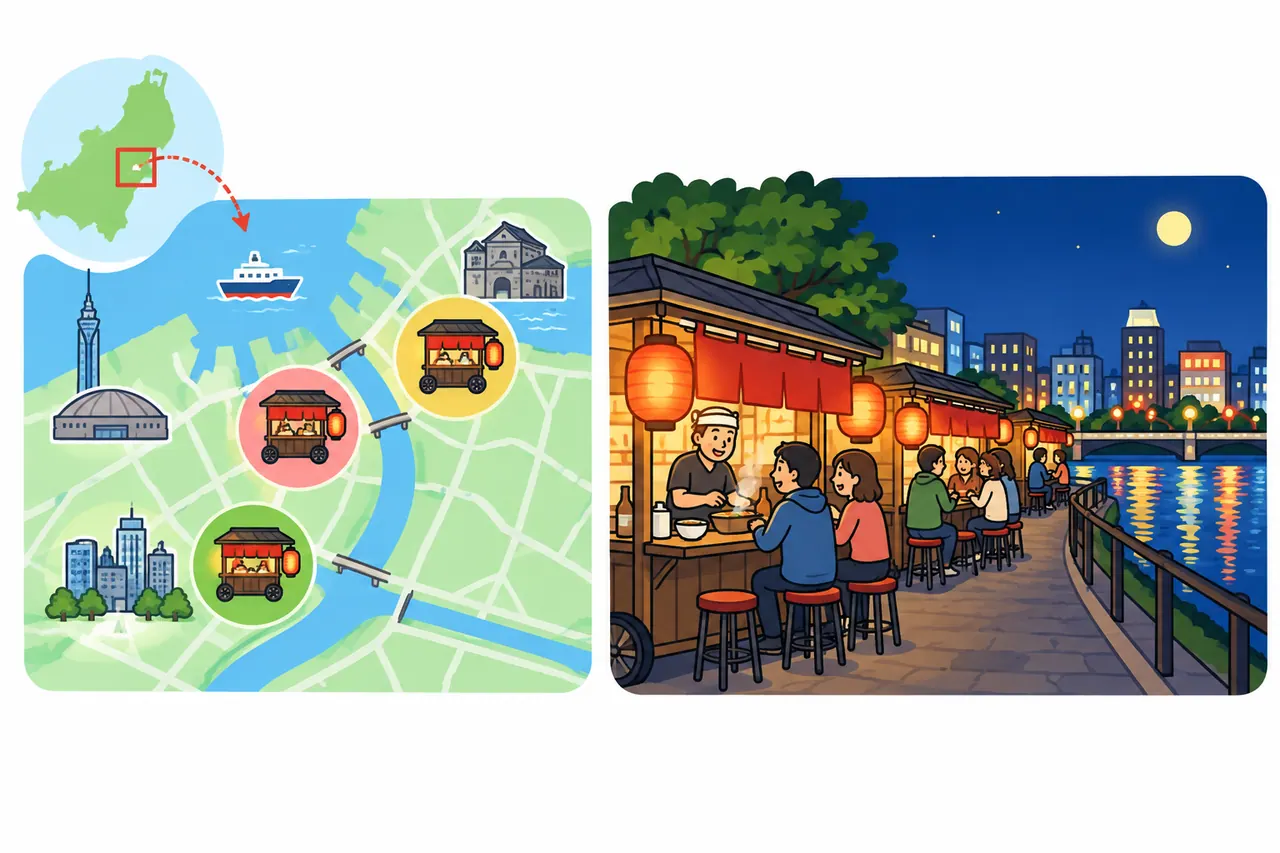
Nakasu is in Hakata Ward, Fukuoka City, on an island between branches of the Naka River. The stalls line the riverside “yatai streets”; the river is also called the Nakagawa. The official VISIT FUKUOKA page for Nakasu identifies the area as being directly outside Nakasu-Kawabata Station, while the Japan National Tourism Organization lists the address of the Nakasu Island yatai as 1-8 Nakasu, Hakata-ku.
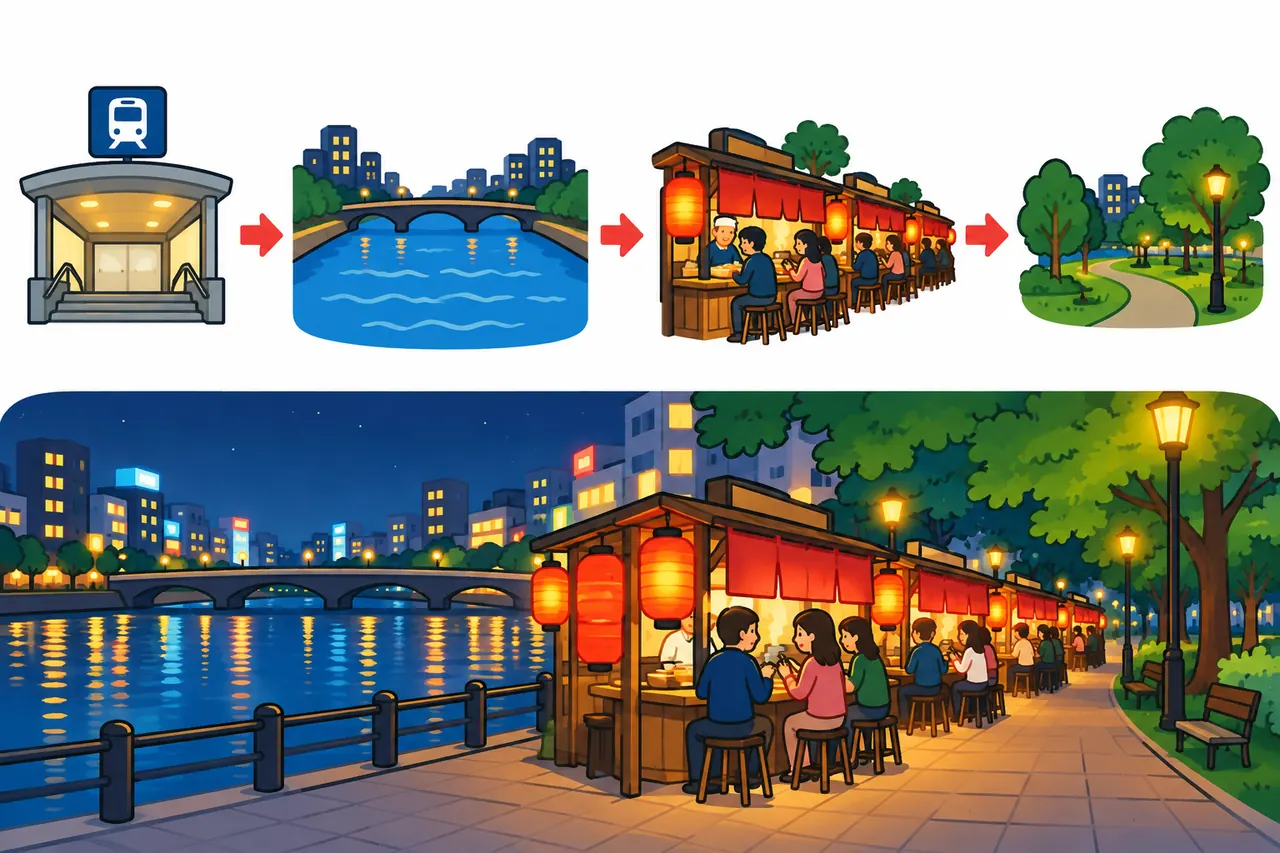
That address is a useful reference for the area, but it does not identify the exact location of every stall. Fukuoka City’s tourism site does not provide a full Nakasu stall list, and an official map showing each stall’s position was not found. The number of stalls in Nakasu is also not confirmed in the official information used for this guide, so treat any count you see elsewhere as a separate claim rather than a definitive total.
One stall featured by Fukuoka City is in Seiryu Park. Its article describes featured stalls around three and five minutes’ walk from Nakasu-Kawabata Station, but those timings refer to the featured locations rather than every stall along the river. For a general visit, head from the station toward the river and follow the lights; allow a little time to look along the riverside rather than relying on a particular stall being at a fixed point.
How to get there
The simplest supported access point is Nakasu-Kawabata Station on the Fukuoka City Subway’s Kuko and Hakozaki Lines. VISIT FUKUOKA describes Nakasu as directly outside the station, and Fukuoka City’s featured-stall article gives walking times of about three and five minutes for its particular examples. These details make the station a practical starting point, but the walk to an individual stall depends on which one you choose.
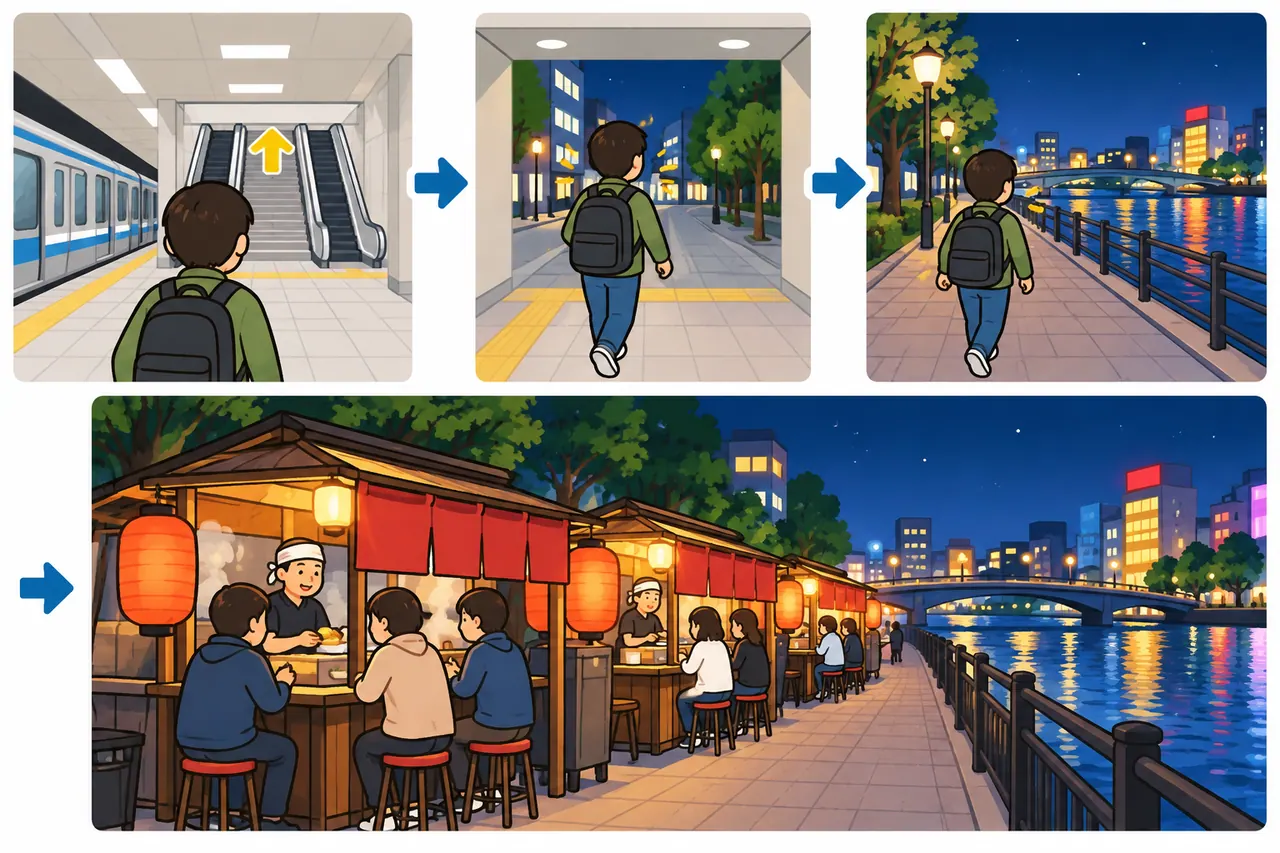
A straightforward arrival plan is to get off at Nakasu-Kawabata, leave the station in the direction of the river, and continue on foot until you reach the yatai streets. Once there, check the counter space and the price board before committing to a seat. There is no official stall-by-stall map to follow, so be ready to walk along the river and choose from the stalls that are open.
If you need help before setting out, the Fukuoka City Tourist Information Center at Hakata Station can be contacted at 092-431-3003. The number is listed on the official VISIT FUKUOKA Nakasu page. The available official information does not provide a complete route from the airport or every other part of the city, so check your own starting point and subway connection separately.
Opening hours: when to go
Yatai are evening businesses, not daytime lunch stops. Fukuoka City’s leaflet says owners begin setting up after 5:00pm, while opening times vary by stall: some start around 6:00pm and most start between 6:30 and 7:00pm. The VISIT FUKUOKA yatai guide identifies around 8:00pm as the busiest time.
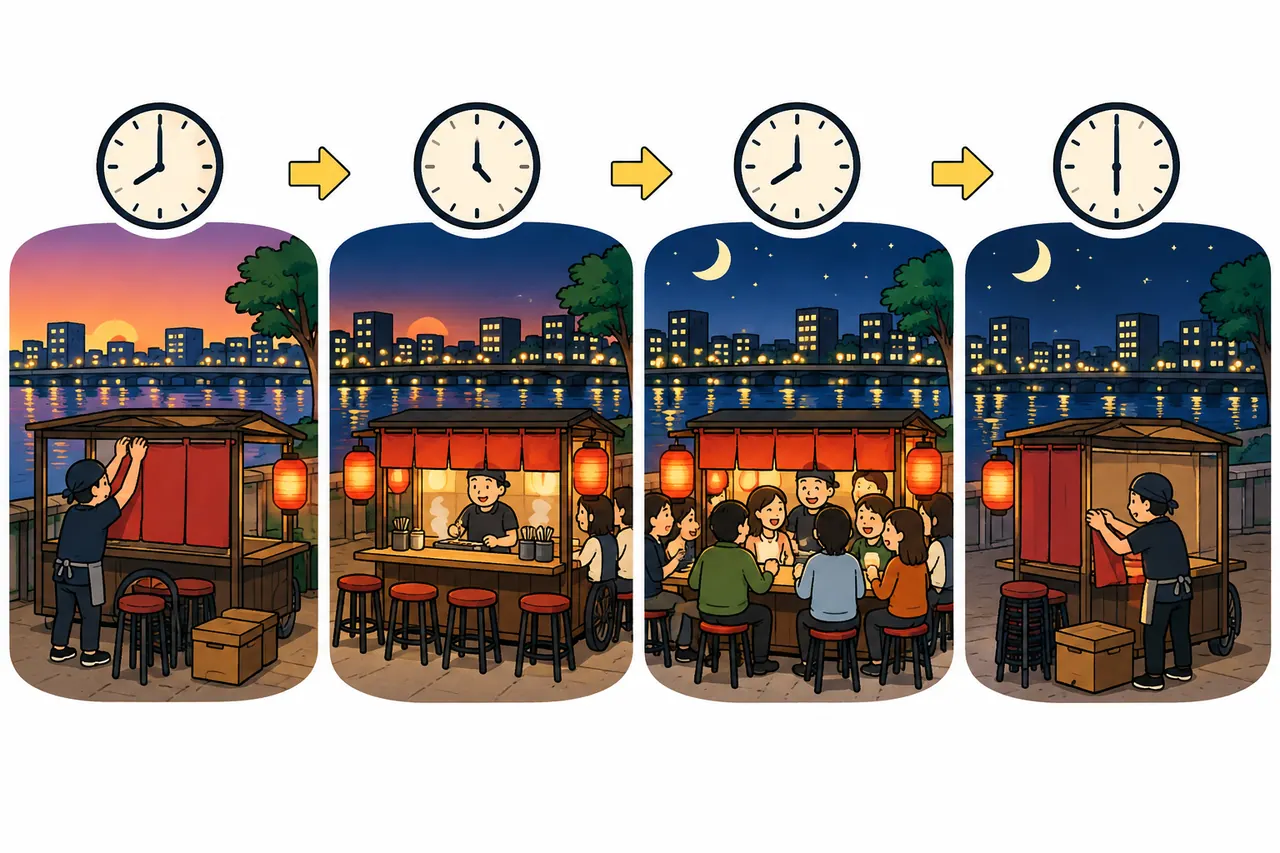
Many stalls stay open late, but there is no single schedule for all of Nakasu. JNTO gives a usual range of 6:00pm to 2:00am for Nakasu yatai, and Fukuoka City says owners may open around 18:00 and close as late as 2:00. In the city’s 2024 ramen article, two Nakasu stalls had listed hours of 18:30–1:00 and 18:00–1:00. Those examples illustrate the variation; they are not a promise that every stall will follow the same hours.
If you want to avoid the busiest period, arriving before the rush is a reasonable plan: many stalls are opening around 6:30–7:00pm, and the area is busiest around 8:00pm. Fukuoka City reported that one popular stall could have a queue of about 30 people at peak times in 2024. Hours and days off can change by stall and with the weather, so check the official guidance before you go and be prepared for a particular stall to be closed.
What the Nakasu yatai are like
A yatai is a small mobile food stall, usually arranged around a counter with stools. Seating is close together, and the counter gives diners a view of the cook preparing food. Fukuoka City highlights this counter-side cooking as part of the experience in its article about a night out in the area.
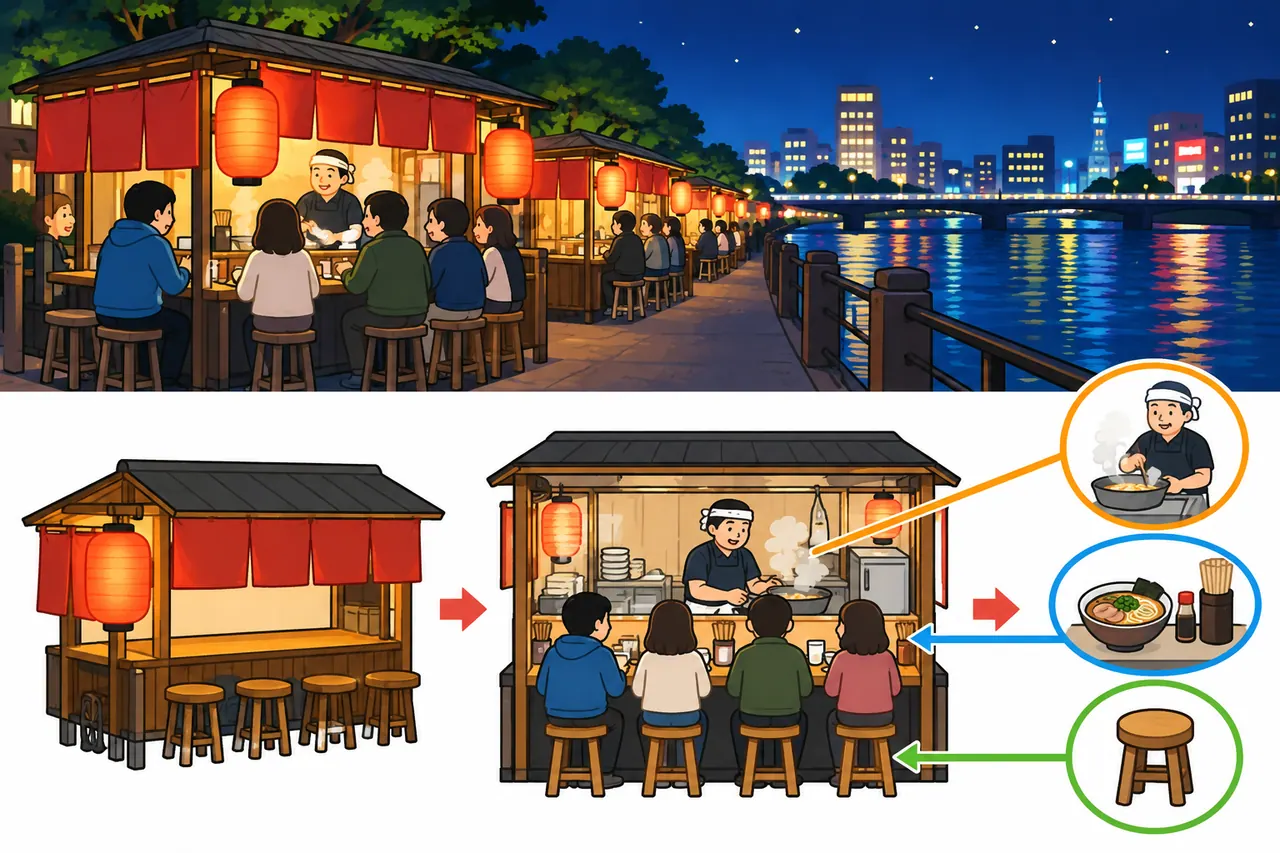
Nakasu is described by VISIT FUKUOKA as lively, lined with traditional stalls and popular with tourists. The river and city lights are part of the setting, but the experience is still a compact meal rather than a restaurant visit with lots of personal space. Keep bags and coats as manageable as you can, and expect to sit close to other diners.
There are practical rules as well as atmosphere. Fukuoka City’s leaflet says stalls must display prices, may not serve raw food and may not set tables outside the stall; it also asks customers not to be loud because people live nearby. These rules help explain why the seating is limited and why it is useful to check the menu board before sitting down.
Nakasu vs. other yatai areas
Fukuoka has several yatai areas, and the official comparison from VISIT FUKUOKA distinguishes them mainly by atmosphere and food associations. Nakasu is lively and draws many tourists, Tenjin is described as calmer and popular with locals, and Nagahama is associated with hosomen, or thin noodles, and kaedama, an extra serving of noodles. The comparison can help you choose a district based on the kind of evening you want.
| Area | Officially described atmosphere or association | A practical fit |
|---|---|---|
| Nakasu | Lively, traditional stalls, many tourists | First-time visitors who want a riverside setting |
| Tenjin | Calm and popular with locals | Visitors looking for a quieter-feeling area |
| Nagahama | Birthplace of hosomen and kaedama | Visitors especially interested in ramen |
The descriptions are broad, not guarantees about the atmosphere at every stall on a particular night. If you have only one evening and want a well-known riverside yatai area that is close to a subway station, Nakasu is a straightforward choice. If a calmer mood or ramen is your priority, consider Tenjin or Nagahama instead; the official VISIT FUKUOKA guide provides the source comparison.
What to eat and how much it costs
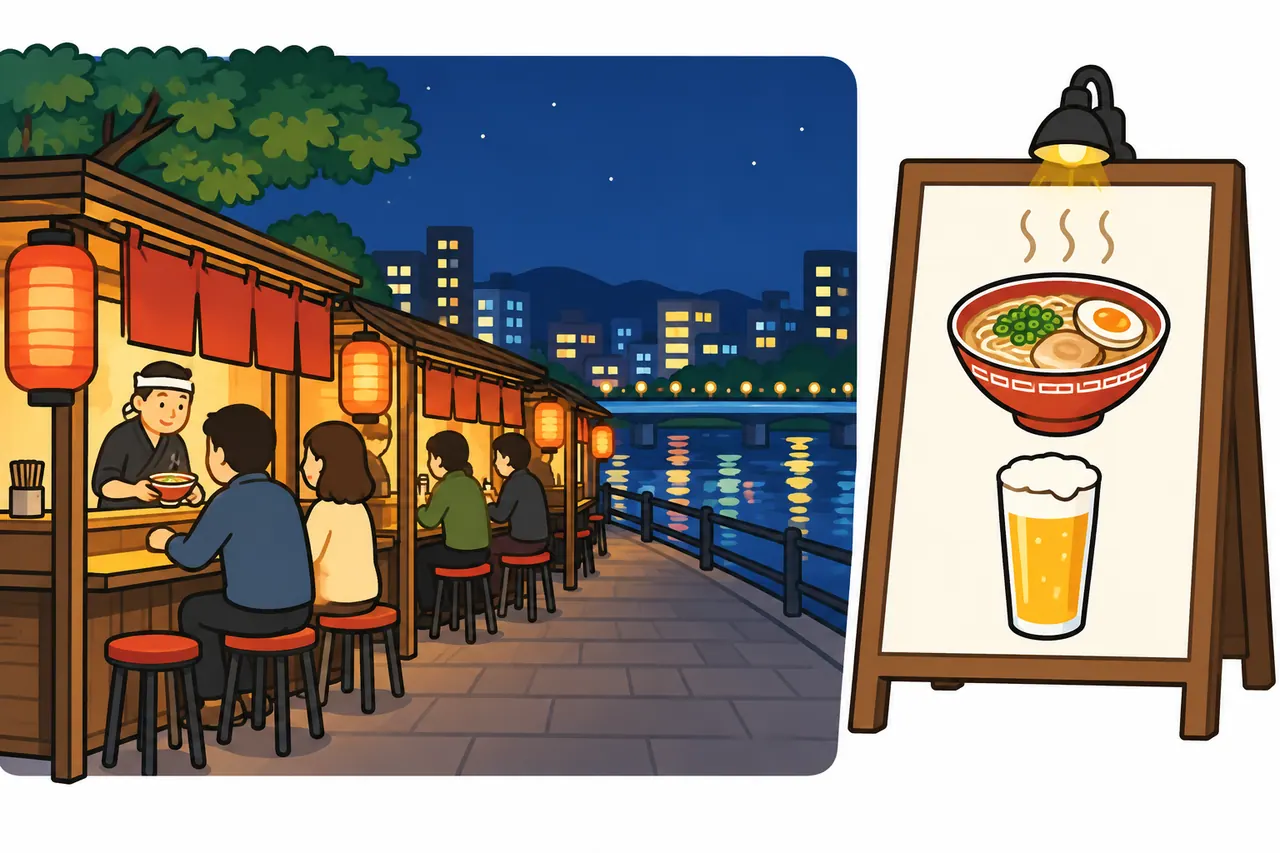
Ramen is a popular choice at Nakasu yatai, but menus differ from stall to stall. In Fukuoka City’s article published on 28 May 2024, two Nakasu stalls listed ramen at 700 yen and 750 yen per bowl. Those are dated examples from two stalls, not a current standard price or a reliable estimate for a whole meal.
| Example | Price or detail | How to use the information |
|---|---|---|
| Ramen at one Nakasu stall featured in 2024 | 700 yen | A dated example; check the stall’s current board |
| Ramen at another Nakasu stall featured in 2024 | 750 yen | A dated example; prices vary by stall |
| Other dishes and drinks | Varies | Read the displayed prices before ordering |
Fukuoka City says stalls must display their prices, so look at the board before taking a seat and ask the staff if an item or price is unclear. The city also recommends ordering at least one drink and one dish per person. Because the official information here gives only two dated ramen prices and no complete menu prices, it does not support a dependable total budget for one person or a multi-stall evening.
Bring yen in cash. Fukuoka City says most yatai are cash-only and that about 10% accept cards; card acceptance should not be assumed at a particular stall. Raw dishes such as sashimi should not be expected, because the city’s leaflet says yatai may not serve raw food. If you have dietary needs, check the actual menu and ask the stall directly rather than relying on a general assumption about what every stall serves.
How to enjoy the Nakasu yatai, step by step
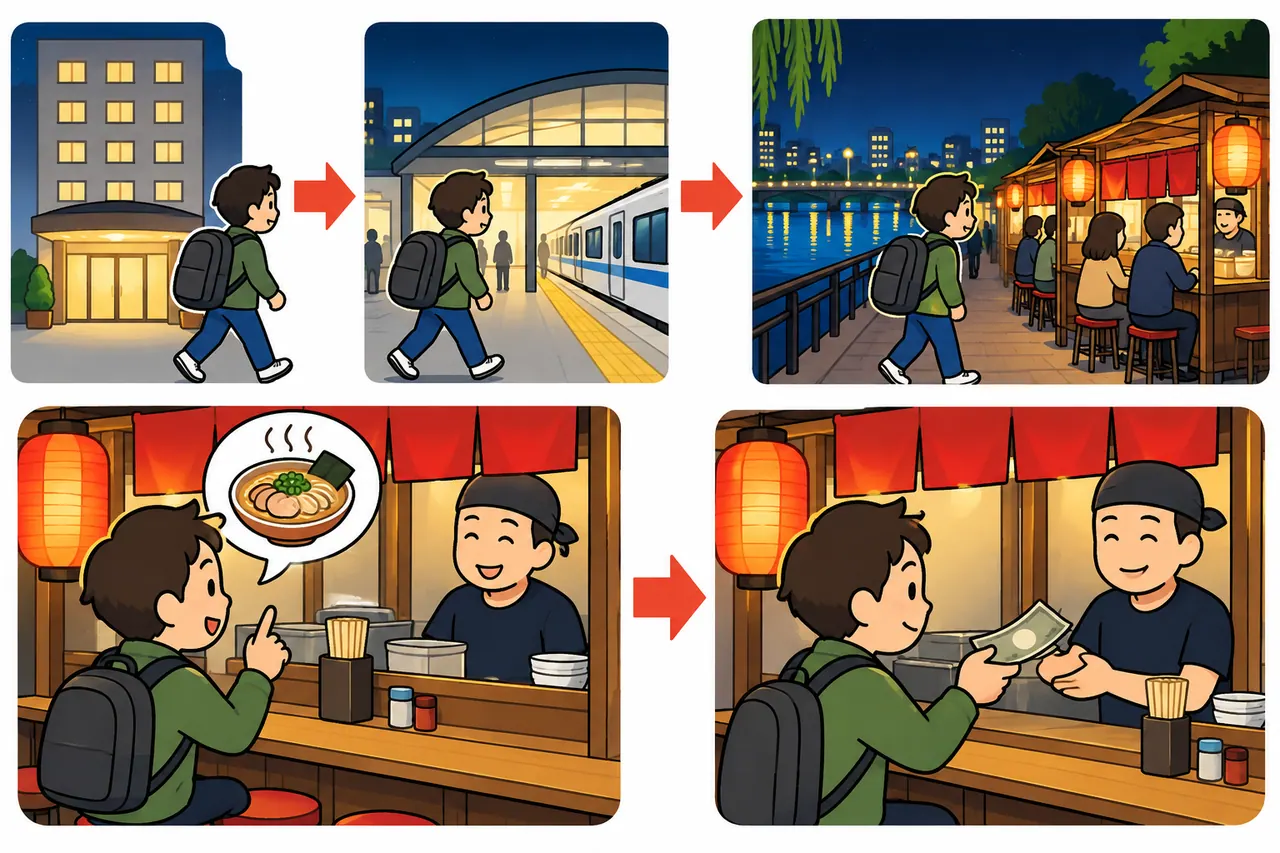
- Leave bulky luggage elsewhere. Yatai have very little space, so Fukuoka City recommends using a station locker or leaving luggage at your hotel. This is especially useful if you are arriving directly from a train journey with a large suitcase.
- Use a toilet before you go. The stalls do not have toilets. If you need one after sitting down, ask the staff where the nearest one is.
- Bring cash. Most stalls are cash-only, and only about 10% accept cards according to Fukuoka City. If you plan to use a card, check acceptance before ordering rather than assuming it will work.
- Go to Nakasu-Kawabata Station and walk toward the river. The area is directly outside the station, and the city’s featured stalls are about three and five minutes away on foot. Since there is no official map for every stall, follow the riverside and choose an open stall.
- Check the stall before taking a seat. Look at the price board and the amount of available counter space. Groups of two or three are recommended by the city, while solo visitors are also welcome.
- Order a drink and a dish each. This is Fukuoka City’s basic guidance for guests sharing the limited seating. If the stall is busy, keep your order and visit considerate of the people waiting.
- Enjoy the cooking and keep your voice down. Counter seating lets you watch the food being prepared, but the city leaflet notes that neighbors live nearby. Once you have finished, pay in cash if required and give the seat to the next guests, particularly when there is a queue.
These practical recommendations come from Fukuoka City’s How to Enjoy Yatai guide and its yatai leaflet. The official advice supports a short, considerate visit in a compact space, not a fixed timetable for how long you may stay. For more detail on the general customs, see the related Fukuoka yatai etiquette guide.
Things to do nearby
If you arrive before the evening stalls open, the Nakasu-Kawabata area has places to visit during the day or late afternoon. Fukuoka City’s itinerary lists Hakata Riverain as directly connected to Nakasu-Kawabata Station, making it an easy stop before walking toward the river. This can help you use the time before the stalls begin setting up after 5:00pm.
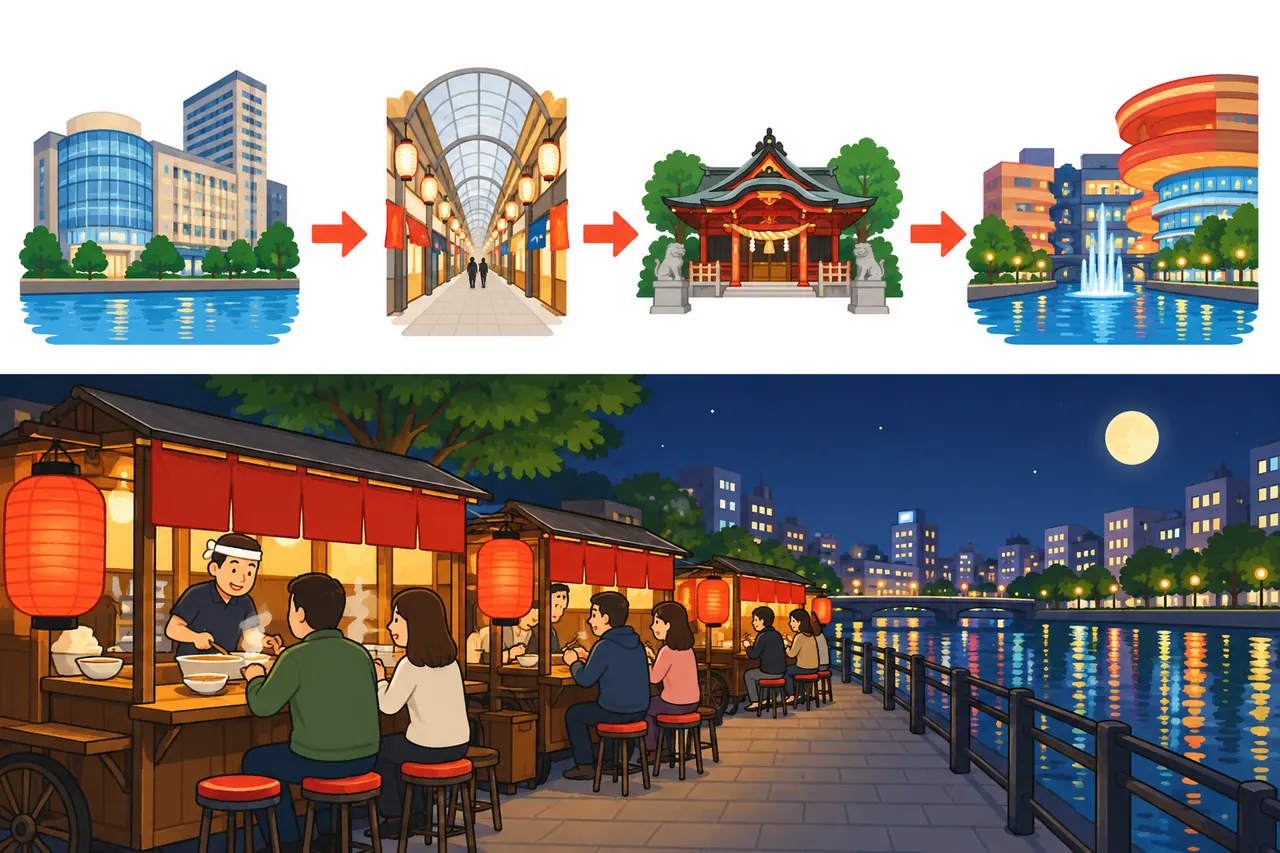
The Kawabata Shopping Arcade is described in the city itinerary as having about 130 shops along 400 metres. It offers a walk through a shopping street before dinner; individual shop opening times are not specified in the official information cited here, so check separately if there is a particular shop you want to visit. Kushida Shrine is another well-known Hakata-area stop on the itinerary.
Canal City Hakata is listed as a three-minute walk from Kushida Shrine in Fukuoka City’s Nakasu-Kawabata itinerary. One practical sequence is to visit the shopping arcade and shrine in the afternoon, then make your way back toward Nakasu for the yatai after dark. Allow flexibility: the stalls do not all open at the same time, and their hours and days off vary.
Mistakes first-timers make
Arriving in the afternoon expecting lunch. Yatai owners start setting up after 5:00pm, and most stalls open between 6:30 and 7:00pm. A visit before then is better used for nearby sightseeing than for looking for a meal at an open stall.
Relying on a payment card. Most stalls are cash-only, and Fukuoka City estimates that about 10% take cards. Bring enough yen for the food and drink you choose, and check the displayed prices before ordering.
Bringing a large suitcase to the counter. Seating and floor space are limited, and the city recommends leaving luggage in a station locker or at your hotel. Arriving with less to manage makes it easier to take a seat without obstructing the stall.
Ordering only a drink or sharing too little. The official guidance is at least one drink and one dish per person. This is a practical way to respect the limited seating rather than treating a yatai as a place to occupy a stool without ordering food.
Assuming every stall has the same hours or menu. Opening times are set by individual stall owners, and the city’s examples show different closing times even among ramen stalls. Check the board and be ready to choose another open stall if your first choice is closed.
Speaking loudly late at night. Fukuoka City’s leaflet asks customers to keep noise down because nearby residents live in the area. A friendly conversation is part of the close counter setting, but the residential surroundings make considerate volume important.
FAQ
Where exactly are the Nakasu yatai? They are along the Naka River in Nakasu, Hakata Ward. JNTO lists the Nakasu Island yatai address as 1-8 Nakasu, Hakata-ku, but there is no official map showing the exact position of every stall.
What time do the Nakasu yatai open? Some stalls open around 6:00pm, and most open between 6:30 and 7:00pm. Many operate late; JNTO gives a usual range of 6:00pm to 2:00am, but each stall sets its own hours and days off.
When is it busiest? VISIT FUKUOKA says the area is busiest around 8:00pm. Fukuoka City reported a queue of about 30 people at one popular stall during peak times in its 2024 ramen article, so expect that a popular counter may require a wait.
Can I pay by card? Usually, you should be ready to pay in cash. Fukuoka City says most stalls are cash-only and about 10% accept cards, so check before ordering if card payment matters to you.
Can I go alone? Yes. Fukuoka City says solo visitors are fine, although groups of two or three are recommended. If you prefer a calmer-feeling yatai area, VISIT FUKUOKA describes Tenjin as calm and popular with locals.
How much is ramen? Two Nakasu stalls listed ramen at 700 yen and 750 yen in Fukuoka City’s 2024 article. These are historical examples, and current prices vary; check the stall’s board for the price before ordering.
Are there toilets at the stalls? No. Fukuoka City says yatai do not have toilets, so use one before you sit down and ask staff where the nearest one is if you need it later.
Can I bring luggage? Large luggage is not practical in the small seating area. Fukuoka City recommends leaving it in a station locker or at your hotel before visiting.
Can I reserve a seat? The official information cited for this guide does not specify a reservation system. Since yatai have limited counter seating and can be busy, check directly with a particular stall if you need to ask about its arrangements.
Are raw foods available? The Fukuoka City leaflet says yatai may not serve raw food. Do not assume that raw dishes will be on the menu; check what the stall offers.