Nagasaki Food Guide: What to Eat and How to Plan the Meal
Contents
- 1. 1. Champon and sara udon: two different noodle meals
- 2. 2. Turkish rice: understand the plate, not just the name
- 3. 3. Published prices: what the examples include
- 4. 4. Shippoku: a shared meal around a round table
- 5. 5. Buying and eating Fukusaya castella
- 6. 6. Practical questions about eating in Nagasaki
- 7. A simple way to plan your food stop
Start with champon if you want a noodle meal, choose Turkish rice for a substantial mixed plate, and look for castella if you want a sweet to take away. For a longer meal shared around a table, consider shippoku cuisine. These dishes serve different purposes, so decide what kind of meal fits your day before choosing where to eat.
Nagasaki City describes the region’s food culture through wa-ka-ran: wa refers to Japanese culture, ka to exchange with China, and ran to Western exchange, including the Netherlands and Portugal. This is a useful way to understand the range of local food without assuming that every dish follows one standard “fusion” recipe. Ingredients, menus and dining styles vary by restaurant, so check the description of the particular dish or course you plan to order. Nagasaki City’s guide to wa-ka-ran cuisine introduces shippoku as one representative example.
1. Champon and sara udon: two different noodle meals
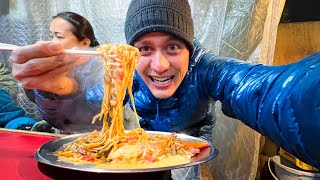
Champon is a good choice when you want a bowl of noodles, while sara udon is another Nagasaki speciality with its own preparation and texture. Shikairou says its founder, Chen Ping Shun, devised champon to provide food for Chinese students and residents. The restaurant was founded in 1899 in Hirobabamachi, on the site of a former Chinese residential quarter, and attributes its version’s chicken-bone and pork-bone soup and use of ingredients from Nagasaki’s land and sea to that history. Shikairou’s restaurant history is the source for this account; it should not be treated as a description of every bowl served in Nagasaki today.
Shikairou also describes sara udon as a variation developed from champon. Its account of the dish’s origins includes noodles that are first fried and then stir-fried with the other ingredients. That historical description does not guarantee that every restaurant serves sara udon with the same kind of noodle or texture. If texture matters to you, read the menu description and ask which version the restaurant serves before ordering.
Shikairou’s listed address is 4-5 Matsugaemachi, Nagasaki. Its operation notice, checked on 4 November 2026, lists lunch from 11:30 to 15:00, with final entry at 14:00 and the possibility that admission may end earlier when the restaurant is crowded. Reservation enquiries are listed for 10:00 to 17:00; those are enquiry hours, not dining hours, and do not by themselves confirm which meals can be reserved. Check the current operation notice before travelling, and ask the restaurant about the booking conditions that apply to your visit.
Plan around the final-entry time rather than treating the stated lunch closing time as the last moment you can arrive. A 14:50 arrival would be after the listed 14:00 final entry, even though lunch is shown as continuing until 15:00. If Shikairou is a priority, check its notice again and contact the restaurant during its listed enquiry hours rather than assuming that the restaurant serves lunch continuously until closing.
For a broader meal plan, choose between a noodle bowl and a mixed plate before you set off. Champon and sara udon are both noodle dishes, but the restaurant’s account of sara udon describes a different preparation, and current menus may describe further variation. A menu photo can help you compare what is offered, but it is not a substitute for checking the wording if you have a particular preference or dietary restriction.
2. Turkish rice: understand the plate, not just the name
Turkish rice is a Nagasaki local dish usually described as a plate combining items such as pilaf, a cutlet and Napolitan-style spaghetti. The combination is not a single fixed formula: Nagasaki’s official tourism feature shows different restaurant versions. Treat the name as a guide to a mixed plate, then read the individual menu to check which ingredients, meat, sauce and sides are included. The official Turkish-rice feature provides restaurant examples and ordering details.
At Nicky Earthtin, the official tourism feature recommends ordering by menu number. It lists a Yorozuyamachi shop and a second branch inside Nagasaki Kaido Kamome Market, at Nagasaki Station. Keep the branch name with the menu number when saving a dish or arranging to meet someone: a photograph of a numbered plate is more useful when it identifies both the branch and the item. Check the feature and the restaurant’s current information before going, since the two locations are not the same meeting point.
The same tourism feature describes Bistro Bordeaux as one of the restaurants said to be an originator of Turkish rice; it does not establish one undisputed birthplace. It also lists Kitchen Shizuru on the first floor of an APA hotel near Nagasaki Port, and ALI in Ouramachi, where an example combination includes pilaf, a cutlet and a fried egg. These examples show why it is better to compare the actual plate and its location than to assume every restaurant’s version is interchangeable.
A practical way to choose is to decide first whether you want the most familiar combination or a particular set of components. If you want to compare restaurants, note the branch, menu name or number, and the listed ingredients before you travel. For a group, sharing menu details in advance can also help everyone see whether the plate suits their preferences; the general name alone does not confirm which ingredients a restaurant uses.
3. Published prices: what the examples include
The price examples below are from Tottotto, inside Huis Ten Bosch. They are prices for named dishes at one theme-park venue, not a citywide price range for Nagasaki meals. A listed plate price also does not establish that admission to the venue is included, so check the relevant arrangements separately if your visit depends on them.
| Dish or meal | Published price | What the listing describes | Location or date note |
|---|---|---|---|
| Tottotto mixed Turkish rice | ¥2,600 | Omurice, hamburger steak, cream croquette and Napolitan spaghetti | Tower City, first floor, Huis Ten Bosch |
| Tottotto pork-cutlet Turkish rice | ¥2,300 | Pork-cutlet Turkish rice | Check the venue’s dated operation information |
| Tottotto Christmas Turkish rice | ¥2,700 | Announced seasonal dish | Announced for 6 November–25 December 2026 |
| Shikairou lunch | Check current menu | Champon and other restaurant dishes | Lunch 11:30–15:00; final entry 14:00 or earlier |
| Fukusaya castella | Check chosen size | Product cut into ten pieces | Shelf life varies by season |
The Tottotto prices and product descriptions above were checked on 4 November 2026 against the Huis Ten Bosch restaurant listing. The Christmas Turkish rice was announced for 6 November–25 December 2026, so it was a future seasonal offer on the date checked, not a dish already available then. If you are visiting outside the announced dates, check the current menu rather than relying on a seasonal photograph or an old listing.
For a realistic budget, separate food from transport, drinks and any venue admission. A single published dish price cannot tell you the cost of a complete outing, and these examples do not establish the cost of champon, Turkish rice or shippoku across Nagasaki City. If you are comparing a city restaurant with one inside Huis Ten Bosch, include the practical cost and arrangements for reaching and entering the venue before deciding which option suits your day.
4. Shippoku: a shared meal around a round table
Shippoku is a meal format as well as a collection of dishes. Nagasaki City describes diners sitting around a red-lacquered round table, with food served on shared platters and moved to each diner’s small plate. The meal begins with the greeting “ohire o douzo,” inviting guests to have ohire, a clear soup. The city’s wa-ka-ran guide explains this format and places shippoku among Nagasaki’s representative local food traditions.
The city’s examples of shippoku dishes include sashimi, blanched dishes, simmered beans, Nagasaki tempura and braised pork. These are examples of foods that may appear, not a guaranteed menu for every restaurant or course. When asking about a booking, confirm which course is being offered, how many guests it serves and whether the quoted price is per person or for a group.
If anyone in your party has a dietary requirement, contact the restaurant before booking and describe the restriction precisely. The general description of shippoku does not confirm whether a particular restaurant can provide halal or vegetarian food, or accommodate an allergy. Ask about ingredients in stocks and sauces as well as visible items on the platter; a dish that appears to contain vegetables is not proof that the whole course meets a dietary requirement.
Choose shippoku when you want a shared meal and have time to arrange it, rather than treating it as a quick substitute for a noodle lunch. The shared-plate format can make the meal different from ordering an individual champon bowl or Turkish-rice plate, so check the course details before building the rest of your day around it. If your group wants a particular course or has different needs, get those details settled with the restaurant before you arrive.
5. Buying and eating Fukusaya castella
Fukusaya’s castella is notable for the coarse sugar, called zarame, that remains on the bottom. The company lists egg and wheat as specified allergens and says the product is cut into ten pieces. Fukusaya describes its castella as a fresh confection, and its stated shelf life varies by season. Check the date on the actual box, especially if you are buying it for a journey or as a gift to be eaten later. See Fukusaya’s product information for the product details.
The ten-piece cut describes this product; it is not a serving rule for every group or every castella product. Choose the size and current price from the product listing rather than assuming that all boxes cost the same. Keep the label and date with the box if you are sharing it, so anyone with an allergy can check the ingredients.
Fukusaya advises taking care with the paper sheet at the bottom when eating the castella. Remove the paper rather than eating it with the cake, and check the package itself for the applicable date. Because the company says shelf life changes by season, do not assume that every box will keep for the same length of time.
6. Practical questions about eating in Nagasaki
A little preparation can help you choose between a quick individual meal, a substantial mixed plate and a longer shared course. Restaurant descriptions and official listings are more useful than relying on dish names alone, especially when you have a specific menu item, timing or ingredient in mind. The questions below cover the details most likely to affect your choice.
Is Turkish rice the same at every restaurant?
No. Nagasaki’s official tourism materials show restaurant variations, with combinations that can include pilaf, a cutlet and Napolitan-style spaghetti. Read the components on the menu for the branch you plan to visit rather than assuming the name specifies the meat, sauce or side. At Nicky Earthtin, the official feature recommends ordering by menu number, so keep the branch and number together.
Can I arrive at Shikairou just before 15:00 for lunch?
The operation notice checked on 4 November 2026 lists lunch until 15:00 but final entry at 14:00, with entry possibly ending earlier when the restaurant is crowded. The 15:00 closing time therefore does not mean that late admission remains possible. Check the operation notice before travelling, particularly if you expect to arrive close to the cutoff.
Are the Tottotto prices typical of Nagasaki City?
No. The prices in this guide are published examples for named dishes at Tottotto, which is inside Huis Ten Bosch. They do not establish a citywide average for champon, Turkish rice or shippoku. Check the menu of the particular restaurant you plan to visit for its current dishes and prices.
How long will Fukusaya castella keep?
Check the date on the box you buy. Fukusaya describes the product as a fresh confection and states that its shelf life varies by season, so one box’s date should not be used to predict the shelf life of another. The listed specified allergens are egg and wheat, and the product is cut into ten pieces.
What should I confirm before booking shippoku?
Ask which course is currently offered, how many people it serves and whether the price is per person or for the group. If someone has an allergy or dietary restriction, explain it to the restaurant before booking and ask about ingredients in stocks and sauces, not only the visible dishes. Nagasaki City’s general description explains the shared-table format but does not verify the arrangements of an individual restaurant.
A simple way to plan your food stop
Choose one meal format first: champon or sara udon for noodles, Turkish rice for a mixed plate, or shippoku for a shared-table course. Then check the exact venue and current listing: for Shikairou, pay attention to the final-entry time; for Turkish rice, confirm the branch and menu components; and for shippoku, ask the restaurant about the course and any dietary needs. If you want castella as a takeaway, check the product size, allergen information and date on the box.
Official details in this guide, including the dated Tottotto price examples and Shikairou’s operation notice, were checked on 4 November 2026. Prices, schedules and menus can change, so use the linked provider or official tourism page to confirm the information relevant to your visit. The examples are intended to help compare meal types and plan questions, not to suggest that one dish or price represents every restaurant in Nagasaki.