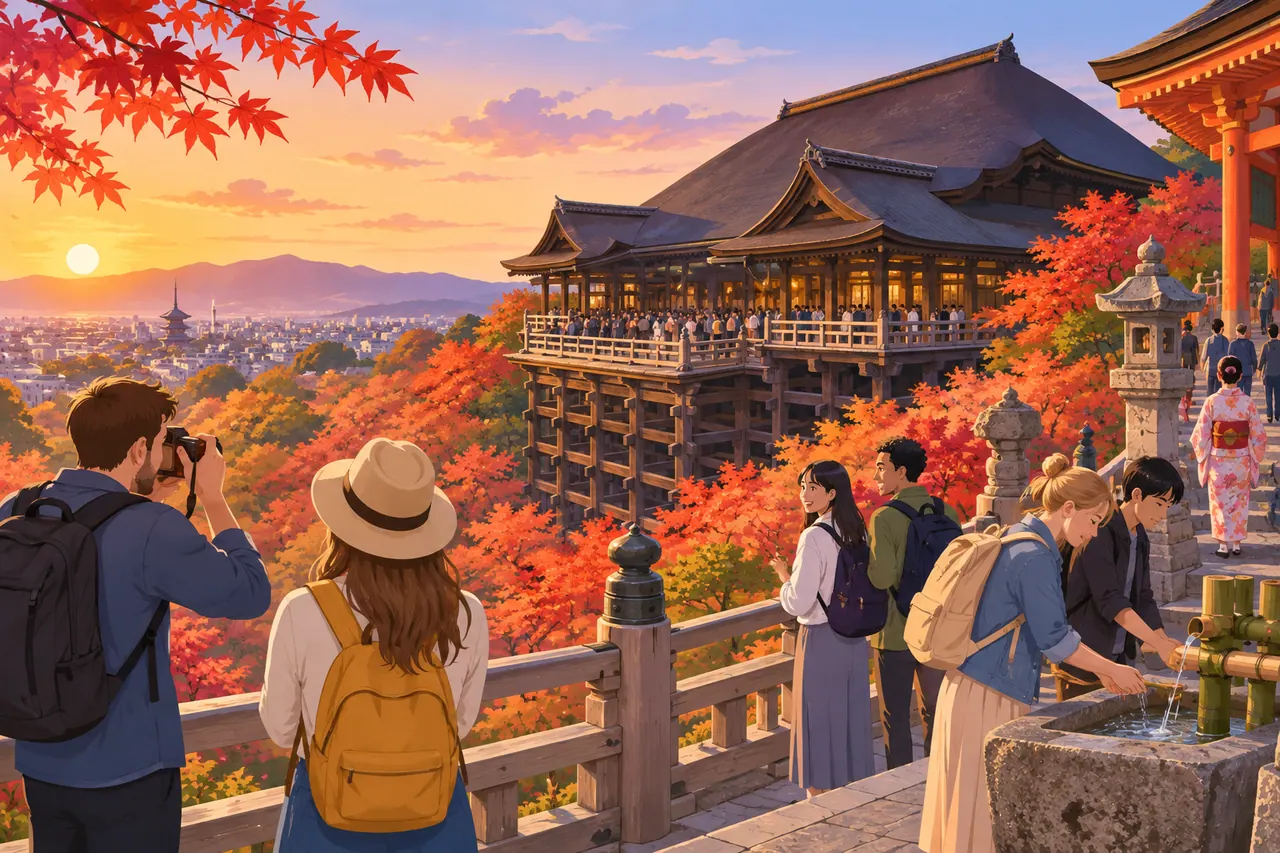
Kiyomizu-dera Guide: Access, Hours & Night Viewing 2026
Contents
Kiyomizu-dera is a Buddhist temple in eastern Kyoto, best known for its wooden main hall and stage built above a steep hillside. The temple normally opens at 6:00 a.m., but its closing time changes by season and for special events. From JR Kyoto Station, one listed route is city bus 100 or 206 to Gojozaka, followed by a walk of about 10 minutes.
This guide brings together the temple’s history, architecture, access, 2026 schedules, fees and visitor rules. The information was checked on November 3, 2026; schedules and conditions can change, so check the temple’s current notices before traveling. The writer did not visit the site or test the routes.
Kiyomizu-dera history: founding, rebuilding and life today
Kiyomizu-dera is a place of devotion to Kannon, a Buddhist figure associated with compassion. The temple’s founding tradition, repeated fires and rebuilding help explain the history behind the buildings visitors see today. For its account of the temple’s origins and later history, see the temple’s history page.

The founding story
The temple recounts its origins in the Kiyomizu-dera Engi, a record of its beginnings. According to this traditional account, a monk named Kenshin followed a message in a dream to Mount Otowa, where he met a holy man named Gyoei Koji; Kenshin later took the name Enchin. The dream and meeting belong to the temple’s founding tradition, rather than to events this guide can independently establish.
Sources give different dates and descriptions for the founding. Kiyomizu-dera gives 778 as its founding year, while the Agency for Cultural Affairs describes the temple as established as a private temple in 780. The government account names Gyoei Koji as founder and Enchin as the first head priest, and says support from Sakanoue no Tamuramaro helped establish halls and towers. The sources do not explain the difference between the dates.
Fires and the present temple
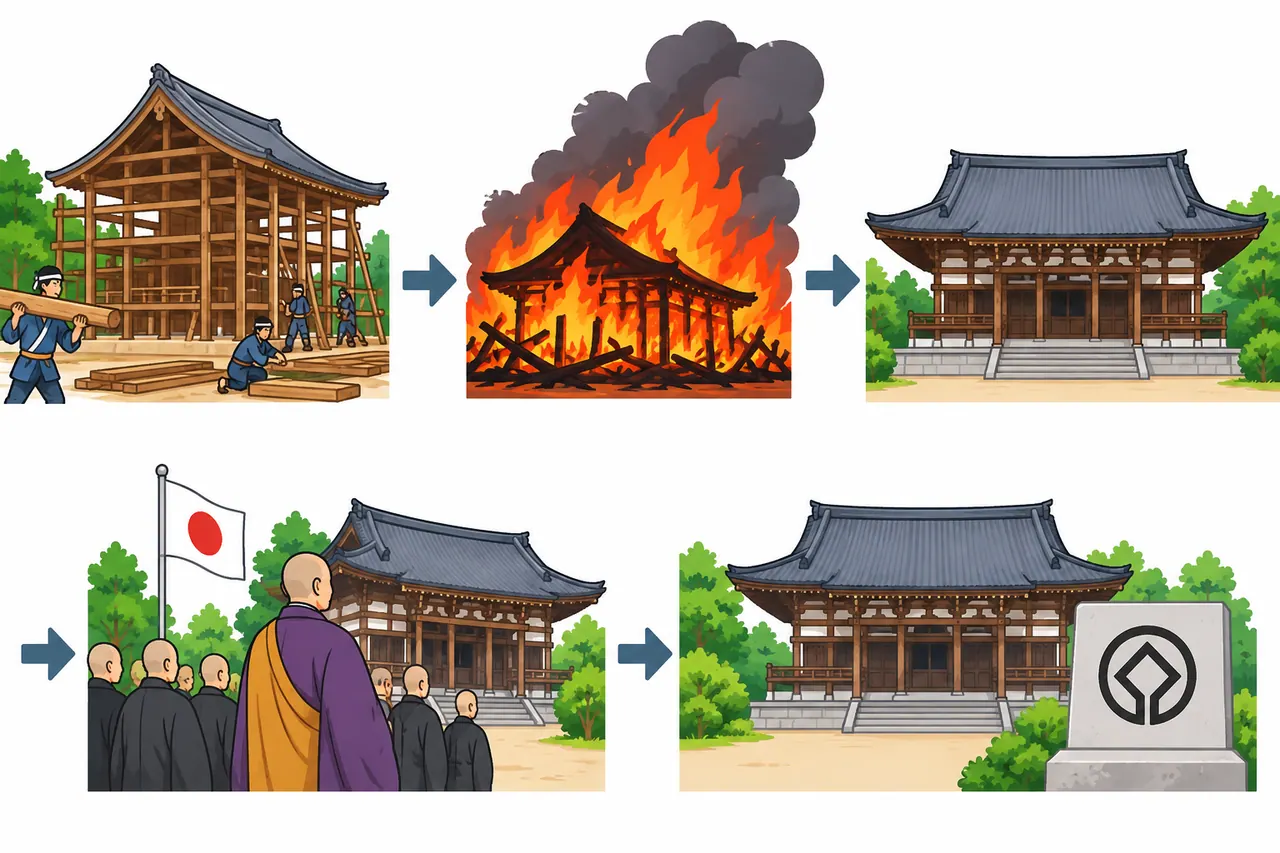
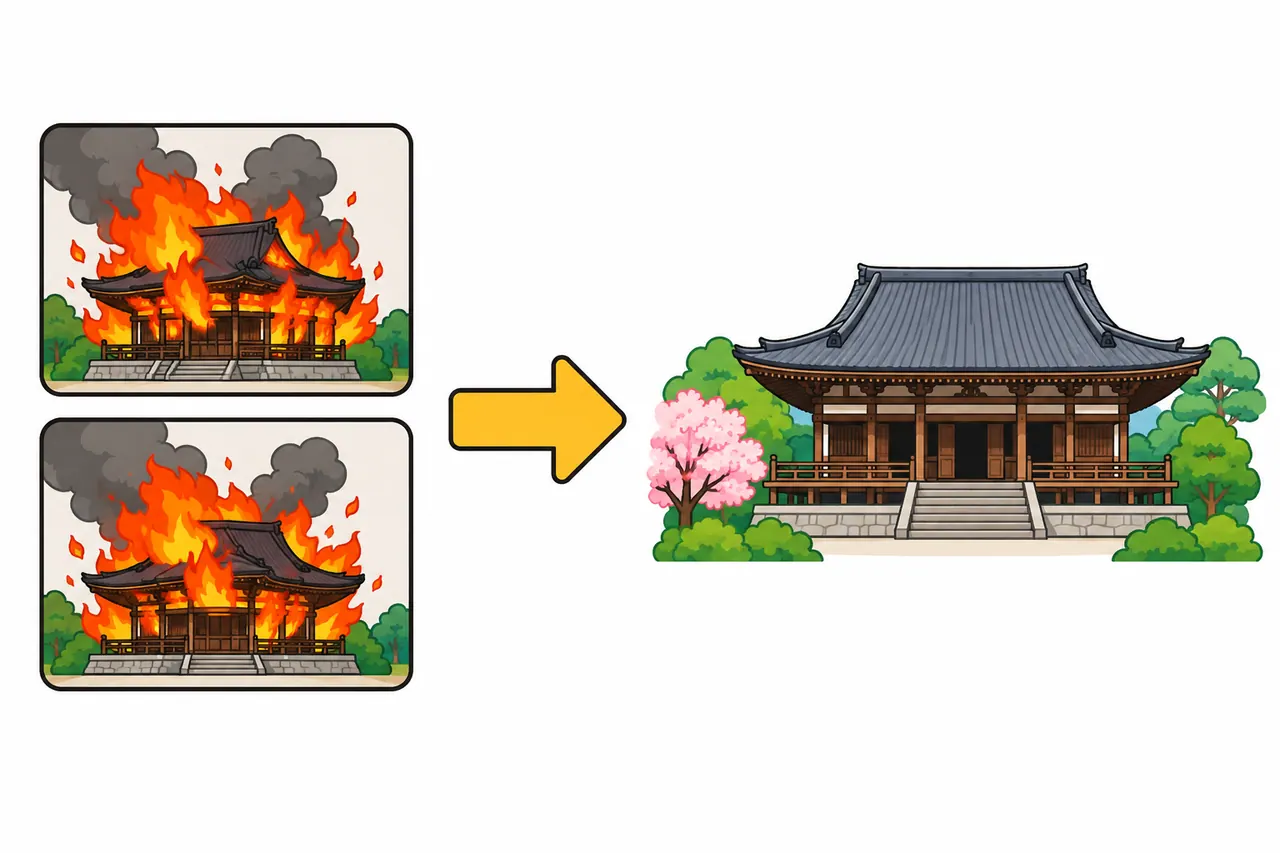
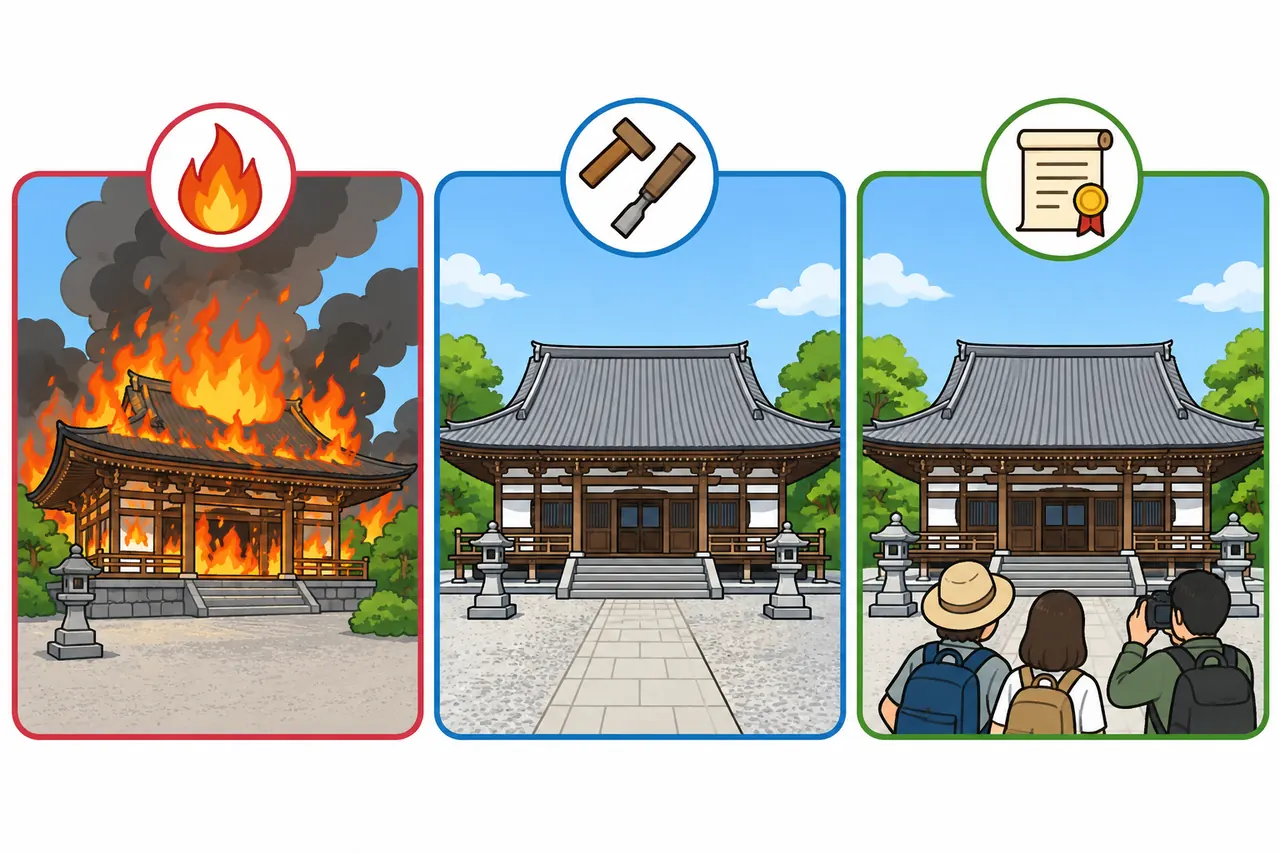
Kiyomizu-dera says it has suffered more than 10 major fires since its founding, while the Agency for Cultural Affairs records nine fires in its World Heritage overview. The available sources do not explain the difference in those counts. The earlier main hall burned in 1629, and the present hall was completed in 1633; the Agency for Cultural Affairs says many current halls and towers were rebuilt with donations from Tokugawa Iemitsu.
Kiyomizu-dera today
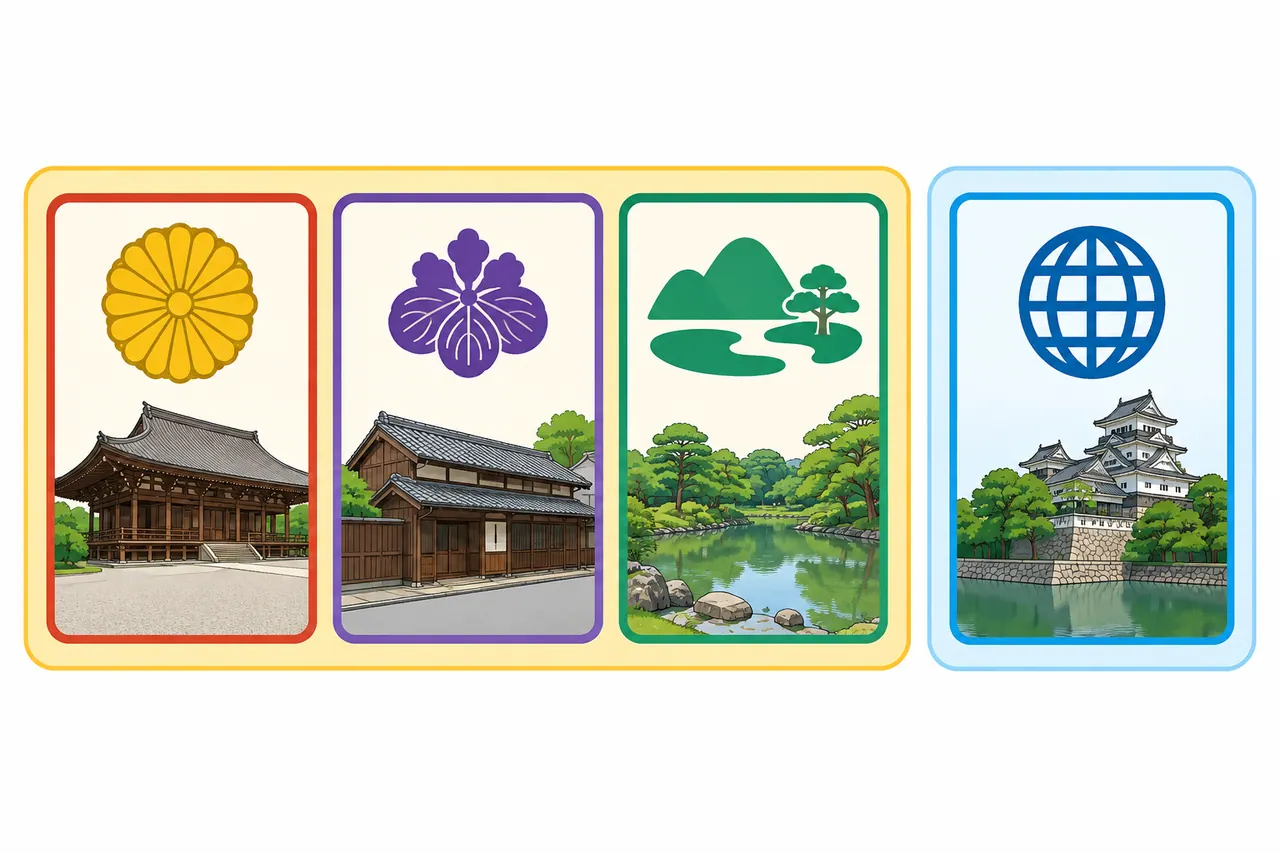
Kiyomizu-dera is the head temple of the Kita-Hosso school of Buddhism and became independent in that role in 1965. It remains a place of worship and hosts events, including Sennichi-mairi, a special period for temple visits; dates and entry conditions can vary, so consult the current event information. In 1994, the temple became part of the World Heritage property Historic Monuments of Ancient Kyoto, a group of historic sites rather than a title for Kiyomizu-dera alone.
Main hall, architecture and places to see
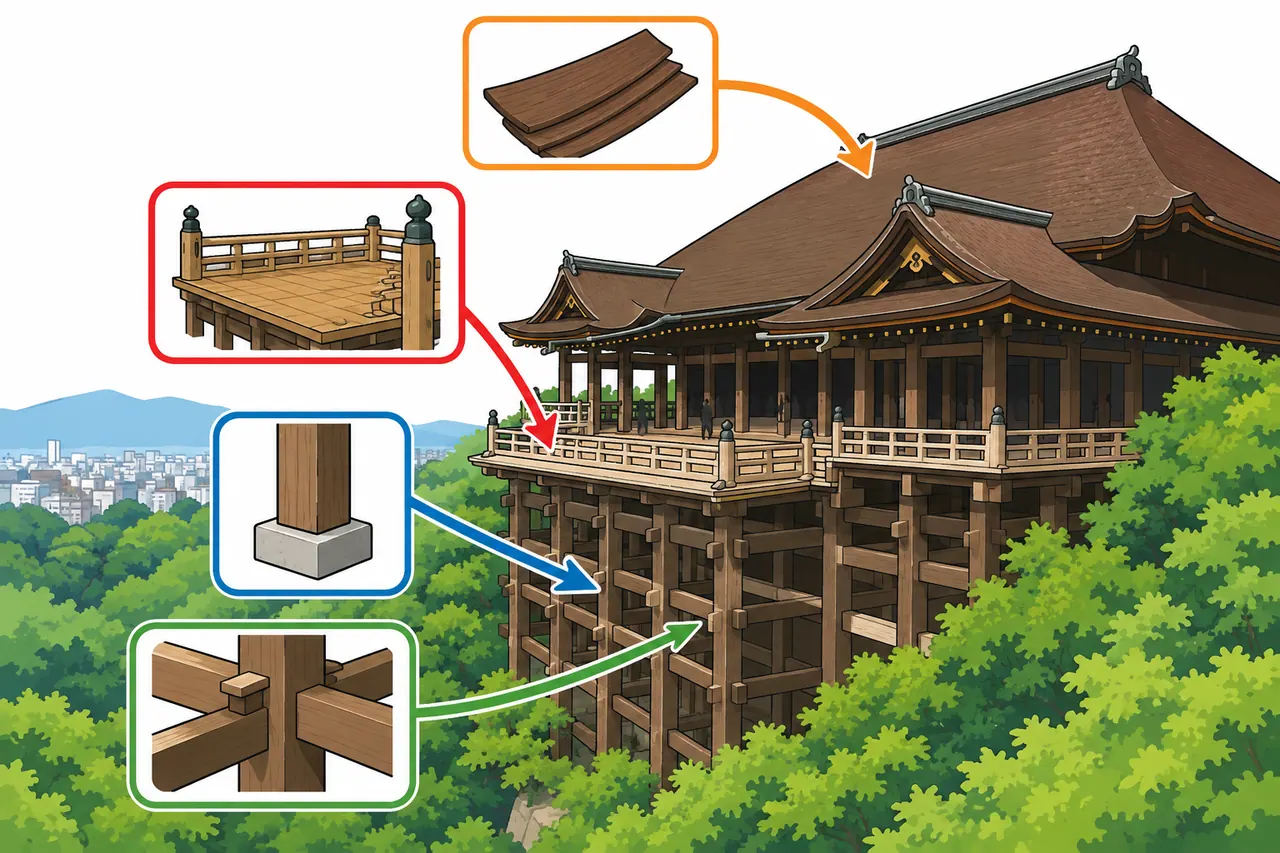
The main hall stands on a steep slope, supported by tall wooden pillars connected by horizontal beams. The temple’s grounds map can help you identify buildings and paths, but it does not guarantee that every interior or area will be open during your visit. Use the signs on site to check where visitors may go.
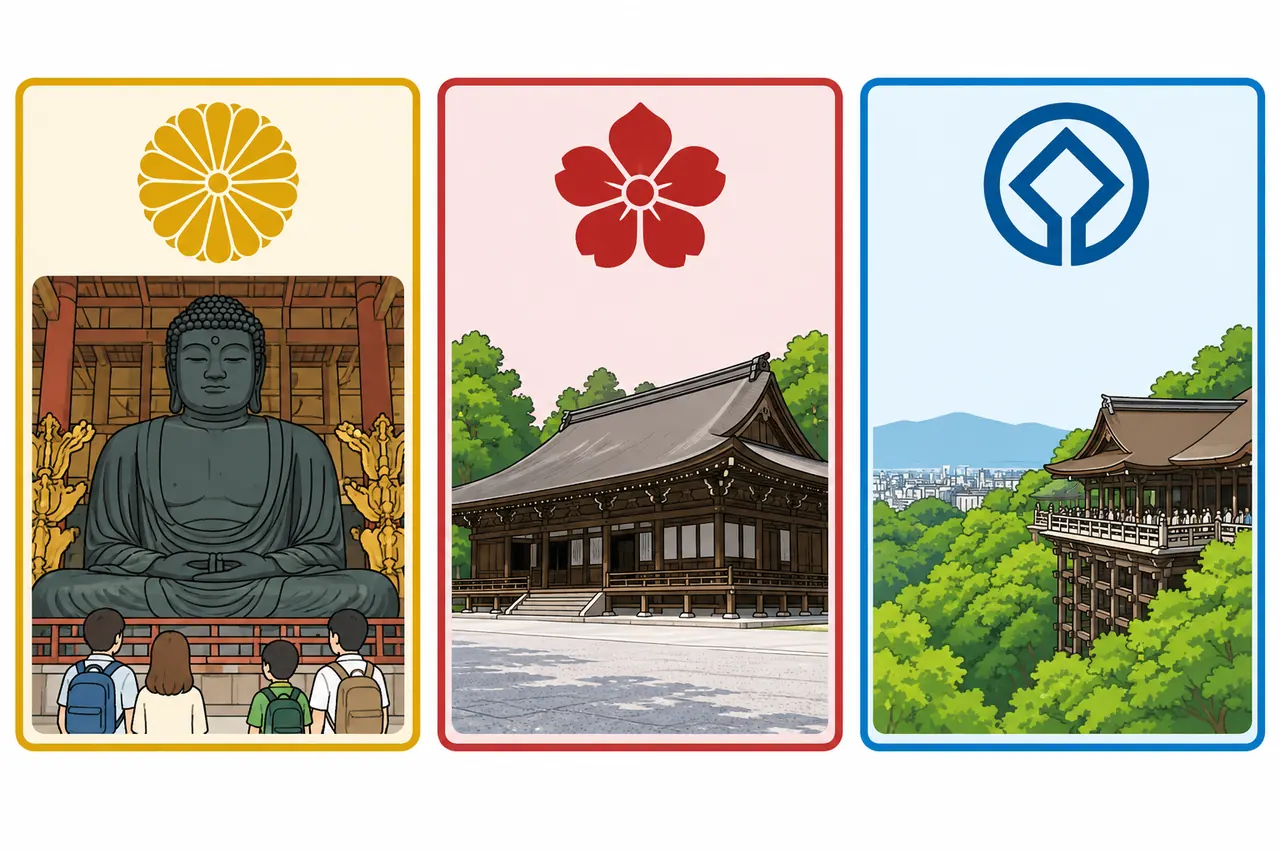
Main hall and stage
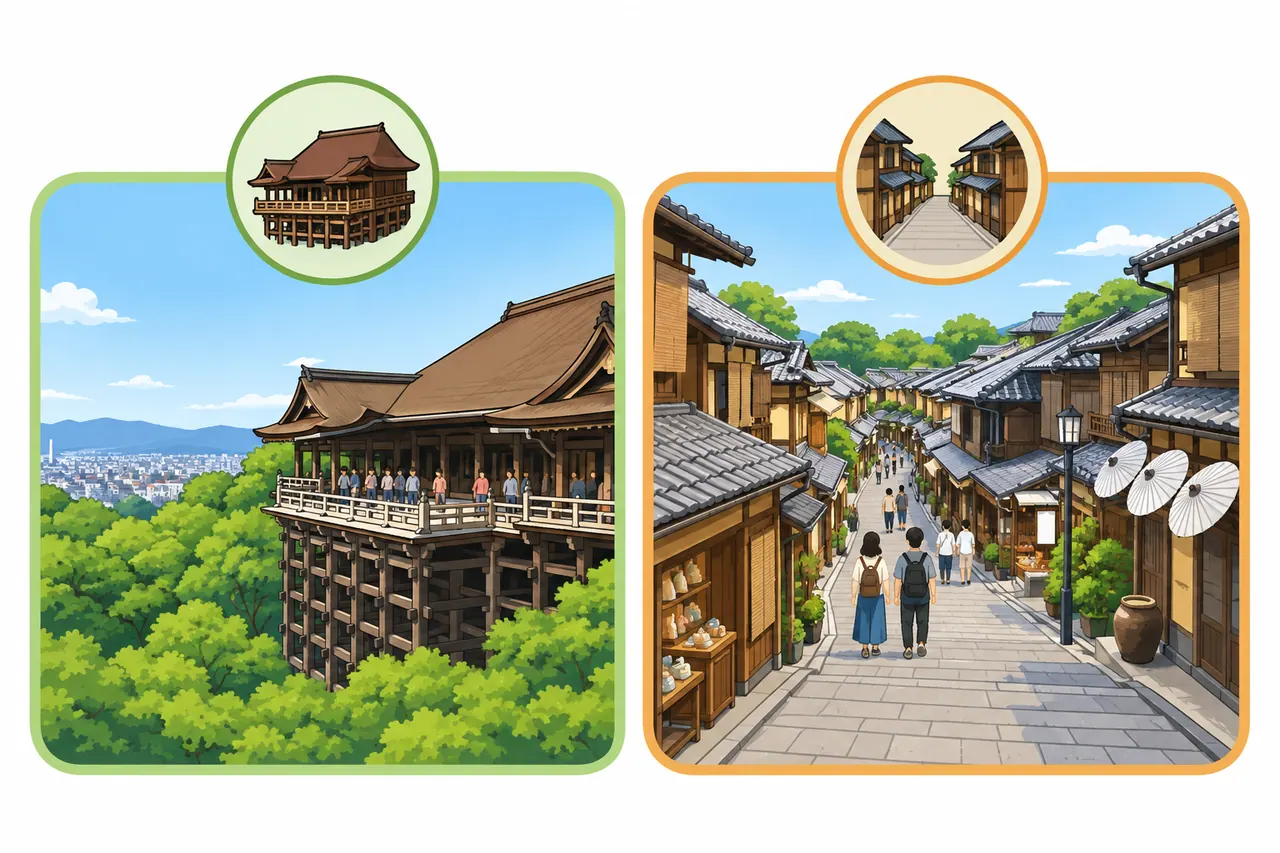
Hondo means main hall, and kakezukuri describes a building supported over a steep slope. The main section is nine bays by seven bays; a ken is a traditional bay between pillars, not a measurement in metres. The stage measures about 200 square metres and stands about 13 metres above the foundation stones below the cliff, according to the published temple information.
The temple says 18 pillars support the stage. The hall has a hipped roof—sloping on all sides—covered with cypress bark. Inside, the inner area has a stone floor and the outer area a wooden floor, and the hall houses the image of Thousand-armed Kannon. These measurements and descriptions come from published sources, not from measurements made for this guide. If the open route allows, look at the beams joining the tall supports from the permitted viewing areas.
Religious art and buildings
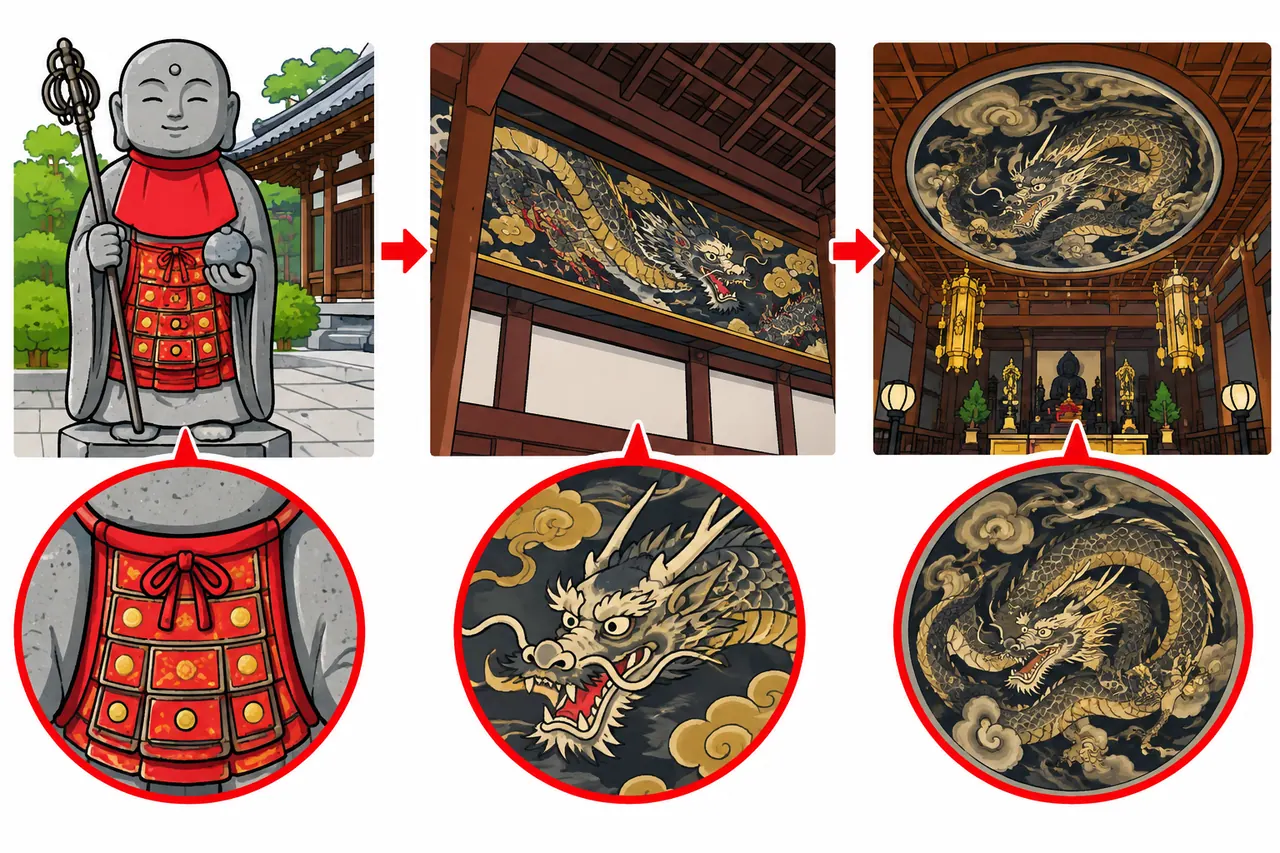
Two figures stand beside Thousand-armed Kannon: Jizo Bosatsu and Bishamonten. Kiyomizu-dera describes this pairing as unusual for attendants beside Thousand-armed Kannon. The Jizo figure carries a sword and wears armor, including a helmet with a lion head; the temple’s account of the attendant figures gives more detail.
The three-story pagoda houses a figure of Dainichi Nyorai. The temple also describes Buddhist paintings and dragons on the pagoda’s ceiling and pillars, as well as images of eight founders of the Shingon Buddhist tradition on its walls. In the scripture hall, or Kyodo, a circular dragon is painted in ink on the ceiling; the temple credits the work to Edo-period painter Okamura Nobumoto.
Gates, halls, garden and waterfall
These places are useful points of interest, not a promised walking order. Check the official grounds map for their locations and follow signs for current access.
| Place | What to look for |
|---|---|
| Niomon Gate | The gate reached by the Kiyomizu-zaka approach. |
| Three-story pagoda | A Buddhist tower with art described by the temple. |
| Scripture hall | The circular dragon painting on the ceiling. |
| Main hall | The wooden stage and its tall supports. |
| Jojuin garden | A garden with separate special-opening dates and fees. |
| Otowa Waterfall | A place connected to the temple’s founding and name. |
Visiting Otowa Waterfall
Kiyomizu-dera describes water falling in three streams at Otowa Waterfall. Visitors collect water with a ladle and pray for cleansing or for wishes to come true; the temple connects the waterfall with its founding and name. The official information available for this guide does not confirm separate benefits for each stream or give a rule about which stream to choose or how many times to drink.
Find the waterfall on the grounds map and read the signs before using a ladle. Follow staff instructions if they differ from a video or older guide. Do not rely on an unofficial explanation for a rule the temple has not confirmed.
Protected buildings and heritage
The main hall was designated a National Treasure on November 22, 1952. Jojuin garden has a separate designation as a Place of Scenic Beauty, which does not mean it is open every day. The wider World Heritage listing is different from both: Kiyomizu-dera became part of Historic Monuments of Ancient Kyoto in 1994.
A Cultural Affairs Agency accessibility case study names 15 Kiyomizu-dera buildings as Important Cultural Properties. The list includes Niomon Gate, the horse stable (Umadome), bell tower (Shoro), West Gate (Saimon), three-story pagoda, scripture hall (Kyodo), Tamura Hall, Asakura Hall, Todoroki Gate, the main residence north gate, guardian hall (Kasuga Shrine), Shaka Hall, Amida Hall, inner hall (Okunoin) and Koyasu Pagoda. This is the case study’s list, not a claim that it is the latest complete list.
A separate Agency for Cultural Affairs overview mentions 18 Important Cultural Property buildings and includes buildings at Jishu Shrine. Its scope differs from the 15-building case-study list, so the totals should not be added or assumed to describe the same set. The official information consulted for this guide does not provide a full list of every Kyoto Prefecture-designated property or every protected object at the temple.
How to get to Kiyomizu-dera and find the entrance
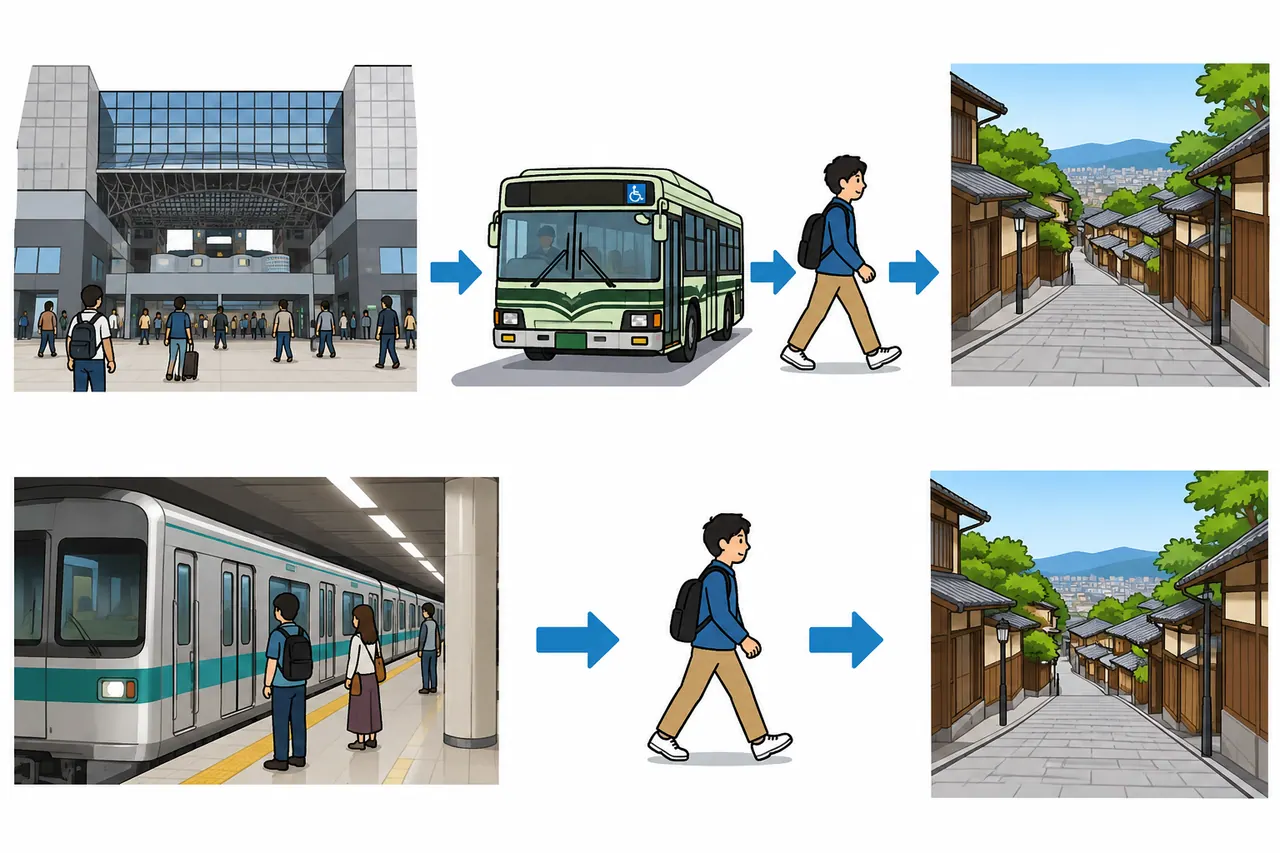
The temple’s access page lists bus routes and walking approaches. Its stated walking times start at the listed stop or station and are not the full journey time from your starting point. Bus fares, total journey times and the fastest or cheapest route were not confirmed for this guide, so check the current timetable, fare and direction before boarding.
Compare the listed routes
| Starting point | Route listed by the temple | Walk after arrival |
|---|---|---|
| JR Kyoto Station | City bus 100 or 206 to Gojozaka | About 10 minutes |
| JR Kyoto Station | Kyoto Bus 18 to Gojozaka; Saturdays, Sundays and public holidays | About 10 minutes |
| Keihan Shichijo Station | City bus 100 or 206 to Gojozaka | About 10 minutes |
| Hankyu Kyoto-Kawaramachi or Keihan Gion-Shijo | City bus 207 to Kiyomizu-michi | About 10 minutes |
| Hankyu Kyoto-Kawaramachi or Keihan Gion-Shijo | Keihan Bus 83, 85, 87 or 88, among others, to Kiyomizu-michi or Gojozaka | About 10 minutes |
| Keihan Kiyomizu-Gojo Station | Walk to the temple | About 25 minutes |
From Kyoto Station, city bus 100 or 206 to Gojozaka is the basic listed option; Kyoto Bus 18 is also listed for Saturdays, Sundays and public holidays. From Kyoto-Kawaramachi or Gion-Shijo, the temple lists city bus 207 to Kiyomizu-michi and several Keihan Bus services to Kiyomizu-michi or Gojozaka. From Kiyomizu-Gojo Station, the listed walk is about 25 minutes, but the temple’s supplied information does not say whether it recommends walking or taking a bus from there. Choose based on your group’s needs and confirm service on your date.
Choose the approach and entrance
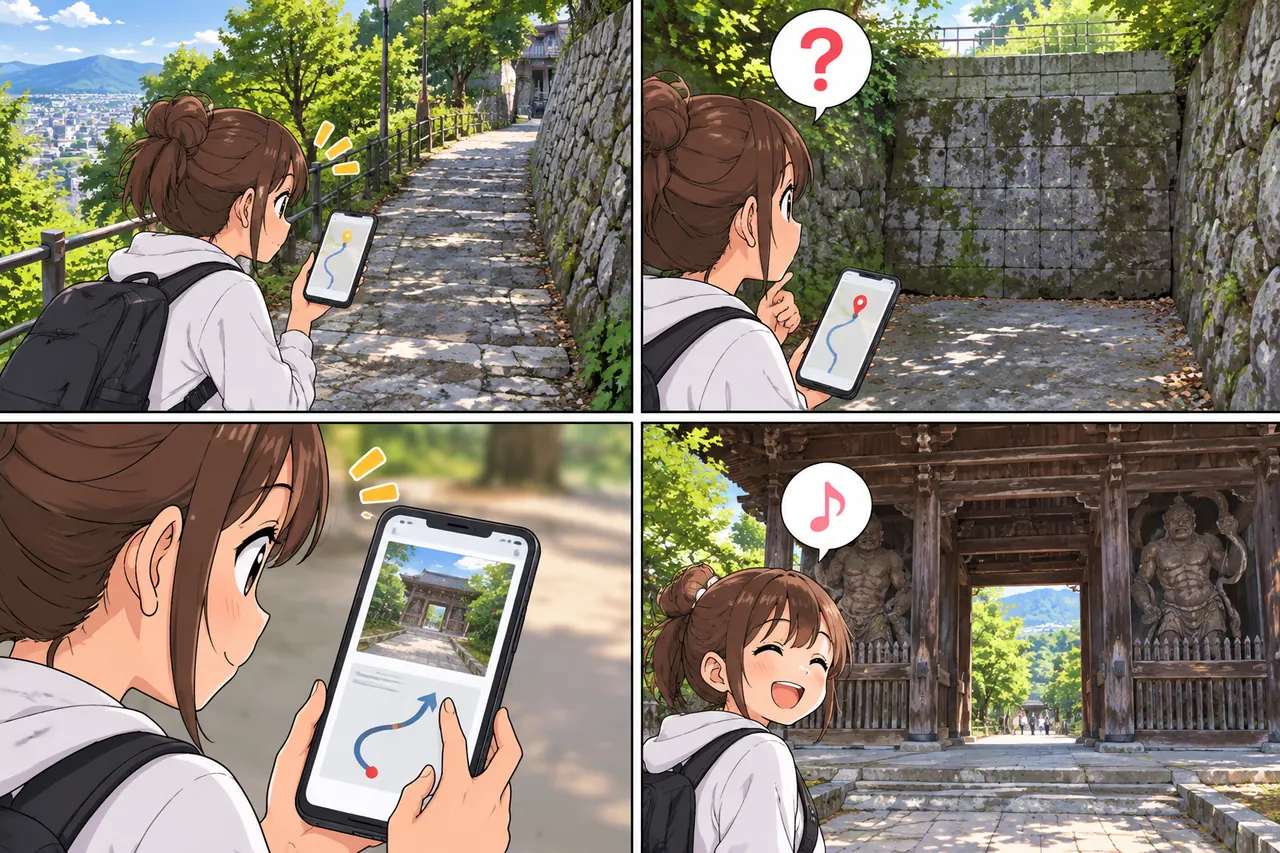
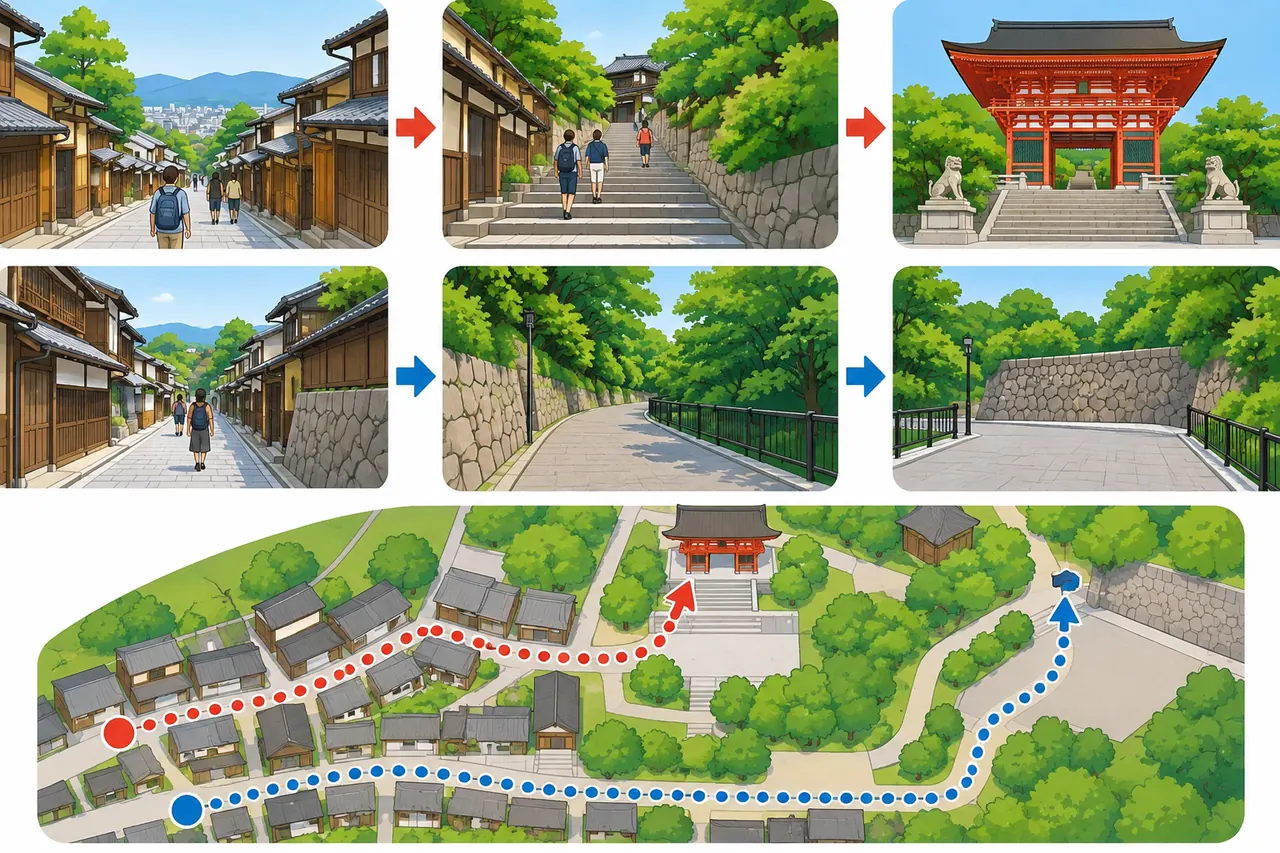
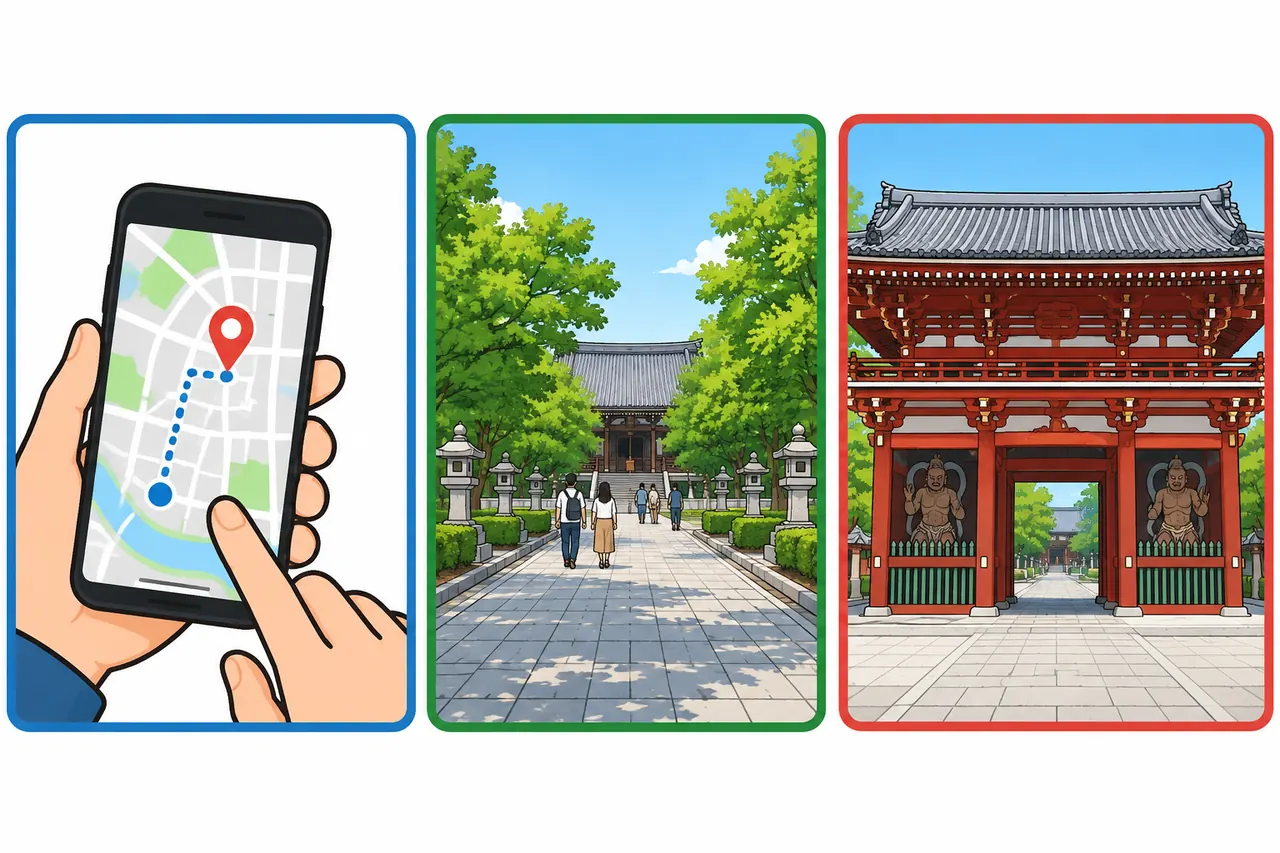
The temple describes two approaches: Kiyomizu-zaka, which leads toward the front of Niomon Gate, and Chawanzaka, which leads toward the emergency-road entrance. Both are slope roads. A map app may show a route that does not lead to an entrance visitors can use, so compare the route with the temple’s directions before setting out.
A practical check is to open the official access page, find your starting station or bus stop in its directions, and then compare the suggested walking route with the two approaches. If the map directs you somewhere you cannot enter, change the route. The address is 1-294 Kiyomizu, Higashiyama-ku, Kyoto; the temple’s phone number is 075-551-1234.
Cars, bicycles and Wi-Fi
There is no general visitor parking lot in the temple grounds. The temple points drivers toward city or nearby temporary parking and recommends public transport or a taxi during busy seasons. The road in front of the main gate is closed to vehicles from 8:00 a.m. to 7:00 p.m.
Bicycles are generally not allowed in the grounds, though a few bicycle spaces are available near the Chawanzaka emergency-road entrance. Free KYOTO Wi-Fi is available near the entrance and at some other spots. Saving the access page before leaving can help if you need to check your approach on the way.
Hours, fees, accessibility and visitor rules
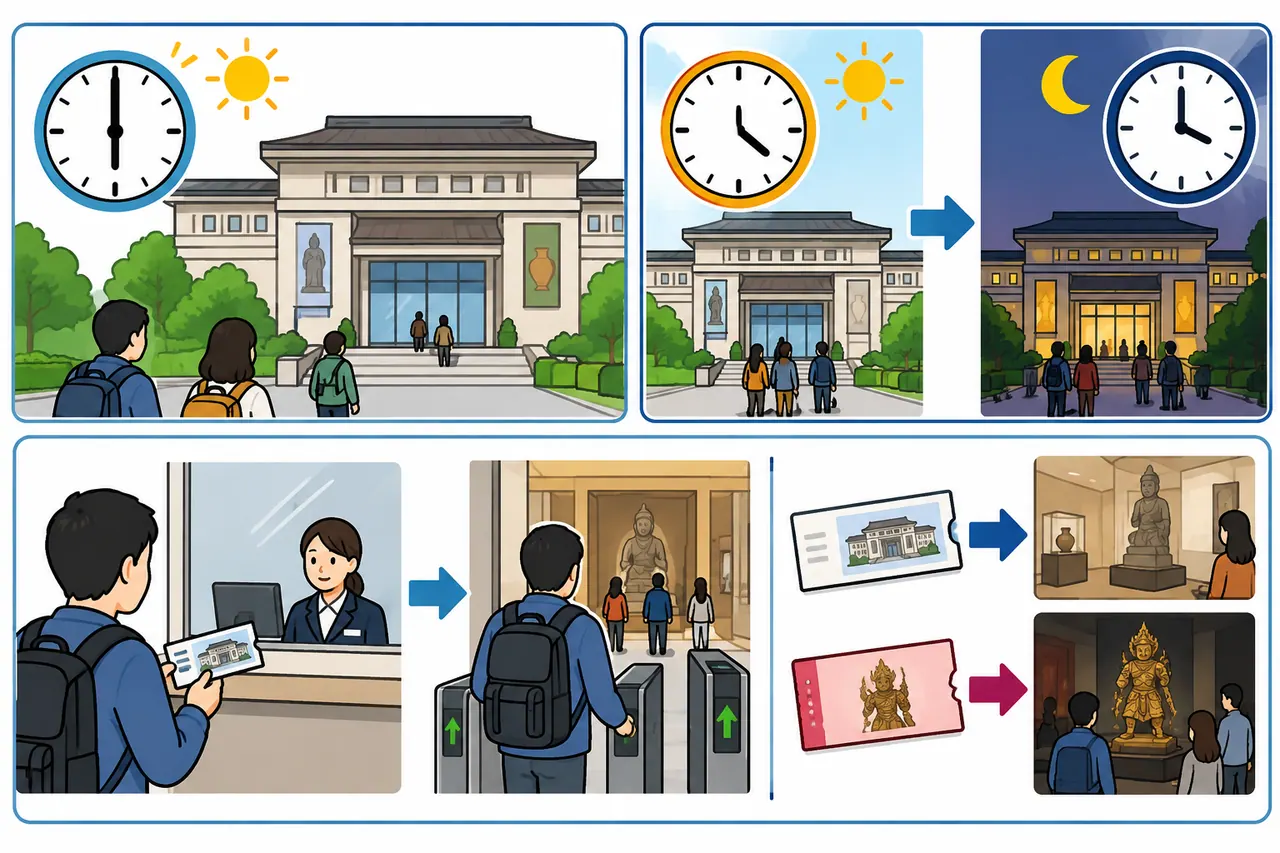
Kiyomizu-dera normally opens at 6:00 a.m. Closing time changes by season and event, and the information checked for this guide did not establish a regular closing day or rule out temporary closures. Check the temple’s access and hours information and current notices for your date rather than assuming it is open every day.
Regular closing times in 2026
| Dates in 2026 | Normal closing time |
|---|---|
| January 1–March 26 | 6:00 p.m. |
| April 6–June 30 | 6:00 p.m. |
| July 1–August 13 | 6:30 p.m. |
| August 17–August 31 | 6:30 p.m. |
| September 1–November 20 | 6:00 p.m. |
| December 1–December 31 | 6:00 p.m. |
These are normal closing times, not special-event hours; the dates not listed here may have different schedules. The temple normally opens at 6:00 a.m., but the closing time varies, and special evening openings have separate last-entry times. Recheck the official schedule before travel, especially if your visit falls near an event date.
Entry fees and planning a budget
A Kyoto City Tourism Association summary reports regular entry at ¥500 per adult and ¥200 per elementary or junior high student. The cited PDF was unavailable when checked, so confirm the current regular fee with the temple before budgeting. The fee’s application start date and conditions for children below elementary school age were not confirmed.
| Item | Amount or condition |
|---|---|
| Regular adult entry | Reported ¥500; confirm current price with the temple. |
| Regular elementary or junior high student entry | Reported ¥200; confirm current price with the temple. |
| Group discount | None. |
| Disability-related waiver | Visitor and one accompanying person enter free with the required original certificate. |
| Qualifying school-trip teacher | Free with teacher ID and proof of leading the group. |
| Autumn 2026 Jojuin garden | ¥600 adult / ¥300 elementary or junior high student, plus temple entry. |
For one adult visiting the autumn garden, the reported regular temple fee plus the garden fee would be ¥1,100. That total depends on the unconfirmed regular fee; transport, food and other purchases are extra. Check payment methods with the temple if you need to know whether a particular payment option is accepted.
The Japanese FAQ names an original disability certificate or ryoiku techo, a Japanese certificate for people with intellectual disabilities, for the disability-related waiver. It says the visitor and one accompanying person enter free with the required original document. Qualifying teachers leading an official educational event or school trip must show both identification proving their teacher status and evidence that they are leading the group, such as an itinerary.
Wheelchairs, strollers and toilets
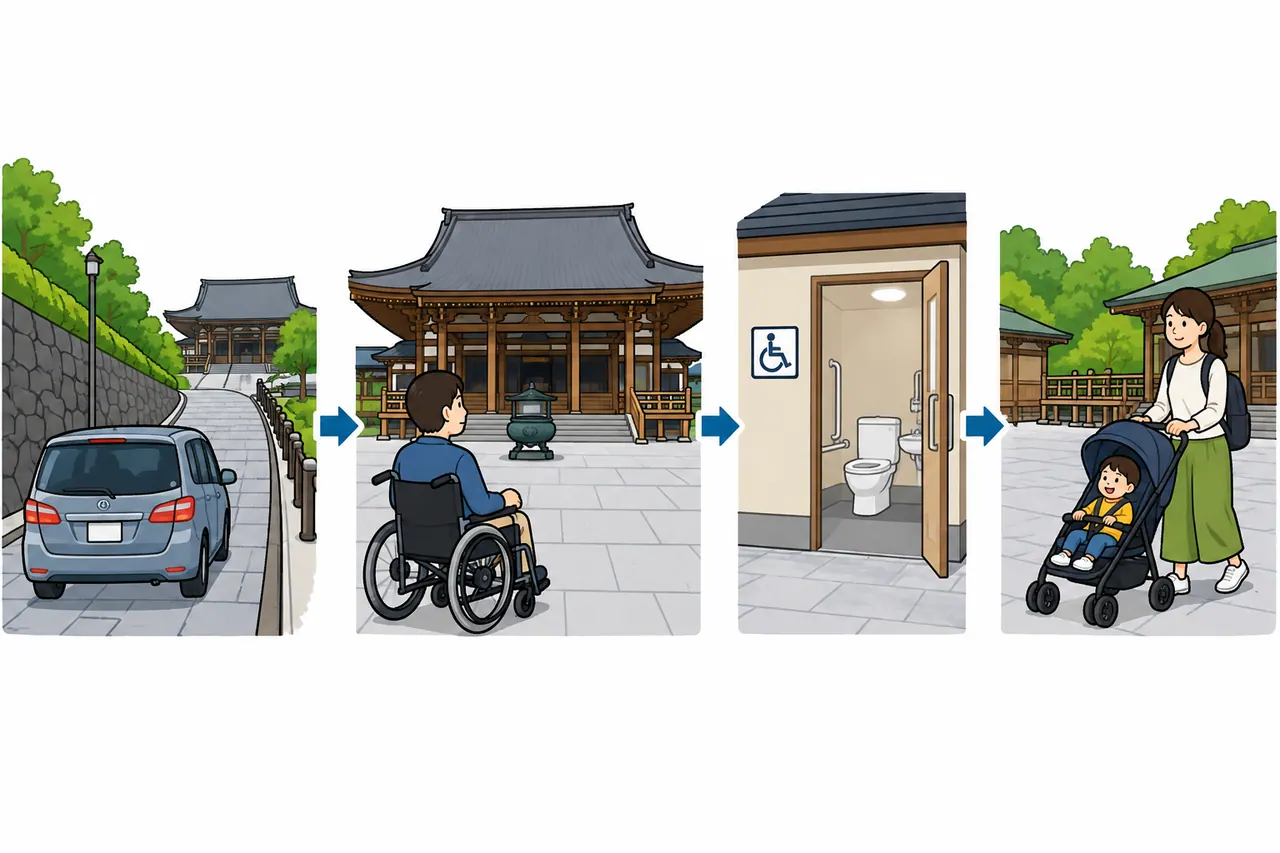
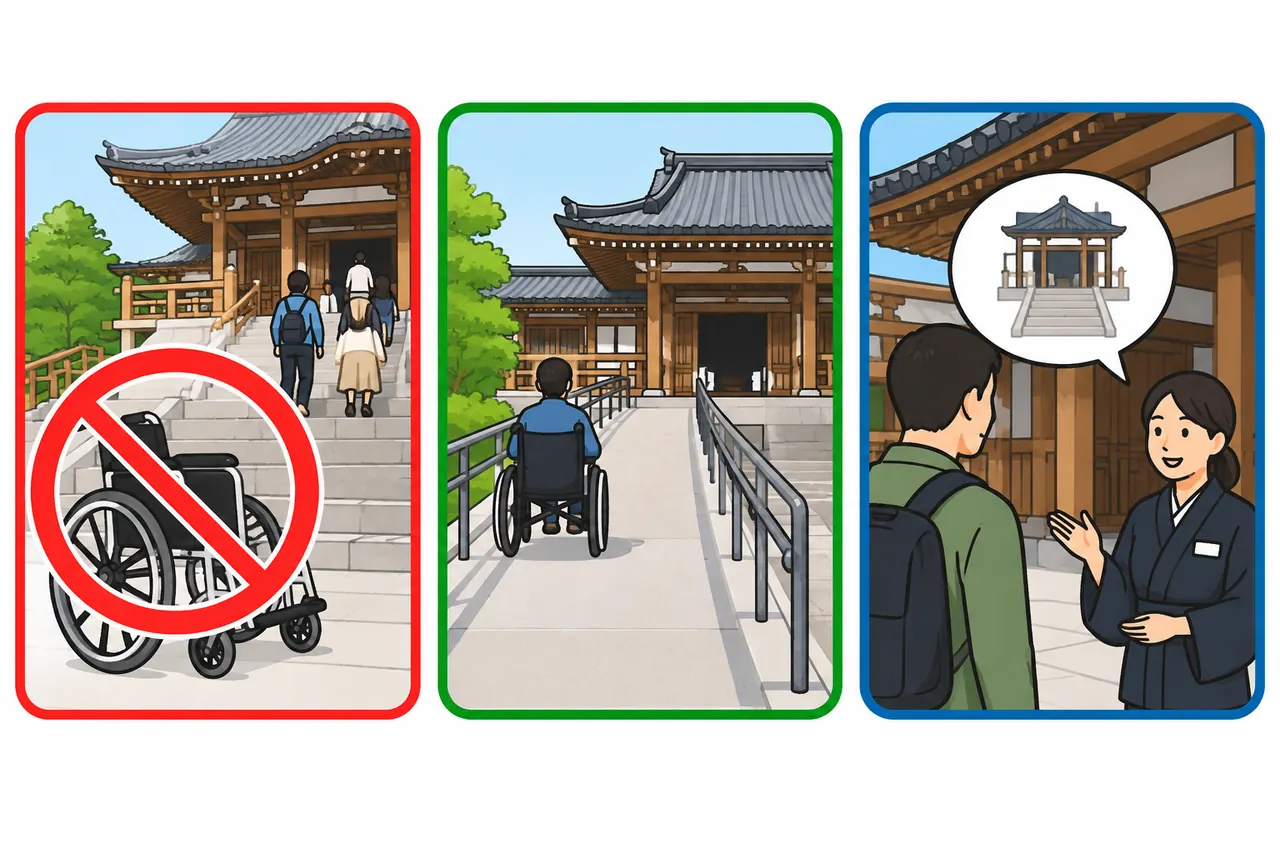
The temple describes a route that avoids steps in public areas, an accessible toilet, and stroller access through public areas. The accessible toilet can also be used for diaper changing. Wheelchairs are not available to borrow, so visitors who need one should bring their own.
For car access by wheelchair, the temple says to use the Chawanzaka emergency-road entrance to reach a point near the main hall. Check the official access page against a map and contact the temple if you need to clarify the approach before traveling. The temple’s English FAQ confirms the public-area route, toilet and wheelchair-loan information.
Visitor rules
| Topic | Temple rule |
|---|---|
| Pets | Not allowed; guide, service and hearing dogs are exceptions. |
| Smoking | Not allowed in the grounds. |
| Drones, monopods and tripods | Not allowed. |
| Wedding and costume photo shoots | Not allowed. |
| Food and drink | Do not bring food or drink, except drinks in containers with lids. |
| Eating | Do not eat while walking or standing; take rubbish home. |
These rules are based on the temple FAQs checked November 3, 2026. A monopod has one leg and a tripod has three; neither is allowed for photography in the grounds. Check signs for rules that apply in particular interiors, and follow any on-site instructions.
Seasons and 2026 night viewing
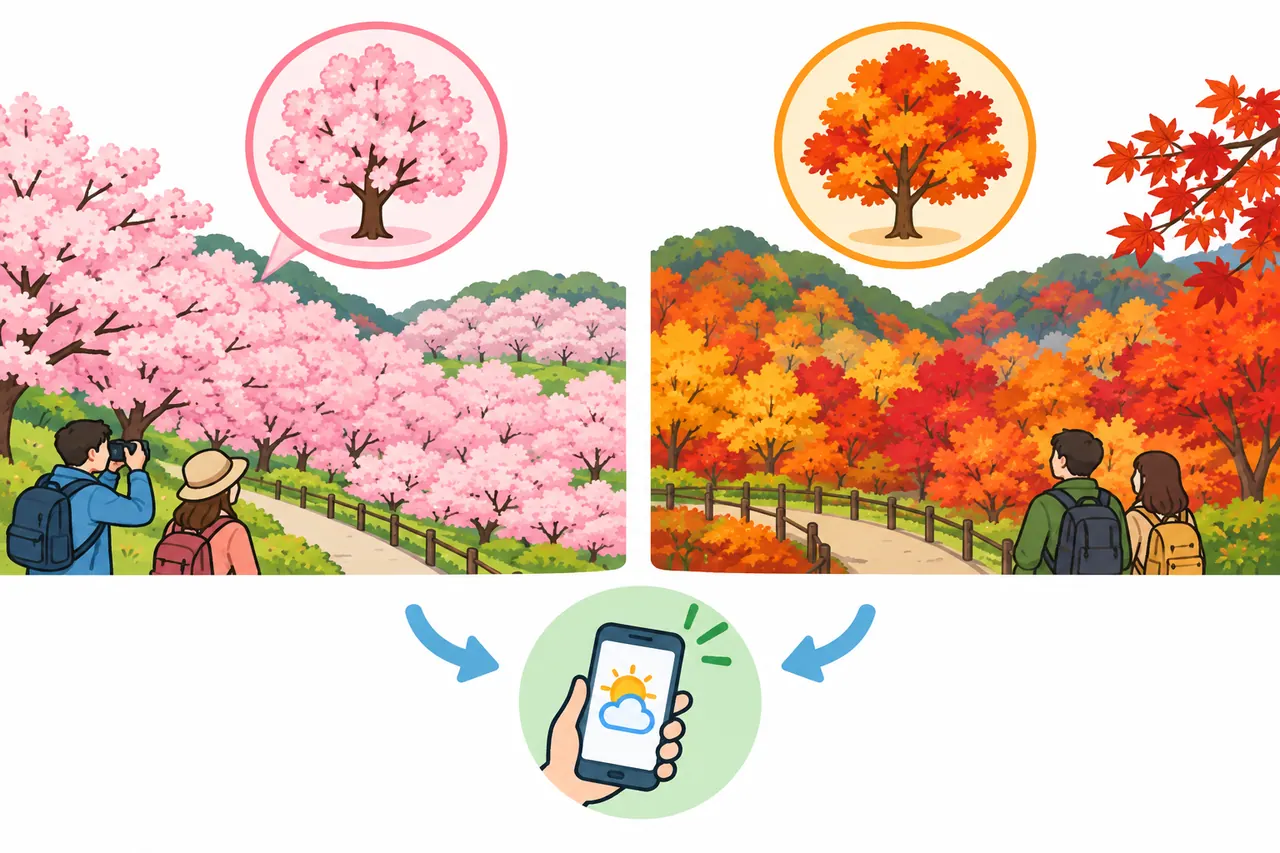
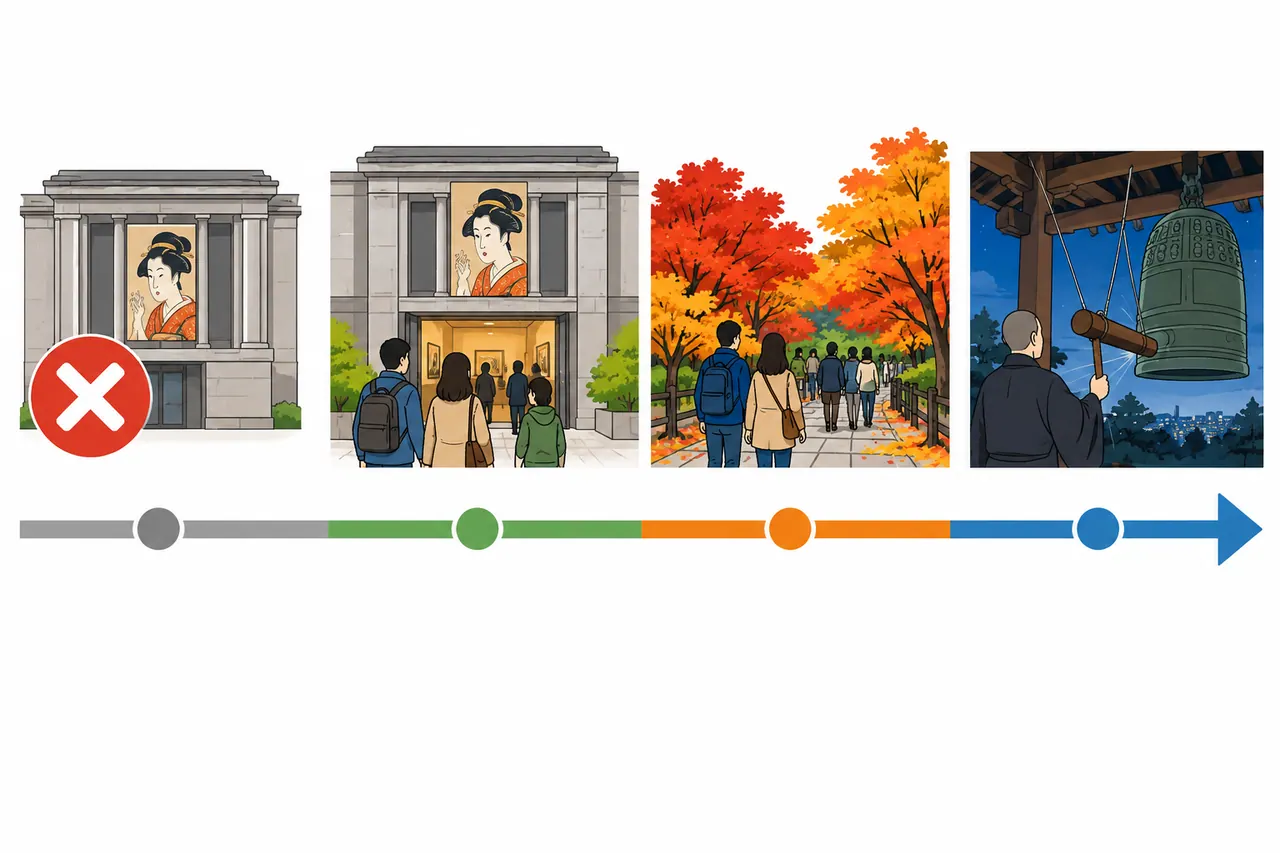
The temple says the grounds have about 1,500 cherry trees and 1,000 trees with autumn color. For current conditions, it directs visitors to its notices and Facebook page; a past photo or video shows one visit, not a forecast for your date. The Kyoto City Tourism Association includes Kiyomizu-dera in its morning-visit guidance, but a temple-specific crowd count by hour was not confirmed.
2026 event calendar
The dates below preserve the status as checked on November 3, 2026. Events marked as past had already taken place by then; the Pink Ribbon event’s actual result was not confirmed. Check the temple’s 2026 event calendar and the linked event notices before making plans.
| 2026 dates | Event | Conditions and status on November 3 |
|---|---|---|
| March 15, April 3, October 15 | Seiryu-e | 2:00–3:30 p.m.; dates passed. |
| March 27–April 5 | Spring night viewing | Last entry 9:00 p.m.; closes 9:30 p.m.; no reservation; ended. |
| August 9–16 | Sennichi-mairi and special inner-room opening | 9:00 a.m.–5:00 p.m.; entry extended to 9:00 p.m. August 14–16; no reservation; ended. |
| August 14–16 | Summer night viewing | Last entry 9:00 p.m.; closes 9:30 p.m.; no reservation; ended. |
| October 20 | Pink Ribbon night viewing | Scheduled for 6:45–9:30 p.m.; last entry 9:00 p.m.; result unconfirmed. |
| October 27–November 12 | “Shapes of Silence” exhibition | 9:30 a.m.–5:00 p.m.; separate Jojuin fee; running on November 3. |
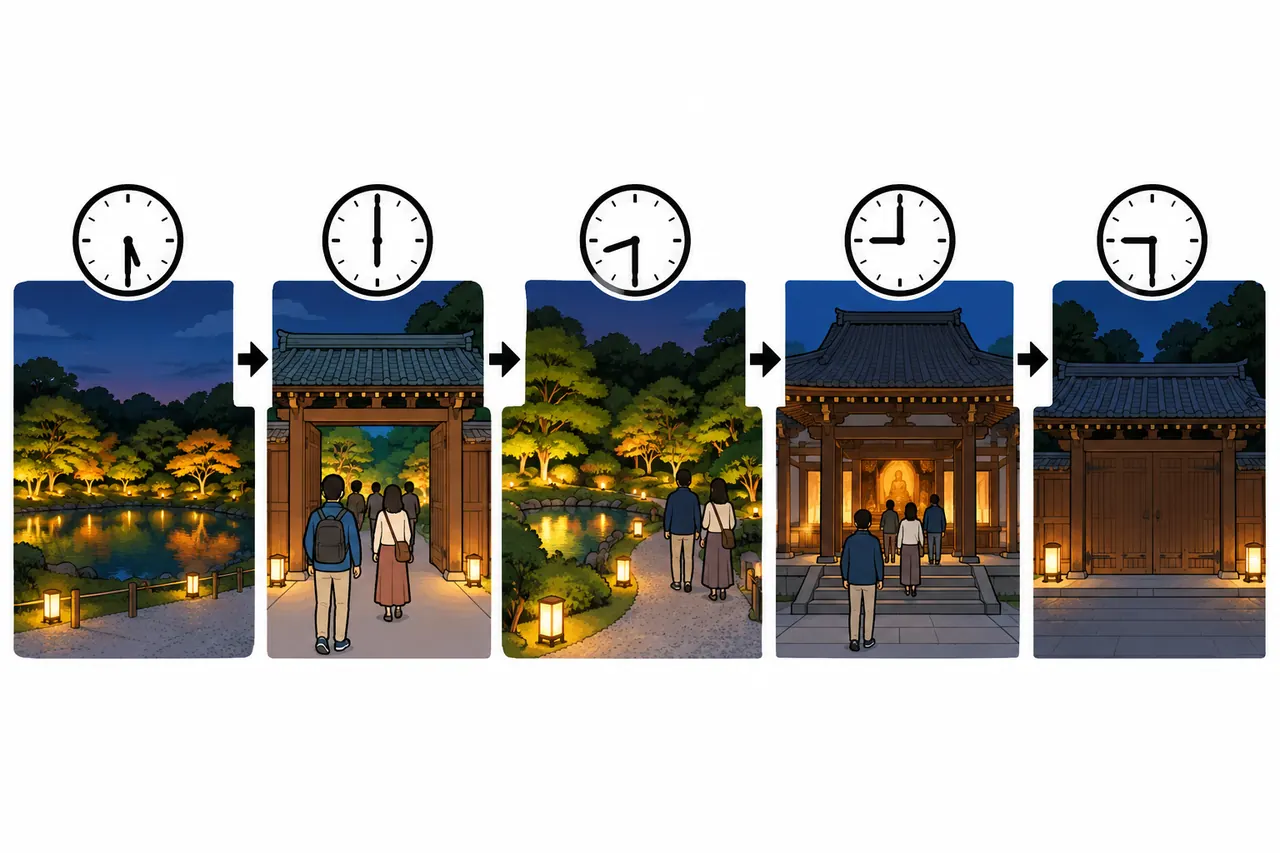
| November 21–30 | Autumn night viewing | 5:30–9:30 p.m.; last entry 9:00 p.m.; no reservation; scheduled. |
| November 21–30 | Jojuin garden opening | Separate fee; no reservation; scheduled. |
| December 31 | New Year’s Eve bell | Reservation needed to ring the bell. |
The autumn night-viewing notice gives hours of 5:30–9:30 p.m., with last entry at 9:00 p.m. and no reservation required. The special viewing is scheduled for November 21–30; check the official autumn notice for the date-specific instructions. The dates for spring and summer night viewing are included for reference, but both periods had ended by November 3.
Sennichi-mairi and the special inner-room opening were scheduled for August 9–16, with entry from 9:00 a.m. to 5:00 p.m. and extended entry until 9:00 p.m. on August 14–16. The English notice gave fees of ¥500 for adults and ¥200 for elementary or junior high students, and said no reservation was needed. The October 20 Pink Ribbon notice listed hours of 6:45–9:30 p.m., last entry at 9:00 p.m., and a ¥500 fee to be donated in full to JBCRG; it also warned of area restrictions and possible cancellation in bad weather. Its actual result was not confirmed.
The “Shapes of Silence” exhibition was scheduled for October 27–November 12, 2026, from 9:30 a.m. to 5:00 p.m. Its Jojuin special-entry fee was ¥600 for adults and ¥300 for elementary or junior high students, separate from the regular temple fee. Check the exhibition notice for the dated details.
Jojuin garden: daytime and evening entry
The autumn Jojuin garden opening was scheduled for November 21–30, 2026. Its separate fee is ¥600 for adults and ¥300 for elementary or junior high students, in addition to temple entry; the notice says no reservation is needed. The published notices differ on the daytime start time: the annual event calendar gives 10:00 a.m., while the individual notice dated October 28 gives 9:00 a.m.
| Entry period | Start | Last entry |
|---|---|---|
| Day | 9:00 or 10:00 a.m.; official notices differ | 4:00 p.m. |
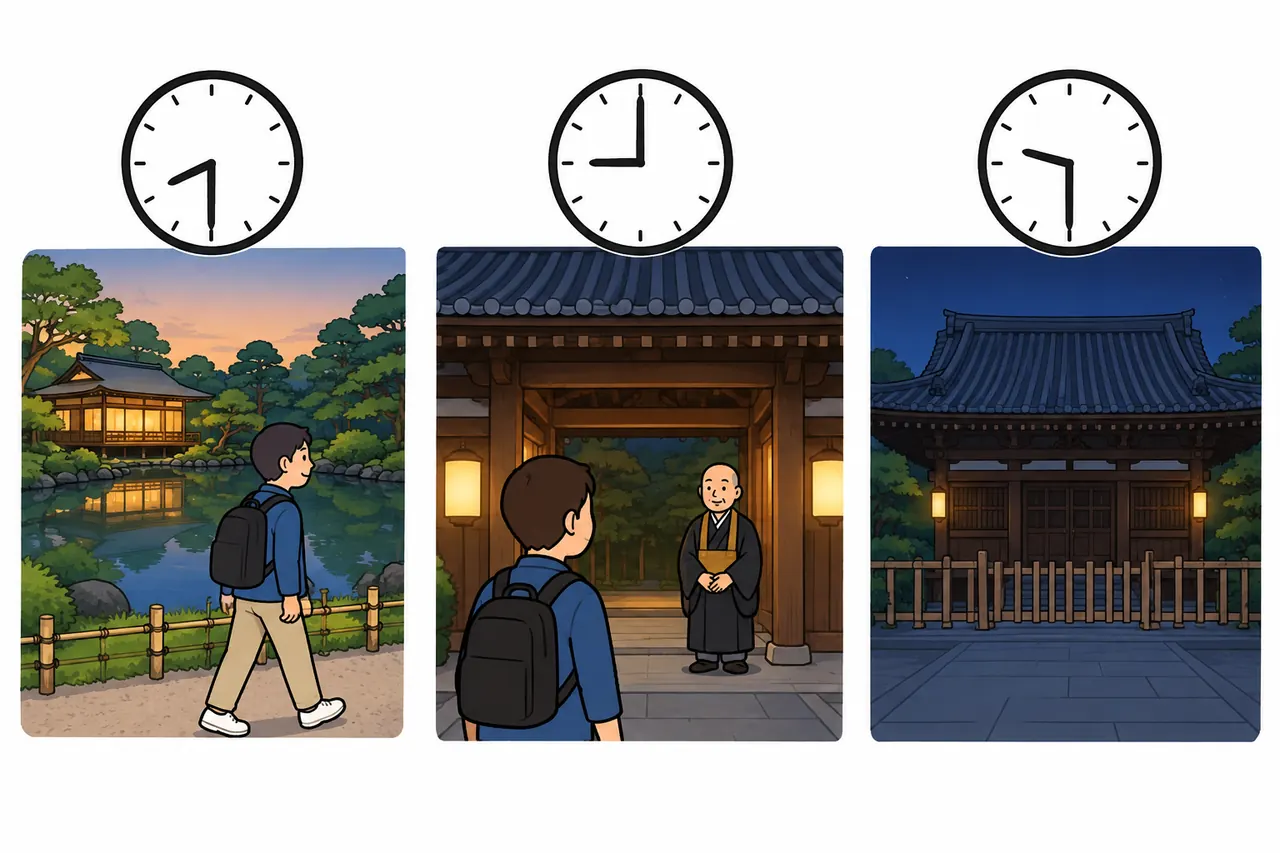
| Evening | 6:00 p.m. | 8:30 p.m. |
The listed last-entry times are not stated closing times. The garden’s evening last entry is earlier than the temple’s 9:00 p.m. night-viewing last entry. Before going, check the English garden notice or contact the temple to confirm the daytime start and any changes.
Plan an autumn evening
For a date covered by the scheduled autumn opening, the garden’s earlier deadline can help set the order of your evening. The temple’s published hours do not provide an official visit-duration estimate, so allow time according to your own pace rather than relying on a fixed itinerary.
- Enter for temple night viewing from 5:30 p.m., following the entrance guidance for your date.
- Visit Jojuin garden from 6:00 p.m. and before its 8:30 p.m. last entry. Pay its separate admission fee.
- Continue the temple visit while its admission window remains open; the temple’s last entry is 9:00 p.m.
- Leave before the 9:30 p.m. temple closing, and keep both last-entry times in mind when planning your return travel.
These steps use the dated official opening schedule and do not assign an unmeasured walking or sightseeing duration. The official information available here does not establish whether visitors may leave and re-enter, so ask the temple before making a plan that depends on re-entry.
Booking event visits
Do not assume every event has the same booking rule. The listed 2026 night-viewing and autumn garden notices say reservations are not needed, while ringing the New Year’s Eve bell requires a reservation. The 2026 English event guide says there is no general public reservation application for the bell; contact the temple for details.
Plan your visit
Start with your date, then check hours, route, fees and any access needs. The temple’s supplied information did not provide a confirmed visit-length estimate, so choose priorities without assuming a fixed amount of time is sufficient. A useful visit does not require a prescribed walking order: use the map and signs available on the day.
Choose a plan for your group
| Priority | First check | Allow for |
|---|---|---|
| Early visit | Confirm the normal 6:00 a.m. opening and your transport. | Your journey and walking pace. |
| History and art | Find the main hall, pagoda and scripture hall on the map. | Areas that may not be open. |
| Autumn evening | Check the special dates and 9:00 p.m. last entry. | The earlier garden last entry if visiting both. |
| Jojuin garden | Confirm the daytime start and separate fee. | Temple entry as well as garden entry. |
| Wheelchair access | Ask about the Chawanzaka car approach. | Bringing your own wheelchair. |
| Waterfall | Find it on the official map. | Signs, staff instructions and any wait. |
For a history-focused visit, use the map to locate the main hall, pagoda and scripture hall, then check which areas are open when you arrive. For a garden visit, budget for both the garden and temple fees, and confirm the garden’s start time because the notices differ. If you are traveling with children, check ticket conditions for their age group; if you use a stroller, the temple says strollers can pass through public areas.
Add nearby places
Ninenzaka is a street in the Kiyomizu area and can be included before or after the temple. Leave time for your own walking pace and any stops rather than treating the street as a timed extension of the temple visit. The temple’s route information does not prescribe a half-day circuit through nearby attractions.
Save-for-later checklist
Check the temple event page for your date and the access page for current routes, approaches and hours. Save the bus stop or station you plan to use, plus the approach road you intend to follow, and confirm the regular fee, payment methods and any child or certificate conditions with the temple. Add separate garden or exhibition fees to your budget, review access and visitor rules for everyone in your group, and call 075-551-1234 if a time, fee or access detail is unclear.
Kiyomizu-dera FAQ
These answers reflect the sources checked on November 3, 2026. Opening schedules, special events and fees can change, so use the temple’s current notices when making date-specific plans. Where the available information does not settle a question, the answer says so.
What time does Kiyomizu-dera open?
The temple normally opens at 6:00 a.m. Its closing time varies by season and event, and the dates listed for normal hours do not cover special-event schedules. Check the official access and hours page for your date and any closure notices.
How much is regular admission?
Regular entry is reported as ¥500 for adults and ¥200 for elementary or junior high students. The cited Kyoto City Tourism Association PDF could not be opened when checked, so confirm current fees with the temple before setting your budget. The application start date for those prices and conditions for children below elementary school age were not confirmed.
How do I get there from Kyoto Station?
The temple lists city bus 100 or 206 to Gojozaka, followed by a walk of about 10 minutes. Kyoto Bus 18 to Gojozaka is another listed option on Saturdays, Sundays and public holidays. Confirm the current bus service, fare and direction before traveling.
Is there night viewing in 2026?
The listed 2026 night-viewing periods were March 27–April 5, August 14–16 and November 21–30. The March and August periods had ended by November 3; the autumn period was scheduled for November 21–30. The published notices say last entry is 9:00 p.m., closing is 9:30 p.m. and no reservation is needed, but check the current event notice before going.
When was Kiyomizu-dera founded?
Kiyomizu-dera gives 778 as its founding year, while the Agency for Cultural Affairs gives 780 for its establishment as a private temple. The sources do not explain the difference, so both dates are reported here with their sources. The present main hall was completed in 1633 after the earlier hall burned in 1629.
Can visitors use a wheelchair or stroller?
The temple says public areas have a route that avoids steps, and an accessible toilet is available. Wheelchairs are not available to borrow, while strollers can pass through public areas. For car access by wheelchair, the temple directs visitors to the Chawanzaka emergency-road entrance; contact the temple if you need to clarify the approach.
Can I visit Jojuin garden during autumn night viewing?
The 2026 autumn garden opening was scheduled for November 21–30, with a separate fee of ¥600 for adults and ¥300 for elementary or junior high students, plus temple entry. Evening entry was listed from 6:00 p.m. with last entry at 8:30 p.m.; the temple’s night-viewing last entry was later, at 9:00 p.m. The garden notices differ on the daytime start time, so confirm it directly if visiting during the day.
How long should I allow for a visit?
The official sources checked for this guide did not provide a confirmed visit-duration estimate. Time needed will depend on your route, walking pace, event access and which places you choose to see. Check the grounds map and schedule, then plan around your own priorities rather than relying on an unsupported time estimate.


)](https://i.ytimg.com/vi/3J5VSdqPW4Y/mqdefault.jpg)


)](https://i.ytimg.com/vi/4NOXJydIPKk/mqdefault.jpg)