Kinkakuji Temple: Golden Pavilion, ¥500 Fee and Bus Guide
Contents
- 1. 1. Kinkakuji Temple hours, tickets and budget
- 2. 2. How to reach Kinkakuji Temple by bus
- 3. 3. Photo rules, facilities and access needs
- 4. 4. History and architecture of the Golden Pavilion
- 5. 5. The garden, views and seasonal planning
- 6. 6. A flexible day plan and onward options
- 7. 7. Kinkakuji Temple FAQ
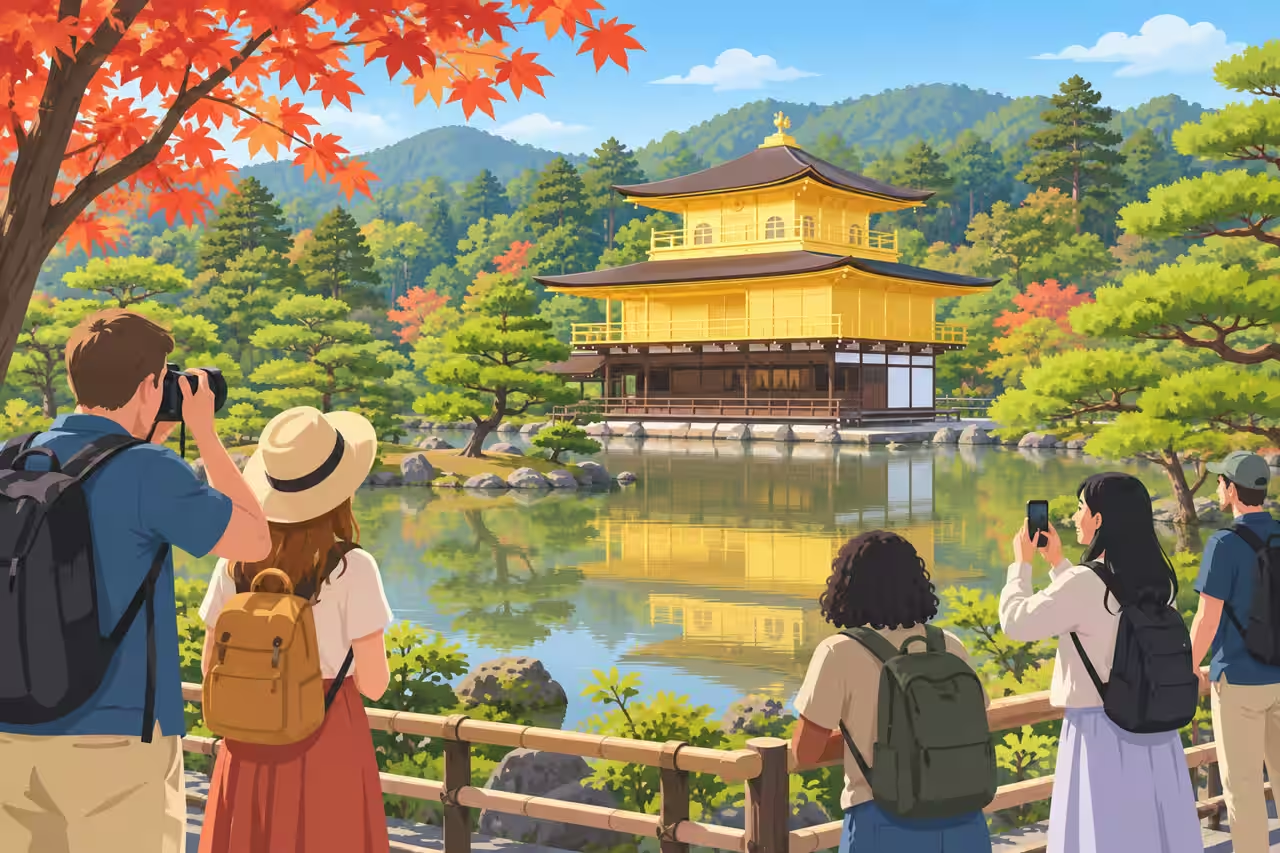
Kinkakuji Temple is the familiar name for Rokuon-ji, a Zen Buddhist temple in Kyoto known for its gold-leafed pavilion and garden. For a first visit, you can take Kyoto City Bus 205 from Kyoto Station to Kinkakuji-michi, then walk to the temple; allow a flexible hour at the grounds as a planning choice, not as an official visit-time estimate. Check transport, admission and visitor rules before setting out, because schedules and special-opening arrangements can change.
1. Kinkakuji Temple hours, tickets and budget
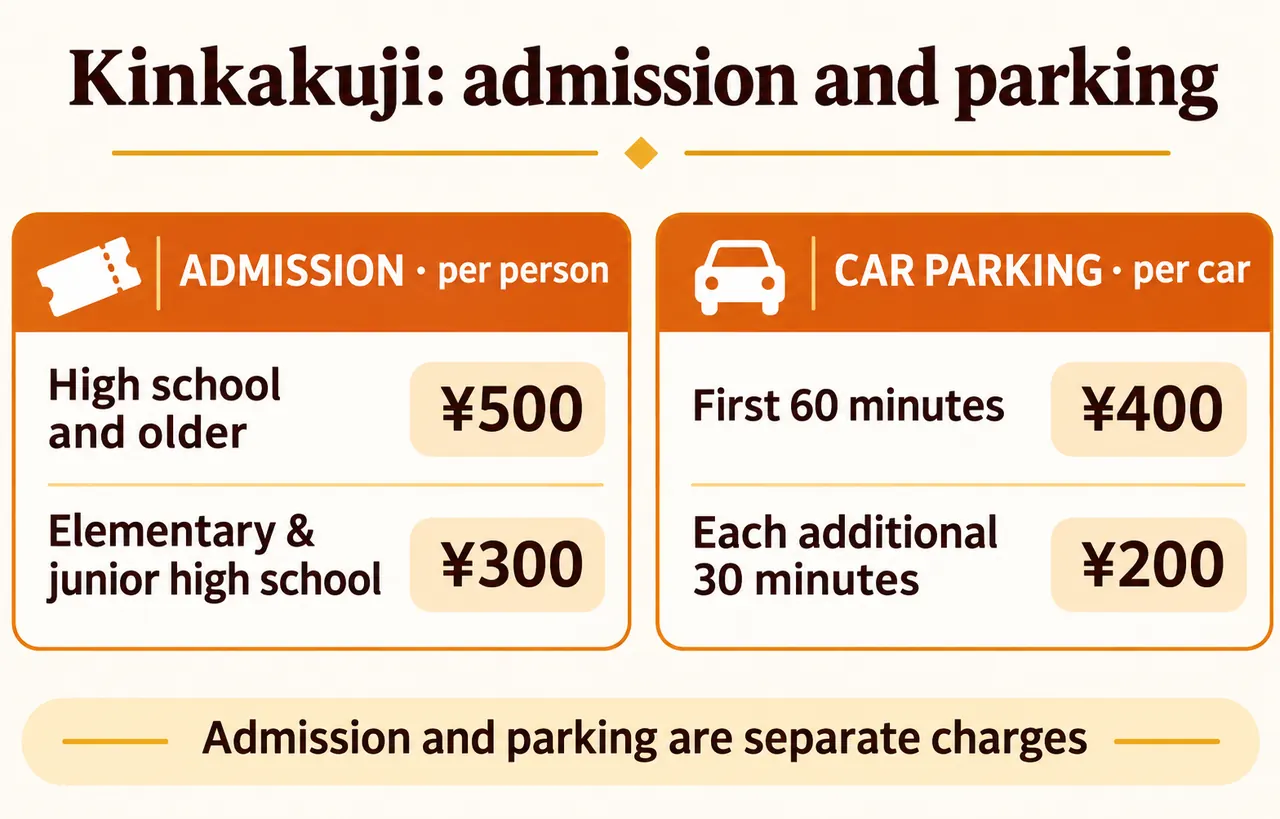
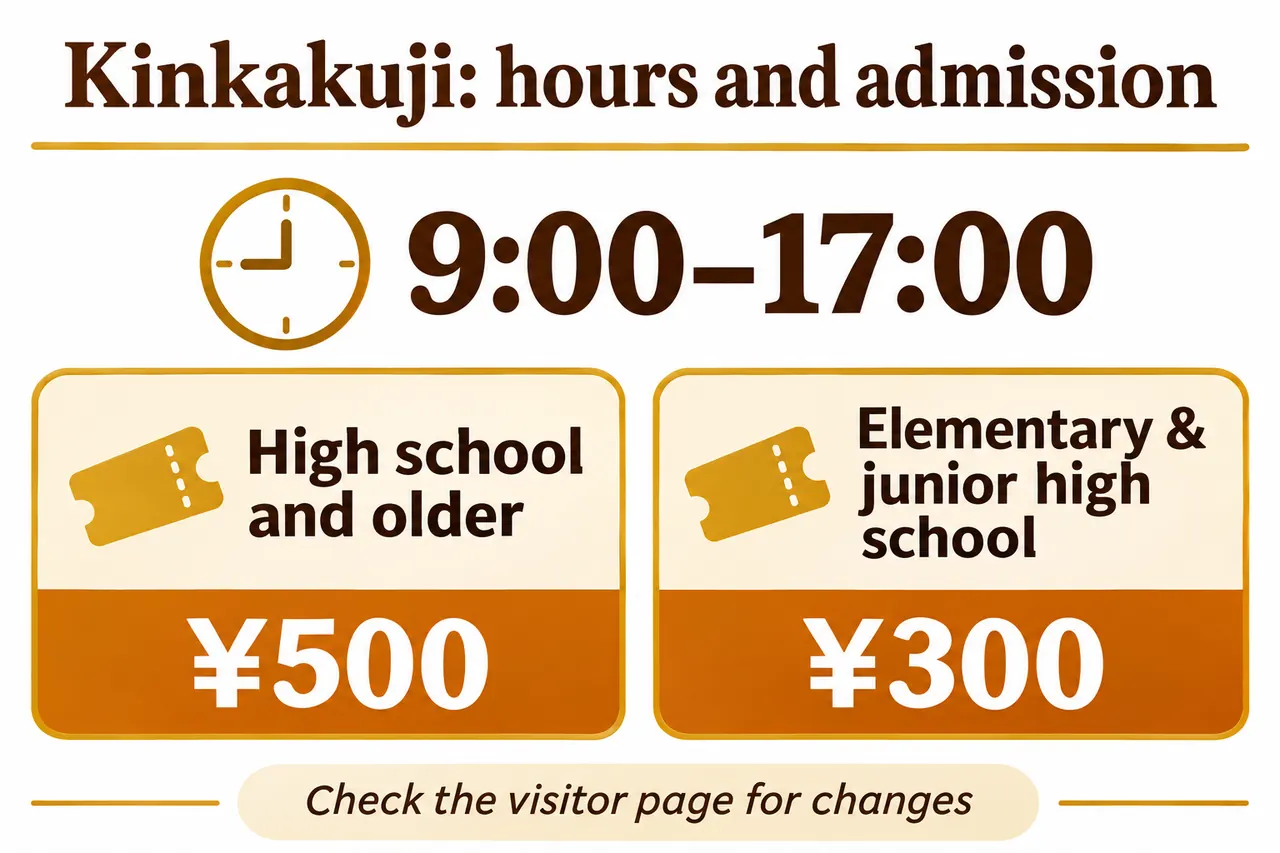
Kinkakuji normally opens every day from 9:00 to 17:00. The admission fee is ¥500 for high-school students and older and ¥300 for elementary and junior-high students; special exhibitions may change hours or fees. These details were checked against the temple’s visitor information on November 3, 2026. Check current hours, admission and access information on the temple’s official visitor page.

| Visitor or item | Published terms |
|---|---|
| Opening | 9:00–17:00, every day |
| High-school students and older | ¥500 |
| Elementary and junior-high students | ¥300 |
| Group discount | None |
| Ordinary-car parking | ¥400 for the first 60 minutes; ¥200 for each additional 30 minutes |
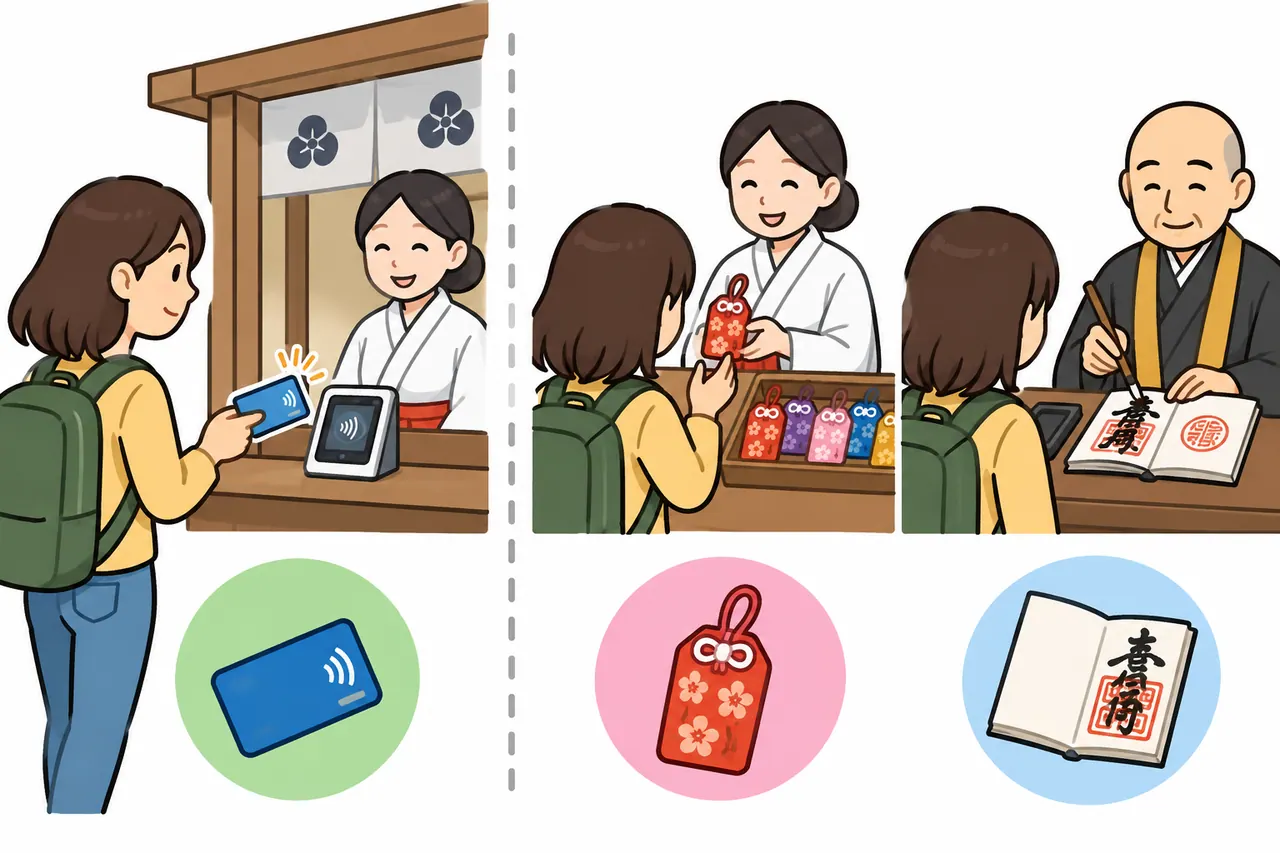
The temple’s Japanese visitor page identifies the ¥500 category as high-school students and older, while its English page calls it “general.” An older school-trip listing gives a different high-school fee, so use the temple’s own current information when budgeting. Admission can be paid in cash or by accepted cashless methods, but cashless payment does not cover items such as protective charms (omamori) or temple stamps (goshuin). See the Japanese visitor information.
Regular online booking, the ticket’s form and cancellation terms are not confirmed by the available visitor information. Check the temple’s official page before purchasing through another seller rather than assuming that advance booking is necessary or available. There is no group discount, but the English and Japanese pages describe the group threshold differently: more than 30 people in English and 30 or more in Japanese, so a group of exactly 30 should ask the temple which guidance applies.
Some visitors with disability certificates, including relevant disability or rehabilitation certificates, may qualify for reduced or free admission. The temple asks visitors to present the original certificate on the day or apply in advance by return postcard; schools and facilities should follow the temple’s application instructions and bring the reply postcard on the day. Confirm the applicable procedure with the temple before travel through its official FAQ.
A simple return-journey budget
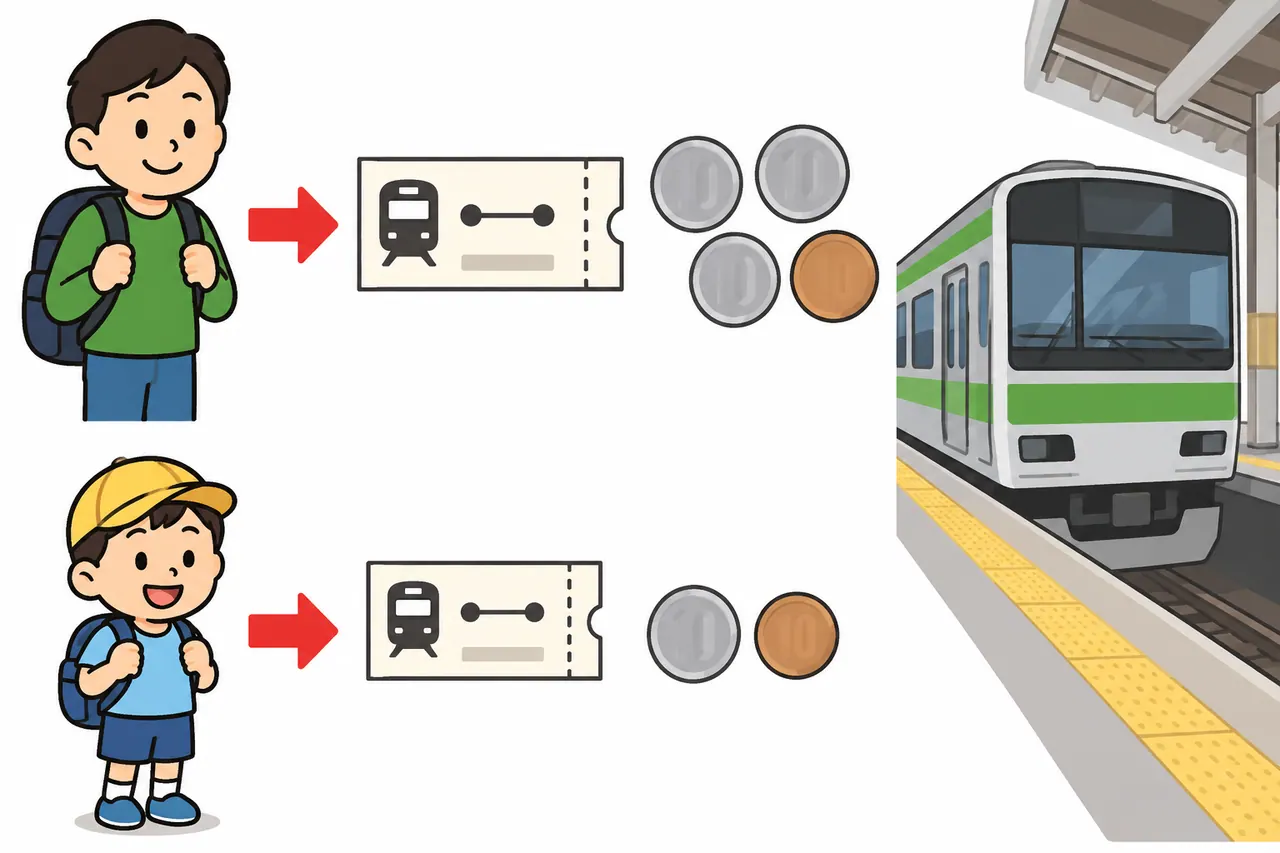
The examples below assume that both bus rides are within an area where the ordinary fixed city-bus fare applies. They exclude food, lodging, souvenirs, parking and any other transport, and they use admission and fare information checked on November 3, 2026. The bus and temple use different child categories, so calculate each traveler’s fares separately.
| Example traveler | Bus to temple | Admission | Bus back | Total |
|---|---|---|---|---|
| Adult bus fares and ¥500 admission | ¥230 | ¥500 | ¥230 | ¥960 |
| Qualifies for child bus fares and ¥300 admission | ¥120 | ¥300 | ¥120 | ¥540 |
The bus child fare generally applies from age six to under 12; a 12-year-old who is still attending elementary school also qualifies. The temple’s ¥300 admission category covers elementary- and junior-high students, so a junior-high student may qualify for the temple discount but not the bus child fare. Sightseeing express buses have different fares, so do not use these examples for those services. Check Kyoto City’s current bus fare information.
2. How to reach Kinkakuji Temple by bus
From Kyoto Station, take City Bus 205 toward Kinkakuji and Kitaoji Bus Terminal, then get off at Kinkakuji-michi and walk to the temple. The city’s timetable and route list are the useful checks before boarding: the timetable shows departures from Kyoto Station, while the route list lets you confirm stops. Check the route 205 timetable and its stop list.
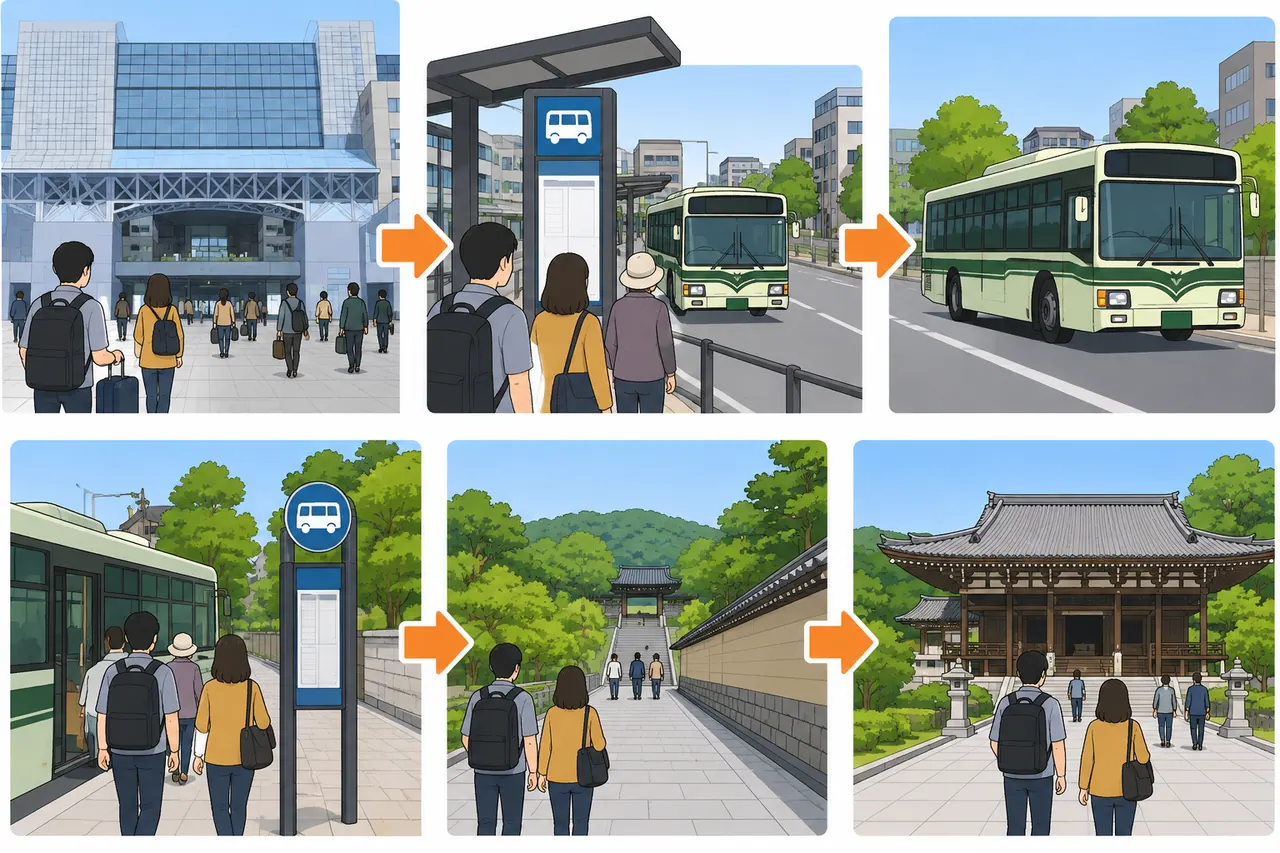
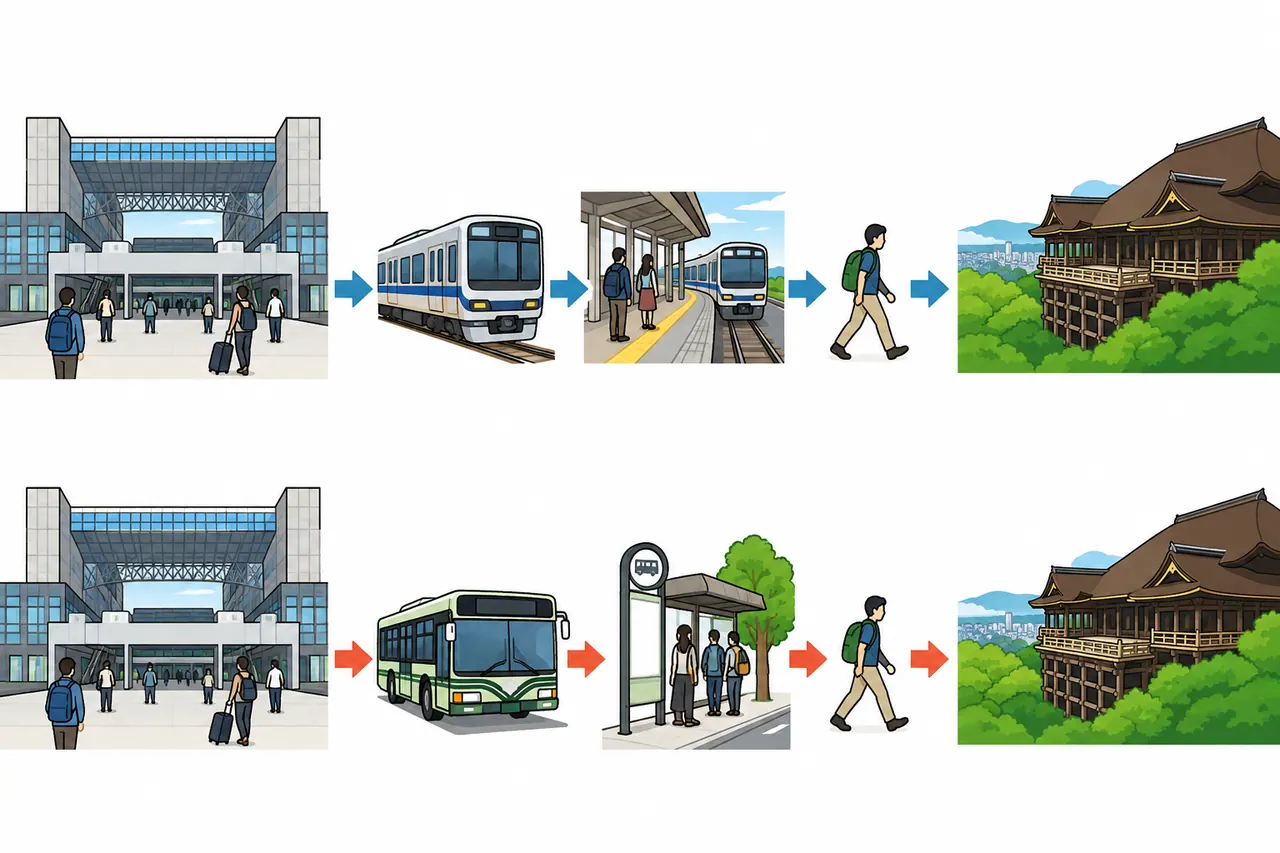
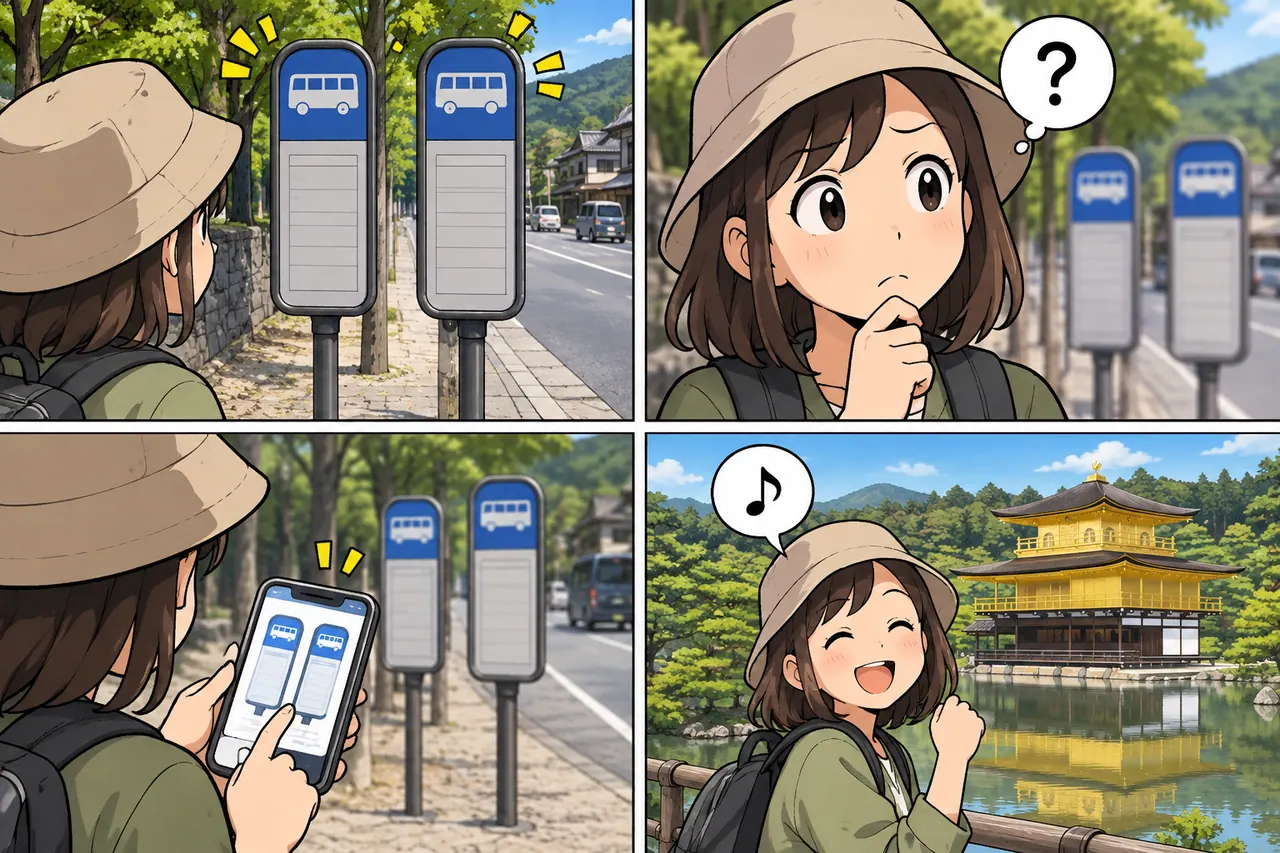
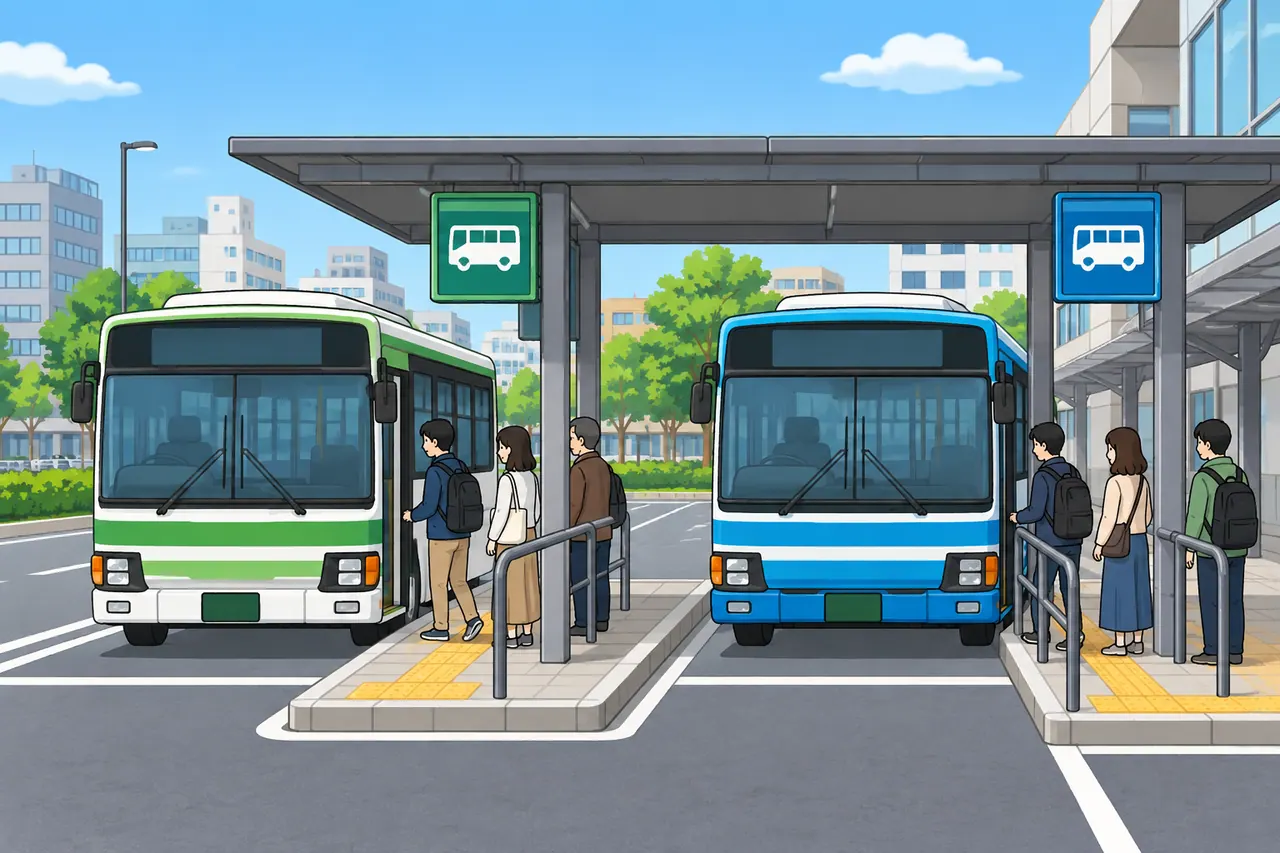
At Kyoto Station, check the bus display for the direction toward Kinkakuji and Kitaoji Bus Terminal, and choose a departure that fits your travel day. On ordinary city buses, board at the rear, then pay at the front as you leave; the stop name to listen or watch for is 金閣寺道, or Kinkakuji-michi. Kyoto City’s bus-riding instructions explain the general boarding and payment process, including the use of transport IC cards, which are prepaid travel cards.
After getting off at Kinkakuji-michi, follow local directions to the temple at 〒603-8361 Kyoto, Kita-ku, Kinkakujicho 1. A school-trip guide updated in 2013 describes the walk from the stop as five minutes, but that is an older estimate, not a guarantee for every walking pace or route. An older access document gives 31–43 minutes by bus from Kyoto Station, but current journey time is unconfirmed and traffic can delay buses.
| Choice from Kyoto Station | Route to check | Cost and time information | Practical trade-off |
|---|---|---|---|
| Direct city bus | 205 to Kinkakuji-michi, then walk | Adult fixed-area fare ¥230; current journey time unconfirmed | No transfer, but traffic can delay the trip |
| Subway plus bus | Karasuma subway line to Kitaoji, then a bus toward Kinkakuji | Current combined fare and journey time unconfirmed | Requires a transfer and a check of bus direction and operating day |
| Car | Drive to the temple parking area | Parking charges apply; road travel time unconfirmed | Check road conditions and parking arrangements |
The direct bus avoids a transfer, but the available information does not establish which option is fastest or cheapest for every journey. Kyoto City lists buses 25, 102, 109, 204, 205 and M1 from the Kitaoji area; the services do not necessarily run on the same days or in the same directions. In particular, the checked route 102 timetable from Funaokayama shows Saturday and holiday trips but no trips in its weekday column, while route 109 is listed for November 21–23 and November 28–29, 2026, as part of the autumn arrangements.
Connections from Shokoku-ji and Ginkaku-ji
From the Shokoku-ji area, check route 59 from Karasuma Imadegawa or Doshisha-mae to Kinkakuji-michi. The temple’s English access information also lists route 102 from Karasuma Imadegawa, but its operating day and direction should be checked in the current timetable before relying on it. From Ginkaku-ji, the temple lists route 204 from Ginkakuji-michi to Kinkakuji-michi; its English page also lists route 102, which serves both stops, but again requires a schedule and direction check.
Autumn 2026 bus arrangements
From October 31 to November 29, 2026, northbound boarding at Kinkakuji-michi is divided by route. Northbound means buses travelling toward Kitaoji, among other northern destinations; routes 25, 102, 109, 204, 205 and M1 use C-1, while routes 12 and 59 use C-2. Check the Kyoto City autumn bus notice for the arrangements and any later changes.
On Saturdays and holidays during that period, from 15:00 to 17:30, travelers on covered routes can transfer to the subway free if they follow the stated procedure. The bus fare is still required: get a boarding certificate at northbound Kinkakuji-michi, ride a covered bus to Kitaoji Bus Terminal and pay the bus fare, then exchange the certificate for a subway ticket at the special window in Kitaoji subway station. Covered routes are 25, 102, 109, 204, 205 and M1, but each route’s operating day still matters.
3. Photo rules, facilities and access needs
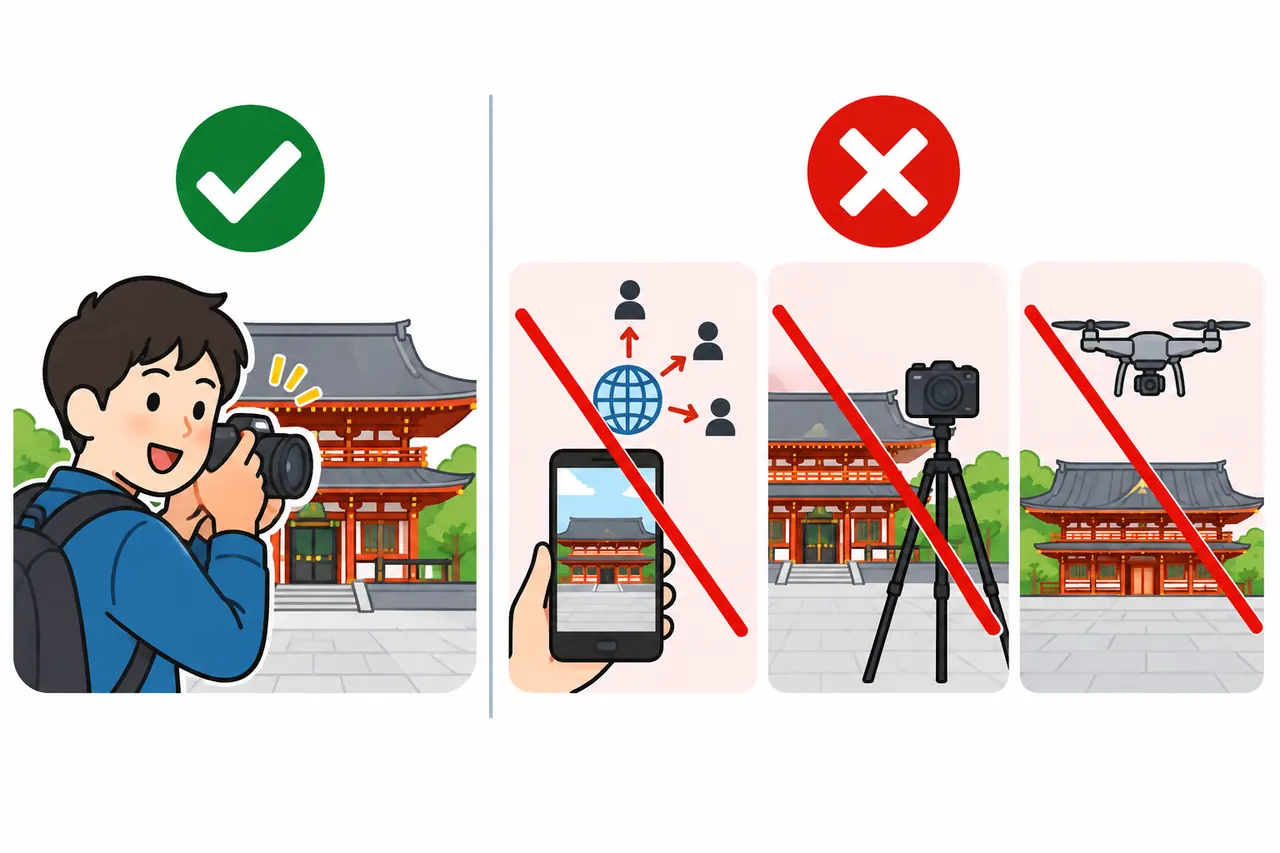
The temple permits small-camera snapshots for personal enjoyment, but prohibits photography and video intended for public sharing, including social media. Business photography, group photos, livestreaming and drone flights are also prohibited, as are interviews with visitors on the grounds. These rules are stated in the temple FAQ; check it before your visit rather than assuming that ordinary visitor photography rules apply.
School-trip and school-activity photographers have a separate application process. The school must request the work, and the required form must arrive by post no later than the day before photography; fax, email and hand delivery are not accepted. The official school-trip photography guidelines give the relevant instructions.
| Need | Temple information |
|---|---|
| Luggage | No lockers or baggage storage on the grounds |
| Packed lunch | No place to eat it in the garden |
| Wheelchair | Available to borrow; reservations are not accepted |
| Toilet | A multi-purpose toilet is available |
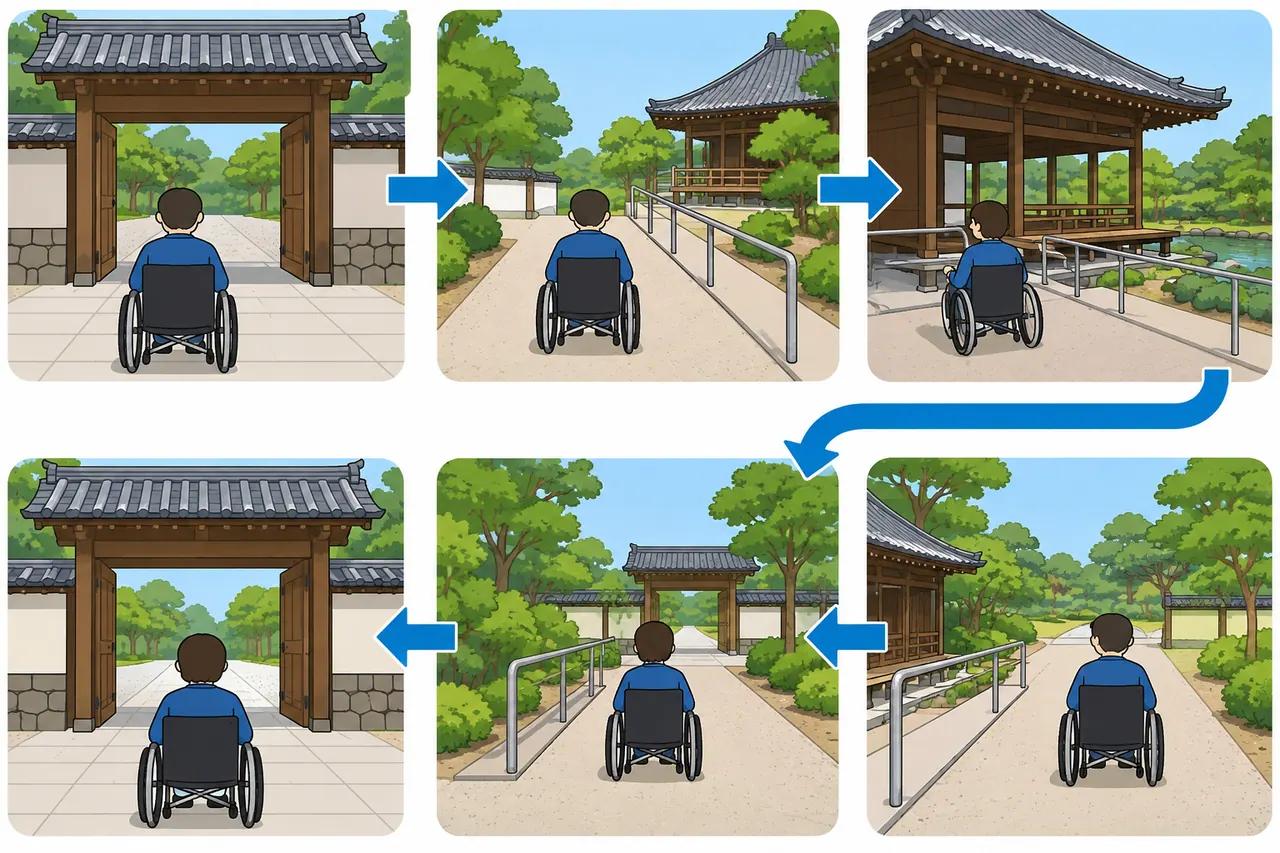
| Wheelchair or stroller route | Reach the pavilion’s side, then turn back before the stairs |
| Assistance dog | Allowed |
| Small dog or cat | Must remain fully inside a suitable cage or carrier |
Wheelchair and stroller users can reach the side of the pavilion without a large step, but stairs lie beyond that point; turn back there and leave through the entrance. A wheelchair is available to borrow, but the temple does not accept reservations for it, so do not plan on a reserved chair. The temple also has a multi-purpose toilet, and assistance dogs are allowed.
A small dog or cat must remain fully inside a suitable cage or carrier, including during photographs; carrying the animal in your arms or in a sling is not permitted. There is no luggage storage or locker on the grounds, so arrange storage before arriving if you are carrying a large bag. Wi-Fi availability is unconfirmed, and the garden has no place to eat a packed lunch.
Parking and contact
The temple parking area is listed as open from 8:40 to 17:10 and has capacity for 250 spaces. Ordinary cars cost ¥400 for the first 60 minutes and ¥200 for each additional 30 minutes; parking is separate from admission. For temple questions, call the Rokuon-ji office at 075-461-0013, noting that the English visitor page says telephone support is in Japanese only.
4. History and architecture of the Golden Pavilion
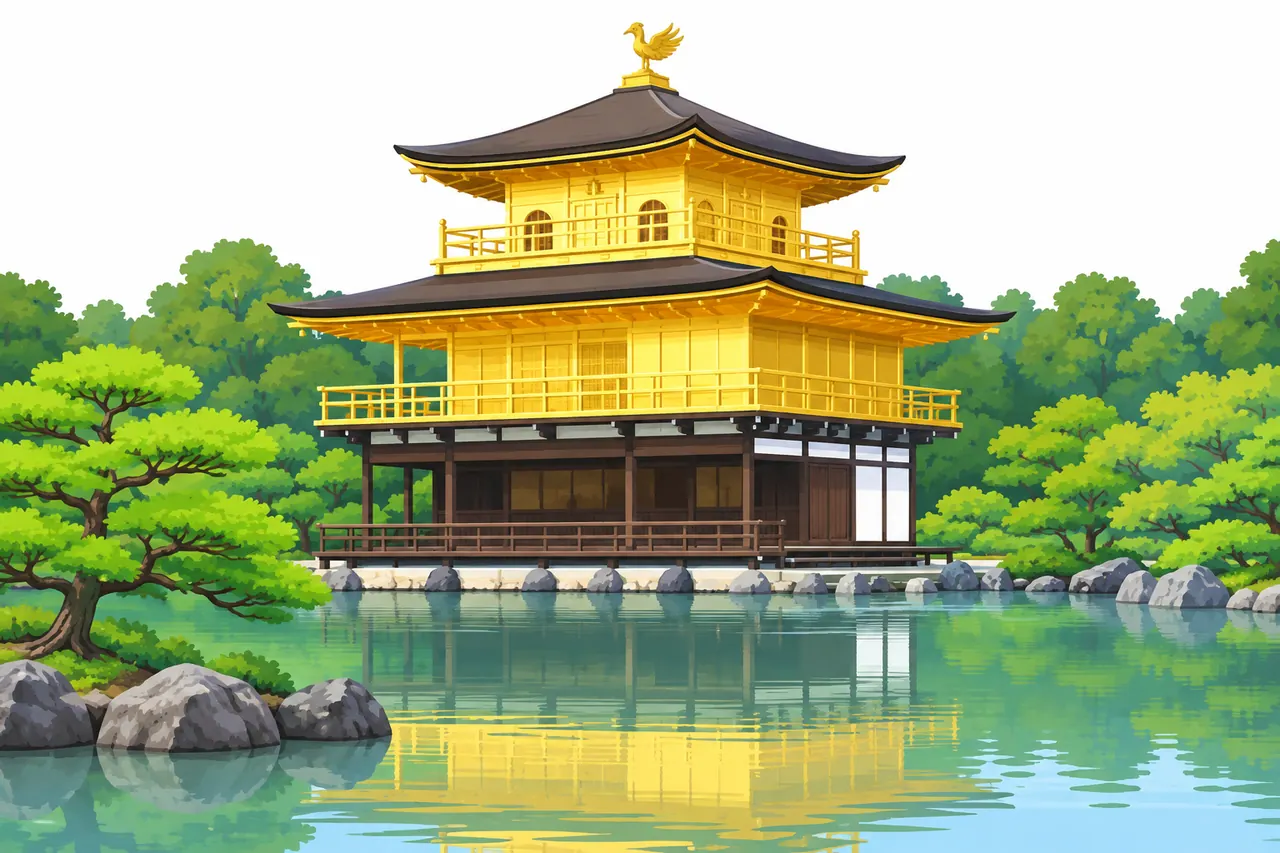
Kinkakuji is the familiar name for Rokuon-ji, a Zen Buddhist temple belonging to the Shokoku-ji branch of Rinzai Zen. “Kinkaku,” or Golden Pavilion, refers to the hall that holds Buddha relics; it is one building within the wider temple grounds. The temple’s official history describes the site and the pavilion’s role in its history of Rokuon-ji.
Ashikaga Yoshimitsu became the third shogun of the Muromachi government; a shogun was a military ruler. After Japan’s two rival imperial courts, each supporting a different emperor, were reunited, Yoshimitsu passed the shogun’s role to Yoshimochi in 1394. In 1397, he began building a villa called Kitayama-dono on land formerly owned by the Saionji family, and Emperor Go-Komatsu visited in 1408, when Yoshimitsu held a feast.
After Yoshimitsu’s death, the villa became a Zen temple named Rokuon-ji. The year of that naming differs between official accounts: the Shokoku-ji history timeline gives 1420, while the Agency for Cultural Affairs gives 1422, so neither date should be presented as undisputed. The temple’s history and the agency’s record offer the two accounts for comparison: Shokoku-ji’s timeline and the Agency for Cultural Affairs record.
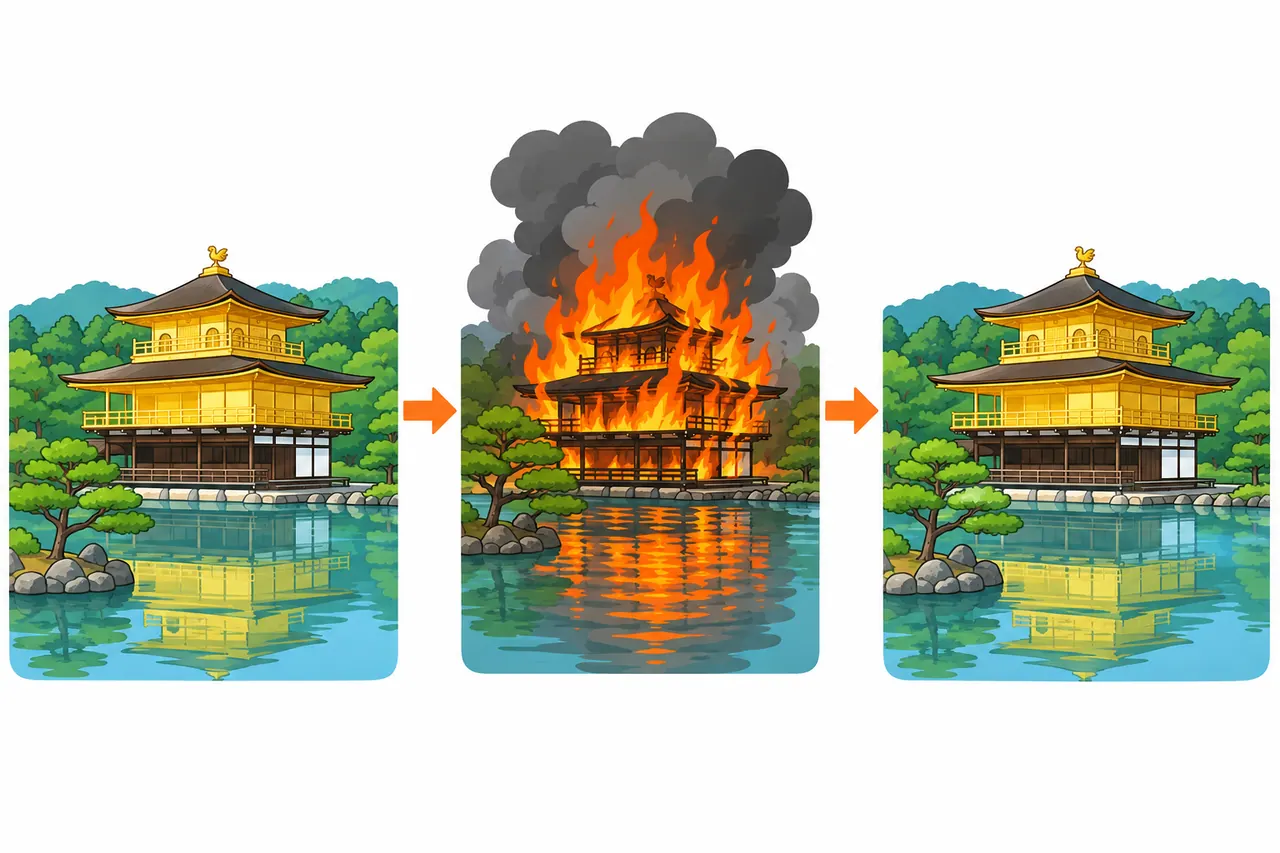
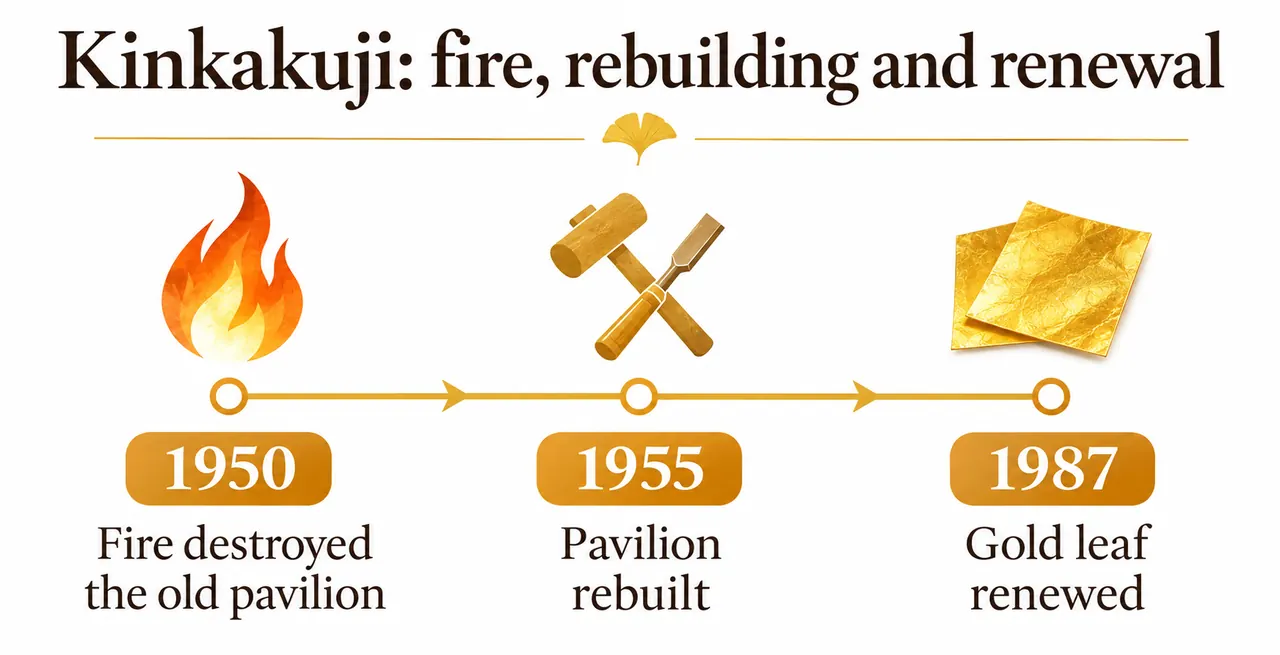
Rokuon-ji was damaged during the Onin War, but the Golden Pavilion escaped being burned. The temple began accepting visitors in 1894; in 1950, the old pavilion was destroyed in a deliberately set fire, and it was rebuilt in 1955 using drawings made during an earlier repair. In autumn 1987, lacquer and gold leaf were renewed and a ceiling painting and statue were restored; in 1994, Rokuon-ji became part of the World Heritage site Historic Monuments of Ancient Kyoto.
The building visitors see today is therefore not the pavilion Yoshimitsu saw. Its reconstruction drew on earlier repair drawings, and later restoration renewed important surfaces and artworks. The temple’s grounds guide and the Agency for Cultural Affairs record document the pavilion’s rebuilding and restoration history.
Three floors, three architectural styles
The pavilion has three floors, each with a distinct style. The temple’s guide describes gold leaf over lacquer on the upper two floors, while the first floor is described in a different style and is not identified as gold-leafed in that account. Its roof is made from thin overlapping boards of sawara wood, and a phoenix stands at the top.
| Floor | Official name | Style described by the temple | Gold leaf |
|---|---|---|---|
| First | Hosui-in | Style used for the homes of court nobles | Not specified in the temple’s description |
| Second | Choon-do | Style associated with warrior houses | Over lacquer |
| Third | Kukyocho | Chinese-style Zen Buddhist hall | Over lacquer |
Gold leaf is gold beaten into very thin sheets, and the lacquer beneath it acts as a protective coating. The contrasting floor styles bring together courtly, warrior-house and Zen Buddhist architectural references in a single building. The temple’s grounds guide is the source for the floor names, materials and roof details.
5. The garden, views and seasonal planning
Kyokochi pond is the centre of the garden, with named features including Ashiwara-jima island and Hatakeyama stone. The grounds also use borrowed scenery: this means incorporating a landscape outside the garden into its view, with Mount Kinugasa forming the background here. The Agency for Cultural Affairs record describes the borrowed scenery and the garden’s composition.
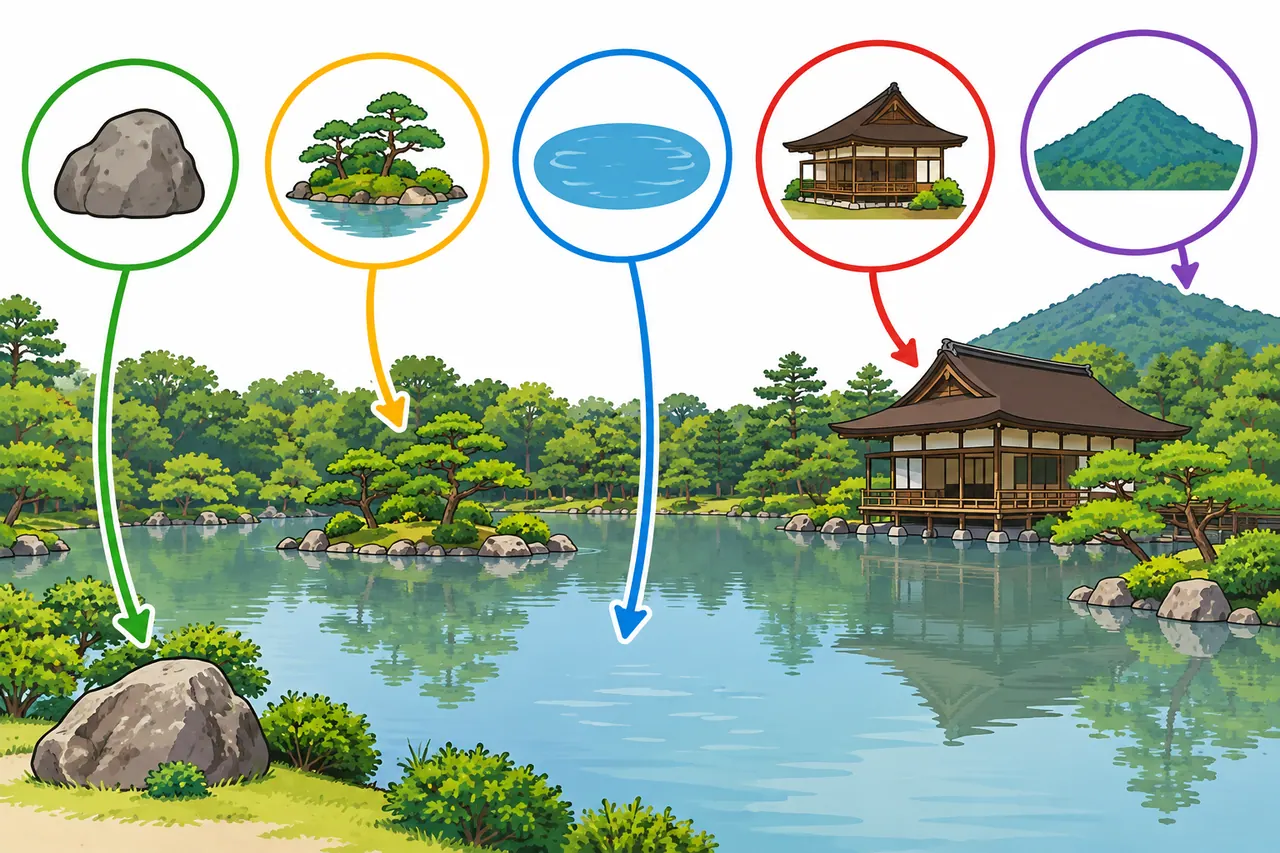
| Feature | What to notice |
|---|---|
| Kyokochi | The garden’s central pond |
| Ashiwara-jima | An island in the pond |
| Hatakeyama stone | A named stone in the garden |
| Mount Kinugasa | The background used as borrowed scenery |
| Sekkatei | An Edo-period teahouse |
Sekkatei’s name is linked to the beauty of evening sunlight on the pavilion. The cultural agency describes the garden as modeled on Saiho-ji, and the garden has two official heritage titles: Special Historic Site and Special Place of Scenic Beauty. These designations recognize its historic and scenic value; see the garden heritage record.
The temple’s home page provides a live image that updates every three minutes, but it shows a view from one camera rather than measuring the whole garden or its crowd level. It can help you see a recent view before leaving, but it cannot establish conditions at every point on the grounds. The temple’s official home page is the place to check that image.
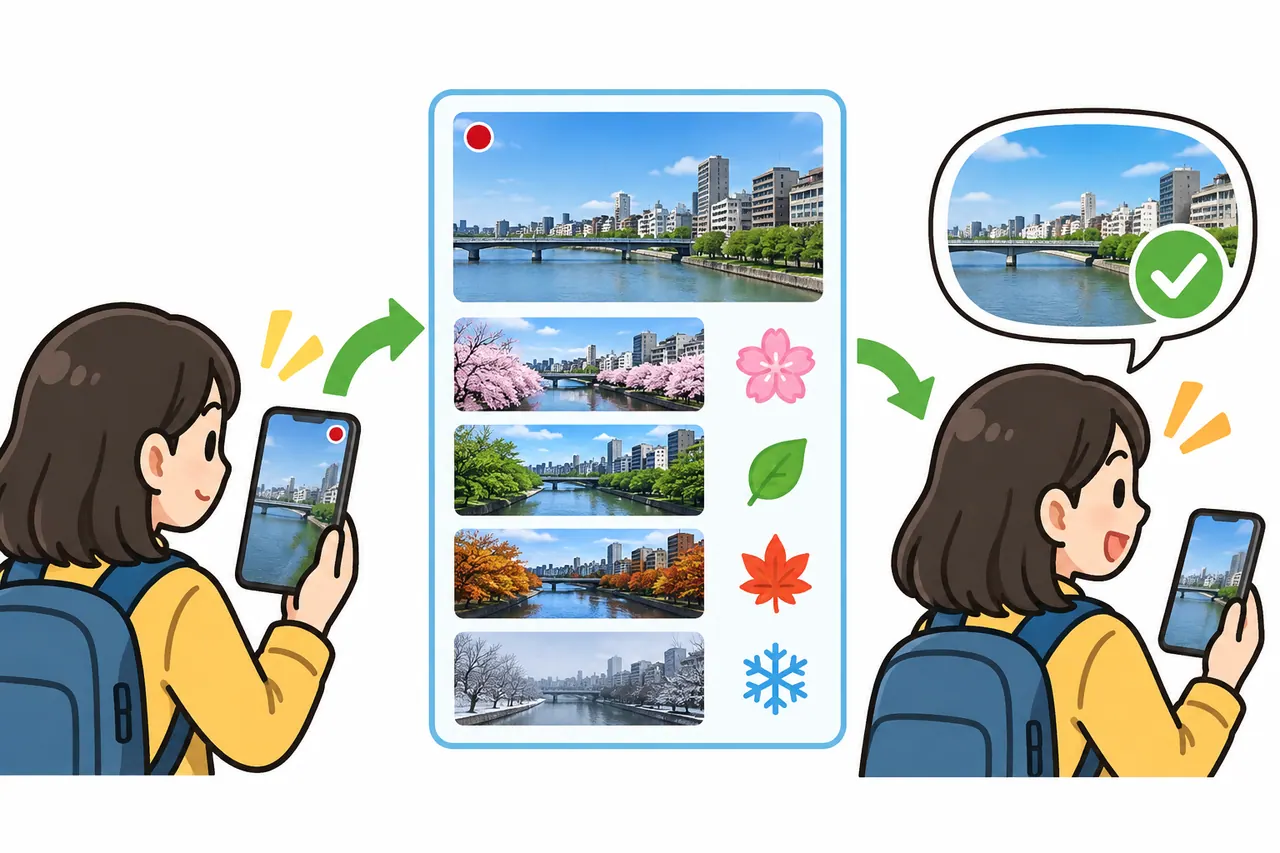
The quietest visiting hour, snow timing and current autumn-leaf timing are not confirmed here, and a past seasonal image cannot predict conditions on your travel date. Rain can change how a view appears, but it does not change the need to check access and visitor rules; bring suitable protection and allow flexibility in your journey. The Kyoto City morning-visits guide does not list Kinkakuji, and a special early-morning opening is unconfirmed, so do not assume that the temple opens before its published 9:00 start.
The existing social examples associated with this guide depict individual past visits: @mkxpresar shows slow views of the pavilion across the pond, @sandrahinds.hn shows pavilion and garden images, and @karankc33 opens a photo series with a rainy-day view. Their publication dates are unverified, so they do not establish current weather, seasonal conditions or permission to film or publish. A CoolPlaces autumn walk and a Deep Japan By the Last Samurai historical discussion likewise show or discuss past visits rather than providing current visitor notices.
6. A flexible day plan and onward options
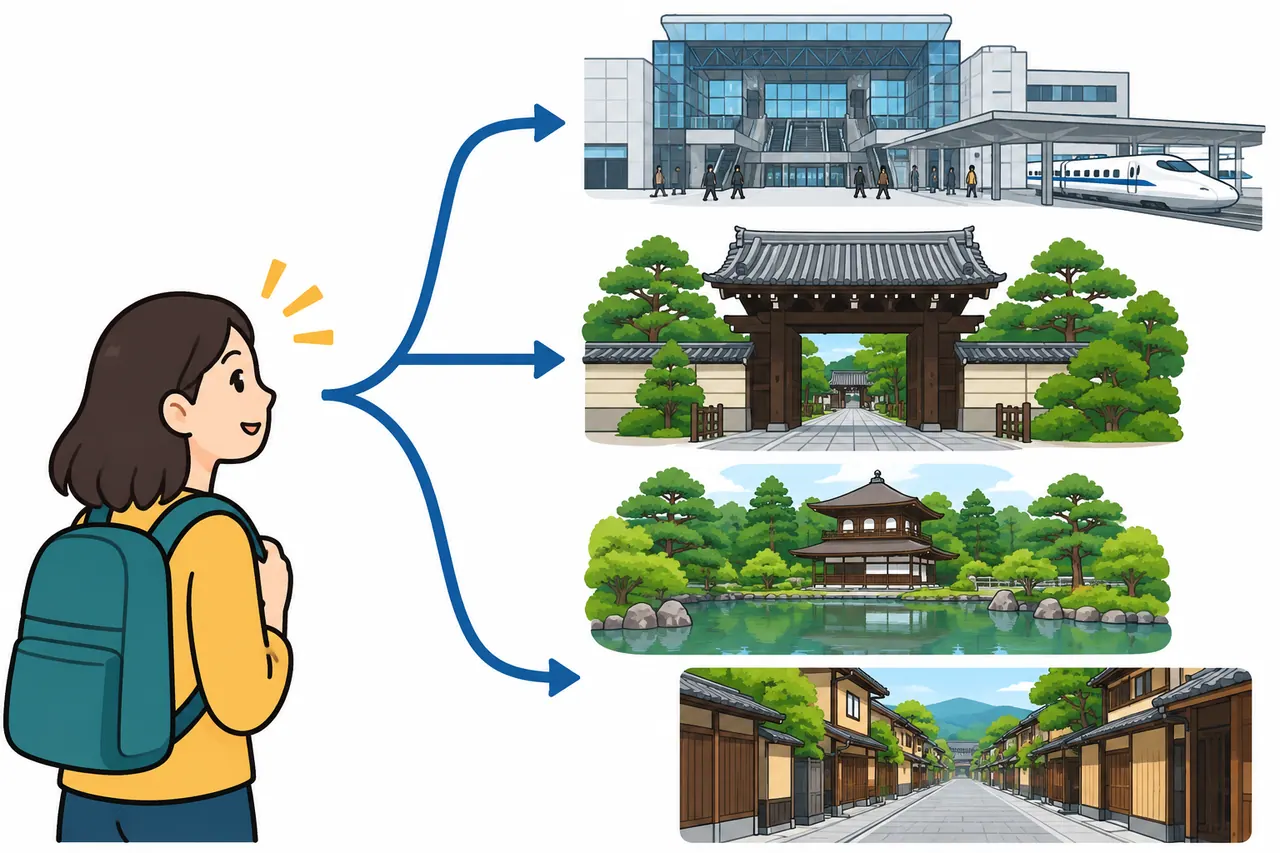
A flexible 10:00–11:00 visit block is a practical planning example, not an official estimate of how long the temple takes to visit. The example assumes travel from Kyoto Station by route 205 and that you can walk through a garden with stairs; wheelchair and stroller users should instead plan for the turnaround point described above. Set your departure time using the current timetable and allow for traffic, walking pace and your group’s needs.
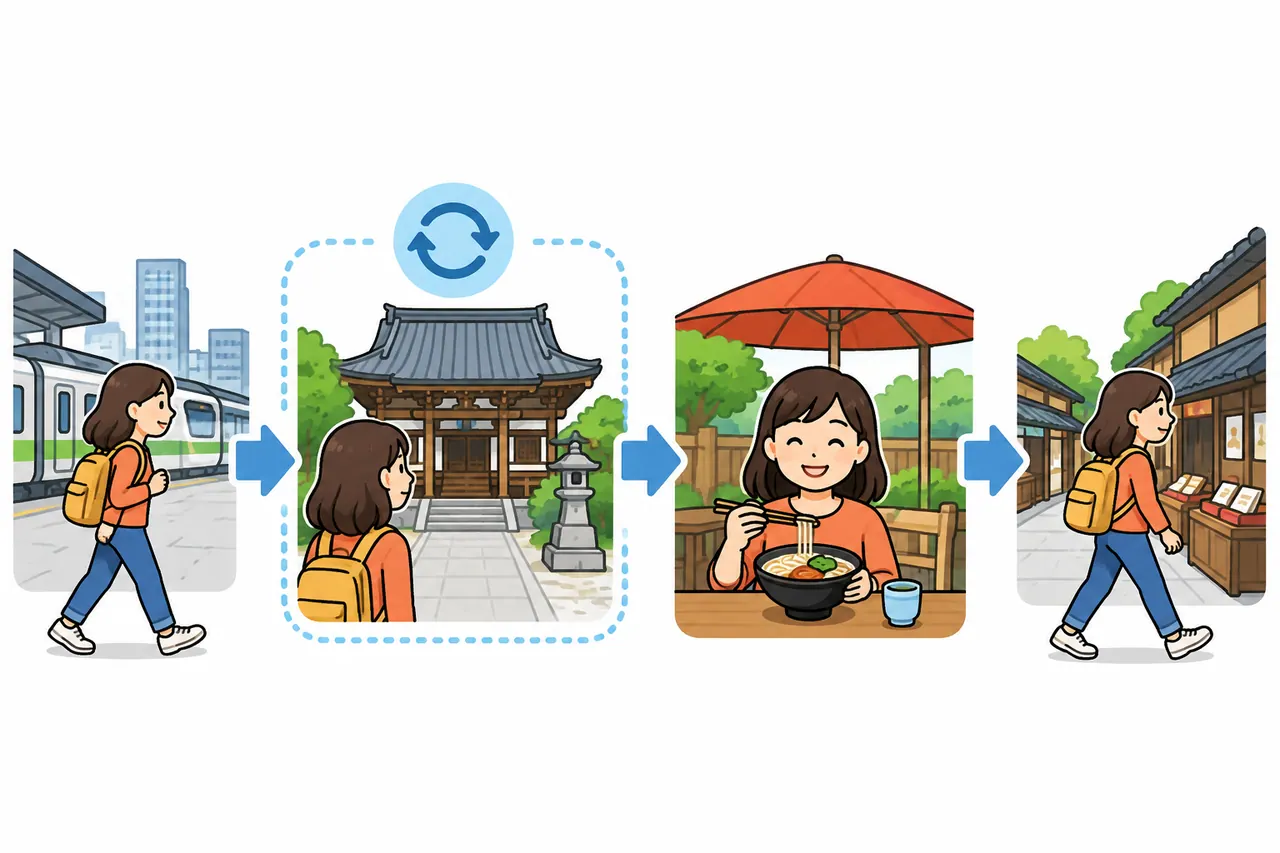
| Stage | Suggested plan |
|---|---|
| Before departure | Check temple notices, weather and the route 205 timetable |
| Kyoto Station | Choose a departure that gives you room to reach the temple around 10:00 |
| Around 10:00 | Arrive at Kinkakuji Temple |
| 10:00–11:00 | Keep this hour flexible for the pavilion and garden |
| After the visit | Eat or rest outside the grounds |
| After the break | Return to Kyoto Station or choose another stop |
There is no place in the garden to eat a packed lunch, so plan a meal or break outside the grounds. The Kyoto City Tourism Association advises travelers to account for crowding and traffic delays on buses, and the city recommends the Pokeloke plus+ bus-information tool to help avoid crowded buses. Neither the sample arrival nor the one-hour visit block is a promise about journey or sightseeing time.
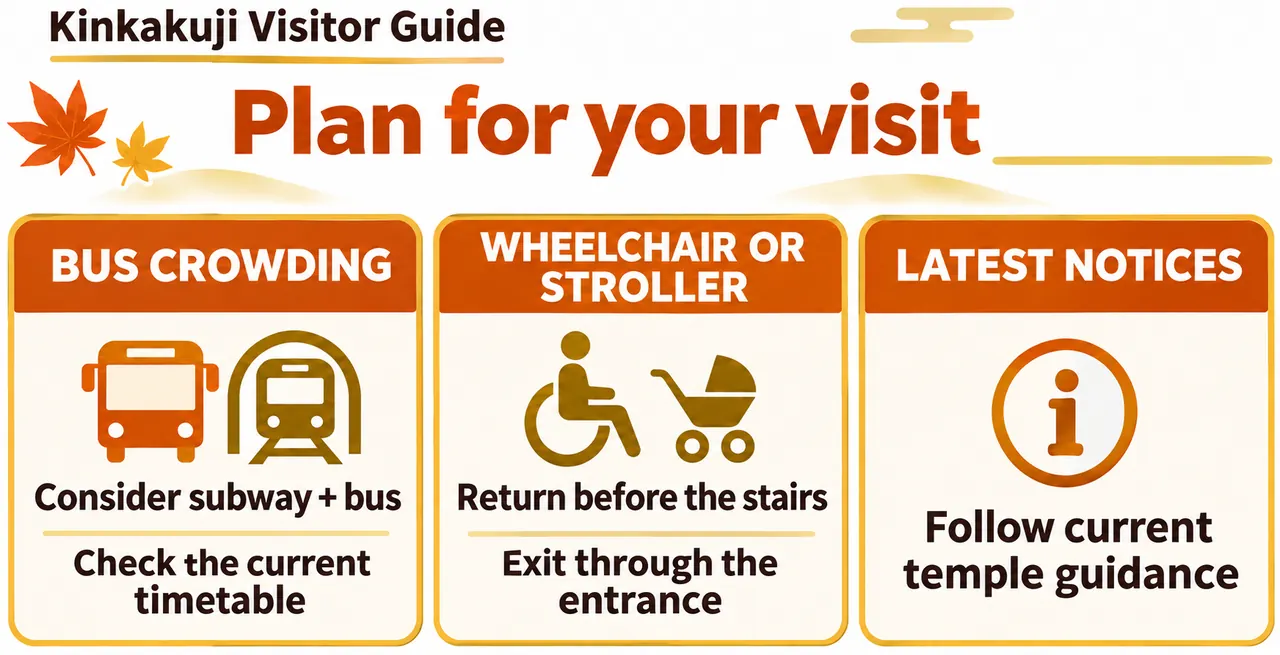
| If… | Consider… |
|---|---|
| Rain is forecast | Check weather and temple notices, bring suitable protection and keep the journey flexible |
| Your bus looks busy | Check current bus information and consider subway plus bus |
| You use a wheelchair or stroller | Turn back before the stairs and exit by the entrance |
| You travel with children | Check each person’s temple admission and bus-fare category |
| The temple announces a change | Follow the current official notice |
For another stop, the temple lists bus connections between Kinkakuji-michi and the Shokoku-ji area, including route 59 and, in its English guidance, route 102. It also lists connections between Kinkakuji-michi and Ginkakuji-michi, including route 204 and, in its English guidance, route 102; check each service’s current direction and operating day. These listings explain connections from those areas to Kinkakuji, not a guaranteed return journey or travel time.
You can also leave the next destination undecided until after a break, then check current transport and the next place’s hours. Return to Kyoto Station if that best fits onward travel, but check the bus or subway connection for the time you need to travel. Before leaving, save the temple’s Japanese name and address, confirm your bus direction and payment method, and review the current photo rules.
7. Kinkakuji Temple FAQ
These answers summarize the temple’s published visitor information and Kyoto City transport details checked on November 3, 2026. Special exhibitions and transport arrangements can change, so use the official pages linked below for the latest information. The flexible planning suggestions are editorial guidance, not official estimates of visit duration.
What are Kinkakuji’s hours and admission fees?
The usual opening hours are 9:00–17:00 every day, and admission is ¥500 for high-school students and older and ¥300 for elementary- and junior-high students. Special exhibitions may change the hours or fees, so check the official visitor page before travelling. The temple’s English and Japanese pages use slightly different wording for the ¥500 category, but the Japanese page specifies high-school students and older.
How do I get to Kinkakuji from Kyoto Station?
Take City Bus 205 toward Kinkakuji and Kitaoji Bus Terminal, get off at Kinkakuji-michi and walk to the temple. Check the route 205 timetable for departures and the route stop list before boarding. Bus travel time varies, and an older estimate of 31–43 minutes is not a guarantee for a current journey.
How much should I budget for admission and buses?
For a traveler paying ¥500 admission and two ordinary adult fixed-area bus fares of ¥230 each, the total is ¥960 before food or other expenses. A traveler who qualifies for both ¥300 temple admission and ¥120 child bus fares would pay ¥540 for the same two bus rides and admission. Check the child-fare rules separately: the temple’s student categories and the bus’s child category are not the same.
Can I take photos or post them on social media?
The temple permits small-camera snapshots for personal enjoyment, but prohibits photography or video intended for public sharing, including social media. It also prohibits business photography, group photos, livestreaming, drones and interviews with visitors on the grounds. Read the temple FAQ for the current rules rather than assuming that a photo taken for personal use may also be posted.
Is Kinkakuji accessible by wheelchair or stroller?
A wheelchair or stroller can reach the side of the pavilion, but stairs beyond that point mean visitors should turn back and exit through the entrance. The temple has wheelchairs available to borrow but does not accept reservations, and it provides a multi-purpose toilet. Check the official FAQ for these and other access details before your visit.
Is there luggage storage or a place to eat a packed lunch?
There are no lockers or baggage-storage facilities on the temple grounds, so arrange storage before you arrive if you have a large bag. The garden has no place to eat a packed lunch, so plan to eat or rest outside the grounds. Wi-Fi availability is unconfirmed.
How long should I allow for a visit?
The temple does not provide a confirmed visit-duration estimate in the information used here. Allowing a flexible hour is one way to plan, but it is an editorial suggestion rather than an official duration or a measured average. Add time for your journey, weather, walking pace and the needs of your group.
Does Kinkakuji open early in the morning?
The temple’s published regular hours begin at 9:00, and a special early opening is unconfirmed. Kyoto’s morning-visits guide does not list Kinkakuji, so do not assume that it is open for early visits. Check the temple’s current official notices before planning around an earlier arrival.


)](https://i.ytimg.com/vi/3J5VSdqPW4Y/mqdefault.jpg)


)](https://i.ytimg.com/vi/4NOXJydIPKk/mqdefault.jpg)