
Kansai business jet terminal: Tamayura planning guide
Contents
- 1. 1. Location and purpose of Premium Gate Tamayura
- 2. 2. Who the facility serves and who arranges what
- 3. 3. Facilities and published service scope
- 4. 4. Reservation and operator steps
- 5. 5. Reaching Terminal 2 and planning transfers
- 6. 6. Customs, CIQ, and passenger preparation
- 7. 7. What to include in an enquiry or trip brief
- 8. 8. Frequently asked questions
Premium Gate Tamayura is Kansai International Airport’s dedicated business-jet facility, located in the domestic section of Terminal 2. It supports both domestic and international business-jet use and has a lounge, dedicated security screening, and dedicated customs, immigration, and quarantine facilities. These facilities provide a specific place and process for business-jet passengers, but they do not remove the need to arrange the aircraft, passenger procedures, and ground transport.
One distinction is especially important when planning: the facility is described as operating 24 hours, while its reception contact hours are 09:00–22:00 Japan time. An application is not a confirmed reservation; the airport says a reservation is established after confirmation by email and telephone. The information in this guide was checked against the cited official sources on 5 November 2026.
1. Location and purpose of Premium Gate Tamayura
Premium Gate Tamayura is inside the domestic section of Terminal 2 at Kansai International Airport. That location is relevant when arranging a driver, meeting a handling contact, or planning a connection with another flight. Do not assume that an instruction to meet at Kansai Airport means a meeting point in Terminal 1 or at a general commercial-terminal entrance.
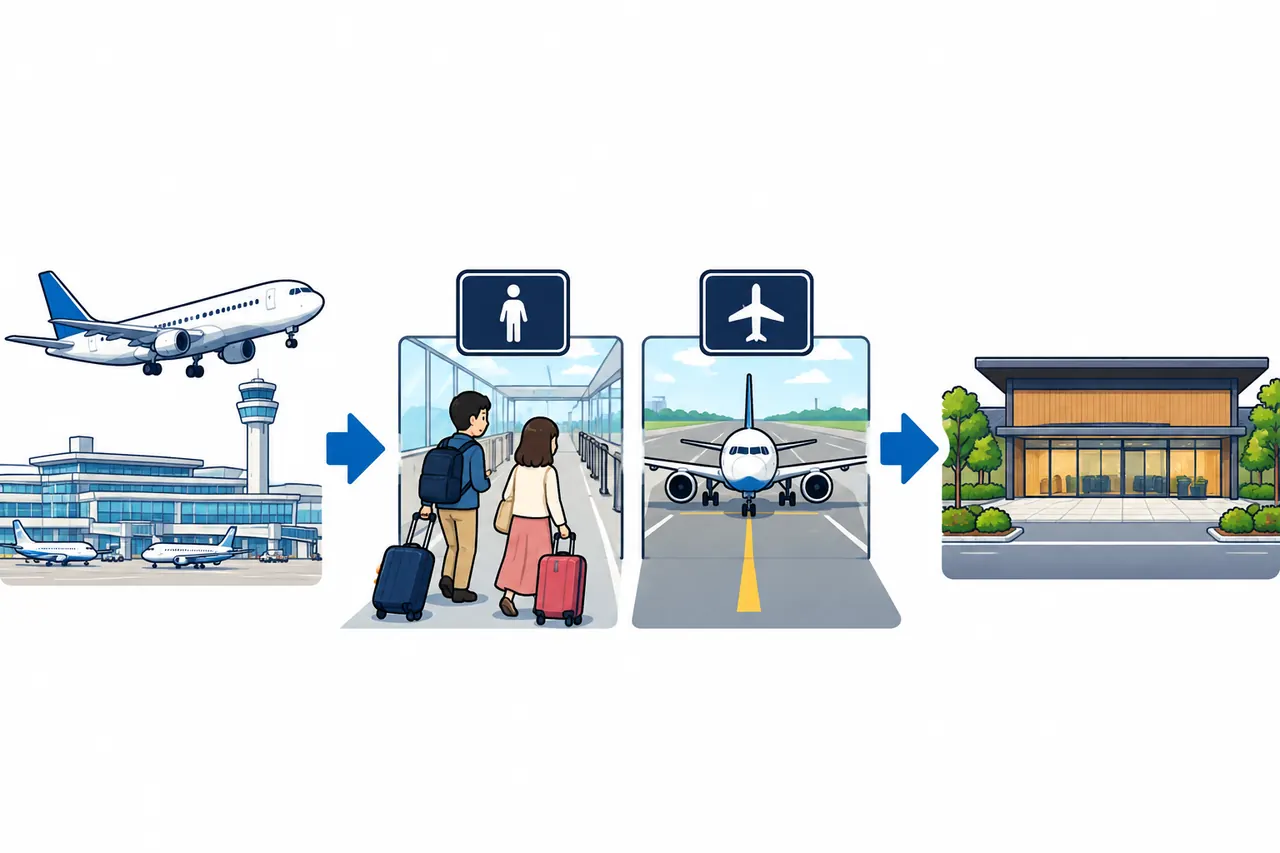
The airport identifies the facility as serving both domestic and international business-jet users. Its dedicated setting includes passenger facilities and processing areas, but it is not a substitute for arranging the flight itself or the ground handling needed to operate it. For a particular trip, ask the handling contact to confirm where passengers should go and how they will be directed between the facility and the aircraft.
The airport describes the facility’s area as approximately 320 square metres. Its English-language facility guide specifies that the stated area excludes corridors, so the figure should not be treated as a measurement of usable lounge space. The published area gives a sense of the facility’s scale, but does not establish how many passengers can be accommodated for a particular visit or whether a meeting room is available at a requested time.
The dedicated location also matters if a commercial-airline passenger is meeting a business-jet passenger. A public terminal, the dedicated facility, and the aircraft are separate points to account for in the itinerary. Confirm the meeting arrangement with the handler instead of relying on a general airport map or a commercial terminal’s usual passenger flow.
For visual context, Walkerscape’s Terminal 2 walking tour shows the public terminal area named in the facility’s location. It is useful for understanding the general terminal setting, but it does not show that the creator used Tamayura. Attractions Atlas shows Terminal 1’s departure hall, while TravellingTech’s video shows Terminal 1 international departures; neither should be mistaken for the Tamayura interior or for a service included with a facility reservation.
2. Who the facility serves and who arranges what
The official facility information describes Tamayura as available for domestic and international business-jet use. The facility application is common to domestic and international use, while the airport also provides a separate form for international flight-operation information. That distinction is practical: a passenger’s facility arrangements and the aircraft operator’s operating paperwork are related parts of a trip, but they are not the same application.
A passenger or trip coordinator can begin by asking about facility use and the passenger group. The aircraft operator or its handling contact must separately address aircraft-operation arrangements. Kansai Airports’ business guidance says that operators need a contract with a ground-handling company, and lists aircraft-operation paperwork separately from facility-use paperwork.
The airport’s operator guidance includes submission of an operating plan to the aviation authority and notification concerning use of Kansai Airport’s landing and take-off facilities. For aircraft with a maximum take-off weight of 5,700 kg or more, the guidance also includes a pledge concerning measures to prevent falling objects and refers to AIC032/20. These are operator-specific requirements to check through the operator or handler; passengers should not assume that a Tamayura application covers them.
The distinction between the facility and the operator is useful when requesting a complete itinerary or quote. A facility charge, aircraft operation, ground handling, and a car transfer are different subjects to clarify. The official information cited here does not provide a current facility price, application deadline, or a combined price for those services.
For current facility information and the application process, use the official Tamayura page. For operator-related guidance, use Kansai Airports’ business aviation information. If your trip includes an international flight, ask the coordinator which information must be submitted on the international flight-operation form as well as the facility application.
3. Facilities and published service scope
The airport lists a lounge, a meeting room, dedicated CIQ facilities, a dedicated security checkpoint, a smoking room, and two toilets. CIQ means customs, immigration, and quarantine. Having dedicated CIQ facilities describes the setting for the relevant procedures; it does not waive those procedures or establish how long they will take for a particular flight.
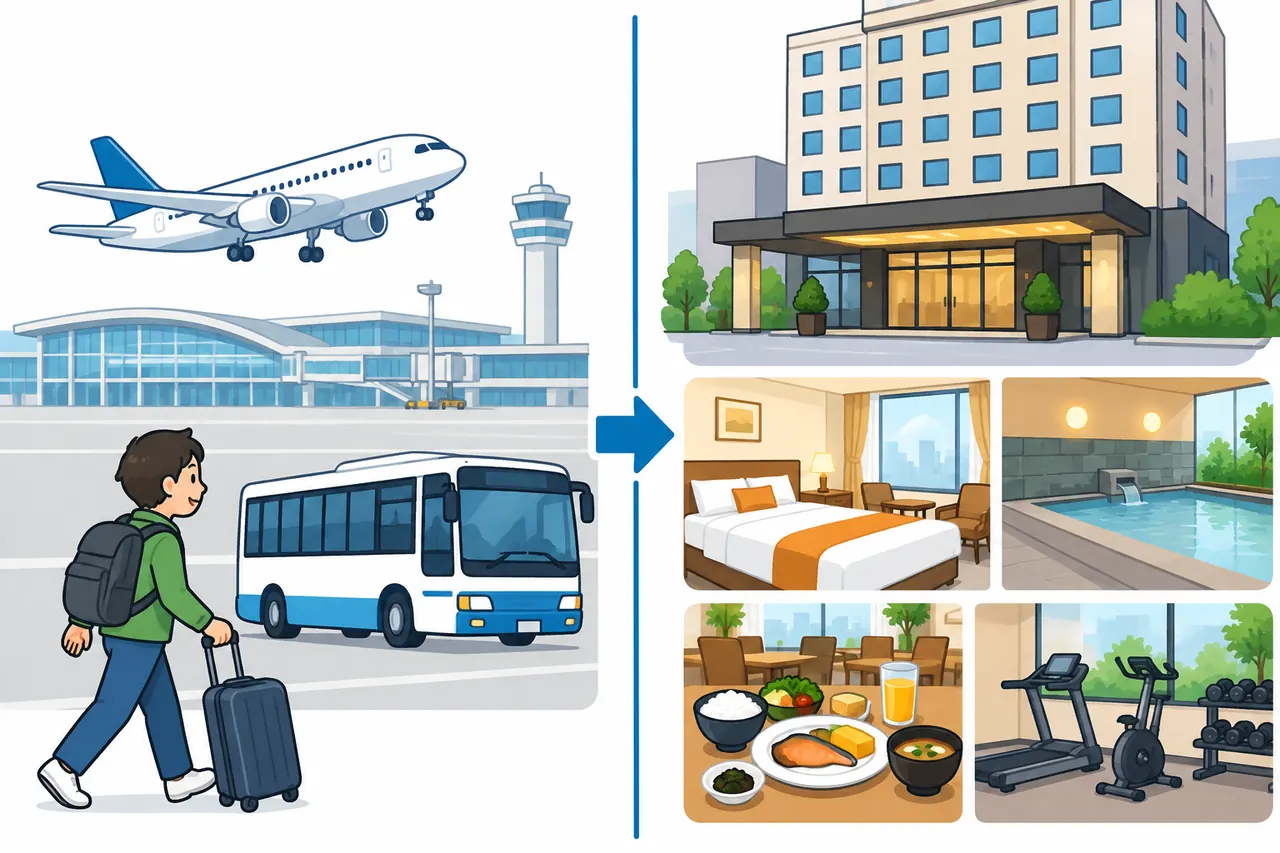
The English-language facility guide lists free Wi-Fi, newspapers, and magazines. The airport also describes drinks and light snacks as self-service. These published amenities can help passengers plan what to expect in the facility, but they do not establish a specific catering menu, additional catering options, or a price for a visit.
The meeting room is a listed facility, not a guarantee that it will be available for a particular time or group. If a meeting is important to the itinerary, ask about availability when contacting the airport or the handler. Similarly, the published information does not specify whether a particular work setup or connectivity requirement can be met, so describe any essential requirements rather than assuming the listed Wi-Fi will meet them.
| Published item | What the official information says | What to confirm for your visit |
|---|---|---|
| Lounge | A dedicated lounge is provided | How it fits the passenger group’s planned use |
| Meeting room | A meeting room is listed | Availability at the intended time |
| Refreshments | Drinks and light snacks are self-service | Whether any additional catering is available |
| Connectivity and reading | The English guide lists free Wi-Fi, newspapers, and magazines | Any specific work or connectivity requirement |
| Passenger processing | Dedicated CIQ facilities and security screening are provided | The sequence for the particular passenger group and flight |
| Facility area | Approximately 320 m²; the English guide excludes corridors | Whether the published space suits the planned use |
| Facility operation | Described as operating 24 hours | Whether the requested use is accepted and confirmed |
| Reception contact | 09:00–22:00 Japan time | When an enquiry will be handled |
This table summarizes published service scope, not a price list or service guarantee. The airport information used here does not state a current facility fee, a catering price, or a booking deadline. Ask for the terms that apply to the requested date and service rather than treating the listed facilities as proof that every request is included.
4. Reservation and operator steps
The airport describes a process in which an application is submitted and the facility checks whether it can accept the request. Reservation is established through confirmation by email and telephone. Sending an application should therefore be treated as the start of the process, not evidence that the visit has been approved.
Begin with the facility application available through the official Tamayura page. The same facility application is used for domestic and international use. Follow the airport’s instructions for the application, then wait for the acceptance check and the email and telephone confirmation described by the airport.
After the reservation is established, the airport says that necessary information for CIQ and other arrangements is shared. International flights also have a separate flight-operation information form. Ask the coordinator which details are required, where they should be submitted, and whether any additional operator paperwork applies; the facility application alone is not a substitute for aircraft-operation notifications.
A practical sequence is:
- Make the facility enquiry. Use the airport’s Tamayura page to access the application and contact information. Reception contact hours are 09:00–22:00 Japan time, even though the facility is described as operating 24 hours.
- Wait for the acceptance check. The airport says it checks whether it can accept an application. Do not treat submission as confirmation.
- Keep the confirmation. Reservation is established through email and telephone confirmation. Retain those details with the rest of the trip arrangements.
- Provide the relevant follow-up information. After reservation is established, share the CIQ and other required information through the process given by the airport or coordinator.
- Check aircraft arrangements separately. The operator or handling contact should verify the operating plan, airport facility-use notifications, and any other applicable aircraft paperwork through the airport’s business aviation guidance.
- Confirm ground arrangements. Agree on the meeting point and transfer plan separately; the public Terminal 2 shuttle is not described as a dedicated business-jet transfer.
For aircraft with a maximum take-off weight of 5,700 kg or more, the operator guidance includes a pledge concerning measures to prevent falling objects, with AIC032/20 referenced. This requirement belongs in the operator’s paperwork check, not in a passenger’s assumption that a terminal reservation demonstrates aircraft compliance.
TravellingTech’s Terminal 1 international-departures video may help explain the commercial-terminal side of a meeting or connection. It does not show that a Tamayura reservation includes a commercial-airline lounge, a transfer between terminals, or assistance with an airline connection. Keep those elements in the itinerary as questions for the relevant coordinator.
5. Reaching Terminal 2 and planning transfers
Kansai Airport publishes a free public shuttle bus to Terminal 2 from the first floor of Aeroplaza. The stated journey takes approximately 7–9 minutes, and the Terminal 2 stop is on its first floor. These details describe the public terminal connection; they do not describe a private-car service or a dedicated Tamayura transfer.
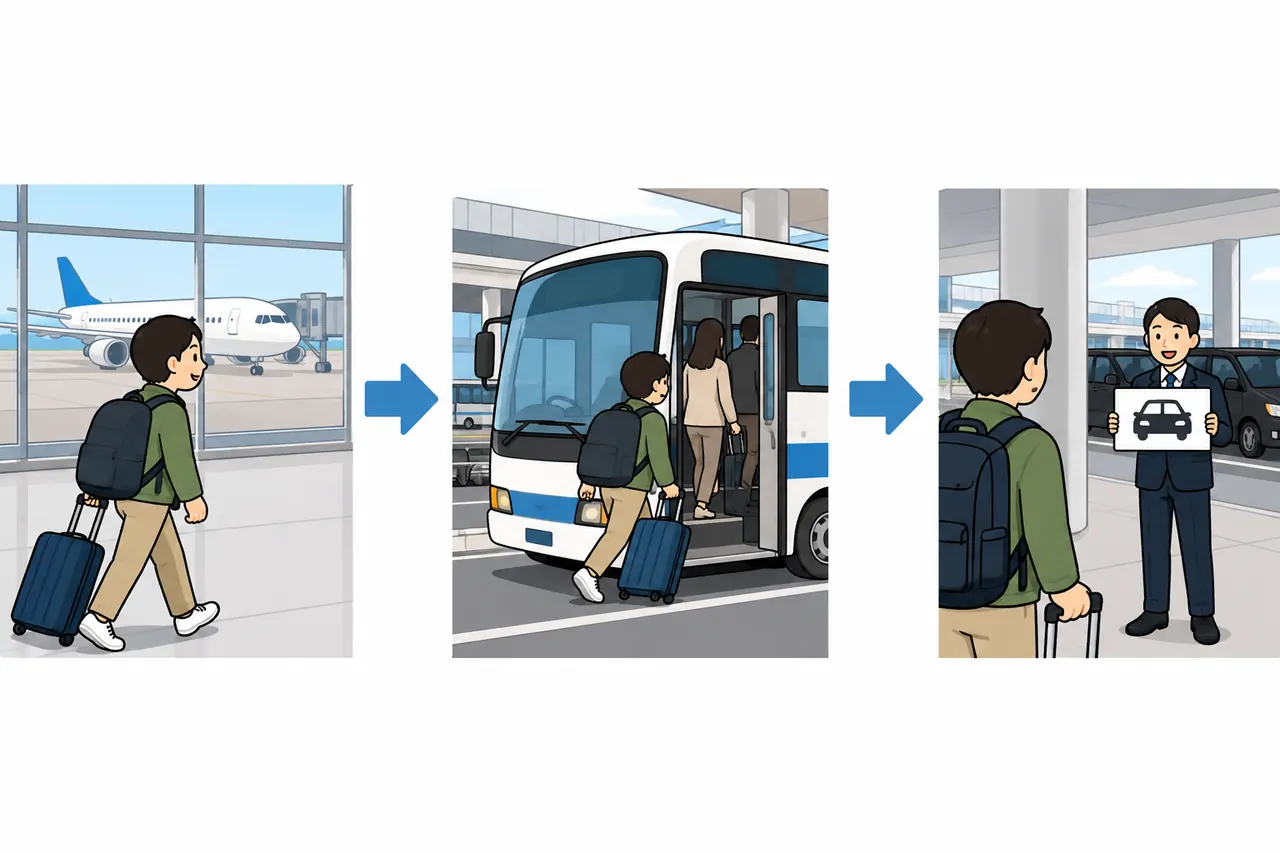
If you are considering the public bus, use the airport’s Terminal 2 access information to check the published route and stops. Then confirm the actual meeting point with the handling contact before travelling. The bus’s stated journey time does not include finding the correct stop, waiting, reaching a rendezvous point, passenger processing, or any flight procedure.
| Movement or location | Published information | What it does not establish |
|---|---|---|
| Aeroplaza to Terminal 2 | Free public bus; approximately 7–9 minutes | A dedicated private-car transfer or total journey time |
| Aeroplaza boarding point | First floor | A Tamayura-specific meeting point |
| Terminal 2 stop | First floor | The agreed passenger rendezvous with a handler |
| Terminal 2 to the city | Requires a separate transport plan | A verified fare or door-to-door duration |
For a commercial-flight connection, distinguish the commercial terminal from Terminal 2 and the dedicated facility when discussing transfers. Ask the handler and the airline or other relevant coordinator to confirm the exact meeting point and movement plan. Do not assume that a public bus journey time describes a connection between a commercial flight and a business-jet departure.
This guide does not establish a fare or door-to-door travel time from the airport to Osaka, Kyoto, or Kobe. Arrange the city transfer separately and request information for the actual destination and itinerary. GO TO VIAJES’ Terminal 1 airport tour provides another public-terminal view, from its Spanish-language collection, but it likewise does not document Tamayura or a private transfer.
6. Customs, CIQ, and passenger preparation
Every passenger entering Japan must make a customs declaration for accompanied goods. Japan Customs directs travellers to use Visit Japan Web for electronic declarations, and paper declaration forms are also available on aircraft. A dedicated CIQ facility at Tamayura does not create an exemption from declaring belongings or following the applicable customs process.
Japan Customs describes a green channel for passengers without taxable goods or other relevant items, and a red channel for other cases. Follow the applicable declaration process and the instructions given for your arrival. The airport’s description of dedicated CIQ facilities identifies where processing facilities are provided, not a promise of a particular processing time or a different declaration obligation.
If a passenger has unaccompanied articles, Japan Customs says that two copies of the paper declaration are required. This is a detail to settle before arrival rather than leaving it to an assumption about the facility. Check the current instructions from Japan Customs’ passenger procedures page, including its direction to Visit Japan Web.
Passengers and coordinators can prepare by making a clear trip brief and asking which information belongs on each official form. Keep customs questions distinct from the facility application and the operator’s flight paperwork. That separation helps avoid treating one completed form as proof that all passenger, aircraft, and ground arrangements are complete.
7. What to include in an enquiry or trip brief
A useful enquiry gives the coordinator enough context to identify the request and direct questions to the right party. Include the proposed flight, passenger group, aircraft details, and ground destination, as appropriate to the information requested by the airport or handler. The official information cited here does not specify every field required by each form, so use the form’s instructions rather than guessing what must be submitted.
Ask the facility contact about facility acceptance and the confirmation process. Ask the operator or handling contact about the aircraft operation, airport notifications, handling contract, and any aircraft-specific paperwork. Ask separately about the meeting point and ground transport so a response about terminal access is not mistaken for confirmation of a car or other transfer.
For a quote, request separate answers for the facility, aircraft operation, ground handling, and transfer rather than relying on an undifferentiated total. The sources used for this guide do not establish current facility prices, taxes, cancellation charges, aircraft slots, parking availability, or transfer times to the region’s cities. Ask the relevant provider to confirm each item for the actual date and flight; do not infer availability or cost from a general airport description.
A concise brief can end with a list of unresolved questions: whether the facility can accept the request, whether the meeting room is available if needed, what passenger information is required for CIQ, what aircraft notifications apply, and what transfer is arranged. For international use, ask whether the separate international flight-operation information form is needed and how it relates to the facility application. Keeping these questions together makes it easier to see which answers are confirmed and which still need follow-up.
8. Frequently asked questions
Where is Premium Gate Tamayura?
It is inside the domestic section of Kansai Airport Terminal 2. The public Terminal 2 bus stop is on the first floor, but that does not establish the exact Tamayura meeting point. Confirm the rendezvous with the handling contact before travelling.
Does Tamayura serve international business-jet flights?
Yes. The airport describes the facility as supporting both domestic and international business-jet use, and the facility application is common to both. International flights also have a separate flight-operation information form, so ask the coordinator which additional information and procedures apply.
Is the facility available 24 hours?
The airport describes the facility as operating 24 hours. Its published reception contact hours are 09:00–22:00 Japan time, which is a separate detail for making enquiries. Arrange and confirm the actual visit through the airport’s stated reservation process rather than assuming that 24-hour operation means an unconfirmed request is accepted.
Does submitting the application confirm a reservation?
No. The airport checks whether it can accept an application, and says a reservation is established through confirmation by email and telephone. Keep that confirmation with the rest of the itinerary and do not treat form submission alone as approval.
Is the free Terminal 2 bus a business-jet transfer?
No. It is a general public shuttle from Aeroplaza’s first floor to Terminal 2, with a published journey time of approximately 7–9 minutes. It is not described as a dedicated VIP transfer, and the exact Tamayura meeting point must be confirmed separately.
Does dedicated CIQ mean passengers do not need to make customs declarations?
No. Japan Customs says every passenger entering Japan must make a customs declaration for accompanied goods. Use Visit Japan Web or the paper form available on aircraft, follow the applicable channel instructions, and note that two copies of the paper declaration are required if there are unaccompanied articles.
Are facility prices, parking, and city-transfer times published here?
No current facility price, application deadline, cancellation charge, aircraft-slot or parking availability, or city-transfer time is established by the official facts cited in this guide. Request those details for the specific flight and date from the relevant facility, operator, handler, or transfer provider. Keep any answer about one service separate from confirmation of the others.