

Kansai Area Rail Passes: Choose the Route, Then the Product
Contents
- 1. Compare the products before you plan around one
- 2. What the Kansai Wide Area Pass includes
- 3. WEST QR Kansai Mini: budget for extra tickets
- 4. Using WEST QR: activation and the station gate
- 5. Osaka city days and a fair cost comparison
- 6. Kansai area rail pass FAQ
- 7. Other rail-pass perspectives and related planning
Choose Kansai area rail passes only after you have listed the journeys you expect to make. A pass that suits a longer JR trip may not help on a day spent using Osaka Metro, and a city ticket does not cover every railway in the region. Compare each product with the same itinerary, dates and transport modes you would use if buying ordinary tickets.
One important change affects older advice: JR West says sales of the former Kansai Area Pass ended on 30 September 2026. Tickets purchased by that date can still be used during their designated validity, but the discontinued product should not be presented as available for a new purchase. Check JR West’s notice for the former Kansai Area Pass.
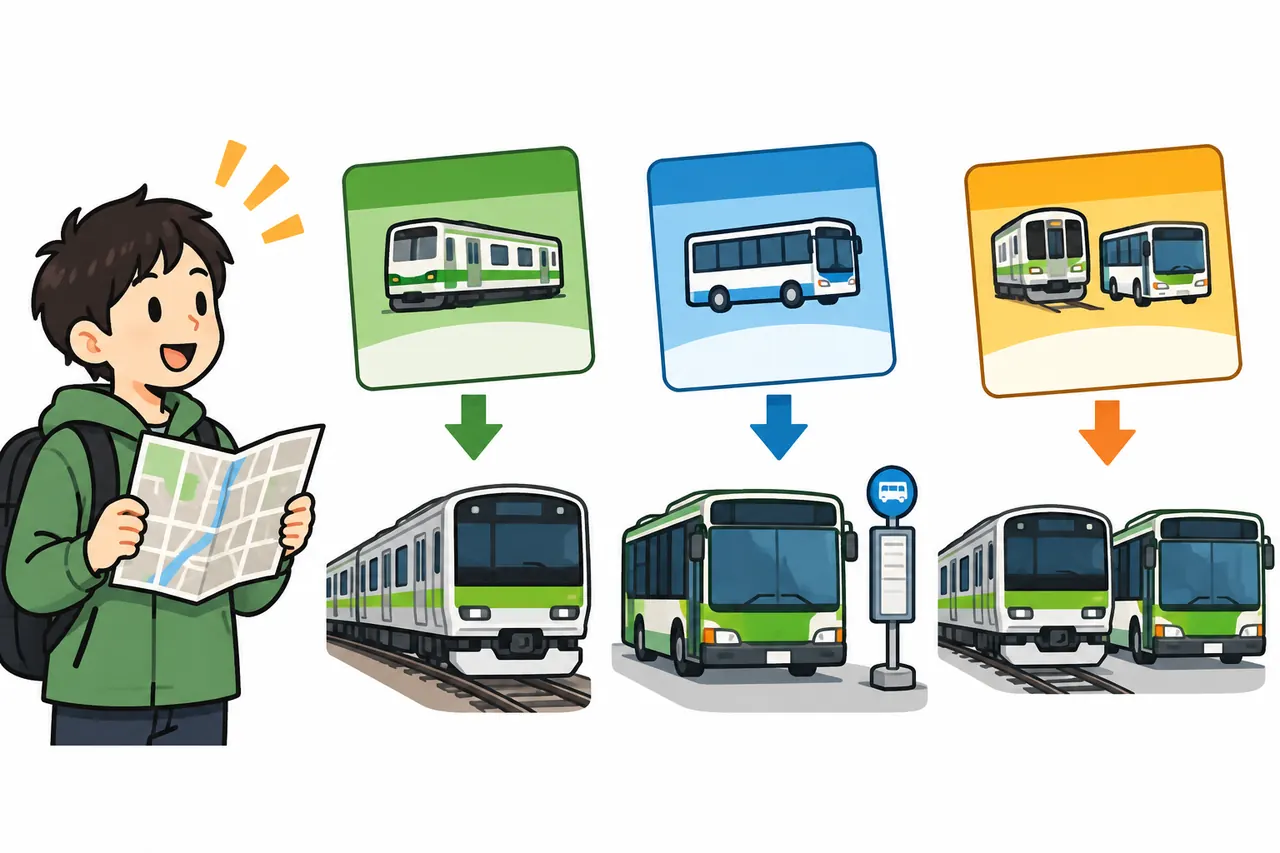
The current examples in this guide serve different purposes. The Kansai Wide Area Pass covers specified longer-distance JR journeys, WEST QR Kansai Mini covers ordinary trains within its published area, and Osaka Metro’s Enjoy Eco Card is for Osaka Metro and covered city-bus travel. None is a blanket pass for every JR line, private railway, subway and bus in Kansai.
Compare the products before you plan around one
Product names can sound interchangeable even when their duration, eligible trains and exclusions are quite different. Keep the full product name beside every price in your notes, especially when reading older Kansai Area Pass recommendations. The table below compares the named products covered in this guide; it is not a complete list of every transport pass sold in Kansai.
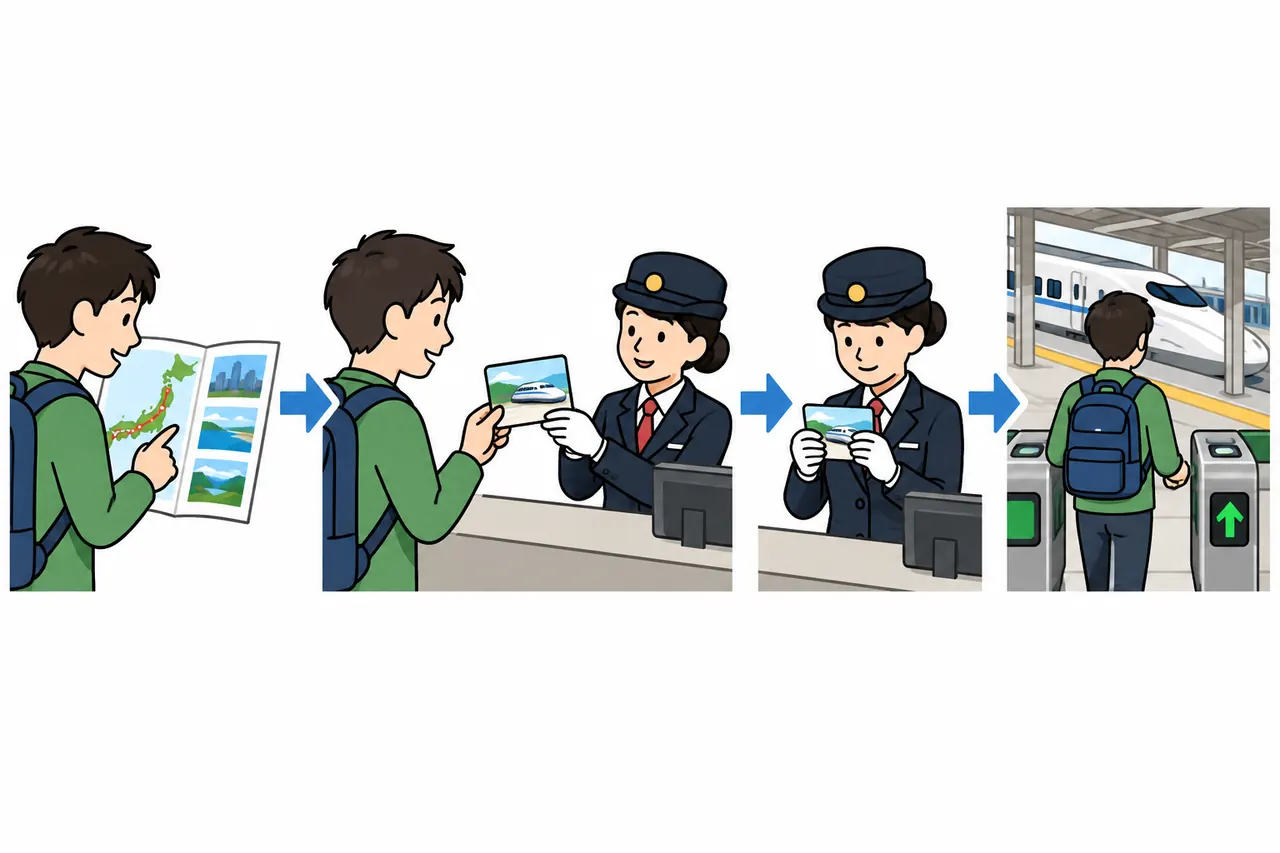
| Product | Published price | Duration | Main distinction |
|---|---|---|---|
| Kansai Wide Area Pass | Adult ¥12,000; child ¥6,000 | Five days | Includes specified JR limited express and Shinkansen travel within its published scope |
| WEST QR Kansai Mini | Adult ¥3,000; child ¥1,500 | Three days | Covers ordinary trains, including Special Rapid and Rapid; extra tickets are needed for certain premium trains |
| Osaka Metro Enjoy Eco Card | Adult ¥820 on weekdays; ¥620 on weekends and holidays; child ¥310 | One day | Covers Osaka Metro and eligible city-bus travel, with exclusions |
| Former Kansai Area Pass | No longer sold after 30 September 2026 | Formerly one to four days | Historical product; do not treat it as a new-purchase option |
Prices and product details in this table were checked on 5 November 2026. The Kansai Wide figures and covered-train examples are listed by JR West, the Mini figures and train categories by JR West’s WEST QR Kansai Mini page, and the Enjoy Eco Card prices and exclusions by Osaka Metro. Always read the linked product conditions as well as the headline price, because the ticket’s validity and exclusions determine what you still need to pay for.
Start by writing down the journeys you genuinely expect to take, including the railway or bus service you intend to use. Do not count a walk as a ride simply because a pass covers nearby transport, and do not assume that a station’s appearance on a regional tourism map means every operator serving it is included. If a journey depends on a private railway or a different operator, check that operator’s current ticket information separately.
Then compare the ordinary fares for those same journeys with the pass price and any extra tickets. The comparison should keep the route, travel dates and transport modes consistent on both sides. A broad coverage area, a high number of possible rides or a low-looking headline price does not by itself establish that a pass will save money on your holiday.
What the Kansai Wide Area Pass includes
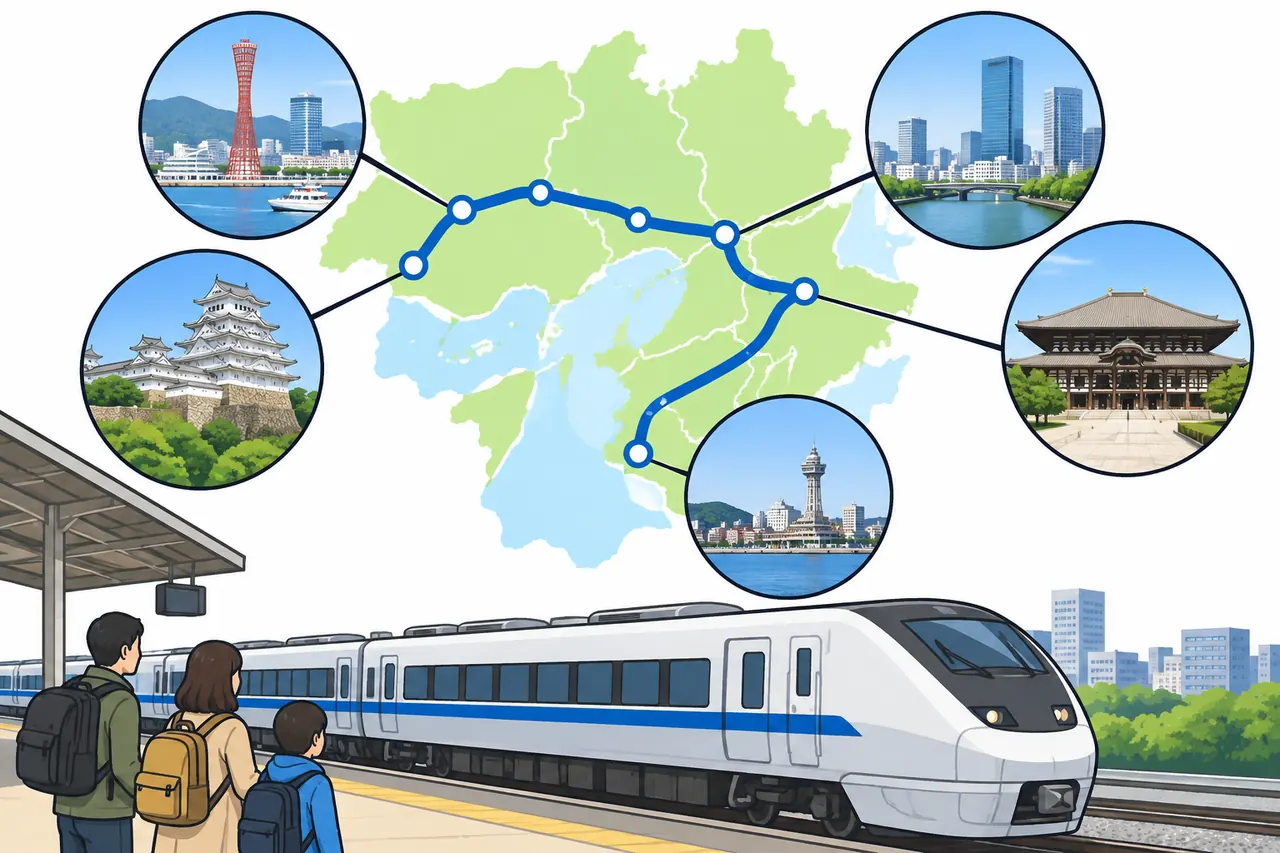
JR West lists the Kansai Wide Area Pass as a five-day product priced at ¥12,000 for adults and ¥6,000 for children. Its specified Shinkansen coverage includes the Shin-Osaka–Okayama section, including reserved seats within that section. JR West also lists limited express trains such as Haruka and Kuroshio among the covered examples. See the official Kansai Wide Area Pass details for the applicable scope and conditions.
The route boundaries matter. Coverage of the Shin-Osaka–Okayama Shinkansen section does not mean that the pass covers every Shinkansen line or a journey from any point in Japan. In particular, JR West lists the Tokaido Shinkansen between Shin-Osaka and Tokyo, the Sanyo Shinkansen between Okayama and Hakata, and the Kyushu Shinkansen as excluded.
| Journey or category | Kansai Wide position | What to check |
|---|---|---|
| Shin-Osaka–Okayama Shinkansen | Included within the published scope | Match the journey to the covered section and the pass’s seating conditions |
| Haruka or Kuroshio | Listed limited express examples | Confirm that the actual journey is within the pass area and conditions |
| Shin-Osaka–Tokyo Shinkansen | Excluded | Arrange a separate fare for this section |
| Okayama–Hakata Shinkansen | Excluded | Do not extend the covered section beyond Okayama |
| Kyushu Shinkansen | Excluded | Check the relevant separate ticket or product |
| Highway bus | Excluded | Budget for it separately |
These distinctions are useful when a holiday combines travel across several regions. If your itinerary includes Tokyo, keep the Shin-Osaka–Tokyo leg outside the Kansai Wide calculation rather than counting it as a pass benefit. Our Tokyo to Kyoto guide can help you consider that separate intercity section, but the Kansai Wide coverage listed here does not include the Tokaido Shinkansen between Shin-Osaka and Tokyo.
Eligibility also affects the comparison. JR West states that the pass requires a passport issued by a government other than Japan and Temporary Visitor status. Check the complete official eligibility instructions and required documents for your circumstances before buying; a fare comparison is not useful if you cannot use the product. The pass’s price, five-day duration and route coverage should therefore be assessed together with eligibility, not as separate afterthoughts.
WEST QR Kansai Mini: budget for extra tickets
WEST QR Kansai Mini is a three-day product with a published price of ¥3,000 for adults and ¥1,500 for children. It covers ordinary trains, including Special Rapid and Rapid services, within the product’s published area. For the current coverage and conditions, consult JR West’s WEST QR Kansai Mini page.
The Mini does not make every faster or premium service part of the same ticket. JR West says that using Haruka or another limited express requires a separate limited express ticket. For Shinkansen travel, the Mini requires the fare and limited express charge separately, so include the full required Shinkansen ticket cost when comparing it with ordinary tickets.
| Train category | Mini planning rule | Include in your budget |
|---|---|---|
| Ordinary, Rapid or Special Rapid train | Use only within the published area and validity | The pass price and any travel outside its scope |
| Haruka or another limited express | A separate limited express ticket is required | The pass price plus the required extra ticket |
| Shinkansen | The fare and limited express charge are required separately | The full required Shinkansen ticket cost |
This distinction prevents a common budgeting mistake: treating an extra ticket as though it always covers every part of a premium-train journey. The operator’s stated rule depends on the train category, so check the requirement for the service you actually plan to ride. If the journey involves a Shinkansen, do not budget only for a supplement; JR West says the fare and limited express charge are separate requirements.
The Mini also requires an internet-connected smartphone. That requirement can affect your choice if you are travelling with people who do not have suitable devices or reliable internet access. Compare the product’s digital-use requirements with the arrangements available to everyone in your group before relying on it for a travel day.
Using WEST QR: activation and the station gate
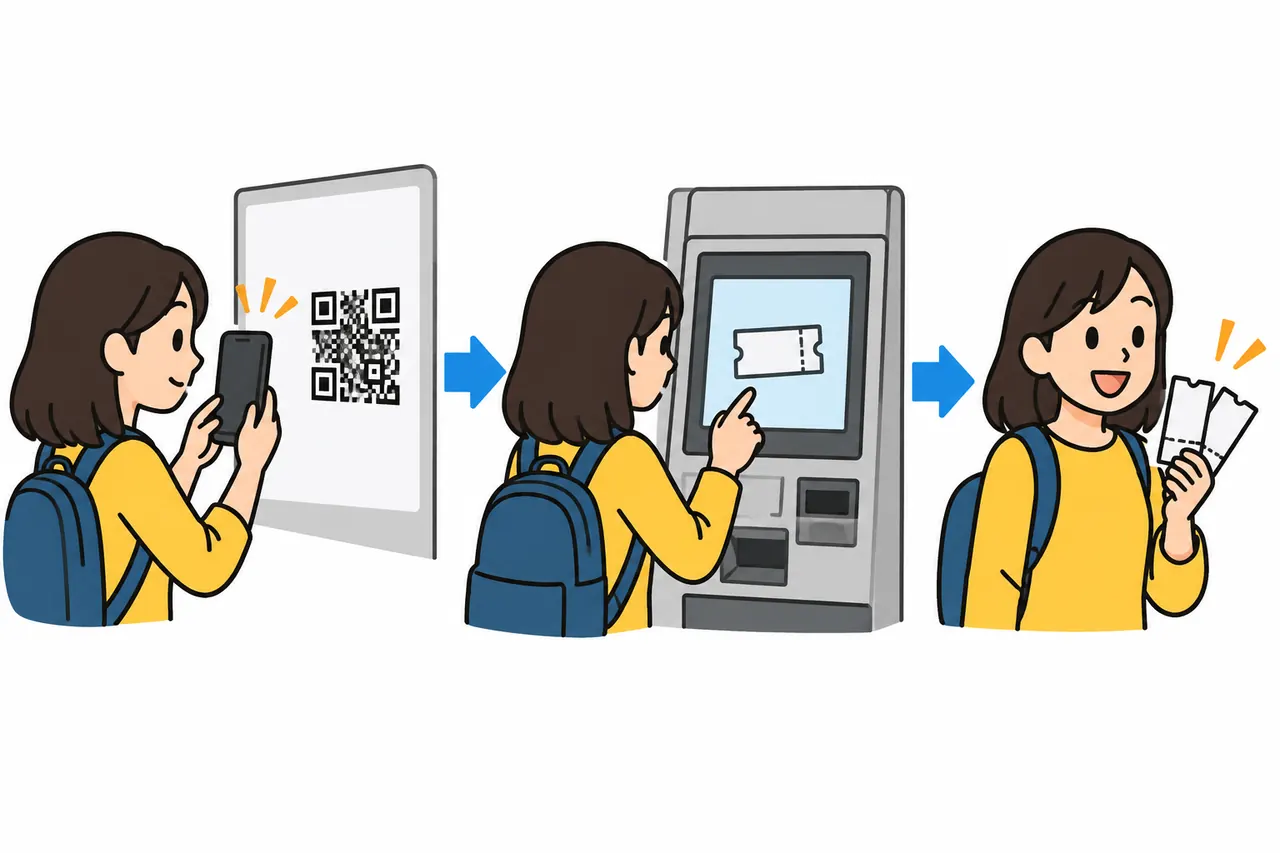
The WEST QR user guide says to display the code and hold it over the QR reader at the gate. A printed QR code and a screenshot cannot be used, so saving an image as an assumed offline backup is not a substitute for opening the live ticket. Review JR West’s WEST QR user guide before travel and follow the instructions for the product you purchased.
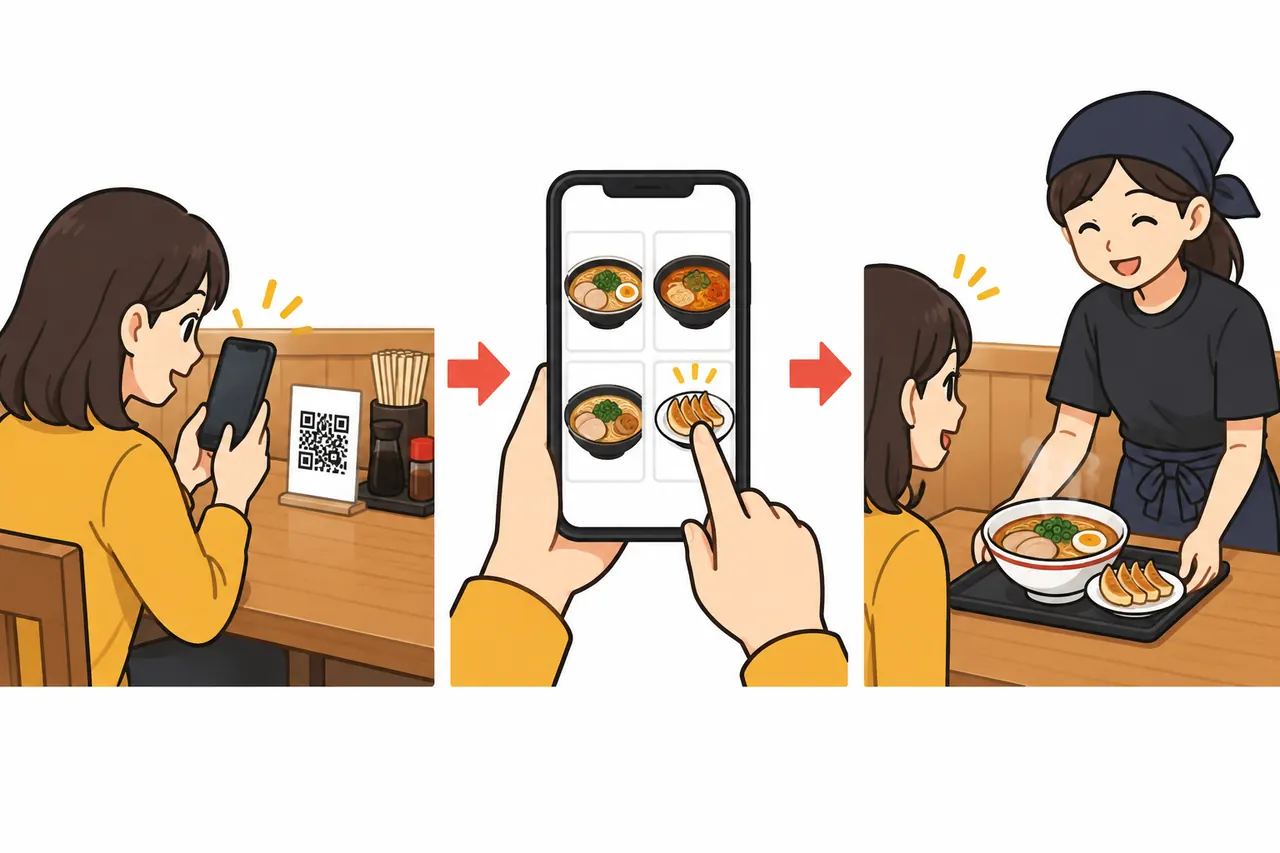
Use this sequence to avoid activating the ticket for the wrong date:
- In the WEST QR account, check that each traveller is registered correctly.
- On the actual day of use, perform the product’s start-use action.
- Confirm the intended date before starting use; after the action, the use date cannot be changed.
- At the gate, open the live QR display and hold it over the QR reader.
- If a traveller without a smartphone is registered through a companion’s account, keep the group on the same itinerary.
Buying the product and activating it are separate decisions. Purchasing ahead does not mean that you should start using it immediately: JR West’s guide says to perform the start-use action on the day you will use it. Since the date cannot be changed after activation, check the date on the ticket before confirming that action.
JR West allows a traveller without a smartphone to be registered through a companion’s account, provided that the travellers follow the same itinerary. Treat that as a specific companion arrangement, not permission for one phone to serve travellers who split up and travel in different locations. If the group plans to separate, review the official instructions before relying on one account for everyone.
A bank card or transport IC card does not replace the live QR display required by this product. If you are preparing other payment options for your trip, our cash and card guide may be useful, but the QR ticket’s own device and gate instructions still apply. Japan Unravelled’s rail-pass overview is another general perspective on regional products; check the current operator page before using any older recommendation.
Osaka city days and a fair cost comparison
Osaka Metro’s Enjoy Eco Card is a one-day product for Osaka Metro and covered city buses. The listed adult price is ¥820 on weekdays and ¥620 on weekends and holidays; the child price is ¥310. The ticket has exclusions: Yumeshima Station, on-demand buses and certain specified city-bus routes are not covered. Check the official Osaka Metro Enjoy Eco Card page when planning a day that may involve any of those services.
This makes the card a different kind of option from the two JR products above. A day built around eligible Osaka Metro and bus journeys is not the same cost question as a day involving a JR limited express or a Shinkansen section. Separate the days and services in your plan rather than treating “one day” as proof that all transport used that day is covered.
Use a comparison worksheet like this before deciding:
| Calculation row | Without a pass | With a candidate pass |
|---|---|---|
| Covered journeys | Add the actual fares for the chosen sections | Include only journeys covered by that product |
| Product cost | No pass price | Add the published product price |
| Limited express or other supplements | Add any required tickets | Add every required ticket not included |
| Excluded transport | Add the actual fares | Add the same excluded-transport fares |
| Travel dates | Keep journeys on their intended dates | Check that the product’s validity fits those dates |
| Eligibility and device needs | Apply normal ticket requirements | Check passport, status, smartphone and QR conditions where relevant |
The fairest calculation uses the same trip on both sides. If you compare a pass against an itinerary with fewer rides, or count an excluded service as included, the result does not answer whether the product suits your actual plans. Use the price and conditions published for the named pass, and do not substitute details from an older or similarly named product.
It can help to put an Osaka city day and a longer-distance JR day on separate rows before adding any totals. The Enjoy Eco Card’s stated scope is Osaka Metro and covered city buses, while the Kansai Wide and WEST QR products have their own JR coverage and extra-ticket rules. For other railway operators, check the operator’s current ticket information rather than assuming that any of these products covers its services.
No universal break-even point follows from the product prices alone. The fares depend on the specific sections you choose, while the pass comparison also depends on exclusions, required supplements, validity and eligibility. Our Japan budget travel guide can help organise the wider trip budget, but your pass decision should still be based on your own route and the official conditions.
Kansai area rail pass FAQ
Can I buy the former Kansai Area Pass now?
No: JR West says sales ended on 30 September 2026. Purchases made by the end of sales can still be used during their designated validity, but that does not make the product available for a new purchase. The official Kansai Area Pass page is the place to check the notice and distinguish historical conditions from current products.
Does the Kansai Wide Area Pass cover the Shinkansen from Shin-Osaka to Tokyo?
No: JR West lists the Tokaido Shinkansen between Shin-Osaka and Tokyo as excluded. Its stated Shinkansen example is the Shin-Osaka–Okayama section, which includes reserved seats within that section. Keep the precise section beside the pass name when you plan or calculate fares.
Can I use a printed WEST QR code or a screenshot at the gate?
No: JR West’s guide says that printed QR codes and screenshots cannot be used. The instructions call for displaying the live code and holding it over the gate’s QR reader. Use an internet-connected smartphone and follow the official WEST QR user guide.
What extra ticket do I need for Haruka with WEST QR Kansai Mini?
JR West says that Haruka and other limited express use require a separate limited express ticket. Shinkansen travel has a different stated rule: the fare and limited express charge are required separately. Check the rule for the train category you intend to use, then include the required cost in your comparison.
Will one of these passes definitely save money?
There is no universal saving based on the pass price alone. Add the actual fares for the journeys you intend to make, then compare them with the product price, excluded sections and any extra tickets for the same travel dates. A route-specific calculation is more useful than relying on a recommendation that assumes a different itinerary.
Other rail-pass perspectives and related planning
Several rail-pass videos and comparison guides offer additional perspectives, but their subjects should not be confused with current product conditions. Simplify Travel presents limitations of the former JR Kansai Area Pass; that can provide historical context, while JR West’s ended-sales notice governs new purchases. THE POOR TRAVELER presents a Filipino-language comparison of Kansai transport products, and Cakes with Faces presents regional rail passes in a 2025 guide.
Japan Unravelled presents both a Kyoto, Osaka and beyond rail-pass overview and a ranked rail-pass comparison; in either case, match any recommendation to your itinerary and the current operator conditions. JAPANALLPASS DOT COM compares the former JR West Kansai Area Pass and Kansai Thru Pass, so check current sales and terms before adopting older product advice. These resources can help frame questions, but they do not replace the official pages for prices, eligibility, coverage and QR use.
For other parts of a Japan trip, related JGO! guides include Akihabara Guide: Anime, Electronics and Planning Your Visit, Aomori Nebuta Festival: Dates, Seats and Haneto Guide, Atsuta Jingu: Shrine Access, Museums and Prices, and Awa Odori Festival: Tokushima Dates and Tickets. Further planning topics include the Bento Guide: Buying and Enjoying Japan’s Train Lunches and Beppu Day Trip from Fukuoka: Train, Bus, Cost & Plan. These are separate destination and travel-planning topics; for Kansai rail decisions, use the product-specific official sources linked above.


