
How to Order Hakata Ramen
Contents
- 1. Quick guide: the basic ordering sequence
- 2. What makes Hakata ramen different
- 3. Noodle firmness: the words to know
- 4. Step by step: ordering in a ramen shop
- 5. Kaedama: how noodle refills work
- 6. Ordering at ICHIRAN: the order form and refill button
- 7. Toppings and condiments on the counter
- 8. Ordering ramen at a yatai
- 9. Trying different styles at Fukuoka Ramen Stadium
- 10. Common first-time mistakes
- 11. FAQ
Hakata ramen is known for thin, straight noodles in a rich pork-bone broth. The key choice when ordering is usually how firm you want the noodles, and the useful word to know for a noodles-only refill is kaedama. Because thin noodles soften quickly in hot broth, it helps to decide about both firmness and a possible refill before you start eating.
Quick guide: the basic ordering sequence

- Check how the shop takes orders. Look for a ticket machine, an order form, or a staff member taking orders at the counter.
- Choose and pay for your bowl. At a ticket-machine shop, buy a ticket and give it to the staff; at other shops, order directly or fill in the form.
- Choose your noodle firmness. Say futsu for normal, kata for hard, or another firmness shown on the menu.
- Start eating while the noodles are hot. Thin noodles soften in the broth, so there is little benefit in leaving the bowl untouched for long.
- Order kaedama while broth remains if you want more noodles. It is a refill of noodles only, not a refill of soup.
Shop systems differ, so this sequence is a guide rather than a rule for every restaurant. Some shops take payment before you sit down, while others take payment later. If you are unsure what to do, check the menu or machine, then ask staff or follow the ordering method used at the counter.
What makes Hakata ramen different
Hakata ramen is the Fukuoka style of tonkotsu ramen: its broth is made from pork bones, and it is commonly served with thin, straight noodles. The Fukuoka Prefecture Tourism Association describes tonkotsu ramen as Hakata ramen, while JNTO’s guide to ramen also identifies Fukuoka ramen with thin, straight noodles. The broth is rich and cloudy, and the noodles’ thin shape is an important part of the way the meal is ordered.
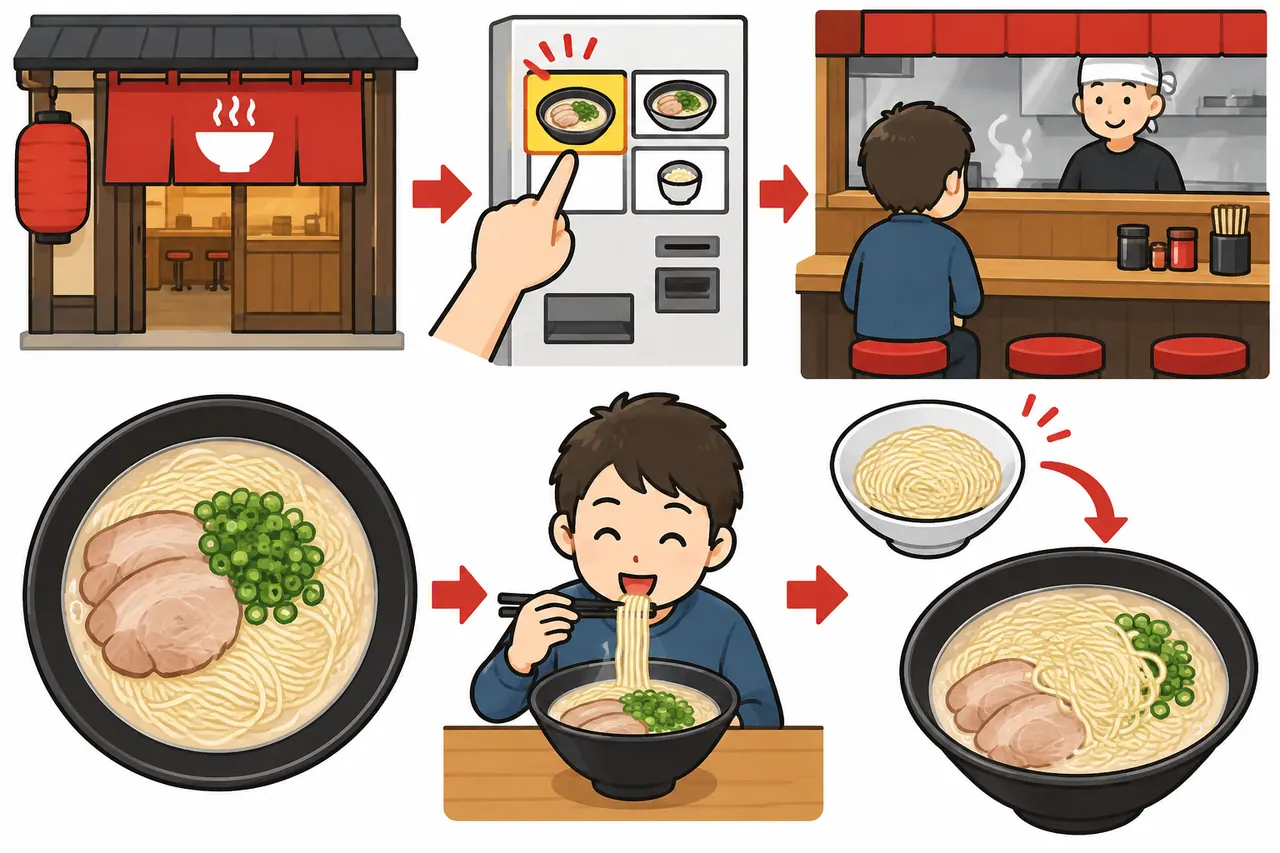
Thin noodles cook quickly and soften as they sit in hot soup. That is why shops often ask how firm you want them, and why Hakata ramen is associated with kaedama: you can order another portion of noodles while there is still broth left. A refill does not include more broth, so it is worth thinking about how much soup you drink during the first portion.
The style is useful to understand before you reach the counter, but you do not need to know every local term to order. Start with the firmness choices that appear on the menu or form, and use futsu if you want the normal option. If a shop offers additional terms that you do not recognize, its own menu is the best guide to what is available there.
Noodle firmness: the words to know
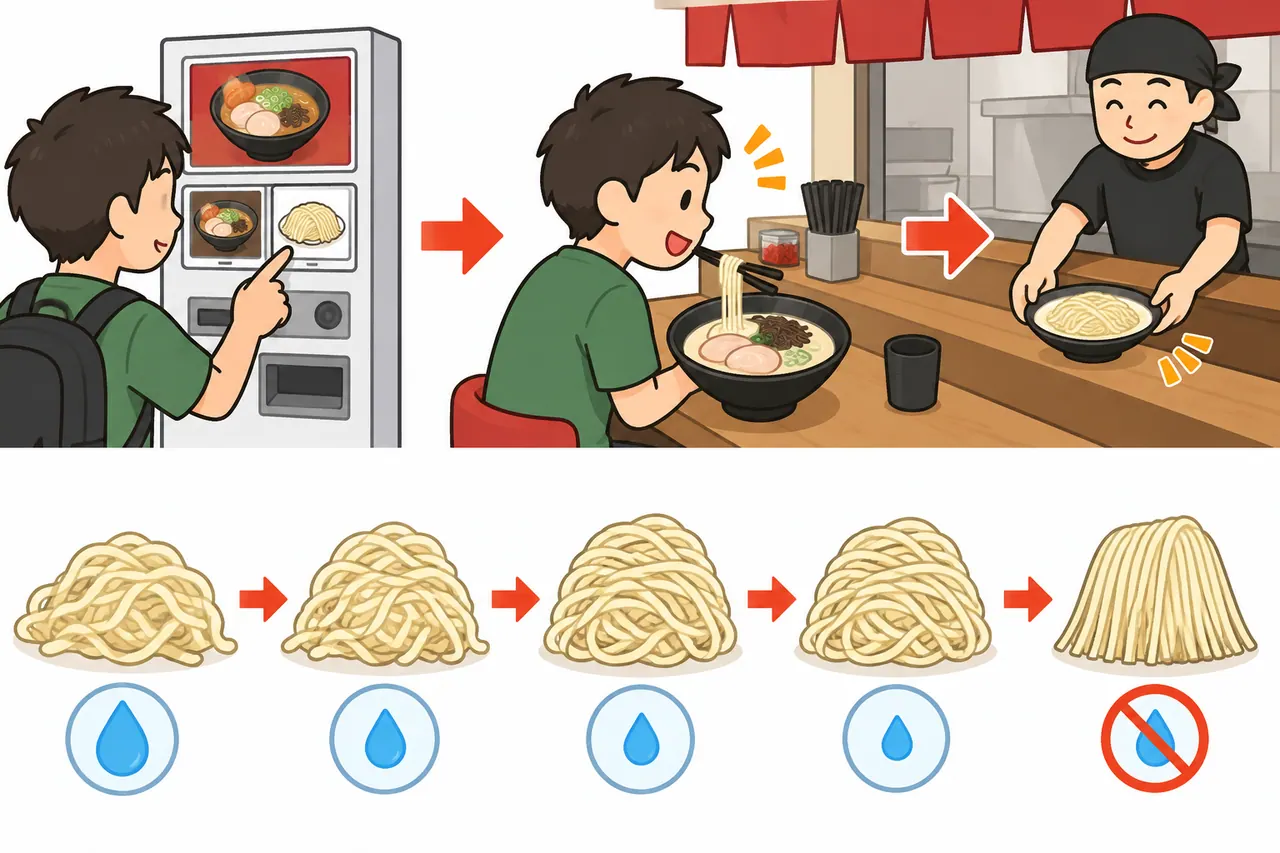
Firmness is usually the main customization to consider when ordering Hakata ramen. JNTO lists the following terms, from soft to very hard; the Fukuoka Prefecture Tourism Association notes that firmness can range from al dente to soft.
| Word | Meaning | A practical starting point |
|---|---|---|
| Yawa | Soft | Choose it if you prefer tender noodles. |
| Futsu | Normal | A safe default if you are trying Hakata ramen for the first time. |
| Kata | Hard | Choose it if you like a firmer bite. |
| Barikata | Extra hard | Choose it if you already know you prefer very firm noodles. |
| Harigane | Very hard; a local fan term | An option for experienced eaters who want very firm noodles. |
| Konaotoshi | Very hard; a local fan term | Another very firm option mentioned by JNTO. |
The JNTO list of ramen terms is a useful reference, but it is not an official complete ranking of every word used in every shop. You may encounter other terms, including “bari-yawa” or “nama,” but the sources available for this guide do not establish exactly where those terms sit in a universal firmness scale. Menus and available choices vary by restaurant, so do not assume that every shop offers all the terms in the table.
If you are unsure, use a choice you can identify on the menu, such as futsu or kata. If you plan to eat slowly or spend time taking photographs, kata is a practical option to consider because the noodles continue to soften in hot broth. That is a personal preference, not a guarantee that a firmer order will stay firm indefinitely.
Step by step: ordering in a ramen shop
First, look for the shop’s ordering system before choosing a seat. Some restaurants use a ticket machine near the entrance, some take orders at the counter, and others use a written order form. Do not assume that a machine or form works the same way everywhere; check the signs and menu in front of you.
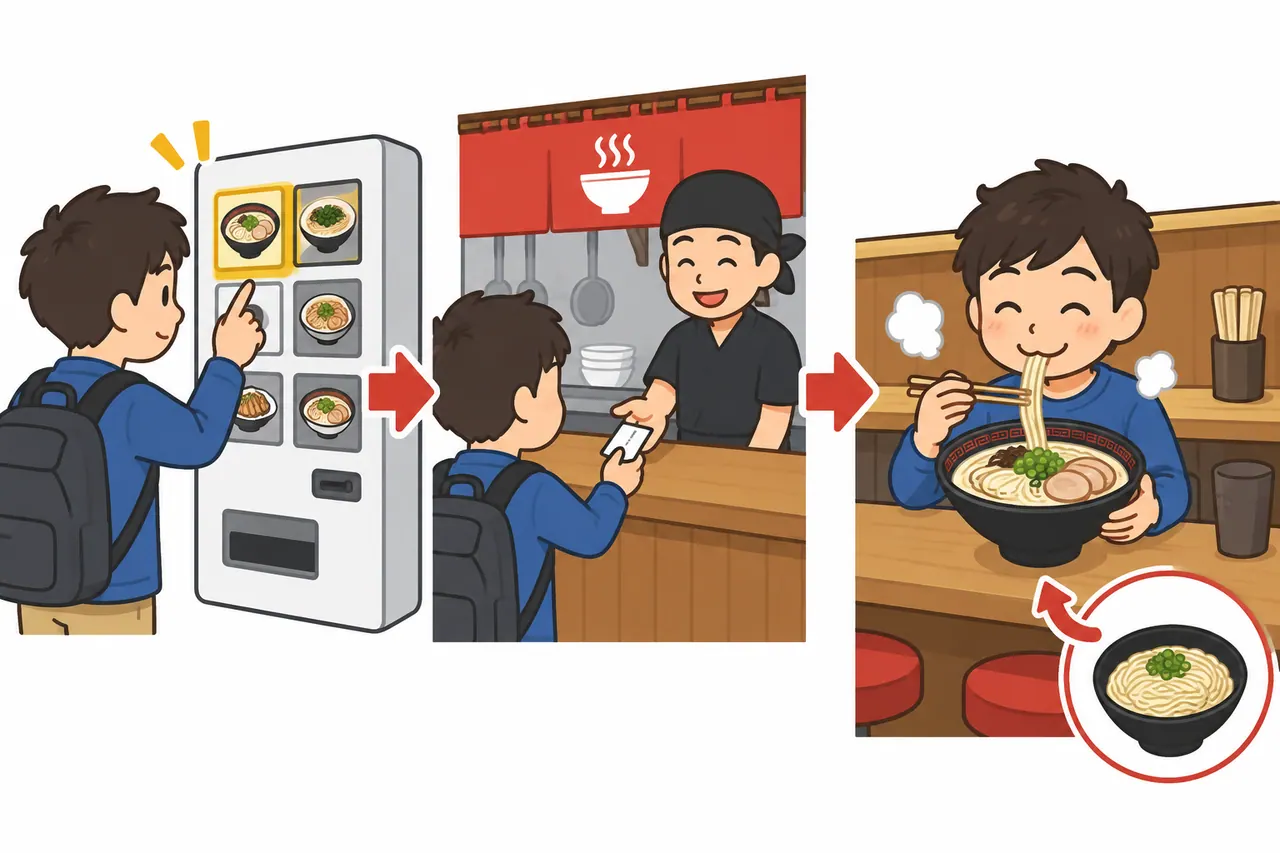
At a ticket-machine shop, choose the ramen you want and pay at the machine. The machine gives you a ticket to hand to staff, often when you sit down or when they ask for it. One shop featured by Fukuoka City has a ticket machine with menus in English, Chinese and Korean, but that is an example from a particular shop, not a promise that every machine has those languages. Photos on the buttons may help you identify a choice when you cannot read all the text.
If staff take orders directly, choose your bowl and then answer if they ask about noodle firmness. A short response such as futsu, kata or barikata communicates the choice. At a restaurant with a paper form, mark the options rather than waiting for staff to ask each question aloud. When you are uncertain about a menu item, point to it or ask staff for help instead of guessing.
Once the order is placed, begin eating while the noodles are hot. If you think you may want kaedama, keep enough broth for the extra noodles and decide before your bowl is nearly dry. Payment timing depends on the shop: ticket-machine restaurants are paid in advance, while other restaurants may ask you to pay at the end.
Kaedama: how noodle refills work
Kaedama means another portion of noodles; it does not mean another bowl of ramen or a refill of broth. JNTO’s Ramen 101 guide stresses that the broth is not refilled, so pace yourself if you want another portion. The Fukuoka Prefecture Tourism Association describes kaedama as another full portion of noodles that usually costs a small fraction of the bowl price.
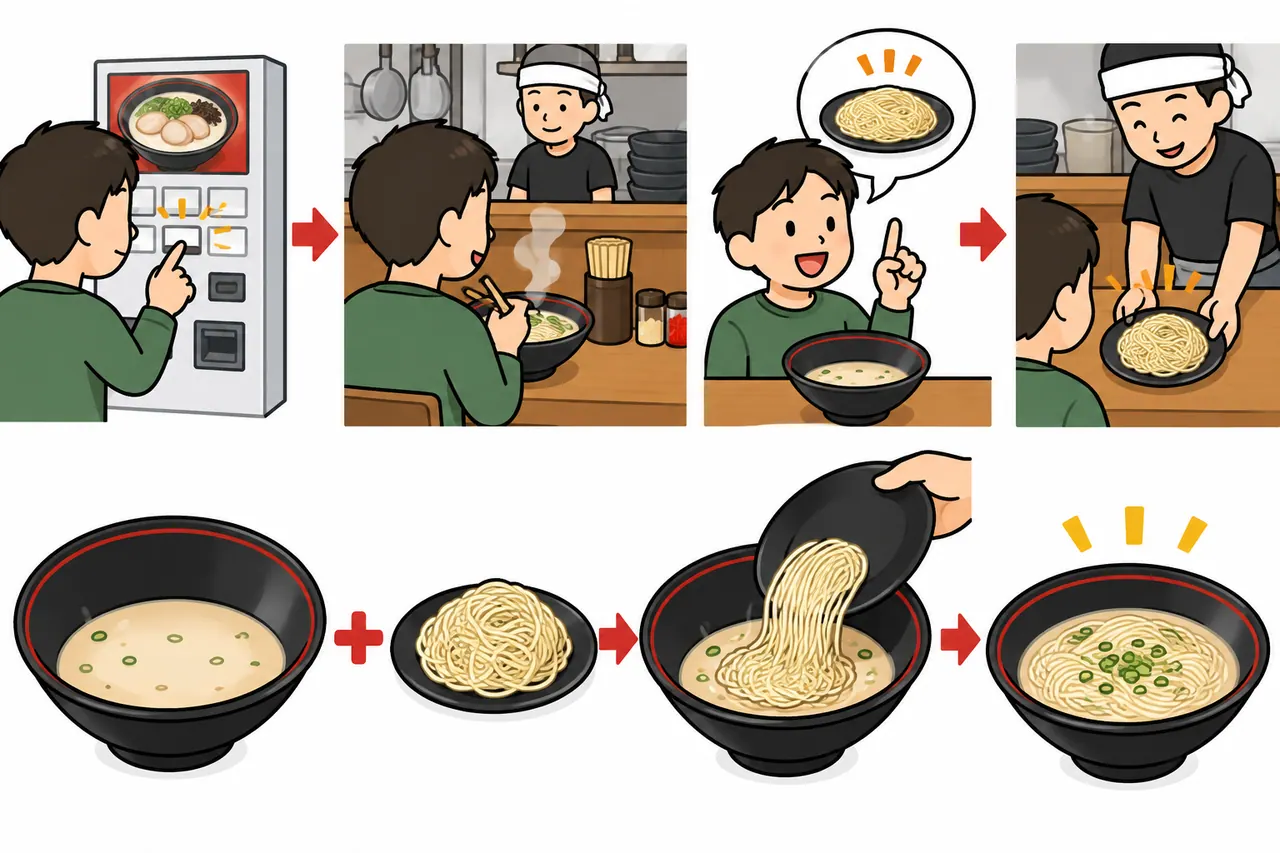
There is no official yen price for kaedama in the supplied sources. Prices vary by shop, so check the menu or ticket machine before ordering rather than relying on a price from another restaurant. A refill is an additional purchase, not an automatic part of the first bowl.
For timing, JNTO’s Fukuoka Ramen Stadium guide says you can order extra noodles if you still have at least half your broth left. Treat that as useful guidance for keeping enough soup for the new noodles, not as a universal rule enforced by every shop. Shop practice may vary, and the available sources do not establish a stricter rule.
In many restaurants, you can tell staff kaedama. At a shop with a ticket machine, you may need to buy a separate refill ticket, so look for a kaedama button before or during the meal. If the ordering method is not clear, check the machine or ask staff. Avoid drinking much of the broth during the first portion if you already know you want more noodles.
Ordering at ICHIRAN: the order form and refill button
ICHIRAN uses a written order form that lets you choose seven things: noodles, dashi, richness, chashu (pork), scallion, spice and garlic. The ICHIRAN official site explains these seven customization points. You mark your preferences on the form instead of needing to say every choice aloud, which can make the process easier if you are new to ordering ramen.
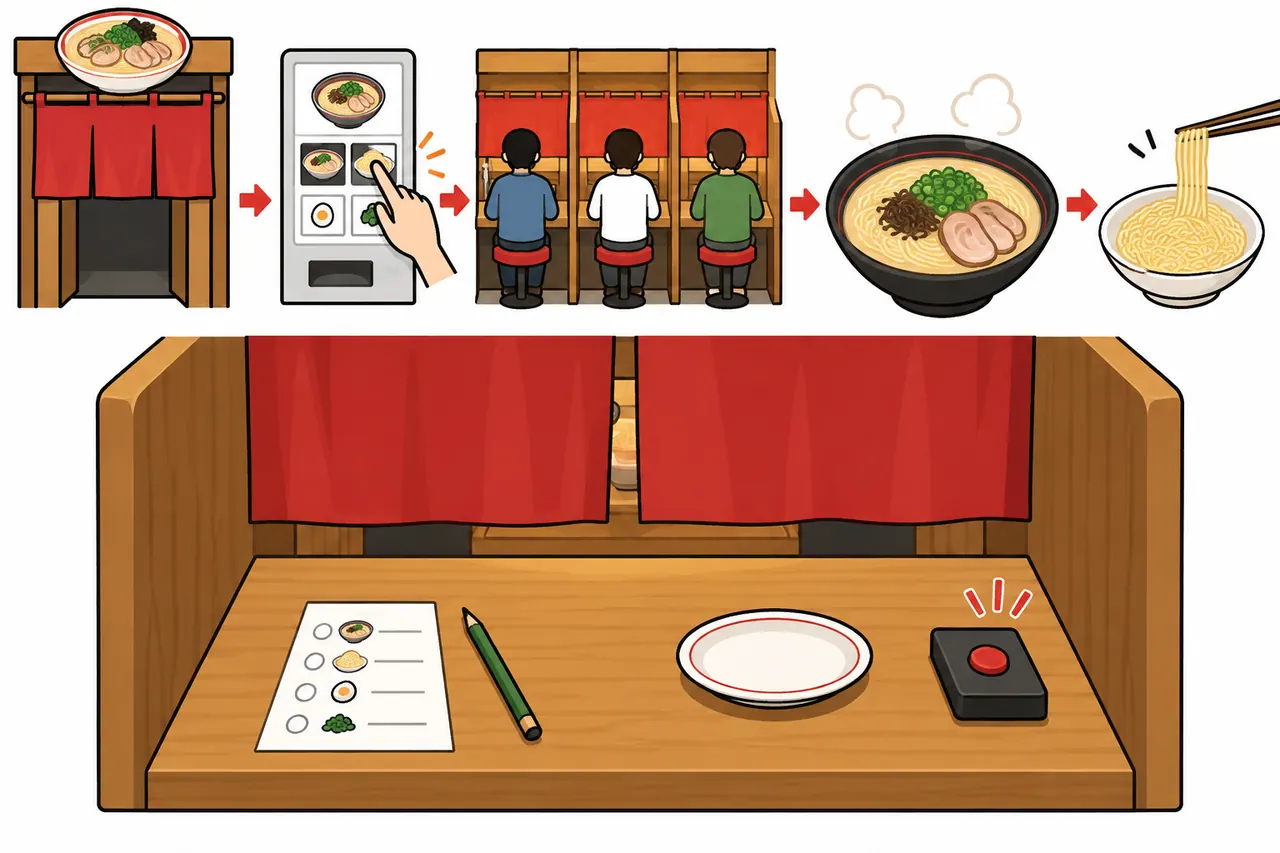
Take a moment to check the options on the form before marking it. The seven choices concern different parts of the bowl, so they are not all variations on noodle firmness. If you are uncertain about a preference, choose the option that suits you on the form rather than assuming that the choices apply to every ramen shop.
To order kaedama at ICHIRAN, place the kaedama plate on the button by the curtain. A chime sounds, and staff take your refill order. The official site also says that you can choose a different noodle texture for the refill, so you could begin with futsu and select kata for the next portion.
Toppings and condiments on the counter
Some ramen counters have condiments that diners add themselves. Common examples in Fukuoka include red pickled ginger (beni-shoga), sesame seeds and spicy pickled mustard greens (karashi takana), but what is available varies by shop. The supplied official sources do not give a standard guide to these toppings or establish that every shop provides them.
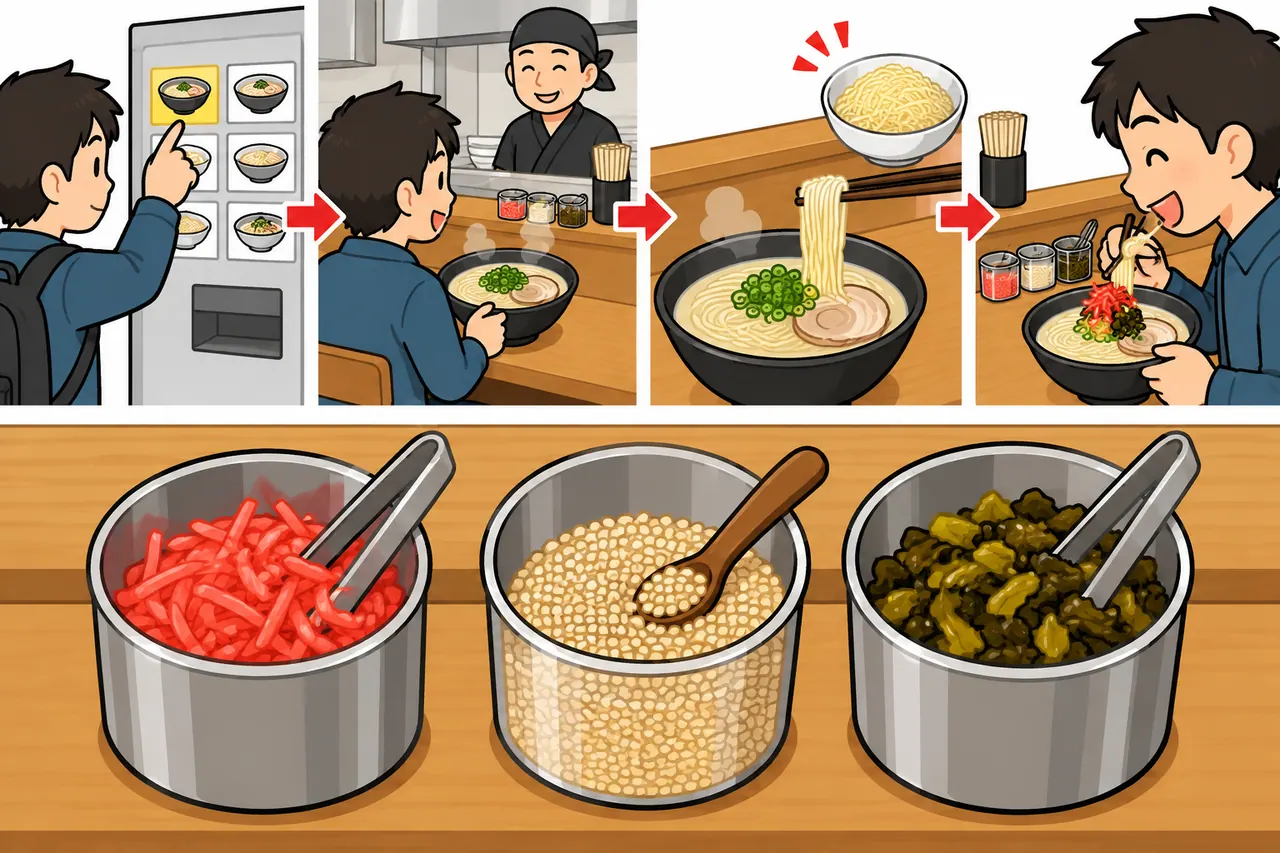
A simple approach is to taste the broth before adding anything. Then add a small amount of a condiment, taste again and decide whether you want more; pickled or spicy ingredients can change the flavour of the bowl. This is practical personal guidance, not an official rule about how ramen must be eaten.
If a shared spoon or tongs are provided, use those utensils to take a condiment rather than putting your own chopsticks into a shared container. Paid toppings are different from condiments set out for diners to use: extra pork, for example, should be ordered from the menu or ticket machine if it is offered. At ICHIRAN, chashu, scallion, spice and garlic are among the choices you can make on the order form.
Ordering ramen at a yatai
A yatai is a small open-air food stall, and the ordering routine may feel different from eating in a restaurant. Before ordering, check the menu prices and make your order clearly. Fukuoka City’s guide to enjoying yatai advises customers to order at least one drink and one dish per person.
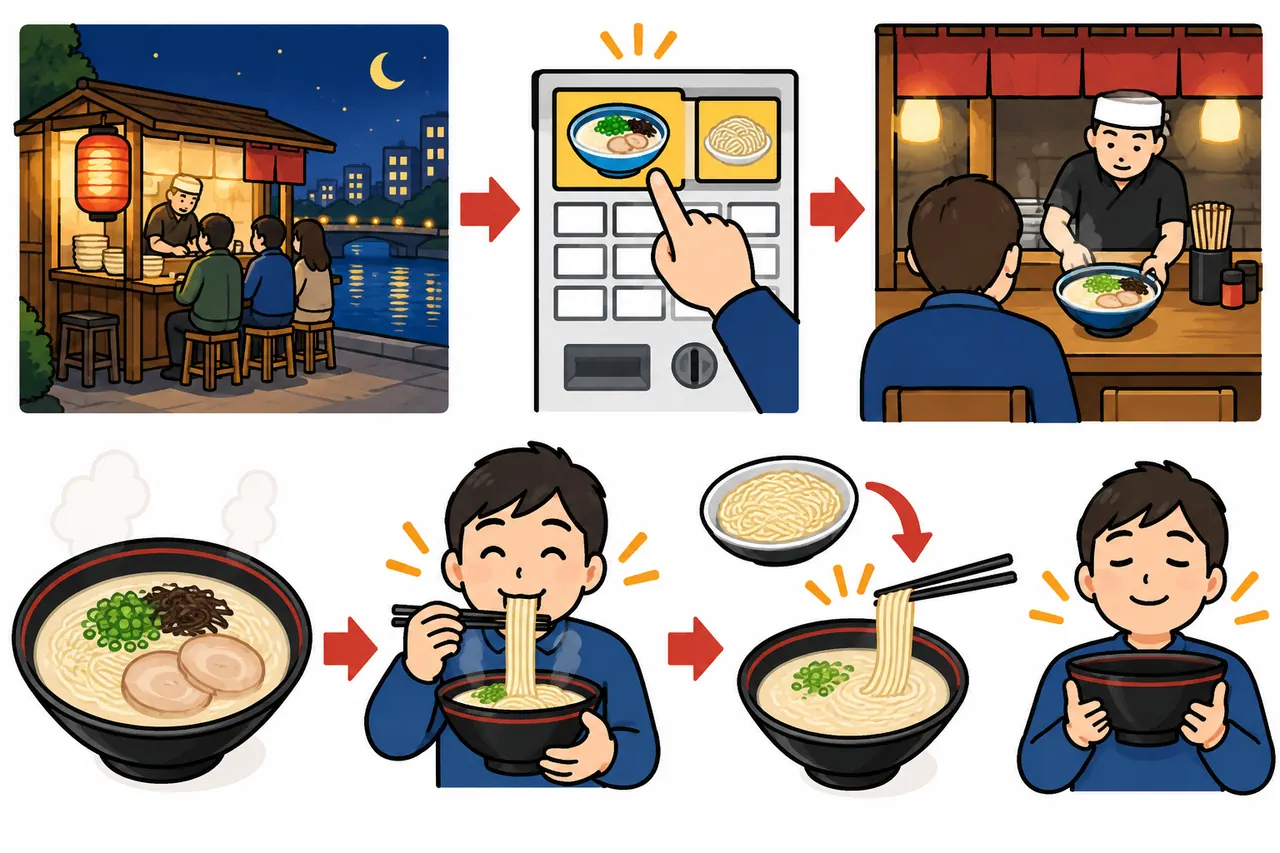
Bring cash rather than assuming that a stall will accept a card. Fukuoka City says that most yatai are cash only and that about 10% take cards, so card acceptance is the exception described by the official guide, not something to count on. If you do not have cash, check payment options before settling in to order.
At the stalls featured in Fukuoka City’s ramen article, ramen was listed at 700–750 yen in the article dated 28 May 2024. This is a dated price range for the featured stalls, not a current guaranteed price at every yatai; check the menu at the stall before ordering. For more about stall visits, see the related guides below on yatai etiquette, prices, opening hours and the Nakasu yatai area.
Trying different styles at Fukuoka Ramen Stadium
Fukuoka Ramen Stadium is a ramen food court on the fifth floor of the Cinema Building at Canal City. The JNTO guide to Fukuoka Ramen Stadium gives two access options: take the loop bus for 100 yen from Hakata or Tenjin Station, or walk for 15–20 minutes. The bus fare and walking time are the details given by that guide; check current transport and venue information as part of planning your visit.
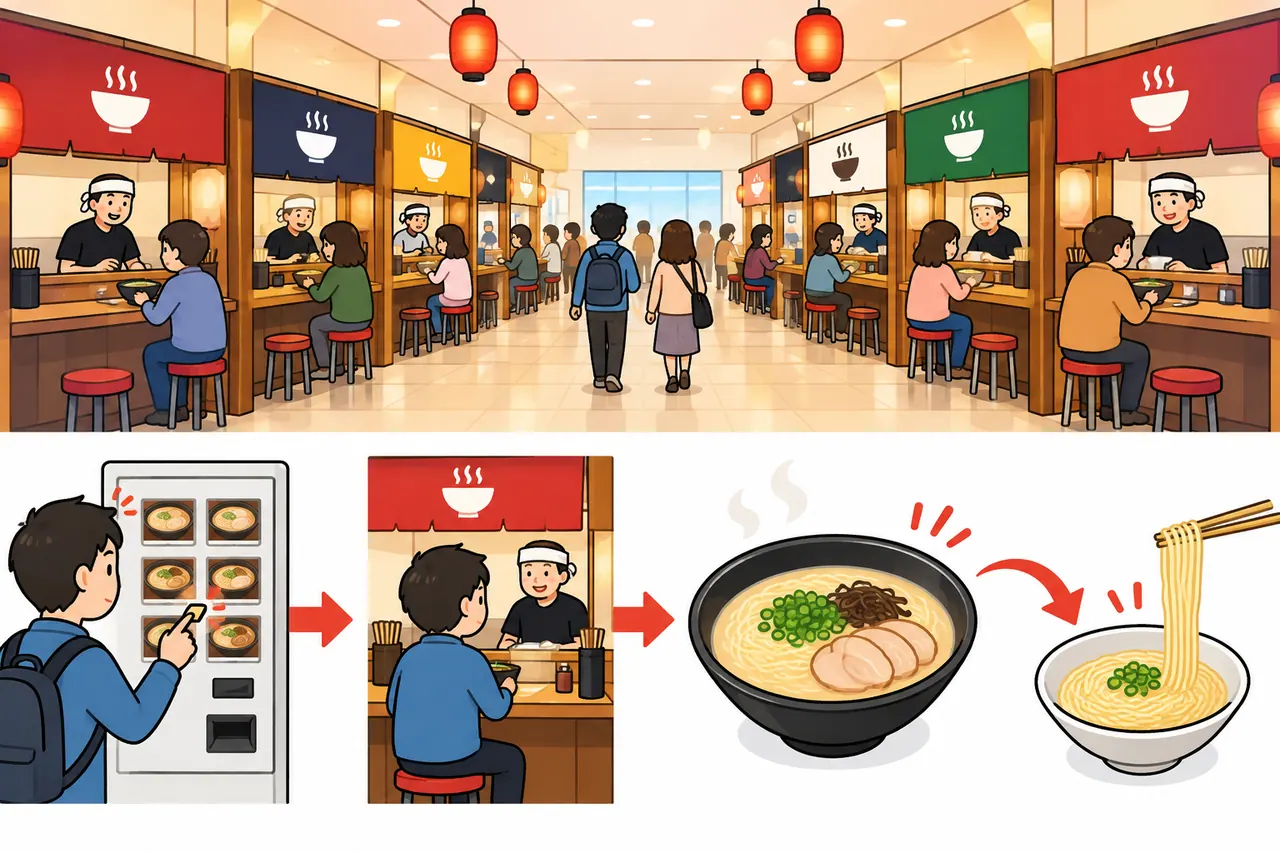
A food court can be a useful place to compare ramen styles because several shops are gathered in one location. Each restaurant may have its own menu, ordering method and refill procedure, so do not assume that the process you used at one counter applies to the next. Look at the individual shop’s menu before ordering.
Opening hours and the shops at the venue can change. Check the latest venue information before setting out, especially if you are planning your visit around a particular shop. The JNTO guide is a practical starting point for the location and access details, but it does not remove the need to check current information.
Common first-time mistakes
Drinking most of the broth before deciding about a refill. Kaedama is noodles only, and the JNTO guidance says to order while at least half the broth remains. If you might want another portion, leave enough soup to go with it.
Expecting the broth to be topped up with the noodles. A refill does not include more soup. This is why it helps to pace your broth and check the menu for the shop’s refill method before you need it.
Waiting a long time before eating. Thin noodles soften in hot broth, so start while the bowl is hot. If you expect to eat slowly, you may prefer kata, although the best firmness is ultimately a matter of taste.
Assuming every restaurant has the same ordering system. One shop may use a ticket machine, another may take orders at the counter, and ICHIRAN uses an order form for its customizations. Look for the instructions at the restaurant rather than pressing buttons or filling in a form based on what happened elsewhere.
Arriving at a yatai with only a payment card. Fukuoka City says most stalls are cash only, with about 10% taking cards. Bring cash and check the menu prices before ordering.
Sitting at a yatai without ordering enough. Fukuoka City’s guide advises at least one drink and one dish per person. Check the menu and order clearly so you know what you are choosing and how much it costs.
FAQ
What firmness should I order the first time?
Futsu, or normal firmness, is a safe starting point if you have no strong preference. Choose kata if you already know you like a firmer noodle texture. The shop’s menu may offer a different set of choices, so follow the terms shown there.
What do barikata, harigane and konaotoshi mean?
Barikata means extra hard in JNTO’s list. JNTO describes both harigane and konaotoshi as very hard terms used by local fans. These terms are not available at every shop, so use them only if the menu offers them or staff confirm that they can prepare them.
How much does kaedama cost?
There is no official yen price for kaedama in the supplied sources, and the price varies by restaurant. The Fukuoka Prefecture Tourism Association says it usually costs a small fraction of the bowl price. Check the menu or ticket machine at the shop for the actual price.
Can I get more broth with kaedama?
No. Kaedama is a refill of noodles only; the broth is not refilled. Keep enough soup in the bowl if you want the new noodles to have broth with them.
When should I order kaedama?
Order it while you still have broth left, rather than waiting until the bowl is almost empty. JNTO’s Ramen Stadium guide says you can order extra noodles while at least half the broth remains. Restaurant practice may vary, so check the shop’s instructions if you are unsure.
Do I need to speak Japanese to order?
Not necessarily. Some restaurants use ticket machines, some take orders at the counter, and ICHIRAN uses an order form for its seven customizations. Fukuoka City reports that one featured shop has a ticket machine with English, Chinese and Korean menus, but language support is not guaranteed at every restaurant.
Can I pay by card at a yatai?
Do not assume that you can. Fukuoka City says most yatai are cash only and about 10% take cards. Bring cash, and check payment options at the stall if you want to use a card.
What were the ramen prices at yatai?
Fukuoka City’s article dated 28 May 2024 listed ramen at 700–750 yen at the featured stalls. That is a dated range for those stalls, not a price guarantee for every yatai or for a later visit. Check the menu at the stall before ordering.