How to get to Tochigi: routes, tickets and arrival steps
Contents
Tochigi is a prefecture, not one arrival station. The best route depends on whether you are heading to Utsunomiya, Oyama, Nikko, Kinugawa Onsen or another destination, so check the town and station you need before buying a ticket. A prefecture-wide search can point you toward a station that is convenient for one part of Tochigi but not for your actual plans.
For Tokyo-area travel, the main choices covered here are the Tohoku Shinkansen to Oyama or Utsunomiya, the Utsunomiya Line to Utsunomiya, and direct limited express trains toward Nikko or Kinugawa Onsen. Reaching a regional station is only one part of the journey: visitors continuing to Shinkyo, Lake Chuzenji or Kegon Falls need to check the connecting bus and final walk as well.
The information below uses official pages checked on 4 November 2026. Published train times are examples, bus services may be seasonal, and fares can apply only to a specific leg. Recheck the operator’s information for your travel date before setting out.
1. Choose your arrival point
Utsunomiya and Oyama for the Shinkansen
The Japan National Tourism Organization (JNTO) describes the Tohoku Shinkansen from Tokyo or Ueno as one way to reach Tochigi, with Oyama and Utsunomiya given as example stations. Its guide describes the journey from the Tokyo area as about 50 minutes. Treat that as a broad reference for the rail journey, not a door-to-door estimate: your total time also depends on getting to the departure station and continuing from your arrival station to your accommodation or attraction. JNTO’s Tochigi guide provides the prefecture-level access overview.
The Utsunomiya Line from Tokyo or Ueno is another option for Utsunomiya, with JNTO describing the journey as about 100 minutes. Compare it with the Shinkansen for your actual departure point and destination, rather than choosing by the train time alone. If you are visiting somewhere beyond Utsunomiya, check how you will make the final connection before deciding that this is the more convenient arrival point.
These station names are not interchangeable. For example, the source identifies Utsunomiya as a place to connect to the JR Nikko Line, while Oyama is an example of a Shinkansen arrival station in the prefecture. Confirm your destination against the station shown on your accommodation or attraction information.
Nikko and Kinugawa Onsen by direct train
For Nikko, JNTO lists direct limited-express services from Asakusa and Shinjuku, as well as the JR Nikko Line from Utsunomiya. A direct train can avoid a transfer at Utsunomiya, but the useful comparison is the journey from your starting point to the specific place you want to reach. Nikko Station, the shrine area and Lake Chuzenji are different points in the trip.
Kinugawa Onsen also has direct limited-express approaches from Asakusa and Shinjuku in JNTO’s overview. Do not select a train merely because its name or destination includes a familiar Nikko-area place: check the train’s destination and stopping pattern against the station you need. A service for Kinugawa Onsen is not automatically a direct service to Tobu-Nikko.
Spacia X is a Tobu limited express running from Asakusa toward Tobu-Nikko. The examples published on Tobu’s Spacia X guide include Spacia X 1, departing Asakusa at 07:50 and arriving at Tobu-Nikko at 09:39; Spacia X 3, 09:00–10:50; and Spacia X 5, 10:00–11:49. These are published examples, not a guarantee that a particular train will run on your chosen date, so check the service and timetable for that date.
Think beyond the station
A station may be a practical arrival point without being your final stop. If your plans include a local bus, a walk, a separate admission ticket or a drive, include each one in your estimate. This is especially important for a day trip: a train journey that looks short on its own can still leave limited time for the place you came to see.
For example, someone heading to Kegon Falls by public transport needs to account for the journey to Nikko, the bus to Chuzenji Onsen, the walk from the bus stop and the falls elevator if they plan to use it. Those are separate parts of the trip, not one station-to-attraction journey. The sections below give the published bus fares and Kegon Falls access details to help you work through them.
2. Compare time, cost and booking
A useful comparison separates the train or bus leg from the rest of the day. JNTO’s approximate 50-minute Shinkansen and 100-minute Utsunomiya Line descriptions are broad access references, while the Spacia X times above are examples for named trains. Neither type of figure includes every walk, transfer wait or onward journey. Start with the exact place you want to reach, then build the route around the services that operate on your date.
| Journey or product | Published time or period | Published fare or inclusions | What to check |
|---|---|---|---|
| Asakusa–Tobu-Nikko, Spacia X 1 | Example: 07:50–09:39 | Basic fare and limited-express charge are required | Confirm the train and fare for your travel date through Tobu |
| Nikko Station–Shinkyo bus | Listed fare: ¥220 | Bus fare for this leg | Check the selected service and timetable |
| Nikko Station–Chuzenji Onsen bus | Listed fare: ¥1,250 | Bus fare for this leg | Check the selected service and timetable |
| Kegon Falls elevator | March–November: 08:00–17:00 | Adult return ticket: ¥600 | No reservation; entry is first-come |
| Kegon Falls elevator | December–February: 09:00–16:30 | Adult return ticket: ¥600 | No reservation; entry is first-come |
Bus and elevator details in the table are from the relevant operator pages, with the listed information checked on 4 November 2026. A bus fare covers the named bus leg, not the train to Nikko or every other journey in your itinerary. Likewise, the Spacia X row describes the basic fare and limited-express charge as required components; it is not a complete price for every seat category.
The Spacia X fare varies by regular, peak and off-peak periods. Tobu states that a Standard Seat requires a basic fare and a limited-express charge. Special seating requires the basic fare and Standard limited-express charge as well as a separate special-seat charge, so do not treat the extra seat fee as the full cost of travelling.
The Cockpit Suite is a room for up to seven people with a special-seat fee of ¥18,000. The Compartment is a room for up to four people with a special-seat fee of ¥8,000. These room fees are not all-inclusive rail prices: add the required fare components and check the product and date in Tobu’s purchase information. A photograph of a premium room does not establish the total price or availability for your journey.
3. Buy rail tickets and plan Nikko bus connections
Buying a Spacia X ticket
Tobu provides an online limited-express ticket purchase route and also directs overseas visitors to TOBU Japan Trip Tickets. Start at the official Spacia X guide and follow the purchase option that matches your journey. Select the actual travel date and direction, then check the train, seat category and listed fare components before paying.
Compare the product you are buying with the seat or room you want. A Standard Seat and a special seat have different charges, and the room fee for a Cockpit Suite or Compartment is an additional special-seat charge rather than a complete journey price. The available information does not establish a single total fare for all dates and passengers, so use the operator’s purchase screen for your own itinerary.
Keep the confirmation and ticket in the form accepted by the operator. Do not assume that a screenshot, a pass or another ticket product substitutes for the item shown in the purchase conditions. If you are also taking a local bus, check that leg separately rather than assuming the rail purchase includes onward transport.
Bus fares from Nikko Station
The Tobu Bus Nikko guide lists separate fares from Nikko Station for a range of destinations. The fares below are useful for estimating individual legs, but they are not a combined itinerary or an instruction to add every listed destination together.
| Destination from Nikko Station | Listed bus fare |
|---|---|
| Shinkyo | ¥220 |
| Nishisando Iriguchi | ¥350 |
| Chuzenji Onsen | ¥1,250 |
| Ryuzu Falls | ¥1,600 |
| Akanuma | ¥1,700 |
| Yumoto Onsen | ¥1,950 |
| Kirifuri Kogen | ¥850 |
The operator’s Nikko bus information also lists a ¥600 fare between Tobu-Nikko and Kinugawa Onsen. Check the named boarding point and destination carefully: Nikko Station and Tobu-Nikko are distinct station names, and a fare for one leg does not describe travel from every starting point in the area.
Seasonal services and changing timetables
Some routes in the Nikko area are seasonal, so an old timetable may not apply to your journey. The K service toward Kirifuri Kogen is listed for the annual period from 1 April to 30 November. The T service toward Kirifuri Falls is listed from 1 December to 31 March, and the Chuzenji Onsen–Hangetsuyama route is also seasonal.
The summer timetable consulted for this guide applies from 1 April to 30 November 2026. It should not be carried over as a winter timetable or assumed to cover dates outside its stated period. Check the operator’s current timetable for your exact date and destination, especially if your plan depends on a seasonal connection.
4. Plan the full journey to Kegon Falls
From Nikko Station to the falls
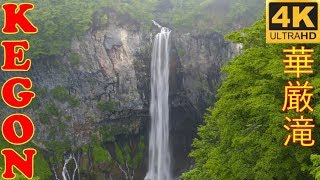
Kegon Falls is about a five-minute walk from the Chuzenji Onsen bus stop, according to the Kegon Falls access information. That walk is only the final approach from the stop; it does not include the journey to Nikko Station or the bus ride up to Chuzenji Onsen. If you are planning a day trip, allow space in your schedule for each part of the route.
The falls also have a paid elevator. The official Kegon Falls information page lists operating hours of 08:00–17:00 from March through November and 09:00–16:30 from December through February. The adult return fare is ¥600, and reservations are not required; admission is first-come. Check the hours that apply to your month, and do not confuse the elevator’s operating period with the bus timetable.
The elevator ticket is a separate cost from the bus fare. For example, the listed Nikko Station–Chuzenji Onsen bus fare is ¥1,250, while the adult return elevator ticket is ¥600. These prices describe different parts of a visit, and they do not include the train to Nikko, food or any other journey.
Driving and parking
The access information gives an approximate driving time of 50 minutes from Utsunomiya Interchange to Kegon Falls via the Nikko-Utsunomiya Road, Kiyotaki Interchange and Irohazaka. This is a route estimate, not a guaranteed journey time, especially when traffic or snow affects the road. If your visit is tied to a timed connection or admission plan, do not rely on the estimate as a promise of arrival.
The nearest parking options are the First and Second car parks. The access page gives a walk of around two to three minutes from either car park to the elevator entrance. Normal-car parking is ¥500 per visit, while microbuses and large vehicles are listed at ¥2,000 per visit. Check the access information for the vehicle category that applies to you and allow for the walk from the car park.
Whether you travel by bus or car, keep the arrival point and final entrance distinct in your plan. Bus users need the Chuzenji Onsen stop and the walk to the falls; drivers need the relevant car park and the walk to the elevator entrance. The journey estimate, parking charge, elevator hours and ticket are separate facts, so compare them as separate parts of your day.
5. Book and manage the whole journey
Start from the final destination, not just the train station. Write down where you will begin, the station or bus stop you need, the transfer point, and the final address or attraction entrance. A published train time describes a train leg; it does not automatically include the walk to the platform, time between services or the local journey at the other end.
Next, price each leg using the product and conditions that apply to it. A Spacia X journey can include a basic fare, limited-express charge and, for special seating, a separate special-seat charge. A Nikko-area bus fare is for its listed bus journey, and the Kegon Falls elevator has its own ticket. Keep the components separate until you have confirmed what each operator’s purchase screen includes.
A practical booking and checking sequence is:
- Open the relevant operator page and select the date, direction and boarding point for the leg you want to book.
- Check the train or bus destination against your intended station or stop. Similar destination names do not guarantee that a service reaches the same place.
- Read the listed fare components and seat category before buying. For Spacia X, distinguish a standard seat from a special seat or room.
- Save the confirmation and useful station or route information. Keep the ticket in the format required by the operator rather than assuming any saved image will be accepted.
- Before departure, check the operator’s current timetable and service notices. A route overview, a dated timetable and a disruption notice answer different questions.
Check whether the information you are using is for the right date. The summer Nikko bus timetable in this guide applies from 1 April to 30 November 2026, while the Kirifuri services have separate annual seasonal periods. A route may exist without operating on the date you need, so confirm the actual service rather than relying on route geography alone.
For the return, plan backwards from the transport you must catch. The last usable train, the last bus connection and the elevator’s closing time are separate limits. A later departure on one part of a route does not prove that the rest of the chain still works, and an outward itinerary may not work in reverse. Recheck the return connections for your date before committing to the day’s schedule.
If you are travelling with children, have reduced mobility or are carrying bulky luggage, inspect the boarding point and transfer arrangements before purchase. Ask the operator about the actual equipment and luggage rules for the service you plan to use. A route map or station name alone does not establish step-free access or available luggage storage.
6. Connections, luggage and alternatives
If a connection no longer works
If a connection is missed or disrupted, first check the operator’s timetable for the next usable departure. Ask station or service staff which part of your booking can be changed, and keep the booking reference and original sales channel available. Change and refund conditions depend on the product you bought, so do not assume that one ticket’s rules apply to another.
Avoid taking an improvised shortcut before checking what it means for the rest of your journey. Changing one train may affect a reserved seat, a bus connection or the time available at your destination. Confirm the next leg as well as the immediate departure so that you know whether the revised route still gets you where you need to go.
Seasonal services need particular care when making an alternative plan. For example, the Kirifuri K service and T service cover different parts of the year, and the Chuzenji Onsen–Hangetsuyama route is seasonal. If your original bus is unavailable, do not assume another service follows the same route or timetable; check the operator’s information for the date and destination you need.
Keep locations and tickets easy to identify
Save the destination’s Japanese name alongside its English spelling, and store separate map pins for the arrival station, final stop and accommodation. The station pin helps with orientation, while the accommodation address tells staff where you actually need to go. This is useful when several local stops or similarly named places appear in a route search.
Keep ticket details, confirmations and operator notices together so you can refer to the relevant information during a transfer. If your itinerary uses separate rail and bus purchases, make sure you can identify which confirmation applies to each leg. Check the accepted ticket format with the operator instead of assuming that every screenshot or booking summary can be used for travel.
A pass may be worth comparing with separate tickets, but only if its coverage, dates, eligibility and reservation conditions match the journeys you will actually take. The available information here does not establish that a particular pass covers every route or fare listed. Compare it with the priced legs in your real itinerary rather than adding unrelated trips to make a pass appear better value.
7. Questions before departure
Is the journey time in this guide the total time to my destination?
No. The approximate times for the Shinkansen and Utsunomiya Line refer to the broad rail access descriptions, and the Spacia X times are examples for named trains. Add your journey to the departure station, any transfer wait, the local bus and the final walk before estimating the time to your destination. Check the service for your exact travel date before relying on a particular departure.
Does the Spacia X special-seat price include the whole journey?
No. Tobu’s information distinguishes the basic fare and limited-express charge from the special-seat charge. The Cockpit Suite and Compartment fees given here are special-seat fees, not all-inclusive rail prices. Check the actual purchase screen for the date, seat or room category and required fare components before paying.
Can I use the Nikko bus timetable throughout the year?
Not necessarily. The K service toward Kirifuri Kogen is listed from 1 April to 30 November, while the T service toward Kirifuri Falls is listed from 1 December to 31 March; the Chuzenji Onsen–Hangetsuyama route is seasonal. The summer timetable consulted for this guide applies from 1 April to 30 November 2026, so check the operator’s information for any other date.
How do I plan a visit to Kegon Falls by public transport?
Check the train to Nikko, then the bus to Chuzenji Onsen and the walk of about five minutes from that stop to the falls. If you plan to use the elevator, allow for its seasonal opening hours and the ¥600 adult return ticket; no reservation is required, and entry is first-come. Keep the bus fare, elevator ticket and train fare separate when estimating the cost.
What should I check if I am driving?
The published road estimate is about 50 minutes from Utsunomiya Interchange via the Nikko-Utsunomiya Road, Kiyotaki Interchange and Irohazaka, but it is not a guarantee in traffic or snow. Check the route and conditions for your date, then account for parking: the listed fee is ¥500 per visit for a normal car and ¥2,000 per visit for a microbus or large vehicle. From either nearby car park, the walk to the elevator entrance is around two to three minutes.