
Haneda Airport to Tokyo: Train, Bus or Taxi? (2026)
Contents
- 1. Compare routes and destinations
- 2. Haneda Airport to Tokyo by train: fares, gates and passes
- 3. Haneda Airport to Tokyo by bus: tickets, stops and destinations
- 4. Haneda Airport to Tokyo by taxi, private transfer or rental car
- 5. Haneda Airport to Tokyo late at night: trains, buses and hotels
- 6. Terminal transfers and arrival checklist
- 7. Haneda Airport to Tokyo FAQ
Haneda Airport’s code is HND; Narita Airport’s is NRT, and the two airports need different travel plans. From Haneda, the main rail choices are Keikyu toward Shinagawa and the Tokyo Monorail toward Hamamatsucho. A bus may be more convenient if its stop is near your hotel, while a taxi can take you to an address. (Haneda Airport’s access guide)
On this page
- Compare routes and destinations
- Take the train
- Take the bus
- Take a taxi, private transfer or rental car
- Travel late at night
- Transfer between terminals and prepare to leave arrivals
- Frequently asked questions
The prices and service details in this guide were checked on November 3, 2026, unless stated otherwise. Published journey times are estimates, not door-to-door guarantees: they may exclude waiting, transfers, airport procedures or the walk to your final address. Recheck the official operator information for your travel date.
Compare routes and destinations
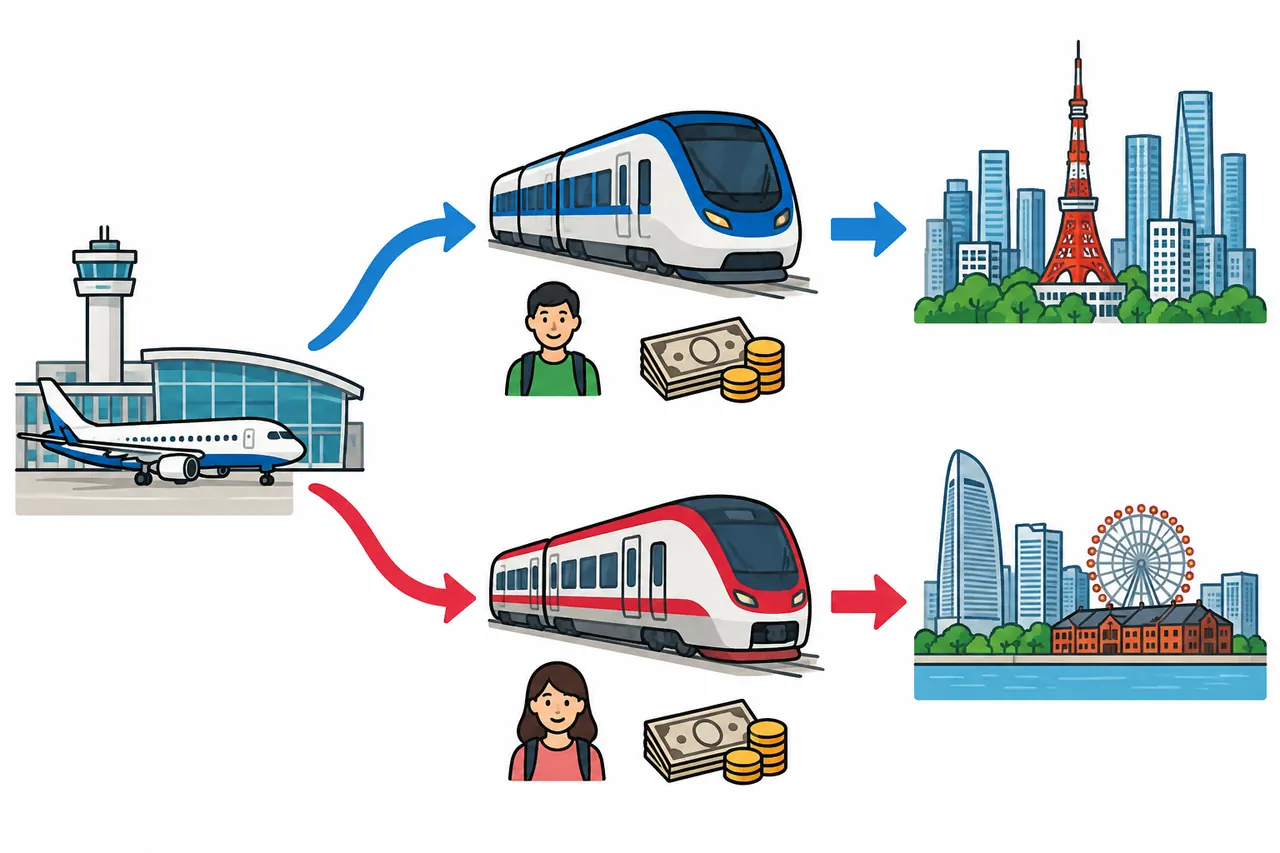
Choose a route for your complete hotel address, not just the first station you reach. Keikyu to Shinagawa has the lower stated airport-to-city fare of the two priced rail trips below, but that does not establish which route is cheapest for your entire journey. The airport’s estimates and other journey estimates can differ because they may use different terminals, trains, stops or starting points.

| Option | Adult one-way fare for the trip shown | Published ride estimate | What to check |
|---|---|---|---|
| Keikyu to Shinagawa | ¥327 by IC card; ¥330 by ticket | About 15 minutes | Whether your onward train requires a change |
| Tokyo Monorail to Hamamatsucho | ¥519 by IC card; ¥520 by ticket | About 20 minutes in Haneda Airport’s estimate | Whether Hamamatsucho is useful for your next train |
| Train to Tokyo Station | Complete fare not confirmed here | About 30 minutes in Haneda Airport’s estimate | The JR connection and total fare |
| Bus to Tokyo Station | Tokyo Airport Transport lists ¥1,200 adult and ¥600 child for Tokyo Station Yaesu North Exit | About 35 minutes | The exact stop, departure and service on your date |
| Regular taxi | Fixed fare where applicable, or meter; highway fees extra | Ask the provider | Whether your address is in a fixed-fare area |
| Private transfer | Ask the provider | Ask the provider | Meeting point, fare and what is included |
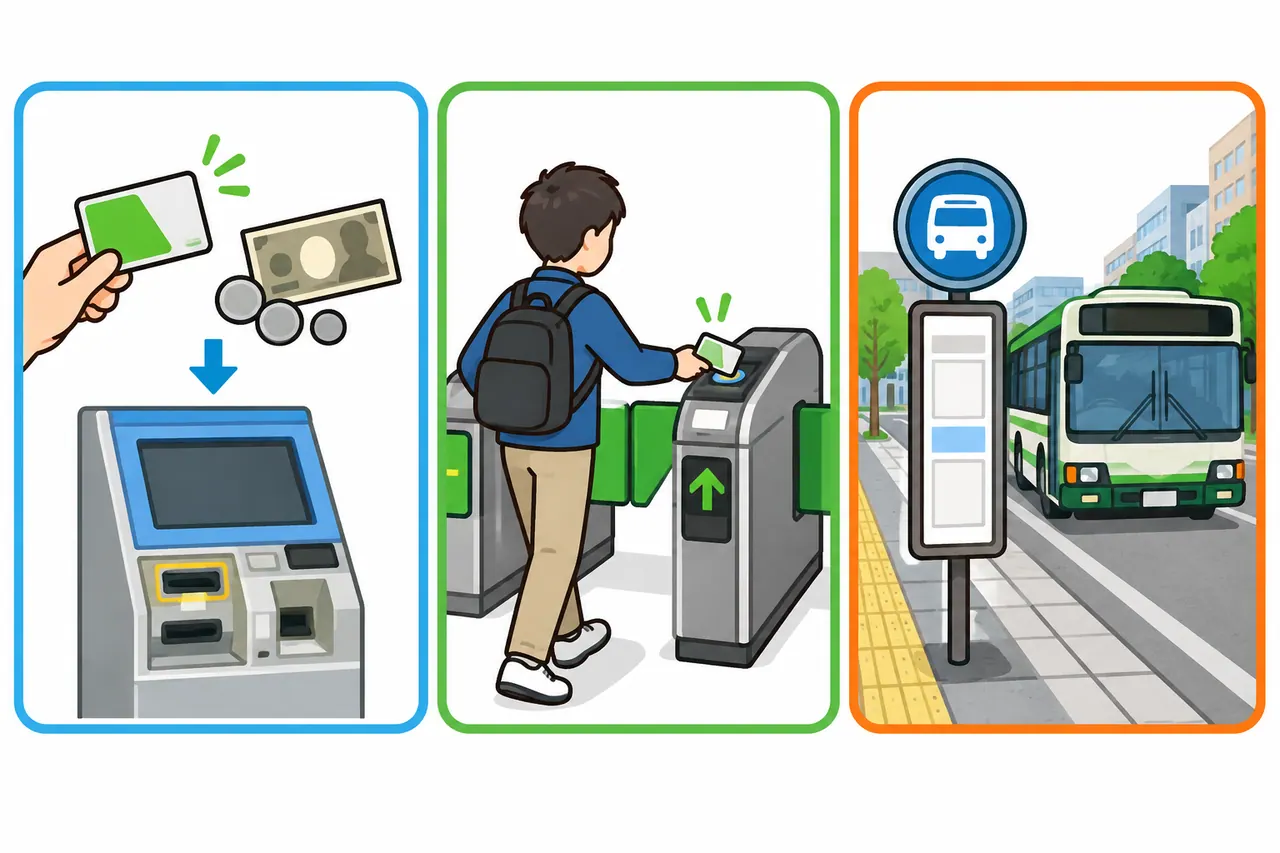
An IC card is a reusable transport card that you add money to. A meter fare is calculated during the taxi ride, while a fixed fare is a set price for a trip that meets the service’s rules. Rail figures are from Keikyu and Tokyo Monorail; bus figures and estimates are from Haneda Airport’s access information and the operator information linked below.
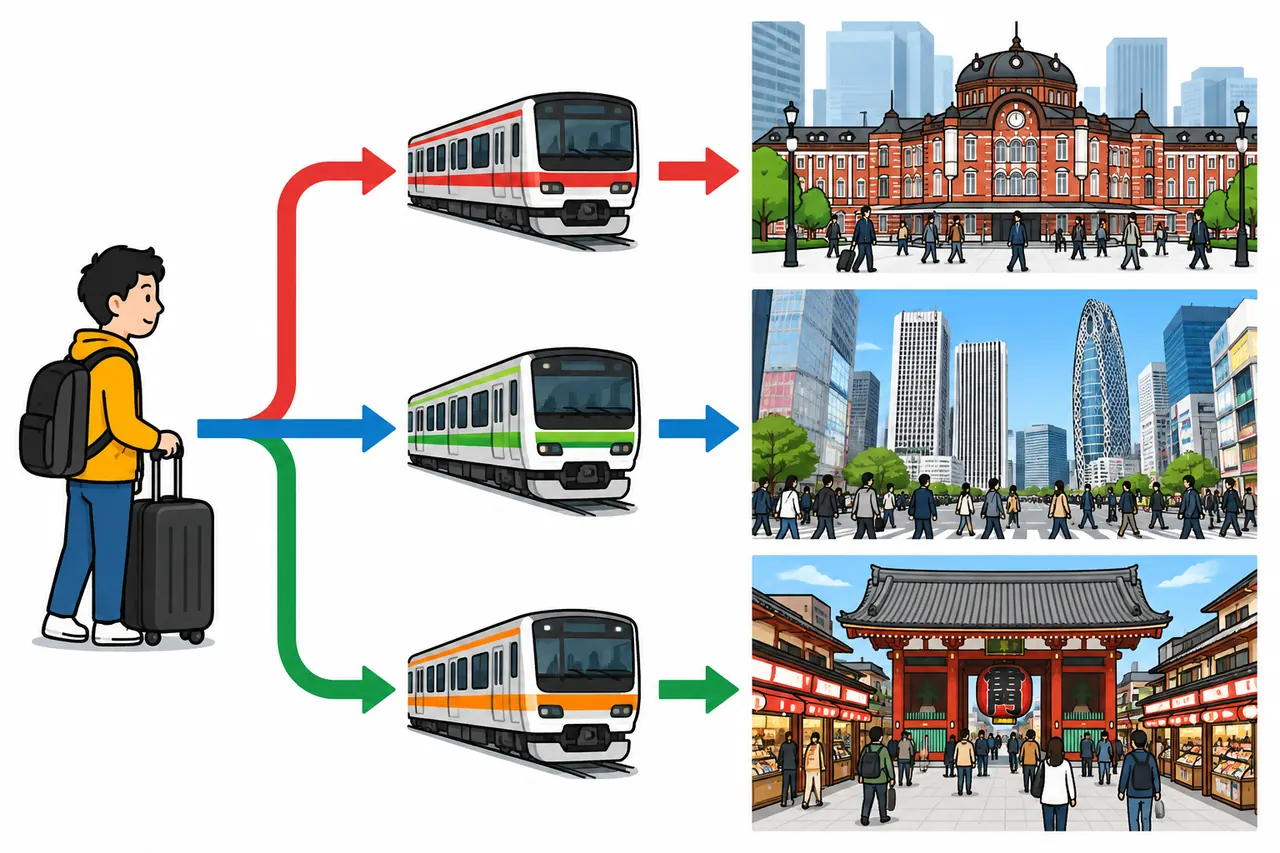
Start with your destination
The table gives practical rail directions and published estimates, not guaranteed door-to-door times. Complete fares are included only where they were confirmed in the checked official fare information; in particular, the prices to Shinagawa and Hamamatsucho are not the full fare to a later JR station. Confirm your specific train and fare in a route search before traveling.
| Destination | Practical rail route | Published estimate | Fare note |
|---|---|---|---|
| Shinagawa | Keikyu | About 15 minutes | ¥327 IC or ¥330 ticket |
| Hamamatsucho | Tokyo Monorail | About 20 minutes in Haneda Airport’s estimate | ¥519 IC or ¥520 ticket |
| Tokyo Station | Keikyu to Shinagawa, then JR; or Monorail to Hamamatsucho, then JR | About 30 minutes in Haneda Airport’s estimate | Complete fare not confirmed |
| Shinjuku | Keikyu to Shinagawa, then JR Yamanote Line | About 50 minutes in Haneda Airport’s rail estimate | Complete fare not confirmed |
| Shibuya | Keikyu to Shinagawa, then JR Yamanote Line | About 45 minutes in Haneda Airport’s rail estimate | Complete fare not confirmed |
| Ginza | Keikyu toward the Toei Asakusa Line, then change at Shimbashi for the relevant subway connection | About 50 minutes in GO TOKYO’s estimate | Complete fare not confirmed |
| Asakusa | A Keikyu train continuing onto the Toei Asakusa Line | About 50 minutes in GO TOKYO’s estimate | Complete fare not confirmed |
| Ueno | Change to JR at Shinagawa or Hamamatsucho | About 50 minutes in GO TOKYO’s estimate | Complete fare not confirmed |
| Ikebukuro | Change to JR at Shinagawa or Hamamatsucho | About 1 hour in GO TOKYO’s estimate | Complete fare not confirmed |
JR means Japan Railways. The Toei Asakusa Line is a subway line, and some Keikyu trains continue onto it. For Asakusa, check the train display to make sure your service continues to the station you need; for Ginza, check which subway station is closest to your address.
Journey estimates differ between sources. For example, GO TOKYO gives about 55 minutes from Haneda to Shinjuku by bus, while Haneda Airport lists about 35 minutes for a bus to Shinjuku Station West Exit. GO TOKYO’s estimates for Shinjuku, Shibuya, Ginza, Asakusa, Ueno and Ikebukuro are useful planning references, but they are not operator timetables.
Compare the two rail routes to Tokyo Station
Both common rail approaches to Tokyo Station require a JR change. The airport-rail fare is only the first part of the trip, and the complete adult fare was not confirmed in the official information checked for this guide. Do not use older transfer totals as current prices: some rail guidance includes fares from before JR East’s March 14, 2026 fare revision.
| First leg | Change to JR | Confirmed first-leg ticket fare | Additional fare |
|---|---|---|---|
| Keikyu to Shinagawa | Shinagawa | ¥330 | JR fare not confirmed here |
| Tokyo Monorail to Hamamatsucho | Hamamatsucho | ¥520 | JR fare not confirmed here |
For the Keikyu route, follow the city-bound signs at Haneda and take Keikyu to Shinagawa. There, follow the JR signs, check the departure display for a train to Tokyo Station, and follow the signs at Tokyo Station for your exit or next connection. You can check station layouts using JR East’s Shinagawa and Tokyo Station maps.
For the Monorail route, ride to Hamamatsucho and follow the JR signs there. Check the platform display before boarding, because the Monorail fare does not include the JR leg. JR East provides a Hamamatsucho station map for planning the transfer.
Haneda or Narita?
This guide covers HND, not NRT. If your flight lands at Narita, use a Narita-specific transport plan rather than assuming the same routes or fares apply. If you must travel between the airports, Haneda Airport’s access page lists a train estimate of 90–115 minutes and a bus estimate of 65–85 minutes, but check the exact service, terminals and fare with the operator. (Haneda Airport: access to Narita)
Haneda lists train fares between the airports of ¥1,760–¥3,080 by ticket or ¥1,746–¥3,066 by IC card, and a bus fare of ¥3,600. Keisei separately describes a 89-minute route from Narita Airport Terminals 2 and 3 to Haneda’s domestic terminal using an Access Express, at ¥1,800 by ticket or ¥1,787 by IC card; its 89-minute estimate excludes transfer time and does not, by itself, confirm the reverse journey. (Keisei: directions to Haneda)
Haneda Airport to Tokyo by train: fares, gates and passes
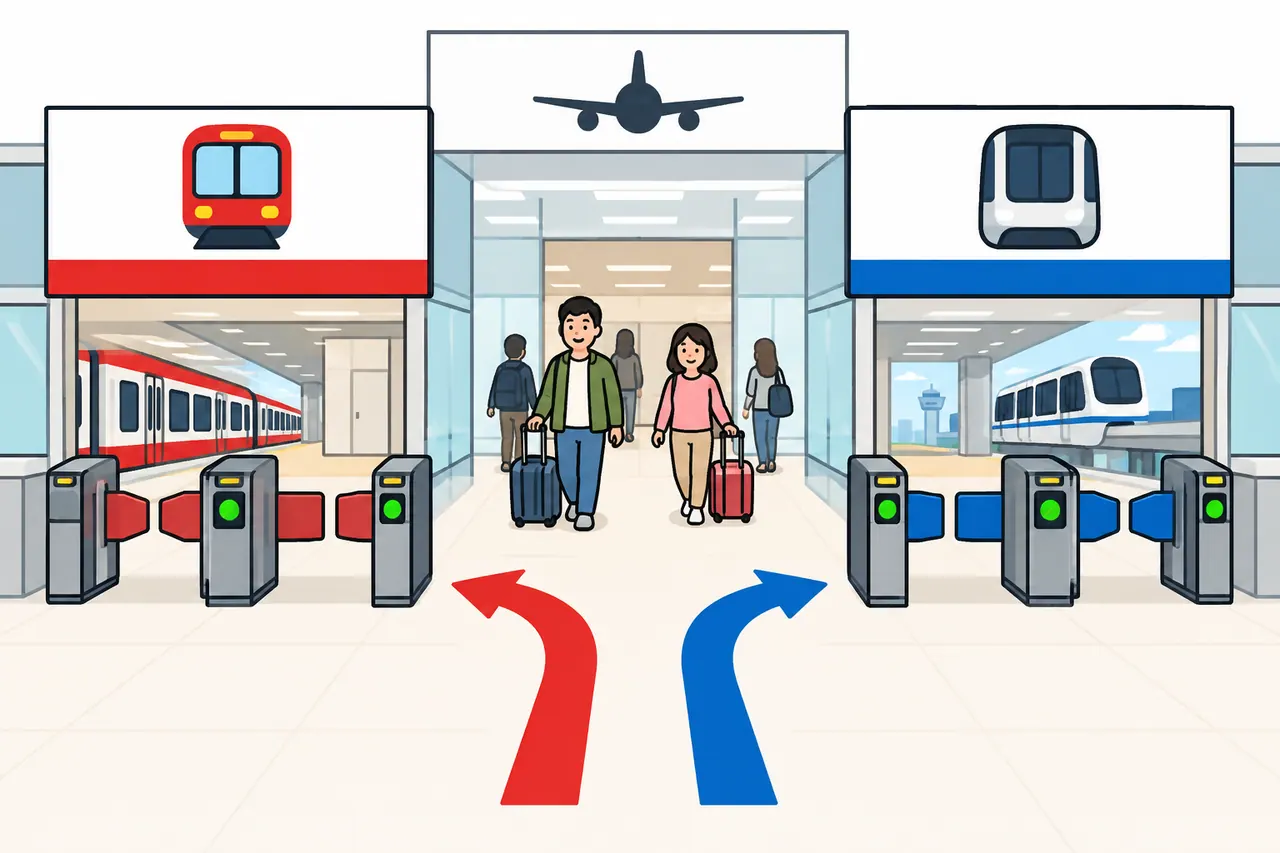
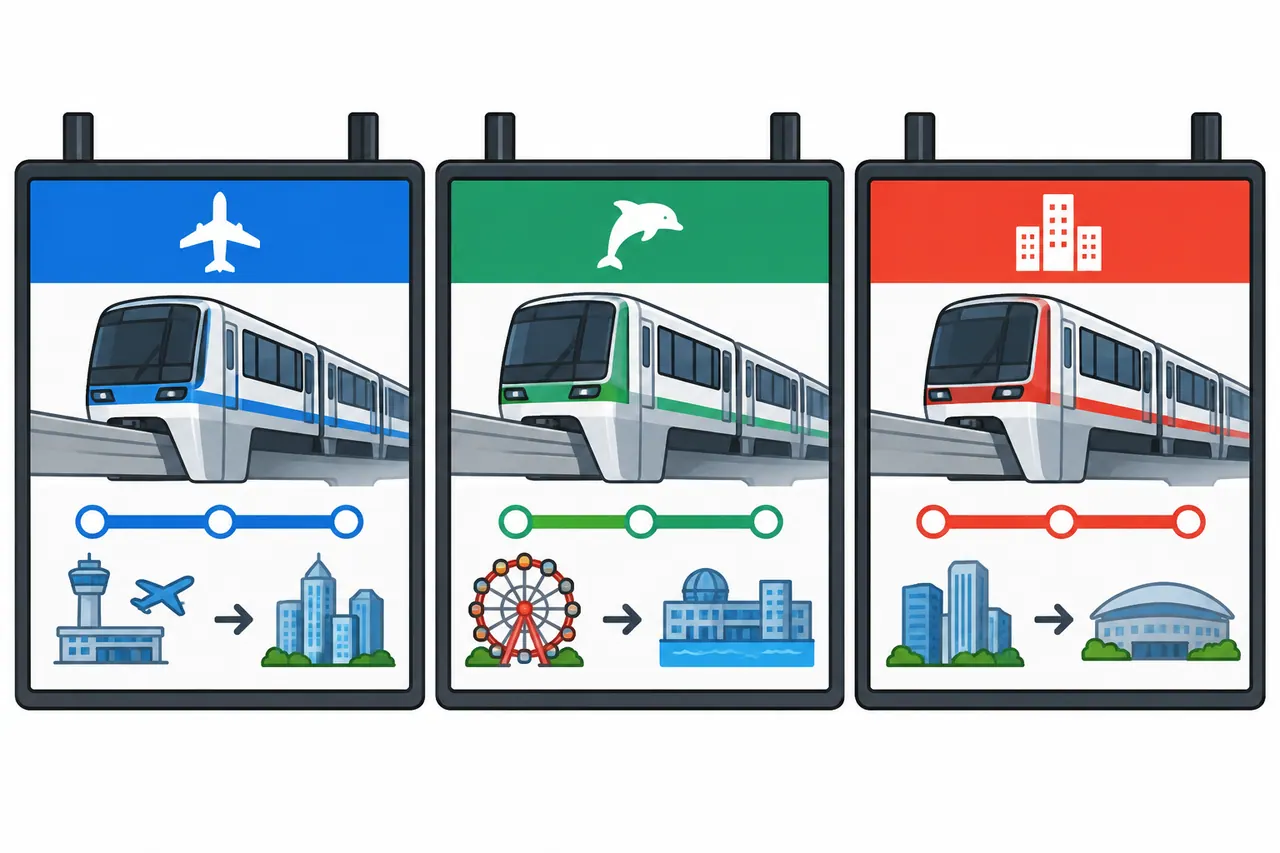
Keikyu heads toward Shinagawa, while the Tokyo Monorail heads toward Hamamatsucho. Their gates, fares and train displays are separate, so check which operator your route search names before following signs. Save both your transfer station and final destination before you leave the arrivals area.
Find your terminal’s railway gate
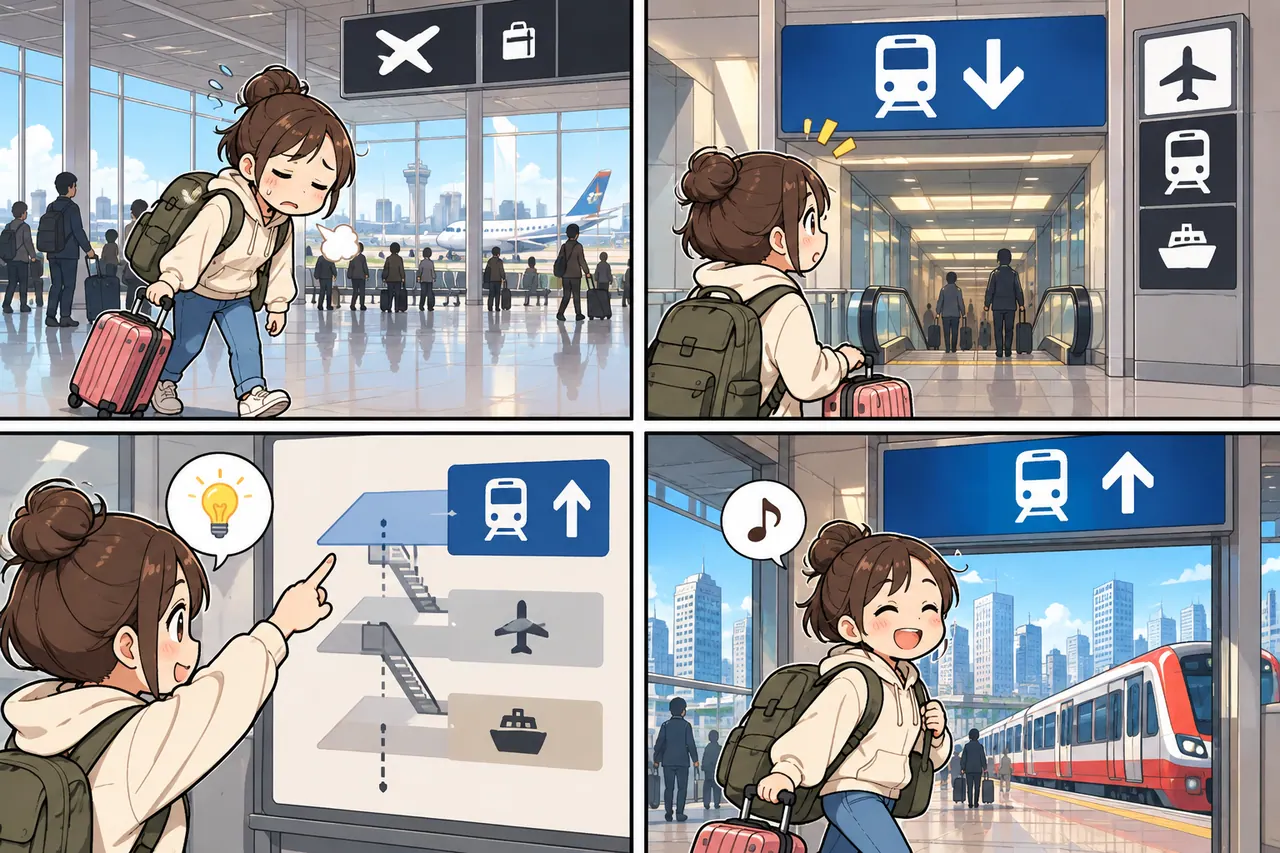
B1 and B2 mean basement levels; 1F, 2F and 3F mean the first, second and third floors. For Terminals 1 and 2, Haneda Airport describes the railway platforms as being on B1, while Keikyu describes its gates and platforms as B2. Because those floor descriptions differ, follow the local Keikyu signs rather than relying only on a floor number. (Haneda Airport train access; Keikyu access guide)
| Terminal | Keikyu | Tokyo Monorail |
|---|---|---|
| Terminal 1 | Follow Keikyu signs; the cited floor descriptions differ | Airport guidance lists the platform on B1 |
| Terminal 2 | Follow Keikyu signs; the cited floor descriptions differ | Airport guidance lists the platform on B1 |
| Terminal 3 | City and Yokohama gate on 2F; gate toward Terminals 1 and 2 on B2 | Gates on 2F and 3F |
Terminal 3 has different gate locations from Terminals 1 and 2. In particular, the Keikyu gate toward central Tokyo and Yokohama is on 2F, while the gate toward Terminals 1 and 2 is on B2. Check the Haneda floor guide if you want to review your terminal before following the signs.
Fares, journey estimates and train types
The confirmed adult one-way Keikyu fare from any of Haneda’s airport stations to Shinagawa is ¥330 by ticket or ¥327 by IC card. The Tokyo Monorail fare from an airport station to Hamamatsucho is ¥520 by ticket or ¥519 by IC card. These are separate airport-to-city trips to different stations, not full fares to Tokyo Station or another onward destination. (Keikyu fares; Tokyo Monorail fares)
Haneda Airport’s approximate rail times are 15 minutes to Shinagawa, 20 minutes to Hamamatsucho and 30 minutes to Tokyo Station. Tokyo Monorail’s own information gives 13 minutes from Terminal 3 to Hamamatsucho on the Airport Rapid and 19 minutes to Tokyo Station including a change after Hamamatsucho. The sources do not always identify the same starting terminal or train type, so treat the figures as planning estimates, not a promise for every departure. (Haneda Airport train access; Tokyo Monorail; Tokyo Monorail FAQ)
The Monorail runs Airport Rapid, Section Rapid and Local trains, and those services stop at different stations. Read the display before boarding to confirm that your train stops at your destination. Tokyo Monorail says trains run about every five minutes on average, but that average does not mean there is a departure every five minutes at every time of day. (Tokyo Monorail)
A simple step-by-step train plan
A little preparation can make the gate and transfer easier, especially if you arrive at a terminal you have not used before. First, find your terminal on your flight confirmation and enter that terminal and your final station into a railway route search. Read the result for the operator, departure direction, fare and changes before walking to the gate.
Follow the signs for the named railway, then use a ticket machine or a usable IC card before entering. At the platform, check the train display for direction and stops; keep your ticket or card ready for the exit and any transfer. If a gate, platform or transfer is unclear, ask station staff rather than boarding based only on the train’s destination label.
For Tokyo Station, make sure the route search includes the JR leg from Shinagawa or Hamamatsucho. The airport-rail prices in this guide cover only the first leg, so check the complete fare rather than budgeting only ¥330 or ¥520. Haneda Airport’s train page and the operators’ fare pages are useful starting points for checking your route.
IC cards, Welcome Suica and the Japan Rail Pass
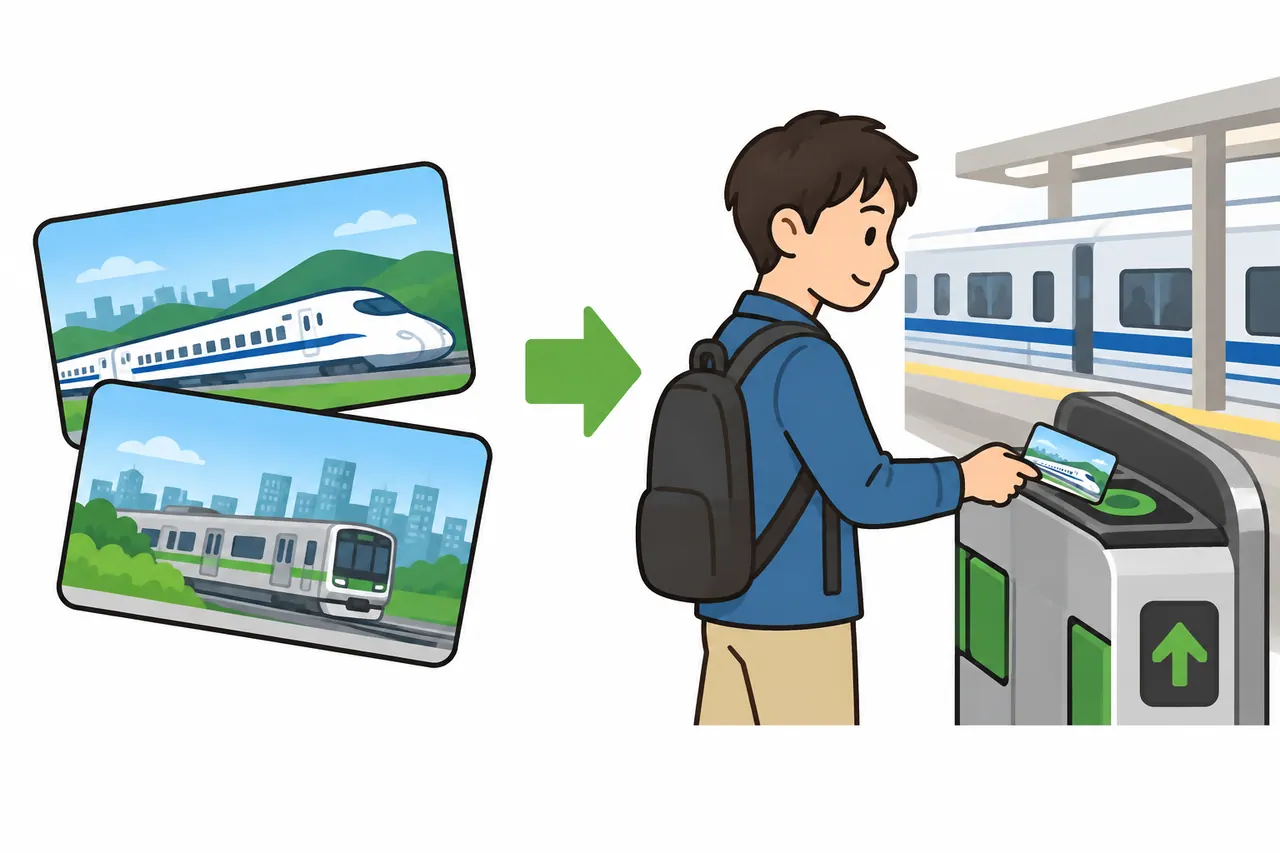
A transport IC card can be charged and reused to pay for eligible rail journeys. If you already have a usable card, check its balance before entering the gates; a paper ticket is another option. Welcome Suica is a visitor card, but its rules differ from those of other IC cards and from the mobile version.
The card-type Welcome Suica information checked for this guide says that it is sold at a dedicated machine at Tokyo Monorail’s Haneda Airport Terminal 3 Station and at JR East Travel Service Centers. It is generally one card per person, has no deposit, and is valid for 28 days from purchase. Check the official purchase information for current sales locations, hours and availability before relying on it.
The card can be charged in yen at compatible machines, up to a balance limit of ¥20,000. Credit-card charging is not available for the card described in this guidance, and remaining value is generally not refunded; separate procedures apply if the card is defective. These details refer to the physical card and should not be assumed to apply unchanged to the mobile version. (JR East Welcome Suica information; purchase-limit FAQ)
During its valid period, the nationwide JAPAN RAIL PASS covers the Tokyo Monorail and the JR lines included in its conditions. Keikyu is not listed as a covered line, so pay separately if you use it. Other JR passes may have different rules, so check the JAPAN RAIL PASS conditions rather than assuming the nationwide pass rules apply to another product.
First and last trains, timetable updates and help
The first and last trains vary by station, day and destination. Check the timetable for the airport station and travel date, then search for your onward train from Shinagawa or Hamamatsucho. Tokyo Monorail provides links to airport-station timetables, and Keikyu provides a Terminal 3 timetable.
The Keikyu standard timetable linked here lists revisions dated December 2025. Keikyu announced further timetable changes from November 21, 2026, for weekends and holidays, and from November 24, 2026, for weekdays, so check its timetable-change notice for the date you travel. A listed weekday Keikyu train leaves Terminals 1 and 2 at 00:05, Terminal 3 at 00:08 and reaches Shinagawa at 00:20; this is not confirmed as the last train or as a connection to JR. (Keikyu individual train information)
| Railway | Published contact number | Published contact hours |
|---|---|---|
| Keikyu | 03-5789-8686 | Haneda Airport lists weekdays 9:00–19:00 and weekends and holidays 9:00–17:00; a Keikyu notice lists 9:00–17:00 and closure over New Year |
| Tokyo Monorail | 050-2016-1640 | Daily 10:00–17:00 |
The Keikyu contact-hour information differs between its sources, so check the current notice if you need to call. These are customer-contact hours, not train operating hours. Haneda Airport lists the numbers and hours on its rail access page.
Haneda Airport to Tokyo by bus: tickets, stops and destinations
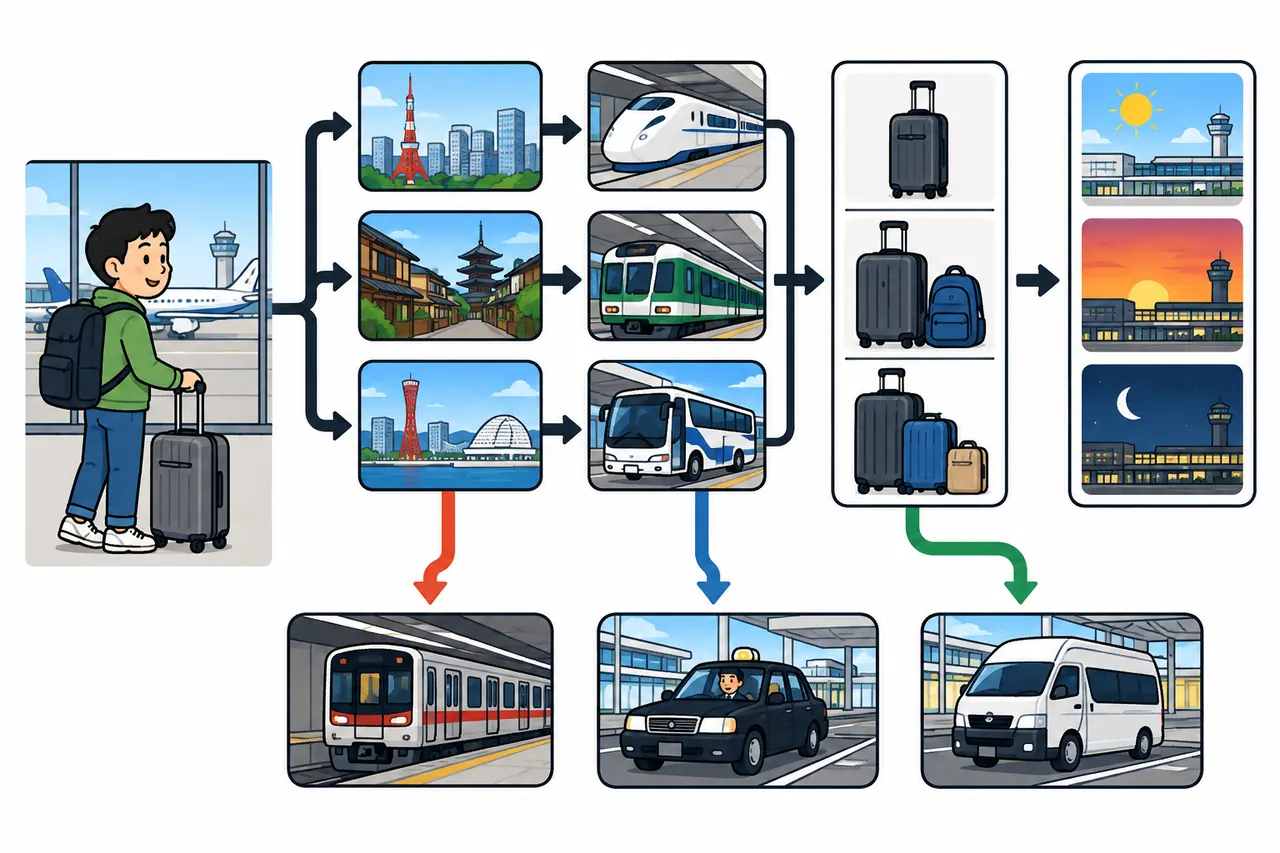
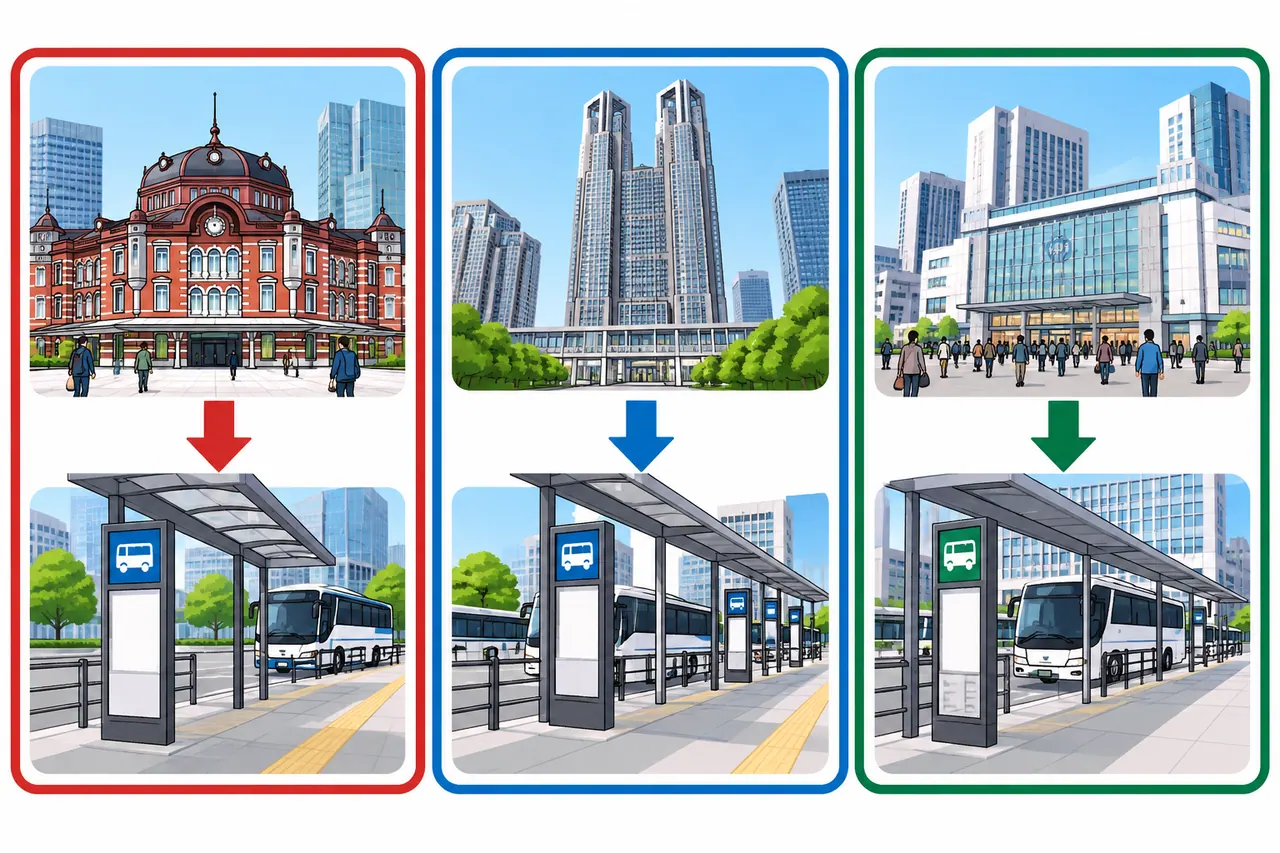
A bus can be useful if its city stop is close to your accommodation and you want to avoid a rail transfer. All three terminals have bus stops on 1F, but the stop number depends on your destination and terminal. “Limousine Bus” is the name of an airport bus service; it does not mean a private car.
Buy a ticket and find the right stop
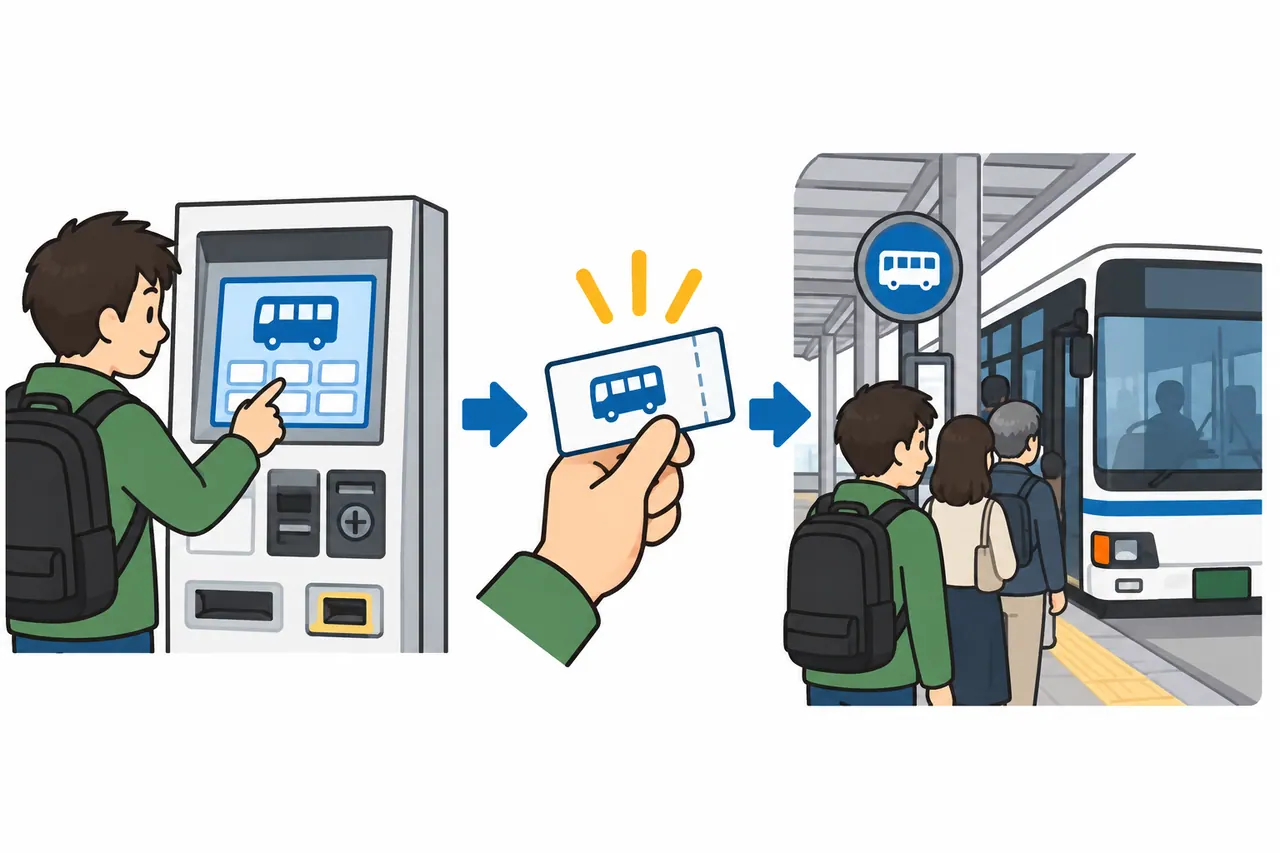
Haneda Airport lists ticket machines at Terminals 1 and 2 and a ticket machine or ticket counter at Terminal 3 for passengers buying before boarding. The bus ticket counters at Terminals 1 and 2 closed on March 29, 2025, so do not plan to rely on those counters. Check the airport bus guidance and its counter-closure notice before setting out.
| Destination | Terminal 1 stop | Terminal 2 stop | Terminal 3 stop |
|---|---|---|---|
| Tokyo Station | 3 | 4 | 1 |
| Shinjuku Station and Busta Shinjuku | 4 | 5 | 3 |
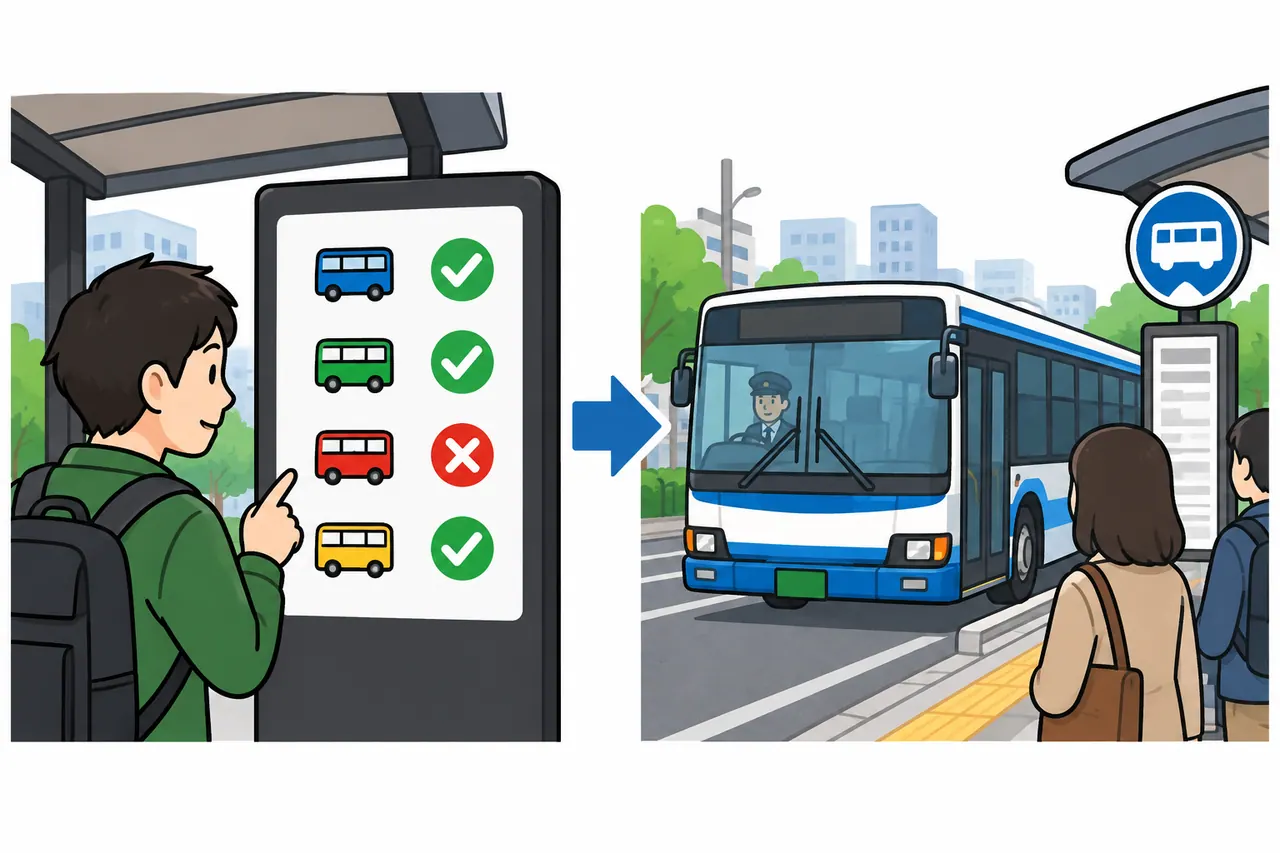
Busta Shinjuku is a bus terminal. Before paying, find your destination on the airport page and check the operator’s route information for your date, terminal, departure, fare and ticket availability. Then follow the bus signs to 1F and match the stop number to your ticket.
Tokyo Airport Transport lists one-way fares from Haneda of ¥1,200 for an adult and ¥600 for a child to Tokyo Station Yaesu North Exit; ¥1,000 and ¥500 to Tokyo City Air Terminal; and ¥1,400 and ¥700 to Shinjuku Station or Busta Shinjuku. Its Tokyo Station, Shinjuku and Tokyo City Air Terminal pages provide route information and list web booking and purchase for Haneda-originating services; same-day, time-specific tickets can also be bought at airport machines. Availability, seats and operations can change, so check the operator’s Tokyo Station, Shinjuku and TCAT information before travel.
Bus times, destinations and route changes
Haneda Airport publishes the following approximate journey times. Road conditions can change them, and a listed estimate does not establish that a bus is running on your date. Check the exact stop and service with the operator before buying.
| Destination | Haneda Airport estimate |
|---|---|
| Tokyo Station | About 35 minutes |
| Shinjuku Station West Exit | About 35 minutes |
| Shibuya Station | About 40 minutes |
| Ikebukuro Station West Exit | About 55 minutes |
| Yokohama Station | About 30 minutes |
| Kawasaki Station | About 45 minutes |
| Tokyo Disneyland | About 30 minutes |
| Narita Airport | About 1 hour 15 minutes |
| Togendai, Hakone | About 3 hours |
Some route information does not match between sources. Haneda Airport lists the Otemachi–Marunouchi and Hibiya–Shiodome–Ginza routes as suspended, while GO TOKYO gives an estimate for travel to Ginza. The airport also lists the Akasaka–Roppongi route as suspended, but Tokyo Airport Transport announced that a route serving the Akasaka area, including Hotel New Otani, resumed on October 1, 2026. Confirm the exact stop and date-specific service with the operator rather than treating either general listing as a guarantee. (Haneda Airport bus access; Tokyo Airport Transport service notice)
There are also differences between published journey estimates. GO TOKYO gives about 55 minutes to Shinjuku by bus, about 55 minutes to Shibuya by bus, and about 1 hour 10 minutes to Ikebukuro; Haneda Airport’s bus estimates to the relevant stations are about 35, 40 and 55 minutes. GO TOKYO is useful for broad destination planning, but check the airport and operator for the exact stop, route and departure.
Bags, children and wheelchair access
Compare the total fare for your group rather than one adult fare, and ask the bus company about current child fares and age rules if you are traveling with children. Haneda Airport says to keep mobile batteries with you inside the bus rather than placing them in luggage stored under it. This is a practical packing point to check before boarding. (Haneda Airport bus guidance)
For Tokyo Airport Transport’s Tokyo Station, Shinjuku and Tokyo City Air Terminal routes, a folding wheelchair can be stored in the luggage compartment. An electric wheelchair may not be accepted, and the operator advises passengers to inquire in advance; passengers cannot ride while seated in a wheelchair on these services. If you use a wheelchair, contact the operator before booking to confirm the rules for your particular service and arrangements for boarding and transferring to a seat.
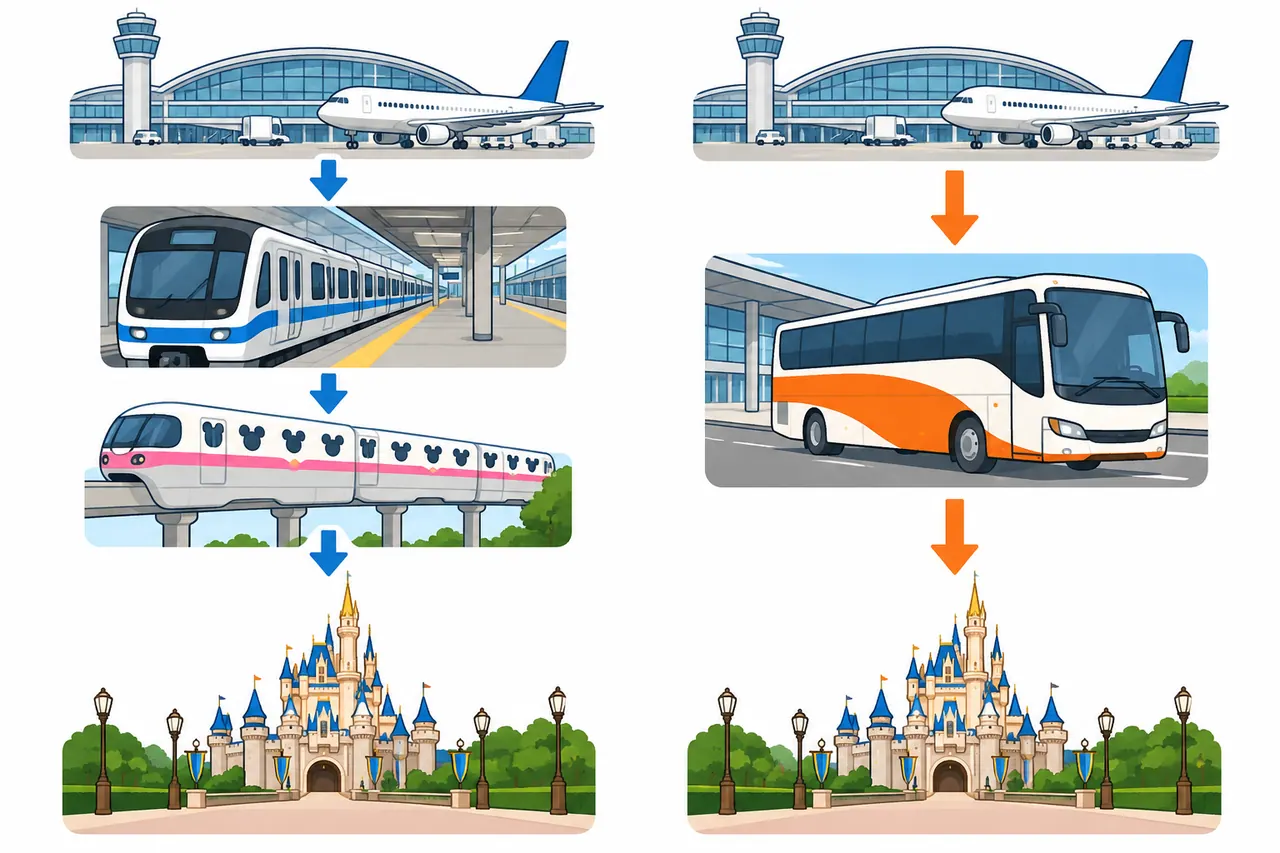
Tokyo Disneyland by bus, train or taxi
Haneda Airport estimates about 30 minutes by bus to Tokyo Disneyland, but check the operator’s departure and fare for your date. By train, one option is Keikyu to Shinagawa and JR via Tokyo Station to Maihama; the Disney Resort’s access information also describes a route via the Monorail, Hamamatsucho and Tokyo Station. From Maihama Station, the walk to Tokyo Disneyland is about five minutes. (Haneda Airport bus access; Tokyo Disney Resort rail access)
The complete rail fare is not confirmed here, and a taxi’s specific fare and travel time to the park are also unconfirmed. Compare the bus’s service on your date with the train route and the final walk before choosing. If traveling by taxi, ask the provider for the price and expected time rather than relying on an unsupported estimate.
Haneda Airport to Tokyo by taxi, private transfer or rental car
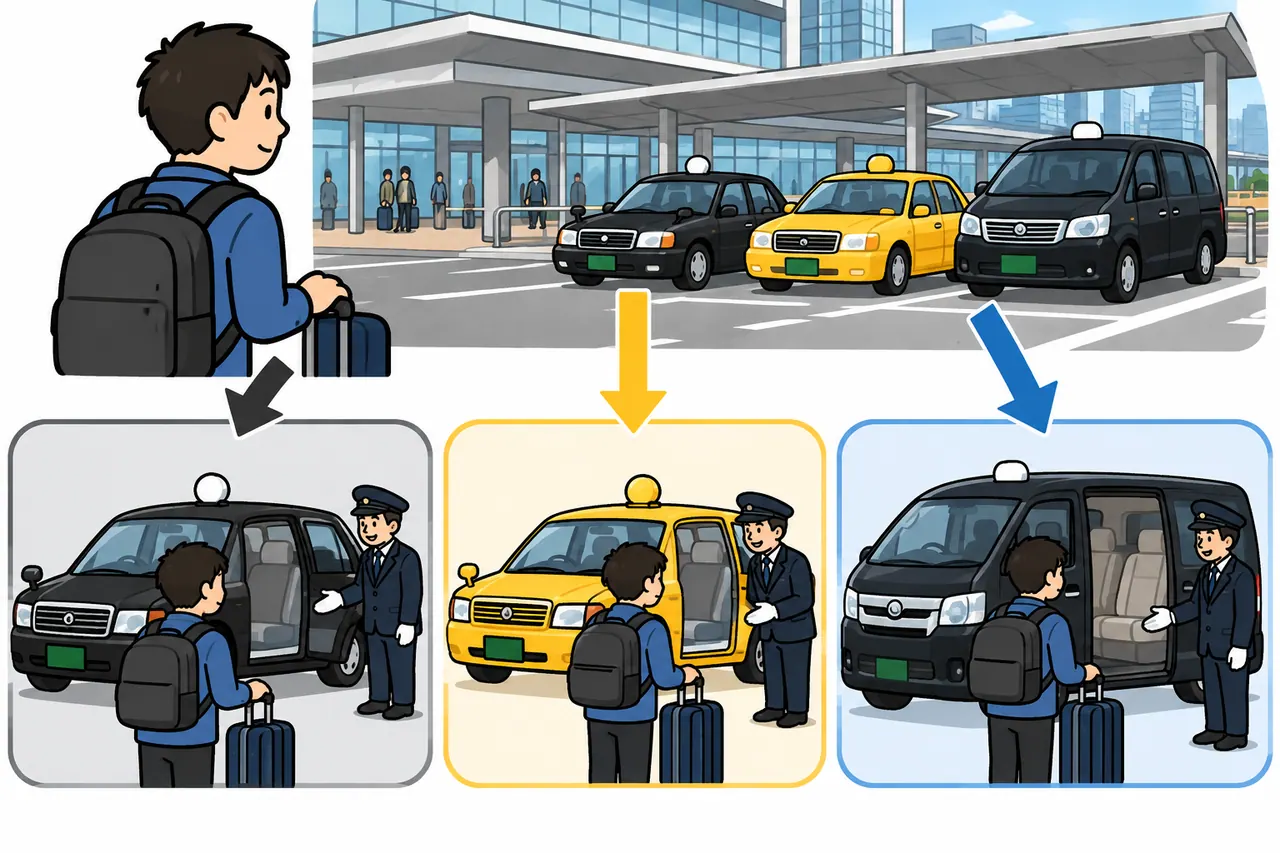
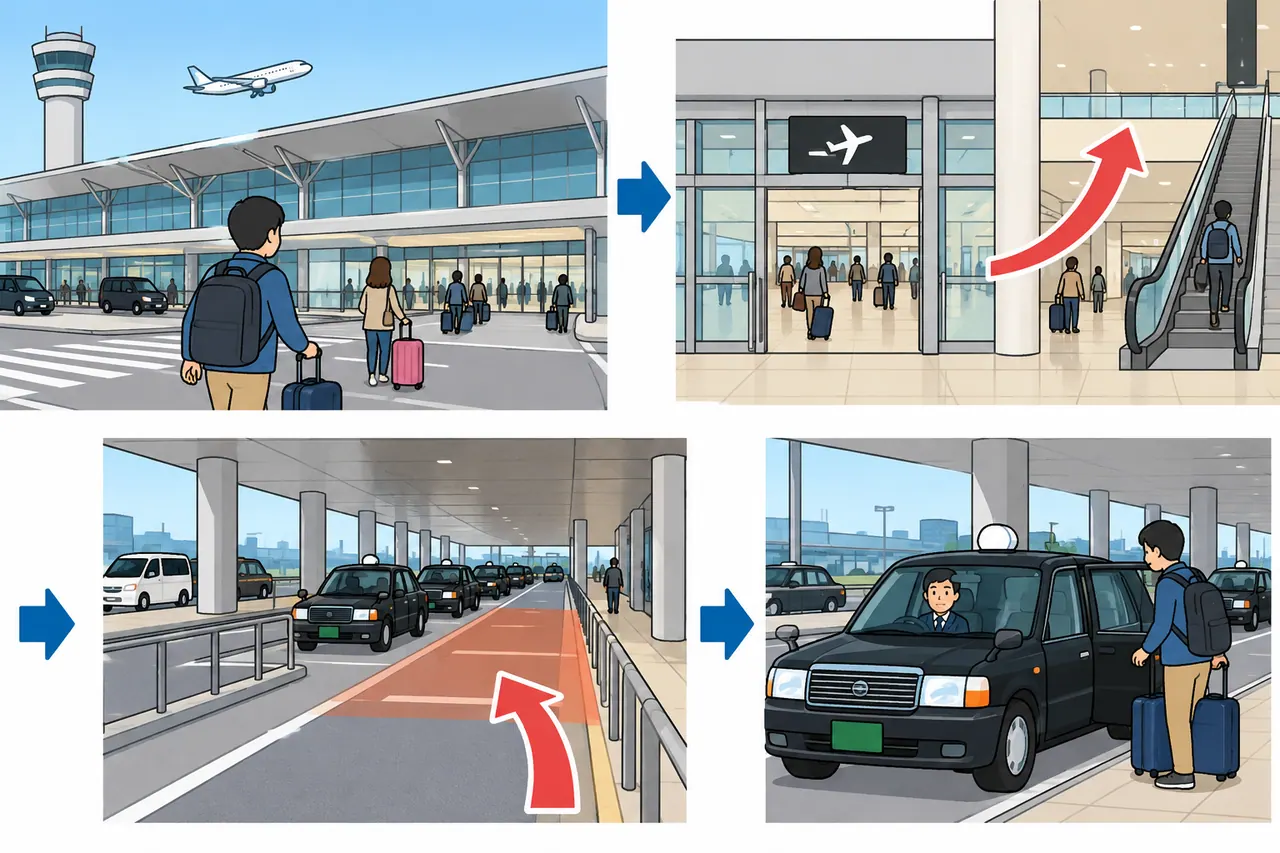
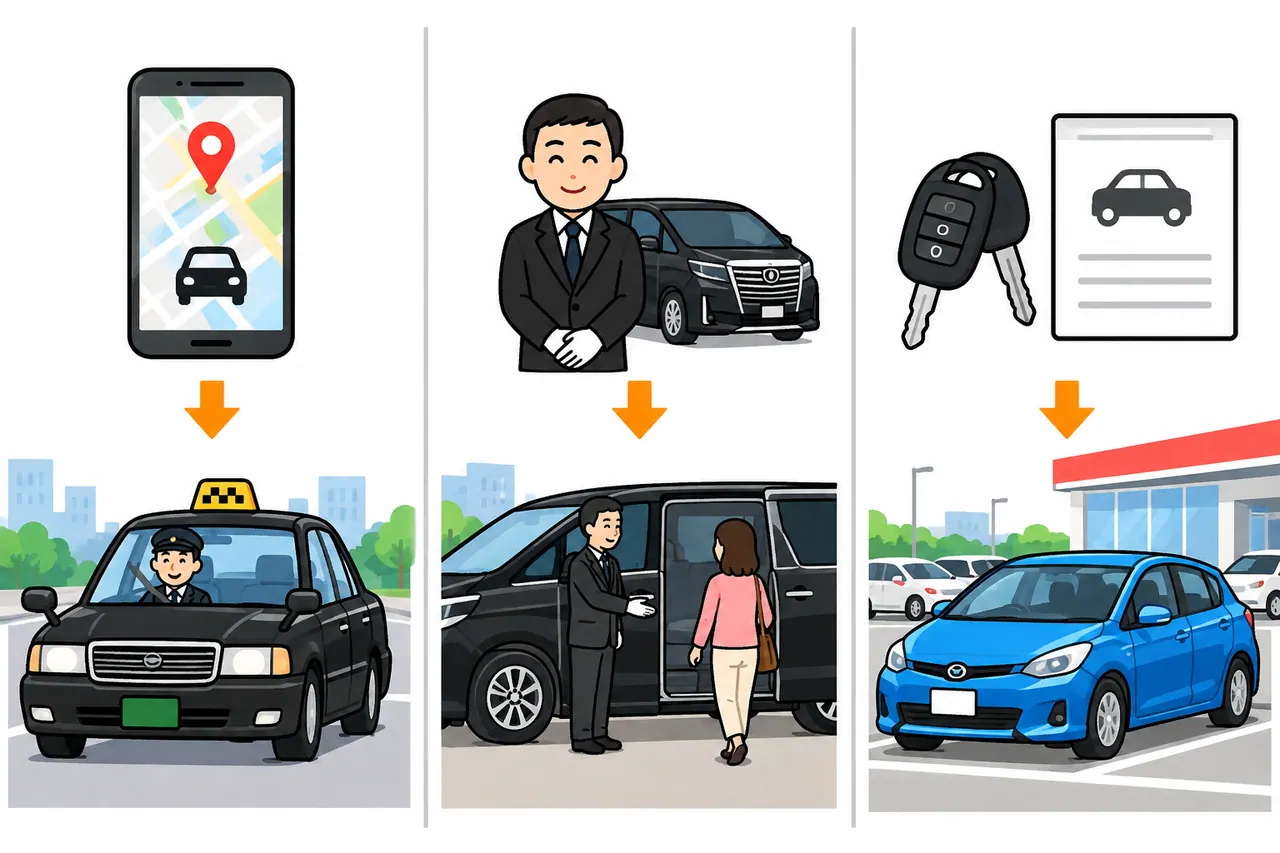
A taxi can take you to a full address, which may help when your accommodation is far from a station or you want to avoid a rail change. Before leaving arrivals, distinguish a regular taxi stand from a booked or app taxi pickup, because their locations differ. Some trips between Haneda and parts of Tokyo or Kanagawa qualify for fixed fares; outside covered areas, the meter applies, and highway fees are extra. (Haneda Airport taxi information)
Fixed fare: a Shinjuku example
Tokyo Taiyo lists the following fixed fares between Haneda and Shinjuku Ward. These are one company’s prices, not a universal price for every taxi, provider or address. Its service requires booking at least one hour before use, and highway fees are charged separately. (Tokyo Taiyo fixed-fare information)
| Time | Fixed fare | Extra charge | Booking condition |
|---|---|---|---|
| 05:00–22:00 | ¥9,000 | Highway fees | Book at least one hour before use |
| 22:00–05:00 | ¥10,700 | Highway fees | Book at least one hour before use |
At a regular airport taxi stand, a ride to a covered area is treated as a fixed-fare trip unless the passenger asks to cancel the fixed-fare arrangement and use the meter instead. This does not mean every destination has a fixed fare, so tell the driver your full address and ask how the fare will be calculated. The Tokyo Taxi Center explains the Haneda stand rules.
Regular taxi stands
The regular taxi stands are on 1F, with stand numbers separated by vehicle destination. Use the Tokyo or Kanagawa row that matches your destination, then confirm the fare arrangement and highway fees with the driver. The Terminal 3 Kanagawa stand is temporarily closed from February 1, 2026, through January 31, 2027; check local signs or ask airport staff if you need a Kanagawa-bound taxi. (Haneda Airport taxi information; Tokyo Taxi Center passenger information)
| Terminal | Vehicle destination | Regular taxi stand |
|---|---|---|
| Terminal 1 | Kanagawa | 1 or 17 on 1F |
| Terminal 1 | Tokyo | 2 or 18 on 1F |
| Terminal 2 | Kanagawa | 2 or 20 on 1F |
| Terminal 2 | Tokyo | 3 or 19 on 1F |
| Terminal 3 | Tokyo | 21, second lane on 1F |
To use a regular stand, follow the taxi signs to 1F and find the listed stand for your destination area. Show the driver your full address rather than only a hotel or neighborhood name. Before starting the journey, ask about the fare and any highway fees.
Booked or app taxi pickup
Booked and app-based taxis use different pickup areas from the regular 1F stands. Haneda lists a pickup near Exit 7 on 2F at Terminal 1, near Exit 2 on 2F at Terminal 2, and at level 8 of the P5 car park at Terminal 3. P5 means Car Park 5, not the regular Tokyo taxi stand. (Haneda Airport taxi information)
Open your booking message or app and read its pickup instructions before walking to the vehicle. Match the terminal and meeting point to airport signs, and follow updated app directions if the pickup location changes during busy periods. Ask the provider about the fare and extra charges, since the pickup point alone does not confirm the price.
Private transfer or rental car
A private transfer is a car arranged for your trip; a rental car is a vehicle you arrange to use yourself. Prices for private transfers and rental cars are not confirmed here, so request the terms directly from the provider before booking. For a private driver, save the meeting instructions in advance because the meeting point may differ from a regular taxi stand.
| Choice | Questions to check before booking |
|---|---|
| Private transfer | Where will the driver meet you, and what is included? |
| Rental car | Where is pickup, and what are the price and booking conditions? |
| Booked or app taxi | Which pickup area applies, and are there extra charges? |
| Regular taxi | Is the address in a fixed-fare area, and are highway fees extra? |
For any prearranged car, check the payment and cancellation terms and whether the vehicle has space for your group and bags. A private transfer’s meeting point is set by the provider, not necessarily by the airport’s regular taxi layout. For a rental car, confirm pickup arrangements and conditions with the rental provider; no rental price or booking rule is confirmed in this guide.
Haneda Airport to Tokyo late at night: trains, buses and hotels
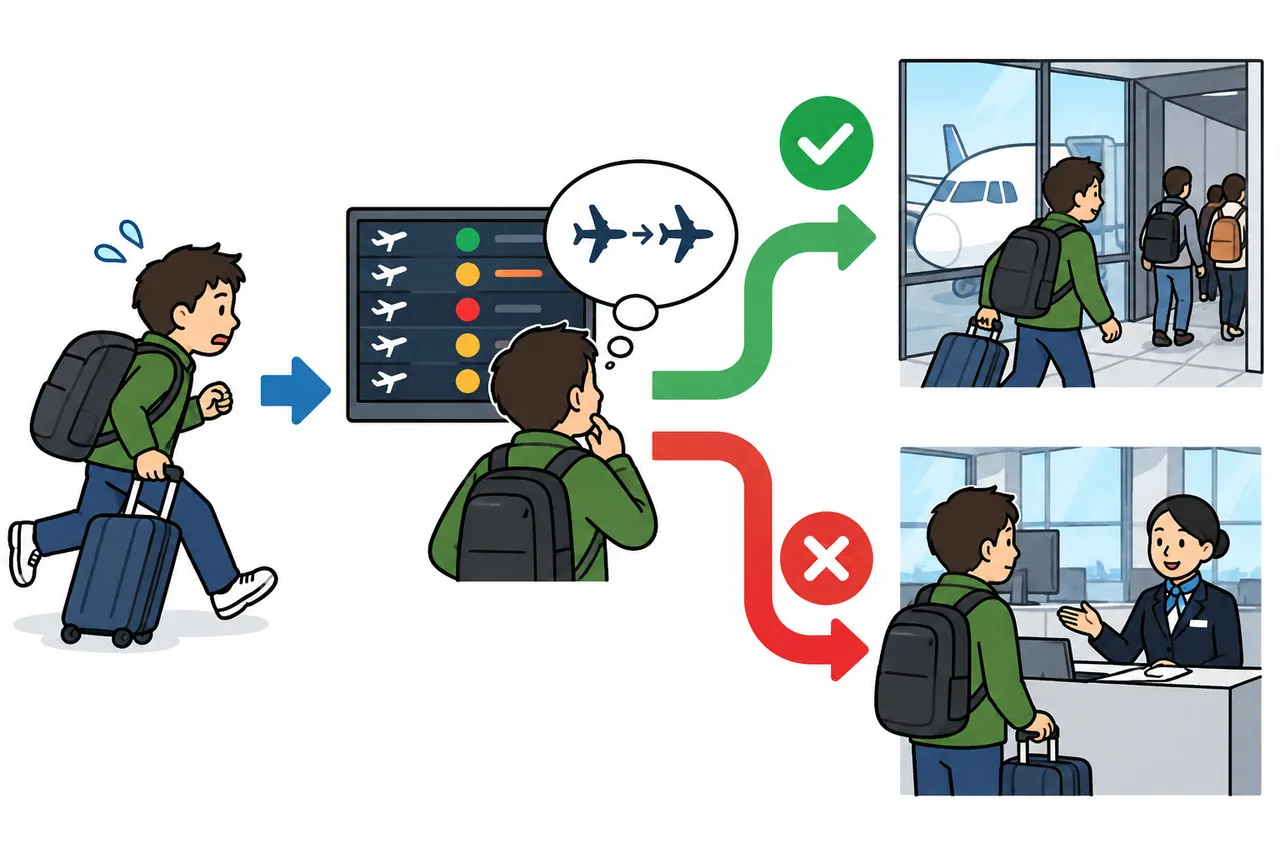
After a late arrival, check the train from your actual terminal and the onward service from your transfer station. If the complete rail journey does not fit your travel date, compare an available late bus, taxi or airport hotel. A published ride time does not tell you whether the last connection will still be running.
Check the full train connection
First and last trains vary by airport station, day and destination, so use a timetable for your travel date rather than relying on a general estimate. Open the Tokyo Monorail airport-station timetable links or the Keikyu Terminal 3 timetable, select the relevant day and direction, and check the departure from your own terminal. Then search for the next train from Shinagawa or Hamamatsucho.
Keikyu’s timetable materials have different revision dates, and its announced changes take effect on November 21, 2026, for weekends and holidays, and November 24 for weekdays. Check the Keikyu notice and the timetable for your date. The listed 00:05, 00:08 and 00:20 train times described above do not confirm that the service is the last train or that it connects with JR.
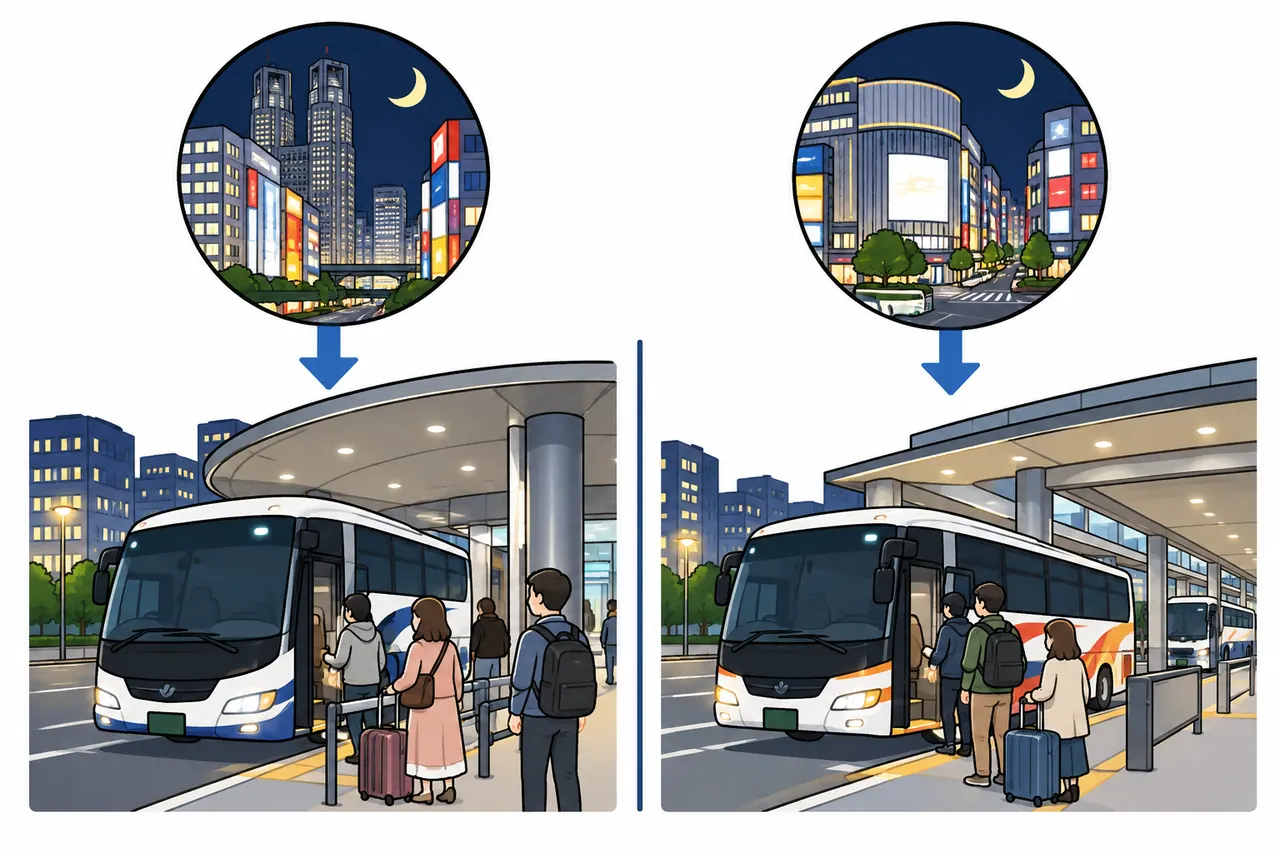
If your final connection does not fit, keep a backup plan before leaving arrivals. Check a bus from your terminal, a taxi pickup or an airport hotel, and allow time for airport procedures before treating a listed bus departure as workable. A bus departure listing is not a reserved seat.
Late-night bus departures
Haneda Airport lists the following late-night or early-morning departures. Confirm the current service and fare with the bus operator for your date, because the late-night fare is not confirmed here and a listed departure does not guarantee availability.
| Destination | Terminal | Stop | Listed departure |
|---|---|---|---|
| Shinjuku and Ikebukuro | Terminal 1 | 4 | 00:10 |
| Shinjuku and Ikebukuro | Terminal 2 | 5 | 00:05 |
| Shinjuku and Ikebukuro | Terminal 3 | 3 | 00:20, 01:00, 01:40, 02:20 |
| Yokohama Station and Sakuragicho | Terminal 3 | 7 | 01:20 |
Use the row for the terminal where you arrive, and allow time to reach the correct 1F stop. Check the operator’s current service information before paying. The ordinary adult bus fares listed for some routes should not be assumed to apply to late-night departures.
Stay at or near Haneda
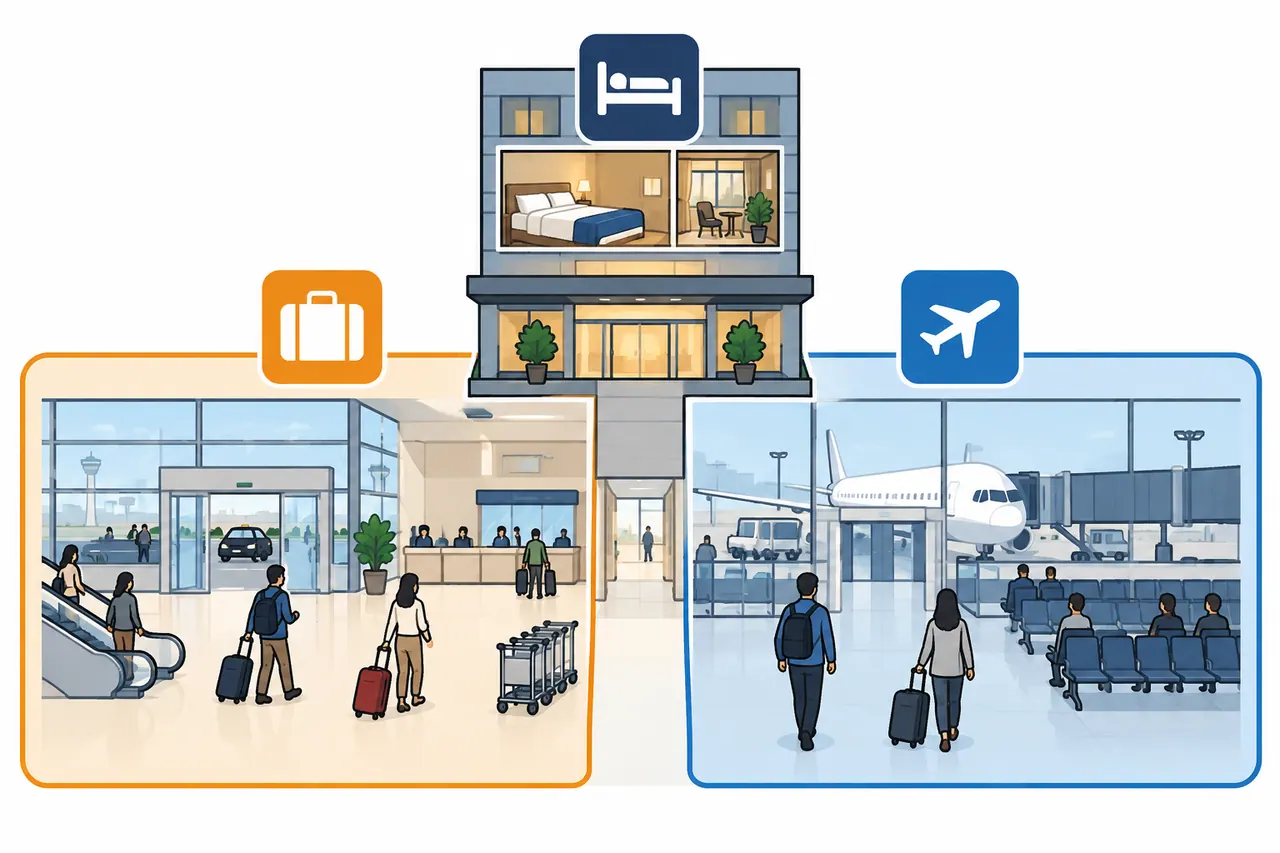
An airport hotel can be a practical backup when the onward journey does not fit your arrival time. Check the date-specific room price and availability, and read the access conditions before booking. In particular, distinguish a hotel in the general airport area from a transit hotel inside the international transit area.
| Hotel | Location | Practical condition | Official information |
|---|---|---|---|
| First Cabin Haneda Terminal 1 | Terminal 1, 1F; 3-3-2 Haneda Airport, Ota-ku, Tokyo | Listed check-in is 14:00 and check-out is 10:00; plans can differ | Hotel page, map and booking |
| Haneda Excel Hotel Tokyu | Connected to Terminal 2 domestic departure lobby, 2F; 3-4-2 Haneda Airport, Ota-ku, Tokyo | The lobby-side entrance closes late at night; use the hotel’s night route | Booking and access and map |
| The Royal Park Hotel Tokyo Haneda | Terminal 3, 3F; 2-6-5 Haneda Airport, Ota-ku, Tokyo | Choose the general-area hotel or transit hotel according to your eligibility | Hotel information and access and map |
The Royal Park Hotel’s transit hotel is not available to every airport traveler. It is for passengers who have completed departure procedures for an international flight from Terminal 3, or who are transferring from one international flight to another at Terminal 3 without entering Japan; travelers entering Japan after arrival or connecting to a domestic flight cannot use it. Check the official transit hotel information and book through the official site if eligible.
Hotel prices and available rooms depend on date and plan. If you do not book a room, ask airport staff where you may wait overnight and check current airport rules before planning to stay in the terminal. For a city hotel, compare the station and hotel address before choosing your transport.
Terminal transfers and arrival checklist
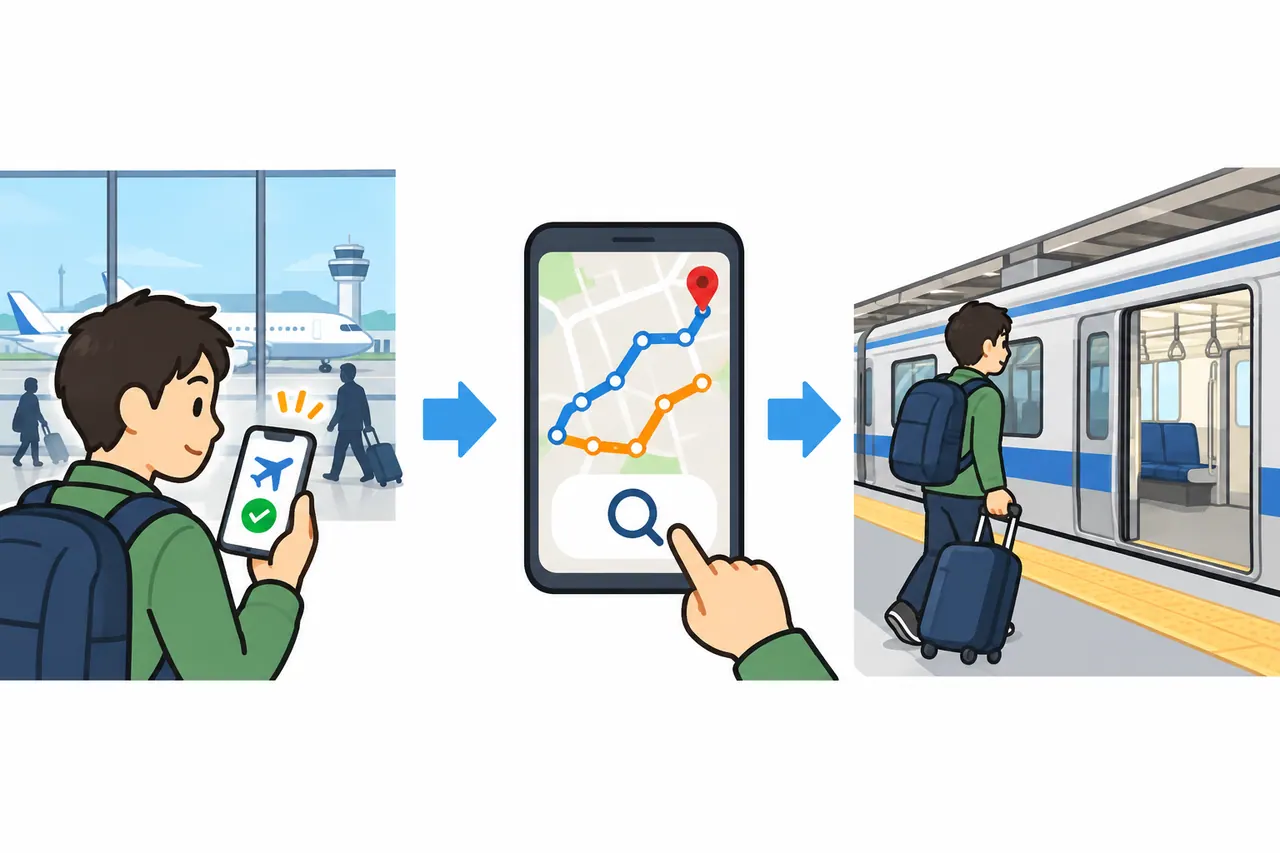
Haneda has a free shuttle bus between terminals. Some passengers connecting between flights may also receive a free rail transfer ticket, but that ticket is not a free ride into central Tokyo. Check the eligibility rules before changing terminals or choosing your city-bound train. (Haneda Airport terminal transfer information)
Moving between terminals
The free rail transfer ticket is for passengers who meet the conditions for domestic-to-international or international-to-international connections. It covers Keikyu or Tokyo Monorail between Terminal 3 and Terminal 1 or 2; confirm the conditions with airport staff if you have a connecting flight. The free shuttle bus is another option for moving between terminals. (Haneda Airport terminal transfers)
Check both flight confirmations and identify the terminal for each flight. If the terminals differ, read the airport’s transfer information and ask staff about the rail ticket if you think your connection qualifies. Follow the shuttle or railway signs to the next terminal, and then check the city-bound service from that terminal.
If you are going straight to a Tokyo hotel, choose your route from the terminal where you arrive. A terminal transfer does not replace checking the correct city-bound train, bus or taxi pickup. Before walking, compare the time needed for the transfer with your planned departure.
Before leaving arrivals
A few details saved on your phone can help you choose the right route and ask for assistance. Keep the terminal, hotel address and final station together so you can check them at the ticket machine, bus stop or taxi pickup. Use this list before leaving arrivals.
| Save or check | Why it helps |
|---|---|
| Airport code and terminal | HND and NRT have different routes, and Haneda bus stops vary by terminal |
| Hotel name and full address | A full address is useful when showing a destination to a taxi driver or provider |
| Final station and exit | Your airport fare may not cover the whole trip |
| Departure and onward train | A general estimate is not a timetable |
| Payment plan | Check the amount needed for your chosen route |
| Backup option | A bus, taxi or hotel may help if your first plan no longer fits |
Check Haneda Airport’s access and facilities information or ask staff about toilets, Wi-Fi and other facilities, since locations and availability can change. Keep bags clear of doors and walking routes as a courtesy to other travelers. Have your hotel booking name and address ready in case you need help finding the entrance.
Choose for bags, children, wheelchairs or rain
The easiest route for one traveler may not suit a family or a group with large bags. Compare the walk, transfer and final stop as well as the fare, and check the transport provider’s rules where they apply. A route that reaches the right station can still leave a walk or another ride to your address.
| If you are traveling with… | Check before choosing |
|---|---|
| Large bags | Whether you can manage the station change; compare a bus or taxi |
| Children | The whole-group fare and the operator’s child rules |
| A wheelchair | Boarding arrangements, storage and the vehicle’s rules |
| A late flight | Both the airport departure and your onward connection |
| Rain | The walk from your final stop to your address |
If a train change looks difficult, compare a bus stop near your address or a taxi to the full address. Contact the bus operator in advance if you need wheelchair assistance, because vehicle and storage rules can differ. Check the complete journey before leaving the airport rather than deciding from the first-leg fare alone.
Haneda Airport to Tokyo FAQ
These answers use adult one-way fares where fares are given. Prices and service details were checked on November 3, 2026, and should be confirmed with the operator for your travel date. A quoted journey estimate does not include every possible wait, transfer or walk.
What is the cheapest train from Haneda to central Tokyo?
Of the two airport-to-city station trips priced here, Keikyu to Shinagawa costs less: ¥327 by IC card or ¥330 by ticket. The Tokyo Monorail to Hamamatsucho costs ¥519 by IC card or ¥520 by ticket. These fares go to different stations, so compare the complete route and fare to your destination before deciding. (Keikyu fares; Tokyo Monorail fares)
Which Haneda terminal has the Keikyu train to Tokyo?
All three terminals have Keikyu access, but the gate locations vary. At Terminal 3, the city and Yokohama gate is on 2F, while the gate toward Terminals 1 and 2 is on B2; for Terminals 1 and 2, Haneda and Keikyu give different floor descriptions. Follow the local Keikyu signs and check the airport floor guide for your terminal.
Is there a late-night bus from Haneda to Tokyo?
Haneda Airport lists late departures for Shinjuku and Ikebukuro from all three terminals, and a Terminal 3 departure toward Yokohama Station and Sakuragicho. The listed Shinjuku and Ikebukuro times are 00:10 from Terminal 1, 00:05 from Terminal 2, and 00:20, 01:00, 01:40 and 02:20 from Terminal 3; the listed Yokohama departure is 01:20 from Terminal 3. Confirm that the service and fare are current for your date with the airport bus information and operator.
Do I need to reserve a taxi at Haneda Airport?
You do not need an advance reservation to use a regular airport taxi stand. A separately booked or app-based service has its own pickup instructions and rules, so check the message or app before going to the vehicle. Tokyo Taiyo’s Shinjuku fixed-fare example requires booking at least one hour before use, and highway fees are extra. (Tokyo Taxi Center stand information; Tokyo Taiyo fixed fare)
How do I get from Haneda to Tokyo Disneyland?
Haneda Airport estimates about 30 minutes by bus, but check the operator’s service and fare for your date. By train, you can travel by Keikyu via Shinagawa and Tokyo Station to Maihama; the Disney Resort also describes a route via the Monorail, Hamamatsucho and Tokyo Station. The walk from Maihama Station to Tokyo Disneyland is about five minutes, while the complete rail fare is not confirmed here. (Haneda Airport bus access; Tokyo Disney Resort rail access)
Can I use a Japan Rail Pass on the train from Haneda?
The nationwide JAPAN RAIL PASS covers the Tokyo Monorail and eligible JR lines during the pass’s valid period, subject to its conditions. Keikyu is not listed as a covered line, so pay separately for a Keikyu journey. Other JR passes can have different rules; check the official pass conditions for the pass you hold.
Can I buy Welcome Suica at Haneda Airport?
The card-type Welcome Suica information checked for this guide lists a dedicated sales machine at Tokyo Monorail’s Haneda Airport Terminal 3 Station and JR East Travel Service Centers. It is generally limited to one card per person, has no deposit and is valid for 28 days from purchase, but availability and sales hours should be checked with the sales location. The physical card can be charged in yen at compatible machines up to ¥20,000, cannot be charged by credit card, and generally has no refund for remaining value. (JR East Welcome Suica purchase information; purchase-limit FAQ)
What if I miss the last train?
Check the timetable for your terminal and date, then confirm whether your onward train from Shinagawa or Hamamatsucho is still available. Haneda lists late buses to Shinjuku and Ikebukuro, but service, seats and fares must be checked with the operator. If the full route does not fit, compare a taxi or an airport hotel, and check the hotel’s access conditions before booking.
Are the train times to Tokyo guaranteed?
No. Haneda Airport’s estimates include about 15 minutes to Shinagawa, 20 minutes to Hamamatsucho and 30 minutes to Tokyo Station, but waiting, train type and transfers can change the total. Other official and tourism sources sometimes give different figures because their starting terminals, services or assumptions may differ. Check a route search and timetable for your travel date.
How can I travel between Haneda and Narita?
Haneda Airport lists a train estimate of 90–115 minutes and a bus estimate of 65–85 minutes between the airports. Its listed fares are ¥1,760–¥3,080 by train ticket, ¥1,746–¥3,066 by IC card, and ¥3,600 by bus. Confirm the terminals, service and fare with the operator; a separate Keisei figure for travel from Narita to Haneda excludes transfer time and does not confirm the reverse direction. (Haneda Airport Narita access; Keisei directions)