
Gion Kyoto Guide: Yasaka Shrine, Performances and Local Etiquette
Contents
Gion is a historic Kyoto district associated with Yasaka Shrine and the culture of geiko and maiko. A visit can combine a respectful walk through the area, time at the shrine and, on an operating date, an evening performance of traditional arts at Gion Corner. Start from Gion-Shijo or Kyoto-Kawaramachi Station, then check the official information for each place you plan to visit.
Access, performance and price details in this guide were checked on 4 November 2026. Schedules and prices can change, so confirm them on the official pages for your chosen date before travelling or purchasing a ticket.
Compare the main Gion stops
The shrine and the theatre offer different kinds of visits: Yasaka Shrine is a place of worship with 24-hour worship access, while Gion Corner has scheduled performances at set evening start times. The shrine office has its own daytime hours, so do not treat it as open for office services around the clock. Gion Corner’s published seats also have different prices and features, making it useful to decide whether you want a regular performance seat, a premium seat or a tea-ceremony experience seat before opening the ticket page.
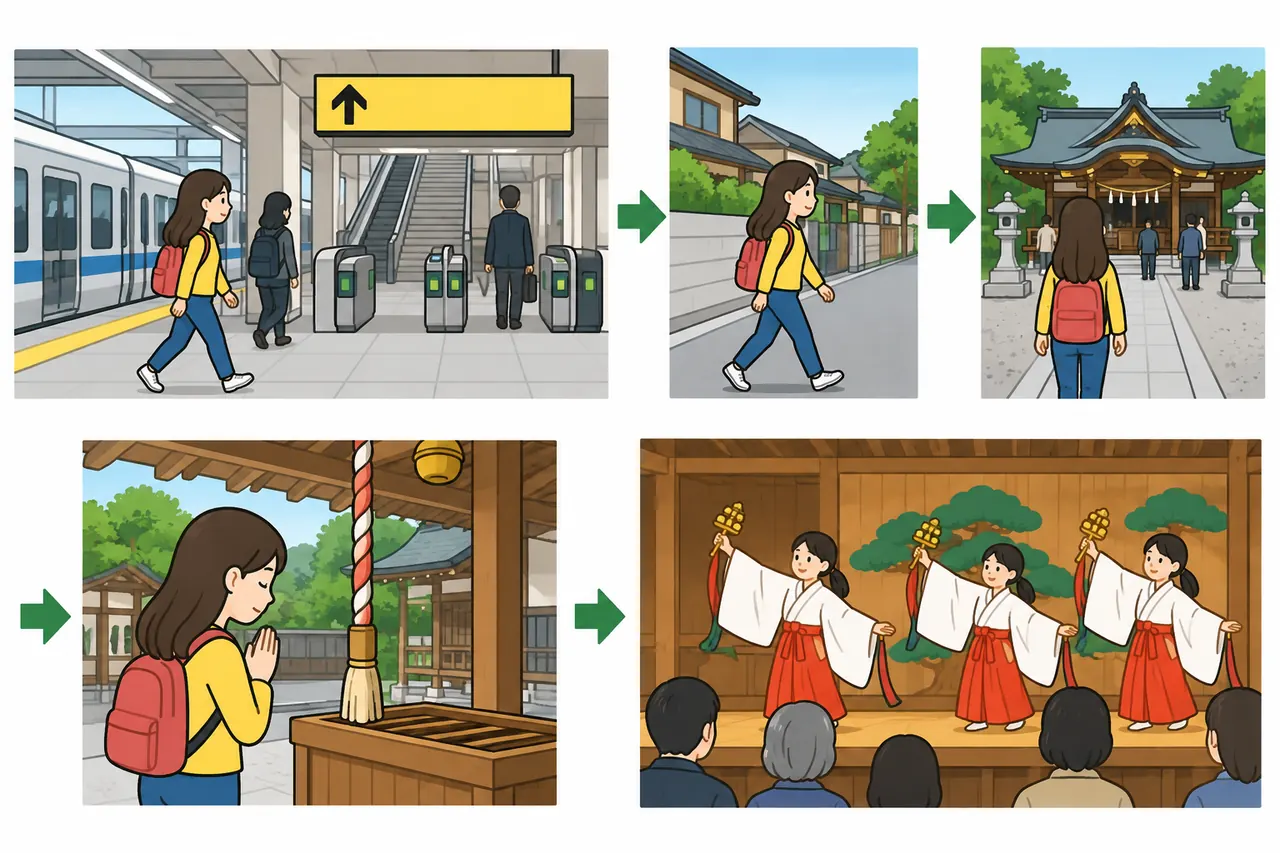
| Place or ticket | What it offers | Published price | Published hours or schedule |
|---|---|---|---|
| Yasaka Shrine | Worship at a shrine closely connected with Gion | A general worship price was not confirmed on the access page; check with the shrine about any specific paid visit | Worship access: 24 hours; shrine office: 9:00–17:00 |
| Gion Corner regular performance | A programme of traditional performing arts | General admission for visitors aged 23 and over: ¥5,500, including tax | Published starts: 18:00 and 19:00; check the operating calendar |
| Gion Corner premium seat | The regular performance from a premium seat | ¥6,600, including tax; the same price regardless of age | Check the official performance calendar and ticket link |
| Gion Corner tea-ceremony experience seat | A performance seat with a tea-ceremony experience | ¥6,050, including tax; the same price regardless of age | Check the official performance calendar and ticket link |
Yasaka Shrine lists the station approaches and the distinction between 24-hour worship access and the shrine office’s 9:00–17:00 hours on its official access page. Gion Corner’s official performance and ticket information gives its prices, start times and performance-calendar details. These are separate visits rather than one combined ticket, and the shrine page does not establish that every shrine service is available at all hours.
The Gion Corner page says preschool children are free, but a child who needs a seat must pay. Its wording for some youth age categories is unclear at the age boundaries, so do not infer which category applies to a 15- or 22-year-old from that wording. Ask the organiser which price applies to the visitor before buying if the age category is not clear.
What is Gion?
Kyoto’s tourism association describes Gion as an area that developed in front of Yasaka Shrine. The district is home to geiko and maiko, and its local guide also notes teahouses, Japanese restaurants and cafés. This mix of living neighbourhood, visitor destination and cultural district is a reason to treat Gion as more than a backdrop for photographs: residents and workers use its streets, too.
Yasaka Shrine and Gion’s geiko culture have a long association, according to the Kyoto City Tourism Association’s shrine guide. The association also presents Yasaka Shrine as part of Kyoto’s festival culture. The shrine describes itself as the head shrine of approximately 2,300 shrines associated with Yasaka and Gion faith, and says that it is affectionately known as Gion-san.
Gion is also linked with the Gion Festival, which JNTO introduces as a July festival. That month alone does not tell you which events will take place on a particular day, so check the official calendar for the year and the event you hope to see. JNTO also suggests Maruyama Park as a nearby place to walk in the Yasaka Shrine area; it can be considered as a separate stop rather than assumed to be part of a timed route.
For more context before visiting, the Kyoto City Tourism Association’s Gion and Kiyomizu area guide describes the district and neighbouring area. It notes shops, restaurants and cafés in Gion, as well as Kiyomizu-yaki shops in the Kiyomizu area. Individual businesses set their own opening hours, prices and payment arrangements, so check directly with a shop or restaurant if you are planning around it.
Walk respectfully in Gion
Kyoto City Tourism Association specifically asks visitors not to photograph maiko without permission. It also notes that Hanamikoji has substantial traffic and asks people not to walk in the middle of the road. Keep to the parts of the street where walking is appropriate, look out for vehicles, and avoid obstructing people who are going about their daily work.
Rules may differ by road or property, and the area guide does not identify the current boundaries of every private lane or photography restriction. Read signs where you are and follow the instruction at that location rather than assuming that one rule applies to all of Gion. Equally, do not treat the whole district as closed to visitors: the practical distinction is to follow local signs and respect access limits where they are posted.
A street encounter with a geiko or maiko is not an invitation to follow, stop or photograph that person. If you want a planned introduction to traditional performing arts, Gion Corner offers a published programme, set start times and official ticket information. That gives you a way to experience several arts in a theatre setting without relying on a chance encounter in the street.
For a quieter, more considerate visit, make the shrine or a scheduled performance the main purpose of your trip, then explore the public streets while staying alert to signs and traffic. If you are visiting outside the shrine office’s hours, remember that worship access remains listed as 24 hours, but office services are not listed as 24-hour. You can also use the official pages to distinguish these choices: check the shrine access information for a shrine visit and the Gion Corner calendar and tickets for a performance.
For additional viewing, @aii.japan has an English-language reel about Hanamikoji and photography guidance, while @redry13 has a Spanish-language reel showing Hanamikoji’s streetscape. These clips can provide a visual impression, but they do not replace signs or current instructions on site. The area’s appearance in a social post should not be taken as confirmation that a particular road or property is open to visitors.
Visit Yasaka Shrine
Yasaka Shrine is at 625 Gionmachi Kitagawa, Higashiyama Ward, Kyoto. The shrine says it is affectionately known as Gion-san and identifies Susanoo-no-Mikoto as its principal deity. Its official information also describes it as the head shrine of approximately 2,300 shrines associated with Yasaka and Gion faith.
The shrine lists worship access as available 24 hours a day, while the shrine office is open 9:00–17:00. These are two different kinds of access: a visit for worship outside office hours should not be assumed to provide the same office services. The access page does not confirm a general admission charge or whether advance booking is required for every type of visit, so contact the shrine if you have a specific paid visit or service in mind.
To approach on foot, use one of the station estimates published by the shrine: about five minutes from Gion-Shijo Station or eight minutes from Kyoto-Kawaramachi Station. The shrine also lists immediate access from the Gion city-bus stop. These are the shrine’s own approximate access descriptions; check the train or bus service you intend to use and follow local directions for the entrance you want.
There is no parking within the shrine grounds, according to its access information. If you are travelling by car, do not assume that you can park inside the shrine; check arrangements separately before setting out. For another outdoor stop in the same general area, JNTO suggests Maruyama Park near Yasaka Shrine. Keep it as a separate part of the day, since the supplied access details do not give a measured walking time between the shrine, the park and other stops.
Choose a Gion Corner performance
Gion Corner’s regular performances take place in the small theatre of Gion Kobu Kaburenjo. The published programme includes Kyoto dance, tea ceremony, flower arrangement, koto music, bugaku and kyogen. The foundation says that either bunraku or noh is presented depending on the period, so check the current programme if one particular art is important to you.
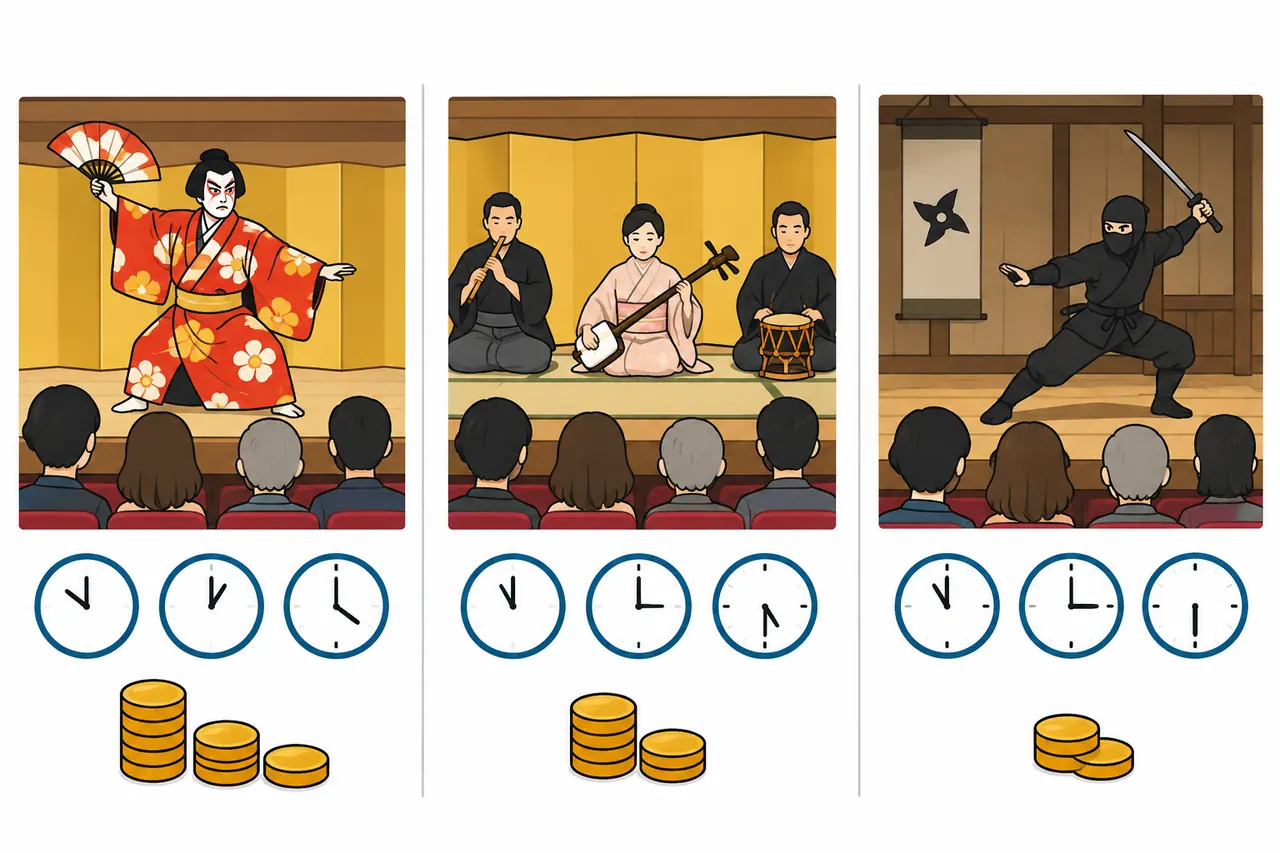
The published performance starts are 18:00 and 19:00. These are scheduled start times, not a guarantee that performances take place every day of the year. The current page lists winter performances from 1 December to 11 March on Tuesdays, Wednesdays, Thursdays and Fridays, and says the venue is closed on public holidays during that period. The winter schedule should therefore be checked against the specific date you have in mind.
The page also lists closures on 26 December through 4 January, 11 and 23 February, 16 July and 16 August. Because the calendar and closures need to be interpreted for the year you plan to visit, check the official performance and ticket page rather than relying on a general seasonal assumption. The page links to the official ticket-purchase site, so use that link to check availability and complete a purchase.
For visitors aged 23 and over, the published general-admission price is ¥5,500 including tax. A premium seat costs ¥6,600, and a tea-ceremony experience seat costs ¥6,050; those two seat types are listed at the same price regardless of age. Compare the seat options against what you want from the visit, and confirm that the chosen date and seat are available before making other evening plans around the show.
The child and youth information needs care. Preschool children are listed as free, but a child who requires a seat must pay; the published wording for some youth categories has unclear age boundaries. If the visitor’s age makes the applicable category uncertain, ask the organiser rather than guessing or applying an age boundary that the page does not clearly establish.
The venue is at 570-2 Gionmachi Minamigawa, Higashiyama Ward. Its access page says to look for the sign along Hanamikoji Street and proceed inward from there. It lists approximately five minutes on foot from Gion-Shijo Station, ten minutes from Kyoto-Kawaramachi Station, or five minutes from the Gion city-bus stop; see the venue’s official access page for its approach instructions.
Plan a daytime or evening visit
A practical first decision is whether your priority is shrine access, shrine office services or a scheduled performance. You can worship at Yasaka Shrine at any time listed on its access page, but the shrine office hours are 9:00–17:00. Gion Corner’s performances begin in the evening on operating dates, so check the calendar before arranging the rest of your day around a show.
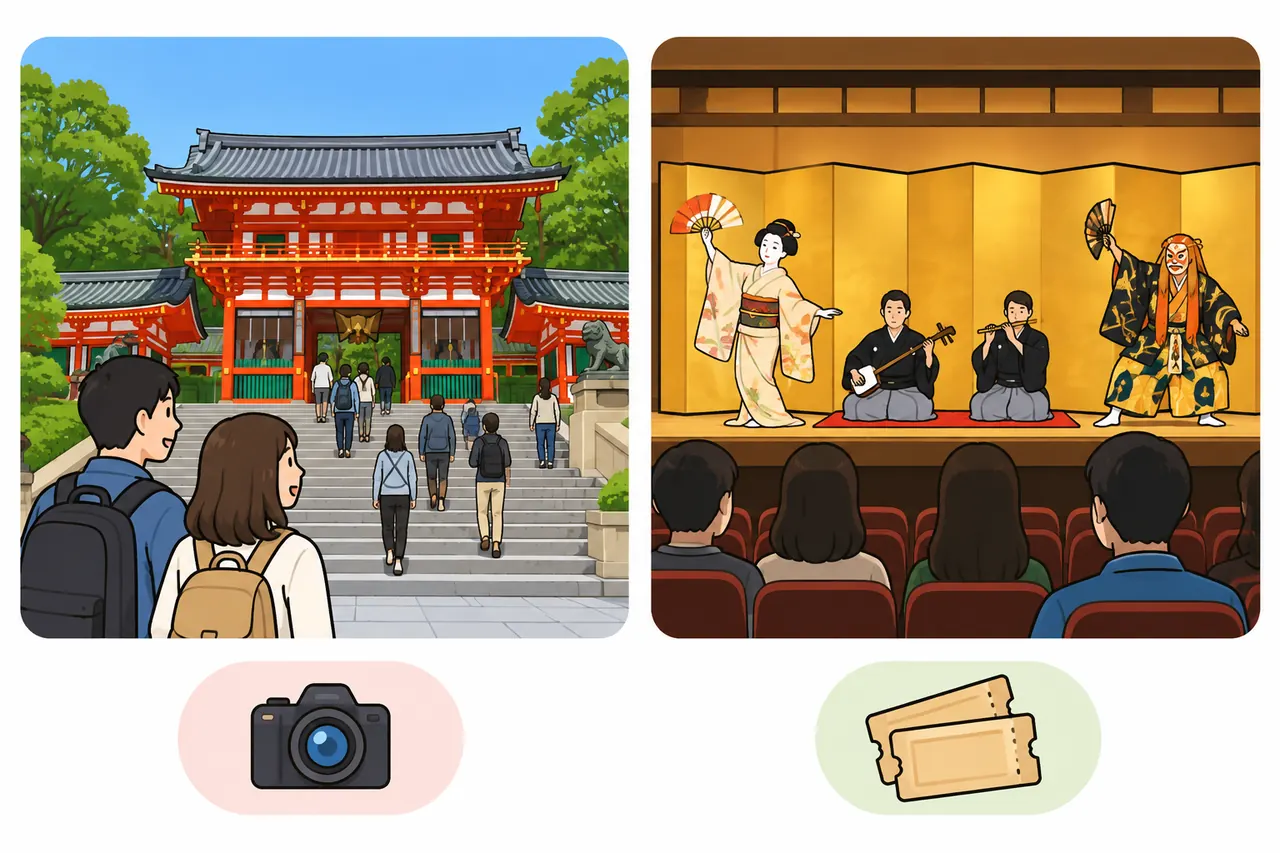
For a shrine-focused visit, start from Gion-Shijo or Kyoto-Kawaramachi Station and use the shrine’s published walking estimate to choose your approach. Check whether you need the shrine office before visiting, because the office’s daytime hours are separate from 24-hour worship access. You can then consider Maruyama Park as an additional outdoor stop, using JNTO’s Yasaka Shrine information to confirm the nearby place rather than assuming a particular connecting time.
For a performance-focused visit, first select an operating date and start time on Gion Corner’s official page. Then use the venue’s station or bus-stop access estimate and follow the sign on Hanamikoji Street inward to the small theatre. Leave your other evening arrangements flexible until you have checked the ticket availability and your return train or bus service; the published performance information does not establish the operating hours of other businesses.
Daytime and evening also offer different planning questions. The area guide lists teahouses, Japanese restaurants and cafés in Gion, but it does not give their individual opening hours, prices or payment policies. Contact or check the particular business if a meal or shop visit is central to your plans, and do not assume that a venue will be open because the shrine or theatre is accessible.
JNTO introduces the Gion Festival as a July event, but you should check the official calendar for the year and event you want to attend. A festival visit may require a different plan from an ordinary shrine or theatre visit, and the supplied information does not establish dates for particular processions. For a separate eastern Kyoto temple visit, consult the Kiyomizu-dera guide and plan that approach independently rather than treating it as an immediate extension of the shrine route.
For a visual preview, The KYOTO’s night walk through Gion shows the area after dark. Other travel videos include OMOTENASHI TV’s Gion-area guide, Japan Travel with Aki’s Gion guide, Trip Moito’s Gion guide and GRRRLTRAVELER’s English-language guide to Gion and geisha culture. Treat videos as background rather than as current confirmation of opening, access or photography rules.
Gion Kyoto guide FAQ
These quick answers separate the information that is easy to confuse: the station approaches for each venue, shrine access versus office hours, and the different Gion Corner seat prices. Always check the relevant official page again for your travel date, particularly if your visit depends on a performance or a specific service. For directions, you can also open Kyoto in Google Maps, then confirm the final approach with the shrine or venue’s own access instructions.
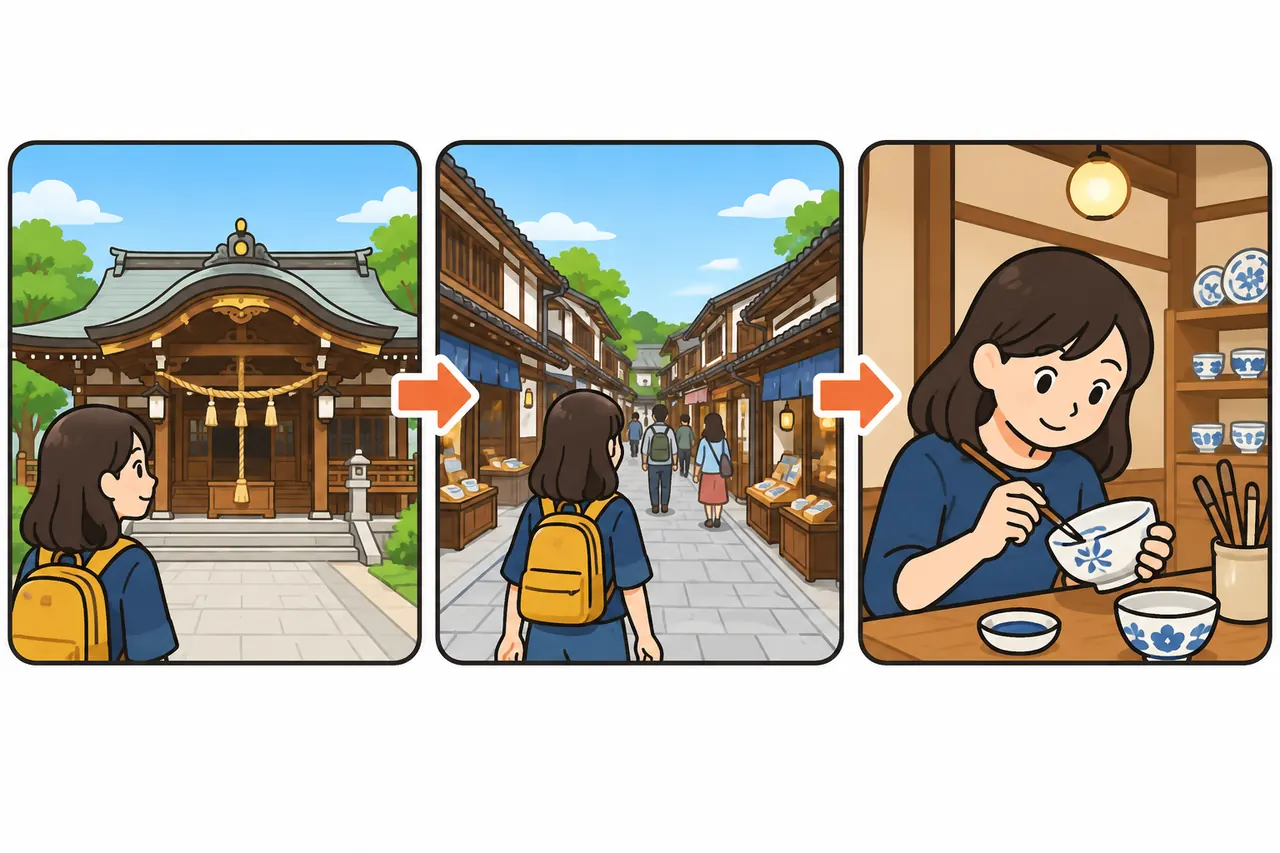
Which stations are closest to Yasaka Shrine and Gion Corner?
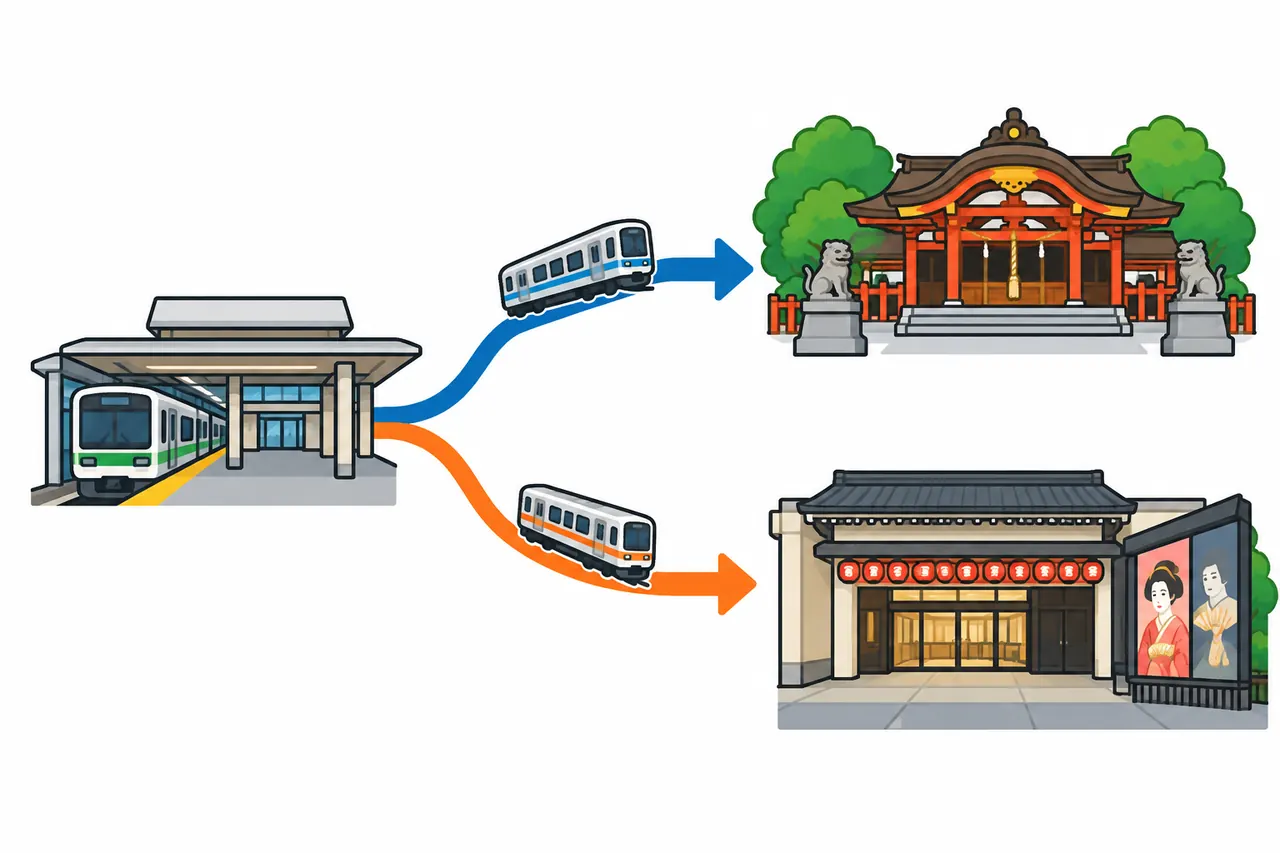
Yasaka Shrine lists an approximate five-minute walk from Gion-Shijo Station and eight minutes from Kyoto-Kawaramachi Station. Gion Corner lists five minutes from Gion-Shijo and ten minutes from Kyoto-Kawaramachi. These are separate venue estimates, not a measured walking time between the shrine and theatre.
Can I worship at Yasaka Shrine at night?
The shrine’s access page lists worship access as available 24 hours a day. Its shrine office is open 9:00–17:00, so office services should not be assumed to be available at night. Check with the shrine if your visit depends on a particular service or paid activity.
Can I photograph maiko in Gion?
Kyoto City Tourism Association says not to photograph maiko without permission. Respect the person’s privacy, follow signs at the location and do not treat a street encounter as permission to approach or photograph someone. Rules for individual roads or properties can differ, so follow the instructions where you are.
How much does Gion Corner cost?
The published general-admission price for visitors aged 23 and over is ¥5,500 including tax. Premium seats are ¥6,600 and tea-ceremony experience seats are ¥6,050, with those two seat types listed at the same price regardless of age. Preschool children are free unless they need a seat, and visitors whose youth age category is unclear should ask the organiser before purchasing.
Does Gion Corner perform every day?
No daily schedule should be assumed: the published page lists winter performances from 1 December to 11 March on Tuesdays through Fridays, with public-holiday closures, and it lists other specific closure dates. The operating calendar can vary by date, so check the official performance page before travelling or buying a ticket. The listed starts are 18:00 and 19:00 on performance dates.


)](https://i.ytimg.com/vi/3J5VSdqPW4Y/mqdefault.jpg)


)](https://i.ytimg.com/vi/4NOXJydIPKk/mqdefault.jpg)