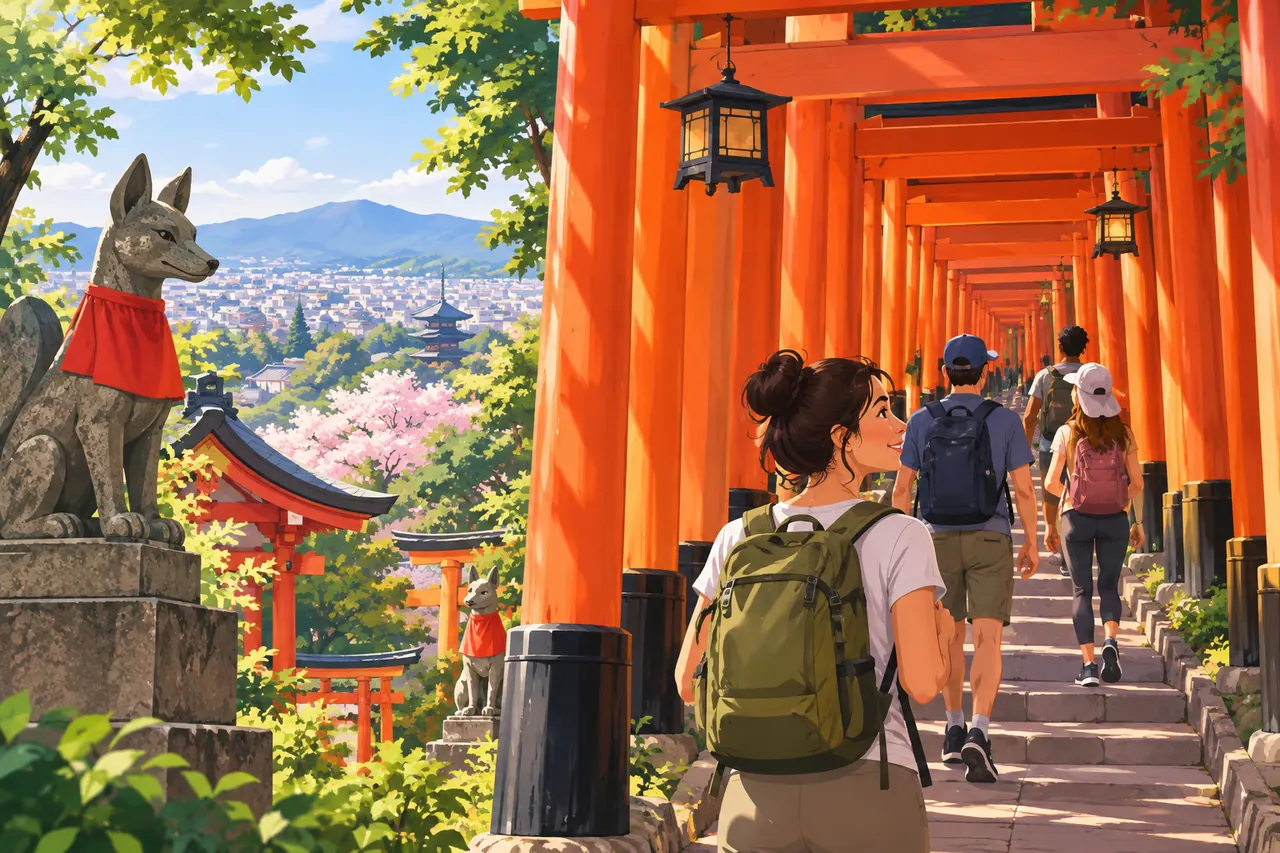
Fushimi Inari Shrine: Torii Walk, Walking Time & Access
Contents
- 1. What Is Fushimi Inari Shrine? History, Foxes and Torii
- 2. Fushimi Inari Shrine Access: Trains, Bus and Parking
- 3. Fushimi Inari Shrine Mountain Walk, Food and Timing
- 4. Fushimi Inari Shrine Rules, Photos and Access Needs
- 5. Fushimi Inari Shrine Tours and Next Stops in Kyoto
- 6. Fushimi Inari Shrine FAQ
Fushimi Inari Taisha is Kyoto’s famous shrine of vermilion gates, with its grounds extending over Mt. Inari. The shrine is free to visit, but the time you need depends on whether you stop at the main sights or continue up the mountain. For the mountain circuit, the Japan National Tourism Organization (JNTO) suggests about 2–3 hours; the summit estimate from Senbon Torii is about 1 hour 30 minutes one way.
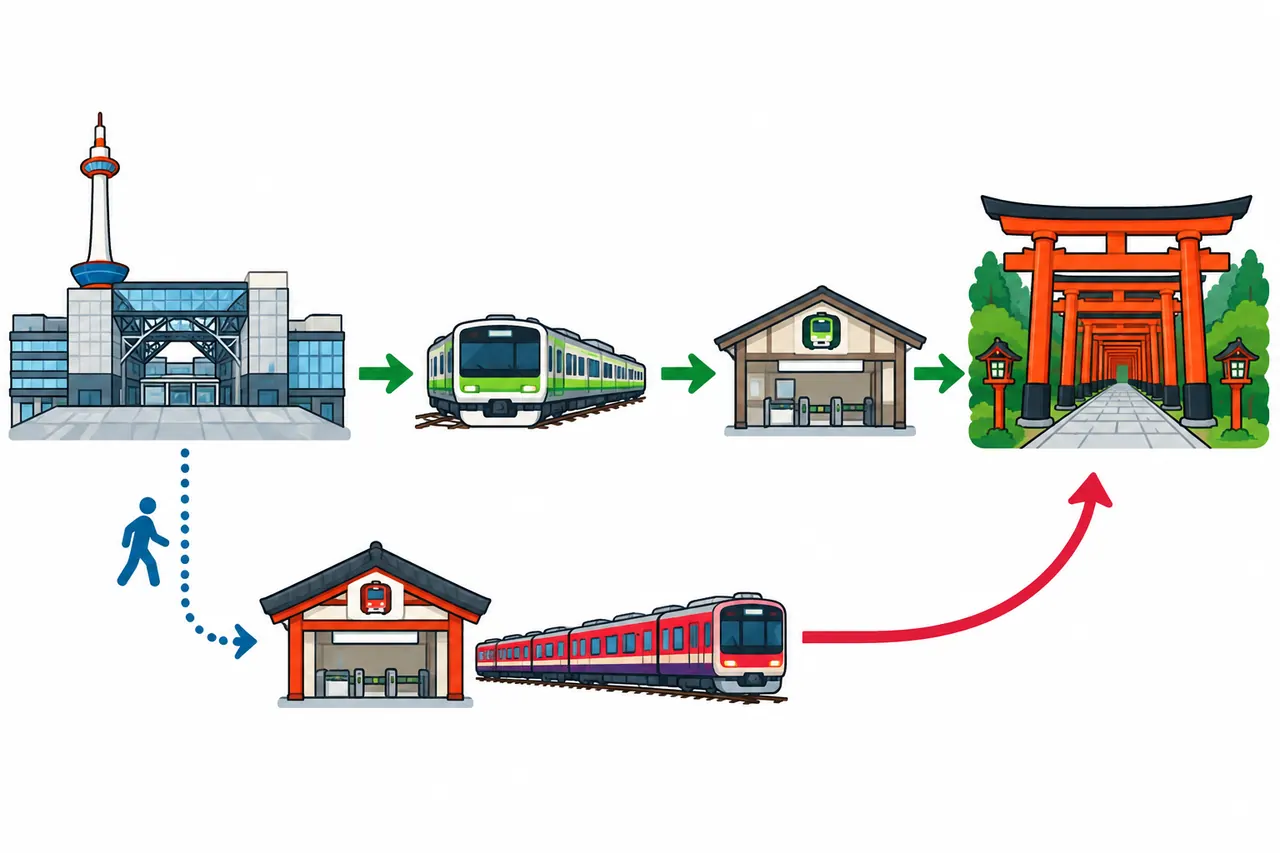
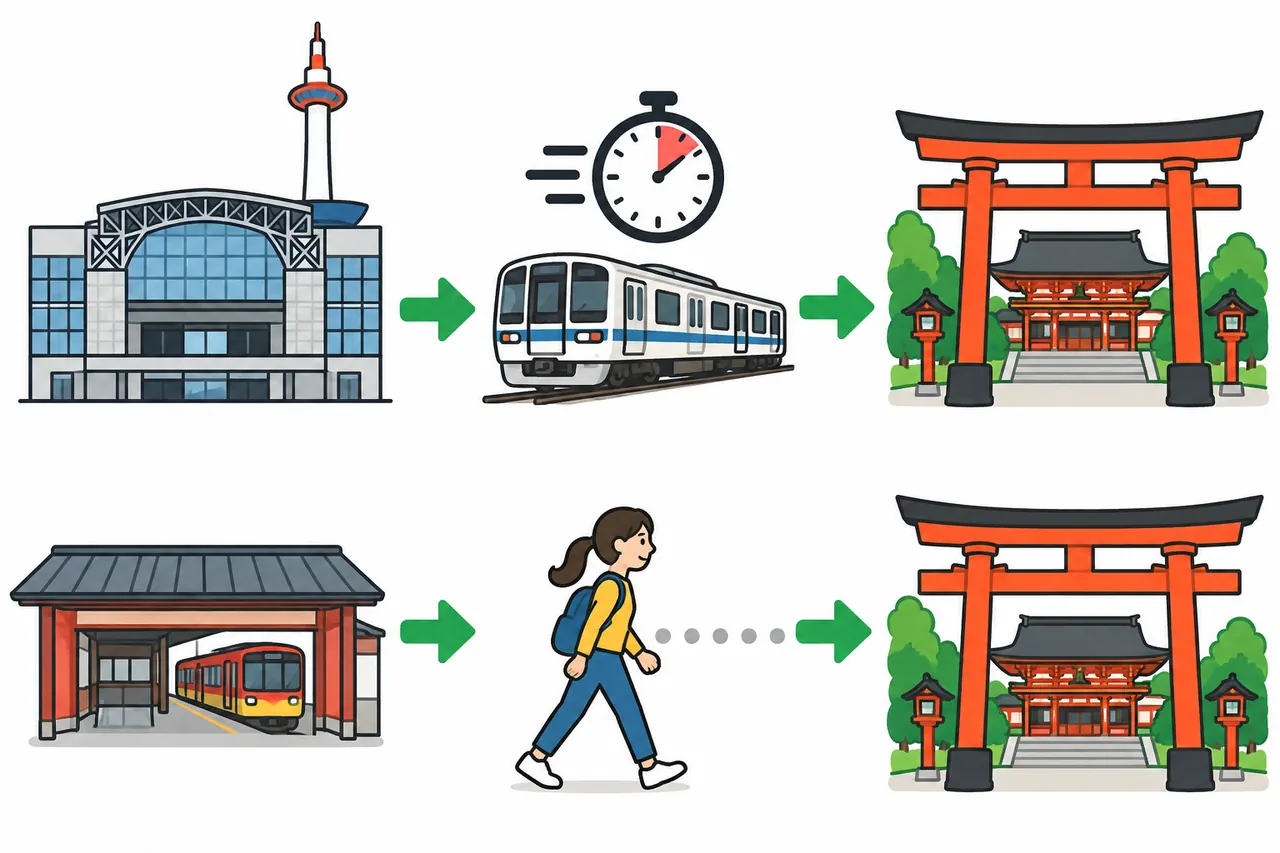
The simplest rail approach is JR Inari Station, directly in front of the shrine. Keihan Fushimi-Inari Station is another option, followed by a walk east of about 5 minutes according to the shrine, or about 7 minutes according to JNTO. Check current train stops and the shrine’s latest notices before you travel, as not every train on a route necessarily stops at the station.
What Is Fushimi Inari Shrine? History, Foxes and Torii
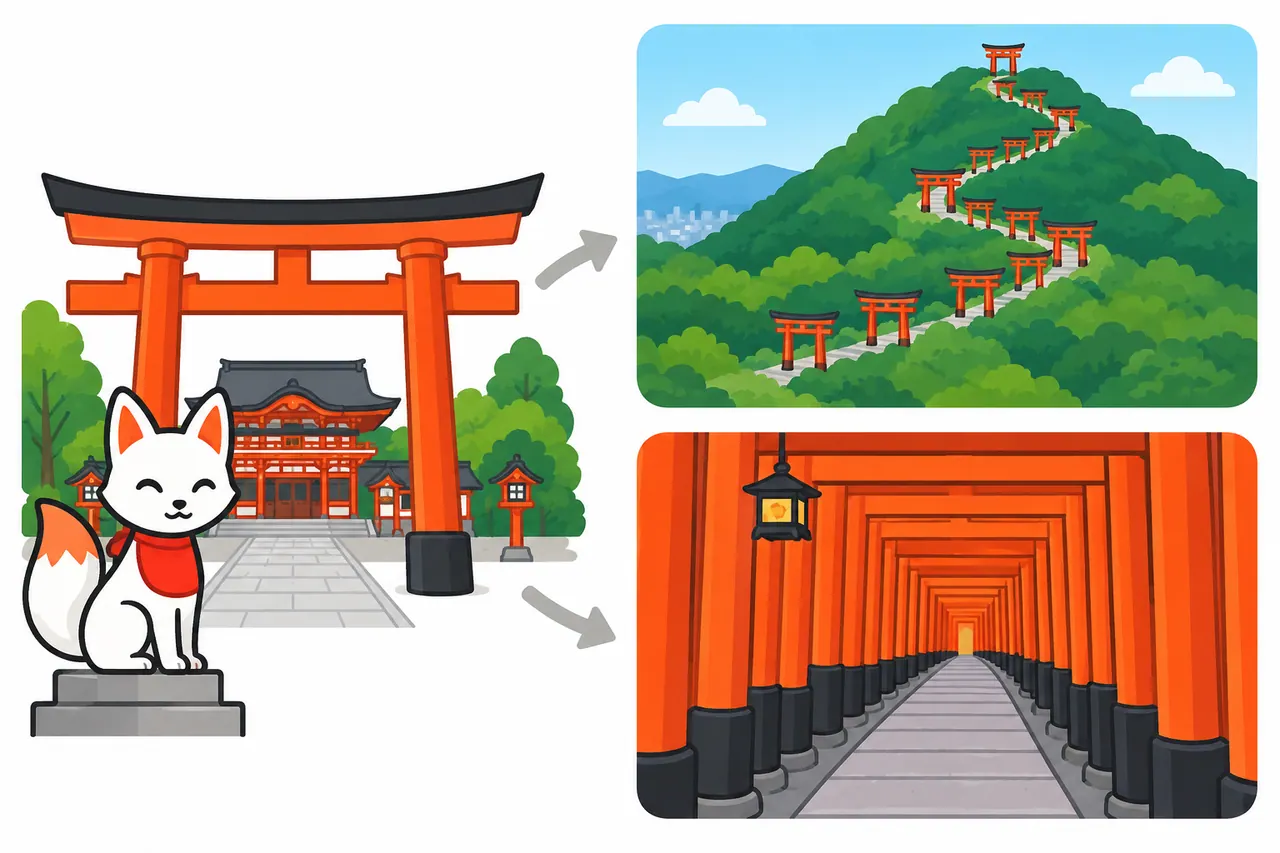
Fushimi Inari Taisha is the head shrine of about 30,000 Inari shrines in Japan, and its grounds extend across Mt. Inari. The shrine says Inari was first worshipped here in 711; 2011 marked 1,300 years since that beginning. The shrine’s English site introduces its history and seasonal festivals, while its mountain map shows the main hall, Senbon Torii and Okusha, among other places.
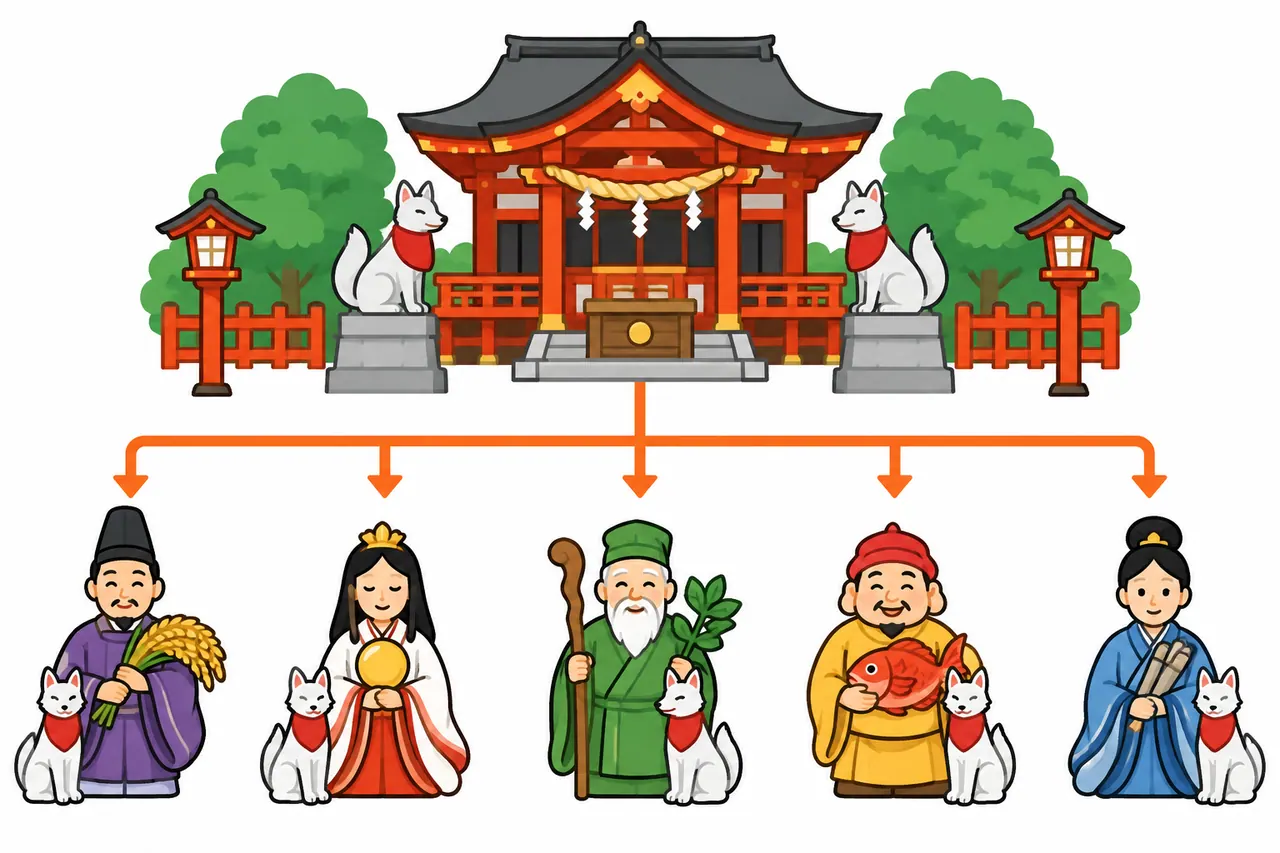

The shrine uses the name Inari Okami for the deity worshipped here. Its explanation describes five deities honored together: Ukanomitama-no-Okami, Satahiko-no-Okami, Omiyanome-no-Okami, Tanaka-no-Okami and Shino-Okami. The five are enshrined in one main hall, which was rebuilt in 1499 and is designated an Important Cultural Property.
The tower gate, or Romon, is also an Important Cultural Property. The shrine and Kyoto’s tourism information describe its construction in 1589 and a tradition linking the work to Toyotomi Hideyoshi. From the gate, visitors reach the main hall and then the mountain paths, where small shrines, sacred mounds and torii continue beyond the most photographed area.
What to see
| Place | What to look for |
|---|---|
| Main hall | A protected cultural property rebuilt in 1499; five deities are enshrined together. |
| Tower gate (Romon) | A protected gate associated with 1589 and a tradition involving Toyotomi Hideyoshi. |
| Senbon Torii | A closely spaced section of donated shrine gates. |
| Mt. Inari | A 233-meter mountain with torii gates and stone worship sites along its paths. |
The shrine’s official map is useful for locating the main hall, Senbon Torii and Okusha Hōhaisho, the inner worship area. It helps set a realistic turning point if you do not want to walk the whole mountain route. A shrine virtual-reality and cultural-property page also provides further background on the site.
Why are there foxes and red gates?
The shrine explains that foxes are messengers of Inari Okami; Inari Okami is not itself a fox. Fox imagery is therefore part of the shrine’s religious symbolism, rather than a statement that the deity and the animal are the same. Around the grounds, you will see fox figures and other references to this role.
The gates are vermilion, a red-orange color. The shrine says vermilion helps keep evil away and represents a rich harvest. Its English FAQ also says that about 10,000 large and small torii stand along the mountain paths; this is a mountain-wide figure, not a count of Senbon Torii alone.
People donate torii to express a wish or give thanks for a wish granted, a practice the shrine says spread during the Edo period (1603–1868). The shrine’s torii-donation information includes listed examples of ¥300,000 for a memorial torii in size 5 and from ¥567,000 for size 6. The date and current applicability of those displayed amounts have not been confirmed, so contact the shrine’s office in charge of administration for current prices and the application process rather than treating the examples as a current quote.
Fushimi Inari Shrine Access: Trains, Bus and Parking
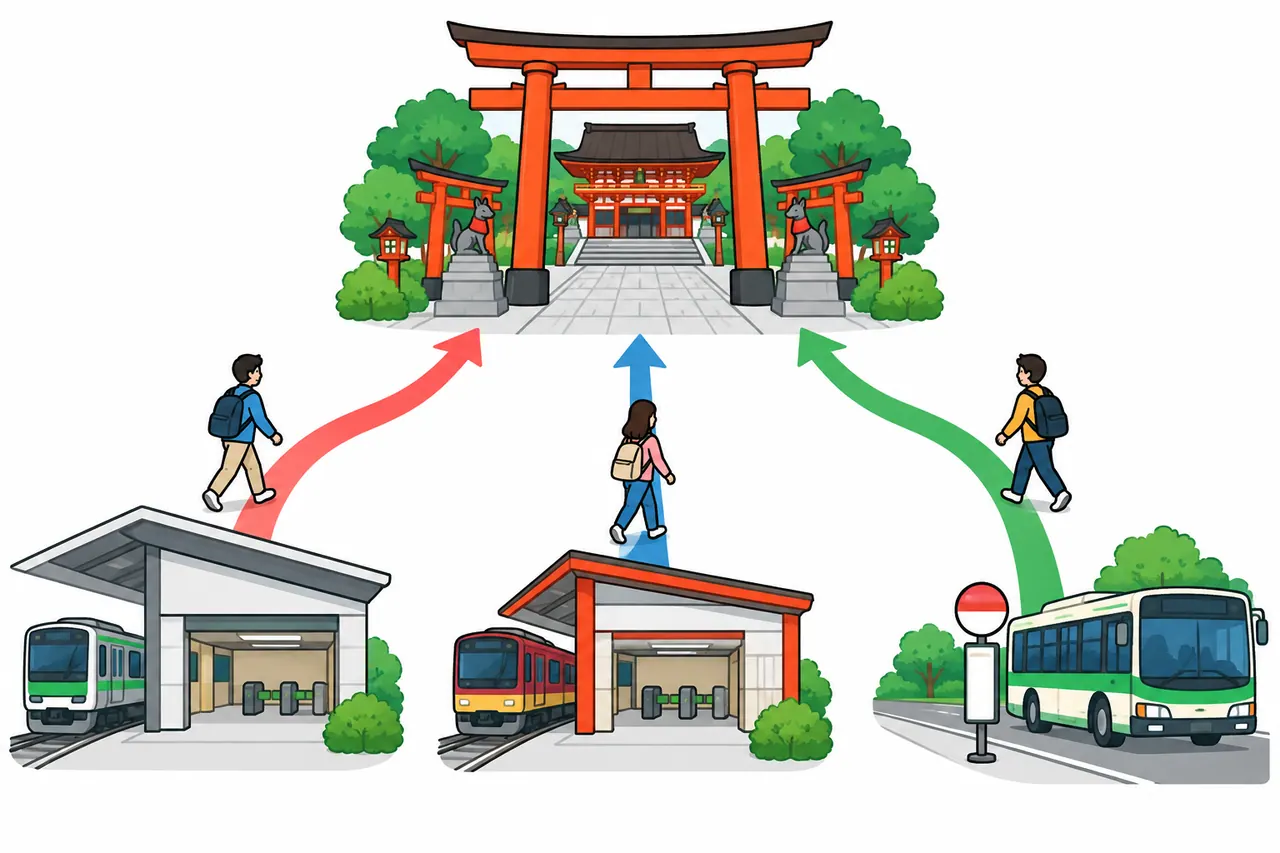
The shrine is at 68 Fukakusa Yabu-no-uchi-cho, Fushimi-ku, Kyoto; the listed telephone number is 075-641-7331. JR Inari Station is directly in front of the shrine, making it the most straightforward station if you are arriving from Kyoto Station. Keihan Fushimi-Inari Station is a separate stop, east of the shrine, and the walk from there is on foot.
| Option | Route and arrival | Practical detail |
|---|---|---|
| JR Nara Line | Kyoto Station to JR Inari Station | Two stops and about 5 minutes; the shrine is directly in front of the station. |
| Keihan Railway | Fushimi-Inari Station, then walk east | About 5 minutes on foot according to the shrine; JNTO gives about 7 minutes. |
| Kyoto City Bus, Minami 5 | Get off at Inari Taisha-mae, then walk east | About 7 minutes on foot from the stop; bus journey time varies. |
| Car | Use shrine parking for a shrine visit | The shrine recommends public transport because nearby roads can be crowded. |
The shrine’s access page gives directions by public transport, and JR West also describes the route from Kyoto Station. JR timetables show examples of ordinary, Miyakoji Rapid and local rapid trains stopping at Inari, but another rapid train shown in a February 2026 timetable passes the station. Check the stopping-station list for the specific train and travel date rather than assuming every rapid service stops there.
At Keihan Fushimi-Inari Station, head east toward the shrine. The walk estimate differs by source: the shrine says about 5 minutes, while JNTO says about 7 minutes. Keihan’s station information and timetable and fare page can help you check station services and current travel details; confirm that your chosen train stops at Fushimi-Inari.
Kyoto City Bus Minami 5 serves the Inari Taisha-mae stop, from which the shrine says to walk east for about 7 minutes. That is the walk from the stop, not a guaranteed bus travel time from your starting point. Bus fares and the fastest or cheapest route from a particular origin have not been confirmed here, so use a current route planner for your date.
How to plan your train trip
Search your rail app using the full operator and station name: “JR Inari” or “Keihan Fushimi-Inari.” JR and Keihan are different railway companies, so entering only “Inari” can make it easier to select the wrong station. Before boarding, check the train’s stopping-station list and the station signs for the correct platform and direction.
For JR, confirm that the train stops at Inari, especially if you are considering a rapid service. For Keihan, verify the stop in the current timetable rather than relying on an assumed train category. Search your return trip before setting off, and check the official JR Nara Line timetable or Keihan’s timetable for the date you plan to travel.
If you are coming from Kansai Airport, first compare ways to reach Kyoto in the [Kansai Airport to Kyoto guide]. From Osaka, consult the [Osaka to Kyoto guide] to compare train routes. For paying fares, see the [Japan IC card guide]; the fare for a particular journey depends on the route and stations used.
Lockers and parking
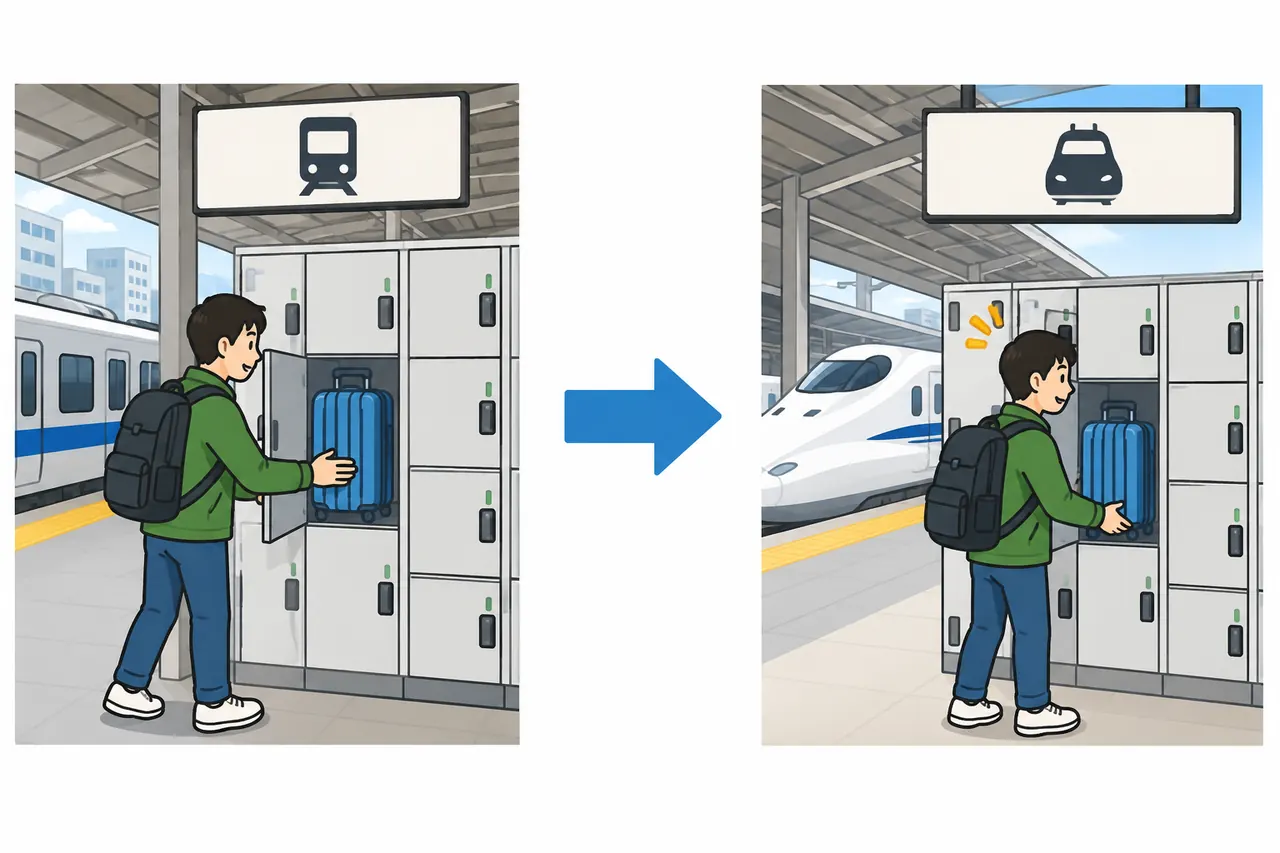
JR West lists coin lockers at Inari Station, but the detailed location and prices have not been confirmed. Keihan’s station map, dated 8 January 2026, shows lockers on both sides of Fushimi-Inari Station; check the station for current prices and available space. For Keihan’s facilities, see the station map.
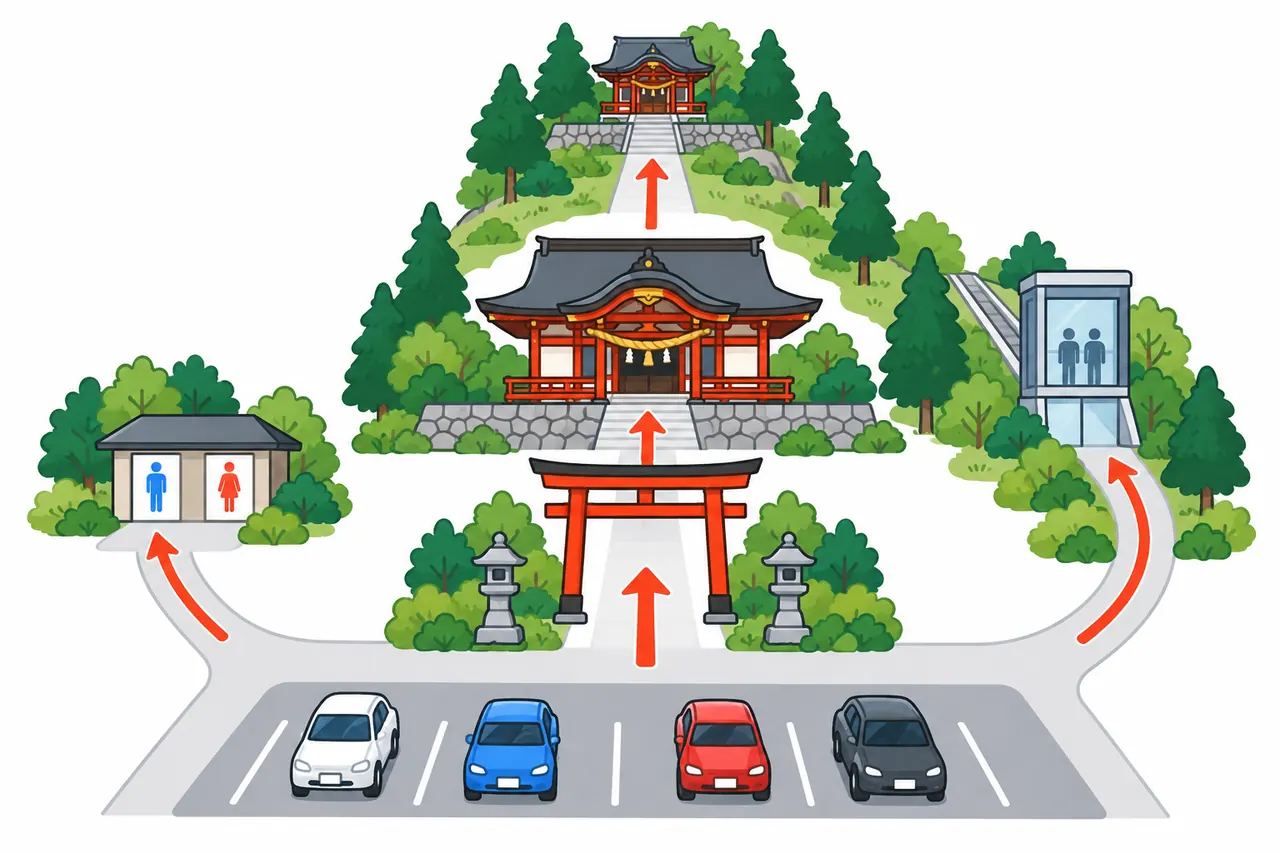
The shrine recommends public transport because nearby roads can be congested, and its parking is for shrine visitors. Follow staff directions if the car park is full. Published tourism listings differ on its size: one gives 250 spaces and another, updated in 2016, gives 170; the current number and parking charges should be confirmed with the shrine rather than assumed from either listing.
Fushimi Inari Shrine Mountain Walk, Food and Timing
JNTO suggests about 2–3 hours for the circuit around Mt. Inari. Kyoto’s Higashiyama trail guide describes the worship path as about 4 kilometers long and gives about 1 hour 30 minutes from Senbon Torii to Ichinomine, the mountaintop, one way. The summit figure is not a return estimate, and your pace and time spent at stops will affect the overall visit.
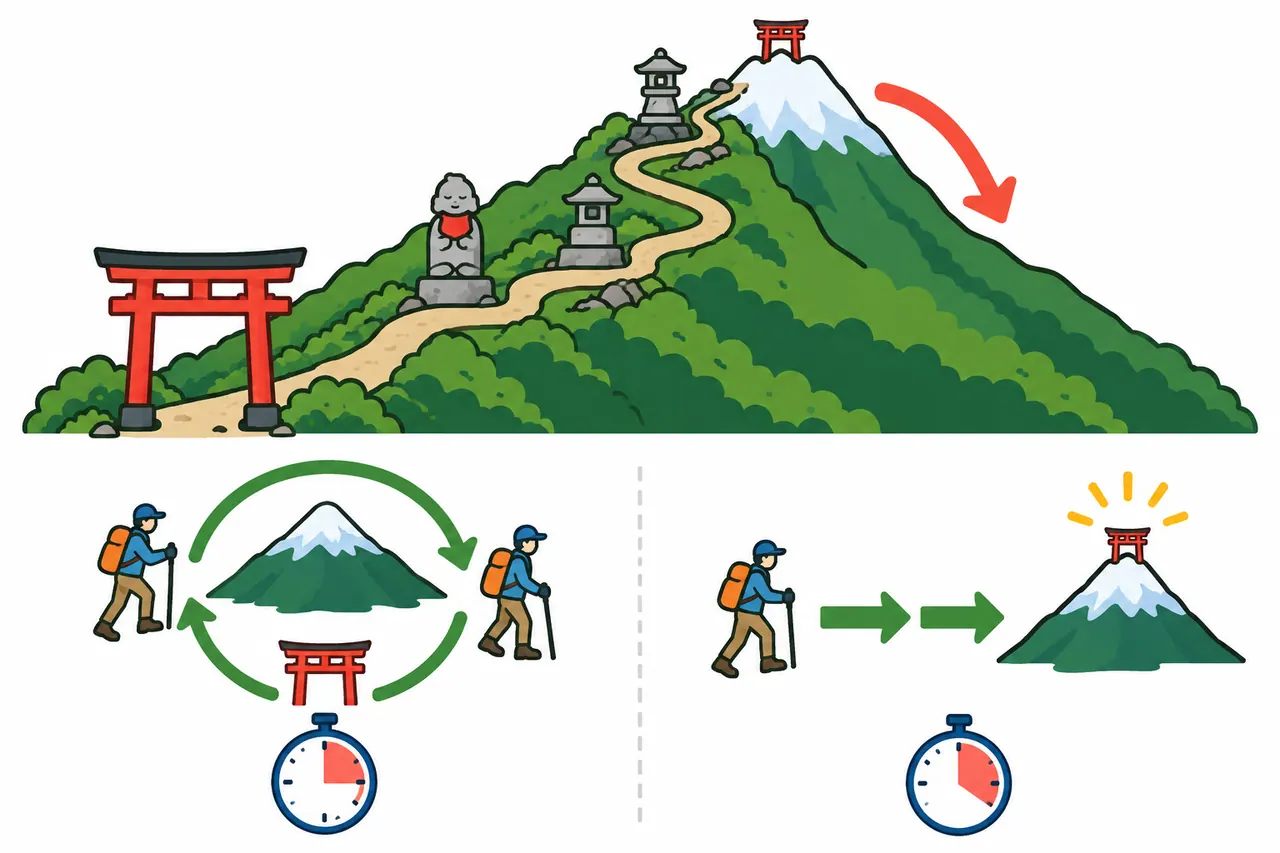
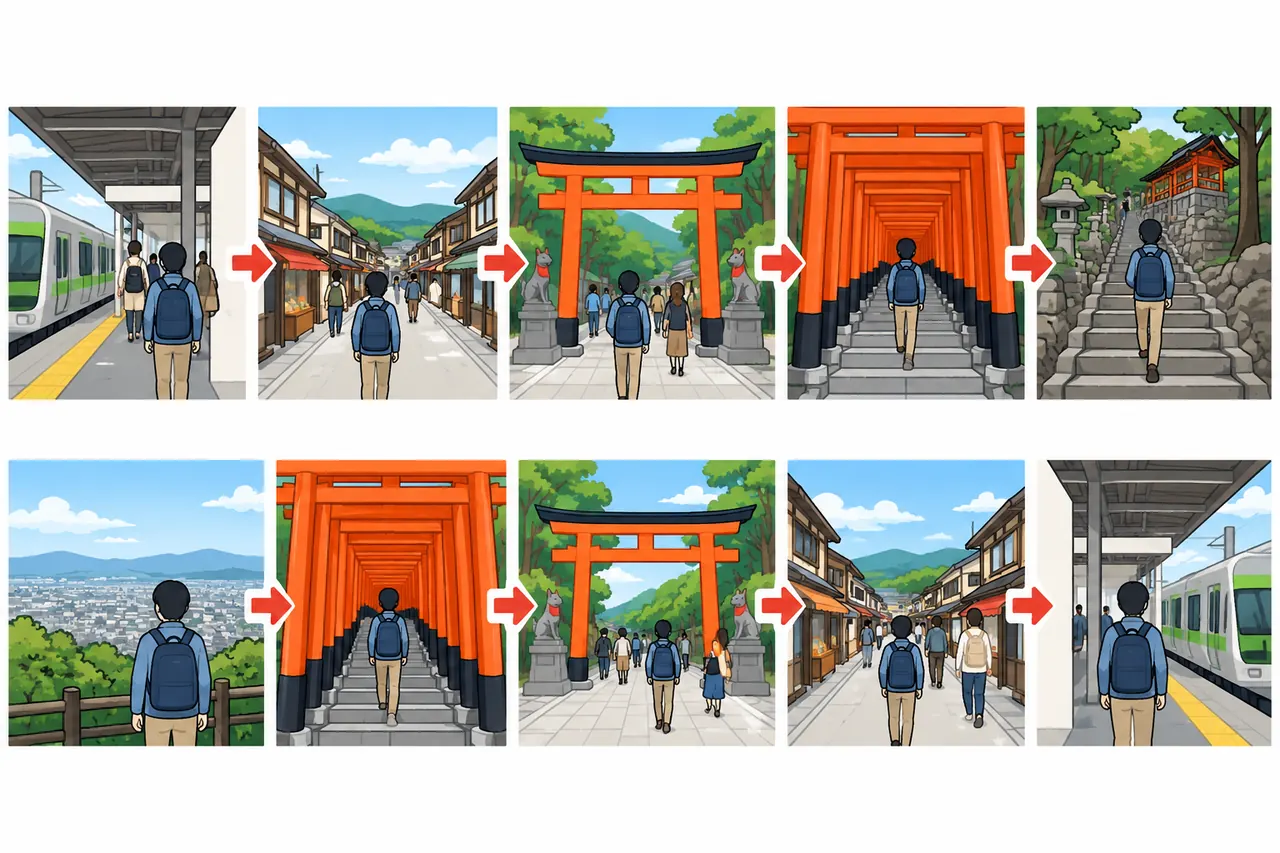

You do not have to complete the circuit. A shorter visit can focus on the tower gate, main hall, Senbon Torii and Okusha Hōhaisho, then return the way you came. The shrine’s map helps identify these landmarks and choose a point at which to turn back.
| Walking plan | Time or detail | Useful planning note |
|---|---|---|
| Shorter visit | Choose how far to go and turn back when needed. | Use the shrine map to select the sights you want to see. |
| Mountain circuit | About 2–3 hours, according to JNTO. | Allow additional time for travel and stops. |
| Summit visit | About 1 hour 30 minutes from Senbon Torii to Ichinomine, one way. | Plan separately for the return; this is not a round-trip estimate. |
For a shorter route, leave JR Inari Station, pass through the tower gate to the main hall, then continue through Senbon Torii to Okusha. This is a practical plan for visitors who want to see the gates without committing to the summit climb. Kyoto’s trail guide gives about 10 minutes for the section from the tower gate to Senbon Torii, but treat route estimates as guides rather than guarantees.
As an editorial planning example, one adult walking slowly in daylight might leave JR Inari Station at 10:00, reach the main hall at 10:10, Senbon Torii at 10:25 and Okusha at 10:40, then return to the station around 11:10. These times include assumed pauses for worship and photographs; they are not measured or guaranteed. The example starts and ends at JR Inari Station and should not be confused with an itinerary from Keihan Fushimi-Inari Station.
For one separate fare example, an adult travelling between Keihan Gion-Shijo and Fushimi-Inari pays ¥240 each way at the fare shown, or ¥480 for a return. Combined with the shrine’s listed free admission, that makes ¥480 for rail and admission, excluding food, a tour and lodging. The fare tables were revised on 1 October 2025, so check the Gion-Shijo fare table and the Fushimi-Inari fare table before travel.
Plan your walk and return
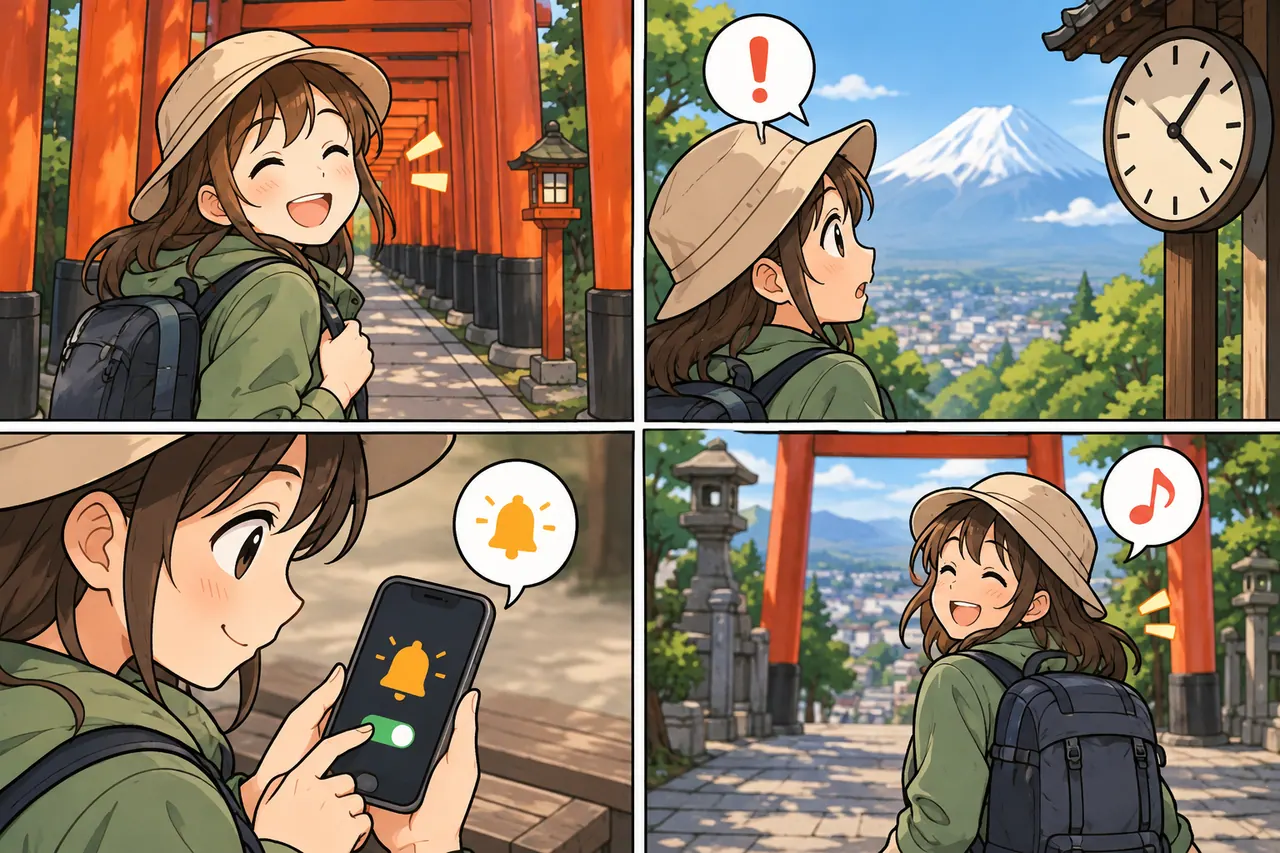
Open the shrine map before starting and decide which places matter most to you. Set a phone alarm if you have a time-sensitive return train, and check weather and sunset information before choosing how far to walk. A map app can help you check your position; turn back when you need to rather than treating the summit as a requirement.
There is no verified time of day that guarantees a quiet visit. Kyoto Prefecture’s tourism listing notes that New Year, the first day of each month and “horse days” in the traditional calendar are especially busy. JNTO suggests visiting from late morning to mid-afternoon and having a light lunch during the walk, but this is a planning suggestion, not a promise about crowd levels.
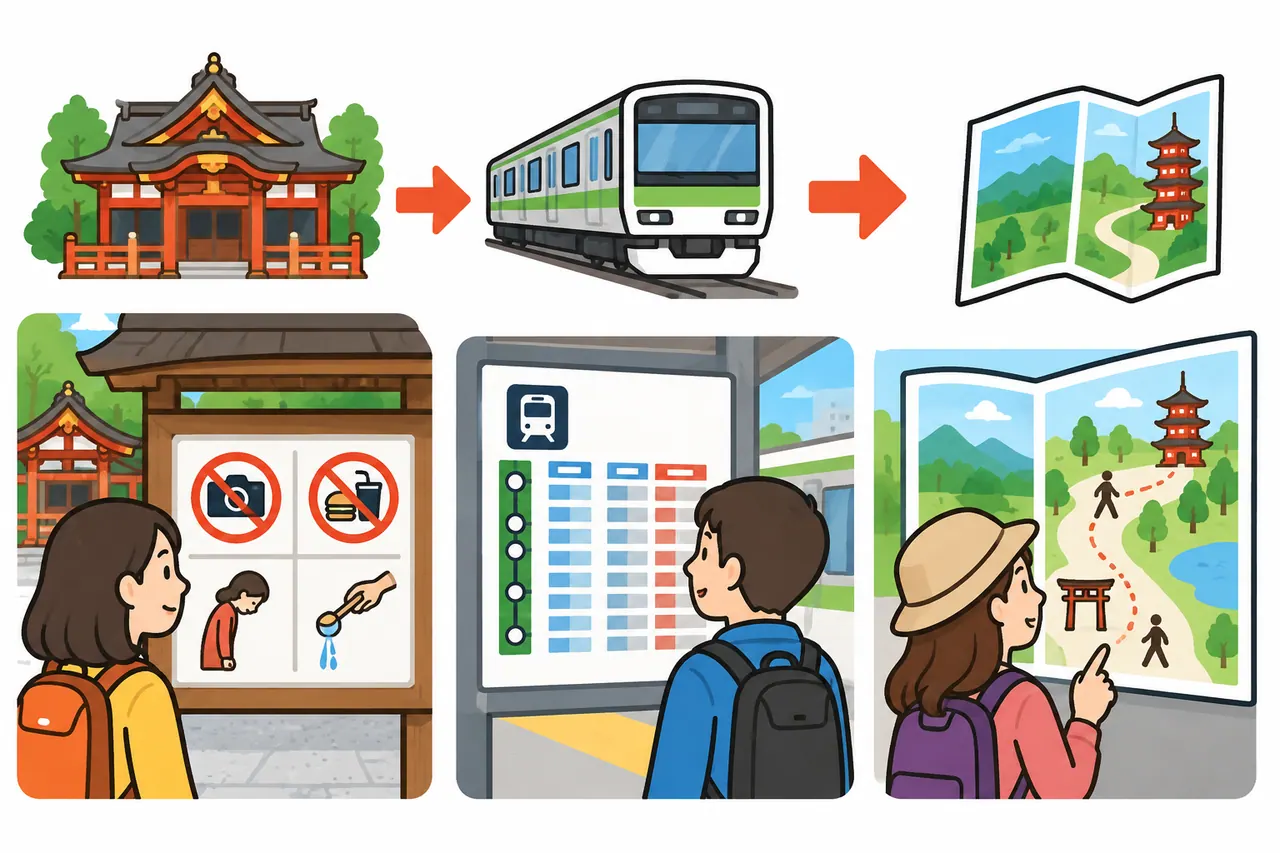
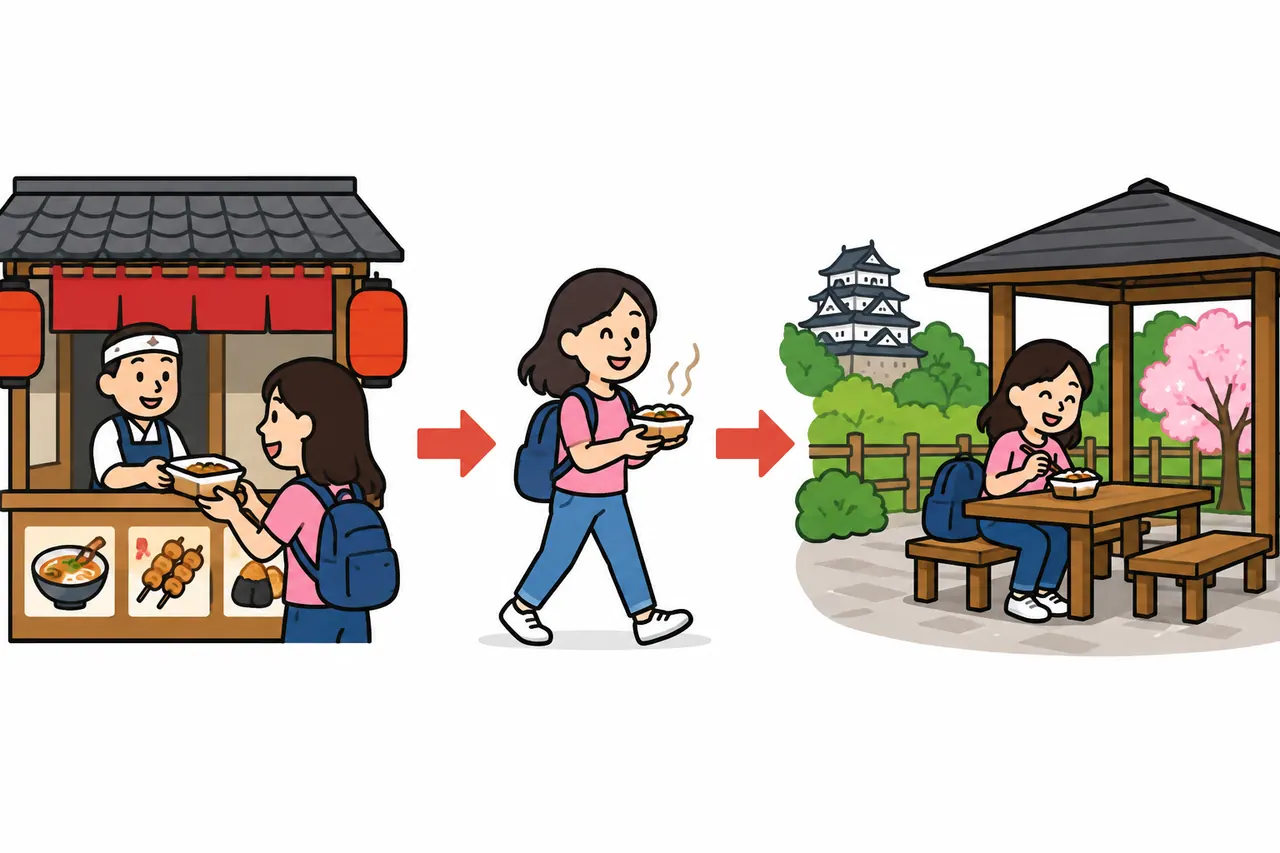
The shrine asks visitors to eat and drink only in its marked free rest areas. Its visitor requests also prohibit eating while walking or standing along the route. Check the latest shrine notices before visiting for any temporary restrictions or closures.
Food on the mountain paths
JNTO mentions tea shops along the approach and suggests a light lunch during a visit. It names inari sushi, rice in a pouch of fried tofu, and kitsune udon, noodles in soup topped with fried tofu; “kitsune” means fox. Sweet shops on the approach also sell tsujiura senbei, a type of rice cracker.
| Food | What it is | Where JNTO mentions it |
|---|---|---|
| Inari sushi | Rice in a fried-tofu pouch. | Tea shops on the approach. |
| Kitsune udon | Noodles in soup topped with fried tofu. | Tea shops on the approach. |
| Tsujiura senbei | A kind of senbei, or rice cracker. | Sweet shops on the approach. |
Prices and individual shop opening hours have not been confirmed, so check directly with a shop if you are planning around a meal. Ask about ingredients if you have food requirements. Remember that the shrine’s rule limits eating and drinking to designated free rest areas.
Fushimi Inari Shrine Rules, Photos and Access Needs
The shrine’s visitor requests are dated 1 January 2022 and are published in Japanese. The summary below follows that Japanese guidance; the English page’s wording and whether it contains the same number of items have not been confirmed. The shrine says visitors should follow staff instructions and may be asked to leave if they do not comply.
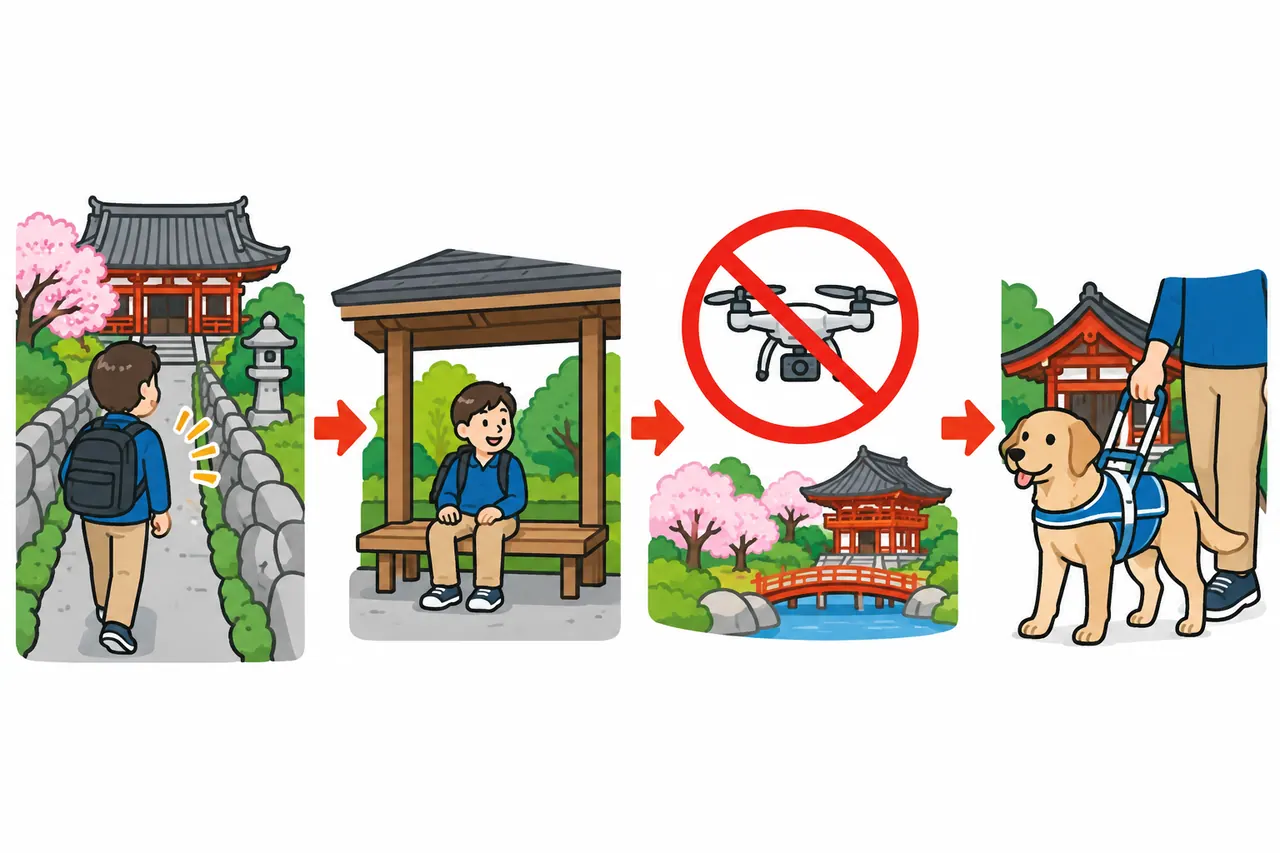
| Situation | What the shrine asks visitors to do |
|---|---|
| Walking or stopping for photos | Keep narrow paths clear; do not block others while taking pictures. Avoid loud voices or sitting in ways that inconvenience other visitors. |
| Eating, drinking or disposing of rubbish | Use designated free rest areas; do not eat while walking or standing. Do not leave rubbish or containers behind. |
| Smoking or using fire | Do not smoke or use fire on the grounds. |
| Passing gates, trees, buildings or lanterns | Do not damage property, climb lanterns or enter restricted areas without permission. |
| Bringing an animal or encountering wildlife | Pets are not allowed, except assistance animals needed for a visit. Do not approach or feed wild birds or animals. |
| Filming, photography or surveys | Do not fly drones, take commercial photographs or film in prohibited areas. Interviews and surveys require permission. |
| Strollers, clothing or parking | Leave strollers only in marked places; do not use shrine parking for a non-shrine visit. The shrine also asks visitors to avoid attire it considers unsuitable, such as wedding dresses. |
| Other conduct | Follow staff directions; the shrine prohibits other conduct it considers inappropriate. |
The shrine’s rules also prohibit unauthorized entry into restricted areas, including areas inside fences, and prohibit damaging buildings, torii and trees. If you stop for a photo in a narrow torii passage, leave space for others to pass. Commercial photography and photography in prohibited areas are not allowed, and interviews or questionnaire surveys require permission.
Wheelchairs, strollers and toilets
Kyoto Prefecture’s tourism listing says wheelchair access is possible as far as Okusha and mentions a lift, while asking visitors to confirm the lift’s operating hours. A Kyoto school-trip guide updated in 2016 notes a steep slope to the main hall and steps on the mountain. Because these sources describe different parts of the route and the older guide may not reflect current conditions, contact the shrine before travel to confirm the route, lift operation and any assistance you may need.
The 2016 guide also lists a wheelchair-accessible toilet north of the parking area. Keihan’s current station information lists a wheelchair-accessible toilet and a slope at Fushimi-Inari Station, but no elevator or escalator. Confirm facilities in advance if they are essential to your plan, and do not assume the mountain route is step-free.
For strollers, the shrine asks visitors not to leave them outside marked places. Ask the shrine about your intended route if steps or slopes are a concern. The older school-trip guide lists the amulet office as open at about 7:00–18:00, but those hours are not confirmed as current; check with the shrine before relying on them.
Prayer, photography and wildlife
The shrine describes the prayer gesture after a formal prayer as “two bows, two claps, one bow.” That is the instruction given for a formal prayer and should not be treated as a complete, verified guide to every step of an ordinary visit. For formal prayers, the shrine’s prayer information lists examples starting at ¥5,000, with a category including kagura starting at ¥30,000; these are prayer fees, not admission or torii-donation prices.
The shrine’s prayer page generally gives prayer times as 8:30–16:30, with reception until about 16:00, and notes that New Year and festival periods may differ. These hours are separate from the temporary kagura schedule described below, so check the shrine’s latest notices before planning a prayer or performance. General admission is listed as free by Kyoto Prefecture’s tourism federation.
The shrine asks visitors not to approach or feed wild animals or birds. Its Japanese visitor guidance also prohibits pets, except assistance animals needed for a visit, and prohibits drones. For official notices and rules, consult the shrine topics page and its visitor requests.
Fushimi Inari Shrine Tours and Next Stops in Kyoto
You can visit independently using the shrine map or consider an English-language guided tour. Kyoto City Tourism Association announced that a tour of about 60 minutes, including a walk through Senbon Torii and a kagura performance, would restart on 18 March 2026. Read the tour resumption announcement and confirm availability with the organizer before making plans.
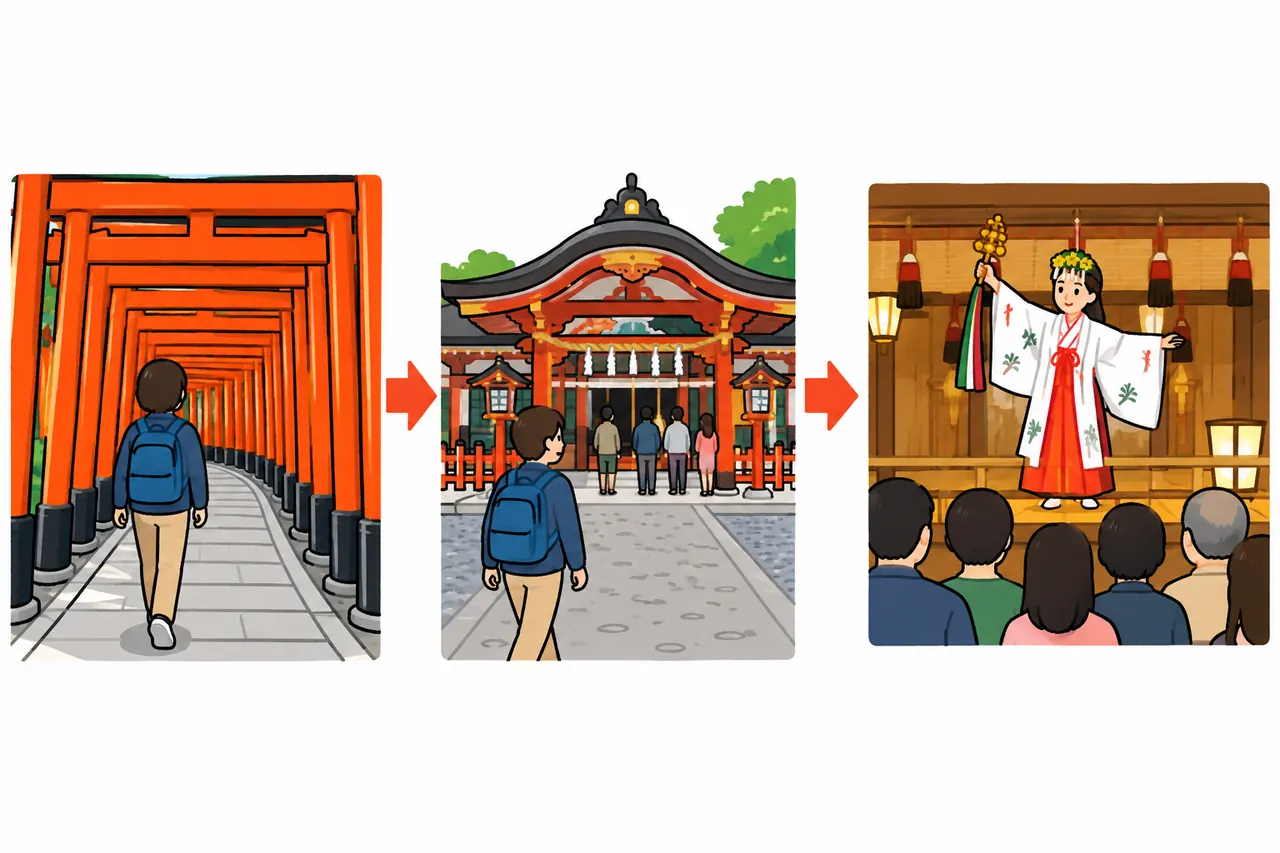
The announcement does not provide confirmed current details here for prices, start times, excluded dates, meeting times, photography rules, transport costs or cancellations. Ask the organizer about each of these points before booking. Do not assume that the tour includes transport or that a particular performance is available on your chosen date.
Kagura times (not shrine visiting hours)
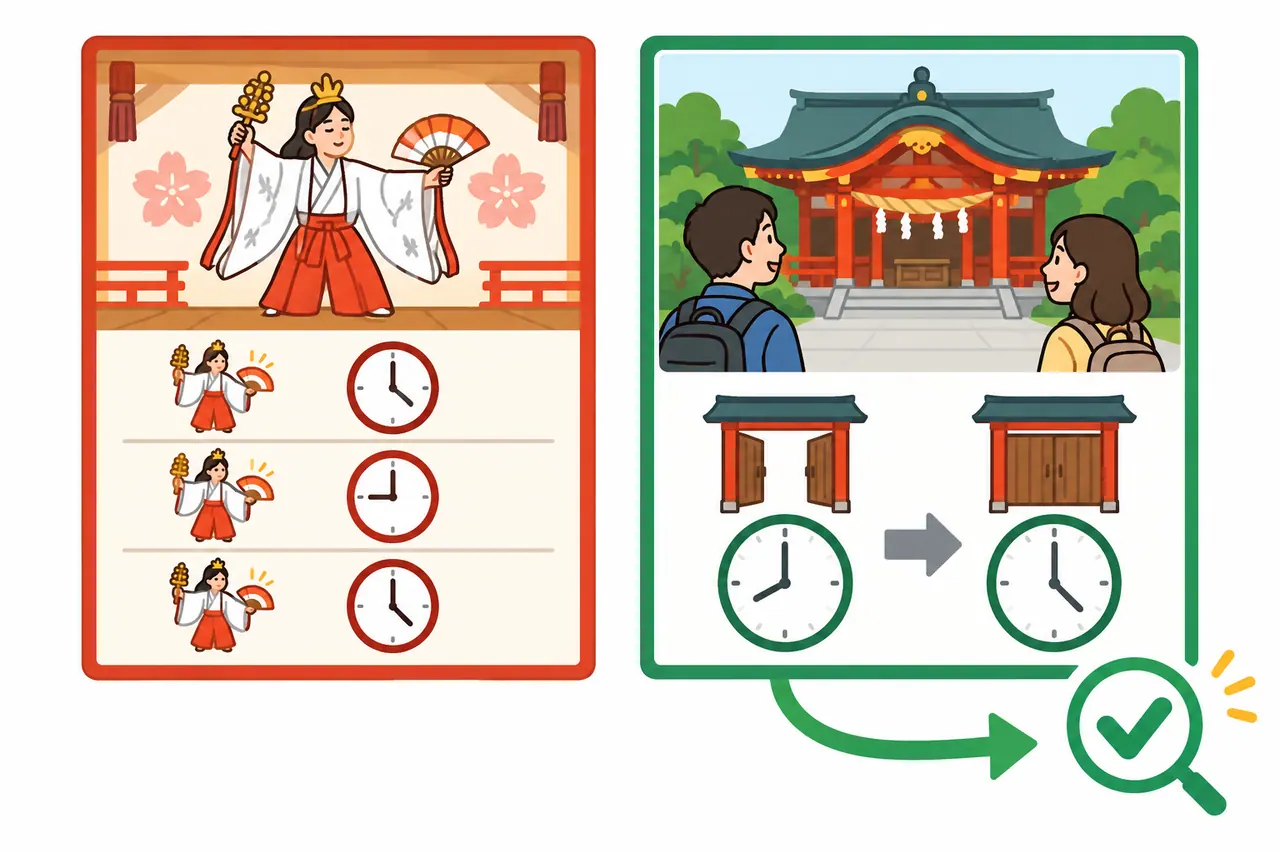
On 30 October 2026, the shrine announced a temporary change to kagura times, effective from 1 November 2026 “for the time being.” The schedule is not the same thing as the hours when visitors may enter the shrine grounds. Check the shrine’s latest notices before going, as the schedule may change.
| Kagura schedule | Announced time |
|---|---|
| Usual days | 9:00–16:00 |
| First day of each month | 8:00–16:00 |
| Reception closes | 15:30 |
Nearby sights and next stops
For another stop in Kyoto, consider looking into Tofukuji, Kyoto Station or Fushimi’s sake-brewery area. These are separate destinations, so check each place’s official information for access, fees and opening times rather than assuming the shrine’s schedule applies. A train app can help compare routes from the station you plan to use.
For more ideas, see the [Kyoto travel guide] and the [Arashiyama guide]. If Fushimi Inari is one part of a wider itinerary, compare the time and transport needed for each stop before choosing how far to walk on Mt. Inari. No half-day route or travel time between these destinations is guaranteed here.
Fushimi Inari Shrine FAQ
Is Fushimi Inari Shrine free? Kyoto Prefecture’s tourism listing gives admission as free. Train fares, food, optional tours and formal prayers are separate costs; prayer fees are not general admission fees.
Does a normal visit require a reservation? The shrine’s official pages reviewed here do not clearly state whether an ordinary visit requires a booking. Check the shrine’s current notices or contact the shrine if you need certainty for a particular date or purpose.
When is the shrine open? Kyoto Prefecture’s listing says worship is free and the site is open without a closing day, while a Kyoto school-trip guide updated in 2016 says worship is possible day and night. Check the shrine’s latest notices before you go for temporary restrictions or closures; this information does not establish that every mountain path is safe or illuminated at night.
How long should I allow? JNTO suggests about 2–3 hours for the Mt. Inari circuit. The summit estimate is about 1 hour 30 minutes from Senbon Torii one way, so allow additional time for the return and stops, or choose a shorter walk and turn back earlier.
How do I get there from Kyoto Station? Take the JR Nara Line to Inari Station; the shrine is directly in front of the station, and the shrine gives the journey as two stops and about 5 minutes. Check the specific train’s stops before boarding because some rapid services pass Inari.
Is Keihan Fushimi-Inari Station the same as JR Inari Station? No. They are separate stations operated by different railway companies. From Keihan Fushimi-Inari Station, walk east; the shrine estimates about 5 minutes and JNTO about 7 minutes.
Can I reach the shrine by bus? Kyoto City Bus Minami 5 stops at Inari Taisha-mae, followed by an eastward walk of about 7 minutes. The bus journey time depends on your origin and conditions, so check a current route planner.
Can wheelchair users visit? Kyoto Prefecture’s tourism listing says wheelchair access is possible as far as Okusha and mentions a lift, but asks visitors to confirm its operating hours. A 2016 guide notes a steep slope to the main hall and steps on the mountain, so contact the shrine to confirm your intended route and any assistance before travelling.
Can I bring a pet or fly a drone? The shrine prohibits pets, except assistance animals needed for a visit, and prohibits drones. Its visitor guidance also asks people not to approach or feed wildlife.
How many torii gates are there? The shrine’s English FAQ gives about 10,000 large and small torii along the mountain paths. This figure covers the mountain route, not Senbon Torii alone.
Are there lockers? JR West lists coin lockers at Inari Station, and a Keihan station map shows lockers on both sides of Fushimi-Inari Station. Check at the station for their current location, prices and availability.
Is the shrine car park free, and how many spaces are there? The shrine recommends public transport and says its parking is for shrine visitors. Tourism listings differ on capacity—250 spaces in one listing and 170 in a 2016 guide—so confirm current capacity and charges with the shrine before driving.


)](https://i.ytimg.com/vi/3J5VSdqPW4Y/mqdefault.jpg)


)](https://i.ytimg.com/vi/4NOXJydIPKk/mqdefault.jpg)