
Fukuoka Yatai Etiquette: Rules for First-Time Visitors
Contents
Good Fukuoka yatai etiquette is straightforward: visit in a small group, check the menu, prices and payment methods before sitting down, share the counter, and leave when you have finished eating. Keep your bag on your lap, use the restroom before you arrive, and follow the individual stall’s rules. Yatai are small and seating is limited, so considerate choices help make room for other guests too. The Fukuoka City yatai guide and Visit Fukuoka’s English guide are useful official references for planning and general etiquette.
1. What is a yatai?
A yatai is a small, open-air food stall. More than 100 yatai open around Fukuoka City when it gets dark, setting up on a street or in a park in the evening and taking everything away again at night. The stalls are part of the city’s evening food culture, but they are not permanent restaurants: each has limited space, and individual menus and rules can differ.
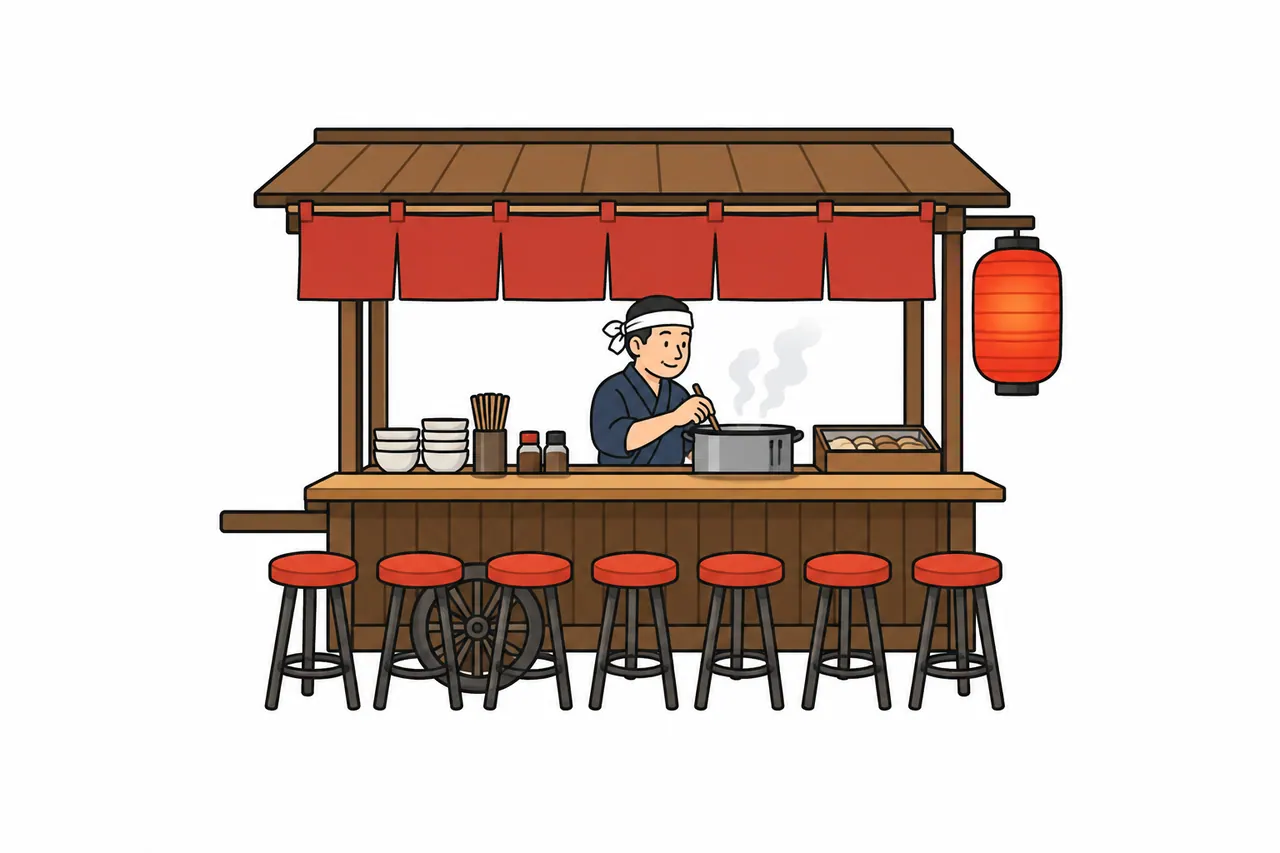

Common yatai dishes include ramen, oden, gyoza, yakitori and tempura. The exact selection depends on the stall, so check the menu before deciding where to sit. A small counter and a few seats are typical; you will often sit close to the owner and other guests. That close seating is part of the experience, and it is also why keeping bags compact, sharing space and avoiding a long stay matter.
Fukuoka has local rules for its yatai as well as customary ways for customers to help the evening run smoothly. The Fukuoka City Yatai Basic Ordinance came into force on 1 September 2013 and was the first ordinance of its kind in Japan. It sets requirements for stall operators, including rules concerning hours, prices and waste, and asks customers to cooperate in certain ways. The city’s ordinance leaflet provides official information about the framework.
2. Before you go: timing and areas
When to go
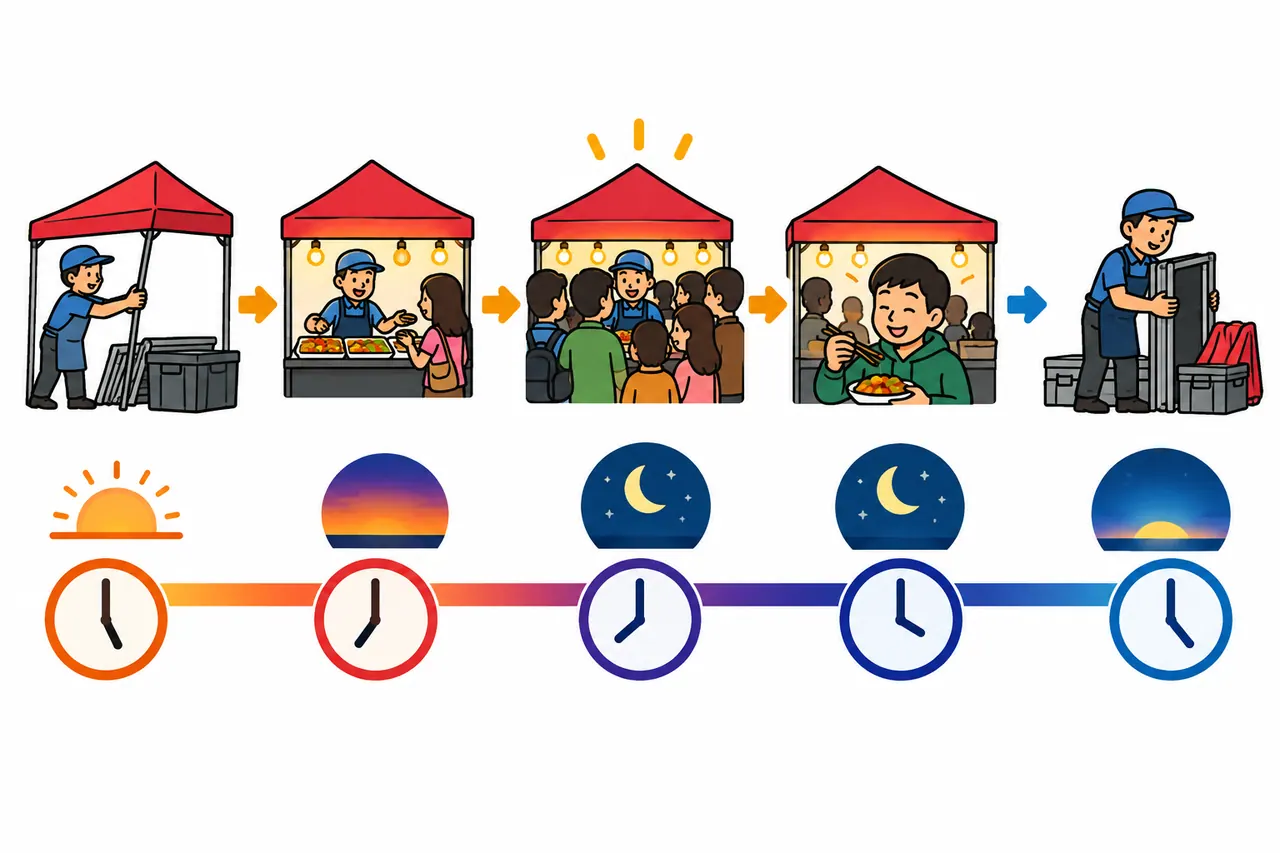
Yatai are an evening activity. Fukuoka City says stalls open from 6pm, while Visit Fukuoka notes that some open around 6:00pm and most open around 6:30–7:00pm. The city ordinance allows stalls to use the road or park from 5pm to 4am, but that period includes setup and teardown; it does not mean every stall serves customers until 4am. Opening and closing times vary, so confirm details with the stall rather than treating a general schedule as a guarantee.
Around 8pm is often the busiest time, and after 9pm many people come for a last bite after drinking. If you want a better chance of finding a seat, going earlier is a sensible plan, though it cannot guarantee that a particular stall will be quiet or have room. Later in the evening, be prepared for more people looking for seats and keep your visit focused on eating rather than lingering after you finish.
Where to go
The main yatai areas in Fukuoka City are Nakasu, Tenjin and Nagahama. Visit Fukuoka describes Nakasu as lively and popular with tourists, Tenjin as popular with locals and more relaxed, and Nagahama as known for ramen with thin noodles. Your choice can depend on what you want from the evening: a busy atmosphere, a potentially calmer area, or a chance to try ramen and ask about kaedama, an extra noodle refill. These are general area descriptions, not guarantees about the mood or menu at every individual stall.
| Area | General character | A possible fit |
|---|---|---|
| Nakasu | Lively, with many tourists | First-time visitors who enjoy a busy atmosphere |
| Tenjin | Popular with locals and described as relaxed | Solo travelers or visitors seeking a calmer evening |
| Nagahama | Known for ramen with thin noodles | Ramen lovers interested in asking about kaedama |
Outside Fukuoka City, Visit Fukuoka also identifies yatai areas in Kokura, in Kitakyushu, and in Kurume. The official Visit Fukuoka yatai guide is a helpful place to check the general area information before choosing where to go. For a specific stall’s hours, menu, rules or payment methods, check directly with that stall because these details vary.
How to prepare
Use the restroom before setting out; Visit Fukuoka recommends doing this because yatai are small street stalls. Pack light and expect to keep your bag on your lap rather than using a spare seat or counter space. If you are carrying luggage, consider leaving it at your hotel before heading out, since a large bag can make a compact seating area harder to share.
Plan for a small group. The city asks customers to avoid arriving in large groups, and limited seating may mean your party cannot sit together. Dress warmly in winter because yatai are outdoors, and keep your evening flexible in case a stall is closed or full. Checking general guidance in advance can help you arrive prepared, but stall-specific information still needs to be confirmed with the stall.
3. How to sit and order
A simple sequence makes a first visit easier: look at the menu and prices, check how to pay, confirm any house rules, and then ask about seating. The details vary from stall to stall, so do not assume that one yatai follows exactly the same procedure as another. Watch what other guests do, ask the owner when something is unclear, and follow the instructions you are given.
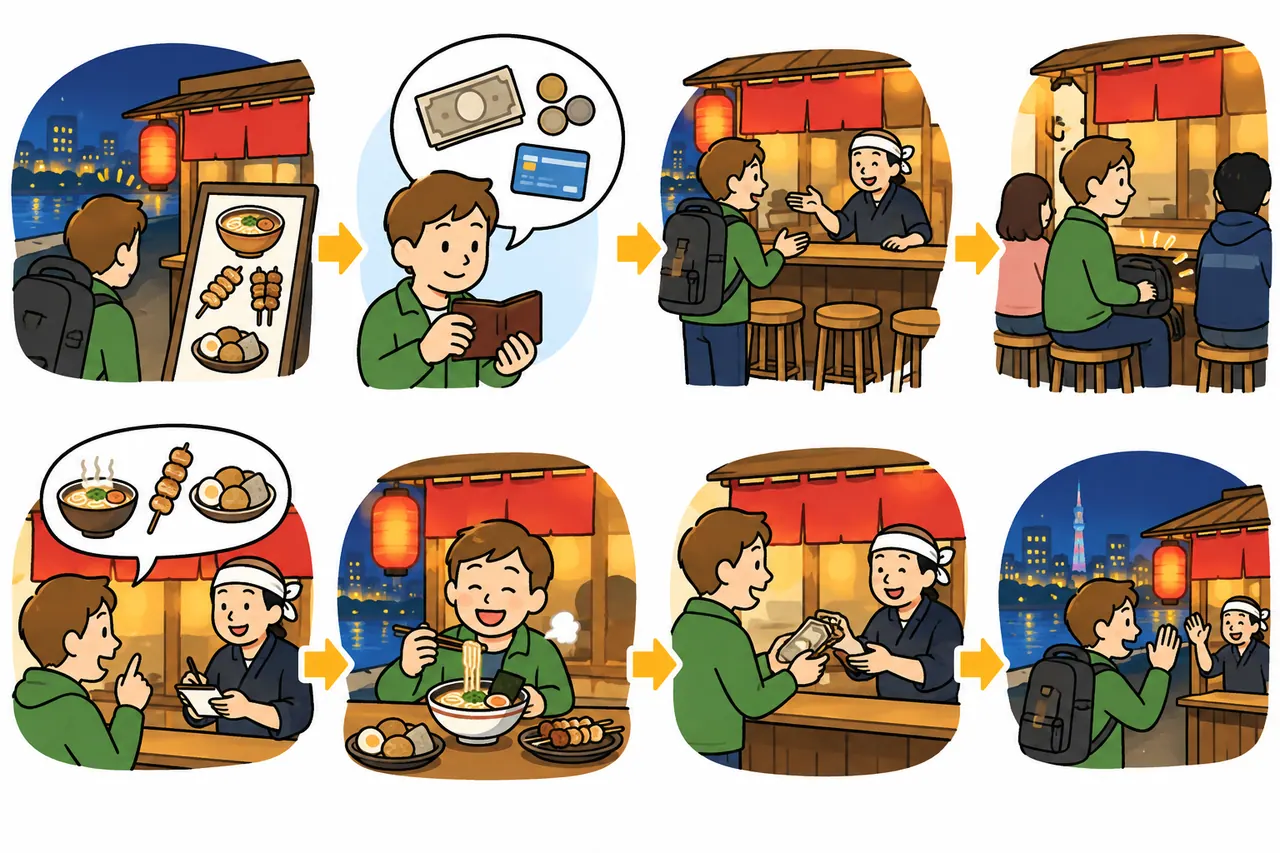
Start by looking at the menu and price display before you sit. Under the city ordinance, stalls must display prices where customers can easily see them. Visit Fukuoka also recommends checking the menu, prices and payment methods before taking a seat. If a price is not clear, ask before ordering so that you know what to expect.
Next, check the payment methods and any stall-specific rules. Payment methods vary by stall, so do not assume a particular way of paying will be accepted. The city’s rules also recognize that stalls can set their own customer rules and manners, making it sensible to check before sitting down. If you cannot find the information or are unsure, ask the owner before ordering.
Seating is limited, and you should expect to share the counter with other guests. Ask whether there is room for your party, and be considerate if only separate seats are available; if the arrangement does not work, you can come back later or try another stall. Keep your bag compact and on your lap, leaving the counter and seats available for people.
Order from the menu and enjoy your meal without becoming loud or disruptive. A friendly conversation with neighbors can be part of the experience, but keep your voice at a normal level and avoid excessive drinking. In Nagahama, you can ask whether a stall serves ramen with thin noodles and offers kaedama, an extra noodle refill; menus vary, so check at the stall rather than assuming it is available.
When you have finished, pay as the stall asks and leave your seat for the next guest. Visit Fukuoka recommends sharing the seats and not staying long after eating. Do not stand outside the stall with a drink if there is no seat: wait for an available place or move on to another stall.
4. Money and prices
There is no single price list for Fukuoka yatai in this guide because food prices vary by stall. The city ordinance requires stalls to display prices where customers can easily see them, so check the price board before ordering. If you cannot find a price or do not understand what it covers, ask the owner before placing your order rather than waiting until it is time to pay.
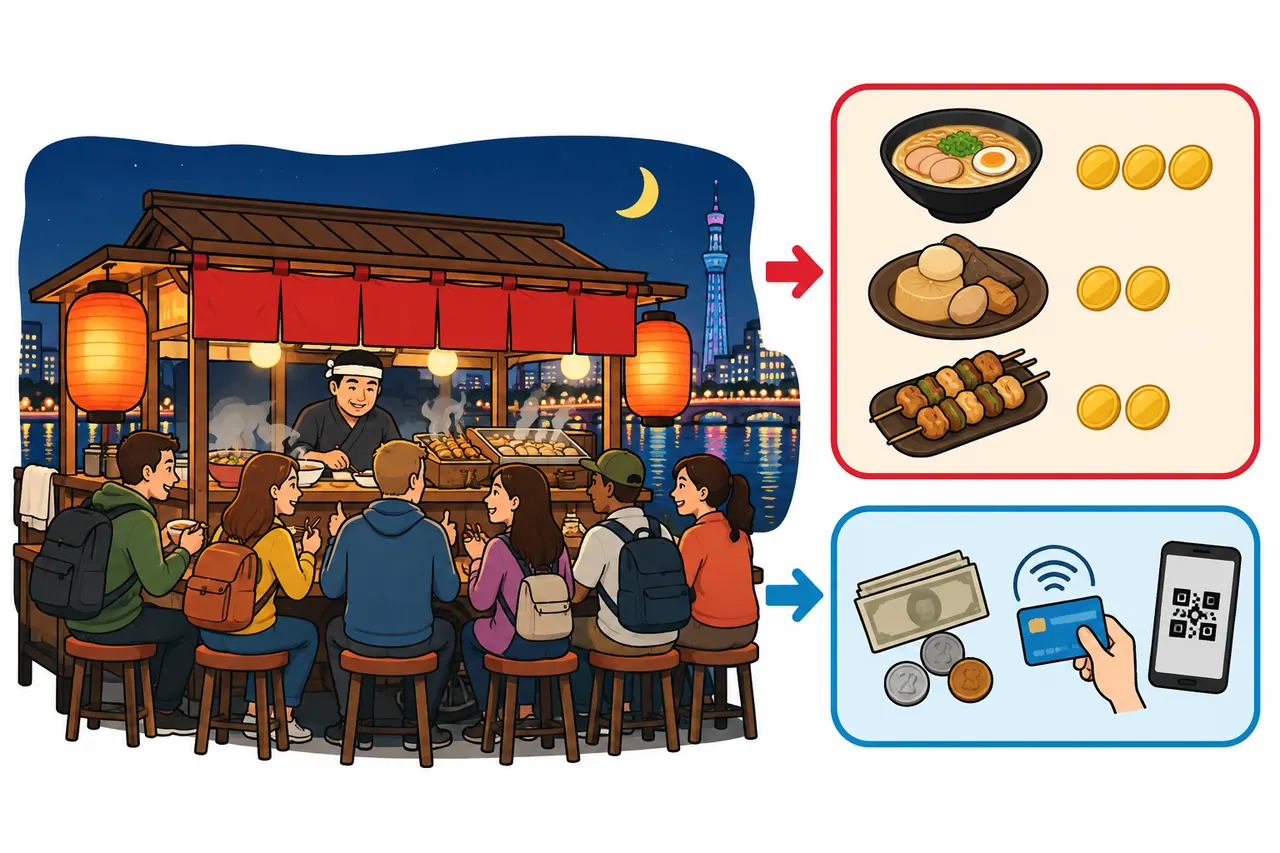
Payment methods also differ from one stall to another. Check how you can pay before you sit down, and do not assume that a card or any other particular method will be accepted. Confirming payment in advance is especially useful when the counter is busy: you will know what to expect, and the owner will not need to pause service later to clarify the arrangement.
A quick pre-seat check can cover the whole transaction: review the menu, look for displayed prices, ask about any unclear item, and confirm accepted payment methods. This is both practical and considerate. It helps you make an informed choice before ordering and avoids having to resolve a question after your meal.
5. Toilets, bags and space
Toilets
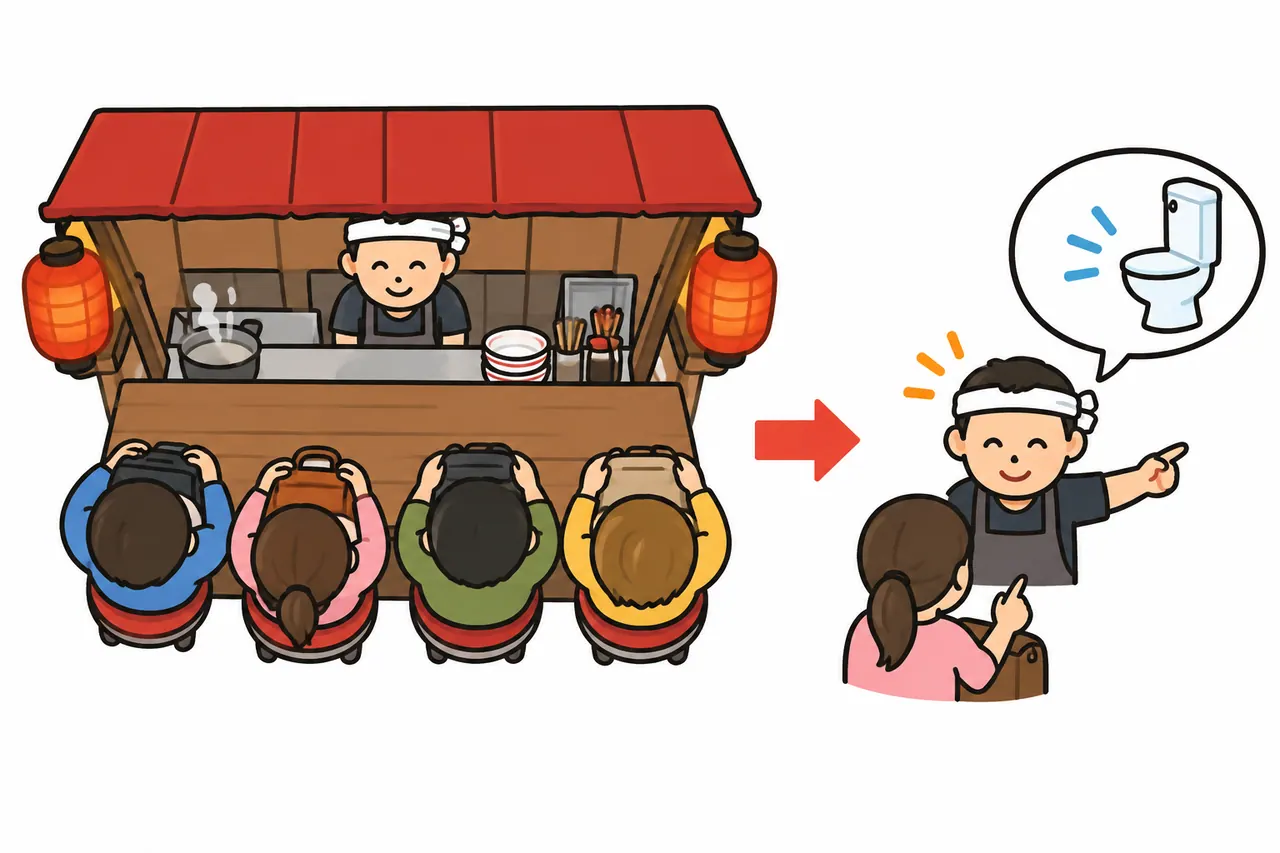
Visit Fukuoka recommends using the restroom before going to a yatai. The stalls are small, so leaving during a meal may be inconvenient, and a toilet may not be available inside the stall itself. If you need one while you are there, ask the owner where to go rather than choosing a location on your own.
The city asks customers to use the toilet locations indicated by the stall. Follow that direction, and do not assume that a nearby facility is the one the owner wants customers to use. Taking care of this before you arrive remains the simplest plan, particularly if you expect to stay in a busy area.
Bags
Keep your bag compact and hold it on your lap. A counter or an empty seat may look like a convenient place to put a bag, but those surfaces are part of a small shared space and may be needed by other guests. Avoid bringing large bags or suitcases into the seating area if you can; if you are traveling with luggage, consider leaving it at your hotel before going out.
Keeping a bag close also makes it easier to make room when someone arrives or when the owner needs access to the counter. Do not spread belongings across a seat or place them where they take up space another guest could use. If you are unsure where to keep something, ask the owner.
Space and sharing
Expect to sit close to other people and share the counter. Seating is limited, so a yatai visit works best when customers make room, accept the seats that are available and avoid treating the counter like a private table. A greeting or quiet conversation with nearby guests is fine, but follow the mood of the stall and keep your voice at a comfortable level.
The city asks customers to avoid arriving in large groups and to avoid staying for a long time. Once you have finished eating, pay and leave rather than continuing to occupy a seat while others wait. If your group cannot fit or sit together, it is considerate to accept the available arrangement, return later or choose another stall.
Clean streets
The ordinance prohibits stall operators from dumping waste or wastewater. Customers can support a clean shared environment by keeping their immediate area tidy and not leaving rubbish on the street. If you are unsure where something should go, ask the owner rather than leaving it beside the stall.
6. Food: no raw dishes
Yatai do not serve raw food, according to Visit Fukuoka’s recommended rules. Do not ask for sushi or another raw dish at a yatai; choose from the cooked items shown on that stall’s menu instead. The particular offerings vary, so check the menu rather than expecting every stall to serve the same dishes.
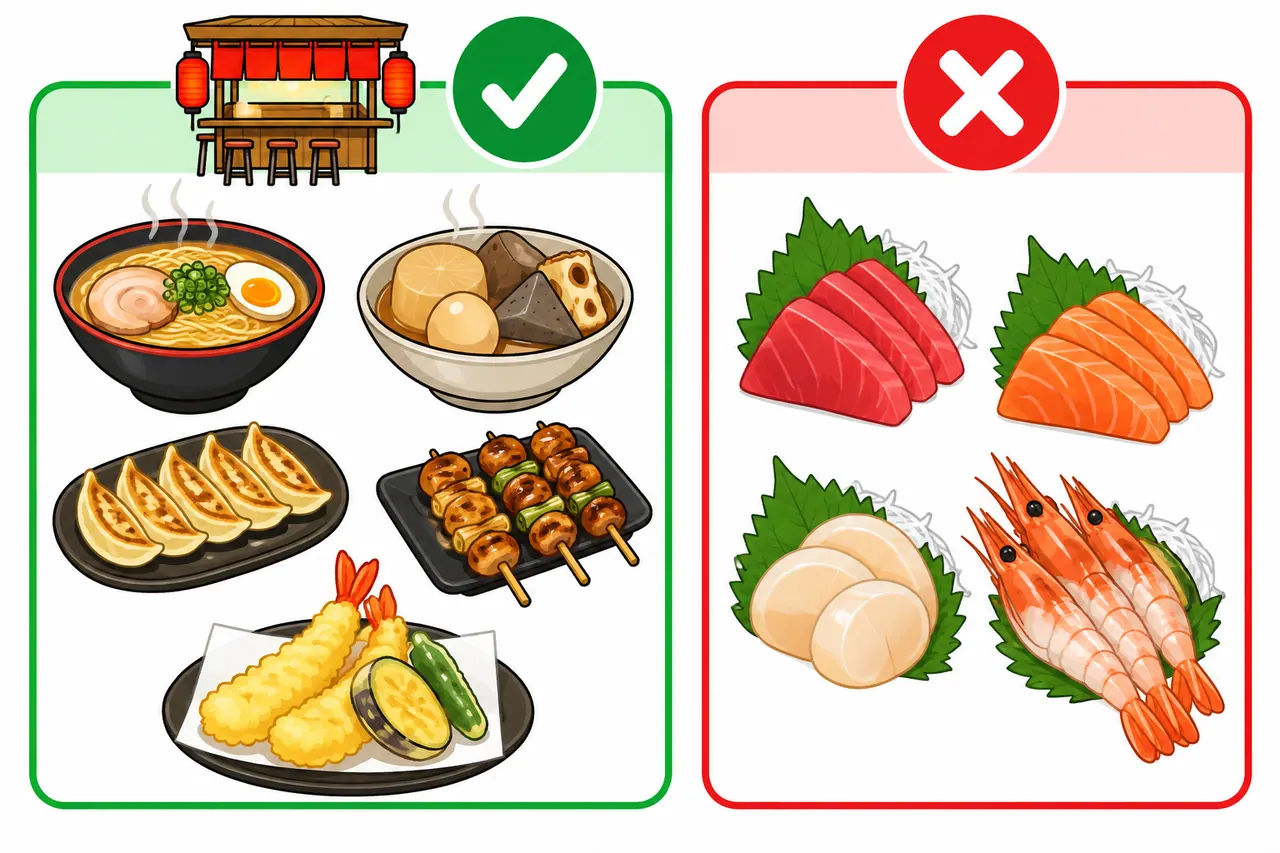
Common options include ramen, oden, gyoza, yakitori and tempura. Those examples describe food commonly found at yatai, not a promise that every stall has all of them. If you have a food allergy or dietary requirement, ask about ingredients before ordering. What a stall can offer depends on that stall, so do not assume that a particular substitution or alternative will be available.
7. Weather and closures
Yatai are outdoors, so weather can affect whether a stall opens. A stall may remain closed in stormy weather, and an owner may also close if unwell. Even if you have chosen an area in advance, the presence of a stall on a map or in a general guide does not guarantee that it will be operating on the night you visit.
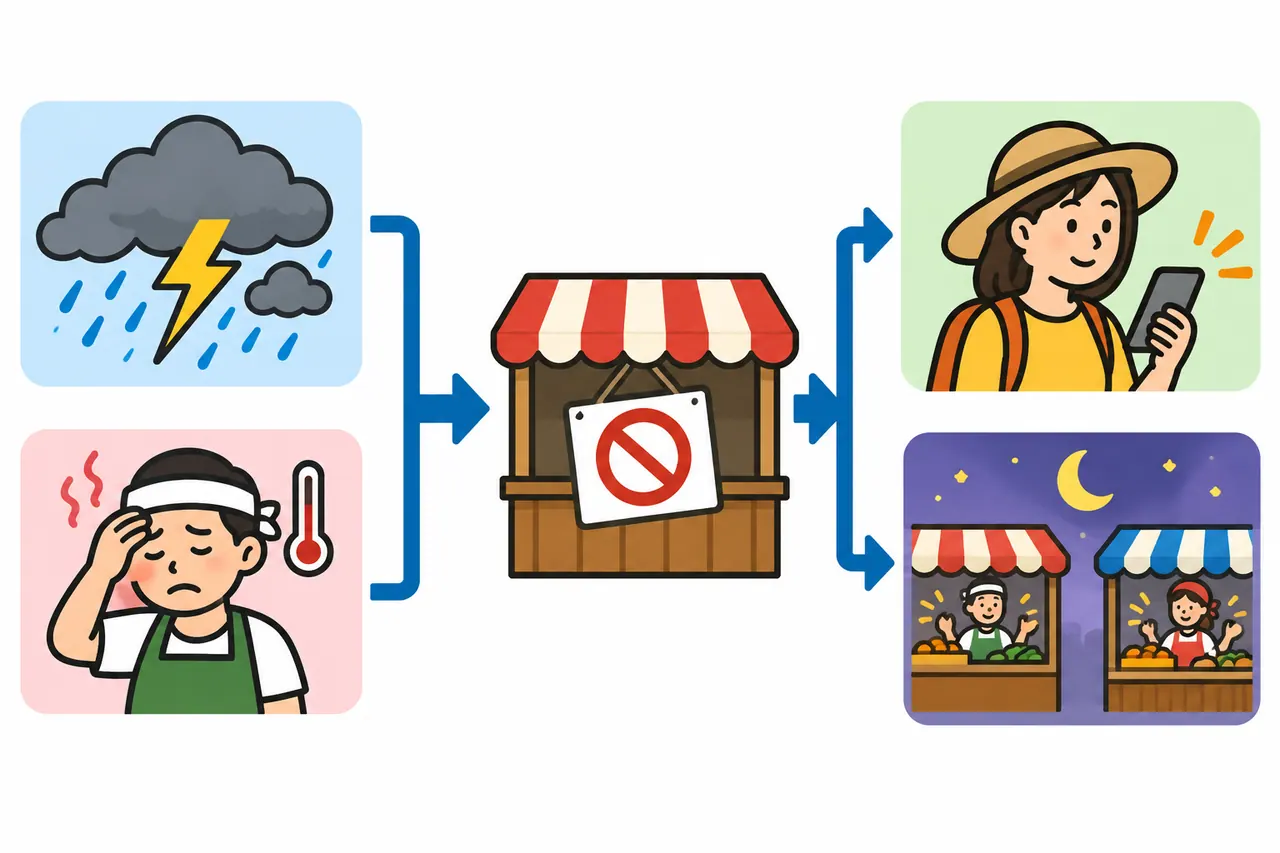
Keep a backup plan, especially if you have only one evening in Fukuoka. If your preferred area is quiet or the stall you wanted is closed, you can see whether other stalls are open or try again another night. Hours vary by stall, so confirm them directly rather than relying on the broad evening schedule.
Dress for the season and remember that the seating is outdoors. Visit Fukuoka specifically recommends dressing warmly in winter. A flexible plan matters because closures can happen with little warning; avoid building an entire evening around one stall whose opening is not confirmed.
8. Where to get help: the Yatai Concierge
Fukuoka City has a “Yatai Concierge” information desk at the International Passenger Terminal Building, on the first floor. The stated opening hours are 08:00–21:30. It can be a place to ask general questions about yatai before your evening visit.
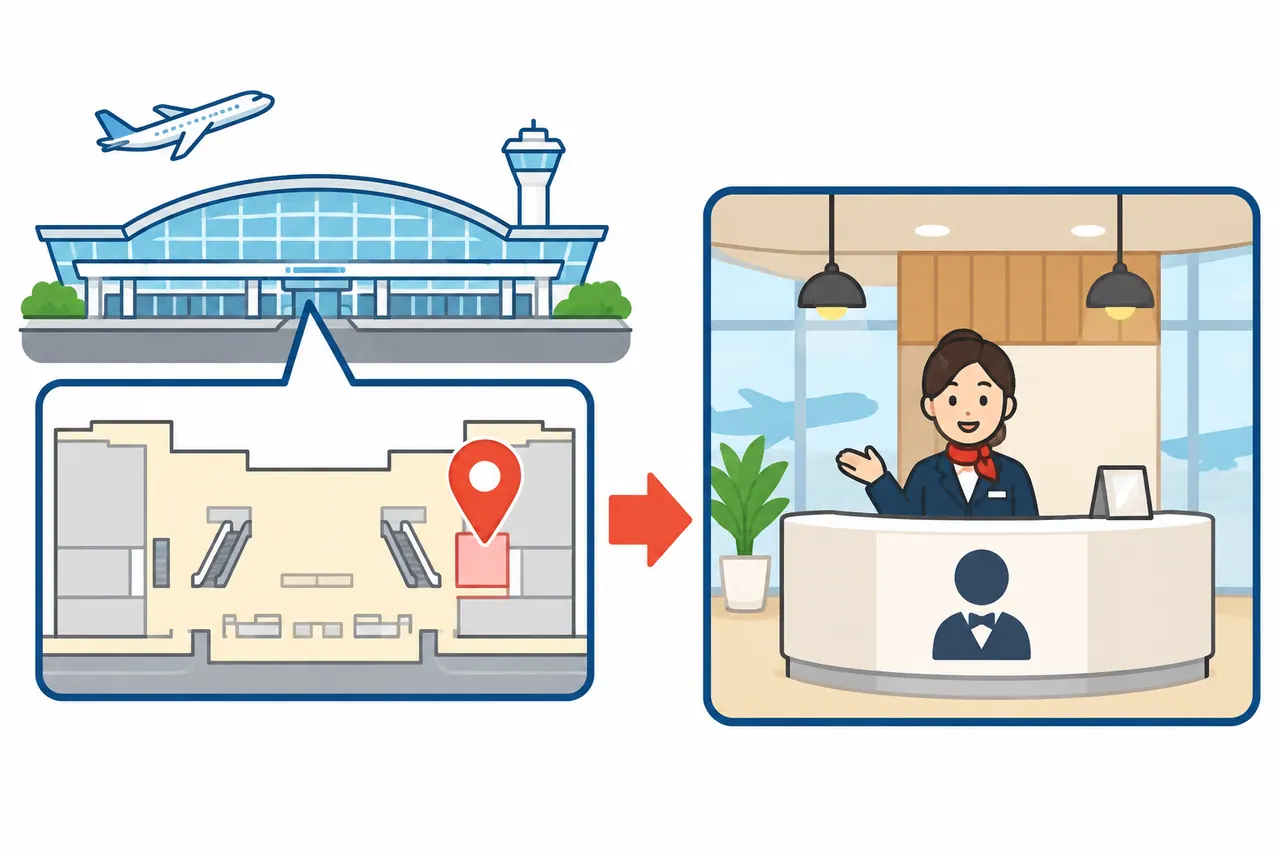
For details that belong to a particular stall—such as its current hours, menu, rules or payment methods—check with that stall directly. These details vary, and the concierge’s general information does not replace confirmation from the operator. For background before you go, consult the Fukuoka City yatai guide and the English-language Visit Fukuoka guide.
9. Mistakes first-time visitors make
Sitting down before checking prices or payment. Look at the displayed menu and prices, and ask about anything unclear before ordering. Confirm payment methods before you take a seat, since they vary by stall.
Arriving as a large group. Yatai have limited seating, and the city asks customers to avoid large groups. Come alone or with a small group where possible; if there is not room, try another stall or return later.
Staying long after eating. These are small shared counters, and other guests may be waiting for a seat. Finish your meal, pay as requested and leave once you are done rather than lingering.
Putting a large bag on a seat or counter. Keep a compact bag on your lap so that seats and counter space remain available. If you have luggage, consider leaving it at your hotel before your evening out.
Standing outside with a drink when there is no seat. Visit Fukuoka advises against standing outside the stall with a drink. Wait for a seat or move on to another stall instead.
Assuming every stall has the same menu or rules. Menus, hours, payment methods and customer rules can differ. Read the information at the stall and ask the owner if you are unsure.
10. FAQ
What time do Fukuoka yatai open?
Fukuoka City says yatai open from 6pm, while Visit Fukuoka notes that some open around 6:00pm and most open around 6:30–7:00pm. The city’s 5pm–4am period for use of the road or park includes setup and teardown; it is not a promise that a stall serves customers throughout those hours. Confirm the hours of the stall you want to visit because they vary.
When is the busiest time at yatai?
Around 8pm is described as the busiest time. After 9pm, many people come for a last bite after drinking. Going earlier may give you a better chance of finding a seat, but availability can vary from night to night.
Can I go to a yatai alone?
Yes. Visit Fukuoka describes Tenjin as relaxed and popular with locals, and identifies it as a suitable area for solo visitors. Expect to share the counter, and check with the stall before sitting down. The number of available seats can change, so going alone does not guarantee an immediate place.
Can I pay by card at a yatai?
Payment methods vary by stall, so do not assume that a card or any other method will be accepted. Ask how to pay before sitting down or ordering. Checking first helps you avoid a surprise when it is time to settle the bill.
Do yatai have toilets?
Use the restroom before you go, as Visit Fukuoka recommends. If you need a toilet while visiting, ask the owner where customers should go; the city asks customers to use the locations indicated by the stall. Do not assume that the stall itself has a toilet.
Do yatai serve sushi or other raw food?
No. Visit Fukuoka says yatai do not serve raw food, so do not ask for sushi or another raw dish. Common cooked options include ramen, oden, gyoza, yakitori and tempura, although each stall’s menu differs.
Can I bring a large group?
Large groups are difficult in a small stall, and the city asks customers to avoid arriving in a large group. A small party is more likely to fit the limited seating, though space still depends on who is already there. If your group cannot sit together, accept the available seats, return later or try another stall.