
Best Udon and Soba in Tokyo: 9 Shops and How to Book
Contents
- 1. How to choose from this list
- 2. Udon and soba: the difference and useful menu words
- 3. The 9 best udon and soba shops in Tokyo
- 4. Comparison table: awards, prices, and booking information
- 5. How to check, book, and order
- 6. Where to eat by area
- 7. Queues, timing, and what to expect
- 8. First-time mistakes to avoid
- 9. FAQ
Tokyo has excellent options for both thick wheat udon and thin buckwheat soba, but the practical details vary by shop. This guide includes nine places selected for documented recognition or official tourism and shop information, including Udon Maruka in Jimbocho, Soba Tajima in Nishi-Azabu, and three soba restaurants named in the 2026 MICHELIN Guide Tokyo Bib Gourmand selection. It also covers historic Kanda soba shops, how to order, what booking information is available, and where details such as prices or English menus remain unconfirmed.
The list is not a ranking of taste. Its order reflects the strength of the available sources: individual MICHELIN Guide listings first, then award information such as Tabelog Hyakumeiten, followed by public tourism guides and official shop details. Within the same evidence level, confirmed English booking or visitor information is prioritized, with shop name used to settle remaining ties. The selection process identified nine usable shops; an additional candidate, Naritomi, was excluded because the exact shop could not be identified.
How to choose from this list
Start with the kind of meal you want. Udon Maruka is the list’s dedicated udon choice, while the other named shops are soba restaurants or are listed as soba-focused places. If an award or guide listing is important to you, the three shops identified in the 2026 MICHELIN Guide Tokyo Bib Gourmand selection are Teuchisoba Jiyusan, Sobakappo Nagano, and Sobakiri Suzuki.
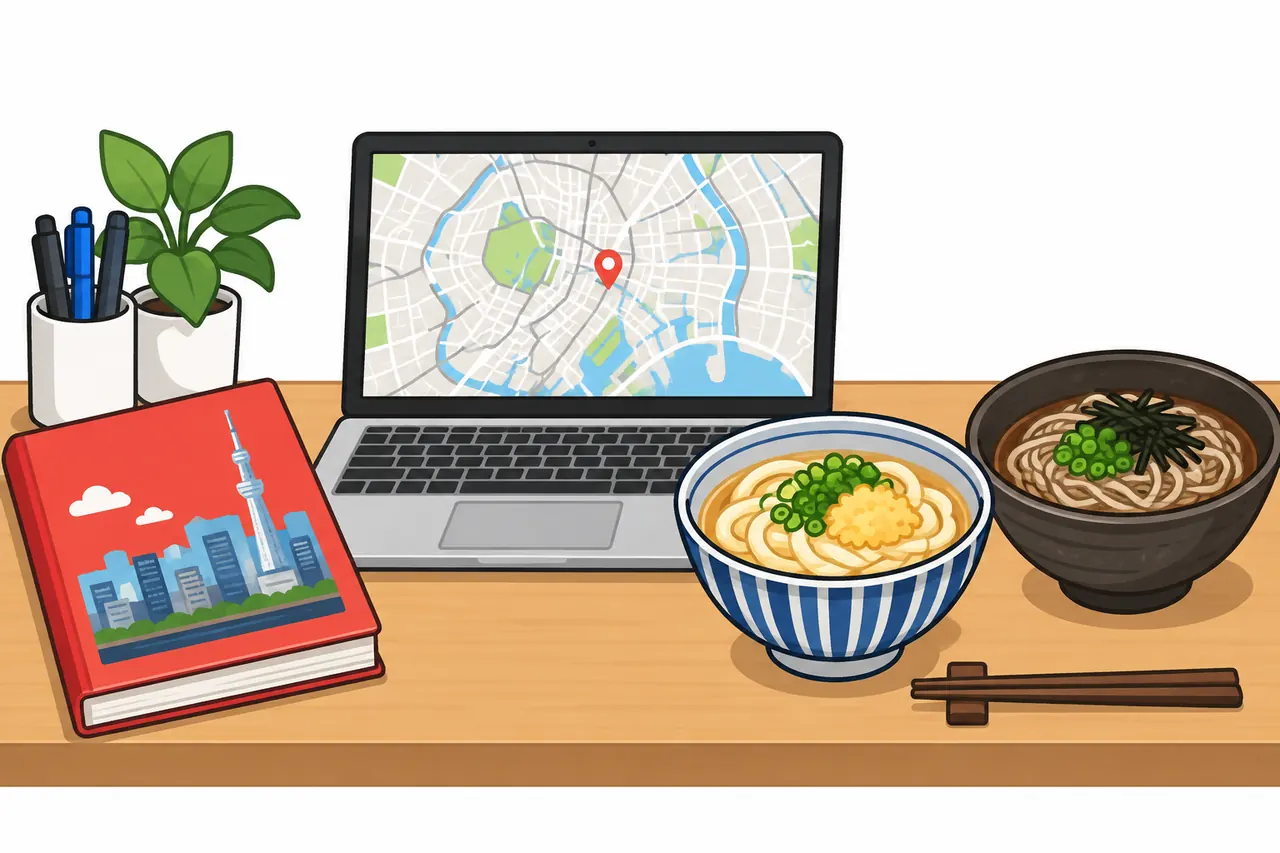

Next, check the practical information for your intended visit rather than assuming that all nine shops operate in the same way. Jiyusan does not accept lunch bookings and requires a reservation for dinner, while Suzuki’s Michelin listing says to telephone from about 9:30 on the day you plan to eat. The MICHELIN Guide advises contacting Soba Tajima directly about reservations.
Price is another reason to check the linked source pages before setting a budget. Most current prices in the available sources are unconfirmed, and the one specific figure in this guide—550 yen for mori or kake at Kanda Matsuya—comes from a listing whose publication date is unknown. Treat it as an older, undated reference, not as a confirmed current price.
Udon and soba: the difference and useful menu words
Udon are thick, soft noodles made from wheat flour. Soba are thinner noodles made from buckwheat, which has a nutty taste. This guide includes more soba restaurants than udon shops, so travelers looking specifically for udon should begin with Udon Maruka and check its linked listing for visit details.
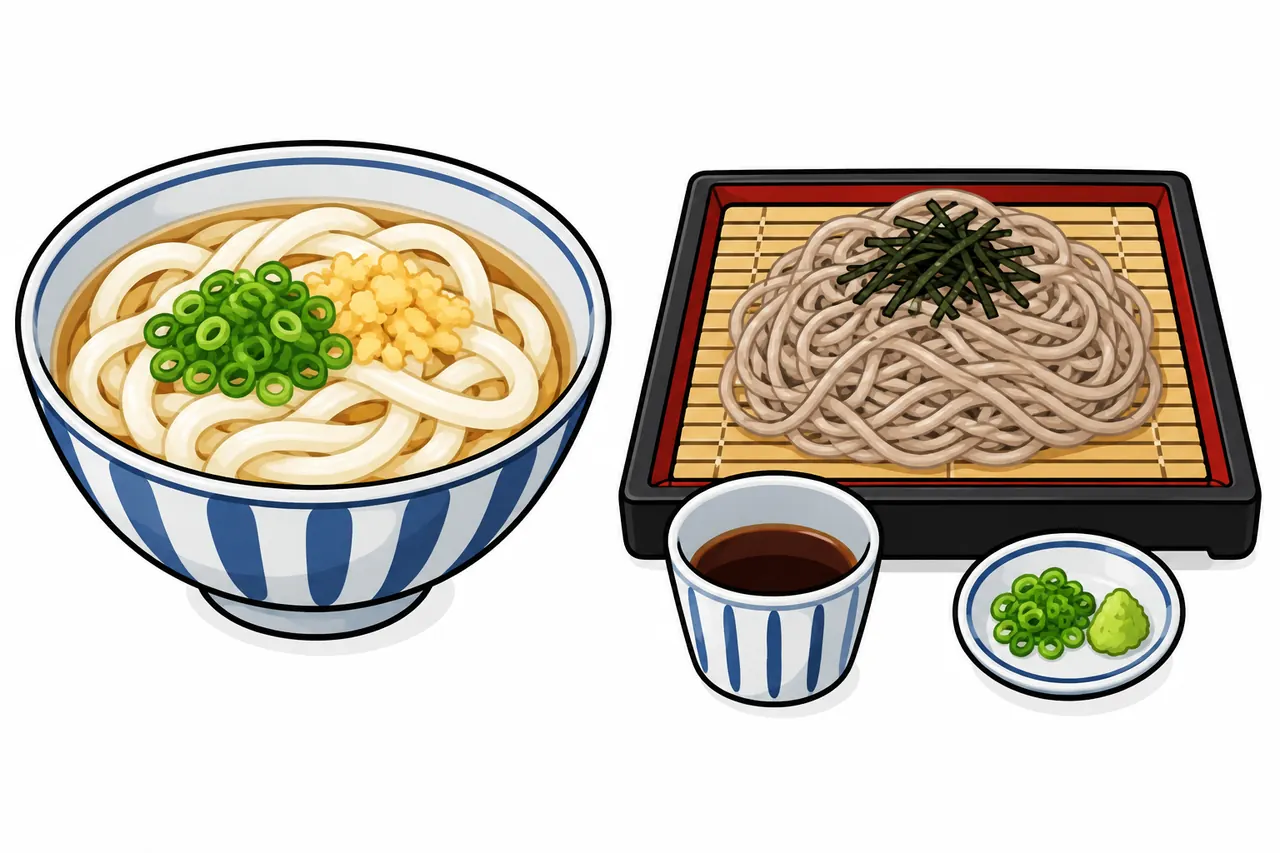
A few menu words make it easier to identify the style of dish you want. Mori and seiro refer to cold noodles served on a tray, usually with a cup of dipping sauce; kake means noodles served in hot soup. Arabiki describes coarsely ground buckwheat, which produces darker, rougher-textured noodles than a finer-ground style.
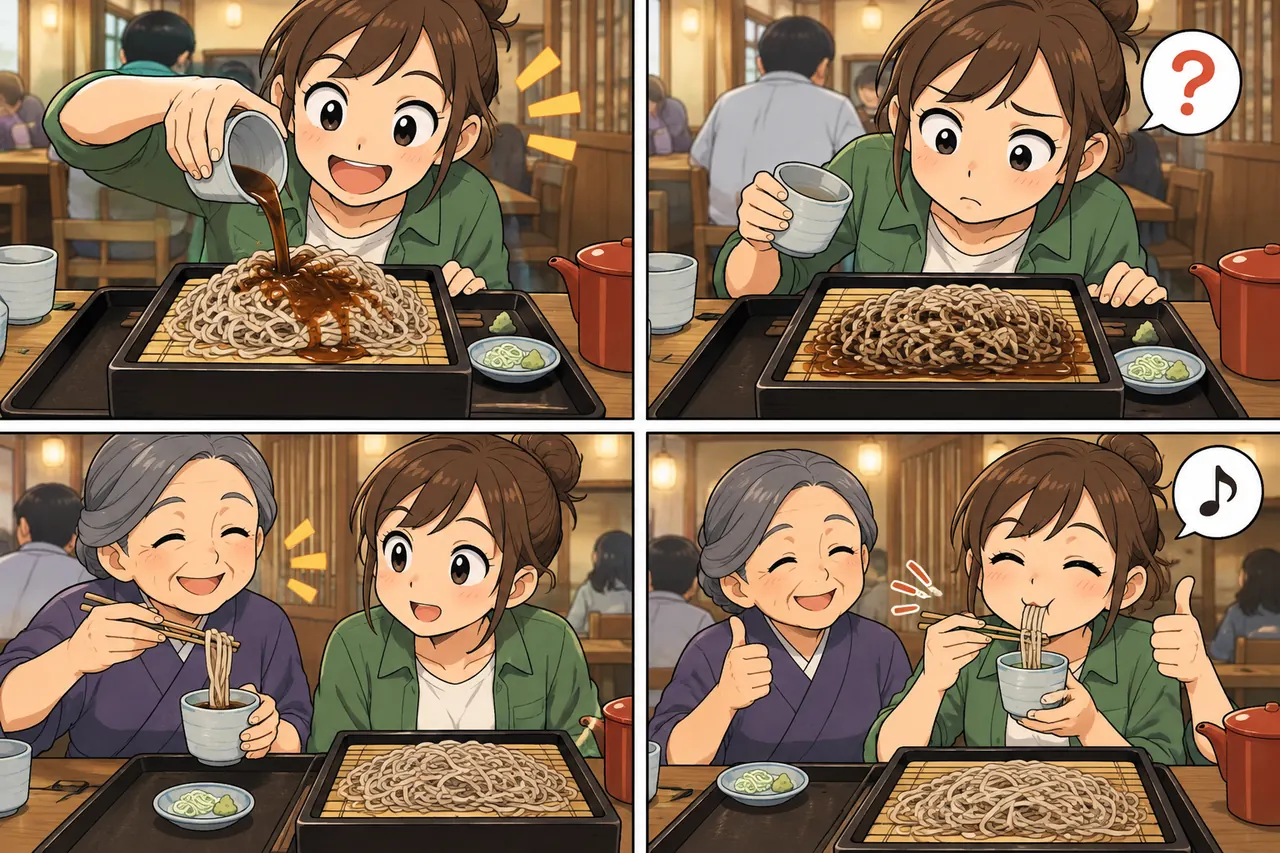
When ordering cold soba, dip a small amount of noodles into the sauce rather than pouring all the sauce over the serving. You can then adjust how much sauce you use with each bite. Slurping is normal at noodle shops in Japan, so you do not need to avoid it for reasons of etiquette.
The 9 best udon and soba shops in Tokyo
The descriptions below explain why each shop is included and what a visitor can verify before going. Use the linked shop pages to check current menus and booking options.
1. Soba Tajima — Nishi-Azabu, Minato
Soba Tajima won Tabelog’s Soba EAST Hyakumeiten 2025 and also has an individual page in the MICHELIN Guide. Those two sources make it one of the most strongly documented soba choices in this selection. See the Tabelog Soba EAST Hyakumeiten listing and the MICHELIN Guide page for Soba Tajima.
For reservations, the Michelin page directs visitors to contact the shop directly. No current price is confirmed here, so consult the linked listing or contact the shop before making a budget based on a particular dish.
2. Udon Maruka — Jimbocho, Chiyoda
Udon Maruka is the main udon recommendation in this guide and won Tabelog’s Udon EAST Hyakumeiten 2024. Its award is a useful reason to consider it if you want to focus your search on udon rather than the soba-heavy remainder of the list. The award appears on the Tabelog Udon EAST Hyakumeiten 2024 page, and the shop has a Tabelog individual listing.
Do not assume that an award listing means that reservations are accepted or that ordering assistance is available in English. Check the linked listing close to your visit for the current details it provides.
3. Teuchisoba Jiyusan — Egara-cho, Nakano
“Teuchi” means hand-made, and Teuchisoba Jiyusan is recognized in both the MICHELIN Guide Tokyo 2026 Bib Gourmand selection and Tabelog Soba EAST Hyakumeiten 2025. The MICHELIN Guide’s Tokyo 2026 announcement describes the Bib Gourmand selection, while the Tabelog Soba EAST page records the Hyakumeiten award. These recognitions make Jiyusan a strong choice for travelers specifically seeking a documented soba specialist.
Its reservation conditions are unusually important to plan around: lunch cannot be booked, but dinner requires a reservation. The MICHELIN Guide provides an individual page for Teuchisoba Jiyusan, and the shop’s official website is another place to check before visiting. Ask the shop about its current menu, prices and language assistance when planning your visit.
4. Sobagochisou Monzen — Jindaiji, Chofu
Sobagochisou Monzen is in the Jindaiji temple area in western Tokyo. GO TOKYO’s restaurant guide describes its hand-made coarse-ground soba, which is made in limited quantities, so a visitor who particularly wants that style should check current shop information rather than assume it will always be available. The guide’s English information places the shop a one-minute walk from the Jindaiji bus stop.
Use the official Monzen website and the GO TOKYO English restaurant guide to check the information available before setting out. The bus-stop-to-shop walk is the specific access detail confirmed in the supplied guide; no additional route or travel time is established here. Prices, English-menu availability, and the booking method are unconfirmed.
5. Sobakappo Nagano — Higashi-Mukojima, Sumida
Sobakappo Nagano is included in the MICHELIN Guide Tokyo 2026 Bib Gourmand selection. Michelin highlights its seiro and coarse-ground soba, giving visitors two useful menu terms to look for when checking the restaurant’s current offerings. The selection is covered in the MICHELIN Guide Tokyo 2026 Bib Gourmand announcement.
The Michelin page for Sobakappo Nagano is the available individual restaurant reference. Check the linked page close to your visit rather than inferring booking availability from the restaurant’s Michelin inclusion.
6. Sobakiri Suzuki — Minami-Oizumi, Nerima
Sobakiri Suzuki is another of the three shops identified in the MICHELIN Guide Tokyo 2026 Bib Gourmand selection. Michelin notes that it serves a soba-zen, or soba set meal, making this a relevant choice for someone looking for more than a serving of noodles alone. The award appears in the MICHELIN Guide Tokyo 2026 announcement.
The individual Michelin listing for Sobakiri Suzuki says that you can make a booking by telephone from about 9:30 on the day you want to eat. Ask your hotel to help with the call if needed, and ask the shop about its current prices and menu.
7. Kanda Yabusoba — Kanda-Awajicho, Chiyoda
Kanda Yabusoba is presented by the Chiyoda City Tourism Association as a shop that preserves the tradition of Edo-style soba. Edo was the former name of Tokyo, and the historical framing makes this a useful stop to consider for travelers interested in the city’s older food culture as well as its restaurants. The association’s description is in its Chiyoda tourism guide.
A GO TOKYO English booklet lists the shop’s name and address, and the restaurant’s official menu page is the place to check its menu. Check the official menu rather than relying on an old third-party price or assuming that the menu page also explains reservations.
8. Tamawarai — Tokyo; check the listing for its exact location
Tamawarai appears in Tabelog’s Tokyo restaurant information with its name and food classification. Its location should not be inferred from the broad “Tokyo” label alone.
Current prices, English-menu availability, and booking arrangements are unconfirmed. A translated display of a restaurant listing is not evidence that the shop provides an English menu or English-language service. Use the listing to verify the restaurant’s location and current available information before travelling.
9. Kanda Matsuya — Kanda-Sudacho, Chiyoda
Kanda Matsuya is described by the Government of Japan as a soba shop where visitors can eat in a historic building. That gives it particular appeal for travelers who want to combine a meal with a sense of Tokyo’s older built environment. Read the Government of Japan feature on Kanda Matsuya for that historical context.
A Kikumasamune shop listing gives the price of mori or kake as 550 yen, but the listing date is unknown. It is therefore not a confirmed current price and should not be used as a reliable estimate of what you will pay today. The figure appears on the Kikumasamune Kanda Matsuya page; current booking arrangements and English-menu availability are unconfirmed.
Comparison table: awards, prices, and booking information
This table separates documented recognition from practical details that remain unknown. In particular, treat the Kanda Matsuya price as an undated listing rather than a current price.
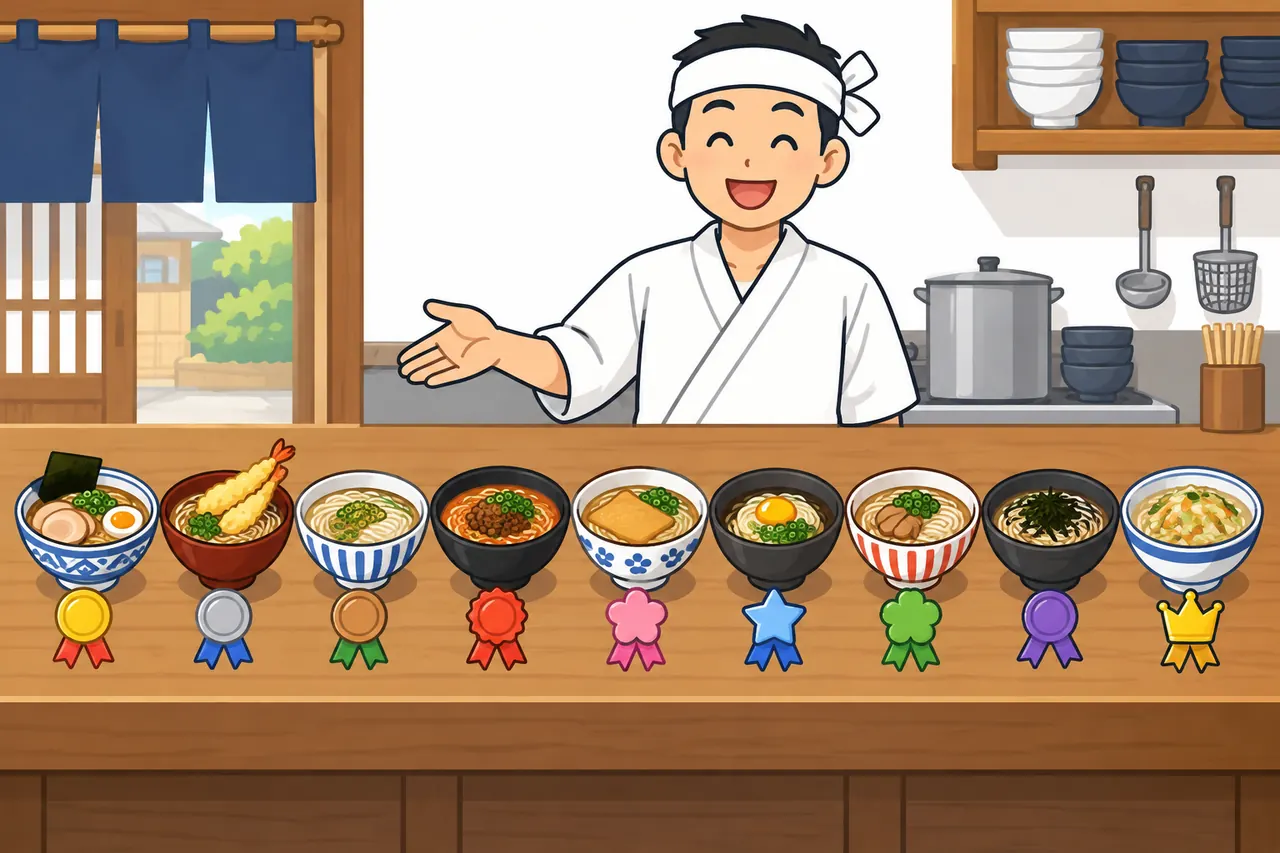
| Shop | Type and area | Recognition or source | Price information | Booking information |
|---|---|---|---|---|
| Soba Tajima | Soba; Nishi-Azabu, Minato | Tabelog Soba EAST Hyakumeiten 2025; MICHELIN Guide listing | Ask the shop directly | MICHELIN Guide says to contact the shop directly |
| Udon Maruka | Udon; Jimbocho, Chiyoda | Tabelog Udon EAST Hyakumeiten 2024 | Ask the shop directly | Ask the shop directly |
| Teuchisoba Jiyusan | Soba; Egara-cho, Nakano | MICHELIN Guide Tokyo 2026 Bib Gourmand; Tabelog Soba EAST Hyakumeiten 2025 | Ask the shop directly | Lunch: no bookings. Dinner: reservation required |
| Sobagochisou Monzen | Soba; Jindaiji, Chofu | GO TOKYO restaurant guide | Ask the shop directly | Ask the shop directly |
| Sobakappo Nagano | Soba; Higashi-Mukojima, Sumida | MICHELIN Guide Tokyo 2026 Bib Gourmand | Ask the shop directly | Ask the shop directly |
| Sobakiri Suzuki | Soba; Minami-Oizumi, Nerima | MICHELIN Guide Tokyo 2026 Bib Gourmand | Ask the shop directly | Telephone booking from about 9:30 on the day |
| Kanda Yabusoba | Soba; Kanda-Awajicho, Chiyoda | Chiyoda City Tourism Association; GO TOKYO booklet | Check the official menu | Ask the shop directly |
| Tamawarai | Soba listing; exact location to confirm | Tabelog individual listing | Ask the shop directly | Ask the shop directly |
| Kanda Matsuya | Soba; Kanda-Sudacho, Chiyoda | Government of Japan feature | Undated listing: mori or kake 550 yen; current price unconfirmed | Ask the shop directly |
How to check, book, and order
Use a source that matches the question you need answered. For an award, check the relevant Michelin or Tabelog page; for a shop’s menu, use its official menu where one is available; for a reservation rule, use the specific listing that states the rule. These pages may not all provide the same information, so the absence of a price or booking detail from one source should not be mistaken for confirmation that the detail does not exist.
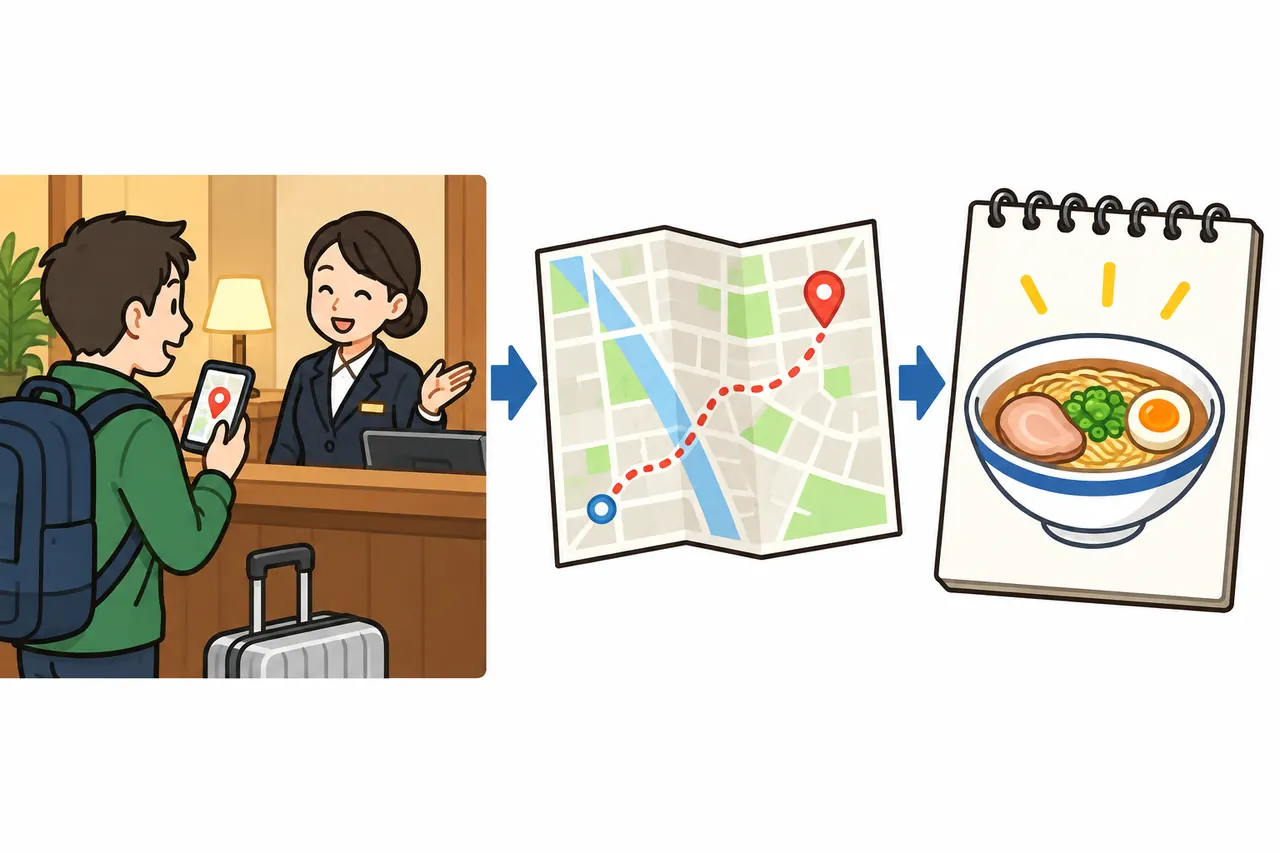
For reservations, follow the rule confirmed for the particular shop rather than using one general approach for all nine. Jiyusan’s dinner requires a reservation, while lunch cannot be booked. Suzuki accepts telephone bookings from about 9:30 on the day, and Michelin says to contact Soba Tajima directly about reservations. If you need help communicating, ask your hotel front desk to assist with the call.
For Monzen, the confirmed access detail is simple: the GO TOKYO guide places the shop a one-minute walk from the Jindaiji bus stop. Check the GO TOKYO guide and the shop’s official site before travelling. For the other shops, the information here does not provide station exits, walking times, or detailed routes, so look up the exact address in the relevant linked listing and plan your route separately.
At the table, asking for mori or seiro indicates cold soba, while kake indicates noodles in hot soup. If you want to try the coarse-ground style, look for arabiki on a menu; Monzen and Nagano are among the shops whose sources specifically mention coarse-ground soba. Save a picture of the dish or menu term so you can point to your choice.
Where to eat by area
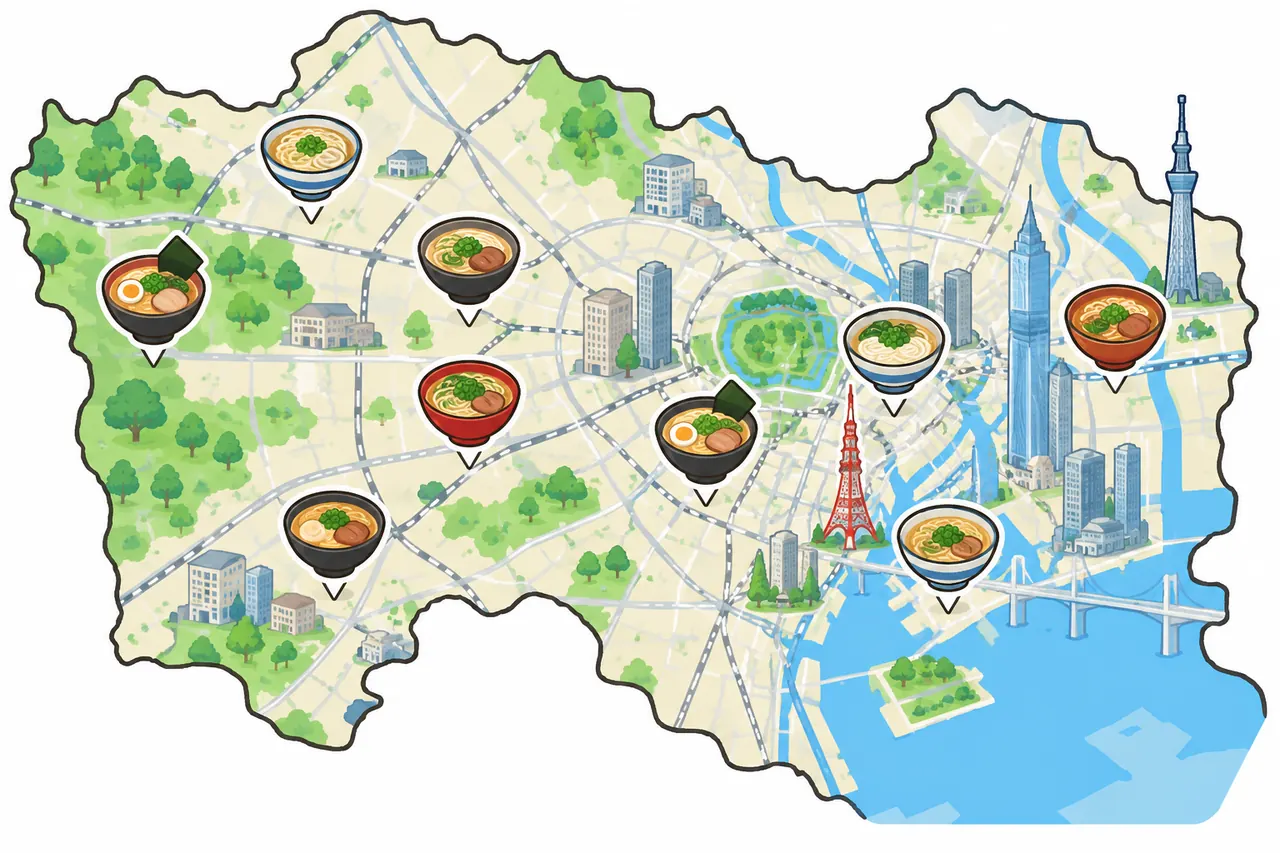
Kanda and Jimbocho put three of the listed shops in the same broad part of central Tokyo: Kanda Matsuya, Kanda Yabusoba, and Udon Maruka are all in Chiyoda City. Their inclusion in one area makes them possible candidates for a noodle-focused outing. Check each address on a map before deciding whether to visit more than one in a day.
Soba Tajima is in Nishi-Azabu, while Jiyusan, Nagano, and Suzuki are in Nakano, Sumida, and Nerima respectively. Those locations are outside the Kanda grouping, so allow time to plan separate journeys rather than assuming that all the shops are close together. Tamawarai’s exact location should be confirmed on its Tabelog page before adding it to an itinerary.
Monzen offers a clear pairing with the Jindaiji area: the shop is near the temple district and the GO TOKYO guide gives a one-minute walk from the Jindaiji bus stop. If you are planning a visit there, check the official site and guide before setting out, particularly because the coarse-ground soba is described as limited in quantity. No specific temple route or travel time is confirmed here, so plan that part of the day independently.
Queues, timing, and what to expect
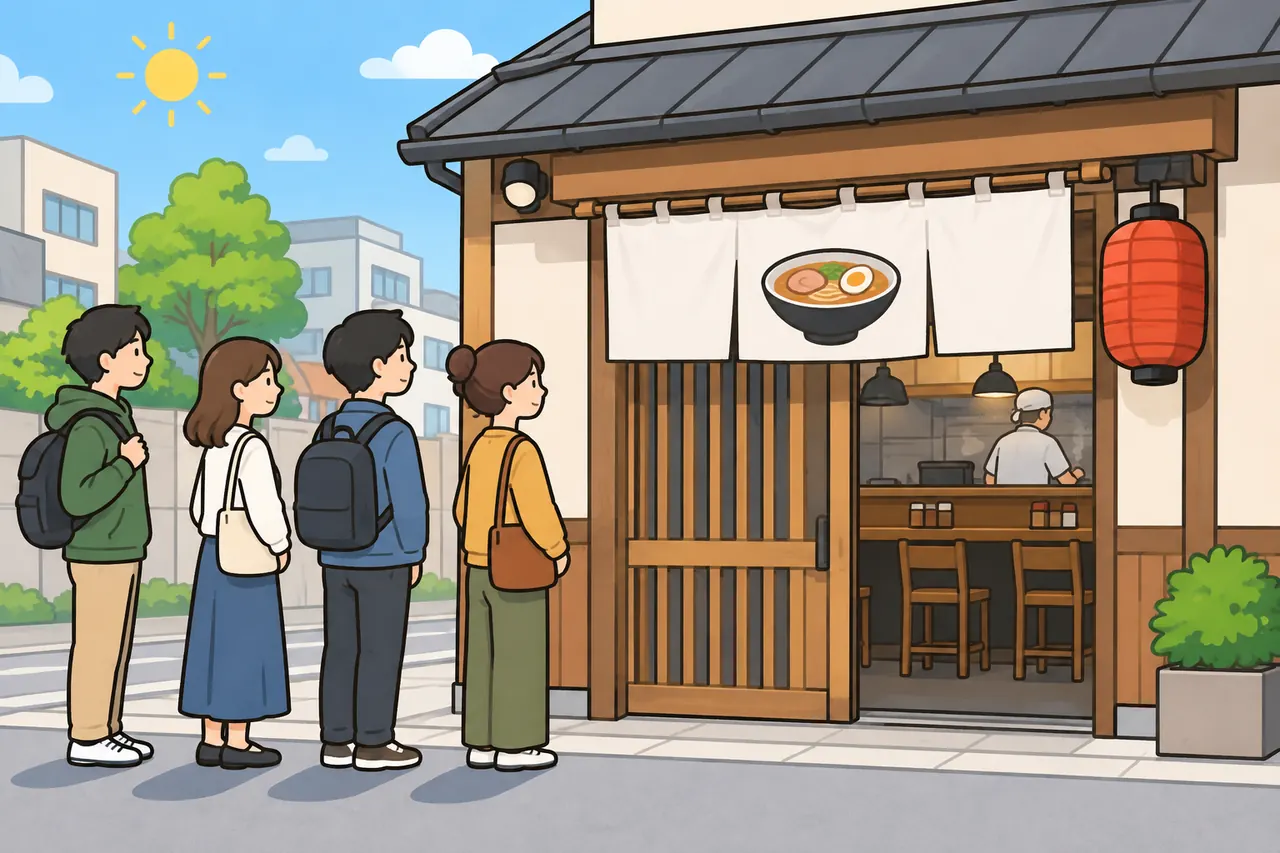
Popular noodle shops can have queues, and travel videos about Tokyo noodle tours sometimes show long waits. That is a reason to leave flexibility in your schedule, not a promise that a particular restaurant will have a queue on the day you visit. Arriving early or avoiding the busiest part of lunch may help you manage the possibility of waiting, but no shop-specific wait times are confirmed in this guide.
Limited dishes need a little extra consideration. Monzen’s coarse-ground soba is described in the GO TOKYO guide as made in limited quantities, so availability may be a factor if that is the dish you want.
Booking rules and other practical details can change. Check the linked official or guide page close to your visit, especially for dinner at Jiyusan and same-day telephone booking at Suzuki. A video of a busy shop can give a general impression of how quickly orders may be taken during a rush, but ask each shop about its current service procedures.
First-time mistakes to avoid
Do not arrive at Jiyusan for dinner without arranging a reservation: the confirmed rule is that dinner bookings are required, while lunch cannot be booked. For Suzuki, do not call the day before on the assumption that it follows a standard advance-booking system; the Michelin listing says telephone bookings begin from about 9:30 on the day you want to eat. Check the relevant shop page before making plans, since the two booking systems are different.
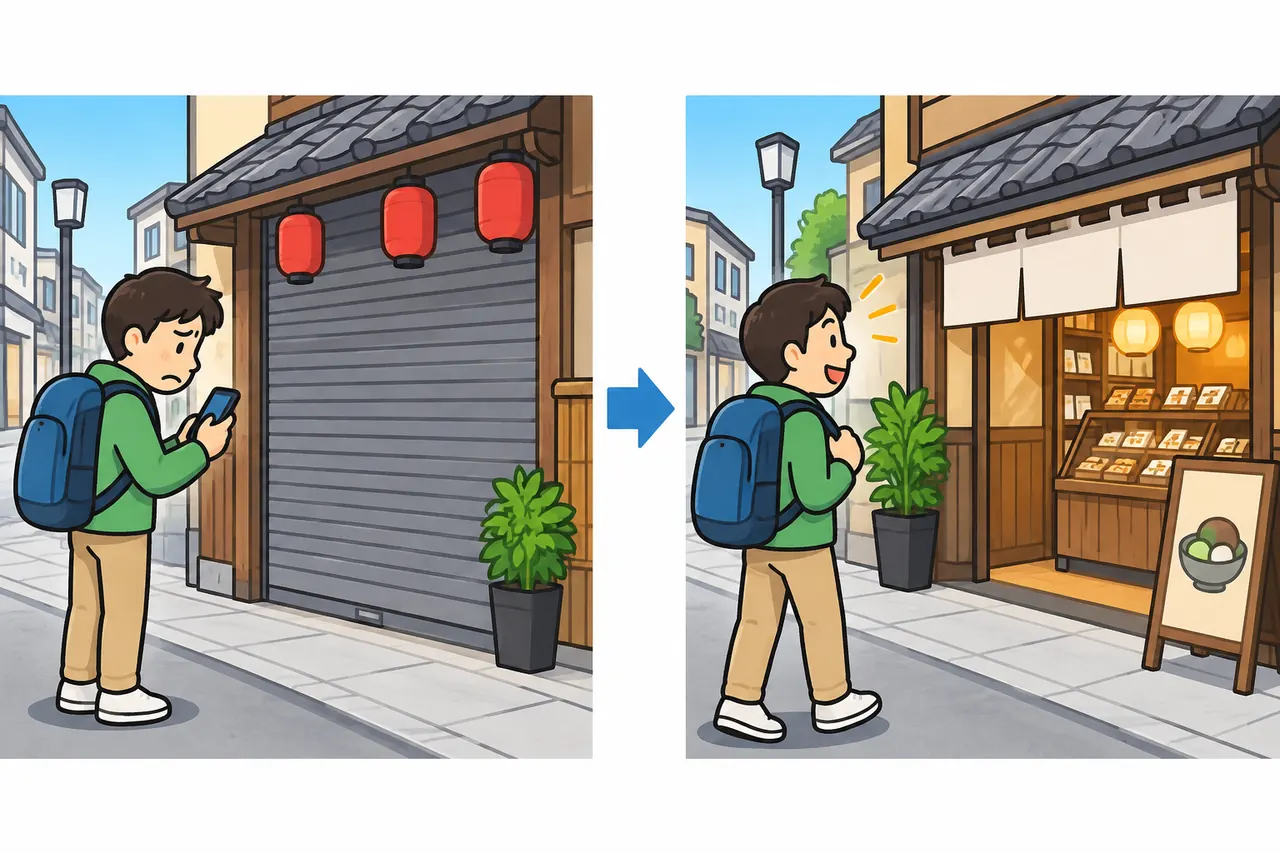
Do not treat an old or undated price as a current menu price. The 550-yen mori or kake figure for Kanda Matsuya comes from an undated listing. Check current shop information and allow for the possibility that a published figure has changed.
Do not assume that a restaurant has an English menu because an English-language guide or translated listing exists. English menus and English-language booking support are unconfirmed across the shops in this guide. A saved menu photo and the words “mori,” “seiro,” and “kake” can help you indicate whether you want cold dipping soba or noodles in hot soup.
Finally, avoid pouring all the dipping sauce over cold soba if you would rather control the amount as you eat. Dip a few noodles at a time, then adjust to your taste. Slurping is normal at Japanese noodle shops, so it is not necessary to eat silently to be polite.
FAQ
What is the best udon shop in Tokyo on this list?
Udon Maruka in Jimbocho is the guide’s main udon pick. It won Tabelog Udon EAST Hyakumeiten 2024, as recorded on the Tabelog award page. The list is not a ranking by taste; ask the shop about its current menu, prices and booking arrangements.
Which soba shops have a MICHELIN Guide Bib Gourmand?
Teuchisoba Jiyusan, Sobakappo Nagano, and Sobakiri Suzuki are identified in the MICHELIN Guide Tokyo 2026 Bib Gourmand selection. The guide’s 2026 announcement is the shared reference for the selection. Their booking conditions differ: Jiyusan requires a reservation for dinner, while Suzuki takes telephone bookings from about 9:30 on the same day.
How much does soba cost in Tokyo?
There is no single confirmed price for the restaurants in this guide, and current prices are unconfirmed for most of them. A Kikumasamune listing gives mori or kake at Kanda Matsuya as 550 yen, but its date is unknown, so it may not reflect the current menu. Check the shop’s current information rather than planning around that undated figure.
Do I need to book these restaurants?
It depends on the shop. Jiyusan requires a dinner reservation and does not accept lunch bookings; Suzuki’s Michelin listing says to call from about 9:30 on the day; and Michelin directs visitors to contact Soba Tajima directly about reservations.
Do these restaurants have English menus?
An English MICHELIN Guide or tourism listing is useful for researching a restaurant, but it does not prove that the shop offers an English menu or English-language service. Learning the words “mori,” “seiro,” and “kake,” or saving a picture of the dish you want, can make ordering easier.
Is it rude to slurp noodles in Japan?
No. Slurping is normal at noodle shops in Japan, and you do not need to avoid it to be polite. If you order cold soba, dip a few noodles at a time into the sauce rather than pouring all the sauce over the noodles.