Best Tempura in Tokyo: 10 Places to Try
Contents
A great Tokyo tempura meal can be a long counter-side course or a lunch built around freshly fried seafood and vegetables. For a first visit, Tempura Kondo is a memorable choice for vegetables, while Nihombashi Sonoji pairs tempura with handmade soba. For a more accessible lunch, consider Kyobashi Tempura Fukamachi or Tempura Miyashiro, both of which publish their menus.
These ten restaurants cover Ginza, Nihombashi, Ebisu, Nakameguro and other neighborhoods. The best choice depends as much on your itinerary, budget and preferred meal length as on the cooking.
Compare Tokyo’s tempura restaurants
| Restaurant | Area | Best for | Published course example |
|---|---|---|---|
| Tempura Kondo | Ginza | Vegetable tempura and a Ginza lunch | Lunch from ¥13,200, including tax |
| Nihombashi Sonoji | Ningyocho | Tempura followed by handmade soba | Lunch and dinner omakase |
| Tempura Motoyoshi | Ebisu and Daikanyama | Seasonal omakase and a special-occasion dinner | ¥33,000–¥44,000, including tax; service extra |
| Tempura Miyashiro | Nakameguro | A substantial lunch course | ¥17,600, including tax |
| Tempura Shimomura | Shin-Okachimachi | A neighborhood counter near Kuramae | Dinner course listed at ¥12,100 |
| Kyobashi Tempura Fukamachi | Kyobashi | Traditional Edomae tempura for lunch | Lunch No. 1 at ¥14,500 |
| Tempura Taku | Kagurazaka | A small counter and chef-selected course | ¥22,000, including tax; service extra |
| Edomae Shinsaku | Ningyocho | A creative counter dinner | Omakase from ¥28,500, including tax; service extra |
| Ten-yokota | Azabu-juban | An intimate evening course | Omakase listed at ¥19,000, including tax |
| Tempura Ginya | Shirokanedai | A leisurely seasonal dinner | Omakase listed at ¥33,000, including tax |
The prices are per person. Details of each course, booking fees and service charges appear below.
Ginza, Ningyocho, Ebisu and Nakameguro
1. Tempura Kondo — best for vegetable tempura
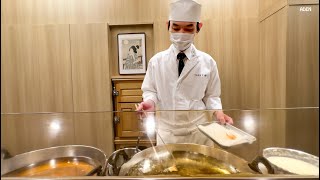
Ginza’s Tempura Kondo is a choice if you want vegetables to be more than a supporting act. Chef Fumio Kondo uses a thin batter to bring out their color and aroma; sweet potato is among the restaurant’s signature ingredients. It suits a traveler who wants a distinctive lunch before an afternoon exploring Ginza. (tempura-kondo.com)
The restaurant’s menu and reservation page lists lunch courses at ¥13,200 and ¥16,500, including tax, and dinner courses from ¥22,000. Lunch seatings begin at 11:30 a.m. and 1:30 p.m. and last two hours. The restaurant is a five-minute walk from Ginza Station. International guests can use the multilingual reservation forms on the official site; phone reservations are handled in Japanese. (tempura-kondo.com)
2. Nihombashi Sonoji — best for tempura and soba
At Sonoji, the meal moves from seasonal tempura to handmade soba. The restaurant draws on seafood from Suruga Bay and vegetables from Shizuoka, then finishes with buckwheat noodles made in-house. Pick it for a food-focused day around Ningyocho, especially if you want two Japanese specialties in one sitting. (nihonbashi-sonoji.com)
The official site offers lunch and dinner omakase, with shared starts at noon and 6:30 p.m. A 5% service charge applies. Follow the site’s Pocket Concierge link for the course available on your date; if your preferred seating is full, register for an availability notification. Guests with a soba allergy should discuss their requirements before booking. (nihonbashi-sonoji.com)
3. Tempura Motoyoshi — best for a seasonal splurge
Motoyoshi’s carefully presented seasonal course is a fit for a special evening around Ebisu and Daikanyama. Rather than choosing individual tempura pieces, guests leave the sequence to the chef and experience how different ingredients respond to the batter and hot oil. (r.gnavi.co.jp)
The OMAKASE restaurant page lists a seasonal course at ¥33,000–¥44,000 including tax, plus a 10% service charge. At the lower end, that is ¥36,300 per person before drinks or other additions. The restaurant is in Ebisu-Nishi, approximately five minutes on foot from JR Ebisu Station; seatings begin at 5:30 p.m. and 8:30 p.m. (omakase.in)
For overseas guests, Motoyoshi’s booking guidance recommends a hotel concierge or TABLEALL. The OMAKASE page restricts its bookings to residents with a Japanese telephone number, so use the overseas route if you are visiting from abroad. Tell the booking contact about allergies when making your request. (motoyoshi-1120.com)
4. Tempura Miyashiro — best for a Nakameguro lunch
Miyashiro combines tempura with dishes drawn from the chef’s Japanese-cooking background. Its setting is part of the appeal: behind an understated exterior, the restaurant has a wood-and-washi interior. Choose it for a relaxed lunch before walking around Nakameguro. (miyashiro.tokyo)
The official menu lists a ¥17,600 lunch with an appetizer, sashimi, ten tempura dishes, rice and dessert. A ¥30,800 lunch adds a broader selection of dishes, while the listed dinner course is also ¥30,800; the TableCheck menu gives these prices including tax. Online reservations are available through the restaurant’s booking links. (miyashiro.tokyo)
5. Tempura Shimomura — best for the Kuramae area
Shimomura is a convenient choice for a day around the eastern side of Tokyo, away from the Ginza dining rooms. The restaurant describes a thin batter, sesame frying oil and separate temperature ranges chosen for different ingredients. Its seasonal seafood and vegetables are served in a neighborhood setting with counter and table seating. (r.gnavi.co.jp)
The restaurant’s reservation listing offers dinner courses beginning with a ¥12,100 course. Its Tabelog listing places it about five minutes on foot from Shin-Okachimachi Station’s A4 exit. Use the listed reservation route: the restaurant says it does not accept AutoReserve’s automated booking service. (r.gnavi.co.jp)
Kyobashi, Kagurazaka, Azabu-juban and Shirokanedai
6. Kyobashi Tempura Fukamachi — best for a traditional lunch
Fukamachi is a strong choice for an Edomae-style meal near Kyobashi. Its kitchen uses seasonal seafood and vegetables, sesame oil and a dipping sauce made with dashi. Counter seats let you watch the frying, while table seating offers another option for a meal with companions. (fukamachi-japan.com)
The official menu lists Lunch No. 1 at ¥14,500: two prawns, three fish items, five vegetables, rice, red miso soup, pickles and dessert. Lunch No. 2 is ¥17,500 and includes a tempura-and-rice finish. Ask for the total including tax and any booking charge when reserving. (fukamachi-japan.com)
The restaurant is near Kyobashi Station. Its site links to a reservation service; allow time to receive the restaurant’s approval before arranging the rest of your day around a requested seat.
7. Tempura Taku — best for a small Kagurazaka counter
For an evening in Kagurazaka, Taku offers a compact counter experience centered on freshly fried seasonal ingredients. With eight counter seats, it is a good pick for diners who want to follow the chef’s sequence rather than choose a long list of individual dishes. (tablecheck.com)
The TableCheck page lists an omakase course at ¥22,000 including tax, with a service charge added separately. Select your date and party size on the booking page, then read the final charge and cancellation terms before submitting. The restaurant is in Kagurazaka, making it convenient for dinner after exploring the area’s streets and shops. (tablecheck.com)
8. Edomae Shinsaku — best for creative frying
Edomae Shinsaku is an alternative to Sonoji for a Ningyocho dinner. Michelin describes a chef who adjusts temperature and technique to the ingredient, producing a more deeply colored, aromatic batter. Choose it when the technique itself is as interesting to you as the ingredient list. (guide.michelin.com)
The OMAKASE booking page lists the course from ¥28,500 including tax, plus 10% service and a ¥390 booking fee per seat. At that starting course price, the amount is ¥31,740 per person before drinks; seasonal ingredients can change the course price. (omakase.in)
When booking, choose your final rice dish: tuna ochazuke is included, while changing to a kakiage tempura bowl costs ¥1,900. Dinner starts at 7 p.m., and the restaurant is near Ningyocho Station. The counter seats eight, so reserve the meal before building an evening around it. (omakase.in)
9. Ten-yokota — best for an Azabu-juban dinner
Ten-yokota is an intimate eight-seat choice in Moto-Azabu, near Azabu-juban Station. Its omakase follows the seasons, making it suited to travelers who want to settle in for a counter meal rather than stop for a quick bowl. (omakase.in)
The restaurant’s OMAKASE page currently lists its course at ¥19,000 including tax, with the price varying according to seasonal ingredients. The platform also lists a ¥390 booking fee per seat. The page identifies a separate branch in Yaesu, so select the Moto-Azabu restaurant when booking this meal. (omakase.in)
Ten-yokota asks guests to avoid strong perfume and says it cannot accept diners who cannot eat shrimp or shellfish. The person who made the reservation must attend. (omakase.in)
10. Tempura Ginya — best for a leisurely Shirokanedai evening
Ginya’s seasonal course is designed for an unhurried evening. The TableCheck reservation page lists an omakase at ¥33,000 including tax, with a small dish, approximately 10–13 kinds of seasonal tempura, kakiage and a rice course. The shared seating begins at 6:30 p.m. and the restaurant plans around three hours for the meal. (tablecheck.com)
Make the booking yourself: Ginya does not accept reservations made by an agent. The restaurant is in a basement reached by stairs, and its Tabelog listing places it about five minutes from Shirokanedai Station, exit 1. Ginya also has detailed allergy restrictions, including an inability to accommodate vegetarian diets, so read those conditions before reserving. (tabelog.com)
How to order and enjoy tempura
At a counter, the chef commonly serves pieces as they come out of the oil. Eat each one while it is hot: the contrast between crisp batter and the softer ingredient is part of the experience. Use chopsticks, and follow the chef’s suggestion if a piece is presented with salt or dipping sauce.
A few menu terms make ordering easier:
- Omakase: a meal selected by the chef, usually served as a sequence.
- Tendon: tempura served over rice, often with a sweet-savory sauce.
- Kakiage: a fritter made from a mixture of ingredients.
- Tencha: a tempura-and-rice dish served with tea or broth.
- Tentsuyu: the dipping sauce served with tempura.
If you would rather have a quick rice bowl than a lengthy course, the Tendon Tenya English guide is a starting point for its Tokyo locations and menus. That format is useful between sightseeing stops; the counter restaurants above are better suited to meals you plan as part of the day.
How to book and plan your bill
Start with the restaurant’s own booking route and have your date, preferred seating, party size and contact details ready. If you have an allergy, name the ingredient and explain how many people in your party it affects. A message such as the following gives the restaurant the information it needs:
“I would like to reserve for two people on November 20 at the dinner seating. One guest has a shrimp allergy. Can you accommodate us, and what is the total price including tax, service and booking fees?”
Compare the full cost before choosing between courses. For example, Taku’s ¥22,000 course includes tax but has service added, while Shinsaku lists both a 10% service charge and a per-seat booking fee. Drinks, optional dishes and changes to a rice course can add to the bill. (tablecheck.com)
For popular counters, a waitlist or availability alert can be useful if your first date is full. Keep more than one date available, but make only reservations you intend to use. Fixed-start restaurants serve the room together, so late arrival can affect the dishes you receive.
Fit the meal into your Tokyo itinerary
For a central Tokyo day: Choose Kondo for lunch in Ginza, then leave the afternoon for shopping or galleries. Fukamachi in Kyobashi is another practical lunch choice when you are staying near Tokyo Station or Ginza.
For Ningyocho: Pick Sonoji if you want a tempura-and-soba meal, or Shinsaku for an evening focused on the chef’s frying technique. Both are easier to enjoy when you keep the hours around the reservation free.
For western Tokyo: Pair Miyashiro with Nakameguro or Motoyoshi with Ebisu and Daikanyama. Motoyoshi’s confirmed Ebisu address is more useful for navigation than an old Gaien-mae access description; use the Ebisu Station route on its reservation listing. (omakase.in)
For a long dinner: Ginya’s planned three-hour meal calls for a clear evening. At Sonoji and Shinsaku, build your route around the shared start time rather than treating the reservation as a flexible arrival window. (tablecheck.com)
FAQ
Which restaurant is best for vegetable tempura?
Start with Tempura Kondo. Its approach emphasizes vegetables as well as seafood, using thin batter to highlight their flavor and appearance. (tempura-kondo.com)
Where can I eat tempura and soba together?
Nihombashi Sonoji serves a tempura omakase that finishes with handmade soba. Its lunch and dinner seatings begin together, so arrive with your party ready for the stated start time. (nihonbashi-sonoji.com)
How much should I budget?
Among the published courses above, Kondo’s lunch starts at ¥13,200 including tax, Miyashiro’s lunch is ¥17,600 including tax, and Motoyoshi’s seasonal omakase is listed at ¥33,000–¥44,000 including tax, plus service. Add room in your budget for drinks, service and booking fees where applicable. (tempura-kondo.com)
Can my hotel concierge book every restaurant?
Booking rules differ. Motoyoshi directs overseas guests to a hotel concierge or TABLEALL, whereas Ginya says it does not accept agent reservations. Use the route specified by the restaurant you choose. (motoyoshi-1120.com)
Is tempura suitable for vegetarians or people with allergies?
Ask about the specific course before booking. Seafood is central to many menus, and restaurants may have restrictions on substitutions. Ginya, for example, lists ingredients and diets it cannot accommodate; Sonoji asks guests to discuss allergies in advance. (tablecheck.com)
References
- Tempura Kondo: official menu, access and reservations
- Nihombashi Sonoji: official site and reservations
- Tempura Motoyoshi: overseas guest guidance
- Tempura Motoyoshi: OMAKASE course and restaurant details
- Tempura Miyashiro: official menu
- Tempura Miyashiro: TableCheck menu
- Tempura Shimomura: restaurant and course listing
- Tempura Shimomura: Tabelog access and restaurant details
- Kyobashi Tempura Fukamachi: official menu and access
- Tempura Taku: TableCheck menu and reservations
- Edomae Shinsaku: OMAKASE course and reservations
- Ten-yokota: OMAKASE course and reservations
- Tempura Ginya: TableCheck menu and reservation conditions
- Tempura Ginya: Tabelog access and restaurant details
- Tendon Tenya: English guide and Tokyo locations
Prices and reservation details checked November 7, 2026; review the applicable course and terms before booking.